

Reviewed · PARIS TOURS
Behind the Scenes of the Roland Garros Stadium
The best part of this Roland Garros tour is following the players’ route from the changing rooms through the corridor and out toward the clay court. You also get into places that television never shows, including the press rooms and presidential stand. For tennis fans, this turns a famous name into a real working stadium.
I like the way the tour connects the public spectacle with the people behind it: players, journalists, officials, and the staff who make the French Open run. I also like the small tennis details, from player plaques and statues to stories about Nadal, Federer, Graf, and other champions. The main drawback is that access can change when the stadium is being used, and the meeting point can be confusing.
In This Review
- Key points to know before booking
- Why Roland Garros feels different from a normal stadium tour
- Entering through the changing rooms and player corridor
- Seeing the press rooms and the tournament’s public face
- Court Philippe-Chatrier and the central stadium
- What you will not see, and why that matters
- The guide can make or break the hour and a half
- Price, timing, and the real value
- Finding 1 Av. Gordon Bennett without stress
- Walking, stairs, weather, and access
- Who will enjoy this Roland Garros visit most
- Cancellation and booking details in plain language
- Should you book the Roland Garros stadium tour?
- FAQ
- Where does the Roland Garros tour start?
- Where does the tour end?
- How long does the tour last?
- What language is the tour offered in?
- What areas can I see?
- Is admission included?
- Do I need to arrive early?
- Is the tour suitable for most people?
- Can I visit the stadium shop?
- Can I cancel for a refund?
Key points to know before booking
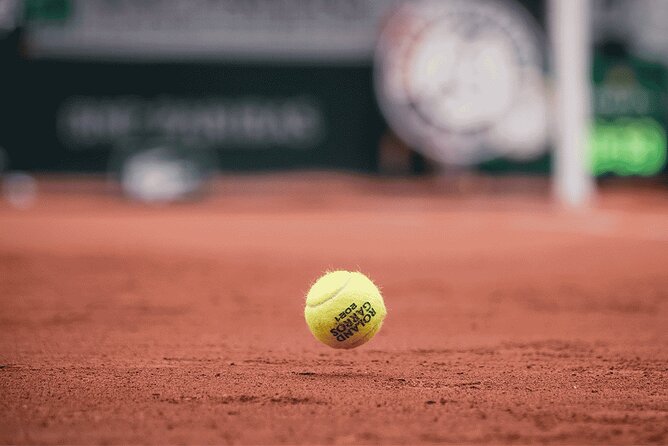
- Follow the players’ route: See the changing rooms, player corridor, press rooms, presidential stand, and central court area.
- Plan for 90 minutes on foot: Comfortable shoes matter, since the tour includes walking and stairs.
- Court Philippe-Chatrier is the star: The main stadium is the highlight, but smaller courts and outer grounds may not be included.
- Guides make the difference: Lionel and other guides have brought the stadium’s tennis stories to life, though guide quality can vary.
- Arrive early: Be at 1 Av. Gordon Bennett 15 minutes before departure. Late arrivals are not accepted.
- Expect changing access: Stadium activity can close some spaces, and photography may be limited during events.
Why Roland Garros feels different from a normal stadium tour
Roland Garros is not just a large sports venue. It is one of tennis’s great stages, and clay gives the place its own character. The French Open is built around long rallies, sliding movement, patience, and changing match conditions. A behind-the-scenes walk helps you understand how much of the tournament happens away from the court itself.
You are not simply shown a grandstand and sent on your way. The route is designed around the player experience. You see where competitors prepare, where journalists work, and where the formal business of the tournament takes place. Then you follow the corridor that leads toward the court, the same basic transition from private concentration to public performance that defines match day.
The tour lasts about 1 hour and 30 minutes. That is enough time to cover the important areas without turning the visit into an all-day commitment. I think the length works especially well in Paris, where you can pair the stadium with the Bois de Boulogne, the Jardin des Serres d’Auteuil, or another stop in the western part of the city.
The experience is offered in English, with a maximum group size of 30. That is not an intimate private tour, but it is small enough for a guide to keep the group moving through the stadium.
Other Paris days travellers weigh against this one:
- Paris: Louvre Museum Timed-Entrance Ticket
★ 4.6 · 71,977 reviews - Disneyland® Paris 1-Day Ticket
★ 4.6 · 49,412 reviews - Paris: Versailles Palace and Gardens Full Access Ticket
★ 4.6 · 41,579 reviews
Entering through the changing rooms and player corridor

The changing rooms are one of the most meaningful stops because they shift your attention from famous matches to the routine before them. This is where players prepare, wait, and gather themselves before walking into the noise. The rooms are not merely decorative spaces. They are part of the mental journey of tournament tennis.
From there, the route leads toward the court through the player corridor. This is the moment many tennis fans anticipate most. On television, you see a competitor emerge into the stadium. Here, you can stand in the passage that connects the quiet interior with the clay and the crowd.
Guides have used this section to explain the player journey and share stories about stars such as Rafael Nadal, Roger Federer, and Steffi Graf. Nadal has a particularly strong connection with Roland Garros, so fans of his career will find plaques, references, and other reminders of his many Paris triumphs especially rewarding.
One practical point: the tour is not a court-access guarantee. Some people have been able to step onto the clay surface when conditions allowed, but this is not officially promised. Treat any close look at the court as a bonus, not part of the contract.
Seeing the press rooms and the tournament’s public face
The press rooms show you the other half of the tournament. Grand Slam tennis is not only played in front of spectators. It is explained, questioned, photographed, and broadcast from rooms where players meet journalists after matches.
This stop has real value because it puts television coverage into context. You begin to see how post-match interviews, media briefings, and tournament reporting fit into the day. If you have followed the French Open from home, the press area can feel like stepping behind the screen.
The presidential stand offers a different view of Roland Garros. It is connected to the formal side of the event, where officials and important guests watch matches. You are seeing a part of the stadium that ordinary ticket holders do not usually enter.
The most memorable information will depend on the guide. Some guides have filled the tour with lesser-known stories and details, while one poorly received visit was shortened and lacked much explanation. That makes the guide an important part of the experience. Lionel has been singled out for making the tour interactive and lively, and multilingual guides have sometimes helped when French and English groups were combined.
Court Philippe-Chatrier and the central stadium
The main court, Philippe-Chatrier, is the visual payoff. This is the stadium most closely linked with the French Open’s biggest matches. Even when the stands are quiet and the tournament is not running, the bowl of the stadium gives you a sense of the scale and pressure faced by the players.
The exact court view can vary. At times, the court has been covered by a platform for an event, or photography has been restricted because the site was in use. Some spaces may also be closed on the day of your visit. If seeing an uncovered playing surface is your top reason for booking, keep that limitation in mind.
The tour is strongest when it explains how the different parts fit together. You start with preparation, move through the player passage, reach the court, and then connect the match with the press and official areas. This sequence gives the stadium a working rhythm rather than treating it as a collection of rooms.
You may also see trophies, statues, player names, and displays connected with French tennis. These details help fill out the visit, especially if you are interested in the sport’s wider story and not just one current champion.
A different way to spend the day, same corner of France:
- Paris: Evening River Cruise with Music
★ 4.4 · 22,721 reviews - Paris: Eiffel Tower Entry Ticket with Optional Summit Access
★ 4.4 · 20,035 reviews - Paris: Eiffel Tower Summit or Second Floor Access
★ 4.3 · 17,248 reviews - Paris: Louvre Guided Tour with Reserved Access & Boat Cruise
★ 4.3 · 16,353 reviews
What you will not see, and why that matters
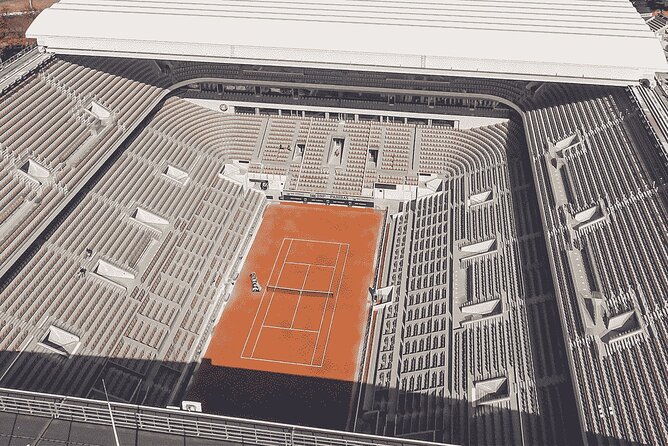
The tour focuses on behind-the-scenes access at the main stadium. It does not promise a full visit to every part of the Roland Garros grounds. One common wish is to see the smaller stadiums and outer courts, but those areas may not be part of the route.
That distinction matters when comparing this visit with attending the French Open itself. During the tournament, the grounds are full of matches, practice sessions, food stands, spectators, and the energy of competition. On this tour, you get access that a regular ticket may not provide, but you do not get the live match-day atmosphere.
I see the two experiences as different rather than competing. A tournament ticket is best for watching tennis. This tour is better for understanding the spaces players and working staff use when the cameras are not focused on the match.
Stadium operations can also affect the itinerary. The organizers note that some areas may be inaccessible because of activity at the site. One visit had the central court partly covered for an event. If you are flexible, this is a sensible choice. If you need every advertised area to be open, the changing access is a real consideration.
The guide can make or break the hour and a half
A good guide turns a corridor into a story. The strongest guiding described for this tour includes practical explanations, player anecdotes, details about French tennis, and a clear sense of how journalists and competitors use the stadium.
Some guides have been praised for warmth, humor, and enthusiasm. Lionel, in particular, has been noted for strong communication and an interactive approach. A multilingual guide has also accommodated English speakers when the English group was full.
But the standard is not perfectly consistent. One visit began late, ended after about 1 hour and 10 minutes instead of the expected 90 minutes, and offered little engagement. Another group had trouble after the guide moved ahead and some people lost contact with the group. Those reports are unusual within the strong overall rating, but they are useful reminders to stay close and keep track of the guide.
The group limit is 30 people. That keeps the tour manageable, though the experience will feel less personal when the group is full. If you want to ask questions, stay near the guide and speak up at the stops.
Price, timing, and the real value
At about $25.77 per person, this is a fairly modest Paris attraction for a 90-minute visit. The price includes the guided tour and entrance to the tour areas. Food, drinks, and transportation are not included.
The value depends almost entirely on your interest in tennis. If Roland Garros is simply a famous name you recognize, the tour may feel less important than a major Paris museum or monument. If you play tennis, follow the French Open, or have a favorite champion, the chance to walk through the player route can justify the price easily.
The tour is often booked around 50 days ahead, so popular dates can fill. That is particularly worth noting if your Paris schedule is fixed. Booking early also gives you time to plan the visit around the western side of the city rather than trying to squeeze it in at the last minute.
The stadium shop is open from 9:30 to 18:30, and access is available before or after the tour. A 10 percent merchandise discount has been offered with the visit. If you want French Open clothing or souvenirs without attending the tournament, this may add a little extra value, though it can also make the visit more expensive if you are easily tempted by tennis merchandise.
Finding 1 Av. Gordon Bennett without stress
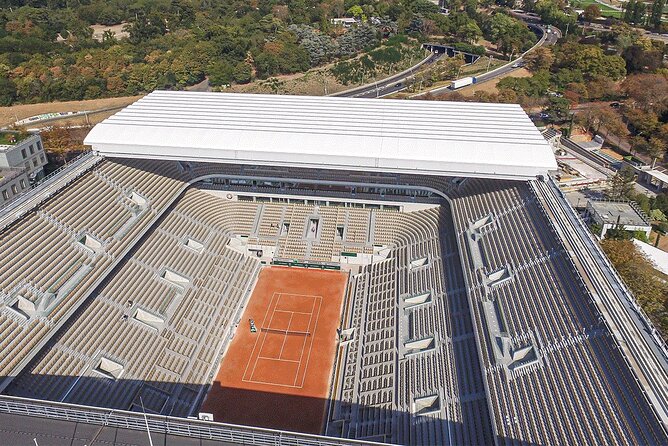
The listed starting point is 1 Av. Gordon Bennett, 75016 Paris. The tour ends at the Boutique Roland-Garros at 2 Av. Gordon Bennett. The site is near public transportation, but the entrance process has caused confusion.
Arrive at least 15 minutes early. This is not casual advice: late arrivals are not accepted, and there is no refund for missing the start. The site may not have clear signs outside directing you to the tour, and a security guard may not know the details of the visit.
The safest plan is to allow extra time to locate the correct entrance and confirm where the group gathers. Keep your mobile ticket ready. Some people have found the gift shop lobby to be part of the arrival process, but follow the current instructions you receive at booking rather than assuming the first gate you see is correct.
Use the bathroom before the tour ends. The shop may not have one available after the guide leaves, and returning into the stadium may not be allowed. This is a small point, but it can save you an awkward search after 90 minutes of walking.
Walking, stairs, weather, and access
Wear comfortable shoes. The route involves about 1.5 hours of walking and stairs, and the experience is not designed as a seated visit. Most people can participate, but access to particular areas may change because the stadium is active.
Weather can affect your comfort, especially when the route includes outdoor or partly exposed sections. A cold day does not ruin the tour, but it can make waiting and court viewing less pleasant. Check the forecast and dress for a visit that may move between indoor and outdoor areas.
Photography rules can change. During one event, photos were restricted and the central court was covered. Do not assume every court or room can be photographed simply because it is part of the route.
The tour is offered in English, but group arrangements can occasionally shift. An English group has sometimes been full, requiring English speakers to join a French-language group with a multilingual guide. This worked well when the guide made room for English, but it is worth confirming the language arrangement if detailed English commentary is essential.
Who will enjoy this Roland Garros visit most
I would put this tour high on the list for:
- Tennis fans who want to see the spaces behind a Grand Slam event.
- Players and coaches interested in how athletes move through a major tournament.
- Nadal fans, since his Roland Garros connection appears throughout the visit.
- Families with older children or teenagers who already enjoy tennis.
- Paris visitors looking for something beyond the usual central sights.
- People who attended the French Open before and want to understand the stadium away from match day.
It is less suitable if you want a broad tour of every court on the grounds, a live tennis match, or a short visit with little walking. It may also disappoint if your main goal is guaranteed access to the clay court itself.
For a family gift, it can work especially well when the recipients play tennis. The visit gives young players a concrete sense of the spaces used by professionals, rather than showing them only a televised match.
Cancellation and booking details in plain language
You receive confirmation at booking, and the ticket is mobile. The experience allows free cancellation up to 24 hours before the scheduled start for a full refund.
Changes or cancellations made less than 24 hours before the start are not accepted for a refund. The cut-off uses local Paris time, so check the clock carefully if you are changing plans from another time zone.
The meeting point and end point are close to the stadium shop, but do not confuse the tour with a general admission ticket for a tournament day. The tour ticket covers the guided visit. Food, drinks, and transfers are your responsibility.
Should you book the Roland Garros stadium tour?
Book it if tennis is part of the reason you are in Paris. The changing rooms, player corridor, press rooms, central stadium, trophies, and champion references give you access to the working side of Roland Garros, not just a view from the stands.
I would book with three expectations: arrive early, wear good shoes, and accept that stadium activity may close a room or change the court view. If you can handle those limits, the price is fair and the visit offers something a normal Paris sightseeing pass cannot.
Skip it if you are hoping for a full tour of every outer court or guaranteed time on the clay. For serious tennis fans, though, this is one of the more personal ways to connect with the French Open, especially when a strong guide such as Lionel supplies the stories that bring the player route to life.
FAQ
Where does the Roland Garros tour start?
The tour starts at 1 Av. Gordon Bennett, 75016 Paris, France.
Where does the tour end?
The tour ends at the Boutique Roland-Garros, located at 2 Av. Gordon Bennett, 75016 Paris, France.
How long does the tour last?
The scheduled duration is approximately 1 hour and 30 minutes.
What language is the tour offered in?
The tour is offered in English. In some cases, English speakers may join a French group if the English group is full, with a multilingual guide providing assistance.
What areas can I see?
The route includes the press rooms, changing rooms, presidential stand, and the corridor leading players to the clay court. The central stadium and other displays may also be part of the visit.
Is admission included?
Guided tour entrance tickets are included. The experience does not include transportation, food, or drinks.
Do I need to arrive early?
Yes. You should arrive 15 minutes before the tour starts. Latecomers will not be accepted, and late arrival does not qualify for a refund.
Is the tour suitable for most people?
Most people can participate, but the visit includes walking and stairs. Some spaces may be inaccessible on the day because of activity at the stadium.
Can I visit the stadium shop?
Yes. The Roland-Garros shop is open from 9:30 to 18:30, and you can access it before or after the visit.
Can I cancel for a refund?
You can cancel at least 24 hours before the scheduled start for a full refund. Cancellations or changes made less than 24 hours before the start are not accepted.
Recently reviewed around Paris
- Seine River Sightseeing Cruise and Lunch at Le Bistro Parisien★ 4.0 · 70 reviews
- Your Photoshoot in Paris★ 5.0 · 45 reviews
- Arc de Triomphe + Rooftop Access Tickets★ 3.5 · 126 reviews
- Giverny Day with Monet Foundation Audio Guided Tour from Paris★ 3.5 · 30 reviews
- Paris: City Bike Tour on a Dutch Bike★ 4.5 · 136 reviews
- Paris Arc de Triomphe Entry and Mini Walking Tour★ 4.5 · 51 reviews
- Paris Baking Insider Experience near Notre-Dame★ 5.0 · 206 reviews
- Paris: Seine River Sightseeing Sunset Cruise with Champagne★ 4.5 · 96 reviews
Paris Tours, compared.

Versailles Palace and Gardens Full Access Ticket
Read our review →

Eiffel Tower Entry Ticket with Optional Summit Access
Read our review →

Louvre Guided Tour with Reserved Access & Boat Cruise
Read our review →
Moulin Rouge Cabaret Show Ticket with Champagne
Read our review →