
Reviewed · WINE TASTINGS
Discovery of the Bordeaux vineyard in 3 wines
Bordeaux wine can seem like a code made of appellations, riverbanks, grape blends, and grand classifications. This tasting makes that code easier to read, using three carefully chosen wines to show how Left Bank reds, Right Bank reds, and dry whites differ. You’ll also hear how Bordeaux wine developed from Roman times onward.
I like the friendly teaching style and the fact that you learn something useful, not just sip three glasses. James is praised for his easy explanations and patient answers, while Pierre brings humor and warmth to the session. I also like the small Basque cheese, ham, and bread pairing, which gives the wine a practical food context.
The main consideration is that this is a tasting class in a wine shop or upstairs tasting room, not a visit to a vineyard or working château. The presentation can also wander a little, and the available start time may need checking carefully, since one booking notice showed 11 a.m. while the actual tasting was at 2:30 p.m.
In This Review
- Key points at a glance
- Three glasses that explain Bordeaux
- Starting at Le Pied à Terre on Rue Judaïque
- Learning to taste without the fuss
- Left Bank power and Right Bank grace
- The dry white that changes the picture
- Basque ham, cheese, and bread on the table
- Stories from Roman times to modern labels
- How much value do you get for $42.33?
- Timing, group size, and practical details
- Who should book this Bordeaux wine tasting?
- Should you book Le Pied à Terre?
- FAQ
- Where does the Bordeaux wine tasting begin?
- Where does the experience end?
- How long does the tasting last?
- How many wines are included?
- Is the tasting offered in English?
- Is this a vineyard or château tour?
- What food is served?
- How many people can join?
- Are service animals allowed?
- Can I cancel for a full refund?
Key points at a glance
- Three Bordeaux styles in one sitting: Compare a powerful Left Bank red, an elegant Right Bank red, and a fresh dry white.
- Useful tasting instruction: Learn how to look at, smell, taste, and discuss wine without any stiff wine-shop jargon.
- Friendly English guidance: James, Pierre, or another host explains appellations, grapes, producers, and winemaking in an accessible way.
- Basque food pairing: Taste the wines with ham, cheese, and bread from Maison Pierre Oteiza.
- Small group setting: The maximum group size is 12, so you can ask questions without competing with a crowd.
- Central Bordeaux meeting point: The experience starts and ends at Le Pied à Terre, 22 Rue Judaïque.
Three glasses that explain Bordeaux
The smart idea here is to organize the tasting around contrast. Bordeaux is not one single wine style. Its wines change with the soil, the climate, the grape mix, and the side of the Gironde estuary where the vineyards sit.
You begin with three tasting-size pours. One is a strong Left Bank red, where Cabernet Sauvignon often plays a major role. Another is an elegant Right Bank red, generally associated with Merlot-led blends. The third is a dry white, chosen to show the clean, fresh side of Bordeaux.
That is a compact lesson, but it gives you a useful framework for the rest of your time in the region. Instead of memorizing a long list of château names, you learn to ask better questions. Is this wine from the Left Bank or Right Bank? Which grapes shape its character? What does the appellation tell me? How might it work with food?
The exact labels can vary, so I would not book this expecting a fixed lineup of famous bottles. The focus is on representative styles and on learning how to understand them.
More Wine Tastings in Bordeaux
- Bordeaux: Cité du Vin Entry Ticket and Wine Tasting
★ 4.6 · 3,885 reviews - From Bordeaux: Afternoon Saint-Emilion Wine Tasting & snack
★ 4.8 · 1,581 reviews - Medoc or Saint Emilion Wine Tasting and Chateau from Bordeaux
★ 5.0 · 1,415 reviews
Starting at Le Pied à Terre on Rue Judaïque
The meeting point is Le Pied à Terre at 22 Rue Judaïque, 33000 Bordeaux. You meet there and return to the same place when the session ends, which keeps the logistics simple.
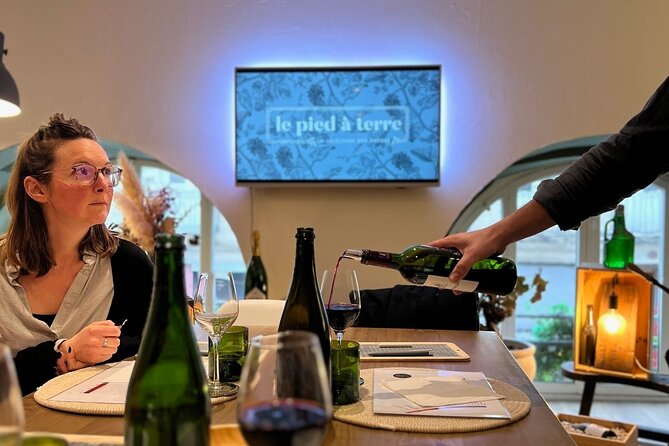
The setting is a wine shop with a tasting room upstairs, or a cellar-style space described as Le Pied à Terre. That makes it easy to find and convenient if you are already exploring central Bordeaux. It also shapes the experience. You are not walking among vines, touring a barrel room, or looking over a château estate. You are sitting down to study the wine itself.
I see that as a strength for a first introduction. A vineyard tour can cover a lot of ground, often with transport and estate history taking up much of the time. Here, the attention stays on the glass, the region, and the basics of tasting.
The group can include up to 12 people. That is large enough for a social afternoon but small enough for questions. It also works well for solo visitors, since you will be sharing a table with people from different countries and wine backgrounds.
Learning to taste without the fuss
The host walks you through the mechanics of tasting. You learn how to observe the wine, assess its aromas, and notice its structure and finish. The goal is not to make you perform like a sommelier. It is to give you a simple way to describe what you are drinking.
That approach suits beginners. You do not need to know the difference between Cabernet Sauvignon and Merlot before arriving, and you do not need a large wine vocabulary. The teaching is designed to be clear, interactive, and relaxed.
It is also useful for people who already drink wine. The session covers the logic behind tasting, not just the ritual. You can ask why one wine feels fuller, why another seems more fragrant, or how acidity changes the way a wine works with food.
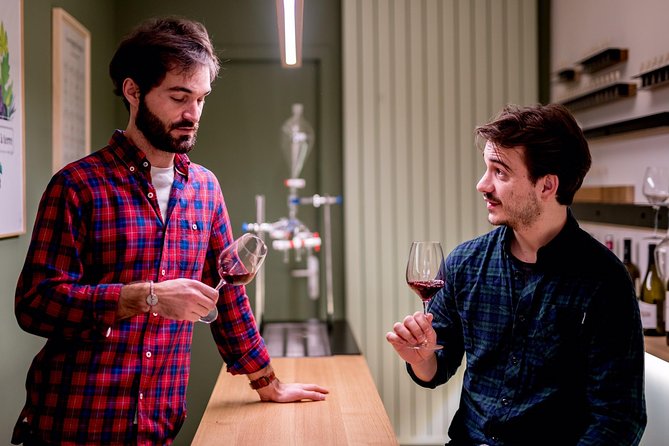
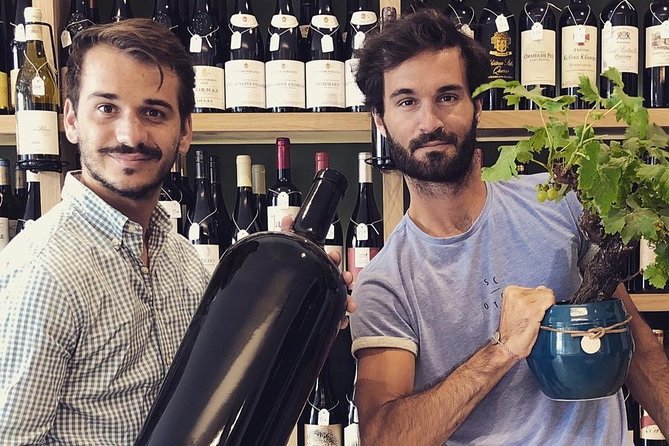
The hosts are especially good at keeping the mood informal. James is described as a strong storyteller who explains the basics of Bordeaux classifications and tasting in an easy-going style. Pierre has also been praised for making the class fun and educational. Since the hosts may vary, the exact personality of the session can change, but the format remains focused on practical instruction.
Left Bank power and Right Bank grace
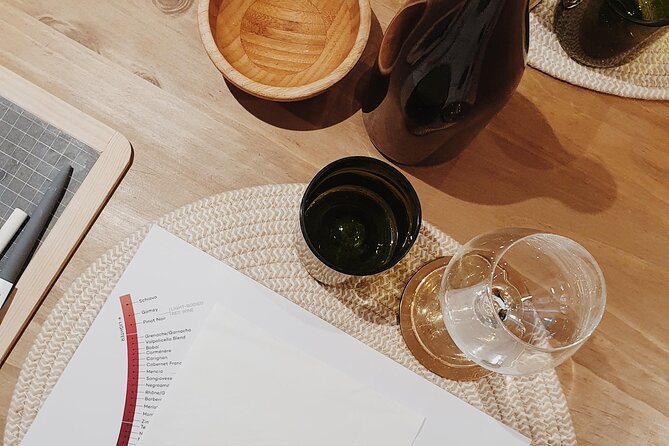
The red wine comparison is the heart of the experience. The Left Bank red is presented as the more powerful example, with the sort of firm structure and depth many people associate with Cabernet Sauvignon-based Bordeaux.
The Right Bank wine shows a different side. It is presented as more elegant, often with Merlot playing a leading role in the blend. The point is not to claim that every Left Bank wine is heavy or every Right Bank wine is soft. Bordeaux is far too varied for that. The tasting simply gives you a useful first comparison.
This is where the session earns its price for a beginner. After tasting the two reds side by side, you have a better chance of understanding a restaurant wine list or a shop shelf. Names such as Saint-Émilion, Pomerol, Médoc, and Saint-Estèphe become less abstract when you connect them to a style.
The session also explains appellations and the rules behind Bordeaux labels. You learn why a producer can use a regional name, what certification means, and how local governance affects the wine’s identity. That background is not glamorous, but it is practical. Bordeaux labels can be confusing, and the rules matter.
Some sessions include two Grand Cru Classé wines, according to the details shared about the tasting. Since bottles can change, treat that as a possible feature rather than a guarantee. The important point is that the selection aims to show different levels and styles, not simply pour three unrelated wines.
More Bordeaux trips worth a second look
- Bordeaux: River Garonne Cruise with Glass of Wine and Canelé
★ 4.5 · 3,630 reviews - Saint Emilion Day Trip with Sightseeing Tour & Wine Tastings from Bordeaux
★ 5.0 · 1,120 reviews - Saint-Émilion: Grand Cru Classé Winery Visit and Tasting
★ 4.6 · 1,118 reviews - Saint Emilion Half-Day Trip with Wine Tasting & Winery Visit from Bordeaux
★ 4.5 · 1,034 reviews
The dry white that changes the picture
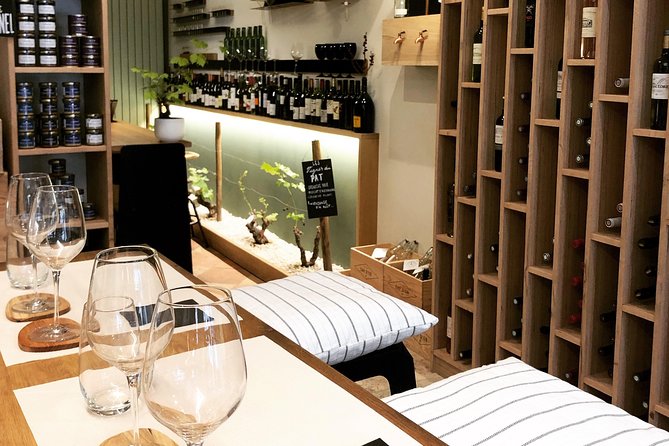
The white wine keeps the tasting from becoming a two-red comparison only. Bordeaux is famous for its reds, but its dry whites can be crisp, aromatic, and excellent with food.
The white is presented as a fresh example from well-regarded estates. One tasting included a Bordeaux blanc, giving beginners a chance to compare the region’s white grapes with the structure of the reds.
This is a valuable part of the session if you think of Bordeaux only as a red-wine region. The white also helps explain acidity. After two reds, a fresh white gives your palate a clear contrast in weight, aroma, and finish.
You will not leave with a complete education in Bordeaux whites after one glass, but you will know to look beyond the red bottles. That small shift can improve your choices at a restaurant or wine shop.
Basque ham, cheese, and bread on the table
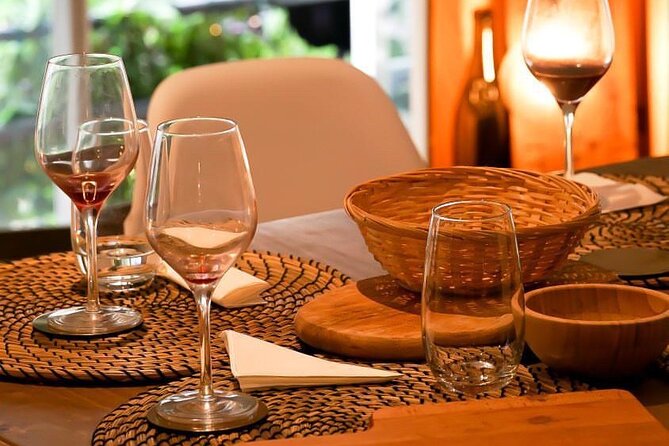
The food is straightforward: a small board with charcuterie and cheese from the Basque Country, supplied by Maison Pierre Oteiza, along with bread.
Do not expect a full meal. The portion is described as modest, with one account noting bread, cheese, and ham. It is enough to test how salt, fat, and texture change the wine, but you should eat beforehand if you need lunch or dinner.
I like this pairing because it keeps the focus on real drinking. Wine is rarely consumed in isolation in France. A bite of ham can make a red taste softer, while cheese can bring out fruit or make a dry white seem sharper.
Vegetarian and vegan arrangements may be possible if you mention them ahead of time. The information specifically notes flexibility for those diets, but you should contact the provider before the session rather than assume a suitable board will be ready.
Stories from Roman times to modern labels
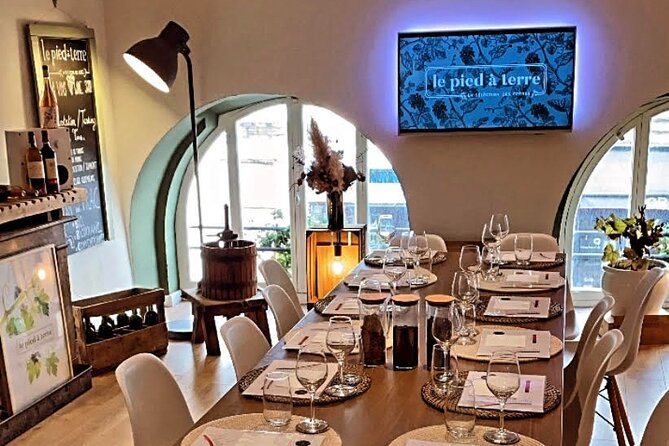
The host adds historical context, including stories connected with Roman times. This gives the tasting a sense of place without turning it into a long lecture about dates and dynasties.
You also hear about estate history, grape varieties, production methods, and the people who make the wines. These details matter because a Bordeaux bottle is shaped by more than its flavor. The estate, appellation, vintage, blend, and classification all affect how the wine is presented and sold.
The storytelling is one of the most praised parts of the experience. The style is humorous and conversational rather than formal. That helps the information stick, especially when the subject becomes technical.
There is one small tradeoff. If you prefer a tightly scripted class, the talk may feel a little loose at times. The host may follow questions and stories instead of moving through a strict lesson plan. I would see that as a plus for curious beginners, but intermediate wine drinkers looking for a precise lecture may prefer a more structured format.
How much value do you get for $42.33?
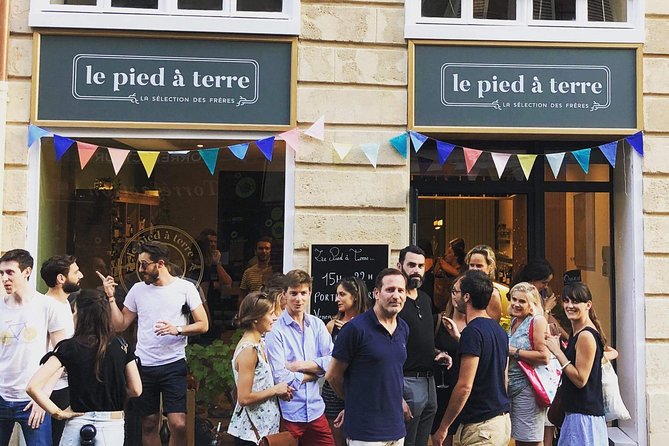
At $42.33 per person, this is not the cheapest way to drink three glasses of Bordeaux. You are paying for the teaching, the setting, the food pairing, and the chance to ask questions in a small group.
For a first-time visitor to Bordeaux, I think the price is fair. A bottle of wine can tell you only so much if you do not know what to look for. Here, you get three regional examples and a method you can use later during your trip.
The value is strongest if you plan to visit wine bars, restaurants, or shops after the session. You will have a basic vocabulary and a clearer idea of what separates the Left Bank from the Right Bank.
The value is weaker if you mainly want generous pours or a vineyard visit. The glasses are tasting portions, and this is not a château excursion. You may also find that the food is more of a useful accompaniment than a substantial snack.
The experience is often booked around three weeks in advance, with an average lead time of 22 days. That suggests you should reserve ahead if your Bordeaux dates are fixed, especially during a busy season.
Timing, group size, and practical details
The advertised duration is about one hour and 30 minutes. Some descriptions of the session refer to a couple of hours, so allow a little extra time rather than scheduling a train, museum booking, or dinner immediately afterward.
Check the start time when you book. One booking showed an 11 a.m. option, while the actual tasting was reported as taking place at 2:30 p.m. The safest approach is to rely on the confirmed time in your booking details and contact Le Pied à Terre if anything looks unclear.
The experience is offered in English and confirmation is provided when you book. It is near public transportation, and service animals are allowed.
Free cancellation is available if you cancel at least 24 hours before the local start time. Changes or cancellations inside that window are not accepted for a refund. The experience also requires a minimum number of participants, so if the provider cancels because that minimum is not reached, you can receive a full refund or choose another option offered to you.
Who should book this Bordeaux wine tasting?
I would point beginners here first. The session gives you a foundation without assuming you already know French wine terms, and the hosts encourage questions.
It is also a good choice for couples, families with adult children, and solo visitors who want an easy social activity. The small group and shared table make it less formal than a private sommelier lesson.
Wine drinkers with some experience can still enjoy it, especially if you want a clear comparison of Bordeaux’s two riverbanks or want to brush up on appellations. Just keep your expectations realistic. This is an introduction, not a full survey of every Bordeaux subregion, vintage, or classification.
I would not choose it as your only wine activity if your main goal is to see vineyards and production facilities. Pair it with a château visit later, and the information from this class should help you make more sense of what you see in the countryside.
Should you book Le Pied à Terre?
Book it if you want a friendly, useful introduction to Bordeaux wine in the city. The strongest reasons are the clear three-wine structure, the practical tasting advice, and the chance to ask questions of hosts such as James or Pierre.
Skip it if you want a countryside outing, a large meal, or a guaranteed list of specific grand cru bottles. The tasting takes place at Le Pied à Terre, not at a vineyard, and the food is a small Basque pairing rather than a full spread.
For most visitors with limited time, I think it is a sensible first step. You leave better prepared to choose Bordeaux wine on your own, which is exactly what a good tasting should do.
FAQ
Where does the Bordeaux wine tasting begin?
It begins at Le Pied à Terre, located at 22 Rue Judaïque, 33000 Bordeaux, France.
Where does the experience end?
The activity ends back at the meeting point at Le Pied à Terre.
How long does the tasting last?
The stated duration is approximately one hour and 30 minutes. You may want to allow extra time because some sessions have lasted closer to a couple of hours.
How many wines are included?
The guided tasting includes three Bordeaux wines: a powerful Left Bank red, an elegant Right Bank red, and a dry white.
Is the tasting offered in English?
Yes. The experience is offered in English.
Is this a vineyard or château tour?
No. The tasting takes place at Le Pied à Terre, described as a wine shop with an upstairs tasting room or cellar-style tasting space.
What food is served?
The tasting includes Basque charcuterie and cheese from Maison Pierre Oteiza, with bread. The portion is a small accompaniment rather than a full meal.
How many people can join?
The maximum group size is 12 participants.
Are service animals allowed?
Yes, service animals are allowed.
Can I cancel for a full refund?
Yes, if you cancel at least 24 hours before the experience start time. Cancellations or changes made less than 24 hours in advance are not eligible for a refund.
Recently reviewed around Bordeaux
- Au Cœur du Château – VSOP D’USSÉ & XO BARON OTARD★ 4.5 · 108 reviews
- retro road trip/ Méhari, 2CV & Burton in Rochefort, La Rochelle★ 5.0 · 28 reviews
- Discover Braastad Cognac★ 5.0 · 52 reviews
- Bordeaux bike tour “The Best of Bordeaux”★ 5.0 · 164 reviews
- Saint Emilion Full Day Wine and Bike Tour★ 5.0 · 167 reviews
- Saint-Emilion Food and Wine Day Tour★ 5.0 · 323 reviews
- Virtual Room Bordeaux – 1st team virtual reality experience★ 5.0 · 47 reviews
- Private Bordeaux History Tour with a glass of Bordeaux wine.★ 5.0 · 28 reviews
Wine Tastings, compared.
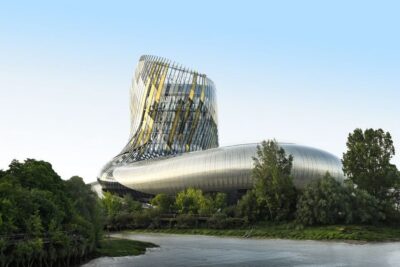

Montmartre Hill French Gourmet Food and Wine Tasting Walking Tour
Read our review →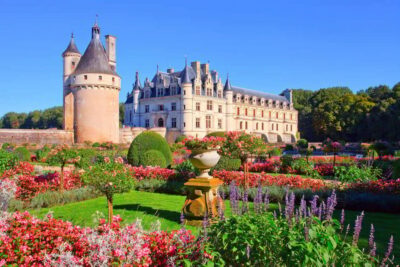
Loire Valley Castles Day Trip With Wine Tasting
Read our review →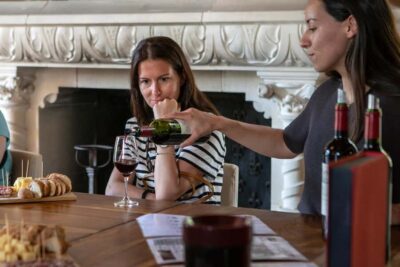
Afternoon Saint-Emilion Wine Tasting & snack
Read our review →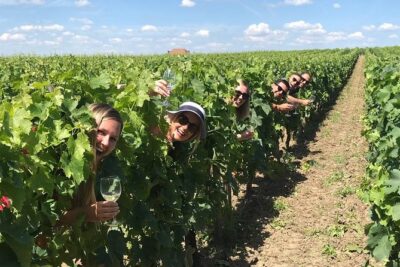
Medoc or Saint Emilion Wine Tasting and Chateau from Bordeaux
Read our review →
Saint Emilion Half-Day Trip with Wine Tasting & Winery Visit from Bordeaux
Read our review →
Champagne Day Trip with 6 Tastings, Reims and Winery from Paris
Read our review →Browse the lists this tour appears in