
Reviewed · BORDEAUX TOURS
Dordogne Day Tour : Prehistory and The Art of the Caves from Sarlat
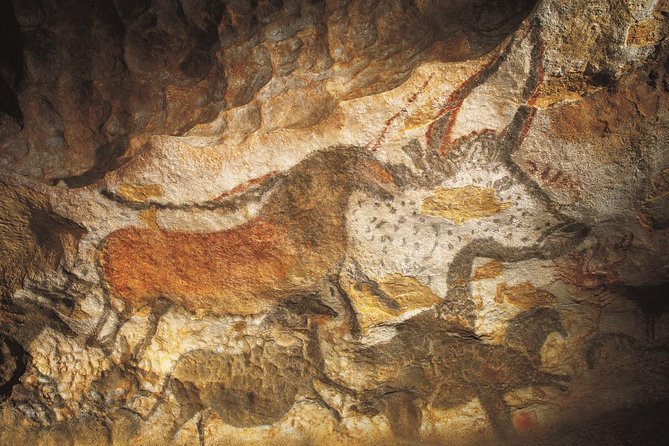
The most powerful part of this day is seeing Paleolithic art in context. You begin with tools, bones, and human remains at the National Prehistory Museum, then move into the Dordogne countryside for prehistoric shelters and cave art before finishing at Lascaux IV, the superb replica of France’s most famous decorated cave. I like the small groups, capped at eight, and the way guides such as Benoît, Anne, Florence, and Martin connect museum objects with the places you see. The main drawback is that Lascaux visits can feel crowded, and English cave tours are limited.
I also like that entrance fees are included, so you are not juggling reservations at three major sites. The day is long, roughly nine hours, and includes stairs and a cold cave interior at about 13°C, so wear warm layers and comfortable shoes. The exact order can change around Lascaux time slots, and the published route may feature La Roque Saint-Christophe while some departures include Rouffignac, so confirm the schedule before booking.
In This Review
- Key points at a glance
- Why Dordogne prehistory deserves a full day
- The National Prehistory Museum at Les Eyzies
- La Roque Saint-Christophe and the Dordogne cliffs
- Lunch in Montignac or a nearby village
- Rouffignac, when it is part of your route
- Lascaux IV: art, technology, and crowds
- The small-group advantage
- Is the $199.55 price fair?
- Who should book this day?
- My verdict on the Sarlat prehistory tour
- FAQ
- Where does the tour start?
- Is hotel pickup included?
- How long does the experience last?
- What admissions are included?
- Is lunch included?
- Is the tour conducted in English?
- How large is the group?
- Are children allowed?
- What should I wear?
Key points at a glance
- Lascaux IV is a full-scale replica: You see the famous painted chambers without entering the protected original cave.
- The Prehistory Museum comes first: Its tools, fossils, and timelines make the later cave visits far easier to understand.
- Rouffignac may replace or accompany the cliff stop: Some departures include its small underground train, while the stated itinerary lists La Roque Saint-Christophe.
- Groups are limited to eight: That gives your English-speaking guide room to answer questions and keep the day moving.
- Lunch is your responsibility: The guide recommends a restaurant, but the meal is not included.
- Plan for cold rooms and stairs: The caves sit at about 13°C, and the tour is not suited to people with mobility problems.
Why Dordogne prehistory deserves a full day
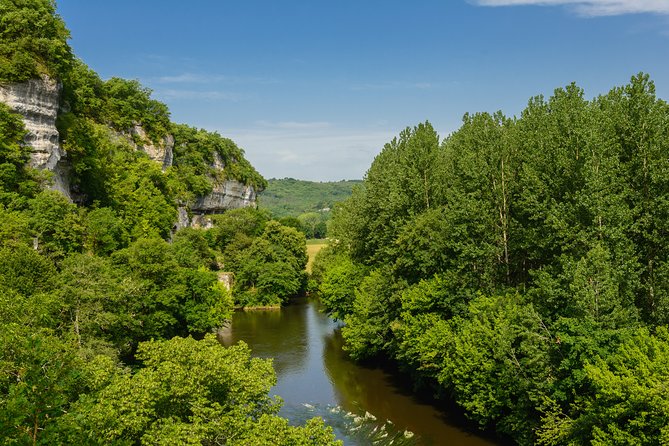
The Vézère Valley is one of the best places in France to make sense of early human life. Here, the subject is not confined to a glass case. You see the cliffs that offered shelter, the caves where people made art, and the museum evidence that helps explain who lived in the region and when.
I would not treat this as a simple sightseeing loop. The value comes from the order of ideas. First you learn the broad story of Paleolithic peoples and their tools. Then your guide points out how people used the limestone cliffs and caves. Finally, at Lascaux IV, you can look at painted animals with a clearer sense of the skill, materials, and age behind them.
The tour leaves from Place Pasteur in Sarlat-la-Canéda at 9:00 a.m. It is sold under a Bergerac location heading, but the practical starting point is Sarlat. There is no hotel pickup or drop-off, and the day returns to the same meeting point. If you are staying outside Sarlat, build in plenty of time to reach the departure point.
Other Bordeaux days travellers weigh against this one:
- Bordeaux: Cité du Vin Entry Ticket and Wine Tasting
★ 4.6 · 3,885 reviews - Bordeaux: River Garonne Cruise with Glass of Wine and Canelé
★ 4.5 · 3,630 reviews - From Bordeaux: Afternoon Saint-Emilion Wine Tasting & snack
★ 4.8 · 1,581 reviews
The National Prehistory Museum at Les Eyzies
The first major stop lasts about two hours, and it is the right place to begin. The National Prehistory Museum holds extensive displays on early humans, Paleolithic tools, fossils, and cave art. Without a guide, the collection could feel like a long march through dates and stone objects. With a good guide, it becomes a story with recognizable stages.
Guides such as Anne and Martin have been praised for selecting the important pieces instead of trying to explain every display. That matters here. The museum is large enough to overwhelm you, especially if you have limited experience with prehistoric timelines. A guide can point out the differences between human species, explain how tools changed, and show why certain finds matter.
I especially value this stop because it gives you a vocabulary for the rest of the day. You begin to understand the difference between a tool shaped for a task and a piece of art made for symbolic reasons. You also get a better sense of how much of prehistoric life is reconstructed from fragments.
Allow yourself to concentrate. Two hours is useful, but it is not excessive for a museum of this size. If you are visiting with children, the guide’s storytelling will help hold their attention, though children must be accompanied by an adult and those under four are not permitted.
La Roque Saint-Christophe and the Dordogne cliffs
The stated second stop is La Roque Saint-Christophe, a sheer limestone cliff with a long record of human use. The site shows how people adapted to the rock face, from early shelters to later construction and engineering. It is not the same experience as walking through a painted cave. Instead, it helps you picture how settlements could be built into a cliff.
The site is valuable because the rock itself becomes part of the lesson. Your guide explains how prehistoric communities used natural spaces for shelter, then how later people made practical changes to the cliff. You get a wider view of human adaptation rather than a single focus on art.
Expect stairs. The tour specifically warns that climbing is involved, making this a poor choice if you have mobility issues. Even if you are generally fit, this is a day for sensible footwear rather than fashion shoes.
There is an important scheduling point here. Several descriptions of this experience refer to Rouffignac Cave instead of La Roque Saint-Christophe. At Rouffignac, the memorable feature is a small train that carries you farther underground, where you can see prehistoric drawings and engravings. Some descriptions also include a peaceful stop in Saint-Léon-sur-Vézère or views of the medieval settlement of La Madeleine.
Since the order and exact stops can depend on reserved time slots, ask Ophorus to confirm what your departure includes. This is not a minor detail. La Roque is an open-air cliff settlement, while Rouffignac is an underground cave experience. Both fit the theme, but they feel very different.
Lunch in Montignac or a nearby village
The midday break is about two hours, including time for lunch. The meal is not included, which gives you some choice but also means you should budget for it. Your guide recommends local restaurants, and some departures have included a stop in Saint-Léon-sur-Vézère.
I like having a real pause in the middle of a nine-hour day. The museum and caves require close attention, and lunch gives you time to reset. You are not rushed from one dark room to another.
If you want a quick meal, ask the guide what fits the afternoon schedule. If you prefer a slower meal, check how much time remains before the Lascaux entry. The timed admission at Lascaux can dictate the day, so flexibility matters more than finding the perfect menu.
A different way to spend the day, same corner of France:
- Medoc or Saint Emilion Wine Tasting and Chateau from Bordeaux
★ 5.0 · 1,415 reviews - Saint Emilion Day Trip with Sightseeing Tour & Wine Tastings from Bordeaux
★ 5.0 · 1,120 reviews - Saint-Émilion: Grand Cru Classé Winery Visit and Tasting
★ 4.6 · 1,118 reviews - Saint Emilion Half-Day Trip with Wine Tasting & Winery Visit from Bordeaux
★ 4.5 · 1,034 reviews
Rouffignac, when it is part of your route
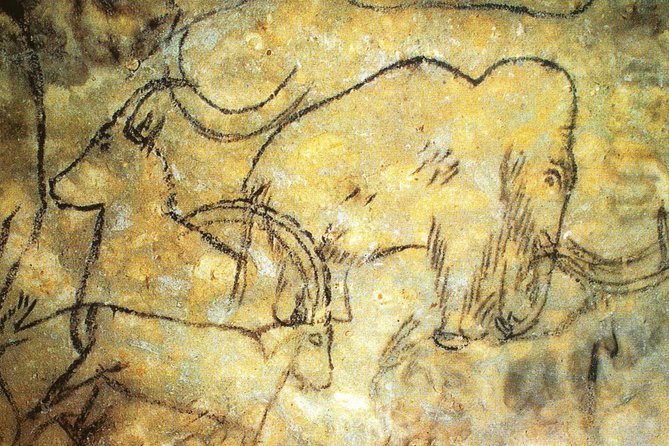
Rouffignac is often described as a high point of the day. The small train ride takes you into the cave, making the visit less physically demanding than a long underground walk, though the wider tour still includes stairs at other sites. Inside, you see prehistoric art in its original setting rather than a modern recreation.
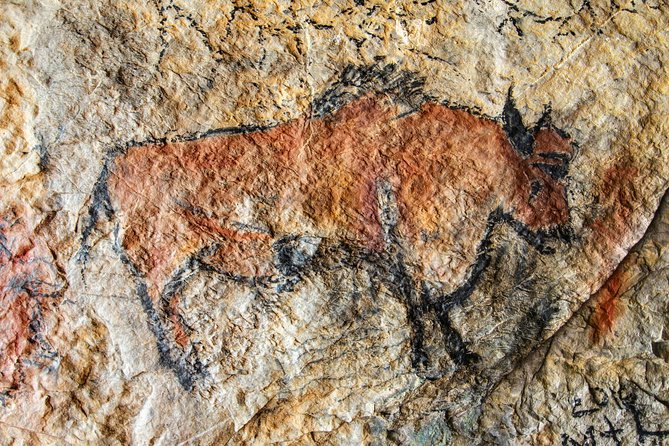
This is a striking contrast with Lascaux IV. At Rouffignac, the cave itself carries the sense of age. The drawings and engravings appear in the natural space where they were made. At Lascaux IV, technology and careful reconstruction let you see paintings from a cave that cannot handle ordinary public access.
English instruction at Rouffignac may not always be available. If the local cave tour is in French, your English-speaking driver-guide provides the needed explanation before or after. That advance briefing becomes especially important because simultaneous translation inside the cave is not allowed at Lascaux.
Lascaux IV: art, technology, and crowds
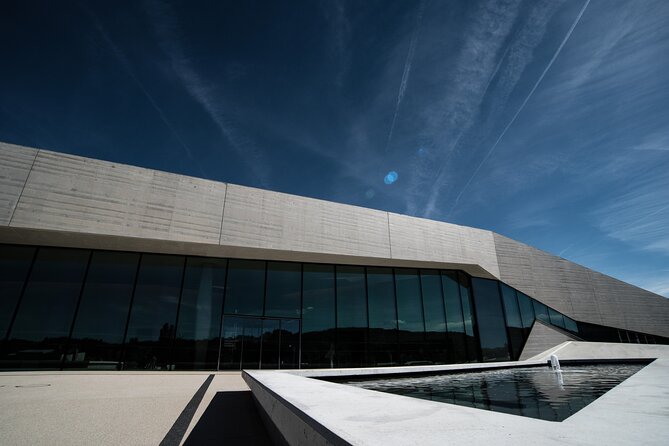
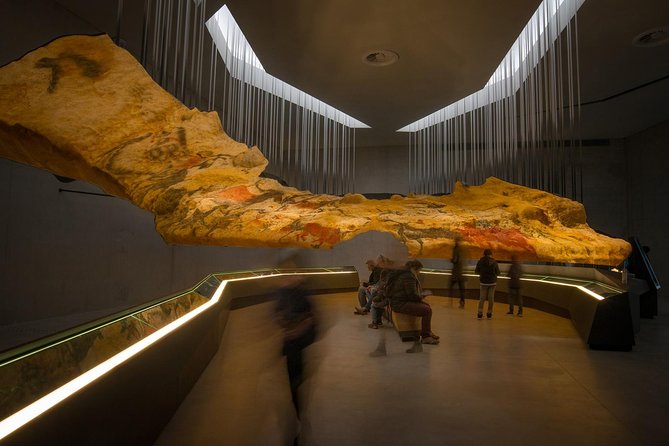
The final major stop lasts about three hours and includes Lascaux IV, a complete replica of the original decorated cave. The replica allows you to see the shape of the chambers and the placement of the paintings without damaging the protected original.
Lascaux IV is more than a copy of painted walls. The complex uses modern presentation methods to explain the discovery of the cave and the techniques used by its artists. For many people, this is the most polished museum stop of the day. The paintings of animals are beautiful, strange, and unexpectedly moving when you remember their age.
The catch is crowd control. Your entry is timed, but the cave presentation may still feel busy. One person described difficulty seeing the walls and hearing the guide when the group around the display became too large. Another felt the final stop needed at least another 30 minutes. I would pay close attention to the time your guide gives you and avoid assuming that three hours means three uninterrupted hours inside the painted replica.
English tours at Lascaux IV are limited. Most cave visits are conducted in French, and simultaneous translation inside is forbidden. Your guide should explain the cave before you enter and clarify the details afterward. That arrangement works well when your driver-guide is strong in English, but the local cave guide’s accent or use of a flashlight can affect how much you understand inside.
For the best experience, listen closely during the pre-visit briefing. Once you are in the replica, you may not get a second chance to identify every animal or painting technique.
The small-group advantage
The maximum group size is eight, usually traveling in a comfortable van. That size is a real benefit in the Dordogne, where timed admissions and country roads can make a large coach awkward. You can hear the guide more easily, ask questions, and keep the group together at busy sites.
The strongest guides bring the region to life between stops. Benoît is praised for his command of prehistory and his sense of humor. Martin is described as passionate and careful with timing. Anne is noted for her museum explanations and practical suggestions for Sarlat. Florence and Marion are also described as friendly, professional, and well informed about the area.
Guide quality is the largest variable. A superb guide turns the drive into part of the tour, explaining cliff villages, local history, and the theories behind cave art. A less effective guide may mainly deliver tickets and leave you dependent on French-language site tours. The experience is therefore worth booking partly because of the small group, but you should keep expectations realistic about who provides the commentary at each cave.
Is the $199.55 price fair?
At about $199.55 per person, this is not a cheap day out. I think the price can be fair if you want a guided, organized route and would otherwise need to reserve several admissions, arrange transport, and work out the Dordogne’s scattered sites yourself.
The fee includes an English-speaking driver-guide, live commentary, professional guiding, and admission to the National Prehistory Museum, Lascaux IV, and La Roque Saint-Christophe. If your departure includes Rouffignac instead of La Roque, confirm how that admission is handled. Lunch and hotel transport are extra.
The tour also saves you the risk of missing a timed Lascaux entry. That has real value in a rural area where a late arrival can disrupt the whole day. Still, the shared format has limits. The van cannot wait indefinitely for someone who is late, and the route cannot be reshaped around one family’s plans.
The tour is booked an average of 86 days ahead, which suggests you should reserve early during busy seasons. Free cancellation is available up to 24 hours before the start time. Cancellations or changes made inside that window are not refunded, and a minimum group size is required.
Who should book this day?
I would choose this tour if you want the Dordogne’s prehistoric sites explained rather than simply photographed. It suits first-time visitors, history fans, families with older children, and anyone who prefers a compact English-speaking group to planning several rural visits alone.
It is also a good fit if Lascaux is a major reason for visiting southwestern France. The museum preparation and cave context make the famous site more rewarding than a stand-alone ticket.
I would hesitate if you dislike fixed schedules, need hotel pickup, or want a slow lunch and long independent visits. The day is full, the order may change, and the cave temperature is about 13°C. Mobility issues are another concern because of stairs.
Families of more than four who need flexibility should consider asking about a private tour. A shared group must keep to its timetable, while a private option may better handle parking, children, and personal interests.
My verdict on the Sarlat prehistory tour
I recommend it for the right kind of day: focused, educational, and tightly timed. The museum gives you the framework, the cliff or original cave site shows how people used the Dordogne, and Lascaux IV delivers the famous art in a form the public can safely visit.
The most useful booking question is simple: Which cave and cliff site are included on my date? Confirm whether you will visit La Roque Saint-Christophe, Rouffignac, or both, and ask how much English explanation is provided at Lascaux IV. If the answers suit you, the combination of included admissions, a group of up to eight, and an experienced guide makes this one of the better ways to spend a full day around Sarlat.
FAQ
Where does the tour start?
It starts at Place Pasteur in Sarlat-la-Canéda, France, at 9:00 a.m. The tour ends back at the same meeting point.
Is hotel pickup included?
No. Hotel pickup and drop-off are not included.
How long does the experience last?
The tour lasts about nine hours.
What admissions are included?
Admission to the National Prehistory Museum, Lascaux IV, and La Roque Saint-Christophe is included. Confirm the exact cave schedule for your date because some departures may feature Rouffignac.
Is lunch included?
No. Lunch is not included. Your guide can recommend a local restaurant, or you can choose where to eat during the lunch break.
Is the tour conducted in English?
The driver-guide provides English commentary, but English tours inside Lascaux IV are limited. Most cave visits are in French, and your guide explains the cave before and after the visit.
How large is the group?
The tour has a maximum of eight travelers.
Are children allowed?
Children must be accompanied by an adult, and children under four years old are not allowed.
What should I wear?
Wear warm clothing because the caves are about 13°C, or 56°F. Comfortable shoes are also important because the tour includes stairs and is not recommended for people with mobility issues.
Recently reviewed around Bordeaux
- Au Cœur du Château – VSOP D’USSÉ & XO BARON OTARD★ 4.5 · 108 reviews
- retro road trip/ Méhari, 2CV & Burton in Rochefort, La Rochelle★ 5.0 · 28 reviews
- Discover Braastad Cognac★ 5.0 · 52 reviews
- Bordeaux bike tour “The Best of Bordeaux”★ 5.0 · 164 reviews
- Saint Emilion Full Day Wine and Bike Tour★ 5.0 · 167 reviews
- Saint-Emilion Food and Wine Day Tour★ 5.0 · 323 reviews
- Virtual Room Bordeaux – 1st team virtual reality experience★ 5.0 · 47 reviews
- Private Bordeaux History Tour with a glass of Bordeaux wine.★ 5.0 · 28 reviews
Bordeaux Tours, compared.
River Garonne Cruise with Glass of Wine and Canelé
Read our review →
Afternoon Saint-Emilion Wine Tasting & snack
Read our review →
Medoc or Saint Emilion Wine Tasting and Chateau from Bordeaux
Read our review →
Saint Emilion Day Trip with Sightseeing Tour & Wine Tastings from Bordeaux
Read our review →
Saint Emilion Half-Day Trip with Wine Tasting & Winery Visit from Bordeaux
Read our review →
Browse the lists this tour appears in