
Reviewed · DORDOGNE TOURS
From Sarlat-la-Canéda: Lascaux IV and Cave Art Full-Day Tour
Lascaux’s painted horses, bulls, and mysterious signs are the star here, but the clever part is seeing them beside a real prehistoric cave, a major museum, and a cliffside settlement. Lascaux IV is a near-exact reproduction built with remarkable precision, while Rouffignac gives you the atmosphere of an actual cave used by prehistoric people.
I like the small group of no more than eight, which keeps the day personal and makes the narrow Dordogne roads less tiring. I also like the guides’ local touch. Guides such as Anne, Lena, Benoit, Marion, and Florence have been praised for explaining archaeology, geology, local stories, lunch options, and the countryside in clear English.
The main drawback is the packed schedule and the limited number of English-language tours inside Lascaux IV. You may join the cave visit in French, with your guide explaining the material before and afterward. La Roque Saint-Christophe also involves stairs, so this is not a good choice for wheelchair users or anyone with mobility problems.
In This Review
- Five things to know before booking
- Why this Dordogne day trip works
- Les Eyzies and the National Prehistory Museum
- Rouffignac and the feel of a real cave
- Lunch and free time in Montignac
- Lascaux IV and the art of making a copy
- La Roque Saint-Christophe and cliffside life
- The guides make the difference
- Is $265 good value?
- Who should book this experience?
- Practical verdict
- FAQ
- Where does the tour begin?
- How long does the experience last?
- How large is the group?
- Is the tour conducted in English?
- Does the tour visit the original Lascaux cave?
- Is Rouffignac Cave part of the day?
- Are meals and drinks included?
- What should I bring?
- Is the tour suitable for people with mobility issues or young children?
Five things to know before booking
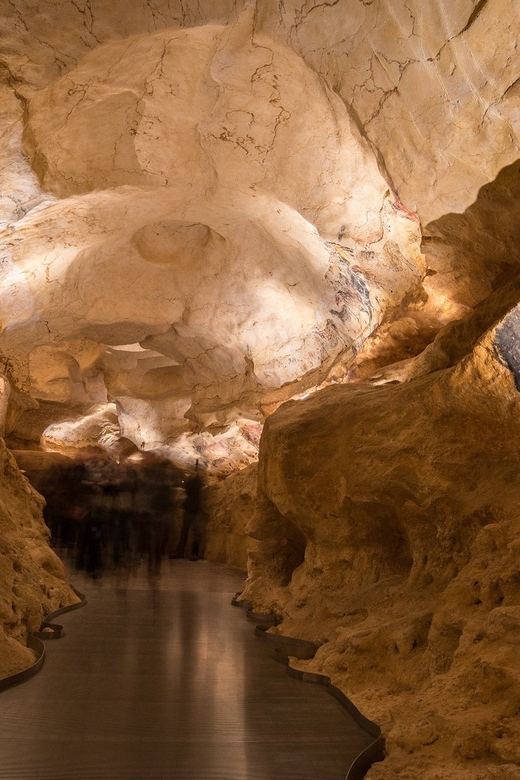
- Lascaux IV is a full-scale reproduction: The original cave is closed to protect its paintings, but this modern replica recreates its shape, relief, colors, and atmosphere in impressive detail.
- Rouffignac adds genuine-cave atmosphere: The visit uses a small electric train and offers a different experience from the polished Lascaux complex.
- Les Eyzies puts the art in context: The National Prehistory Museum holds one of the world’s largest collections of prehistoric artifacts.
- La Roque Saint-Christophe is more than a viewpoint: You see a limestone cliff occupied since Paleolithic times, with explanations of shelters and cliffside engineering.
- The day works best for curious, active adults: Expect nine hours, cave temperatures around 14°C, walking, stairs, and a schedule that can change around timed admission slots.
Why this Dordogne day trip works
The Dordogne is one of the best places in France to connect prehistoric art with the people who made it. A visit to Lascaux alone gives you famous paintings, but not much sense of the wider region. This tour builds a story across several sites.
You begin at the Place Pasteur bus stop in Sarlat-la-Canéda, then ride roughly 30 minutes in a small van. The driving matters because the sites are spread across the Vézère Valley and nearby villages. You can look out at the countryside instead of concentrating on narrow roads, parking, and timed tickets.
The group limit of eight is a real advantage. It is small enough for direct questions and easier conversation with the guide, but large enough to meet other people during the long day. The van has been praised for its comfort and for having a microphone that can be heard from the back row.
One practical note: seat position may matter to you. At least one person found being assigned to the last row for the entire day disappointing. If you are tall, prone to motion sickness, or especially keen to sit near the guide, ask about seating when you book.
More France trips worth a second look
- Normandy American D-Day Beaches Full Day Tour from Bayeux
★ 5.0 · 2,103 reviews - Paris: Parc Astérix Full-Day Entrance Ticket
★ 4.4 · 1,697 reviews - From Paris: Full-Day Loire Valley Chateaux Tour
★ 4.4 · 1,269 reviews
Les Eyzies and the National Prehistory Museum
Les Eyzies-de-Tayac-Sireuil is the natural starting point for understanding the region. The first five Cro-Magnon skeletons were found here in 1868, giving the town a central place in the study of early modern humans.
The National Prehistory Museum opened in 2004 and holds the largest collection of prehistoric artifacts in the world. Your guide leads you through the main exhibits during about an hour and a half, helping you sort out the dates, tools, bones, and objects that can otherwise blur together in a large museum.
I find this stop valuable because it gives the cave paintings a human setting. You are not only looking at animals on stone. You are learning about the people, materials, and changing environment connected with the art.
The museum is also the most information-heavy part of the day. If you prefer outdoor sites and authentic cave interiors to display cases, you may find the allotted time long. One sensible approach is to listen closely to the guide’s tour, then use any spare minutes for the sections that interest you most.
The stop can also feel brief for serious archaeology fans. The museum is large enough to deserve much longer than a scheduled visit, but the cave times set the rhythm of the day. That is the tradeoff for seeing several major places in one outing.
Rouffignac and the feel of a real cave
The schedule identifies the next major visit in the Peyzac-le-Moustier area, and the tour description and past arrangements include Rouffignac Cave. The exact order can change, so confirm the final sequence with the operator.
Rouffignac gives you something Lascaux IV cannot: the sense of entering a real cave connected with prehistoric use. The visit takes place on a small electric train, which makes the experience easier than walking through a long, uneven underground passage.
The cave art here differs from the famous polychromatic paintings at Lascaux. You encounter engravings and outlines of animals, offering another view of how prehistoric people recorded the creatures around them. That contrast is one of the day’s strengths. Lascaux is polished and visually dramatic; Rouffignac feels more direct and archaeological.
The English arrangements require some care. Cave tours in English are limited, and many visits take place in French. Your English-speaking guide explains the cave before and after the official visit because simultaneous translation is not allowed underground.
That means you should not expect a continuous English commentary beside every painting. Instead, pay close attention to your guide’s briefing, then use the cave tour to see the art and setting for yourself. Guides such as Anne, Lena, Benoit, and Marion have been praised for making these explanations clear and lively.
There has been at least one difficult language experience in the past, when an English-speaking participant joined a German-only cave tour and received only a short English tablet explanation. This is not a reason to reject the trip, but it is a reason to ask specifically about the language of your Rouffignac visit and the current arrangements.
Lunch and free time in Montignac
The itinerary allows about two and a half hours of free time in Montignac. This is your main chance to eat, walk a little, and take a break from guided visits.
Meals and drinks are not included, so plan to pay separately. The length of the pause is useful after the museum and cave visit. You are not forced to rush through lunch or eat in the van, and the town gives you time to talk with the other people in your group.
Past guides have recommended lunch places, and one guide’s suggestion was singled out as excellent. Still, restaurant choices and opening hours can change, so treat the guide’s advice as a helpful starting point rather than a promise.
The long break also prevents the day from becoming a march through monuments. You can use it for a proper meal, a short stroll, or simply a quiet reset before Lascaux IV. If you want to see much more of Montignac, though, the timetable may leave less freedom than an independent visit.
A different way to spend the day, same corner of France:
- Paris: Louvre Museum Timed-Entrance Ticket
★ 4.6 · 71,977 reviews - Disneyland® Paris 1-Day Ticket
★ 4.6 · 49,412 reviews - Paris: Versailles Palace and Gardens Full Access Ticket
★ 4.6 · 41,579 reviews - Paris: Evening River Cruise with Music
★ 4.4 · 22,721 reviews
Lascaux IV and the art of making a copy
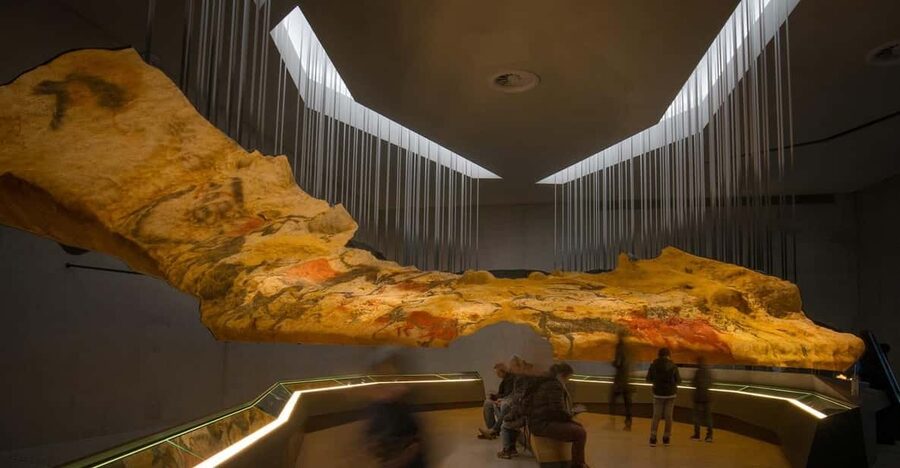
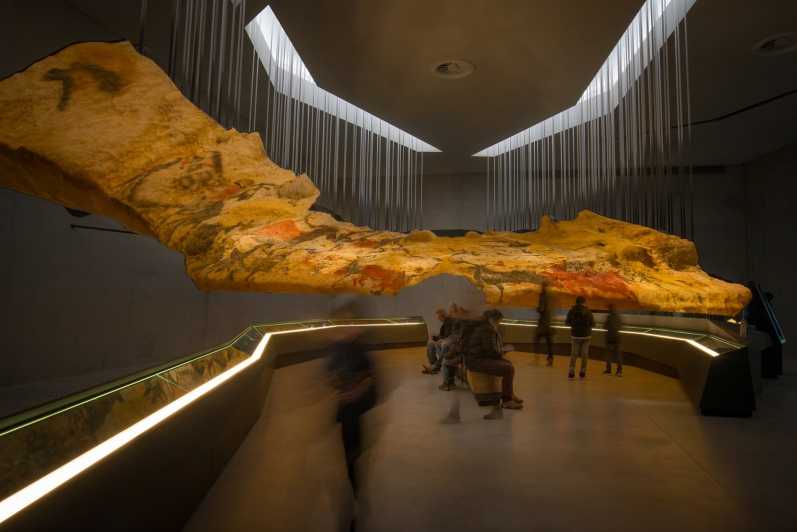
Lascaux IV opened in 2016 as a modern reproduction of the original Lascaux cave. The original has been closed to the public to protect its fragile paintings, so this replica is the responsible way to see the work associated with the site.
The reconstruction used unusually exact methods. Builders created a reinforced concrete shell using shipbuilding techniques, then recreated the cave’s relief down to tiny details. Artists reproduced the polychromatic paintings with natural pigments, following the originals made roughly 17,000 years ago.
That technical care changes the usual meaning of a replica. You are not looking at a few panels in a museum or a loose artistic interpretation. You are walking through a carefully recreated cave form designed to show how the paintings relate to the curves, shadows, and surfaces of the original.
The building itself is part of the attraction. It is a modern piece of engineering as well as a display space for prehistoric art. One guide may also give you a personalized explanation of the other exhibits after the official cave tour, so do not assume the guided portion is the whole visit.
Skip-the-line access is particularly useful here because Lascaux IV operates with timed entry. The tour company organizes the day around the reservation, but the order of the stops can change to fit the available slot. You should be ready for the possibility that Lascaux comes first, last, or somewhere in the middle.
The cave is kept at about 14°C, or 57°F. Bring a warm jacket even in summer. The outdoor temperature may be hot, but the underground rooms will feel cool, especially if you are standing still during explanations.
La Roque Saint-Christophe and cliffside life
La Roque Saint-Christophe is a dramatic limestone cliff with shelters occupied since Paleolithic times. The site shows how people adapted to the natural shape of the rock, first using the cliff for shelter and later developing ways to live and work along its face.
This stop adds scale to the day. In the caves, you focus on paintings and engravings close to the rock. At La Roque Saint-Christophe, you look outward and upward at the size of the cliff and consider how much engineering was needed to use it.
Your guide explains prehistoric shelters and later cliffside construction. The site is not simply a photo stop. It helps connect the earliest human occupation with the practical problems of building, moving, and living in a vertical setting.
You will climb stairs, and that is important. The site is not suitable for wheelchair users and is a poor fit for anyone with serious mobility issues. Wear comfortable shoes, take your time, and do not treat the stairs as an afterthought at the end of a nine-hour day.
Depending on the Lascaux time slot, this visit may happen earlier rather than at the end. The order is flexible, but the content remains a useful counterpoint to the museum and caves.
The guides make the difference
The strongest reason to book this as a guided day is the guide rather than the vehicle. A good guide turns separate attractions into one understandable story, explaining what you are seeing before you arrive and pointing out details during the drives.
The guides associated with this experience have included Anne, Lena, Benoit, Marion, Florence, Martin, and Emilien. Their strengths, as reflected in the supplied material, include clear English, local knowledge, humor, safe driving, and the ability to adjust when a museum or cave changes its timetable.
That flexibility matters in the Dordogne. Timed cave entries control the day, and an unexpected closure once required a guide to make calls and arrange a replacement plan. The group still visited another authentic cave, Lascaux, and additional sites. You cannot assume every disruption will be solved in exactly that way, but an experienced guide is far better placed to respond than an independent visitor with several separate tickets.
Guides also fill the van rides with useful context. You may hear about geology, prehistoric culture, local legends, nearby places, restaurants, and other parts of the Périgord. The best commentary is not a flood of dates. It helps you arrive at each stop knowing what deserves your attention.
Is $265 good value?
At $265 per person, this is not a cheap day out. It becomes easier to justify when you consider what you would need to arrange independently: transport from Sarlat, parking, timed admission at Lascaux IV, the museum, Rouffignac, La Roque Saint-Christophe, and enough local knowledge to fit everything into one day.
The price also buys back your attention. You are not driving, checking road signs, or worrying about being late for the next reservation. You can watch the countryside, ask questions, and let the guide manage the sequence.
Meals and drinks are not included. The wording also separates the named visits from entrance fees to other attractions, so check exactly which admissions are covered at the time of booking. The advertised inclusions specifically name Les Eyzies and its museum, Lascaux IV, and La Roque Saint-Christophe, while the cave program also includes Rouffignac.
For a couple or family without a car, the value is strong because the route would be difficult to reproduce in one day. If you already have a car, plenty of time, and a firm interest in choosing your own museums and caves, independent travel may cost less and feel less rushed.
Who should book this experience?
I would choose this tour if prehistoric art is a main reason you are visiting the Dordogne. It is also a good fit if you want a full day of expert explanation without having to research the region or drive between scattered sites.
It suits adults, older children, and active families, but children under four cannot join. If you bring a child, give the child’s age when booking so an appropriate car seat can be provided.
This is less suitable for anyone needing step-free access. La Roque Saint-Christophe includes stairs, and the tour is not suitable for wheelchair users. You also need comfortable walking shoes and warm clothing for the caves.
The activity runs in rain or shine and is not available in August. In July, departure is at 8:30 a.m. rather than 9 a.m. The tour requires at least two adults to operate, so check availability before building your whole holiday around it.
Practical verdict
Book it if you want the Dordogne’s major prehistoric sites explained in one carefully managed day. The combination of a museum, a real cave, a precise Lascaux reproduction, and a cliffside site gives you far more context than a stand-alone Lascaux visit.
Think twice if you need a leisurely pace, guaranteed English commentary inside every cave, or extensive time at the museum. For most curious visitors based in Sarlat, though, the small van, strong guiding, skip-the-line Lascaux access, and well-planned route make $265 a fair price for a demanding but memorable day.
FAQ
Where does the tour begin?
The meeting point is the Place Pasteur bus stop in Sarlat-la-Canéda, at La Maison Secrète.
How long does the experience last?
The tour lasts about nine hours, including the van journeys between Sarlat and the prehistoric sites.
How large is the group?
The group is limited to eight participants.
Is the tour conducted in English?
The driver-guide speaks English. English tours inside Lascaux IV are limited, and many official cave visits are conducted in French. Your guide explains the cave before and after the visit because translation inside the cave is not allowed.
Does the tour visit the original Lascaux cave?
No. Lascaux IV is a detailed reproduction of the original cave and its artwork. The original cave is protected from public access.
Is Rouffignac Cave part of the day?
The program includes a visit to Rouffignac, where you travel through the cave on a small electric train and see prehistoric engravings and animal outlines. The order of visits may change.
Are meals and drinks included?
No. Meals and drinks are not included. Free time in Montignac allows you to arrange lunch independently.
What should I bring?
Bring a passport or ID card, comfortable walking shoes, and a warm jacket. Cave temperatures are about 14°C, or 57°F.
Is the tour suitable for people with mobility issues or young children?
La Roque Saint-Christophe includes stairs, and the activity is not suitable for wheelchair users. Children under four cannot join. If bringing an older child, provide the child’s age when booking so a suitable car seat can be arranged.
Recently reviewed around France
- Louvre Private Tour – The Essentials and More with Expert Guide★ 5.0 · 227 reviews
- 2CV tour by night★ 5.0 · 55 reviews
- Eiffel Tower Second or Summit Floor Access by Elevator with Views★ 3.5 · 161 reviews
- 2 Hour Street-art Walk and Space Invaders Hunt in Paris★ 5.0 · 27 reviews
- 2 hour outdoor group activity in Paris: SAINT GERMAIN★ 5.0 · 48 reviews
- The only Paris Wine Tasting experience you need to do – 2 hours★ 5.0 · 265 reviews
- Sainte-Chapelle, Conciergerie & Palais de Justice Private Tour★ 5.0 · 72 reviews
- Private 2 – Hour Paris Landmarks Tour by Golf Cart Mini Moke★ 5.0 · 38 reviews
Dordogne Tours, compared.
Lascaux IV: Full Replica Cave Experience Ticket
Read our review →
From Sarlat: Beynac & Domme Tour & Dordogne Boat Ride
Read our review →
Sarlat Gourmet Tour & Market Visit with Tastings
Read our review →
From Sarlat: Half-Day Skip-the-Line Lascaux IV Tour
Read our review →
Browse the lists this tour appears in