
Reviewed · LOUVRE MUSEUM TOURS
Louvre Private Tour – The Essentials and More with Expert Guide
The best thing about this Louvre tour is that it gives you a sensible route through a museum that can otherwise feel like an art-filled maze. In two hours, your private guide takes you to major works such as the Mona Lisa, Venus de Milo, and Coronation of Napoleon, while adding the stories that make each object easier to understand.
I like the private format, since your guide can slow down for a 90-year-old parent, keep three teenagers engaged, or focus on Mesopotamian art instead of forcing everyone through the same script. I also like that admission is included and the tour ends inside the museum, so you can keep exploring after the guided portion.
The catch is pace. Two hours is enough for a strong introduction, not a full Louvre visit, and you will spend much of the time walking or standing. Security can also add up to 20 minutes in the high season, so do not treat the start time as the exact moment you enter the galleries.
In This Review
- Key points to know before booking
- Why a private Louvre visit makes sense
- Meeting at the Pyramid and getting inside
- The Louvre in two focused hours
- Mona Lisa, Venus de Milo, and Napoleon’s coronation
- Guides who adapt the tour to your group
- Pace, comfort, and the practical side of the visit
- Who gets the most value from this Louvre tour
- Booking, cancellation, and free admission details
- Is the $361.74 price worth it?
- Should you book it?
- FAQ
- How long does the Louvre private tour last?
- What does the tour include?
- Is this a private tour?
- Where does the tour begin?
- Where does the tour end?
- Is the tour offered in English?
- Can there be a wait at security?
- Are entrance tickets included?
- Can I cancel for a full refund?
Key points to know before booking
- Private attention: Only your group takes part, making it easier to ask questions and adjust the route.
- Major works in two hours: The visit focuses on famous paintings, sculptures, and selected historic collections rather than trying to cover the entire museum.
- Several praised guides: Walid, Justine, John, Juliette, Monty, Maryam, Hamish, Clara, René, Benoit, and Carla are named in the feedback, with special praise for clear explanations and flexible pacing.
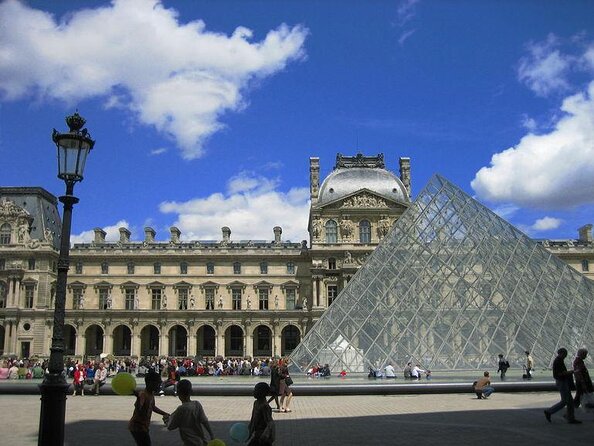
- Meet at the Louvre Pyramid: The starting point is the Louis XIV statue copy in the Cour Napoléon, close to the Pyramid.
- You can stay afterward: The tour ends inside the Louvre, allowing you to continue on your own.
- Good for mixed-age groups: The private setting can work well for families, older adults, and people who need a slower or more focused visit.
Why a private Louvre visit makes sense
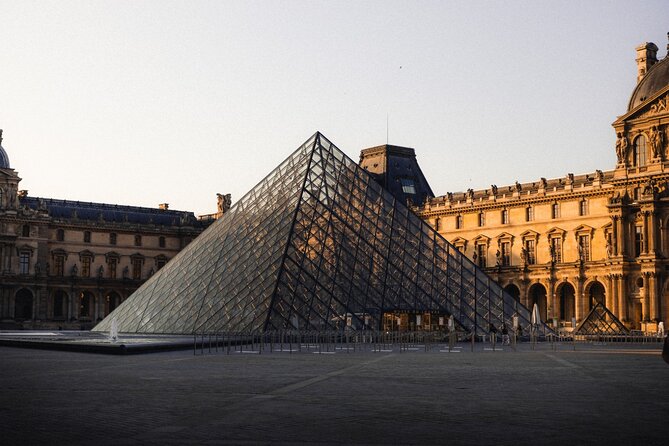
The Louvre is not simply a room filled with famous pictures. It is a huge former royal palace with collections spread across several wings and periods. On your own, you can easily spend half an hour searching for the Mona Lisa, then lose your bearings before reaching the next room.
A private guide solves the first problem: where to go. The guide also solves the second: how to look. Instead of reading a wall label and moving on, you get the background that explains why a work mattered when it was made, how people first saw it, and why it became famous later.
That difference matters most if you have only a short window in Paris. A two-hour visit will not cover everything, but it can give you a clear introduction to the building, the collection, and the best-known works.
The tour is offered in English and costs $361.74 per person. That is a serious price, especially for a two-hour activity, but the calculation changes if you are splitting it among several people. You are paying for a private guide, an included entrance ticket, and time saved finding your way through the museum. For a group that values direct attention, that can be worthwhile.
If you are happy wandering with an audio guide and have several hours to spare, the price may feel high. If you have first-time visitors, children, limited museum patience, or a short Paris schedule, the private format earns its keep more easily.
More Paris trips worth a second look
- Paris: Private Photoshoot at the Eiffel Tower
★ 4.7 · 2,636 reviews - Top Private Cruises in Paris with French Champagne and surprises
★ 5.0 · 1,553 reviews - Private Paris Airport Arrival Transfer – CDG & ORLY Airports
★ 4.5 · 1,119 reviews
Meeting at the Pyramid and getting inside
The meeting point is in the Cour Napoléon, by the copy of Louis XIV under the appearance of Marcus Curtius and near the Louvre Pyramid. That gives you a clear landmark, but the courtyard can still feel busy, so arrive with the exact meeting details ready on your phone.
Your licensed guide handles the start of the visit and the entry arrangements. Tickets are included, which means you do not need to buy admission at the museum on the spot. Pre-booking also helps avoid wasting part of your Paris day in a ticket line.
Do not read skip the line as a promise that you will walk straight into the galleries. Security remains part of the visit, and the stated wait can reach 20 minutes during the busiest season. Build a little breathing room around the appointment, especially if you are connecting it with lunch, a train, or another timed attraction.
The Louvre is near public transportation, so you can reach the meeting point without a hotel transfer. Hotel pickup and drop-off are not included. Service animals are allowed, and most people can take part, though the amount of walking and standing is worth considering for anyone with limited mobility.
The Louvre in two focused hours
Once inside, the guide leads your group through a selection of the museum’s most important works. The route is designed around the essentials, but it is not necessarily identical for every group. Your interests, questions, age range, and pace can shape the visit.
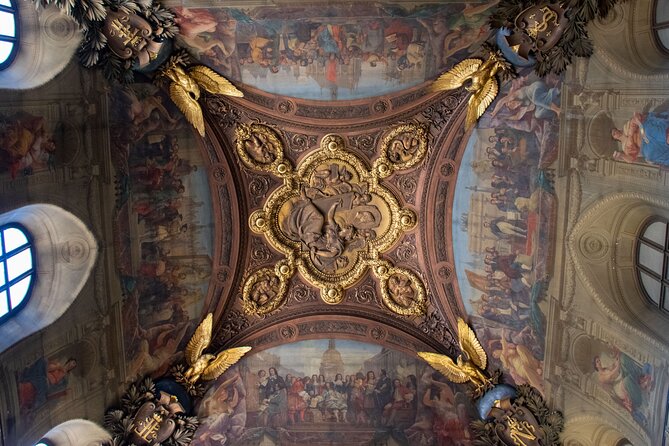
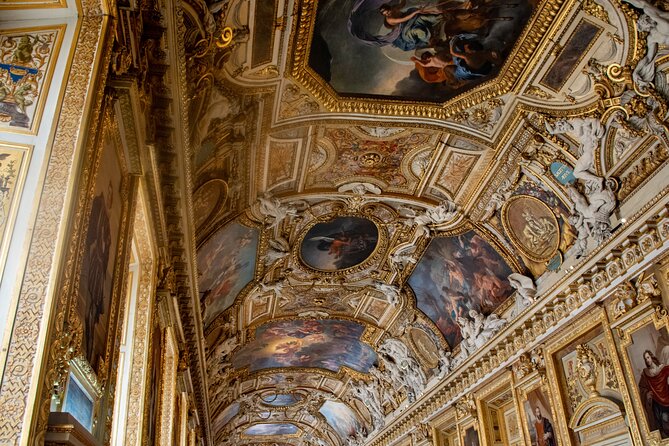
You might begin with the Louvre itself, since the building is part of the story. The former palace helps explain why the collection feels so large and varied. You are not only looking at individual objects. You are moving through a place tied to French monarchy, state power, collecting, and public art.
From there, the guide may move between painting, sculpture, and older collections. The strongest part of this approach is the connection between objects and their time. A painting or statue becomes easier to appreciate when you know who commissioned it, what viewers expected from it, and how its meaning changed.
Several guides are praised for bringing visual aids or for using humor and stories rather than reciting labels. That matters if you do not normally spend much time in museums. The right explanation can make a work accessible without turning the visit into a classroom lecture.
You should expect a fairly brisk route. One family loved the fast pace because it allowed them to see all the main areas they wanted. Another visitor noted that the tour moved quickly, even though it covered the chosen sights well. Ask questions, but also keep moving when your guide signals that it is time for the next room.
Mona Lisa, Venus de Milo, and Napoleon’s coronation
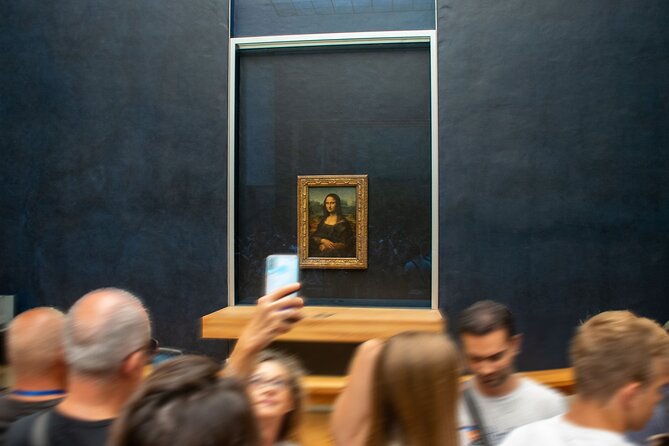
The Mona Lisa is the obvious draw, and it is included among the essential works visited on this route. Seeing it in person can be a memorable moment, but it is also one of the places where crowds may affect your time. Your guide helps you reach the room and gives you useful context, rather than leaving you to search for it alone.
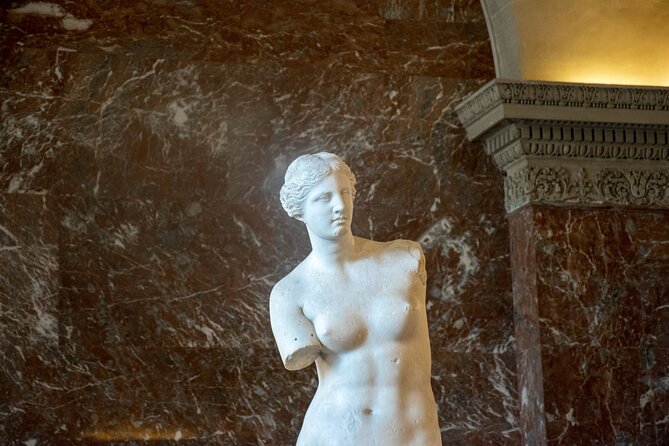
The Venus de Milo offers a different experience. Here, the focus shifts from a celebrated painting to ancient sculpture and the way later generations shaped its fame. A good guide can help you look past the missing arms and see the work as part of a larger artistic and cultural tradition.
The Coronation of Napoleon gives the tour a grand French political note. Its scale and subject make more sense when connected to monarchy, ceremony, power, and the way art can present an official version of events. This is where historical explanation adds real value, especially if you do not already know the period.
These works are only the headline stops. The route can also include Egyptian, Mesopotamian, Syrian, and other ancient collections, along with paintings, jewelry, sculpture, and even selected couture-related material. Juliette is praised for moving from Mesopotamian history through nineteenth-century painting, while Walid answered questions about ancient Syrian gods and introduced lesser-seen objects.
That range is one of the tour’s strengths. You get the famous pieces, but you may also come away with a new favorite that you would never have found on your own.
A different way to spend the day, same corner of France:
- Paris: Louvre Museum Timed-Entrance Ticket
★ 4.6 · 71,977 reviews - Disneyland® Paris 1-Day Ticket
★ 4.6 · 49,412 reviews - Paris: Versailles Palace and Gardens Full Access Ticket
★ 4.6 · 41,579 reviews - Paris: Evening River Cruise with Music
★ 4.4 · 22,721 reviews
Guides who adapt the tour to your group
The guide can make or break a short museum visit. A private tour gives you more room to shape the experience, and the named guides have different strengths.
Walid is repeatedly singled out for his command of art and history, his patience with questions, and his ability to connect the Louvre with wider world history. He also worked well with a family that included teenagers and a child with special needs, keeping the visit engaging rather than formal.
Justine is described as strong in art history and flexible about the group’s interests. She is a good match if you want background on major works instead of a quick list of names and dates. John is praised for clear explanations, easy answers to questions, and his ability to hold the attention of three teenagers.
Juliette brings a wide range, from ancient Mesopotamia to nineteenth-century painting and French royal history. Monty is described as friendly and fun, while Maryam is noted for keeping a quick pace and checking that the group was still together in the crowds.
René guided a bilingual family in English and Spanish and used explanations suited to different ages. Hamish tailored the route to particular areas and drew on an art history background. Carla brought visual aids, which can help younger visitors or anyone who finds museum labels too dry.
Guide assignments can vary, so you should not book on the assumption that one specific person is guaranteed unless the provider confirms it. The useful point is the general style: this is meant to be an interactive private visit, not a fixed audio recording.
Pace, comfort, and the practical side of the visit
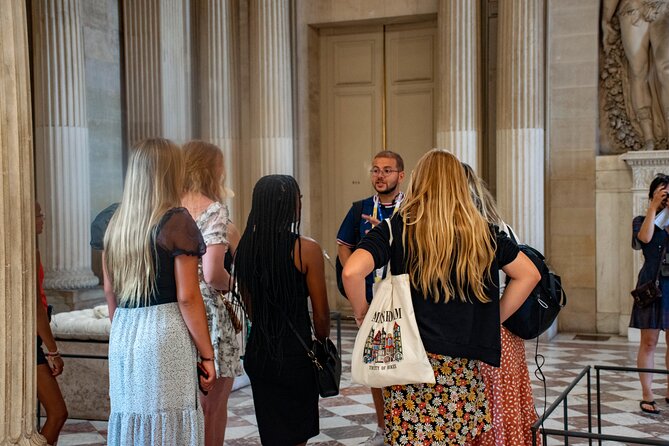
Plan to walk and stand for nearly the whole two hours. There may be benches in some galleries, but they are not available at every stop. If you have a coat, use the coat check when your guide suggests it. Carrying a heavy coat through crowded rooms quickly becomes tiring.
The Louvre also has stairs, and one visitor specifically advised being ready to climb. Wear comfortable shoes and avoid bringing more than you need. These small choices matter because the tour moves through a large building at a purposeful pace.
An evening time slot can be appealing, particularly in summer when the light and crowds may be more manageable. But timing affects what happens next. One visitor booked an evening tour and found there was not enough time afterward to return to favorite rooms. If you want extra independent exploration, choose a time that leaves you room after the guided visit.
The tour ends inside the museum. This is a real advantage. You do not have to leave as soon as the guide finishes, and you can continue looking at other galleries on your own. Keep your ticket available if you plan to move between wings, since you may need it to pass through certain areas.
Some galleries can close without notice, and individual works may be removed for restoration or loan. That is normal for a museum of this size. The route may change, and no guide can guarantee that every listed object will be visible on a particular day.
Who gets the most value from this Louvre tour
I would consider this tour for a first visit when time is tight. You get the core works, a basic map of the museum, and enough context to make the art more memorable. It is also a good fit for people who dislike wandering without a plan.
Families may find the private format especially useful. A guide can adjust the pace, answer questions without embarrassment, and keep the visit moving when attention starts to fade. The experience also suits mixed-age groups, as shown by the combination of young children, teenagers, adults, and an older parent described in the feedback.
It can work for repeat Louvre visitors, too. You may have already seen the Mona Lisa and Venus de Milo, but a guide such as Walid or Juliette can take you toward rooms and objects you missed before. Tell the provider what you have already seen and what you want to explore.
Art lovers should be clear about the two-hour limit. This is a highlights route, not a specialist study of one department. If your main interest is ancient Syrian sculpture, French Romantic painting, or another specific field, ask for that emphasis before the visit.
People who want a slow, quiet examination of a small number of works may find the pace too quick. You can ask for a slower route, but the tour still has to fit a large museum into roughly two hours.
Booking, cancellation, and free admission details
Confirmation arrives when you book, and the tour is often reserved well ahead of time, with an average booking lead of about 50 days. That suggests you should reserve early if your Paris dates are fixed, particularly for a private appointment.
Free admission applies to visitors under 18 and residents of the European Economic Area under 26, provided they show valid identification and proof of residency. Since an entrance ticket is part of the paid tour, check how the provider handles anyone in your group who qualifies for free entry before booking.
Cancellation is free up to 24 hours before the local start time. Cancelling or changing the booking within 24 hours does not qualify for a refund, so double-check your Paris schedule and allow time for transport delays.
Is the $361.74 price worth it?
The price is easiest to justify when several people share the private booking and would otherwise lose time navigating the Louvre. You are also buying more than directions. The guide explains why objects matter, keeps the group together, and adjusts the visit to your interests.
The strongest value comes from the combination of included entry and private guidance. You avoid paying at the door, and you are not tied to a large group with a fixed pace. The tour also ends in the museum, giving you a chance to extend the visit without arranging a second entry.
The weaker value appears if you already know the Louvre well, have a flexible schedule, or prefer independent exploration. Two hours goes quickly, and the price per person can add up. You may prefer a general museum ticket and a self-guided route if your main goal is simply to wander.
My practical test is simple: if getting lost, missing the major works, or tiring out your family would spoil the visit, the private guide is likely worth the money. If you enjoy finding your own route and can return another day, spend the money elsewhere in Paris.
Should you book it?
Book this tour if you want a clear, guided introduction to the Louvre without being folded into a large group. It is especially useful for first-time visitors, families, mixed-age groups, and anyone with only a few hours.
Choose it with realistic expectations. You will see important works and learn the stories behind them, but you will not conquer the Louvre in two hours. Arrive ready to walk, allow time for security, and tell the provider what your group wants from the visit.
I would also try to choose a time that lets you stay afterward. That turns a short guided route into a longer Louvre visit and makes the included end point inside the museum much more useful.
FAQ
How long does the Louvre private tour last?
The tour lasts approximately two hours.
What does the tour include?
It includes a licensed tour guide, a private experience, a highlights tour, and the Louvre entrance ticket.
Is this a private tour?
Yes. Only your group participates in the activity.
Where does the tour begin?
It begins at the Louis XIV sous les traits de Marcus Curtius copy in the Cour Napoléon near the Louvre Pyramid, at 75001 Paris.
Where does the tour end?
The tour ends inside the Louvre Museum. You can continue exploring independently after the guided portion.
Is the tour offered in English?
Yes. English is the listed language for the experience.
Can there be a wait at security?
Yes. Security waits are possible, and during high season the wait can reach 20 minutes.
Are entrance tickets included?
Yes. The entrance ticket is included in the tour price.
Can I cancel for a full refund?
Yes, if you cancel at least 24 hours before the experience start time. Cancellations or changes made less than 24 hours before the start are not refunded or accepted.
Recently reviewed around Paris
- 2CV tour by night★ 5.0 · 55 reviews
- Eiffel Tower Second or Summit Floor Access by Elevator with Views★ 3.5 · 161 reviews
- The only Paris Wine Tasting experience you need to do – 2 hours★ 5.0 · 265 reviews
- 2 Hour Street-art Walk and Space Invaders Hunt in Paris★ 5.0 · 27 reviews
- 2 hour outdoor group activity in Paris: SAINT GERMAIN★ 5.0 · 48 reviews
- Sainte-Chapelle, Conciergerie & Palais de Justice Private Tour★ 5.0 · 72 reviews
- Private 2 – Hour Paris Landmarks Tour by Golf Cart Mini Moke★ 5.0 · 38 reviews
- Orsay Museum Private or Small-Group Guided Tour★ 4.0 · 381 reviews
Louvre Museum Tours, compared.


Louvre Guided Tour with Reserved Access & Boat Cruise
Read our review →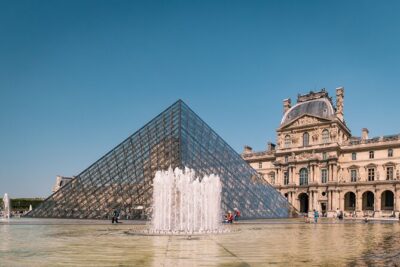
Louvre Museum Masterpieces Guided Tour with Access
Read our review →
Louvre Museum Entry Ticket With Host and River Cruise
Read our review →
Priority Access Louvre with Host -Direct to Mona Lisa
Read our review →
Mona Lisa & Louvre Masterpieces Tour with Reserved Access
Read our review →
Louvre Museum – Exclusive Guided Tour (Entry Included)
Read our review →
Louvre Reserved Ticket and River Cruise Combo
Read our review →Browse the lists this tour appears in