
Reviewed · AVIGNON TOURS
In the footsteps of Van Gogh in Provence from Avignon
Van Gogh’s Provence makes the most sense when you can stand where he stood. This half-day outing links the streets of Arles with Saint-Paul de Mausole in Saint-Rémy, the former asylum where he painted some of his most famous works. I especially like the small eight-person van, which keeps the day personal, and the visit to Van Gogh’s recreated bedroom, a rare chance to connect the paintings with the place where he lived.
I also like the balance between guided explanation and free time. Guides such as Florian, Mathilde, Ghislain, Rémi, and Arnaud have been praised for bringing in local history, Roman sites, wine, and everyday Provence. The main drawback is that Arles may feel brief if you want a full museum visit or a long independent wander, and one stop can feel more like a guided walk than a major attraction.
In This Review
- Key points at a glance
- Why Van Gogh’s Provence works best in person
- Arles: Van Gogh’s open-air studio
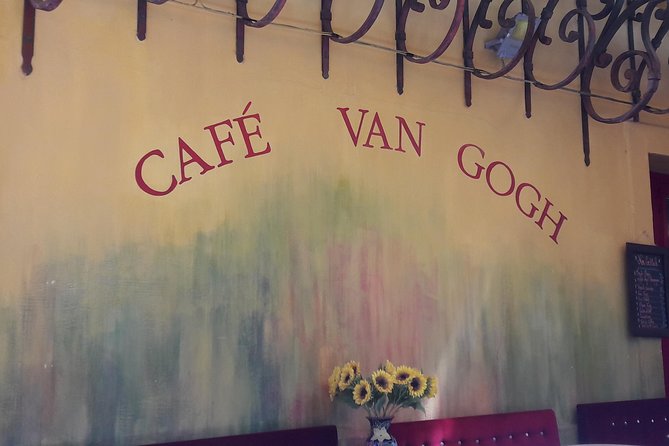
- Place du Forum and Café La Nuit
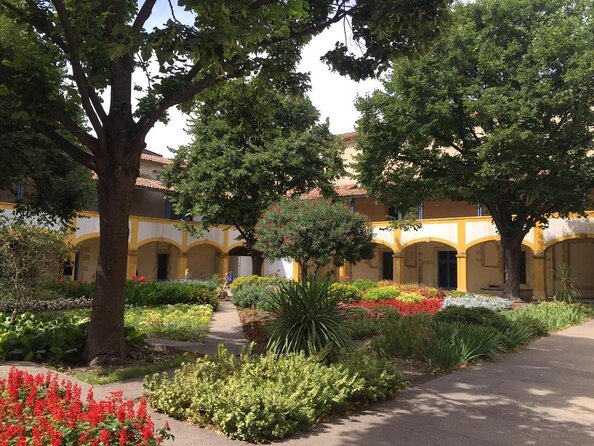
- Espace Van Gogh and the former hospital
- Saint-Paul de Mausole in Saint-Rémy
- What the small minivan changes
- The guide can make or break the day
- Is $119.73 a fair price?
- Timing, meals, and what to bring
- Who should book this experience?
- Should you book the Van Gogh Provence tour?
- FAQ
- Where does the tour start?
- What time does the tour begin?
- How long does the experience last?
- Where does the tour end?
- Is transportation included?
- How many people can join the group?
- Is Saint-Paul de Mausole admission included?
- Are food and drinks included?
- Is the tour available in English?
- Can children under four join?
- What happens if I need to cancel?
- What happens if bad weather cancels the tour?
Key points at a glance
- Van Gogh’s actual Provence settings: Walk through Arles locations connected with Café Terrace at Night, The Yellow House, and The Garden of the Hospital.
- Saint-Paul de Mausole included: Enter the former asylum and see a reproduction of Van Gogh’s bedroom.
- Small-group transport: Ride in a climate-controlled minivan limited to eight people.
- More than an art tour: Expect Roman history, local stories, architecture, and regional details along the way.
- Free time in Arles: The schedule leaves room to wander and find food, though you should eat before departure.
- Strong guide element: Guide quality shapes the experience, with past outings led by Florian, Mathilde, Ghislain, Rémi, Arnaud, Nicolas, Jos, and others.
Why Van Gogh’s Provence works best in person
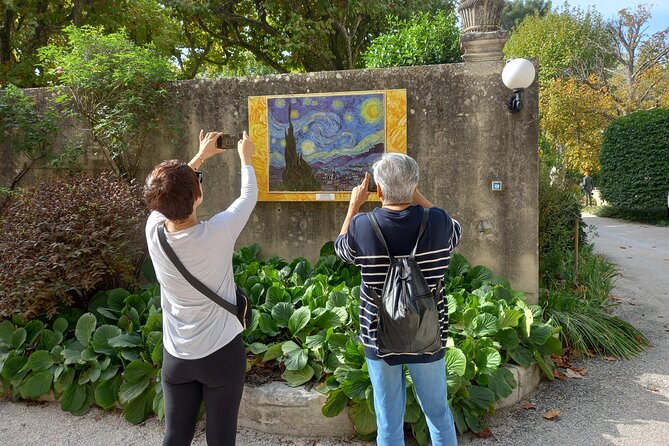
Van Gogh painted Provence with a feverish intensity. The light, colors, and shapes of Arles and Saint-Rémy became central to his work, but reproductions on a museum wall can flatten the connection between the art and the place. Here, you move through the streets and buildings that helped shape paintings such as Café Terrace at Night and The Yellow House.
The tour begins in Avignon at 8 a.m., then heads south by minivan. The advertised time is about five hours, while the fuller description describes a day of roughly six hours. In practical terms, plan on a morning-to-early-afternoon outing rather than a quick two-hour excursion.
That timing matters. You see several places without having to arrange regional transport, parking, or separate admissions. You also get a guide to explain what you are seeing. Van Gogh’s connection with Provence is not always obvious from a street corner alone. A guide can point out how a location relates to his work and add the local setting around it.
The tour is in English, though the guide may be multilingual. Because the group is capped at eight, you have a better chance to ask questions or hear an explanation without standing at the back of a large crowd.
Other Avignon days travellers weigh against this one:
- Provence Highlights Full-Day Tour from Avignon
★ 5.0 · 499 reviews - Chateauneuf du Pape wine tour
★ 5.0 · 484 reviews - From Avignon: Châteauneuf du Pape Half-Day Wine Tour
★ 4.7 · 365 reviews
Arles: Van Gogh’s open-air studio
Arles is the main outdoor chapter of the day. This UNESCO-listed riverside city combines Van Gogh connections with Roman remains, old streets, and the rhythms of a living Provençal town. The tour allows about two hours here, including several specific stops and time to walk independently.
The appeal is not a single grand Van Gogh museum. Instead, you see the city as a collection of working settings. Streets, squares, buildings, and hospital grounds became subjects for paintings. You are asked to compare the real place with the familiar image in your mind.
That can be surprisingly effective. A painting may seem entirely invented until you recognize the basic angle, a nearby building, or the shape of a square. The connection is strongest when the guide explains exactly what Van Gogh was looking at and how the place has changed.
The city also gives the tour useful variety. You learn about Arles beyond the artist, including Roman antiquities, local customs, architecture, and the region’s broader past. One guide was especially praised for explaining the Roman remains, while others added local information about wine and the conditions needed to grow vines.
This wider focus is important for anyone who likes culture but is not a dedicated Van Gogh specialist. You do not need to know every painting in advance. The town itself provides enough visual and historical interest to carry the morning.
Place du Forum and Café La Nuit
Place du Forum is a short stop of about 10 minutes. This is the setting associated with Van Gogh’s Café Terrace at Night, also known as Café La Nuit. The time is enough to see the location and hear the connection, but not enough for a long café break or extended photography session.
I would treat this as a focused orientation stop rather than a full attraction. You are looking at the place that inspired the scene, not entering a museum devoted to the painting. The value comes from standing in the square and understanding how Van Gogh transformed an ordinary urban setting through color and nighttime light.
If you have come mainly for painting locations, this is one of the essential moments. If you want a leisurely coffee, you will need to use your free time elsewhere in Arles. The schedule is designed to connect several sites rather than linger at one.
Espace Van Gogh and the former hospital
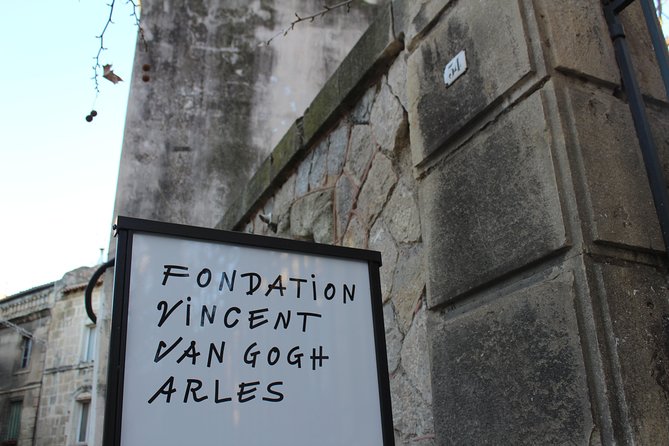
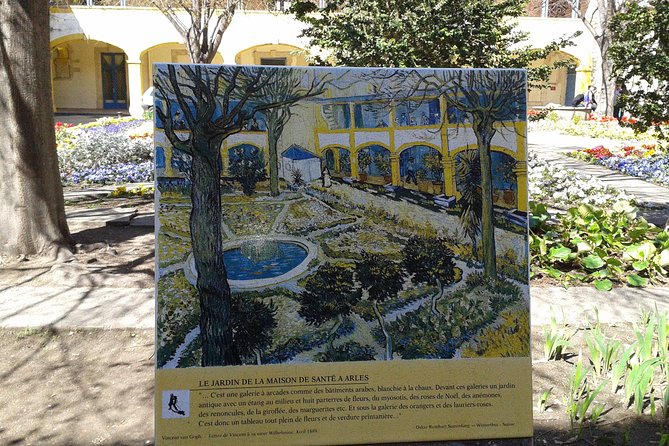
Espace Van Gogh is another brief stop, listed at about 10 minutes. The former charity hospital contains reproductions of Van Gogh’s paintings and connects with the hospital setting he painted. It helps you see how an institution that might otherwise feel like a passing historical building became part of his artistic world.
Again, the short timing sets expectations. This is not presented as an extended museum visit with a large collection. You are seeing reproductions and the setting, with the guide supplying the thread between the two.
That approach works well for a day focused on places rather than objects. You are not simply viewing a framed work. You are standing in a location tied to the image and then moving on to another part of Van Gogh’s Provence.
The brief stop may disappoint you if your priority is close study of paintings. It works better if you want a broad sense of how Arles shaped his work and how the city fits into his life.
A different way to spend the day, same corner of France:
- From Avignon: Full-Day Best of Provence Tour
★ 4.7 · 338 reviews - From Avignon: Half-Day Great Vineyards Tour
★ 4.7 · 321 reviews - Provence Cru Wine Small-Group Half-Day Tour from Avignon
★ 4.5 · 290 reviews - Châteauneuf du Pape Wine Day Tasting Tour including Lunch from Avignon
★ 5.0 · 287 reviews
Saint-Paul de Mausole in Saint-Rémy
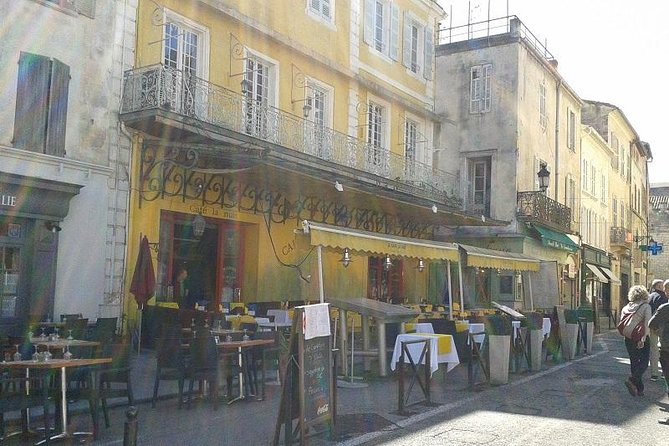
The most substantial admission stop is Saint-Paul de Mausole, where Van Gogh was institutionalized. About an hour is set aside for the visit, and entrance is included in the price.
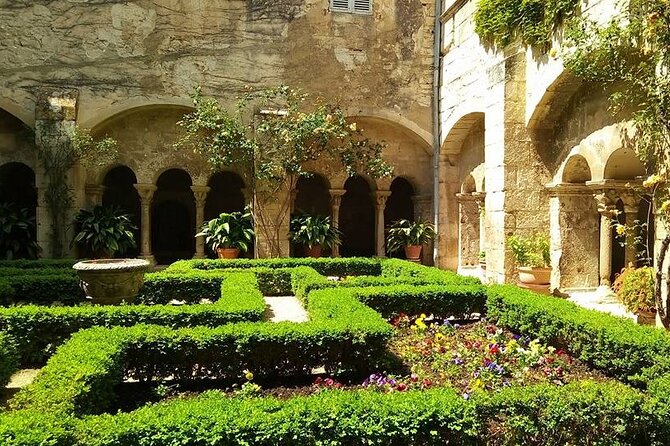
This is the emotional center of the tour. You see a reproduction of Van Gogh’s bedroom and the former asylum setting associated with his later work. The visit also connects to his Wheat Field series and other paintings made during his time there.
The atmosphere is quieter and more reflective than the Arles walking stops. One guide described the visit as serene and thought-provoking, and that is a useful way to approach it. You are not only checking off a famous address. You are considering the tension between Van Gogh’s illness, his surroundings, and his continued ability to produce powerful art.
The recreated bedroom is particularly useful because it gives you a physical point of reference. Paintings about an artist’s life can feel remote, but a room, corridor, or institutional setting makes the story more immediate. The visit does not turn Van Gogh’s illness into a spectacle. Instead, it provides a place to pause and think about the period.
Saint-Paul de Mausole also anchors the tour in Saint-Rémy rather than keeping the experience entirely within Arles. That change of setting makes the day feel broader and helps explain why Provence mattered to Van Gogh beyond one city.
What the small minivan changes
The tour uses an air-conditioned, climate-controlled minivan with eight seats. That is a practical advantage in Provence, especially on a warm day or when you are trying to cover Arles and Saint-Rémy in one morning.
You avoid the work of coordinating separate buses, finding parking, and navigating between the towns. In Arles, parking can be difficult, and a guide may need to adjust the route rather than waste time searching for a space. That flexibility is one of the quiet benefits of booking organized transport.
The van also creates more room for conversation. With a maximum of eight people, the guide can answer questions and adjust explanations more easily than on a large coach. The experience may be operated by a multilingual guide, so the exact level of English commentary can vary, but the activity is offered in English.
There is one tradeoff: you do not control the schedule. Arles gets around two hours, while Place du Forum and Espace Van Gogh are short stops. If you are happiest setting your own pace, you may wish for more time in town.
The guide can make or break the day
The route is strong, but the guide is a major part of its value. Past outings have been led by Florian, Mathilde, Ghislain, Rémi, Arnaud, Nicolas, Jos, Jérémy, Martine, Emile, Jocelyn, and others. The guide assigned to your departure will vary.
The most useful guides do more than recite dates. They explain Van Gogh’s life, connect paintings with physical locations, and add stories about Provence. Several guides have been praised for their English, humor, friendliness, and ability to answer questions without talking endlessly.
That last point matters on a compact tour. Too little explanation leaves you wandering without context. Too much can make every street corner feel like a lecture. The best balance gives you enough information to recognize the significance of a place, then lets you look around for yourself.
You may also hear about subjects outside Van Gogh, including Roman history, local architecture, wine production, bullfighting traditions, and regional geography. A guide may point out extra sites when time and parking allow. This makes the tour useful even if your interest in Van Gogh is moderate.
The experience is not necessarily identical with every guide. If you are booking because of a particular guide praised by someone you know, remember that names are not guaranteed. Still, the repeated pattern of strong guide feedback suggests that personal interpretation is one of the activity’s main strengths.
Is $119.73 a fair price?
At $119.73 per person, this is not the cheapest way to see Arles. You could visit the city independently and choose your own food, pace, and sights. The price becomes easier to justify when you add the transport to Saint-Rémy, the included entrance to Saint-Paul de Mausole, the small group, and the guide’s historical context.
I see the best value here in the combination. You are not paying only for a minivan ride or only for a walking tour. You are getting round-trip transport from Avignon, a multi-stop route, and access to a site that would require extra planning on your own.
The price is also more reasonable if you are staying in Avignon without a car. Organizing both Arles and Saint-Rémy independently can take time, and parking adds another complication. The tour bundles the major Van Gogh connections into one morning.
Value depends on what you want from Arles. If you need several hours for museums, shopping, or a long lunch, an independent visit may suit you better. If you want the Van Gogh story organized around real places, the fee is defensible.
Timing, meals, and what to bring
The meeting point is the Office de Tourisme d’Avignon at 41 Cours Jean Jaurès. The start time is 8 a.m., and the activity ends back at the same meeting point.
Eat something before you leave. Food and drinks are not included, and the early departure plus the compact schedule means you should not count on a relaxed meal during the guided portion. You have free time to wander in Arles, but the schedule is not built around a long lunch.
Wear comfortable shoes and be ready for walking in town. The stated requirement is a moderate level of physical fitness. No special athletic ability is implied, but you should be comfortable moving between streets and stops for several hours.
The tour requires good weather. If conditions force cancellation, you are offered another date or a full refund. A minimum number of participants is also required, and if that minimum is not reached, you are offered another date or experience, or a full refund.
Children under four are not allowed. The activity is offered with a mobile ticket, and confirmation is received at booking.
Who should book this experience?
I would choose this tour if you are staying in Avignon and want an efficient introduction to Van Gogh’s time in Provence. It suits art lovers, but it also works for anyone interested in towns, architecture, Roman remains, and local stories.
It is especially useful for solo visitors and couples who do not want to arrange transport. The small group makes it easier to meet people without the feel of a large bus excursion.
You should also consider it if you have limited time. In one morning, you reach Arles and Saint-Rémy, see several Van Gogh settings, and return to Avignon. Some people use the morning tour as an introduction, then remain in Arles afterward and return to Avignon independently, though the official activity itself returns to the Avignon meeting point.
I would hesitate if you want a museum-heavy Van Gogh experience. The tour focuses on places and reproductions, not an extensive collection of original paintings. I would also hesitate if you dislike fixed schedules or prefer to spend an entire day in Arles.
Should you book the Van Gogh Provence tour?
Book it if you want the story of Van Gogh tied to actual streets, buildings, and rooms rather than presented only through art books. The strongest part is Saint-Paul de Mausole, but Arles adds the city life, Roman past, and painting locations that make the route feel complete.
The tour offers good practical value for a small group: air-conditioned transport, an English-speaking option, a maximum of eight people, and admission to the asylum included. Just eat before departure, wear sensible shoes, and accept that the Arles portion is an introduction rather than a full independent visit.
For a focused Van Gogh morning from Avignon, I would book it. For a slow day of museums and cafés, go on your own instead.
FAQ
Where does the tour start?
It starts at the Office de Tourisme d’Avignon, located at 41 Cours Jean Jaurès, 84000 Avignon, France.
What time does the tour begin?
The scheduled start time is 8 a.m.
How long does the experience last?
The tour is listed as approximately five hours, while the full description refers to about six hours. Plan for a morning-to-early-afternoon activity.
Where does the tour end?
The activity ends back at the starting meeting point in Avignon.
Is transportation included?
Yes. Round-trip transportation is provided in an air-conditioned, climate-controlled minivan.
How many people can join the group?
The minivan has eight seats, and the activity has a maximum of eight participants.
Is Saint-Paul de Mausole admission included?
Yes. Entrance to Saint-Paul de Mausole is included, including the reproduction of Van Gogh’s bedroom.
Are food and drinks included?
No. Food and drinks are not included unless specifically stated. Eating before the 8 a.m. departure is a sensible plan.
Is the tour available in English?
Yes. The tour is offered in English, though it may be operated by a multilingual guide.
Can children under four join?
No. Children under four years old are not allowed on the tour.
What happens if I need to cancel?
You can cancel at least 24 hours before the start time for a full refund. Cancellations or changes made less than 24 hours before departure are not accepted for a refund.
What happens if bad weather cancels the tour?
If poor weather causes cancellation, you are offered a different date or a full refund. If the minimum number of participants is not reached, you are offered another date or experience, or a full refund.
Recently reviewed around Avignon
- Wine Tasting Tour at Châteauneuf du Pape★ 5.0 · 36 reviews
- Châteauneuf du Pape Wine Day Tasting Tour including Lunch from Avignon★ 5.0 · 287 reviews
- Wines from Châteauneuf-du-Pape and surrounding areas in 1/2 day★ 5.0 · 96 reviews
- Van Gogh & Carrières de Lumières Half-Day Tour from Avignon★ 4.5 · 29 reviews
- Morning Wine Tour to Chateauneuf du Pape from Avignon★ 4.5 · 70 reviews
- Lavender Route – Small-Group Day Trip from Avignon★ 5.0 · 120 reviews
- Nimes, Uzes & Pont du Gard Small Group FULL DAY Tour from Avignon★ 4.5 · 187 reviews
- Truffle Hunting in Provence★ 5.0 · 55 reviews
Avignon Tours, compared.
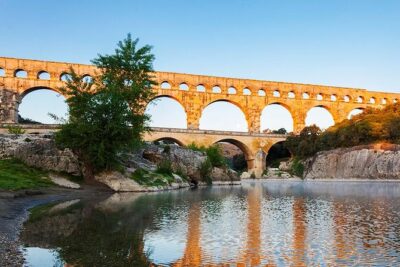
Provence Highlights Full-Day Tour from Avignon
Read our review →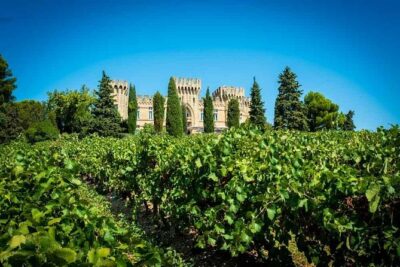

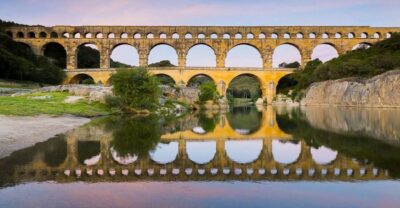

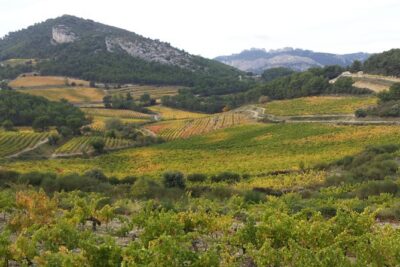
Provence Cru Wine Small-Group Half-Day Tour from Avignon
Read our review →
Châteauneuf du Pape Wine Day Tasting Tour including Lunch from Avignon
Read our review →
Pont du Gard, Saint Remy and Les Baux Half-Day Tour
Read our review →Browse the lists this tour appears in