
Reviewed · AVIGNON TOURS
Truffle Hunting in Provence
The best part of this Provence outing is that you do not just eat truffles in a restaurant. You see where they grow, watch dogs locate them beneath the oak trees, and help uncover the prized black fungi yourself. Johann leads the English portion with humor and clear explanations, while a French truffle hunter works the field with three dogs: Mirabel, Caramel, and Eclair.
I like the hands-on hunt and the generous tasting that follows. You also get useful advice on spotting fresh truffles, avoiding fake truffle products, and storing the real thing at home. The main consideration is timing: the tour runs on weekdays during selected months, and the outdoor hunt requires good weather.
In This Review
- Key points at a glance
- Starting at Les Pastras near Cadenet
- The first hour: how Provence grows its black gold
- Under the oak trees with Mirabel, Caramel, and Eclair
- The summer kitchen tasting
- How to buy and use truffles after Provence
- Is $139.27 good value?
- Who will enjoy this experience most?
- A practical three-hour plan
- Should you book Truffle Hunting in Provence?
- FAQ
- Where does the truffle hunting experience begin and end?
- How long does the experience last?
- In which language is the tour offered?
- When does the experience operate?
- How many people can join the tour?
- What happens if bad weather cancels the experience?
Key points at a glance
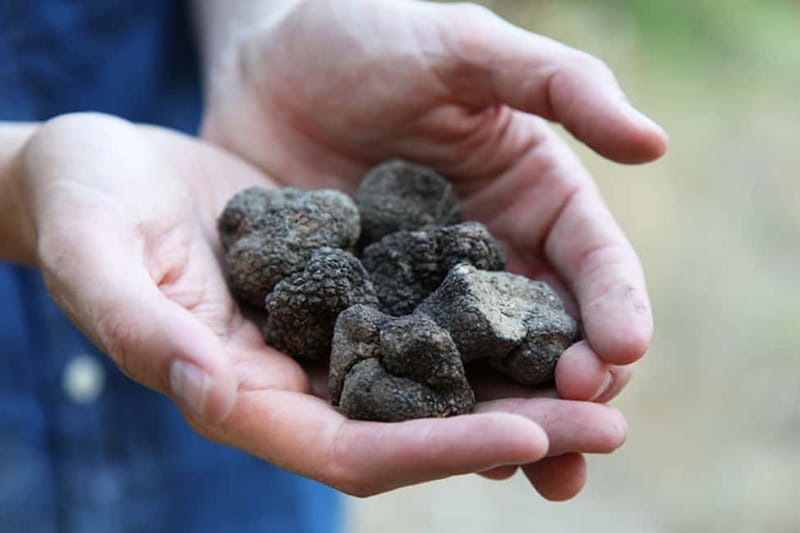
- Watch trained dogs find real truffles beneath the property’s oak trees.
- Learn how truffles are farmed, including the long wait before a new planting produces.
- Taste three truffle hors d’oeuvres, followed by truffle ice cream with truffle honey.
- Drink Champagne throughout the tasting, along with organic olive oil and truffle products.
- Keep the group small, with a maximum of 14 people.
- Plan for a rural meeting point at Les Pastras in Cadenet, about three hours from start to finish.
Starting at Les Pastras near Cadenet
Les Pastras is in Cadenet, in Provence’s Luberon area. The tour begins at the property, at 84160 Cadenet, France, and returns there at the end. That makes this a good fit if you have a car or have already arranged transport around the Luberon.
Finding the property may take a little care. One person found the location somewhat hard to spot, though well worth the effort. I would save the address before setting out and allow extra time, rather than trying to arrive at the last minute.
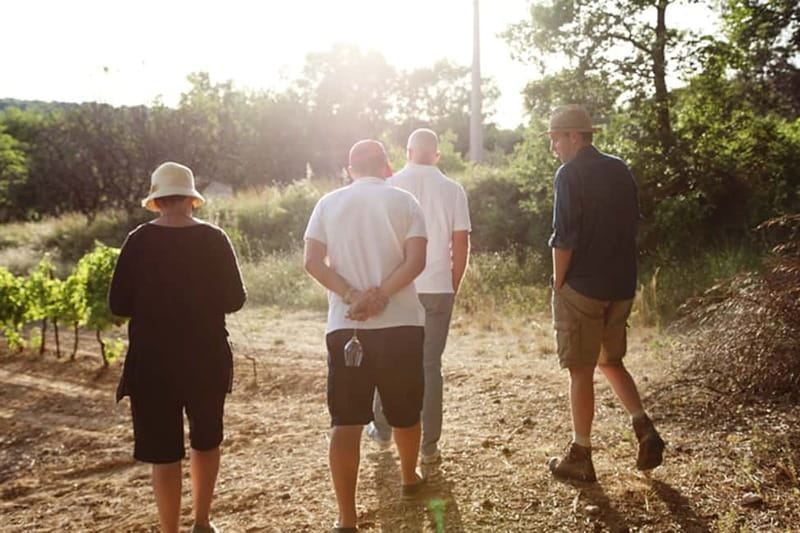
The setting matters here. This is a working truffle farm, not a staged restaurant demonstration. You begin with a walk to a cool, shady part of the property, which gives the guide a comfortable place to explain the basics before you head into the field.
The tour is offered in English, and the group is capped at 14 people. That is small enough for questions and close viewing of the dogs without making the activity feel private or exclusive. You should still expect a shared group experience rather than a one-on-one lesson.
Other Avignon days travellers weigh against this one:
- Provence Highlights Full-Day Tour from Avignon
★ 5.0 · 499 reviews - Chateauneuf du Pape wine tour
★ 5.0 · 484 reviews - From Avignon: Châteauneuf du Pape Half-Day Wine Tour
★ 4.7 · 365 reviews
The first hour: how Provence grows its black gold
Johann starts by explaining the farm, the truffle trade, and the way truffles are cultivated. This opening section gives the hunt some context. Without it, watching a dog scratch at the soil would be fun but fairly brief. With it, you begin to understand why a small fungus can command such high prices.
You learn that truffles take years to grow. The farm setting helps make that wait concrete. Truffle production is not a quick garden project, and the hunt depends on finding the fungus at the right stage of maturity.
The talk also covers terroir, the combination of soil, climate, and growing conditions that affects food. You get a look at truffles as both an agricultural product and a major part of French food culture. Johann’s style is reported as warm, funny, and energetic, so the information does not feel like a classroom lecture.
This is one of the strongest parts of the experience for anyone who likes food beyond the plate. You will learn about the economics of the trade, the difference between cultivated and gathered truffles, and why fresh truffles are costly. The explanations also help you judge later purchases in markets, shops, and restaurants.
You should know that this is an educational food tour, not a fast-paced outdoor adventure. The first stage can last about an hour. If you have little interest in farming, cooking, or specialty food, the detail may feel slow. If you like knowing how an ingredient reaches the table, it adds real value.
Under the oak trees with Mirabel, Caramel, and Eclair
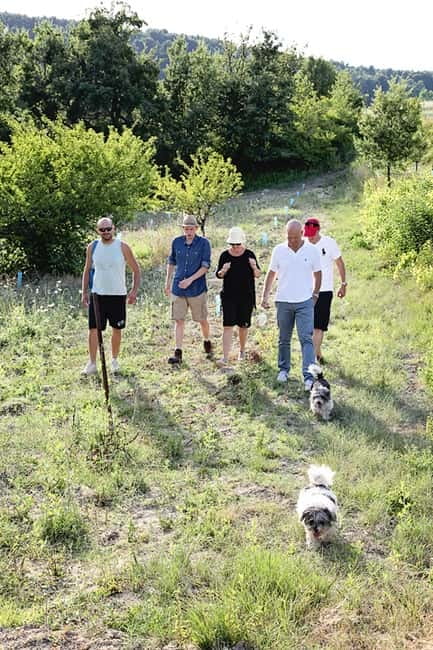
The hunt begins after the introduction. You join the French hunter and the three dogs in the fields, where the animals search for truffles beneath the oak trees.
The dogs are the stars of this section. Their noses locate what you cannot see, and their movement gives the hunt a simple drama: the group watches for a change in behavior, then follows as the dog indicates a possible find. The hunter digs carefully, with your help, to uncover the truffle.
This is not a guarantee that you will find a large haul. The appeal comes from seeing the process at close range and understanding how much depends on the dog, the soil, and the right moment. The dogs may locate several truffles, as they have during past outings, but conditions in a working field can vary.
The three dogs also make the activity more approachable for families. Children around ages 9 and 11 have enjoyed the hunt, and the dogs are friendly and memorable. Still, the educational parts may suit older children and adults better, especially if young children lose interest during the farming explanation.
You do not need specialist outdoor clothing. Comfortable shoes are the sensible choice, since part of the tour takes place in a field. The hunt is outdoors and the experience requires good weather, so check the forecast and avoid delicate footwear if the ground looks damp.
The outdoor setting is also why the timing of your visit matters. The experience operates from November through March and again from May through September, on weekdays except public holidays. November is a particularly fitting month for a truffle-focused visit, but the schedule does not cover every season. April is not included in the stated operating period.
The summer kitchen tasting
After the hunt, you return to a scenic summer kitchen for the food portion. This is where the experience changes from farm lesson to long tasting session.
The tasting includes three different hors d’oeuvres made with truffles. The exact recipes are not specified, but the focus is fresh truffle used in several small bites rather than a single token sample. This gives you a chance to notice how the aroma changes with different foods.
Next comes truffle ice cream with truffle honey. That unusual pairing is one of the tour’s memorable details. It also shows you that truffles do not have to be limited to pasta, eggs, or savory sauces. The sweet course may appeal to curious eaters, though anyone who prefers classic desserts should expect something unusual.
You also taste organic extra-virgin olive oil, truffle oil, and truffle salt. The products are served with Champagne, available throughout the tasting. This is generous hospitality, but it also has a practical side: you can compare the flavor and aroma of fresh truffles with infused products.
The Champagne pairing makes the tasting feel celebratory, especially for a birthday, anniversary, or other special day. It also adds to the value of the $139.27 price. You are paying for a three-hour hosted experience, not simply a short farm walk and one sample.
Still, be clear about what the price includes. The experience centers on education, the hunt, and the tasting. It is not a meal with unlimited courses, and the tour does not promise that you will take home a particular quantity of truffles. You may be able to buy truffles, honey, salt, and oil at the farm, but purchases are separate from the tour price.
A different way to spend the day, same corner of France:
- From Avignon: Full-Day Best of Provence Tour
★ 4.7 · 338 reviews - From Avignon: Half-Day Great Vineyards Tour
★ 4.7 · 321 reviews - Provence Cru Wine Small-Group Half-Day Tour from Avignon
★ 4.5 · 290 reviews - Châteauneuf du Pape Wine Day Tasting Tour including Lunch from Avignon
★ 5.0 · 287 reviews
How to buy and use truffles after Provence
The most useful practical lesson comes during the tasting. Johann explains what to look for when ordering truffles in restaurants and when buying truffle products.
That advice can save you money. Truffle-flavored products are not all made with fresh truffles, and some rely heavily on artificial flavoring. Learning to distinguish real truffle products from imitation versions helps you make better choices once you leave Provence.
You also learn how to clean, store, and prepare fresh truffles. These details are easy to overlook, but they matter. A costly ingredient can lose its aroma if handled poorly, so basic storage guidance makes the tour useful even after the Champagne is finished.
The information is especially helpful if you plan to visit French markets or buy a truffle product as a gift. You will have a clearer idea of what questions to ask and what labels deserve a closer look. The tasting turns the truffle from a luxury symbol into an ingredient you can understand.
If you are mainly seeking a cooking class, keep your expectations measured. You learn how to use truffles, but the central focus is demonstration and tasting rather than preparing a full recipe yourself.
Is $139.27 good value?
At $139.27 per person, this is not a casual add-on. The value depends on how much you care about food, farming, and a small-group experience.
I think the price is reasonable for the full package. You receive roughly three hours of guided time, a farm visit, a working dog demonstration, several truffle tastings, ice cream with truffle honey, olive oil and infused products, and Champagne. The guide’s explanations also cover topics you would not easily learn from a restaurant meal.
The group limit of 14 helps. You are not being moved through a large commercial attraction, and you should have a fair chance to watch the dogs and ask questions. The personal tone is part of what you are buying.
The value is weaker if you dislike alcohol, specialty food, or outdoor activities. Champagne is central to the tasting, and truffles have a strong aroma that is not to everyone’s taste. You may enjoy the setting and the dogs but still find the price high if you are not excited by the food itself.
I would also factor in transport. The meeting point is in Cadenet, not central Avignon, despite Avignon being used as the tour location. You need to reach Les Pastras independently, and a two-hour drive may be worthwhile for a devoted food fan but less appealing if this is one of several similar outings on your trip.
Who will enjoy this experience most?
This tour is a strong choice for food-focused visitors, couples, families with older children, and anyone curious about the rural side of Provence. It works particularly well as a change from churches, museums, and village walks.
You will get the most from it if you enjoy asking questions. The session covers truffle cultivation, history, economics, hunting, freshness, storage, and cooking. A curious participant will find much more here than someone who simply wants a photo with a dog.
The activity also suits a special occasion. Champagne, the scenic kitchen, and the unusual tasting give it a festive feel without turning it into a formal dining event.
I would hesitate to recommend it for very young children, though most people can take part. The dogs may hold their attention, but the farming explanation and product discussion require patience. I would also skip it if you need a weekend activity, since it runs on weekdays only.
Because the tour is weather dependent, keep some flexibility in your Provence plans. If poor weather cancels the outing, you are offered another date or a full refund. Otherwise, cancellation is free up to 24 hours before the start time, with no refund for later cancellations.
A practical three-hour plan
Plan on about three hours from arrival to departure. The day generally breaks into three equal sections:
- An introduction to truffle farming and the property
- A field hunt with the French hunter and dogs
- A tasting in the summer kitchen
Wear comfortable shoes and clothing suited to a short walk outdoors. You will not need rugged hiking gear, and the hunt is not described as especially muddy or strenuous, but you are still visiting a working field.
Arrive prepared to stay for the entire experience. The tasting is not a quick final sample. It includes multiple foods and products, along with explanations about buying and preparing truffles. If you have dietary restrictions, the supplied details do not specify available substitutions, so ask the provider before booking.
The tour is offered in English, but the hunt includes a French hunter working with Johann. The English guidance covers the activity, and the mix adds to the sense that you are seeing a real local practice rather than a polished stage show.
Should you book Truffle Hunting in Provence?
Book it if you want a distinctive Luberon experience that combines farming, animals, food, and a relaxed tasting. The dogs, Johann’s entertaining teaching style, and the chance to sample fresh truffles in several forms give the outing more substance than a standard food stop.
Skip it if you want a full meal, a weekend schedule, or a guaranteed large truffle find. The price is easiest to justify when you value the story behind an ingredient as much as the flavor.
For most food-minded visitors with a weekday available, I would make the effort to reach Les Pastras. You leave with more than a taste of truffle: you understand how it is grown, found, judged, stored, and used. That makes this one of the more memorable ways to connect Provence’s countryside with its table.
FAQ
Where does the truffle hunting experience begin and end?
It begins at Les Pastras, 84160 Cadenet, France, and ends back at the same meeting point.
How long does the experience last?
The activity lasts approximately three hours.
In which language is the tour offered?
The tour is offered in English.
When does the experience operate?
It operates on weekdays, excluding public holidays, from November through March and from May through September.
How many people can join the tour?
The group has a maximum of 14 participants.
What happens if bad weather cancels the experience?
Because the activity requires good weather, a cancellation caused by poor conditions gives you the choice of another date or a full refund.
Recently reviewed around Avignon
- Wine Tasting Tour at Châteauneuf du Pape★ 5.0 · 36 reviews
- Châteauneuf du Pape Wine Day Tasting Tour including Lunch from Avignon★ 5.0 · 287 reviews
- In the footsteps of Van Gogh in Provence from Avignon★ 4.5 · 102 reviews
- Wines from Châteauneuf-du-Pape and surrounding areas in 1/2 day★ 5.0 · 96 reviews
- Van Gogh & Carrières de Lumières Half-Day Tour from Avignon★ 4.5 · 29 reviews
- Morning Wine Tour to Chateauneuf du Pape from Avignon★ 4.5 · 70 reviews
- Lavender Route – Small-Group Day Trip from Avignon★ 5.0 · 120 reviews
- Nimes, Uzes & Pont du Gard Small Group FULL DAY Tour from Avignon★ 4.5 · 187 reviews
Avignon Tours, compared.
Provence Highlights Full-Day Tour from Avignon
Read our review →
Provence Cru Wine Small-Group Half-Day Tour from Avignon
Read our review →
Châteauneuf du Pape Wine Day Tasting Tour including Lunch from Avignon
Read our review →
Pont du Gard, Saint Remy and Les Baux Half-Day Tour
Read our review →Browse the lists this tour appears in