
Reviewed · LOUVRE MUSEUM TOURS
Mona Lisa & Louvre Masterpieces Tour with Reserved Access
The Louvre is not a museum you casually wander into and conquer before lunch. It is a former palace packed with thousands of works, grand staircases, royal rooms, and crowds flowing toward the Mona Lisa. This reserved-access guided tour gives you a clear route through the famous highlights instead of leaving you to study a map while the clock ticks.
I like two things right away: the guide brings useful context to works that can look familiar from books, and you can stay inside the museum afterward to explore at your own pace. Guides such as Saeed, Summer, Omar, Anna, and Natalia have been praised for clear explanations and calm crowd management. The main drawback is the pace. You will cover a lot of ground, but art lovers may want more time at individual works.
In This Review
- Key points to know before booking
- Meeting your guide at the Arc de Triomphe du Carrousel
- The Pyramid and the Louvre from the outside
- Reserved entry and the first practical advantage
- Mona Lisa: famous, crowded, and still worth seeing
- Greek and Roman antiquities, from Venus to the Great Sphinx
- Renaissance paintings and sculpture highlights
- French Romantic art and the royal rooms
- How much time you really need
- Crowds, comfort, and mobility
- Is the $80 price good value?
- Who should book this Louvre tour?
- Should you book it?
- FAQ
- Where is the meeting point?
- Is the meeting point at the Louvre entrance?
- How long does the guided tour last?
- Can I stay in the Louvre after the guided tour?
- Does the tour include the Mona Lisa?
- Is the wine and cheese tasting included?
- Is the tour suitable for wheelchair users?
Key points to know before booking
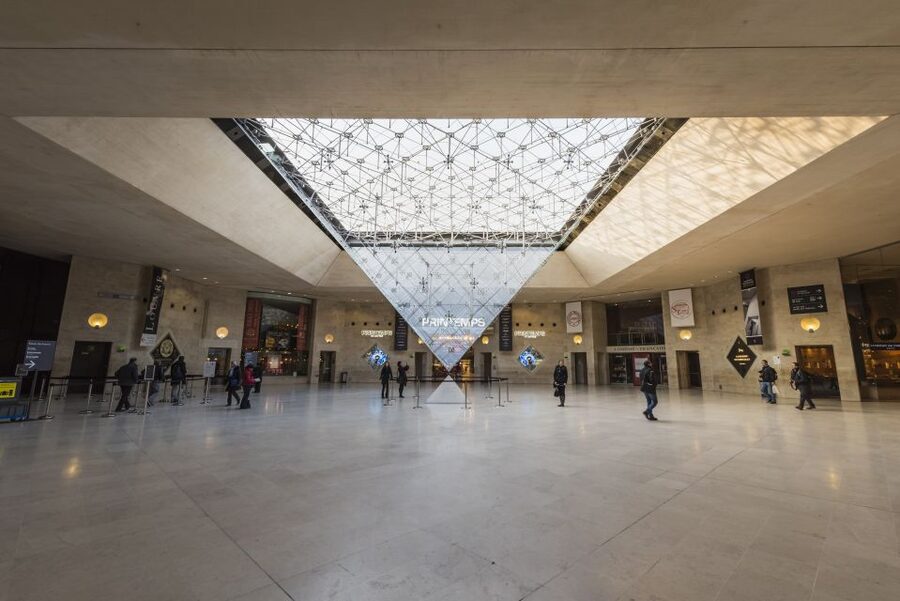
- Reserved Louvre entry: You avoid the ordinary ticket line, though every visitor still passes through security.
- A focused three-hour route: The tour covers major works by Leonardo da Vinci, Raphael, Caravaggio, Michelangelo, Canova, and others.
- The Mona Lisa is crowded: Your guide can help you approach it, but you should not expect a quiet, private viewing.
- More than paintings: The route includes Greek and Roman antiquities, famous sculptures, royal apartments, the Apollo Gallery, and the Louvre’s foundations.
- Free time can extend your visit: The schedule includes up to two hours to continue exploring after the guided portion.
- Optional Paris food stop: The upgrade adds wine with artisanal cheese and charcuterie at Ô Chateau.
Meeting your guide at the Arc de Triomphe du Carrousel
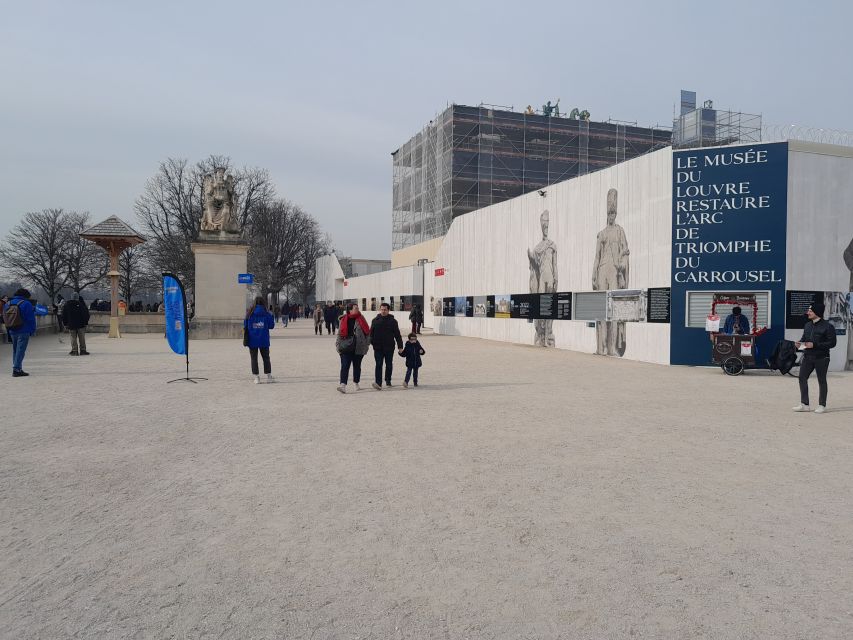
Your day begins beside the Arc de Triomphe du Carrousel, not at the Louvre Pyramid entrance. That detail matters. If you walk straight toward the Pyramid looking for a tour desk, you will be in the wrong place.
Stand with your back to the Pyramid and look across the road toward the entrance to the Tuileries Garden. The meeting point is to the left of the arch, along the wall railing. Staff wear blue, which makes them easier to spot in the busy area.
I would arrive early enough to orient yourself. The arch has a horse-drawn chariot on top, so it is hard to miss once you are in the right spot. Bring comfortable shoes, since this is a standing and walking tour through a very large building.
The tour does not include hotel pickup or drop-off. You make your own way to the meeting point and leave from either the Louvre Pyramid or, if you choose the food upgrade, Ô Chateau.
Other Paris days travellers weigh against this one:
- Paris: Louvre Museum Timed-Entrance Ticket
★ 4.6 · 71,977 reviews - Disneyland® Paris 1-Day Ticket
★ 4.6 · 49,412 reviews - Paris: Versailles Palace and Gardens Full Access Ticket
★ 4.6 · 41,579 reviews
The Pyramid and the Louvre from the outside
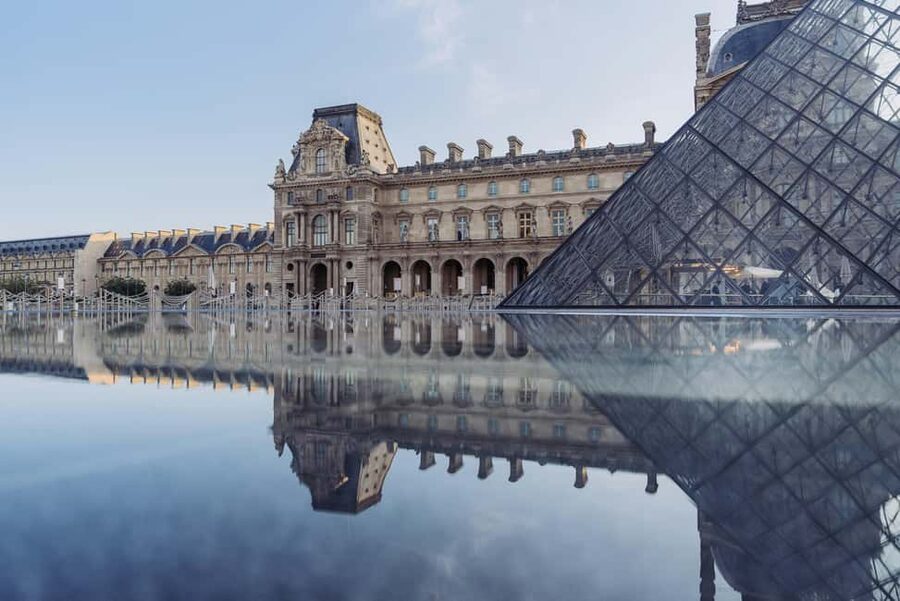
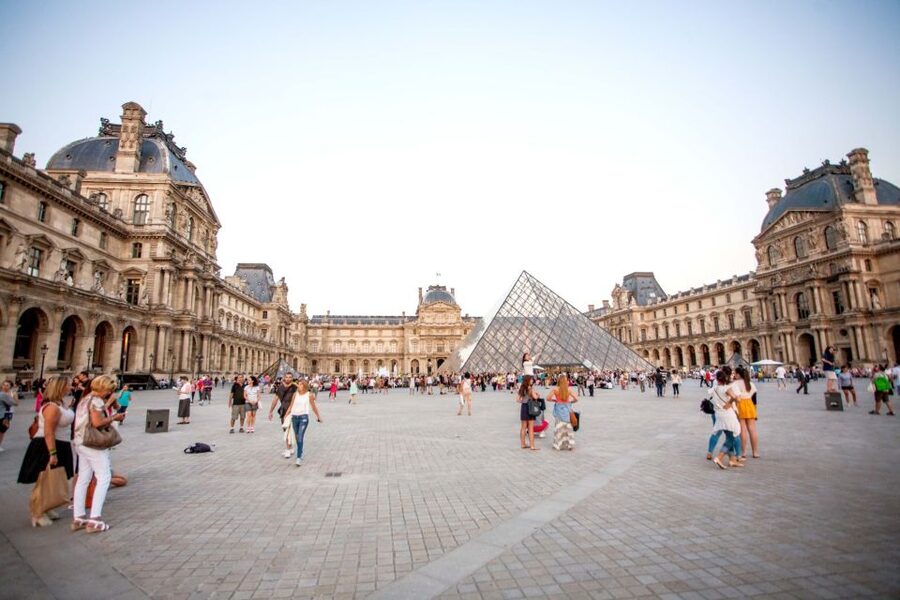
The opening stop at the Louvre Pyramid lasts about 30 minutes and includes a photo stop and an introduction from your guide. This is a useful beginning because the Louvre can feel confusing even before you enter. You get a little orientation, some background on the setting, and a chance to see how the modern glass Pyramid sits against the old palace buildings.
The contrast is part of the appeal. The Louvre is not simply a gallery placed in a neutral building. It grew from a medieval fortress into a royal residence and then into a museum. The architecture is part of what you came to see.
This stop is not a substitute for a full architectural tour, but it gives the visit a better frame. You begin to understand that the museum contains layers from different periods rather than one single grand design.
Reserved entry and the first practical advantage
Reserved access saves time, but it does not mean walking straight through every door. You still pass museum security, and queues can form there. Large bags, luggage, and anything over 55 by 35 by 20 centimeters are not allowed, so arrive without bulky belongings.
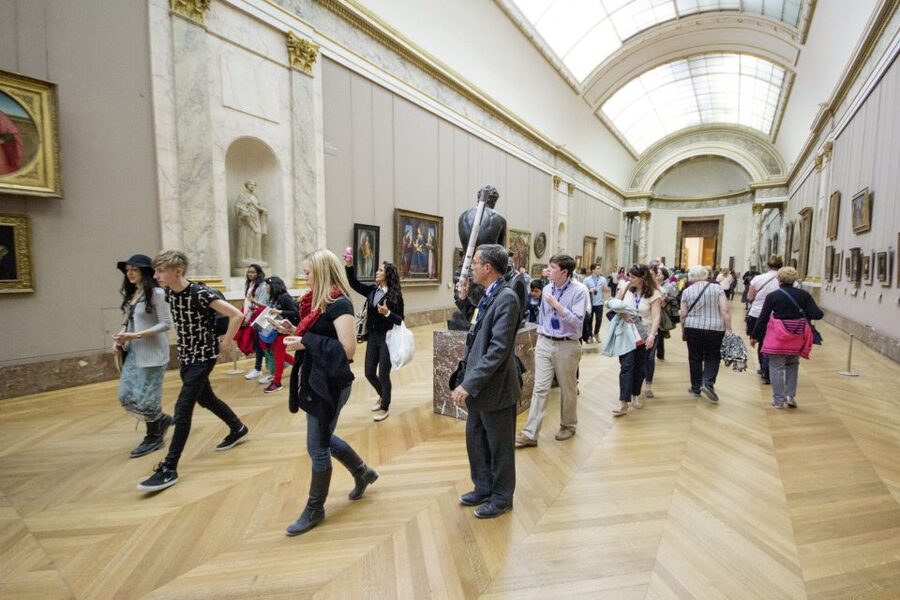
Once inside, your English-speaking guide uses a personal headset. That small detail becomes important in crowded rooms. Instead of clustering around a guide and trying to catch every sentence, you can stand at a sensible distance and still follow the explanation.
The tour usually works best for first-time visitors who want a route. The Louvre is so large that a self-guided visit can easily turn into a long walk between rooms with little sense of how the pieces fit together. A guide gives you priorities and keeps the group moving.
Groups of seven or more may be split into separate groups on the day. That is worth knowing if you are traveling with a large family or a group of friends. It may be less convenient, but it can also make movement through the galleries easier.
Mona Lisa: famous, crowded, and still worth seeing
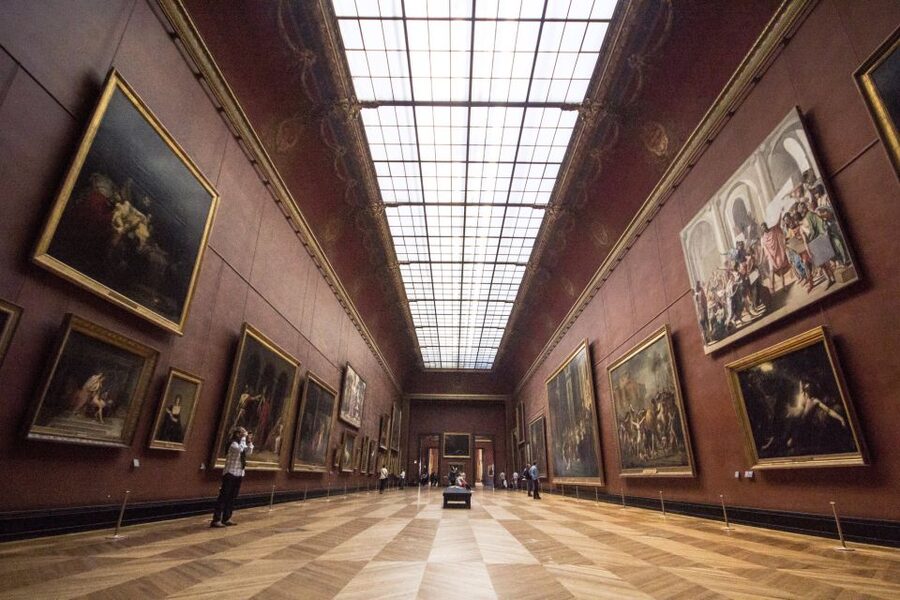
Leonardo da Vinci’s Mona Lisa is the headline stop, and the tour is designed to get you to it as part of a larger Louvre route. The painting is small compared with the fame surrounding it, and the room can be crowded.
You should adjust your expectations. This is not a quiet appointment with Leonardo. You may wait your turn for a clear view, and other people will be taking photographs around you. One useful part of having a guide is learning how to approach the room and where to position yourself without wasting time in the crowd.
The painting is more interesting when you know what to look for. Your guide may point out the expression, the landscape, the pose, and the way Leonardo created uncertainty around the subject. The value is not just checking the Mona Lisa off a list. It is learning why this particular portrait became such a cultural giant.
The tour may end at the Mona Lisa, giving you a natural choice. You can leave after the guided portion, or continue through the museum on your own if you still have energy.
A different way to spend the day, same corner of France:
- Paris: Evening River Cruise with Music
★ 4.4 · 22,721 reviews - Paris: Eiffel Tower Entry Ticket with Optional Summit Access
★ 4.4 · 20,035 reviews - Paris: Eiffel Tower Summit or Second Floor Access
★ 4.3 · 17,248 reviews - Paris: Louvre Guided Tour with Reserved Access & Boat Cruise
★ 4.3 · 16,353 reviews
Greek and Roman antiquities, from Venus to the Great Sphinx
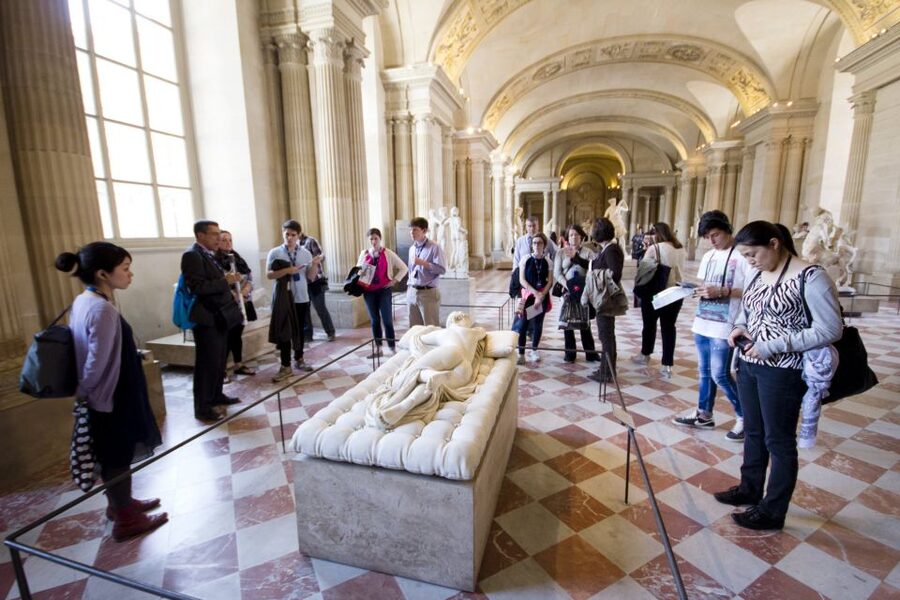
The classical collection provides some of the tour’s strongest visual variety. The Venus de Milo is instantly recognizable, but seeing it in its gallery gives you a better sense of its scale, surface, and missing arms. Your guide can also explain how later generations shaped the way we think about ancient sculpture.
The Winged Victory of Samothrace is another major stop. Its position at the top of the Daru staircase gives the sculpture a powerful setting. The figure appears to move forward through wind, even though the head and arms are missing. It is one of those works where placement, stairway, and surrounding space all add to the experience.
The Great Sphinx of Tanis takes you further back, to a monument more than 4,000 years old. Its imposing size and age make it a useful reminder that the Louvre is not mainly a collection of European paintings. You move between ancient Egypt, Greece, Rome, the Renaissance, and nineteenth-century France in a single morning.
This range is one reason a guide helps. Without some signposts, the museum’s collections can feel like separate worlds. With explanations, you begin to see how power, religion, mythology, portraiture, and royal collecting connect the rooms.
Renaissance paintings and sculpture highlights

The route includes works associated with Leonardo da Vinci and Raphael, giving you a closer look at the Renaissance beyond the Mona Lisa. The period is often reduced to famous names, but the guide’s explanation can help you notice composition, gesture, light, and the changing treatment of the human figure.
You also encounter Caravaggio, whose work brings a sharper emotional force. His paintings use strong light and shadow to make figures feel present and immediate. That kind of comparison is useful in a museum filled with different schools and centuries. You are not just moving from one famous title to another. You are seeing how artists solved similar problems in very different ways.
Michelangelo’s Dying Slave is one of the sculpture highlights. It has a different mood from the heroic public image many people carry of Michelangelo. The unfinished quality and twisting body invite questions about intention, struggle, and the line between a finished sculpture and one still emerging from stone.
Canova’s Psyche Revived by Cupid’s Kiss offers another change in tone. Its smooth marble, intertwined figures, and graceful movement show the refined side of neoclassical sculpture. Seeing it after Michelangelo gives you a useful visual comparison between muscular tension and polished romantic elegance.
The guide’s role is especially valuable here. Art history can become a stack of dates and names, but the better guides turn those facts into stories. Saeed has been praised for bringing works to life with anecdotes, while Omar has been singled out for combining art background with an easy, lighthearted manner. Your assigned guide will vary, but the format gives you a chance to ask questions rather than simply read labels.
French Romantic art and the royal rooms
The tour also moves through the emotional world of French Romanticism. This section adds drama and movement after the balance of classical sculpture and Renaissance painting. The guide helps you place the works within a period when artists favored heightened feeling, political subjects, strong color, and theatrical scenes.
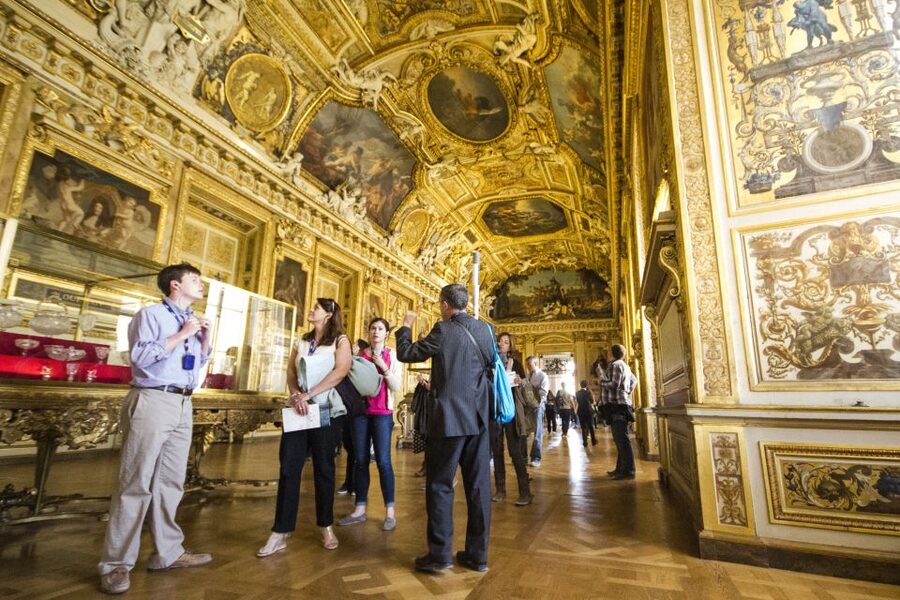
The Apollo Gallery is a change of pace. Once linked to the Louvre’s royal identity, it is known for its grand decoration and ceiling. It reminds you that the building was a palace before it became a public museum. Even if you are mainly visiting for paintings, this room gives you a stronger sense of royal display and ceremony.
The Napoleon Apartments continue that theme. Their Second Empire interiors remain highly decorated, with rooms designed to impress rather than to feel modest or relaxed. I like this part of the tour because it keeps the Louvre from becoming a checklist of paintings. You see the environment in which rulers, officials, and court society once lived and received guests.
The drawback is that the route cannot linger everywhere. A three-hour guided visit through such a large museum must make choices. If a particular room captures your attention, note its location and return during your free time.
How much time you really need
The guided portion is described as about three hours, including the Pyramid introduction and roughly two and a half hours inside the Louvre. The published schedule also allows up to two hours of free time in the museum afterward, so you should check the starting time and plan for a longer overall visit if you intend to stay.
That extra time is a major advantage. The guided route gives you an organized first look, but the free period lets you slow down. You might revisit a sculpture, find another section of the collection, or simply sit with a painting for more than the group pace allows.
The tour is not built for close study of every object. You will walk, stop, listen, move again, and repeat. Several people have found the pace ideal for seeing the main attractions without feeling lost, while one art-focused visitor wanted longer with each work. Both reactions make sense.
I suggest using the guided hours to learn the museum’s layout and priorities. Save your extra time for one or two areas you genuinely want to explore. Trying to see everything after the tour will only make the Louvre feel larger.
Crowds, comfort, and mobility
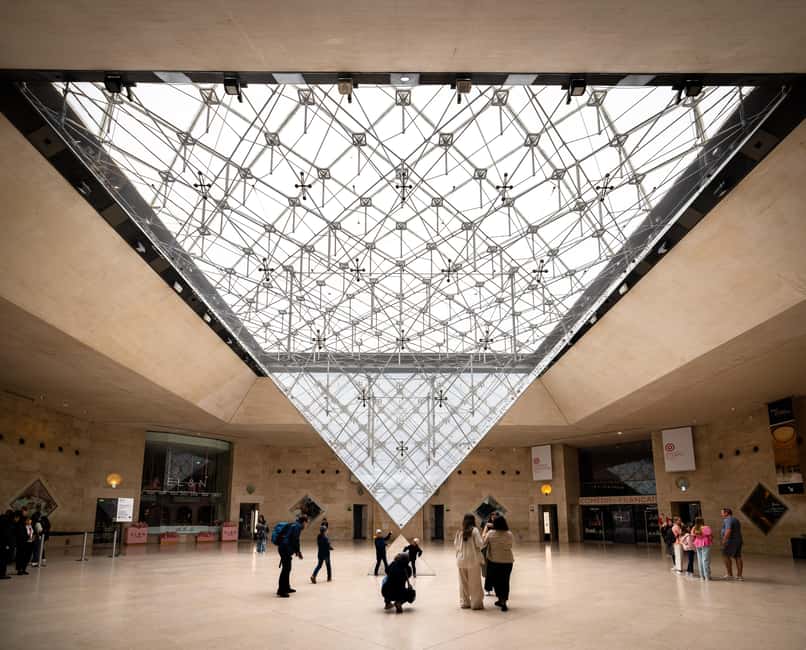
The Louvre can be crowded, especially around the Mona Lisa and the major classical works. Guides such as Summer and Addie have been praised for moving groups through busy galleries and keeping people together. That practical help matters more than it might sound. A large museum is tiring, and losing your group can turn a good visit into a frustrating one.
You will spend a fair amount of time on your feet. Comfortable shoes are essential, and the tour is not suitable for wheelchair users or people with mobility impairments. Baby strollers, luggage, and oversized bags are not permitted, so think carefully about what you carry.
There is security before entry for everyone. Reserved access reduces the ticket-line problem, but it does not remove the need for screening. Build in patience at the start, especially if the museum is busy.
Is the $80 price good value?
At $80 per person, this is not the cheapest way to enter the Louvre. You are paying for more than admission: reserved access, an English-speaking guide, a headset, and a planned route through the museum’s major works.
For a first visit, I think the price can make sense. The Louvre’s scale is the main challenge, not a lack of things to see. A guide helps you spend your limited Paris time on the pieces most people hope to find, while adding stories and context that labels cannot provide.
The value is weaker if you already know the museum well or prefer to wander alone. You may find the group pace restrictive, and you will still need to return to favorite works during free time. The separate entry price for younger EU visitors aged 18 to 26 is also worth noting, since museum entry is free for them, although the tour’s reservation and guided services may still affect the overall booking arrangement.
The optional wine tasting changes the shape of the day rather than the museum visit itself. After the tour, you can go to Ô Chateau for selected wines paired with artisanal cheese and charcuterie. It suits anyone who wants to follow art with a relaxed Paris food stop, but it is not part of the basic tour.
Who should book this Louvre tour?
I would choose this experience if you are visiting the Louvre for the first time, have only a few hours, or feel uneasy about navigating one of Europe’s largest museums. It is also a good fit if you want history and art explained in plain English rather than relying on room labels.
Families with older children may appreciate the structure, though the walking and standing require stamina. Large groups should be prepared for possible separation into smaller parties.
I would choose a different approach if you want to spend an hour with one painting, move at your own speed, or focus on a collection not included in the main route. The tour covers major highlights, not every department and not every famous artist. One visitor specifically wished for more time with works by Monet and other masters outside the main focus.
Should you book it?
Book it if the Mona Lisa, Venus de Milo, Winged Victory, famous sculpture, and royal interiors are high on your Paris list. The strongest part of the experience is the combination of reserved entry and a guide who can make sense of the Louvre’s size.
Go early if you can, wear good shoes, carry only what you need, and plan to stay afterward for the free time. At $80, the tour is best seen as a time-saving introduction rather than a complete Louvre education. For most first-time visitors, that is a fair trade.
FAQ
Where is the meeting point?
Meet beside the Arc de Triomphe du Carrousel, to the left of the arch along the wall railing. With your back to the Louvre Pyramid, look across the road toward the entrance to the Tuileries Garden. Staff wear blue.
Is the meeting point at the Louvre entrance?
No. The meeting point is beside the Arc de Triomphe du Carrousel, not at the entrance to the Louvre Pyramid.
How long does the guided tour last?
The experience is advertised as three hours, or 210 minutes. The route includes about 30 minutes at the Pyramid and roughly two and a half hours inside the Louvre.
Can I stay in the Louvre after the guided tour?
Yes. The schedule includes up to two hours of free time in the Louvre after the guided portion, allowing you to continue exploring independently.
Does the tour include the Mona Lisa?
Yes. The route includes Leonardo da Vinci’s Mona Lisa, along with the Venus de Milo, Winged Victory of Samothrace, Great Sphinx of Tanis, and other major works.
Is the wine and cheese tasting included?
It is included only when you select the upgrade option. The tasting takes place at Ô Chateau and includes wine paired with artisanal cheese and charcuterie.
Is the tour suitable for wheelchair users?
No. The tour is not suitable for wheelchair users or people with mobility impairments. It also involves a fair amount of walking and standing.
Recently reviewed around Paris
- Louvre Private Tour – The Essentials and More with Expert Guide★ 5.0 · 227 reviews
- 2CV tour by night★ 5.0 · 55 reviews
- Eiffel Tower Second or Summit Floor Access by Elevator with Views★ 3.5 · 161 reviews
- 2 Hour Street-art Walk and Space Invaders Hunt in Paris★ 5.0 · 27 reviews
- 2 hour outdoor group activity in Paris: SAINT GERMAIN★ 5.0 · 48 reviews
- The only Paris Wine Tasting experience you need to do – 2 hours★ 5.0 · 265 reviews
- Sainte-Chapelle, Conciergerie & Palais de Justice Private Tour★ 5.0 · 72 reviews
- Private 2 – Hour Paris Landmarks Tour by Golf Cart Mini Moke★ 5.0 · 38 reviews
Louvre Museum Tours, compared.


Louvre Guided Tour with Reserved Access & Boat Cruise
Read our review →
Louvre Museum Masterpieces Guided Tour with Access
Read our review →
Louvre Museum Entry Ticket With Host and River Cruise
Read our review →
Priority Access Louvre with Host -Direct to Mona Lisa
Read our review →
Louvre Museum – Exclusive Guided Tour (Entry Included)
Read our review →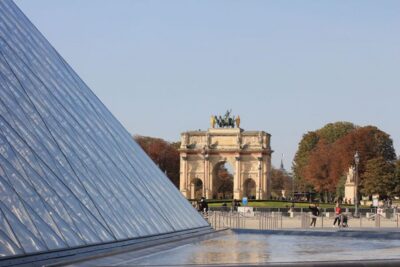
Louvre Reserved Ticket and River Cruise Combo
Read our review →
Louvre Museum Hosted Entry and Mona Lisa Audioguide
Read our review →Browse the lists this tour appears in