
Reviewed · NORMANDY TOURS
Omaha and Utah beaches
Omaha and Utah beaches are not simply scenic stretches of Normandy coast. They are places where the military plan, the terrain, and individual acts of courage come together in a way that is hard to grasp in a museum. This full-day tour follows the American V Corps and VII Corps, linking famous sites with small villages, farm buildings, bridges, batteries, and a church that became a wartime aid station.
I like the way the tour combines Omaha Beach, Pointe du Hoc, and the American Cemetery with less familiar places such as La Fière and Angoville-au-Plain. I also like the small-group format, capped at 16 people, and the guides’ use of maps, photographs, family stories, and clear battlefield explanations. The main drawback is the long day: lunch is not included, hotel pickup and drop-off are not provided, and the beaches can be cold and wet, especially outside summer.
In This Review
- Key points to know before you book
- Why this tour gives you more than a beach visit
- Starting in Bayeux at 8:20 am
- Longues-sur-Mer Battery sets the scene
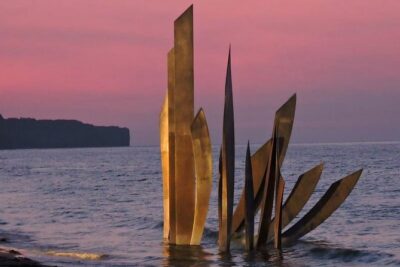
- Omaha Beach: wide, quiet, and sobering
- The American Cemetery at Colleville
- Pointe du Hoc and the German gun positions
- Sainte Mère Église and the airborne story
- Holdy Battery, the first aid station, and La Colombière
- Hiesville and General Taylor’s headquarters
- Angoville-au-Plain church brings the day close
- What the $183.81 price buys you
- Who will get the most from this day
- Practical advice for a smoother day
- Should you book the Omaha and Utah beaches tour?
- FAQ
- Where does the Omaha and Utah beaches tour start?
- What time does the tour begin?
- How long does the tour last?
- Where does the tour end?
- Does the tour include hotel pickup?
- Is lunch included?
- What language is the tour offered in?
- How many people can join the tour?
- What transport is provided?
- Can I cancel for a full refund?
Key points to know before you book
- A full American-sector day: You visit both Omaha and Utah beaches, along with sites tied to the American V Corps and VII Corps.
- More than the famous beaches: The route includes La Fière, DeGlopper Action, Holdy Battery, General Taylor’s headquarters, and Angoville-au-Plain.
- Strong guide-led storytelling: Guides including Theo, Adam, Valentine, Ben, William, and Antoine are praised for clear explanations, personal stories, and a good sense of pace.
- Small-group transport: A private vehicle carries a maximum of 16 people, making it easier to hear the guide and keep the day moving.
- Plan for your own lunch: Food and drinks are not included, and the tour ends back at the central meeting point rather than at your hotel.
- A moving, physically manageable day: Most people can take part, but expect time outdoors, walking on beaches, and changing weather.
Why this tour gives you more than a beach visit
A visit to Omaha Beach on your own can be powerful, but it can also leave you unsure of what you are looking at. The shoreline is broad, open, and quiet. Without a guide pointing out routes, defensive positions, and the direction of the attack, it is easy to miss why the ground mattered so much.
This tour gives each stop a place in the larger campaign. You move from coastal defenses to landing beaches, then inland through villages and crossroads where airborne units and ground troops fought to hold roads and bridges. That connection is the real value.
I also appreciate the human scale of the explanations. Guides such as Theo, Antoine, Adam, and Valentine are praised for explaining military events through individual stories rather than burying you in dates and unit numbers. William is noted for bringing the subject to life, while Ben is praised for keeping the detail at a level that informs without overwhelming.
The quality of the day depends heavily on your guide. That is normal for a battlefield tour, but it is worth saying plainly. A guide who can answer unexpected questions, use maps and wartime photographs, and relate a farm or church to the events around it can change the whole experience. The guide does not simply point at monuments. The guide helps you read the ground.
Other Bayeux days travellers weigh against this one:
- Normandy American D-Day Beaches Full Day Tour from Bayeux
★ 5.0 · 2,103 reviews - Normandy American D-Day Experience – Group tour from Bayeux
★ 5.0 · 1,566 reviews - Normandy Beaches Half-Day Afternoon Trip from Bayeux (A2)
★ 4.5 · 1,116 reviews
Starting in Bayeux at 8:20 am
The tour begins at Place du Québec in central Bayeux at 8:20 am. You need to make your own way there, since hotel pickup is not included. The activity returns to the same meeting point at the end of the day, which makes it practical if you are staying in central Bayeux.
The early start matters. You have many stops ahead, and the route covers a wide section of the American landing area. This is not a relaxed half-day outing with one beach and a museum. It is a tightly planned nine-hour program with frequent changes of location.
Transport is by private vehicle, with a maximum group size of 16. That is a useful middle ground. You avoid the impersonality of a large coach, but you are not paying for a fully private tour. A comfortable van also saves time on roads between the beaches and inland sites.
The route can become slower during major anniversary periods. One account describes heavy traffic during the 80th anniversary crowds, while the tour still managed to cover its planned sites. If you visit around a major commemoration, allow for a less predictable day.
Longues-sur-Mer Battery sets the scene
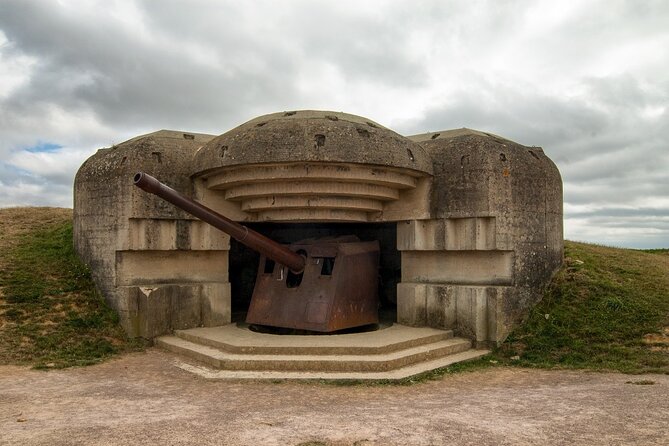
The first listed stop is the Longues-sur-Mer Battery, one of the German coastal defense positions connected with the D-Day assault area. This is a useful opening because it gives you a physical sense of the defenses the Allied forces faced before reaching the beaches.
The battery helps explain that the invasion was not just a matter of landing on sand. German guns, concrete positions, open approaches, and the need to silence or bypass defenses all shaped the operation. Your guide can give the military context before you reach the more emotionally heavy stops.
This is also a good place to listen for the difference between a tour that simply names structures and one that explains how they fit into the attack. The experience is strongest when the guide uses maps or photographs to show sight lines and movement.
Omaha Beach: wide, quiet, and sobering
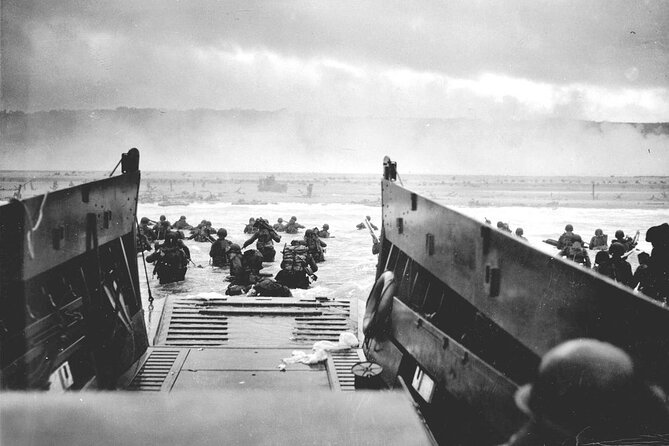
Omaha is likely to be the emotional center of your day. The beach appears peaceful now, but the open shoreline makes it easier to understand the exposure faced by the men who landed here. The distance from the water toward the higher ground is part of the story.
You should give yourself time to look rather than treating the stop as a quick photo break. One guide may focus on the overall assault plan, while another may explain a particular unit, obstacle, or act of courage. The most effective explanations connect the broad operation with the decisions made by small groups under fire.
The emotional impact can be strong. You might find yourself thinking less about strategy and more about the young men who had to cross the sand. That is one reason this tour suits people who want a serious historical experience, not just a scenic drive along the coast.
Omaha is also weather-sensitive. In autumn and spring, the beach can feel cold in the morning, and rain is possible. Wear warm layers and shoes suitable for outdoor walking. Even in good weather, the beach is not the place for flimsy footwear.
A different way to spend the day, same corner of France:
- Omaha and Band Of Brothers Full Day Tour
★ 5.0 · 1,104 reviews - Omaha Beach D-Day Experience – Afternoon group tour from Bayeux
★ 5.0 · 1,088 reviews - Normandy Battlefields Tour – American Sites (A3)
★ 5.0 · 876 reviews - Private D-Day Experience from Bayeux
★ 5.0 · 573 reviews
The American Cemetery at Colleville
The American Cemetery at Colleville gives the day a different weight. After hearing about movement, attack plans, and defensive positions, you enter a place centered on the dead.
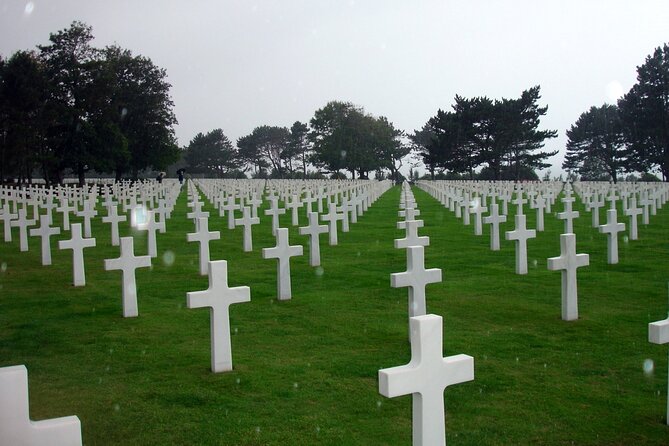
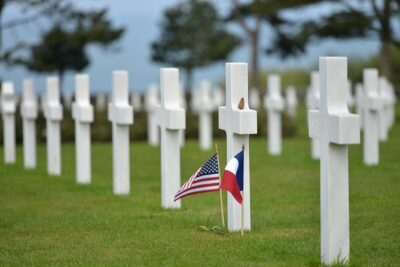
Rows of white markers stretch across the grounds, creating a scale that is difficult to process one person at a time. The cemetery is not merely another stop to check off. It is where the human cost of the campaign becomes most visible.
Your guide can provide context, but you should also allow for quiet. This is one of the places where a packed schedule can feel slightly at odds with the setting. The advantage of a planned tour is that you get there efficiently. The disadvantage is that you have less freedom than on a private visit to decide exactly how long to stay.
For many people, the cemetery is the most affecting stop of the day. I would not plan another demanding activity immediately afterward if you prefer time to absorb what you have seen.
Pointe du Hoc and the German gun positions

Pointe du Hoc adds a different kind of battlefield terrain. The site is linked with the effort to capture German gun positions above the coast, and its cliffs and bomb-scarred ground help you picture the difficulty of the operation.
The stop works well after Omaha because it shows another form of attack. Instead of crossing a broad beach, troops had to deal with steep ground and fixed defenses. Your guide’s explanation is especially useful here because the physical setting does much of the teaching.
The tour also includes German gun emplacements, with some guns still intact. Seeing the concrete positions and surviving equipment makes the technology of coastal defense more real than a paragraph in a book. You can better understand the problem Allied troops faced when the objective was not simply to reach land, but to neutralize weapons that threatened the invasion fleet and beach approaches.
Pointe du Hoc can be uneven underfoot. Stay close to marked paths and watch your step. The site is outdoors, and the weather may make the ground slippery.
Sainte Mère Église and the airborne story
Sainte Mère Église is one of the best-known inland locations connected with the American airborne landings. The village brings the story away from the coast and into the roads, buildings, and fields where paratroopers fought to secure the route inland.
This stop helps you understand why the beach landings could not succeed on their own. Control of bridges, roads, and key villages was vital. The fighting continued well beyond the first minutes on the shoreline.
The tour also visits La Fière, a bridge and nearby area with an important airborne connection. These inland stops are valuable because they show how scattered actions contributed to the larger advance. You are not just following a line from one monument to the next. You are tracing how American forces tried to connect landing areas and hold ground under pressure.
The route includes the DeGlopper Action, another site tied to individual courage during the campaign. This is the kind of stop that can be missed without a specialist guide. It may not carry the same name recognition as Omaha, but it gives the day its personal detail.
Holdy Battery, the first aid station, and La Colombière
The Holdy Battery and 1st Aid Station continue the move inland. Here, the focus shifts toward defensive positions and medical care. That change matters. A battle is not only about advances and attacks. It also involves treating the wounded, moving supplies, and keeping units functioning.
La Colombière Hospital adds another human layer to the story. Your guide may explain how buildings and farms were used during the fighting, helping you see that Normandy’s villages were not distant backdrops. Homes, churches, roads, and fields became places of shelter, treatment, command, and conflict.
The strongest part of this section is the way small locations fill in the gaps between the famous sites. You may not recognize every name before the tour, but by the end you can see how these places supported the larger operation.
Hiesville and General Taylor’s headquarters
At Hiesville, the tour visits General Taylor’s headquarters. This stop gives you a command-level view after the earlier focus on troops and individual actions.
The contrast is useful. At Omaha and Pointe du Hoc, you are looking at the physical challenge faced by soldiers on the ground. At headquarters, you can consider how commanders tried to understand a confused battlefield, move forces, and hold objectives across a wide area.
The tour also includes the General Pratt Memorial. These memorials can be easy to rush past when you are driving independently, especially if you do not know the person or action being commemorated. A guide gives the memorial a reason to be there and links it to the day’s wider story.
Angoville-au-Plain church brings the day close
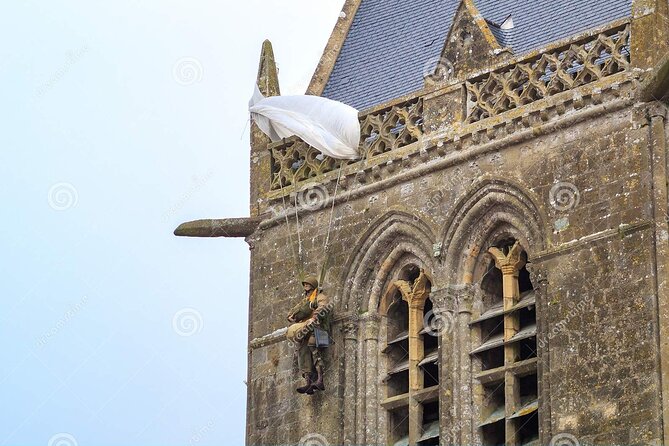
Angoville-au-Plain is one of the most distinctive stops. The church is associated with two medics who cared for about 80 Allied and German soldiers. That detail changes the tone of the tour once again.
The church is not presented only as an old building. It becomes a place where the rules of medical care and human decency mattered amid the fighting. The story is memorable because it is specific: a small interior, wounded men, and medics caring for soldiers on both sides.
This is the kind of place I value most on a Normandy tour. Famous beaches explain the scale of D-Day, but a church in a village can explain its moral complexity. You leave with a stronger sense of how ordinary buildings became places of extraordinary pressure.
What the $183.81 price buys you
At $183.81 per person, this is not the cheapest way to see Normandy. You are paying for about nine hours of transport, a private vehicle, and a driver or guide who knows how to connect a large number of sites without wasting your day on navigation.
The price makes the most sense if you have limited time in Bayeux or do not want to rent a car. Driving yourself can give you more control, but it also means researching each site, finding the right roads, managing parking, and learning enough background to understand what you see. This tour handles that work for you.
It also gives you access to a route that goes beyond the standard beach visit. Omaha, Utah, Pointe du Hoc, Sainte Mère Église, and the American Cemetery are major draws, but the smaller memorials and village sites add much of the tour’s value.
Lunch and drinks are not included, so set money and time aside for your own meal. Hotel pickup and drop-off are also excluded. Those are not major flaws, but they matter when you compare the total cost with a private car or a shorter excursion.
Who will get the most from this day
I would choose this tour if you want a guided military history experience with a strong human focus. It suits first-time visitors who want the main American sites explained in one day, as well as people who already know the basic D-Day story and want smaller locations added to it.
It is especially useful for families and mixed-interest groups. The guide’s maps, photographs, stories, and battlefield explanations can give structure to the day without requiring everyone to arrive with the same level of background.
You should think twice if you prefer to spend a long time at one museum or one cemetery. The route covers many places, so each stop has a limited window. It is also not ideal if you want a slow coastal outing with no fixed schedule.
The tour is offered in English. Most people can participate, and service animals are allowed. Still, expect outdoor conditions and some walking on beach and historic-site surfaces.
Practical advice for a smoother day
Wear warm clothing, especially in the cooler months. The beaches can feel exposed, and one March visit included cold weather with occasional rain.
Bring water and plan for lunch, since food and drinks are not included. The tour may help you find a practical meal stop, but you should not count on lunch being supplied.
Arrive early at Place du Québec. The start time is 8:20 am, and the day works best when the vehicle can leave promptly.
If you are choosing among guides, names that have received especially strong praise include Theo, Adam, Valentine, Ben, Antoine, William, and Guillaume. You cannot necessarily select a particular guide when booking, but the repeated strength of the guiding team is an important part of the experience.
Free cancellation is available if you cancel at least 24 hours before the start time. Confirmation is sent within 48 hours, subject to availability. The activity is capped at 16 people and ends back at the meeting point.
Should you book the Omaha and Utah beaches tour?
Yes, if you want one serious, well-organized day covering the American D-Day story from the beaches to the inland fighting. The combination of Omaha, Utah, Pointe du Hoc, the American Cemetery, Sainte Mère Église, La Fière, and smaller memorial sites gives you far more context than a quick coastal drive.
I would book it as a first full day in the American sector, especially if you are staying in Bayeux and do not have a car. I would also choose it over a narrower beach-only outing if you want the guide to explain how airborne actions, medical stations, command posts, and village battles fit together.
Skip it if you need a relaxed schedule, dislike group transport, or want lunch and hotel transfers included. For everyone else, the cost is justified by the time saved, the range of places reached, and the quality of the guiding. This is a moving day, but it is also a useful one: you leave with a clearer understanding of what happened on the coast and why the inland roads mattered just as much.
FAQ
Where does the Omaha and Utah beaches tour start?
It starts at Place du Québec, Place du Québec, 14400 Bayeux, France.
What time does the tour begin?
The scheduled start time is 8:20 am.
How long does the tour last?
The tour lasts approximately nine hours.
Where does the tour end?
The activity ends back at the meeting point in Bayeux.
Does the tour include hotel pickup?
No. Hotel pickup and hotel drop-off are not included.
Is lunch included?
No. Lunch, food, and drinks are not included.
What language is the tour offered in?
The tour is offered in English.
How many people can join the tour?
The maximum group size is 16 people.
What transport is provided?
Transport is provided by private vehicle, with a driver or guide and professional guiding included.
Can I cancel for a full refund?
Yes. You can cancel at least 24 hours before the experience start time for a full refund. Cancellations or changes made less than 24 hours before the start time are not refunded or accepted.
Recently reviewed around Bayeux
- WW2 Jeep or Dodge truck tour of the Omaha Beach site★ 5.0 · 51 reviews
- 2- to 6-hour sidecar excursion on the D-Day Landing Beaches★ 5.0 · 131 reviews
- Normandy U.S. D-Day Sites Half Day Tour From Bayeux★ 5.0 · 325 reviews
- Mont Saint Michel Experience – Shuttle Service from Bayeux★ 5.0 · 194 reviews
- Normandy Battlefields D-Day Private Trip with VIP Services from Paris★ 5.0 · 240 reviews
- Private Walking Guided Tour of Historic Bayeux English or French★ 5.0 · 36 reviews
- Private Full day American D-Day Guided Tour in Bayeux★ 5.0 · 133 reviews
- Private vintage sidecar tour of the D-Day Landing Beaches★ 5.0 · 130 reviews
Normandy Tours, compared.
Normandy American D-Day Beaches Full Day Tour from Bayeux
Read our review →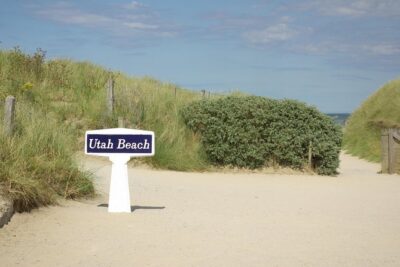
Normandy American D-Day Experience – Group tour from Bayeux
Read our review →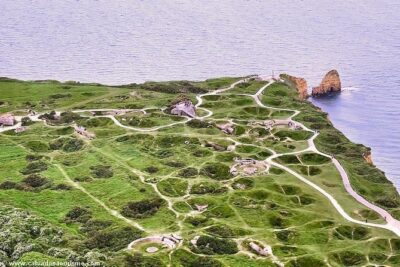
Normandy Beaches Half-Day Afternoon Trip from Bayeux (A2)
Read our review →
Omaha Beach D-Day Experience – Afternoon group tour from Bayeux
Read our review →
Normandy Battlefields Tour – American Sites (A3)
Read our review →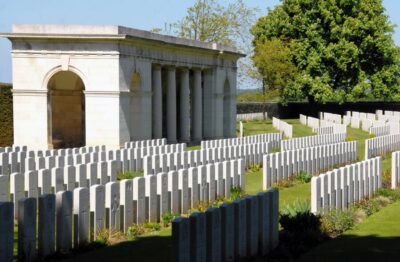
American D-Day Sites in Normandy Half-Day Tour
Read our review →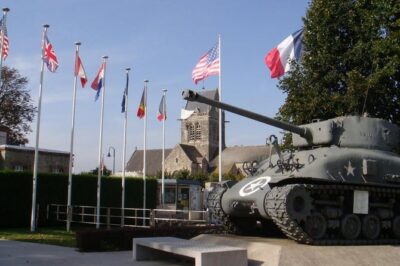
Browse the lists this tour appears in