
Reviewed · NORMANDY D-DAY TOURS
Normandy American D-Day Experience – Group tour from Bayeux
Omaha Beach, the American Cemetery, Pointe du Hoc, Utah Beach, and Sainte-Mère-Église make this a serious day of D-Day history, not a quick photo stop. Your guide connects the beaches to the fields, villages, roads, and German defenses that shaped the battle. Charles, Fred, Pierre, and Robin have all led especially strong days, with clear storytelling and room for questions.
I like two things right away: the wide range of sites and the fact that transport from central Bayeux is handled for you. You can cover both landing beaches, the cemetery, the Rangers’ cliffs, and the airborne story without wrestling with rural roads or parking. The tradeoff is simple: this is a long day, with considerable driving and only about 40 to 50 minutes at most stops.
In This Review
- Key points to know before booking
- What this American D-Day tour covers
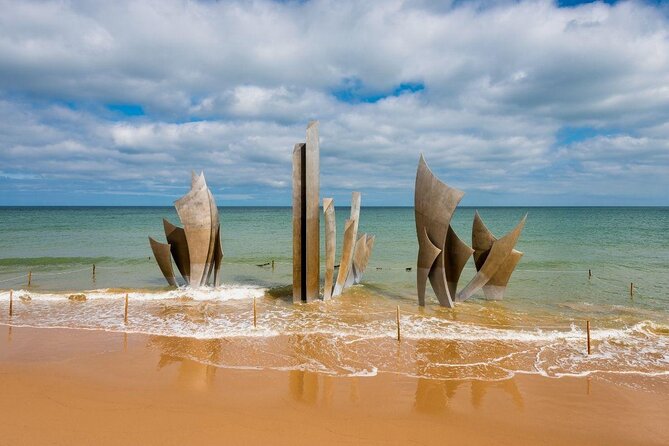
- Omaha Beach gives the day its emotional start
- The American Cemetery allows a quieter pause
- Pointe du Hoc shows what the Rangers faced
- The Airborne Museum rewards a brisk visit
- Sainte-Mère-Église links the airborne story to the road network
- The countryside explains why Normandy was so hard to cross
- Utah Beach completes the American story
- The van makes the day practical, but not short
- Lunch, weather, and timing need a little planning
- Is $179.58 a fair price?
- Who should book this full-day experience?
- Should you book it?
- FAQ
- Where does the Normandy American D-Day tour start?
- Where does the tour end?
- How long does the tour last?
- Is lunch included?
- Is the Airborne Museum included?
- Can I bring large luggage?
Key points to know before booking
- Omaha and Utah in one day: You get a useful comparison between two very different American landing areas.
- The American Cemetery is given real time: A guided introduction is followed by about 45 minutes to walk among the graves on your own.
- Pointe du Hoc remains a powerful stop: Craters and cliff-top positions help explain the Rangers’ difficult mission.
- The Airborne Museum is included: Your admission is covered, though 45 minutes is enough for a brisk visit rather than a thorough one.
- Small-group minivan transport: The advertised capacity is around 20 to 21 people, far more personal than a large coach.
- Expect a full, tightly timed day: Lunch is not included, and the tour runs in all weather.
What this American D-Day tour covers
This is an eight-and-a-half-hour circuit from Bayeux built around the American experience of June 6, 1944. It begins at 8:45 a.m. at Parking Québec-Orangerie, a central departure point that is within a short walk of some Bayeux hotels.
The route gives you a broad view rather than a deep study of one regiment or one beach. You move from the sea to the cemetery, then west to Pointe du Hoc, inland to the airborne sites, and back toward Utah Beach. Along the way, the guide explains the bocage, Normandy’s hedgerow country, and why this ordinary-looking farmland slowed the Allied advance.
That variety is the tour’s main strength. If you have never visited Normandy, you’ll see the places most visitors hope to understand. If you have already read books or watched documentaries, the geography helps turn names and maps into something you can picture.
The experience is guided in English. Guides named in the feedback include Fred, Charles, Pierre-Alexandre, Mathieu, Jeff, Jarod, and Robin. Their styles will vary, but the strongest comments focus on precise answers, a lively delivery, humor used with care, and a genuine interest in the subject. Charles was particularly good at handling questions from a mixed group, while Fred was praised for keeping a long day warm and human rather than stiff.
Other Bayeux days travellers weigh against this one:
- Normandy American D-Day Beaches Full Day Tour from Bayeux
★ 5.0 · 2,103 reviews - Normandy Beaches Half-Day Afternoon Trip from Bayeux (A2)
★ 4.5 · 1,116 reviews - Omaha and Band Of Brothers Full Day Tour
★ 5.0 · 1,104 reviews
Omaha Beach gives the day its emotional start
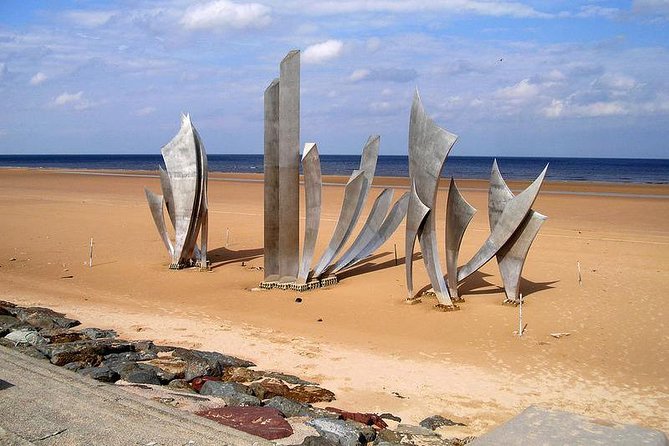
The first major stop is Omaha Beach, where the guide gives you an account of the American landings. This is a useful place to begin because the scale of the shore and the rising ground behind it are hard to grasp from a book.
You get about 45 minutes here, including roughly 15 minutes of free time on the sand, depending on the tide. That qualification matters. The beach is shaped by tidal conditions, so your time physically walking on the sand can vary.
Do not expect a long, quiet morning on Omaha. The guide has a lot to explain, and the schedule must keep moving. Still, even a short walk gives you a chance to look back toward the bluffs and consider the challenge faced by the troops coming ashore.
This stop is strongest when you listen first, then use your free time to look around without rushing. Bring a jacket. Normandy weather can be cool and windy, and one person who enjoyed the tour still advised dressing warmly.
The American Cemetery allows a quieter pause
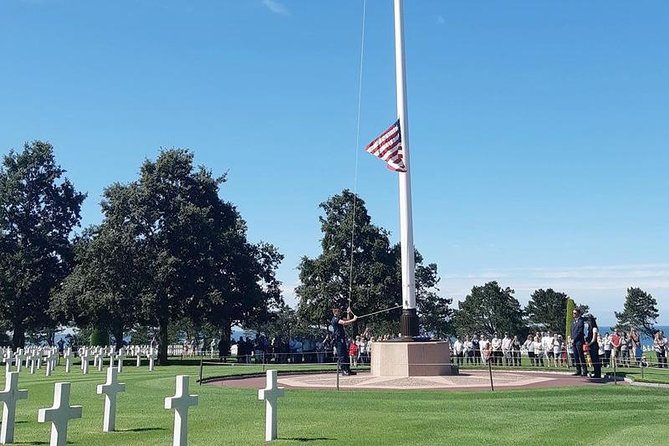
At the American Cemetery in Colleville-sur-Mer, the tone changes. Your guide explains why the cemetery was built where it is, how its location relates to Omaha Beach, and some of the stories connected with the people buried there.
After that introduction, you have about 45 minutes to explore alone. That is enough time to walk through part of the rows, pause at the memorial, and take in the view toward the coast. It is not enough to read every name or search for individual graves in detail, so adjust your expectations.
I consider this one of the most valuable parts of the day. A guide can explain military movements at the beach, but the cemetery brings the human cost into focus. The visit is not treated as just another landmark, and you have space to be quiet.
If you have a particular soldier or unit in mind, tell your guide early in the day and ask what can realistically be covered during the free period. The group must stay on schedule, so this is not a private research visit.
Pointe du Hoc shows what the Rangers faced

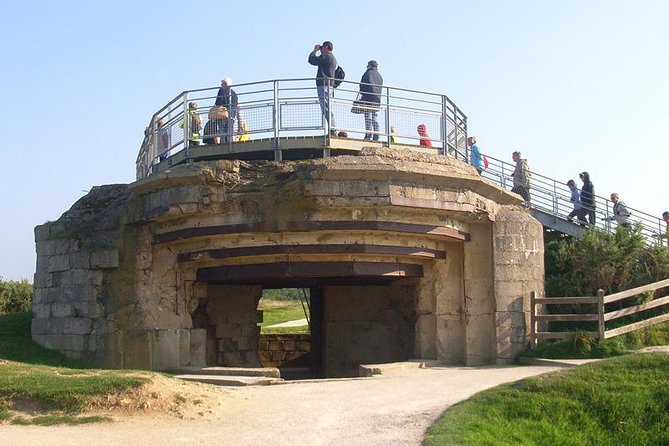
Pointe du Hoc is a compact but dramatic stop. Here, the guide explains the mission of the American Rangers, who scaled the cliffs to silence German guns believed to threaten the landing beaches.
You get about 40 minutes to explore after the introduction. The area is known for its bomb craters and damaged defensive positions, though the supplied details do not promise a particular route or every feature. Wear shoes suitable for uneven ground and dress for exposed coastal weather.
The value of Pointe du Hoc is visual. At Omaha, you look up from the beach toward the heights. Here, you stand on the heights and look down toward the sea. That change of angle makes the mission easier to understand.
The limitation is time. Forty minutes allows a good orientation, but you will not have unlimited time for every bunker, crater, or memorial. If military engineering or the Rangers’ operation is your main interest, you may want a separate visit on another day.
A different way to spend the day, same corner of France:
- Omaha Beach D-Day Experience – Afternoon group tour from Bayeux
★ 5.0 · 1,088 reviews - Omaha and Utah beaches
★ 5.0 · 1,085 reviews - Normandy Battlefields Tour – American Sites (A3)
★ 5.0 · 876 reviews - Private D-Day Experience from Bayeux
★ 5.0 · 573 reviews
The Airborne Museum rewards a brisk visit
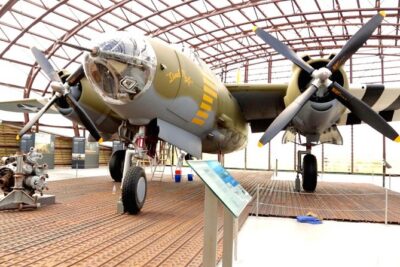
The Airborne Museum in Sainte-Mère-Église is included in the price, which helps the tour’s value. It adds the airborne side of the operation to the beach landings and gives you a different way to understand the early hours of the invasion.
The museum visit lasts about 45 minutes. That is enough to get a strong overview and see the main displays, but not enough to examine everything carefully. One practical approach is to listen to your guide’s explanation, then move quickly through the exhibits that interest you most.
The museum is especially useful because the day would otherwise focus heavily on beaches and coastal defenses. Here, the story shifts to paratroopers, transport routes, and the effort to secure roads and towns inland.
If museums are a major reason you travel, you may find this visit too short. Several people who enjoyed the full day felt the museum deserved more time. You can treat this tour as an introduction and return to Sainte-Mère-Église on your own if the airborne story catches your attention.
Sainte-Mère-Église links the airborne story to the road network
The town of Sainte-Mère-Église was important because it sat on the N13, the main route between Cherbourg, Bayeux, and Caen. That road mattered to both German and American forces moving equipment through Normandy.
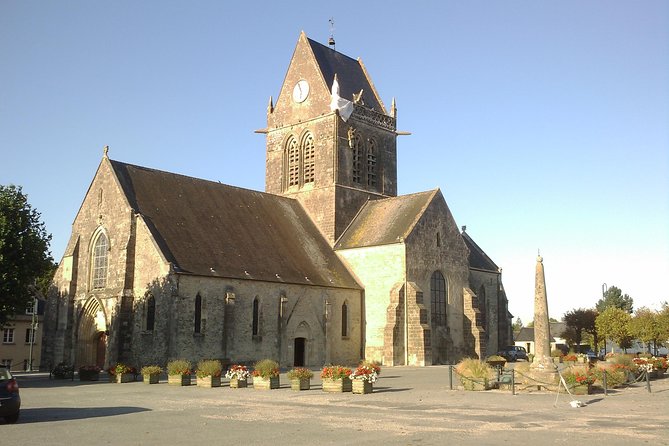
The guide explains the town’s connection to the 82nd Airborne Division and the story of American paratrooper John Steele, whose parachute caught on the church steeple. The town’s fame was also helped by the film The Longest Day.
You have about 45 minutes here. The stop gives you a chance to see the town rather than only hear about it from the van. It also helps connect the airborne operation to the wider fight for roads and movement, rather than treating paratroopers as a separate story.
The schedule can feel tight if you want to combine the church, town center, and museum at a leisurely pace. Pay attention to the meeting instructions before walking away from the group, especially after free time.
The countryside explains why Normandy was so hard to cross
Between the main stops, the guide points out the bocage, the thick hedgerow country that shaped the battle after the landings. This is more than scenery from a van window. The hedges and narrow roads gave German defenders useful cover and made it difficult for Allied forces to move inland.
I like this part because it fills the gaps between famous monuments. D-Day is often presented as a beach operation, but the advance beyond the shore was a separate and difficult fight. Seeing the countryside while hearing how it worked as a defense gives you a better sense of the campaign’s scale.
The guide also makes brief stops connected with the 101st Airborne and with Richard Winters, whose leadership became widely known through Band of Brothers. These are short roadside or village moments, not full museum visits, so they are best understood as added context.
Utah Beach completes the American story
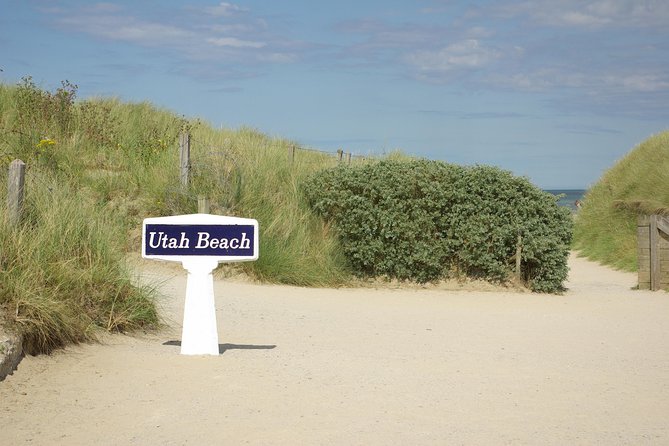
At Utah Beach, the guide gives a detailed account of the landings by the American 4th Infantry Division. You then have about 50 minutes to explore the beach and its monuments.
Utah feels different from Omaha, and seeing both in one day is one of the tour’s best choices. The comparison helps you understand that the American landings did not unfold in exactly the same way along the coast. Your guide can place the beach, nearby objectives, and airborne actions into one connected picture.
There are several monuments in the area, but the tour does not provide time to visit every individual unit memorial in Normandy. One person specifically noted that the route does not include the smaller unit monuments. If your family or military research centers on one regiment, check the route carefully before booking.
The van makes the day practical, but not short
Round-trip transport from Bayeux is a major convenience. Normandy’s D-Day sites are spread across a broad area, and driving yourself requires route planning, parking, and a careful eye on opening times. Here, the guide handles the road while explaining what you are seeing.
The vehicle is an air-conditioned minivan. It has been described as clean, comfortable, and roomy enough for tall passengers. A small group also makes it easier to hear the guide and ask questions than on a large bus.
That said, the day includes substantial time in the vehicle. One account estimated at least an hour and a half of driving, and the route’s length explains why the schedule feels full. The road time is useful when the guide uses it to explain the bocage, nearby villages, or the next operation. It can still feel tiring by late afternoon.
Large luggage is not allowed. Only small carry-on cases or overnight bags are accepted, so leave full-size suitcases at your hotel or another suitable location. Hotel pickup and drop-off are not included, and the tour returns to the central meeting point.
Lunch, weather, and timing need a little planning
Lunch is not included. You may find quick options during the day, but the schedule is not built around a long restaurant meal. Bring food or be ready for a fast stop, and carry water since water is not provided by the tour.
The exact lunch opportunity can depend on the day’s timing and the guide’s suggestions. Guides such as Fred have pointed out places for quick coffee or food, which is helpful, but you should not expect a relaxed French lunch lasting an hour or two.
Dress for changing coastal weather. The tour operates in all conditions, and Omaha, Pointe du Hoc, and Utah can feel exposed. Comfortable walking shoes, a warm layer, and rain protection are sensible choices.
Arrive early at the departure point. The minivan leaves on schedule, and the operator says it will not wait for late arrivals. If you miss the departure, you must take a taxi at your own cost to catch up, with no refund expected. This is one of the few firm rules that can turn a small delay into an expensive problem.
Is $179.58 a fair price?
At $179.58 per person, this is not the cheapest way to see Normandy. It is a reasonable price if you value a full day of transport, an English-speaking professional guide, a small vehicle, and admission to the Airborne Museum.
The price also saves you from arranging a rental car and planning a route across Omaha, Pointe du Hoc, Utah, and Sainte-Mère-Église. For a first visit, that convenience has real worth. You are paying for interpretation as much as for transportation.
The value drops if you want long periods at each site, a private guide, or a focused visit to one unit or operation. With 40 to 50 minutes at many stops, you get a strong overview but not a slow, detailed study. Lunch is extra, and hotel transfers are not part of the package.
For most first-time visitors based in Bayeux, I think the mix is fair. The tour covers a lot of ground in one day, and the best guides add considerable value by answering questions and explaining how each site fits into the larger operation.
Who should book this full-day experience?
You should consider it if this is your first time in Normandy, you want the main American sites in one day, or you prefer not to drive. It suits history buffs, couples, families with older children, and anyone who wants a clear introduction before returning to specific sites alone.
It is also useful for people with uneven levels of background knowledge. The guides are used to groups that include serious students of World War II as well as people starting from scratch. Strong guides such as Charles and Fred can handle detailed questions without losing the broader story.
You may prefer a private or slower tour if you dislike fixed schedules, need lots of museum time, or want to follow a particular regiment. The day is long, and the combination of driving, outdoor stops, and quick visits requires energy.
The published rating is 5 out of 5 from 1,566 ratings, with 100 percent recommending the experience. The most consistent praise centers on the guides’ command of the subject, personal manner, storytelling, and ability to make the day informative without becoming dull. One minor concern was unclear parking and meetup information, so confirm exactly where to leave your car and where to wait before departure.
Should you book it?
Book this tour if you want the most important American D-Day sites in a single, well-organized day from Bayeux. The strongest reasons are the route, the included Airborne Museum admission, and the quality of guides such as Charles, Fred, Pierre, and Robin.
Skip it, or choose a slower private option, if your priority is detailed military research or extended time at every museum and memorial. For everyone else, this is a practical first look at Normandy that connects beaches, cliffs, cemeteries, villages, roads, and hedgerows into one understandable day.
Free cancellation is available up to 24 hours before the start time. Changes or cancellations made later are not refunded.
FAQ
Where does the Normandy American D-Day tour start?
The tour starts at Parking Québec-Orangerie, Place du Québec, 14400 Bayeux, France. The meeting time is 8:45 a.m.
Where does the tour end?
The activity ends back at the same central meeting point in Bayeux.
How long does the tour last?
The tour lasts approximately 8 hours and 30 minutes, making it a full-day experience that runs from the morning into the late afternoon.
Is lunch included?
No. Lunch is not included, and water is not provided. Plan for a quick food stop or bring something with you.
Is the Airborne Museum included?
Yes. Admission to the Airborne Museum in Sainte-Mère-Église is included in the tour price.
Can I bring large luggage?
No. Large items are not permitted on board. Only small carry-on cases or overnight bags are accepted.
Recently reviewed around Bayeux
- 2- to 6-hour sidecar excursion on the D-Day Landing Beaches★ 5.0 · 131 reviews
- WW2 Jeep or Dodge truck tour of the Omaha Beach site★ 5.0 · 51 reviews
- Mont Saint Michel Experience – Shuttle Service from Bayeux★ 5.0 · 194 reviews
- Normandy Battlefields D-Day Private Trip with VIP Services from Paris★ 5.0 · 240 reviews
- Normandy U.S. D-Day Sites Half Day Tour From Bayeux★ 5.0 · 325 reviews
- Private vintage sidecar tour of the D-Day Landing Beaches★ 5.0 · 130 reviews
- Private Walking Guided Tour of Historic Bayeux English or French★ 5.0 · 36 reviews
- Private Full day American D-Day Guided Tour in Bayeux★ 5.0 · 133 reviews
Normandy D-Day Tours, compared.
Normandy D-Day Sites & Cemetery Day Trip from Paris with Lunch
Read our review →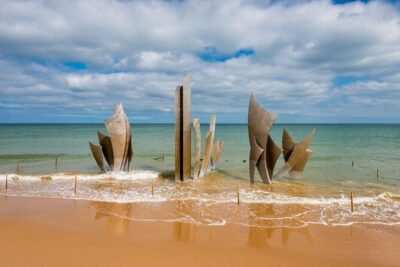
Normandy D-Day Small-Group Day Trip with Omaha Beach, Cemetery & Cider Tasting
Read our review →
Normandy D-Day Beaches and American Cemetery Day Trip from Paris
Read our review →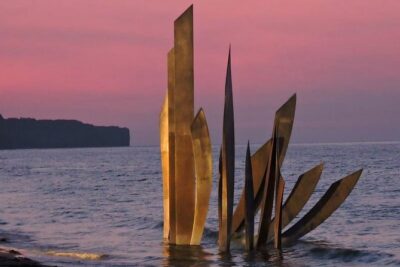
Normandy American D-Day Beaches Full Day Tour from Bayeux
Read our review →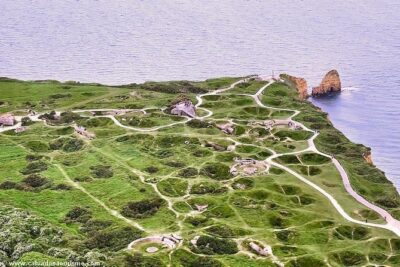
Normandy Beaches Half-Day Afternoon Trip from Bayeux (A2)
Read our review →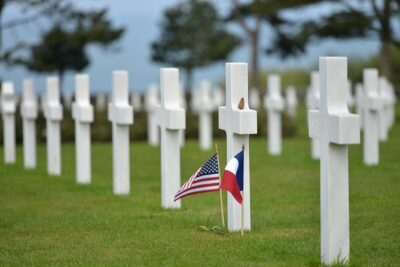
Omaha Beach D-Day Experience – Afternoon group tour from Bayeux
Read our review →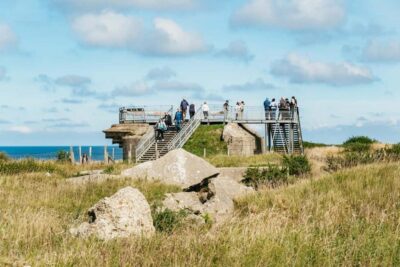
Normandy D-Day Sites Guided Day Trip with Lunch
Read our review →
Normandy Battlefields Tour – American Sites (A3)
Read our review →Browse the lists this tour appears in