
Reviewed · PARIS TOURS
Paris Bakery Tour
The best part of this Paris bakery tour happens behind the counter, where you watch a master baker turn simple ingredients into a French baguette. You see the dough mixed, kneaded, shaped, and baked, then taste the loaf while it is still warm. I especially like the small group of up to eight and the chance to meet the baker in a real boulangerie rather than a staged cooking school.
I also like the generous takeaway bag, with one baguette and one croissant per person, plus the tasting samples during the visit. The main drawback is the short one-hour format: baguettes are the focus, so anyone hoping to watch a full range of pastries being made may find the demonstration limited.
In This Review
- Key points at a glance
- Inside Le Grenier à Pain on Rue Caulaincourt
- What the baguette demonstration shows you
- Meeting the baker and seeing the pastry side
- Tasting warm bread, pastries, and croissants
- Why the small group changes the experience
- Choosing the best time for your Paris day
- Is $74 a fair price?
- Who should book this bakery tour?
- Practical details before you go
- Should you book it?
- FAQ
- How long does the Paris Bakery Tour last?
- Where does the tour begin?
- Where does the tour end?
- What languages are available?
- How many people are in the group?
- What food is included?
- Will I see how a baguette is made?
- Can I cancel the booking?
Key points at a glance
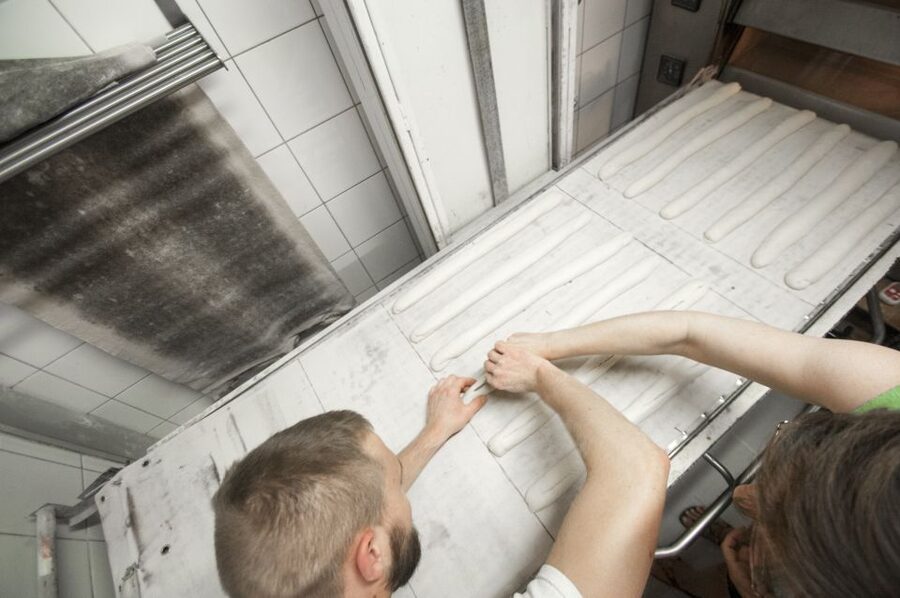
- Watch a baguette from dough to oven: See the mixing, kneading, shaping, and baking process in a working bakery.
- Go behind a Paris bakery counter: The visit takes you into the kitchen at Le Grenier à Pain, 127 Rue Caulaincourt.
- Taste bread fresh from the oven: The warm baguette is part of the experience, not just a display item.
- Meet the master baker: You can see his own breads and pastries and learn about his techniques.
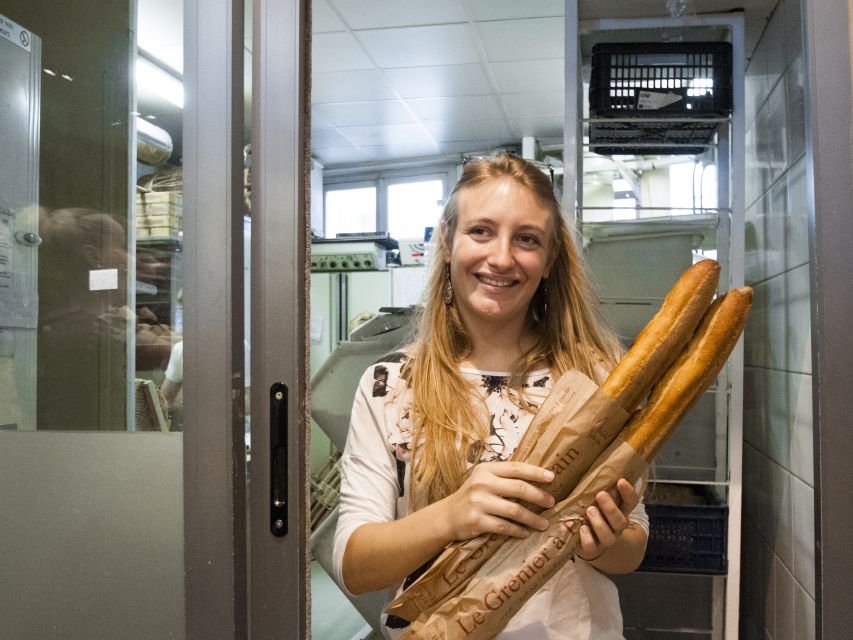
- Leave with more than a sample: Each person receives a baguette and croissant to take away.
- Keep the timing manageable: The tour lasts one hour and is offered in English, French, and Japanese.
Inside Le Grenier à Pain on Rue Caulaincourt
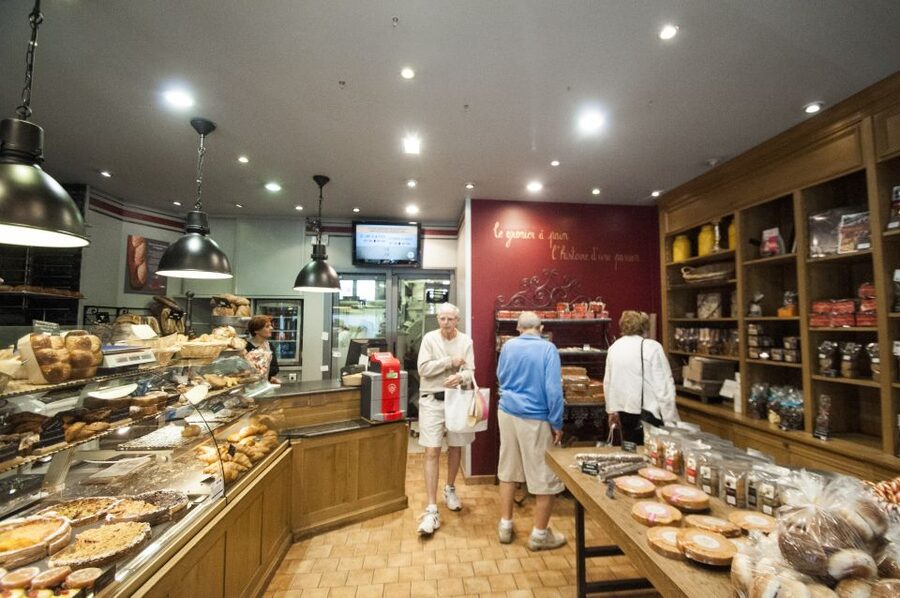
Your meeting point is Le Grenier à Pain at 127 Rue Caulaincourt in Paris’s 18th arrondissement. This address matters. Several bakeries in Paris use the same name, so entering the wrong branch could quickly spoil the morning.
The activity begins and ends at the bakery. That makes it easy to fit into a day of sightseeing in Montmartre and nearby parts of the 18th arrondissement, though the tour itself does not include a wider neighborhood walk. You are there to see how a French bakery works, not to tour Paris by vehicle.
The setting is part of the appeal. You are not simply sitting at a table while a chef prepares a polished lesson. You step behind the counter of a functioning boulangerie and watch the bakery at close range. That gives the visit a practical feel: flour, dough, ovens, shaping, and timing are the center of attention.
The group is limited to eight people. I consider that a real advantage in a compact bakery kitchen. You should have a better chance of seeing the baker’s hands and asking questions than you would in a large demonstration group. The tradeoff is that spaces are limited, and a booking larger than the available capacity may need to move to another date.
Other Paris days travellers weigh against this one:
- Paris: Louvre Museum Timed-Entrance Ticket
★ 4.6 · 71,977 reviews - Disneyland® Paris 1-Day Ticket
★ 4.6 · 49,412 reviews - Paris: Versailles Palace and Gardens Full Access Ticket
★ 4.6 · 41,579 reviews
What the baguette demonstration shows you
The baguette is not treated as a decorative symbol of Paris. It is the main subject, and the baker takes you through the stages that give the loaf its shape and texture.
You watch the dough being mixed, then kneaded and shaped. These steps can look simple from a bakery window, but the small decisions matter. The handling of the dough, the shape of the loaf, and the baking process all affect the final result.
The baker uses special baguette ovens, and the demonstration ends with the loaves coming out warm and golden. That timing is important. You do not merely see a finished baguette sitting on a shelf. You get to taste it fresh from the oven, when the crust and interior offer the clearest sense of what the process has achieved.
You also learn that baguettes come in different forms and that this baker has a signature version. The point is not just to memorize a recipe. It is to understand that French bread has its own methods, habits, and local character, even when the ingredients appear basic.
The experience is especially useful if you buy baguettes in France but have never thought about how they are made. After the tour, the crust, crumb, shape, and aroma may mean more to you. You will have some context for why one loaf feels different from another.
Meeting the baker and seeing the pastry side
A master baker leads the practical part of the visit, while your guide explains what you are seeing and places it in a French cultural setting. The guide’s role matters because a working bakery can be busy and highly visual. Without explanation, you might notice the equipment but miss the reasons behind each step.
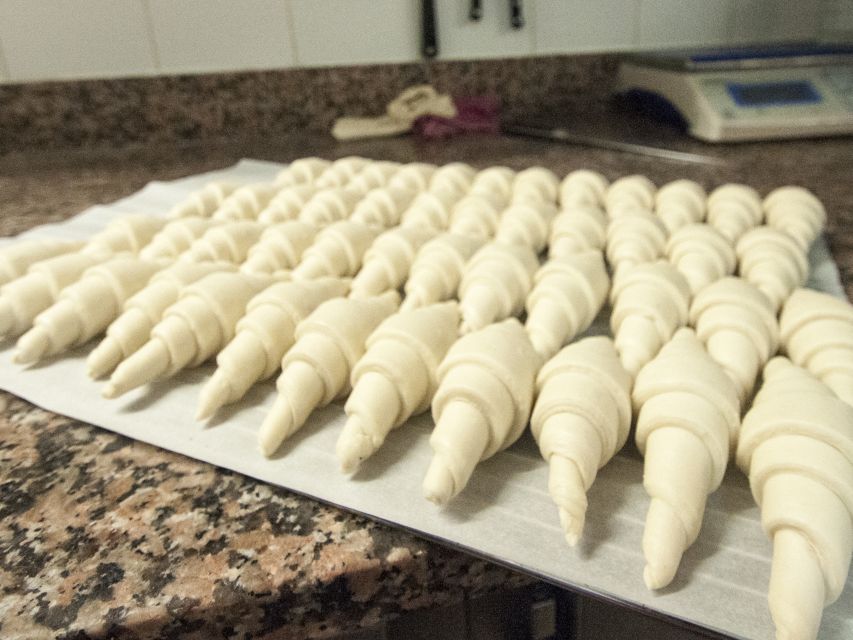
Louise has been particularly praised for explaining the baking process clearly, answering questions, and connecting bread to French culture. The guide may also discuss details such as the butter used in croissants, including the high butter content that helps create their flavor and layers.
You also get to see some of the baker’s distinctive breads and pastries. This adds variety to a tour centered on baguettes. Still, keep your expectations in check. The published experience focuses most heavily on baguette production, and one assessment specifically wished for more baking demonstrations beyond the baguette.
That limitation is worth considering before you book. If your main goal is to watch croissants being shaped and baked from start to finish, this may not be the right choice. If you want a close look at French bread and a taste of several baked goods, the balance works better.
In some visits, children have been invited to take part in parts of the process when they showed interest. That suggests the format can work well for families, but participation depends on the baker and the conditions in the kitchen. It should not be treated as a guaranteed hands-on class.
Tasting warm bread, pastries, and croissants
The tasting is not an afterthought. Once the baguette comes from the oven, you get to try it warm. That simple moment gives the demonstration a satisfying finish, because you can immediately connect the finished taste with the work you just watched.
You also sample different baked goods, including small cakes and pastries. The exact selection is not specified, so do not book expecting a fixed menu. The point is to taste a range of French bakery products and notice how they differ from the baguette.
The croissant adds another layer to the experience. You learn about authentic French croissants and leave with one per person. The takeaway croissant is useful in practical terms, too. You can save it for later if you have already eaten, or make it part of a light breakfast before another day in Paris.
The goodie bag includes one baguette and one croissant per person. That is more substantial than the usual token sample. A baguette is also awkward to carry around, so plan to return to your accommodation or eat it fairly soon rather than dragging it through a full day of sightseeing.
Because the activity lasts only an hour, the food helps the tour feel complete. You see the process, taste the result, and take something with you. There is no long sit-down meal, so the experience remains easy to fit between other plans.
A different way to spend the day, same corner of France:
- Paris: Evening River Cruise with Music
★ 4.4 · 22,721 reviews - Paris: Eiffel Tower Entry Ticket with Optional Summit Access
★ 4.4 · 20,035 reviews - Paris: Eiffel Tower Summit or Second Floor Access
★ 4.3 · 17,248 reviews - Paris: Louvre Guided Tour with Reserved Access & Boat Cruise
★ 4.3 · 16,353 reviews
Why the small group changes the experience
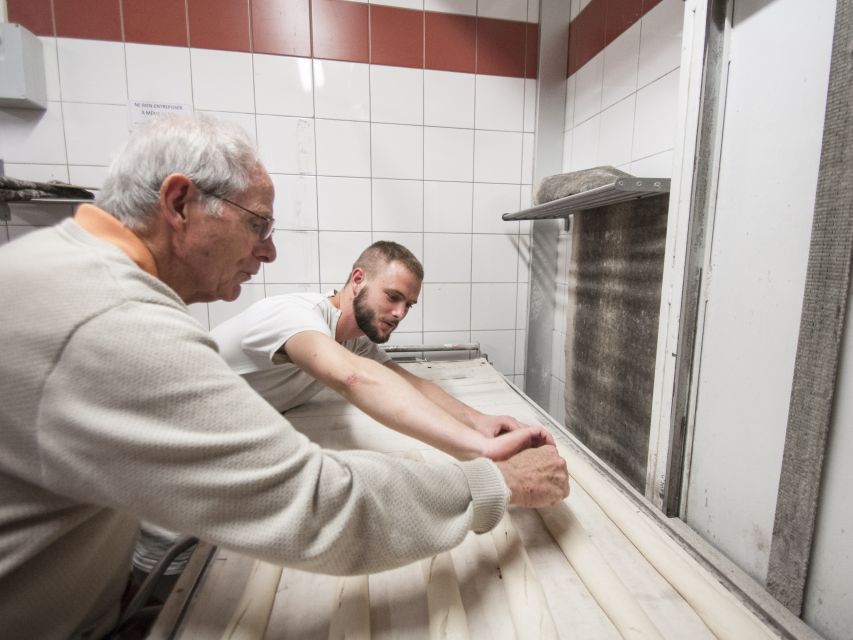
Eight people is a useful ceiling for this type of visit. A bakery kitchen has limited room, and a large crowd would make the behind-the-counter part less personal. With a smaller group, you can focus on the baker’s movements and ask about details that catch your attention.
A small group also gives the guide room to adjust the explanation. Louise, for example, has been praised for responding to questions rather than rushing through a fixed script. That is valuable if you are curious about French food customs, the difference between baguettes, or the techniques behind croissants.
The experience is guided in English, French, or Japanese. Be sure to select the language that suits your booking when checking availability. The guide is included, as are the tastings and goodie bag.
The kitchen setting may not suit anyone who wants a quiet, formal food presentation. You are close to the production area, and the activity is about watching bakery work in action. That is a strength for curious food lovers, but less ideal if you want to sit back and receive a polished pastry lecture.
Choosing the best time for your Paris day
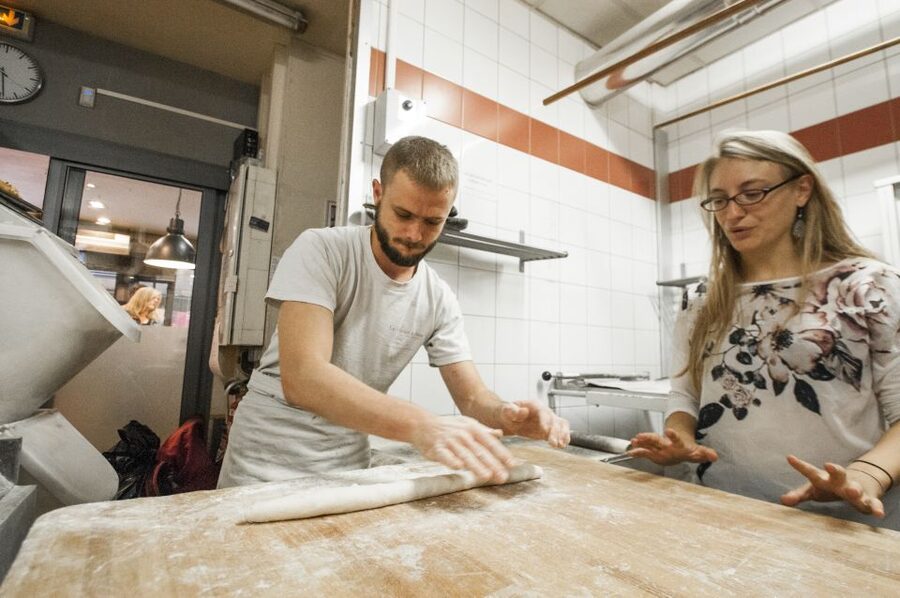
The tour lasts one hour, but starting times vary. You need to check availability for the date of your visit. An early morning slot is the most appealing choice if you want the bakery atmosphere to feel tied to the day’s first bread and pastries.
An early start also leaves the rest of your day open. One practical plan is to visit the bakery first, then continue sightseeing in the 18th arrondissement. You can carry your baguette and croissant back to your accommodation or eat them soon after the tour.
The short length makes this activity easier to schedule than a long cooking class. You do not lose half a day, and you do not need to commit to a full meal. At the same time, the limited duration explains why the tour concentrates on one main process rather than showing every pastry in the bakery.
A timing change may sometimes be possible if the operator can accommodate your schedule, but you should not count on that. Book a starting time you can reach comfortably, and allow enough time to find the correct Le Grenier à Pain location.
Is $74 a fair price?
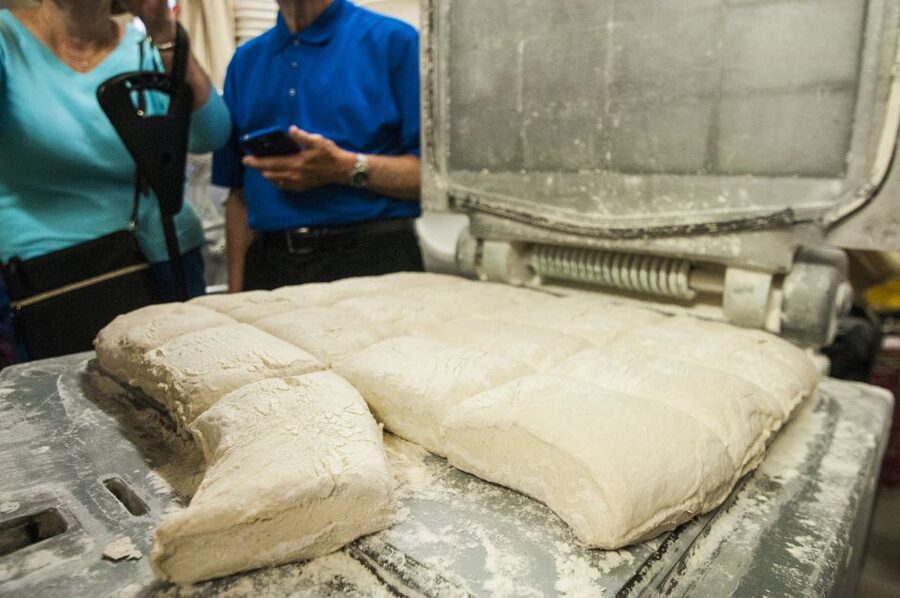
At $74 per person, this is not a cheap bakery stop. You could buy a baguette and croissant in Paris for much less. The value comes from the access and explanation: you go into the kitchen, watch a master baker work, taste the bread fresh, and receive a guide-led introduction to French baking.
The small group helps justify the price. You are paying for a close look rather than a quick purchase at the counter. The included baguette and croissant also add practical value, though they should be viewed as part of the experience rather than the reason to book.
I would consider the price reasonable for someone who cares about food, baking, or French daily life. It is less convincing if you only want a pastry snack or a general Paris sightseeing tour. The activity is short, so its value depends on how much you want the behind-the-scenes access.
The free cancellation policy also reduces the risk of booking ahead. You can cancel up to 24 hours before the activity for a full refund, and the reserve-now-pay-later option lets you hold a place without paying immediately. Since the group is small, those flexible terms are useful if your Paris plans are still shifting.
Who should book this bakery tour?
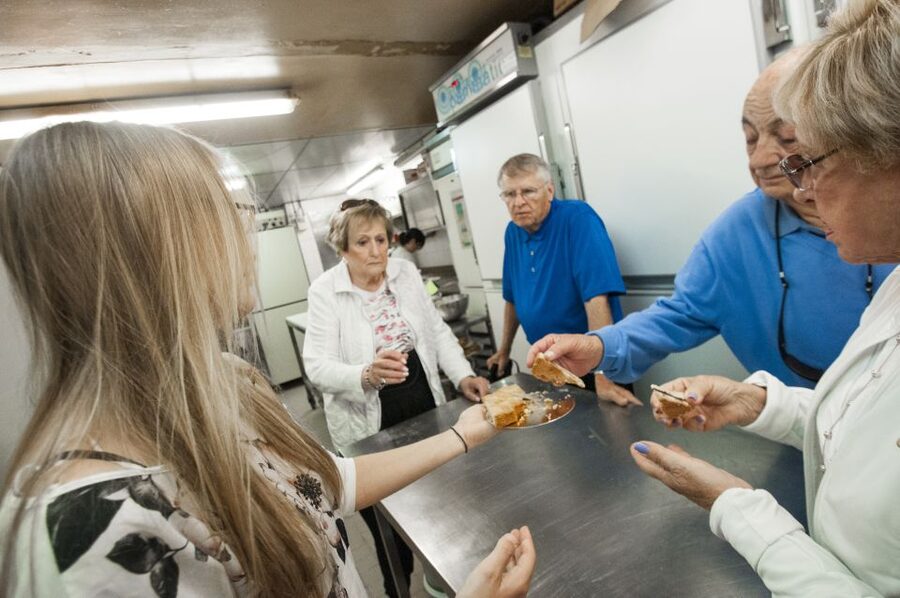
I would put this high on the list for anyone who wants to understand a familiar French food rather than simply photograph it. The baguette is part of everyday life in France, and the tour explains why it deserves more attention than a quick purchase from a bakery shelf.
Families can also find plenty to enjoy, especially children who like seeing dough handled and ovens in action. A past visit allowed interested children to participate in parts of the process, though that depends on the baker and cannot be promised.
The tour also suits first-time visitors who want a low-pressure food activity. It lasts only an hour, requires no full-day commitment, and ends where it starts. You get a taste of French baking without needing to prepare a meal yourself.
I would be more cautious if your priority is pastry technique. You see pastries and taste baked goods, but the main demonstration is the baguette. For detailed croissant shaping, laminated dough practice, or a hands-on baking lesson, look for an activity designed around those subjects.
Practical details before you go
Double-check the address: Le Grenier à Pain, 127 Rue Caulaincourt, 75018 Paris. The name is shared by multiple bakeries, so the street number is essential.
The tour is available with a live guide in English, French, or Japanese. Tastings, the guide, and the goodie bag are included in the $74 price.
The activity ends back at the meeting point. Since you leave with bread and a croissant, think about where you will eat or store them before planning a long stretch of sightseeing.
Space is limited. If your party is larger than the available capacity for a date, you may be offered another date. If that alternative does not work, you receive a full refund.
Should you book it?
Book this Paris bakery tour if you want a small, focused look at French breadmaking, especially the baguette. The warm tasting, the working bakery setting, Louise’s clear guidance, and the take-home baguette and croissant give the one-hour visit a satisfying shape.
Skip it if you want a full pastry workshop or several extended demonstrations. The baguette receives most of the attention, and the short format leaves little room for hands-on baking.
For food-minded visitors, families, and anyone curious about ordinary Parisian life, $74 can be fair value. Choose an early time if possible, verify the Rue Caulaincourt address, and leave room in your day to enjoy the bread rather than carrying it around Paris.
FAQ
How long does the Paris Bakery Tour last?
The activity lasts one hour. Starting times vary, so check availability for your chosen date.
Where does the tour begin?
It begins at Le Grenier à Pain, 127 Rue Caulaincourt, 75018 Paris. Several bakeries use the same name, so make sure you go to this exact address.
Where does the tour end?
The activity ends back at the meeting point at Le Grenier à Pain.
What languages are available?
The live guide can conduct the tour in English, French, or Japanese.
How many people are in the group?
The group is limited to eight participants.
What food is included?
You receive tastings during the visit and a goodie bag with one croissant and one baguette per person.
Will I see how a baguette is made?
Yes. The baker demonstrates mixing, kneading, shaping, and baking the baguette in special baguette ovens. You also taste it fresh from the oven.
Can I cancel the booking?
You can cancel up to 24 hours in advance for a full refund. The reserve-now-pay-later option allows you to book without paying immediately.
Recently reviewed around Paris
- Louvre Private Tour – The Essentials and More with Expert Guide★ 5.0 · 227 reviews
- 2CV tour by night★ 5.0 · 55 reviews
- Eiffel Tower Second or Summit Floor Access by Elevator with Views★ 3.5 · 161 reviews
- The only Paris Wine Tasting experience you need to do – 2 hours★ 5.0 · 265 reviews
- 2 Hour Street-art Walk and Space Invaders Hunt in Paris★ 5.0 · 27 reviews
- 2 hour outdoor group activity in Paris: SAINT GERMAIN★ 5.0 · 48 reviews
- Sainte-Chapelle, Conciergerie & Palais de Justice Private Tour★ 5.0 · 72 reviews
- Private 2 – Hour Paris Landmarks Tour by Golf Cart Mini Moke★ 5.0 · 38 reviews
Paris Tours, compared.


Versailles Palace and Gardens Full Access Ticket
Read our review →

Eiffel Tower Entry Ticket with Optional Summit Access
Read our review →

Louvre Guided Tour with Reserved Access & Boat Cruise
Read our review →
Moulin Rouge Cabaret Show Ticket with Champagne
Read our review →