
Reviewed · PARIS TOURS
Paris: Baking Insider Experience with a Professional Baker
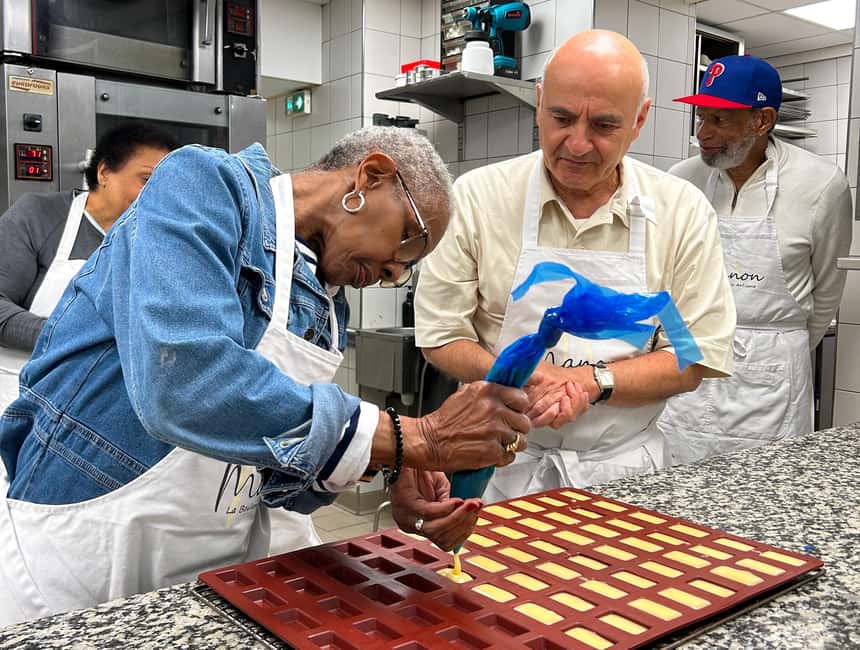
The most appealing part of this experience is that you work inside a real Paris bakery, not a polished cooking studio built only for tourists. In two hours, you handle baguette dough, roll croissant layers, make a small pastry, and taste the results while the bakery carries on around you.
I like the small group size, capped at eight, because a baker can correct your shaping and answer questions. I also like the range of techniques: flour, yeast, sourdough, lamination, baguette forms, and French baking customs all get attention. The main limitation is time. You cover several classic items quickly, and depending on the session, you may not taste the croissants you personally rolled.
In This Review
- Key points to know
- Inside a Working Paris Bakery
- The First Tastes Set the Lesson
- Shaping Baguettes by Hand
- Rolling Croissant Dough and Learning Lamination
- Financiers Add a Faster Sweet Bake
- The Guides Shape the Experience
- What You Learn Beyond the Recipes
- Is Two Hours Enough?
- Family Suitability and Physical Requirements
- Price and Overall Value
- Best For and Who Should Pass
- Should You Book This Paris Baking Class?
- FAQ
- How long does the baking experience last?
- Where does the experience begin?
- Is the class taught in English?
- How many people are in the group?
- What will I make during the class?
- Are snacks included?
- Can children join the class?
- Is the bakery accessible to wheelchair users?
Key points to know
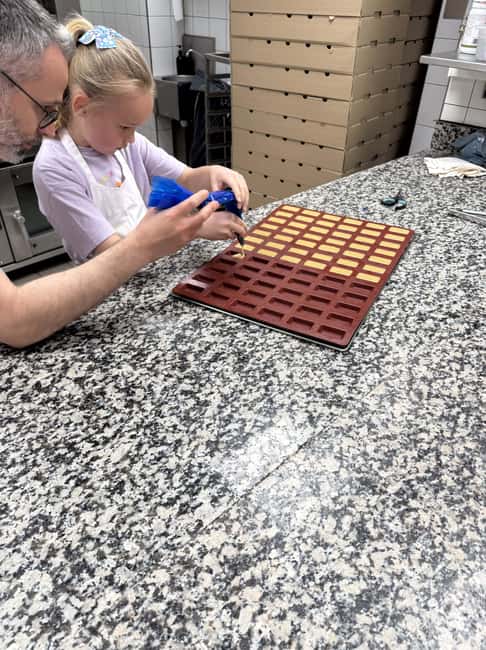
- Hands-on work in a working boulangerie: You shape baguettes, roll pastry, and prepare a small sweet bake rather than simply watching a demonstration.
- Three French classics in one session: The program can include baguettes, croissants, and financiers, with tastings of sweet and savory bakery goods along the way.
- Guides make the difference: Pierre, Jess, Martin, David, Candice, Rachel, Igor, and other English-speaking bakers or hosts have led sessions.
- A useful lesson in French bread: You learn how flour, yeast, sourdough, shaping, and lamination affect the finished product.
- Small groups matter: With no more than eight participants, you get a turn at the workbench and direct help.
- Plan for stairs and standing: The bakery is reached by 15 steps to a second floor with no elevator, and you stand for much of the two-hour class.
Inside a Working Paris Bakery
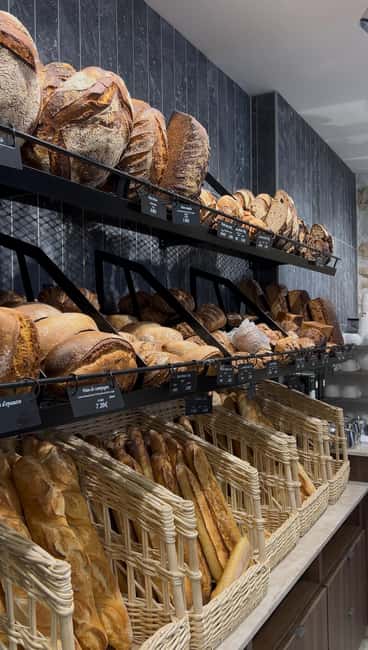
This is not a class where every ingredient and tool waits in identical bowls. You are in one of two traditional Paris bakeries, depending on the option you book, and the bakery may continue its normal work around you.
That setting gives the experience its strongest sense of place. You can see how a neighborhood bakery functions, meet bakery staff, and get a closer look at the daily business behind the baguettes in Paris shop windows. One session took place in an organic bakery that made its products in-house, and the owner and bakers joined the group during the visit.
I value that kind of setting because bread makes more sense when you see it as part of ordinary Paris life. You are not only learning a recipe. You are learning why French bakeries offer different types of baguettes, how products are made and stored, and how the finished goods reach the counter.
The exact bakery depends on the option you choose, so do not book expecting one fixed address or one particular guide. The meeting point can vary. The English-speaking hosts have included Pierre, Jess, Martin, David, Candice, Rachel, Igor, and others, with Pierre receiving especially warm praise for his welcoming teaching style.
Other Paris days travellers weigh against this one:
- Paris: Louvre Museum Timed-Entrance Ticket
★ 4.6 · 71,977 reviews - Disneyland® Paris 1-Day Ticket
★ 4.6 · 49,412 reviews - Paris: Versailles Palace and Gardens Full Access Ticket
★ 4.6 · 41,579 reviews
The First Tastes Set the Lesson
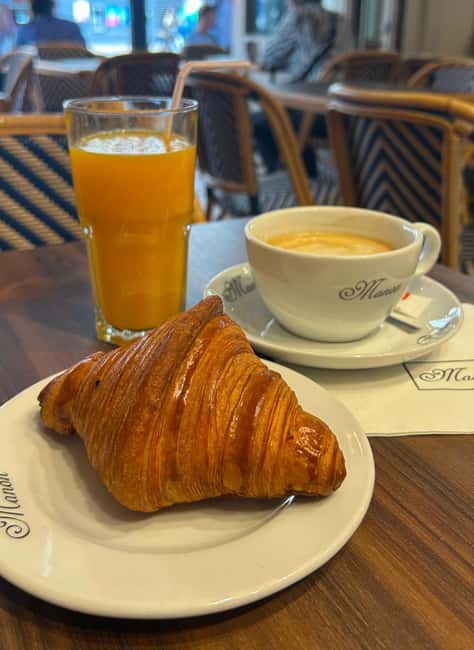
The class includes snacks, and tastings are part of the teaching rather than an afterthought. You may begin with a bakery pastry and drink, then compare different breads or sample sweet and savory flavors as the work progresses.
That comparison helps you understand why technique matters. A baguette is not simply a long loaf, and a croissant is not just a crescent-shaped pastry. Flour, yeast, fermentation, butter, folding, and shaping all change the texture and flavor.
You may taste two types of baguette before shaping your own. This is one of the more useful parts of the session because it gives your hands and palate a reference point. Once you compare loaves, you have a better idea of what you are trying to create.
Come hungry. Several people have left with bread, pastries, and baked goods to eat later in the day. The food is part of the value, especially in Paris, where a bakery stop is already a small pleasure.
Shaping Baguettes by Hand
The baguette lesson is the most immediately practical part of the class. You learn how to handle the dough, shape it, and prepare it for baking. A French baker also explains how one baguette differs from another, including the role of flour and the choice between commercial yeast and sourdough.
Do not expect to become a professional baker in one morning. You will, however, leave with a clearer sense of why dough needs careful handling and why shaping affects the final loaf.
The hands-on format is important here. A demonstration can make baguette shaping look effortless, but your own dough will show you where the difficulty lies. The baker can guide your technique as you work, which is far more useful than simply watching perfect hands move quickly.
The finished baguettes may be baked during the class, giving you something tangible to enjoy or carry away. Some people specifically liked taking home what they made. Bring a bag if you have one, since bread and pastries are easier to manage when you are not carrying them loose through Paris.
Rolling Croissant Dough and Learning Lamination
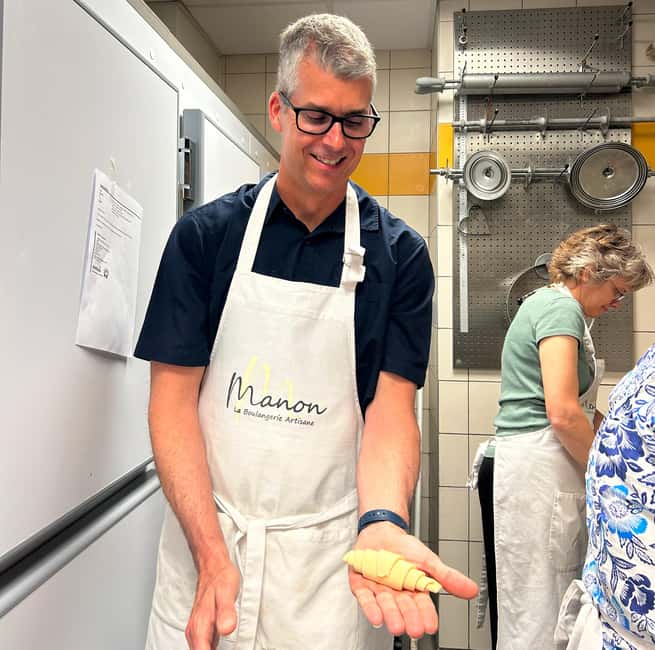
Croissant work introduces the more technical side of French baking. You learn about lamination, the process of layering dough and butter through repeated folding and rolling. The goal is a light, puffed pastry with distinct layers.
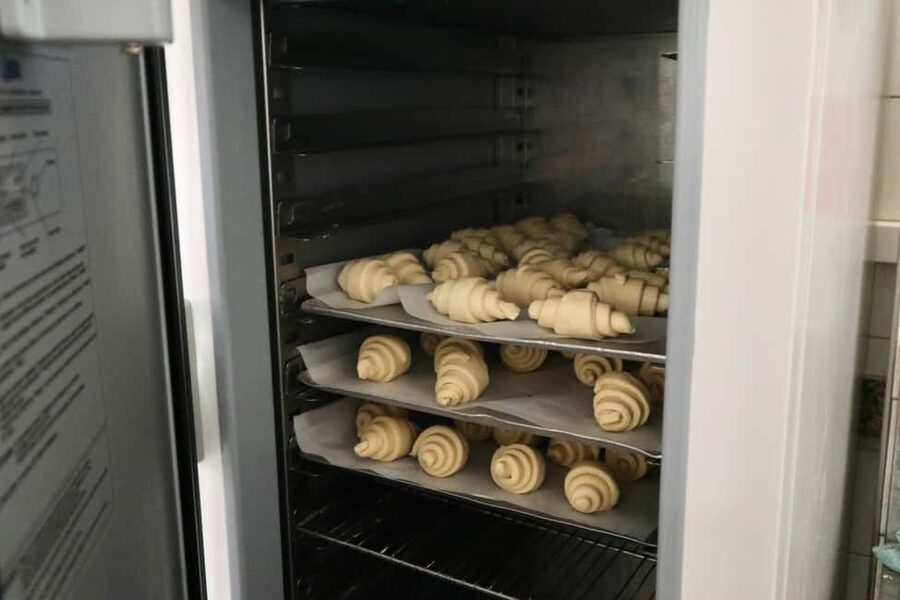
This is also where the class can feel rushed. Croissant dough normally needs time for resting, chilling, and baking, while the activity lasts only two hours. You will work with the dough and learn the method, but the complete process cannot be compressed into a full bakery production cycle.
You may roll or shape a croissant and see how the layers are formed. In some sessions, the croissants made by the group were not ready to taste before the class ended. That is not a major flaw, but it is worth knowing if your main goal is to eat a croissant you personally made.
The tasting program still gives you a chance to understand the finished pastry. Just keep your expectations sensible: this is an introduction to the craft, not a full professional pastry apprenticeship.
A different way to spend the day, same corner of France:
- Paris: Evening River Cruise with Music
★ 4.4 · 22,721 reviews - Paris: Eiffel Tower Entry Ticket with Optional Summit Access
★ 4.4 · 20,035 reviews - Paris: Eiffel Tower Summit or Second Floor Access
★ 4.3 · 17,248 reviews - Paris: Louvre Guided Tour with Reserved Access & Boat Cruise
★ 4.3 · 16,353 reviews
Financiers Add a Faster Sweet Bake
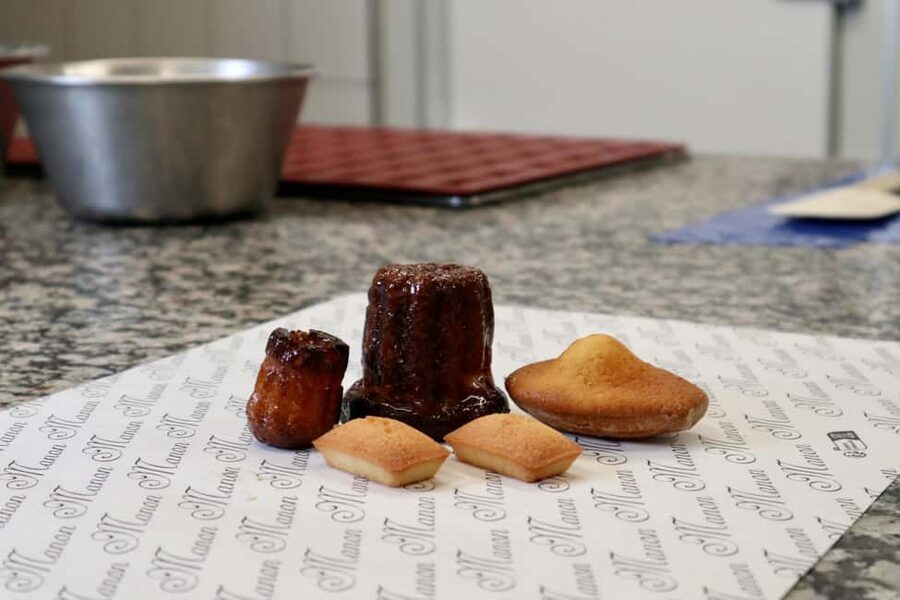
The small cake or pastry portion often centers on financiers, a classic French bake with a compact shape and a rich, tender texture. This gives the class a sweet item that can be prepared and baked within the short session.
I like this part because it balances the slower bread and croissant work. You get to handle another type of mixture, see a different baking method, and taste something sweet before leaving.
The class can therefore cover three familiar French bakery items without pretending they all follow the same method. Baguette dough, laminated pastry, and a small cake each show a different side of French baking.
The exact order can vary by bakery and guide. The important point is that you do more than one item, and the work is spread across bread, pastry, and sweet baking.
The Guides Shape the Experience
A good host matters here, because the class combines technical instruction with stories about French food. Pierre is described as warm, entertaining, and attentive, with one group of ten particularly pleased by his teaching. Jess has led sessions that worked well for children and adults, while Martin has been praised for making the bakery visit engaging and easy to follow.
David’s sessions have included baguette comparisons, financiers, croissant rolling, and an explanation of the history and method behind each item. Candice has guided hands-on baguette and croissant work, and Rachel has made an effort to include both children and older adults in mixed-age groups.
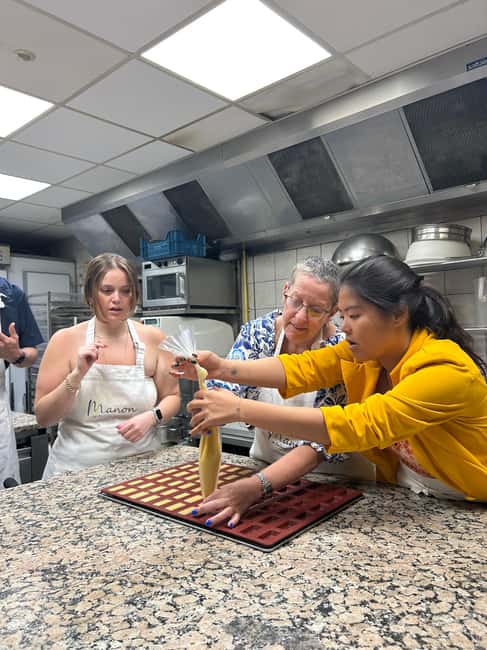
These details suggest a useful strength: the hosts do not treat the experience as a lecture. You are expected to touch the dough, ask questions, and take a turn. The best sessions appear to rely on the guide’s ability to keep everyone involved while the bakery staff continue their own work.
Because the guide can vary, I would choose this experience for its format rather than booking around a particular personality. If a named guide is important to you, confirm the current option details before paying.
What You Learn Beyond the Recipes
The lesson gives you a practical vocabulary for French baking. You hear about different bread flours, yeast, sourdough, dough development, and the reason behind particular shaping methods.
That information is valuable even if you never bake a baguette at home. It changes how you shop in Paris. You may begin to notice differences between loaves instead of treating every baguette as the same, and you will have a better idea of why some pastries are airy, crisp, chewy, or dense.
The stories behind iconic French treats add context without turning the class into a history lecture. You learn what makes a croissant different from ordinary bread dough and why lamination takes patience. You also see the amount of work that goes into products that may cost only a few euros at the bakery counter.
I find this kind of lesson especially useful for visitors who already plan to eat their way through Paris. Afterward, bakery visits become more informed. You can still simply enjoy a pastry, but you also understand some of the choices behind it.
Is Two Hours Enough?
Two hours is a sensible length for a holiday activity. It fits into a morning or afternoon without consuming the day, and it works well on a rainy or cold day when outdoor sightseeing loses some appeal.
The tradeoff is pace. You are introduced to several techniques, but you will not master them in one sitting. Waiting, mixing, resting, shaping, and baking each take time, so the class uses prepared dough or a carefully planned sequence to keep the program moving.
You may also go up and down the bakery stairs more than once. One person specifically found the repeated stairs less enjoyable, and the second-floor location has no elevator. Wear comfortable shoes and avoid bringing anything cumbersome.
I see the two-hour schedule as a plus for families and first-time bakers, but serious home bakers may wish for a longer format with more recipe detail. The experience teaches principles and gives you practice, rather than sending you home with a complete professional formula for every item.
Family Suitability and Physical Requirements
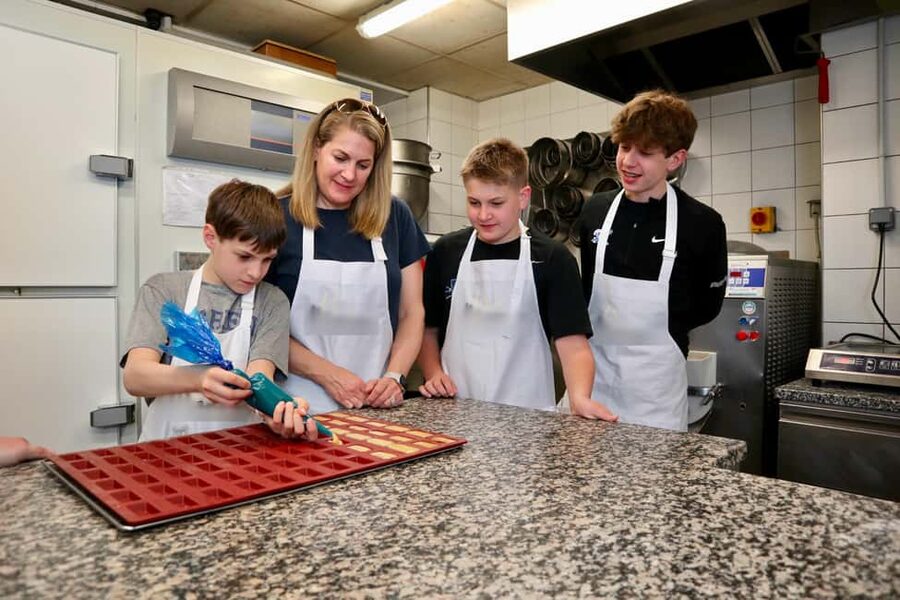
The class works particularly well for older children, teenagers, couples, and mixed-age families. Children around nine and eleven have taken part successfully, and guides such as Jess, Martin, and Rachel have made a point of including younger participants.
Children under five are free, but they cannot join the hands-on baking for safety reasons. The activity is therefore not a good choice if your main aim is to have a preschool child participate.
You need to stand for an extended period. The bakery is up 15 steps on the second floor, with no elevator, and the activity is not suitable for wheelchair users. If stairs or prolonged standing are difficult for you, choose another Paris food experience.
Long hair should be tied back. One baker specifically suggested bringing a hair tie or clip, a small detail that makes sense in a working bakery.
Price and Overall Value
At $108 per person, this is not a cheap bakery visit. You are paying for a small English-language class, an expert guide, access to a working bakery, hands-on instruction, tastings, and some baked goods to enjoy afterward.
The price makes more sense if you value participation. A standard bakery tour might show you the counter and explain a few items, but this experience lets you shape dough, roll pastry, compare breads, and ask questions as you work.
The maximum of eight is another reason the cost can be worthwhile. In a large group, hands-on baking often turns into watching someone else take the only available turn. Here, the format is designed to give each person a chance to participate.
I would not book it solely for the amount of food. You get snacks and may leave with several items, but the real value is the access and instruction. Book it if you want a memorable food activity with practical lessons. Skip it if you only want to eat excellent pastries, since Paris has plenty of bakeries where you can do that for far less.
Free cancellation is available up to 24 hours before the activity for a full refund, and you can reserve now and pay later. Those terms help if your Paris schedule is still shifting.
Best For and Who Should Pass
I would recommend this for:
- Families with children roughly school age and older
- Couples looking for a hands-on food activity
- First-time bakers who want clear guidance
- Home cooks curious about French bread and pastry
- Anyone seeking an indoor activity for a rainy day
- Visitors who enjoy meeting people in a working neighborhood bakery
I would be more cautious if you need wheelchair access, cannot stand for long, or want to take home a full set of recipes. The available information confirms instruction and tastings, but it does not promise printed recipes, and one session ended with participants wishing they had more time and the recipes.
The activity is conducted in English, so it suits visitors who want instruction without a language barrier. The small group also makes it easier to ask about ingredients and methods as they come up.
Should You Book This Paris Baking Class?
Book this experience if you want to understand French bread with your hands, not only your appetite. The combination of baguette shaping, croissant lamination, financiers, bakery tastings, and contact with working bakery staff gives you a satisfying look at a daily Paris tradition.
I especially like it for families with older children and for visitors who want a break from museums and monuments. You get food, a useful skill, and a story to carry into every boulangerie visit afterward.
The cautions are clear: stairs, prolonged standing, a brisk schedule, and no guarantee that the croissants you roll will be ready to eat. At $108, it is best viewed as a small-group lesson and bakery visit rather than a bargain meal. If that sounds like your kind of Paris morning, reserve a place.
FAQ
How long does the baking experience last?
The activity lasts two hours. Starting times vary, so check availability when selecting your date.
Where does the experience begin?
The meeting point may vary according to the option you book. The activity ends back at the meeting point.
Is the class taught in English?
Yes. The live guide conducts the experience in English.
How many people are in the group?
The group is limited to eight participants.
What will I make during the class?
You can expect hands-on work with bread and croissant dough, including baguette shaping and croissant lamination. Sessions can also include financiers and other sweet or savory tastings.
Are snacks included?
Yes. Snacks and bakery tastings are included as part of the experience.
Can children join the class?
Children under five are free but cannot take part in the hands-on baking because of safety concerns. Older children have taken part in the activity.
Is the bakery accessible to wheelchair users?
No. The bakery requires climbing 15 steps to a second-floor location, and there is no elevator. The activity is not suitable for wheelchair users.
Recently reviewed around Paris
- Louvre Private Tour – The Essentials and More with Expert Guide★ 5.0 · 227 reviews
- 2CV tour by night★ 5.0 · 55 reviews
- Eiffel Tower Second or Summit Floor Access by Elevator with Views★ 3.5 · 161 reviews
- The only Paris Wine Tasting experience you need to do – 2 hours★ 5.0 · 265 reviews
- 2 Hour Street-art Walk and Space Invaders Hunt in Paris★ 5.0 · 27 reviews
- 2 hour outdoor group activity in Paris: SAINT GERMAIN★ 5.0 · 48 reviews
- Sainte-Chapelle, Conciergerie & Palais de Justice Private Tour★ 5.0 · 72 reviews
- Private 2 – Hour Paris Landmarks Tour by Golf Cart Mini Moke★ 5.0 · 38 reviews
Paris Tours, compared.


Versailles Palace and Gardens Full Access Ticket
Read our review →

Eiffel Tower Entry Ticket with Optional Summit Access
Read our review →

Louvre Guided Tour with Reserved Access & Boat Cruise
Read our review →
Moulin Rouge Cabaret Show Ticket with Champagne
Read our review →