
Reviewed · CYCLING TOURS
Paris: Charming Nooks and Crannies Bike Tour
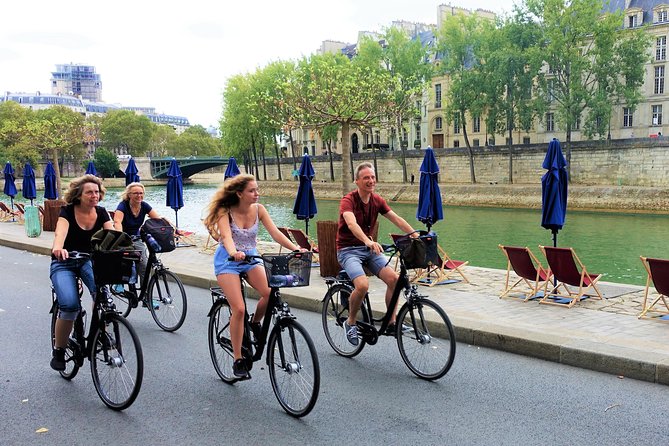
Paris reveals itself differently from a bicycle. On this three-hour ride, you slip through medieval Marais lanes, cross the Seine, follow quieter riverside paths, and reach Saint Germain, Odéon, Luxembourg, and the Latin Quarter without spending the whole outing at famous monuments. Guides such as Clément, Christian, Igor, Lorenzo, and Paul bring the streets to life with stories, humor, and practical local advice.
I like the flat route and frequent stops, which make this far less demanding than a city bike ride may sound. I also like the way the tour reaches places you might miss on foot, from St Louis Island and Place des Vosges to tucked-away corners of the Latin Quarter. The tradeoff is simple: Paris traffic can feel tense, and this is not the right choice if you want a monument-by-monument tour of the Eiffel Tower, Louvre, or Notre-Dame.
In This Review
- Key points
- A Paris introduction that trades monuments for atmosphere
- Finding the group at Hôtel de Ville
- St Louis Island and the old riverfront
- The Marais, from medieval streets to Place des Vosges
- Bastille and the prison behind the symbol
- A riverside pause between the two banks
- Saint Germain des Prés and the café tradition
- Odéon and Luxembourg, where history turns dramatic
- The Sorbonne and the Latin Quarter
- What the guides add to the experience
- Bikes, traffic, and the real riding level
- Who should book this Paris bike tour?
- Final verdict: a smart way to meet the less famous Paris
- FAQ
- Where does the Paris bike tour meet?
- How do I reach the meeting point by metro?
- How long does the bike tour last?
- Is the route suitable for beginners?
- What is included in the price?
- Can children join the tour?
Key points
- Three hours through four central districts: See the Marais, Saint Germain des Prés, Odéon, Luxembourg, and the Latin Quarter in one outing.
- A mostly flat ride: The route uses side streets and bike-friendly paths, with many pauses for stories and photographs.
- A strong choice for repeat visitors: The focus is on old lanes, local neighborhoods, and lesser-known corners rather than Paris’s headline sights.
- Guides make the difference: Clément, Christian, Igor, Lorenzo, Paul, and others are praised for storytelling, humor, patience, and careful riding.
- A useful first-day orientation: Taking the tour early can help you decide which districts, cafés, and sights deserve a return visit.
- Basic equipment is included: You receive a bike, helmet, and live guiding, but food and drinks cost extra.
A Paris introduction that trades monuments for atmosphere
At $53 per person, this tour offers a practical way to cover a surprising stretch of central Paris in three hours. You are paying not only for the bicycle, but also for route planning, local interpretation, traffic management, and the chance to move between districts that would take much longer on foot.
I would consider it especially good value at the beginning of a Paris stay. You get a broad sense of the city, then you can return later to Saint Germain for its cafés, the Marais for its shops and streets, or the Latin Quarter for more wandering.
The focus matters. If this is your first hour in Paris and you have not yet seen the Louvre, Eiffel Tower, Arc de Triomphe, or Notre-Dame, this tour will not replace a classic highlights outing. It is aimed at the older neighborhoods and small details between the major sights.
You should also know that a bicycle tour is not completely traffic-free. The route favors quieter streets and bike paths, but Paris still has cars, buses, cyclists, and pedestrians. A number of guides receive strong praise for keeping groups together and helping riders feel secure, but you still need to pay attention and follow instructions.
More Bike Tours in Paris
- Versailles Palace Bike Tour with Market & Marie-Antoinette hamlet
★ 5.0 · 2,680 reviews - From Paris: Versailles Bike Tour w/ Palace, Gardens, & Picnic
★ 5.0 · 2,150 reviews - Paris: City Highlights Bike Tour
★ 4.7 · 1,835 reviews
Finding the group at Hôtel de Ville

The meeting point is 7 Place de l’Hôtel de Ville, in the large square beside Paris City Hall. Do not simply aim for the middle of the plaza. The guide waits near the lift entrance to the underground parking area where the bicycles are stored, holding a red umbrella.
This detail is worth taking seriously. The square is broad, and arriving at the wrong side can cost you several minutes. The simplest route is the Métro to Hôtel de Ville on lines 1 or 11. Use Exit 4, marked Avenue Victoria. The parking elevator is about 20 meters ahead.
Paris traffic jams can be significant, so I would not cut this close. Citymapper is suggested as a useful way to compare metro, walking, and road travel times. Arrive ready to ride, with weather-appropriate clothing. The operator supplies the bike and helmet, while food and drinks are not included.
St Louis Island and the old riverfront
The route begins near the historic heart of Paris and heads toward St Louis Island. Much of the island’s appearance has remained close to its 17th-century character, giving you an early change of pace from the broad avenues and busy squares.
This opening section works well because it places the Seine at the center of the story. You are not just pedaling from one stop to another. You are crossing between islands and riverbanks while the guide explains how Paris grew around the water.
The pace is leisurely, with stops for photographs and conversation. That matters if you are not a confident city cyclist. You are not expected to race behind the guide or absorb a lecture while moving. The strongest part of this format is the combination of short rides and clear historical context.
The Marais, from medieval streets to Place des Vosges
After crossing the Seine, you enter the Marais, one of the tour’s main rewards. This old district is known for medieval houses, Jewish heritage, and its gay neighborhood, alongside fashionable shops and cafés.
The contrast is the point. You might pass a narrow old street, then turn into a lively modern corner only minutes later. The guide connects those layers instead of treating the Marais as a single postcard district.
Place des Vosges is a key stop. It was Paris’s first royal square and is enclosed by handsome buildings that give the space a calm, ordered feel. The square is a good example of how this tour works: you see a major piece of Parisian design, but the emphasis remains on the surrounding streets and the story behind the place.
The Marais can be crowded in popular sections, so do not expect every minute to feel secluded. Still, the bicycle lets you cover more ground than a walking tour, and the route reaches corners you might overlook when following a standard sightseeing map.
More rides around Paris:
- Electric Bike Tour of Paris’ Hidden Gems
★ 4.9 · 1,377 reviews - Paris Local Districts and Stories Off the Beaten Track Guided Bike Tour
★ 5.0 · 1,264 reviews - Best of Paris Electric Bike Tour
★ 5.0 · 1,179 reviews - Highlights of Paris Bike Tour w/ a Local Guide (English or Dutch)
★ 4.5 · 1,176 reviews
Bastille and the prison behind the symbol
The ride continues toward Bastille Square, where the guide explains the famous prison and the role of Bastille Day in French history. Today, the square is a major urban junction, so this is one point where the calm of the side streets gives way to a busier city setting.
That contrast helps you understand the tour’s safety value. The group does not simply charge into traffic. Guides choose the route, set the pace, and manage crossings. Christian is singled out for keeping riders safe on Paris roads, while Lorenzo and other guides are praised for making people feel comfortable even when traffic becomes complicated.
Bastille is also a good place for a story because the physical prison is gone, while its political meaning remains. A guide can help you separate the real place from the larger legend. If you enjoy history told through streets and public squares, this section should be memorable.
A riverside pause between the two banks
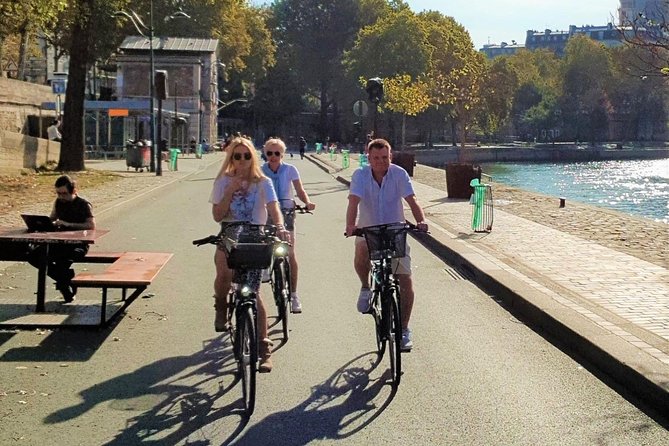
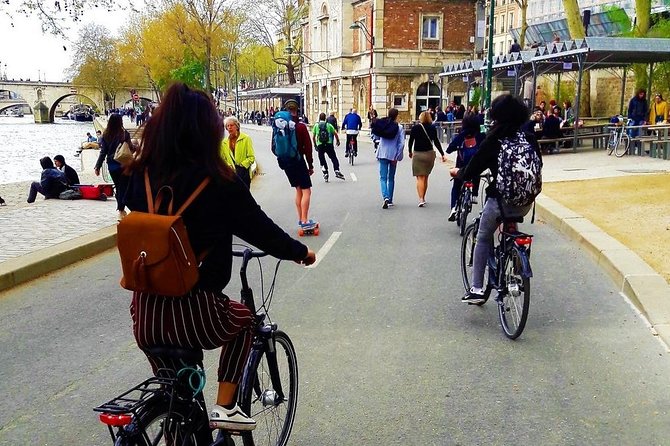
One of the more pleasant transitions comes when you leave heavier traffic and follow the bike-friendly path along the Seine. This is a chance to relax your hands, take in the river, and let the city pass at a slower speed.
A drink stop along the water is part of the plan, but the cost of drinks is not included. Think of it as an opportunity to pause rather than a formal meal break. If you want food, bring money and allow for the fact that a stop may be brief.
I like this section because it breaks up the historical material. Three hours on a bike can feel long if every stop involves dates and political events. The riverside stretch gives you air, views, and a natural reset before the Left Bank.
Saint Germain des Prés and the café tradition
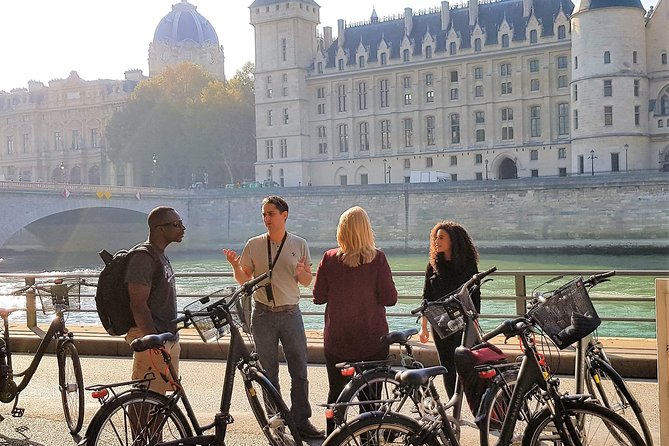
On the Left Bank, the tour heads toward Saint Germain des Prés, a district associated with literary life, cafés, galleries, and old Parisian meeting places. You get a sense of why this neighborhood remains a favorite place to sit, talk, and watch the city.
The route also points out what is described as the world’s oldest company, with a history reaching back 1,154 years. That is an unusual detail, and it gives the guide an opening to discuss how long-lived institutions fit into the changing city around them.
This is not a café crawl, and you should not expect extended time inside galleries or restaurants. Instead, you see the streets and receive suggestions for places to revisit. That can be more useful than a fixed dining stop, especially if you are planning the rest of your stay.
Clément is praised for energy, humor, and strong storytelling, while Paul is known for adjusting the route to suit what a group has already seen. That flexibility is valuable here. If you have already spent hours in the main tourist areas, the guide may help you spend your limited time on parts of Saint Germain that feel less familiar.
Odéon and Luxembourg, where history turns dramatic
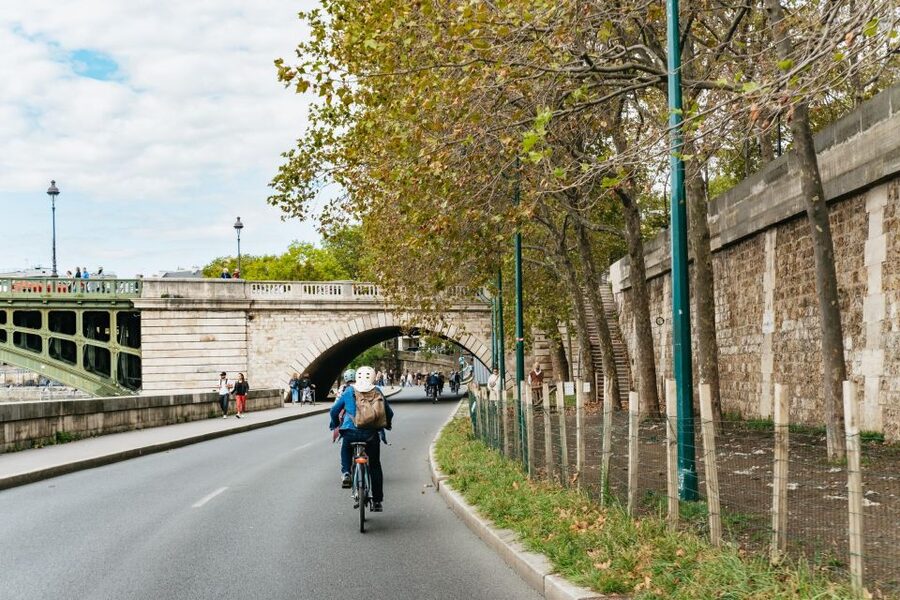
The ride then passes through Odéon and Luxembourg, districts tied to kings, queens, revolutionaries, and Napoleon. This is where the tour’s historical storytelling takes a darker turn, with political conflict and violence shaping the neighborhoods around you.
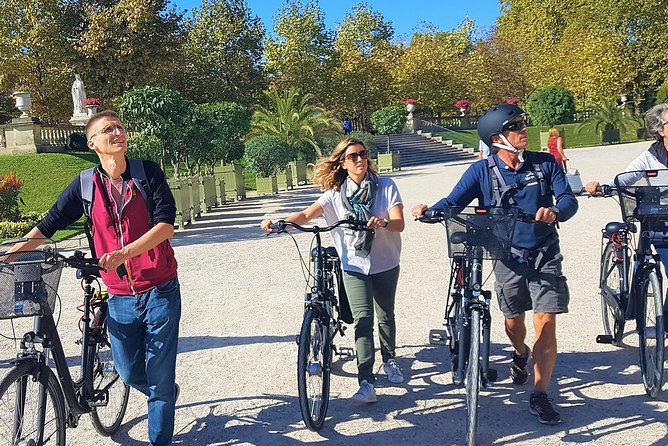
You stop in the Luxembourg Garden, a natural place to rest during the ride. It is also a useful pause before heading toward the Sorbonne and the Latin Quarter. The garden gives you time to recover physically, take photographs, and sort through the stories you have heard.
This is one reason the tour suits mixed-ability groups. The route is described as flat and suitable for all fitness levels, and the frequent stops reduce the pressure. You do need to be tall enough to ride the supplied bicycle: children under 13 and anyone under 135 centimeters are not accepted.
The Sorbonne and the Latin Quarter
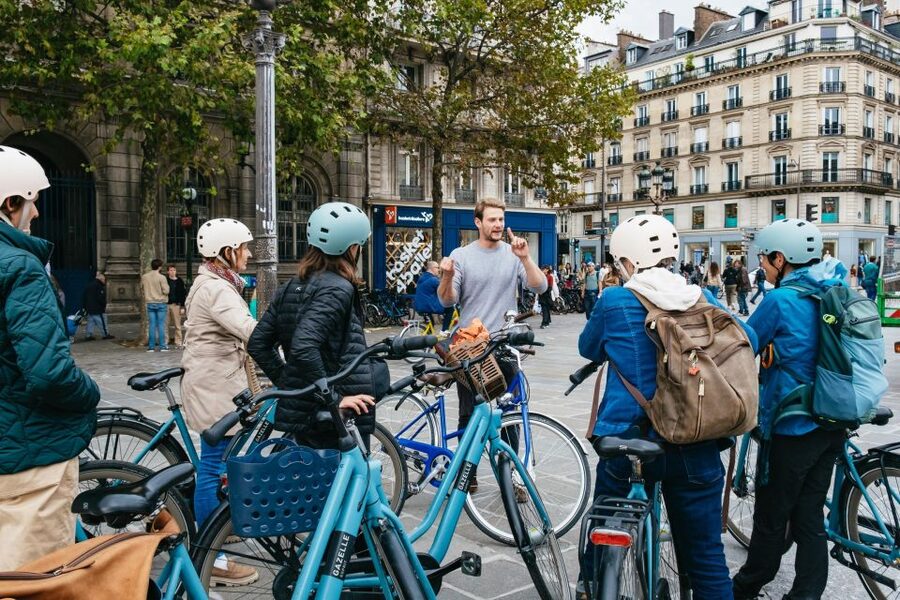
Near the Sorbonne University, the route enters the Latin Quarter. Here, Roman-era remains sit alongside traces of medieval Paris, including narrow streets that once had a rougher reputation than they do today.
The neighborhood is ideal for this kind of tour because its layers are close together. You can move from ancient history to university life, then into small streets where the shape of the old city is easier to read. The guide’s job is to connect those details without turning the ride into a classroom.
The Latin Quarter also shows the limits of a three-hour tour. You will see selected corners, not every church, ruin, bookstore, or lane. If a particular stop catches your eye, make a note of it and return later on foot. Several guides encourage questions and allow time for photographs, but the group still has a route to complete.
What the guides add to the experience
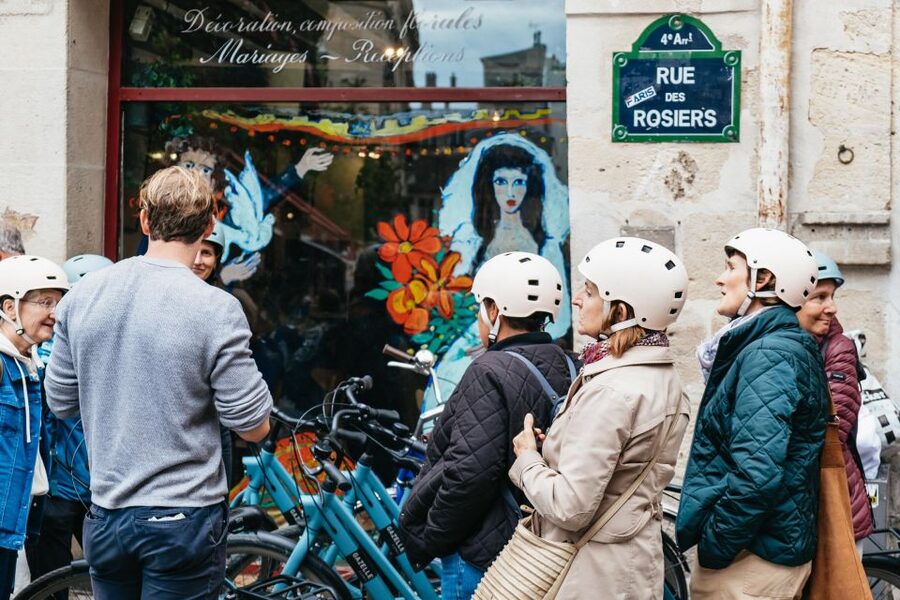
The guide is the heart of this tour. The strongest names in the feedback include Clément, Christian, Igor, Lorenzo, Paul, Ricardo, Romeo, Matthieu, Tamin, and Beni. Their styles vary, but the repeated strengths are clear: good storytelling, humor, patience, and attention to safety.
Igor is praised for being funny, pleasant, and willing to answer questions without rushing the group. Lorenzo receives similar praise for insight, patience, and traffic awareness. Paul is noted for personal observations and for changing the route when the group’s previous Paris sightseeing made that useful.
That last point is important. A fixed route gives the tour structure, but a guide who listens can make it feel less mechanical. Ask questions. Tell the guide which parts of Paris you have already seen. You may get more useful suggestions for the rest of your visit.
The tour is offered in English, French, Italian, Spanish, German, and Dutch. Small groups are available, and several experiences described by participants had only a handful of riders. A smaller group usually makes it easier to hear the guide, stop safely, and ask questions.
Bikes, traffic, and the real riding level
The bicycles are described as easy to ride, functional, and comfortable, with several riders specifically noting the saddle. Helmets are included. The route is mostly flat, and the tour is advertised as suitable for all fitness levels.
That does not mean you can ignore the roads. Paris traffic includes cars, buses, bicycles, and people crossing unexpectedly. One account describes riding as somewhat treacherous at times, even while praising the guide. That is a fair warning, not a reason to avoid the tour.
If you are nervous, tell the guide before setting off. Stay behind the leader, keep a predictable line, and do not stop suddenly in the roadway. The guides are there to manage the route, but each rider remains responsible for alertness.
The tour is a good fit for families with teenagers, couples, and adults who already ride comfortably in cities. It is not suitable for children under 13 or riders below 135 centimeters. Anyone with mobility concerns should consider those limits carefully before booking.
Who should book this Paris bike tour?
I would book this early in a Paris visit if you want orientation without a standard monument checklist. It gives you a useful map in your head: the islands, the Marais, Bastille, the Seine, Saint Germain, Luxembourg, and the Latin Quarter all become connected rather than scattered names.
It is also a strong pick for repeat visitors. Laura from the United Kingdom described the route as better suited to people who had already seen the main sights, and that is exactly right. You get old streets, neighborhood character, political stories, and places to return to later.
Families with teenagers should also consider it. Kimberley from Canada found it a good introduction for a family, and the mix of movement, short stops, and stories can hold attention better than a long indoor visit.
I would choose another tour if your main goal is the Eiffel Tower, Louvre, Notre-Dame, or a detailed visit inside a museum. I would also think twice if Paris traffic makes you very uncomfortable on a bicycle. The route is careful and mostly quiet, but no central Paris ride is entirely free of traffic.
Final verdict: a smart way to meet the less famous Paris
The Paris Charming Nooks and Crannies Bike Tour earns its strong 4.8 rating from 2,585 ratings for good reason. Its best qualities are practical: a flat route, comfortable bikes, a leisurely pace, small-group options, and guides who explain the city while keeping the ride under control.
At $53, I find it good value for a three-hour introduction, especially because it covers several districts that would require a full day of walking. Book it near the start of your stay if you want ideas for later, or choose it midway through a return visit when the major sights are already familiar.
You should book if you want Paris in layers, with medieval lanes, royal squares, river paths, cafés, university streets, and political history. Skip it if you need a first-time highlights tour or do not feel ready to cycle around city traffic.
FAQ
Where does the Paris bike tour meet?
The meeting point is 7 Place de l’Hôtel de Ville, 75004 Paris, at City Hall square. Find the lift entrance to the underground parking area where the bikes are stored. The guide will hold a red umbrella.
How do I reach the meeting point by metro?
Take the Métro to Hôtel de Ville on line 1 or line 11. Use Exit 4, called Avenue Victoria. The parking elevator is about 20 meters in front of the exit.
How long does the bike tour last?
The tour lasts three hours. Starting times vary, so check availability when choosing your booking.
Is the route suitable for beginners?
The tour is suitable for all levels of fitness and follows mostly flat routes, including quieter side streets and a bike-friendly path along the Seine. You still need to follow traffic instructions and remain alert.
What is included in the price?
The price includes a live guide, a bicycle, and a helmet. Food and drinks are not included.
Can children join the tour?
Children under 13 cannot join, and the tour is not suitable for anyone under 135 centimeters tall.
Recently reviewed around Paris
- Louvre Private Tour – The Essentials and More with Expert Guide★ 5.0 · 227 reviews
- 2CV tour by night★ 5.0 · 55 reviews
- Eiffel Tower Second or Summit Floor Access by Elevator with Views★ 3.5 · 161 reviews
- The only Paris Wine Tasting experience you need to do – 2 hours★ 5.0 · 265 reviews
- 2 Hour Street-art Walk and Space Invaders Hunt in Paris★ 5.0 · 27 reviews
- 2 hour outdoor group activity in Paris: SAINT GERMAIN★ 5.0 · 48 reviews
- Sainte-Chapelle, Conciergerie & Palais de Justice Private Tour★ 5.0 · 72 reviews
- Private 2 – Hour Paris Landmarks Tour by Golf Cart Mini Moke★ 5.0 · 38 reviews
Cycling Tours, compared.
Versailles Bike Tour w/ Palace, Gardens, & Picnic
Read our review →
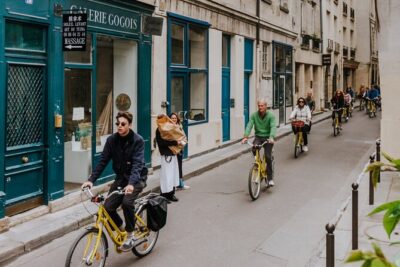
Paris Local Districts and Stories Off the Beaten Track Guided Bike Tour
Read our review →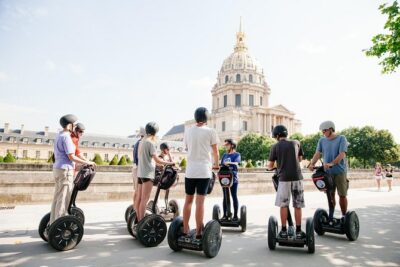
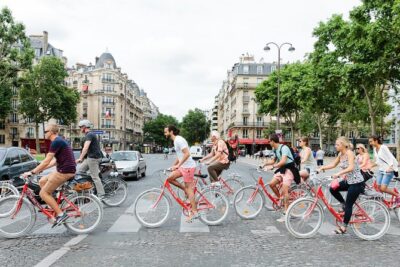
Highlights of Paris Bike Tour w/ a Local Guide (English or Dutch)
Read our review →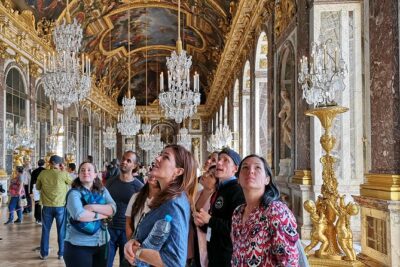
Versailles Bike Tour with Market, Gardens & Guided Palace Tour
Read our review →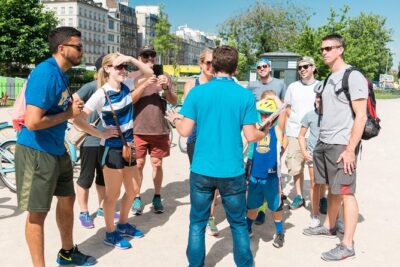
Paris Highlights Bike Tour: Eiffel Tower, Louvre and Notre-Dame
Read our review →Browse the lists this tour appears in