
Reviewed · PARIS TOURS
Paris: French Revolution Tour Relive the 14th July 1789
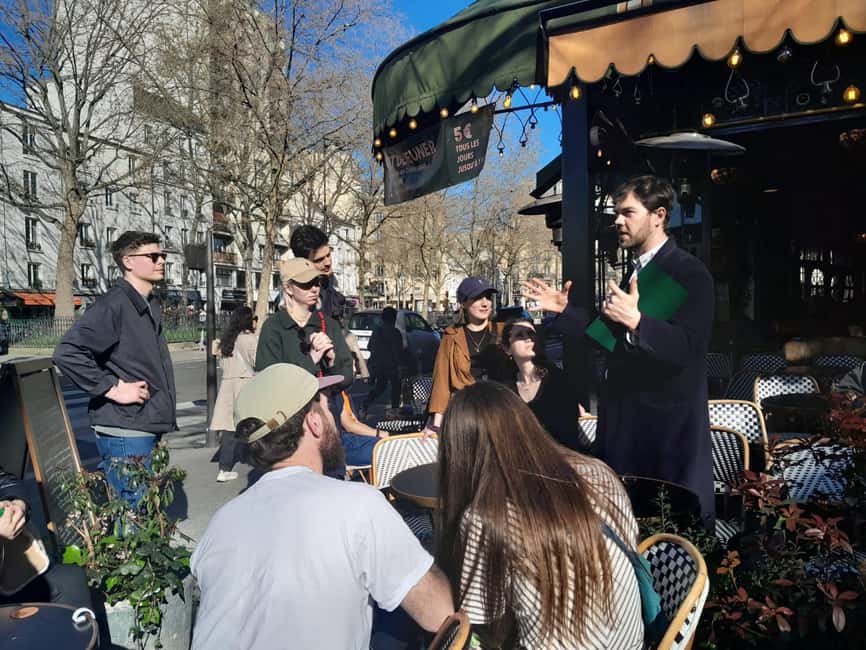
Paris’s Revolution began as much in working neighborhoods as in grand royal halls. This 90-minute walk follows that story through Faubourg Saint-Antoine, La Folie Titon, Passage de Lhomme, and the streets leading to Bastille. You get the social setting behind the uprising, not just a date and a famous prison.
I like two things right away: the route takes you into a part of the 11th arrondissement many visitors skip, and the small group keeps the conversation lively. Guide Robin, described as a history professor and teaching academic, uses pictures and street-level details to make the past easier to see. The main consideration is scope: despite references to the Republic and Napoleon, the walk’s strongest focus is the build-up to 14 July 1789 and the events surrounding that day.
In This Review
- Why this Paris Revolution walk is worth your time
- Starting in Saint-Antoine, where the story feels local
- La Folie Titon and the build-up to 14 July 1789
- Passage de Lhomme and the small details you could miss
- A traditional village and the less polished side of Paris
- The secret stop and the route’s quieter surprises
- Finishing at Place de la Bastille
- Robin’s teaching style and group size
- Is $37 good value for 90 minutes?
- Who should book this experience?
- Final call: book it for the streets, not just Bastille
- FAQ
- How long does the French Revolution tour last?
- How much does the tour cost?
- Where does the tour start?
- Where does the tour finish?
- Which places are included on the route?
- Which languages are available?
- How large is the group?
- Can I cancel the booking?
Why this Paris Revolution walk is worth your time
- You follow the revolution through working-class Saint-Antoine, the neighborhood at the heart of the tour’s social story.
- La Folie Titon and Passage de Lhomme add less familiar stops to the better-known finish at Place de la Bastille.
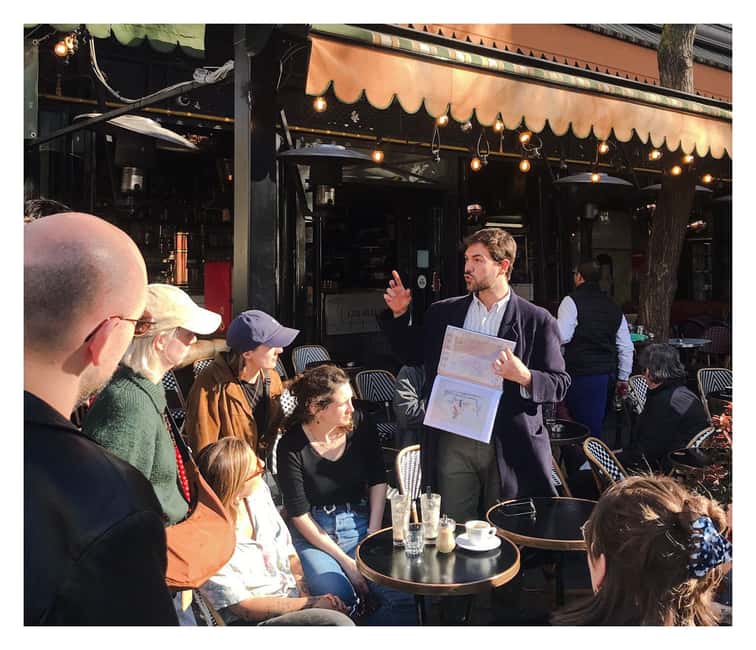
- Robin brings an academic background without turning the walk into a lecture, using questions, humor, and visual material.
- The 90-minute route reaches Bastille, giving you a clear ending and an easy point from which to continue sightseeing.
- At $37, the value comes from interpretation, especially if you want context that ordinary sightseeing rarely provides.
- English, French, and German tours are offered, with a small-group format intended for discussion.
Starting in Saint-Antoine, where the story feels local
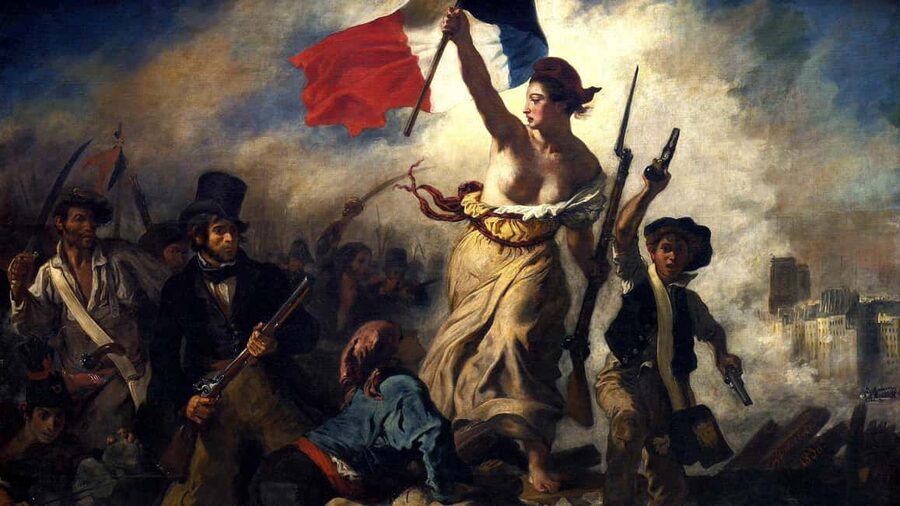
Meet between Café les Blouses Blanches and Mon Café at 1 Place du Dr Antoine Béclère. The starting point is not one of Paris’s headline monuments, and that is useful. You begin in the kind of neighborhood setting that helps explain why the Revolution was not simply a political quarrel among elites.
The walk presents Saint-Antoine as a place shaped by artisans and working people. That focus is one of the experience’s best features. You are encouraged to connect the local streets with the social pressures of the period, including how people lived and why anger grew.
I especially like this approach for a first visit to Paris. Grand sights can make the city feel like a parade of palaces, churches, and museums. This route shifts your attention to ordinary streets and the people who used them. It gives the French Revolution a human scale.
The meeting point is close to cafés, but the exact instructions still deserve a careful look before you set out. The supplied details give both a starting address and the nearby café reference, so use both when finding the group.
Other Paris days travellers weigh against this one:
- Paris: Louvre Museum Timed-Entrance Ticket
★ 4.6 · 71,977 reviews - Disneyland® Paris 1-Day Ticket
★ 4.6 · 49,412 reviews - Paris: Versailles Palace and Gardens Full Access Ticket
★ 4.6 · 41,579 reviews
La Folie Titon and the build-up to 14 July 1789
La Folie Titon is one of the stops that gives this walk its character. Instead of moving straight to Bastille and treating the prison as the whole story, the guide sets up the conditions that led to the famous confrontation.
You can expect the discussion to move beyond the familiar textbook outline. The emphasis is on the days leading up to 14 July, the local population, and the way events gathered force. One useful feature is the hour-by-hour framing. It helps you understand the day as a sequence of decisions and reactions rather than one isolated burst of drama.
Robin’s style seems especially suited to this material. He has been praised for making history accessible, bringing the period into the present, and answering questions rather than delivering a fixed speech. He also uses pictures on some tours, which can help you picture how the area looked in the 18th century.
The stop is not presented as a grand monument with a polished museum display. You are looking at a place and learning how to read it. That can be more rewarding, but it also requires attention. If you prefer a tour built around interiors, objects, or large historic buildings, this experience may feel less tangible.
Passage de Lhomme and the small details you could miss
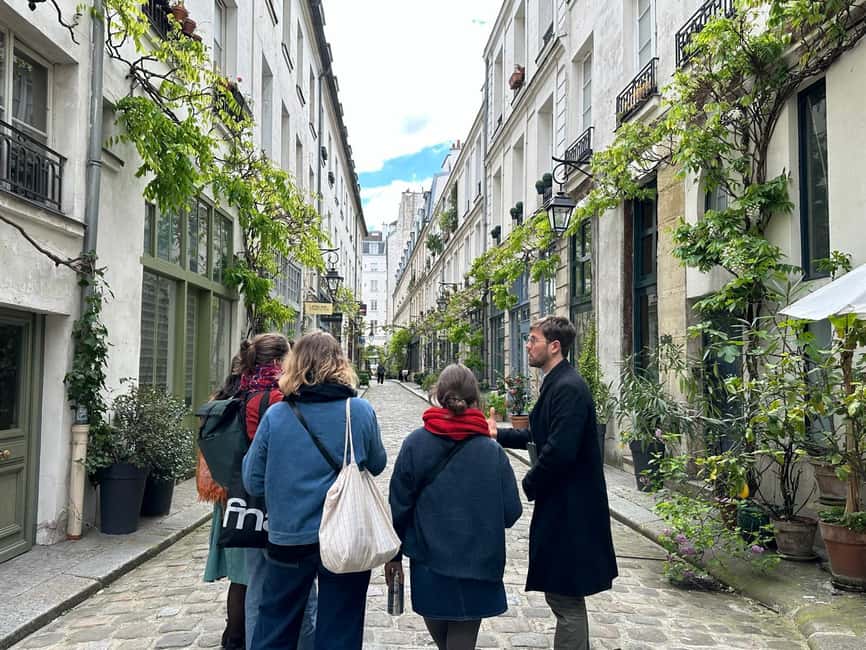
The route continues through Passage de Lhomme, one of the lesser-known corners included in the walk. This is where the tour’s close reading of Paris becomes useful.
A guide can point out architectural features and traces that you might pass without a second glance. One visitor who lives and works near Saint-Antoine and Bastille still found new explanations for familiar surroundings. That is a good sign for repeat visitors and Paris residents, not only first-time visitors.
The passage also supports the tour’s wider purpose. You are not only being told what happened during the Revolution. You are shown how the neighborhood itself can preserve clues about earlier life, work, and change.
I would keep your eyes up and your pace flexible here. The point is not to rush from one named stop to the next. The route works best when you listen to the explanation, then look around for the feature being discussed.
The walk remains educational, but it is not described as stiff. Robin is often praised for humor, clear speech, and inviting participation. That matters in a small group. You are less likely to spend the whole 90 minutes listening passively.
A traditional village and the less polished side of Paris
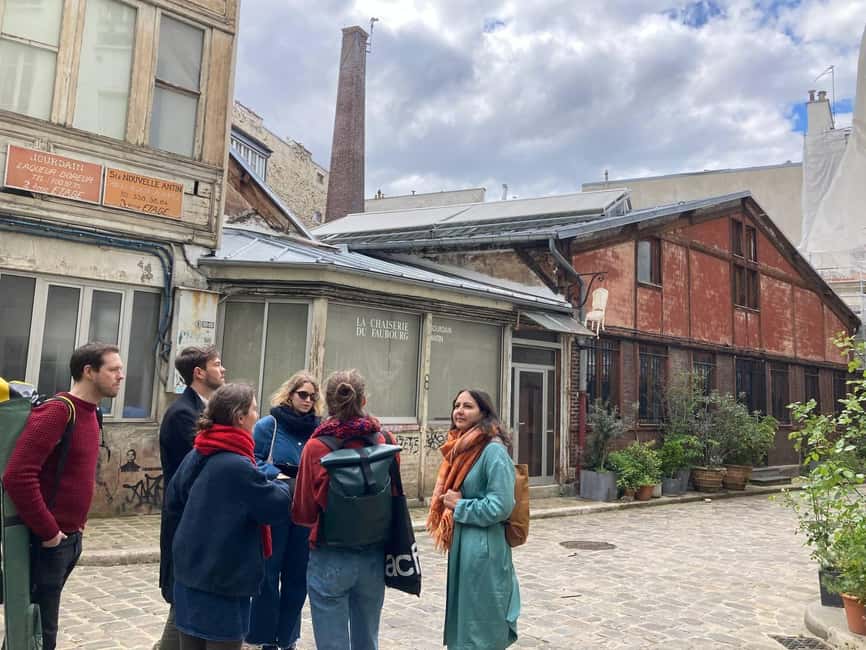
The route includes a stop described as a traditional village. The supplied details do not specify a formal attraction or a named village, so you should think of this as a neighborhood section rather than a major ticketed sight.
That vagueness is not necessarily a flaw. The appeal lies in seeing a different part of Paris and understanding how its streets fit into the story. Several people particularly liked discovering an arrondissement outside the usual sightseeing circuit.
This is also where the tour differs from a standard Bastille walk. You spend time on the route toward the famous square, not just at the endpoint. The guide connects the area to the artisan population and the social conditions that helped fuel the Revolution.
I would recommend this portion to anyone who wants street-level history. You will not simply collect a photograph at a landmark. You will hear why a neighborhood mattered and learn to notice details that lack obvious signs.
The trade-off is that the experience may not satisfy someone hoping to visit a large collection of surviving revolutionary sites. Much of the value comes from Robin’s explanation. Without the guide, the streets may look ordinary.
A different way to spend the day, same corner of France:
- Paris: Evening River Cruise with Music
★ 4.4 · 22,721 reviews - Paris: Eiffel Tower Entry Ticket with Optional Summit Access
★ 4.4 · 20,035 reviews - Paris: Eiffel Tower Summit or Second Floor Access
★ 4.3 · 17,248 reviews - Paris: Louvre Guided Tour with Reserved Access & Boat Cruise
★ 4.3 · 16,353 reviews
The secret stop and the route’s quieter surprises
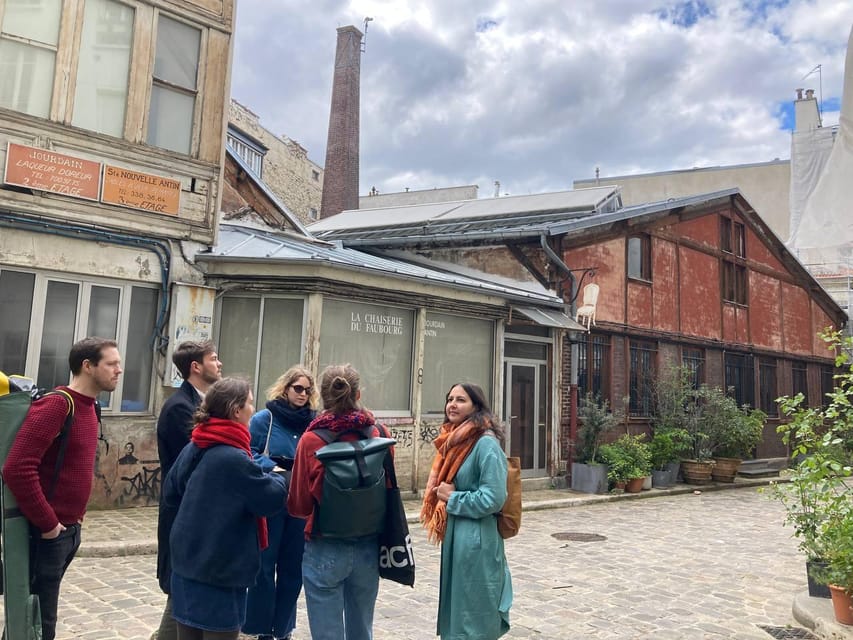
Several sections are described as a secret stop or hidden gem. Since no formal names are supplied for each one, the precise details can vary in importance, but the pattern is clear: this is a route built around overlooked places rather than a straight march between famous monuments.
That design is a real strength. Paris has plenty of major sights, but the Revolution is often reduced to Bastille, the guillotine, and a few famous names. Here, you get a broader account of the neighborhood and the people behind the events.
The guide also gives context beyond the Revolution itself. One particularly useful aspect is the explanation of how the unrest developed, rather than a narrow focus on the single day. This makes the walk helpful if you are still learning the basic sequence of French history.
At the same time, keep your expectations precise. The experience description refers to the rise of the French Republic and Napoleon, but the strongest focus described by participants is the period before and around July 1789. A visitor specifically looking for the Reign of Terror, later revolutionary events, or Napoleon’s major Paris sites may want another tour as well.
Finishing at Place de la Bastille
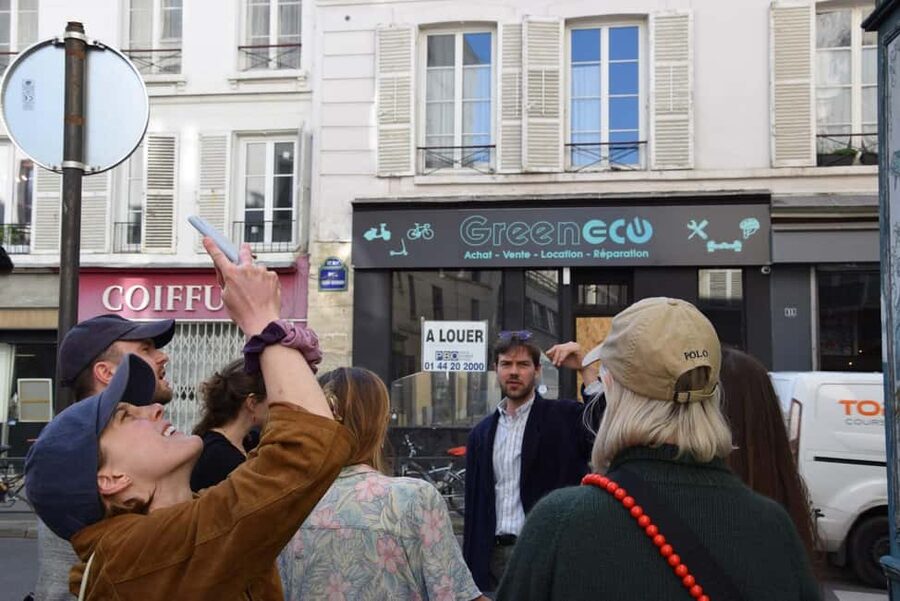
The walk ends at 28 Place de la Bastille, the natural climax of the route. You arrive with more context for the square than you would get from a quick photo stop.
Bastille is famous, but the physical remains are limited compared with what many people imagine. That makes interpretation especially important. The guide helps you understand why this location became such a powerful symbol and how the events connect to the streets you have just walked.
The finish also works well for planning the rest of your day. You can continue exploring the Bastille area, stop for food, or use the location as a base for the next part of your Paris plans. The tour itself does not include admission to an indoor attraction, so you are not left with a timed museum visit to manage.
A viewpoint and photo stop are also part of the route. The exact view is not specified, but it gives you a pause before the finish and a chance to frame the neighborhood you have been studying.
Robin’s teaching style and group size
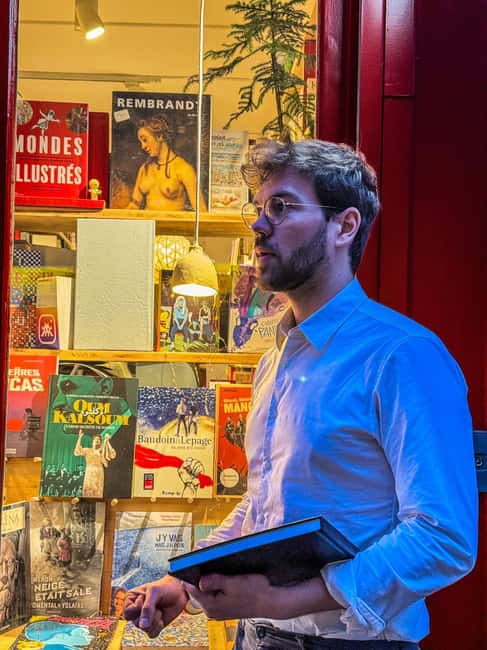
Robin is the guide name most often associated with this experience. His background as a history professor and teaching academic is central to the tour’s appeal. He brings detail, but the comments consistently describe a friendly, engaging manner rather than a dry classroom talk.
That combination matters. French Revolution material can become a jumble of dates, factions, and political shifts. Robin’s approach puts the events in order and links them to real streets. He also encourages questions and group interaction, so you can ask about points that are unclear.
The group-size information is slightly inconsistent. One description says the group is limited to 10 participants, while other details give a maximum of 12 to 15. In practical terms, it is presented as a small-group walk, not a large coach excursion. The smaller format should make it easier to hear the guide and take part in the discussion.
Tours are offered in English, French, and German. If language matters to you, check the available departure before booking.
Is $37 good value for 90 minutes?
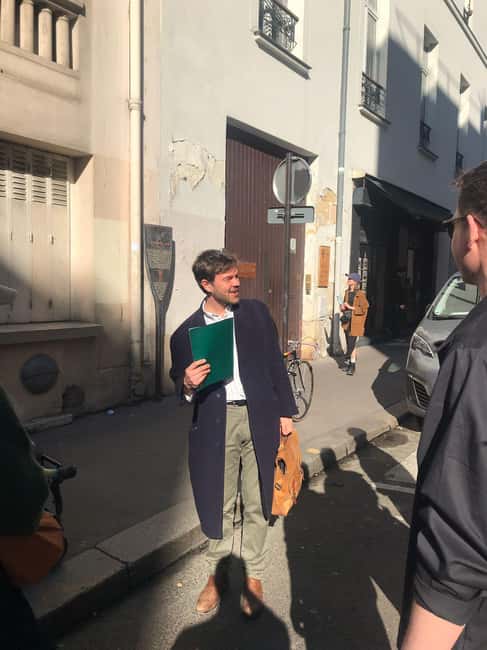
At $37 per person, this is not the cheapest way to spend an hour and a half in Paris. You are paying for the guide’s interpretation, not entry to a museum or a major monument.
I think the price is fair if you care about history and want a route that adds meaning to an otherwise ordinary neighborhood. A well-led walking tour can also save you time by showing you what to look for. The value is strongest for first-time visitors who want context for the rest of their sightseeing, and for repeat visitors who have already covered the main monuments.
The cost is less convincing if you want a full survey of the French Revolution. Ninety minutes gives you a focused introduction, not a complete account of the years from 1789 through Napoleon. One sensible plan is to use this walk for the origins and early events, then visit a museum or take a separate tour for the later period.
There are no additional fees stated for the walk. You can also cancel up to 24 hours in advance for a full refund, and the reserve-now, pay-later option keeps your plans flexible.
Who should book this experience?
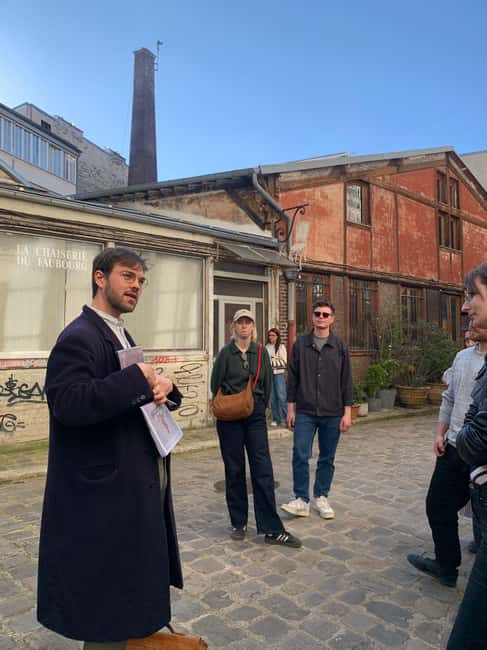
I would choose this tour if you:
- Enjoy history but want it explained in plain language
- Prefer local streets to a standard monument checklist
- Have already seen central Paris and want a different arrondissement
- Like asking questions during a guided walk
- Want to understand the social causes behind the Revolution
- Are visiting with older children or teenagers who respond better to stories than dates alone
It is also a good early-trip activity. One useful piece of advice is to schedule it near the start of your Paris stay. The background on the city, its neighborhoods, and the Revolution can add context to later sightseeing.
I would be more cautious if your mobility is limited, since this is a 90-minute walking tour and the details do not specify accessibility arrangements. The description also does not promise a full treatment of the Republic, the Reign of Terror, or Napoleon, so check the focus if those are your main interests.
Final call: book it for the streets, not just Bastille
Book this walk if you want the French Revolution explained through the neighborhood where ordinary Parisians lived and worked. The strongest reasons are the Saint-Antoine setting, Robin’s academic but approachable teaching style, and the route’s attention to places you might otherwise ignore.
Skip it if you want grand interiors, a short list of famous monuments, or a complete history of the Revolution through Napoleon. For $37, though, it is a strong choice for a curious visitor who wants Paris to feel less like a collection of sights and more like a city shaped by its people.
FAQ
How long does the French Revolution tour last?
The tour lasts approximately 90 minutes.
How much does the tour cost?
The listed price is $37 per person.
Where does the tour start?
The meeting point is between Café les Blouses Blanches and Mon Café, at 1 Place du Dr Antoine Béclère.
Where does the tour finish?
The walk finishes at 28 Place de la Bastille.
Which places are included on the route?
The route includes Faubourg Saint-Antoine, La Folie Titon, Passage de Lhomme, several lesser-known stops, a viewpoint, and Place de la Bastille.
Which languages are available?
The tour is offered in English, French, and German.
How large is the group?
The activity is described as a small-group tour. One detail gives a limit of 10 participants, while other information states a maximum of 12 to 15 people.
Can I cancel the booking?
Yes. You can cancel up to 24 hours in advance for a full refund. You can also reserve now and pay later.
Recently reviewed around Paris
- Louvre Private Tour – The Essentials and More with Expert Guide★ 5.0 · 227 reviews
- 2CV tour by night★ 5.0 · 55 reviews
- Eiffel Tower Second or Summit Floor Access by Elevator with Views★ 3.5 · 161 reviews
- The only Paris Wine Tasting experience you need to do – 2 hours★ 5.0 · 265 reviews
- 2 Hour Street-art Walk and Space Invaders Hunt in Paris★ 5.0 · 27 reviews
- 2 hour outdoor group activity in Paris: SAINT GERMAIN★ 5.0 · 48 reviews
- Private 2 – Hour Paris Landmarks Tour by Golf Cart Mini Moke★ 5.0 · 38 reviews
- Orsay Museum Private or Small-Group Guided Tour★ 4.0 · 381 reviews
Paris Tours, compared.

Versailles Palace and Gardens Full Access Ticket
Read our review →

Eiffel Tower Entry Ticket with Optional Summit Access
Read our review →

Louvre Guided Tour with Reserved Access & Boat Cruise
Read our review →
Moulin Rouge Cabaret Show Ticket with Champagne
Read our review →