Reviewed · MORNING
Paris: Sunrise Running and Sightseeing Group Tour
Paris looks wonderfully different before breakfast. On this sunrise running tour, you move through the city while the streets are quiet, the light is soft, and famous sights are easier to photograph. Starting at Place Saint-Michel, the route links Notre Dame, the Louvre, the Champs-Élysées, Les Invalides, and the Eiffel Tower in one energetic morning.
I like two things right away: you cover a remarkable number of major sights in two hours, and the small group, limited to 10 people, lets the guide adjust the pace and stop for stories. The guide also carries small belongings, water, dried fruit or nuts, and a waterproof running jacket. The catch is simple: this is a real running tour, not a sightseeing walk. You should be able to run at least 5 kilometers without stopping.
In This Review
- Key points at a glance
- Why a sunrise run works so well in Paris
- Starting at Place Saint-Michel beside the Seine
- Crossing Paris by Pont Neuf and Pont des Arts
- The Louvre and Tuileries Garden before opening time
- Place de la Concorde and the grand bridges
- Les Invalides, Grand Palais, and the Champs-Élysées
- The Seine, Trocadéro, and the Eiffel Tower
- The return walk and Musée d’Orsay
- What the guide adds to the run
- Fitness, clothing, and practical limits
- Is $55 a fair price?
- Who should book this Paris running tour?
- FAQ
- How long is the Paris sunrise running tour?
- Where does the tour meet?
- How do I reach Place Saint-Michel by public transport?
- Which landmarks do you see?
- Do I need to be a fast runner?
- Are museum and monument tickets included?
- What does the tour provide?
- Can I bring a suitcase or large bag?
- Is the tour available in English?
- Should you book it?
Key points at a glance
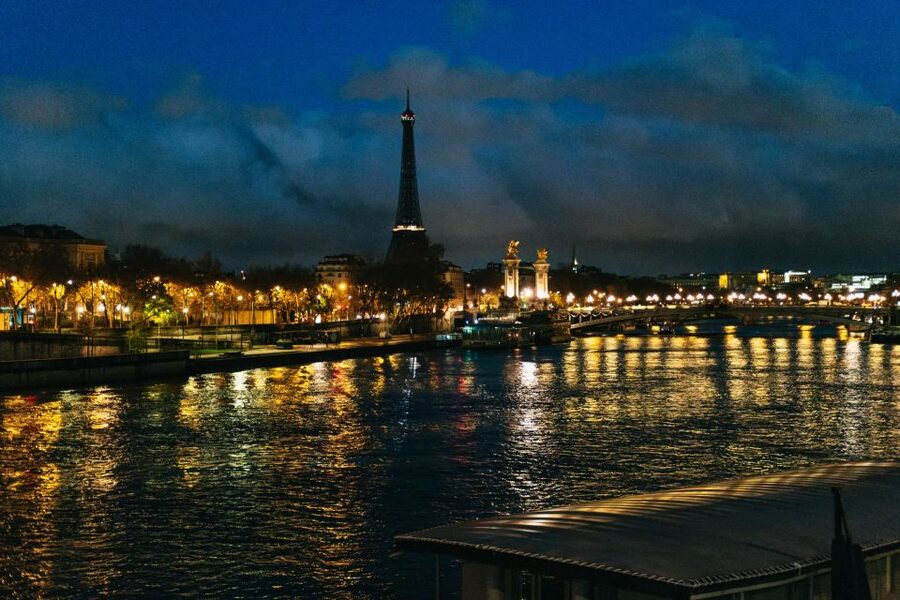
- Sunrise views from Pont Neuf and Pont Alexandre III: The early light gives the Seine and grand bridges a calm, photogenic setting.
- A fast way to see central Paris: The route connects Notre Dame, the Louvre, Tuileries Garden, the Champs-Élysées, and the Eiffel Tower.
- Small groups of up to 10: You get a more personal pace check and easier access to the guide.
- Andrea has led especially well-received runs: Her guiding, history stories, photos, and videos earned repeated praise in the supplied feedback.
- Water and small snacks are included: Your guide carries these, along with small personal items and a waterproof running jacket.
- You need basic running fitness: Expect running with breaks, not a gentle stroll with a few quick jogs.
Why a sunrise run works so well in Paris
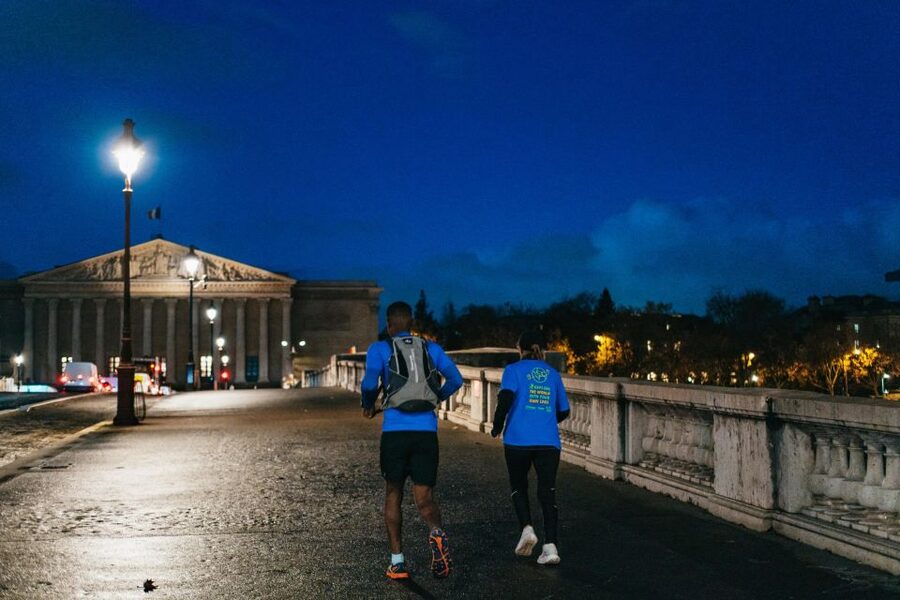
Paris sightseeing can eat up a whole day. You queue for one monument, cross town to another, and spend precious hours working out where to go next. This tour takes a different approach: you use your own two feet to connect a long chain of sights before most daytime crowds arrive.
The early start matters. The Louvre courtyard, Tuileries Garden, Champs-Élysées, and Eiffel Tower are all easier to take in when you are not weaving around large groups. You also get cleaner photos, though the exact light depends on the season and the start time available that day.
I especially like the mix of exercise and local context. You are not simply counting kilometers. At regular pauses, the guide explains the places around you, takes pictures, and gives you time to catch your breath. This helps the route feel like sightseeing with a purpose rather than a race through a checklist.
The experience costs $55 per person. That is fair value if you want a guide, a carefully planned route, digital photos, water, snacks, and a morning workout in one package. It is less attractive if your main goal is to enter museums or monuments, since admission tickets are not included and the tour stays outside.
More Paris trips worth a second look
- A Morning in Paris Food Tour: Croissants, Baguettes & Chocolate
★ 5.0 · 556 reviews - Paris Before the Crowds: Sunrise Bike Tour with Breakfast
★ 4.8 · 70 reviews - From Reims: Morning Champagne Tour and Tastings
★ 4.8 · 463 reviews
Starting at Place Saint-Michel beside the Seine
Meet at 4 Place Saint-Michel, near the Saint-Michel fountain and the metro exit. If you arrive by metro, use exit 3, Fontaine Saint-Michel. Saint-Michel station is on line 4, while Cluny-La-Sorbonne is on line 10. The Saint-Michel-Notre-Dame station serves RER B and C.
Allow enough time to find the fountain. This is central Paris, but the square has several exits and busy pedestrian flows. You will need your own public transport ticket if you use the metro or RER.
The opening stretch takes you toward Notre Dame, the Palais de Justice, the Conciergerie, and Sainte-Chapelle. These sights cluster on and around Île de la Cité, so you get a strong historical opening without spending much time on transport.
You will stop for photos and short explanations, but you will not go inside the cathedral, chapel, or former prison. That is worth understanding before you book. The value here is the outside perspective and the chance to see the buildings in quiet morning light, not an interior visit.
Crossing Paris by Pont Neuf and Pont des Arts
Pont Neuf gives you one of the first scenic views across the Seine. Despite its name, it is Paris’s oldest standing bridge, and its broad setting makes it a useful place to pause, take photos, and settle into the group’s rhythm.
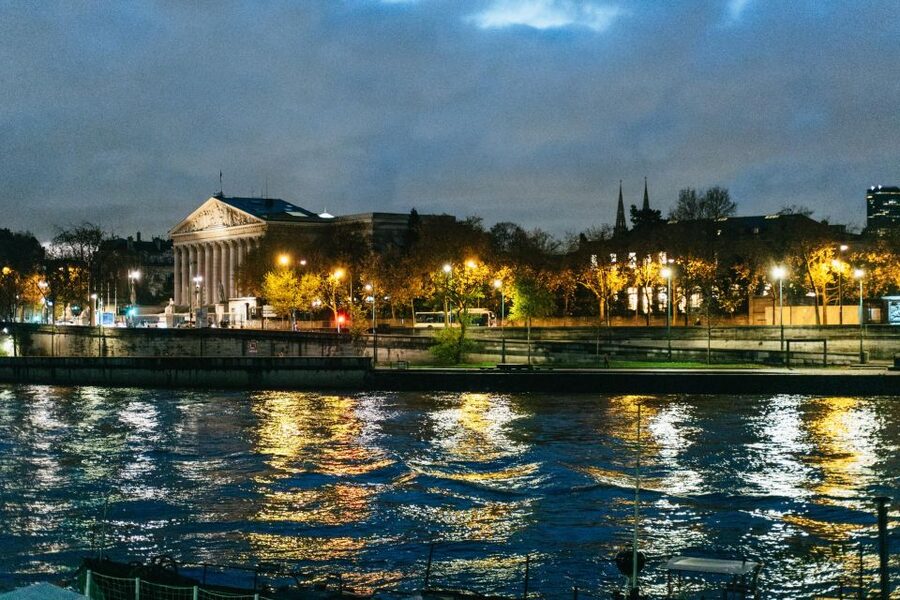
Next comes Pont des Arts, the well-known pedestrian bridge near the Louvre. From here, the river, historic façades, and museum district create one of the most attractive views on the route. Sunrise is a real advantage at this point, since you can often frame the scene without a thick line of sightseers.
The guide pauses at both bridges for sightseeing and stories. These breaks are also practical. A group with different running abilities needs frequent chances to regroup, and the route is designed around that pattern.
Your small group size helps here. With no more than 10 participants, the guide can keep track of the front and back of the group more easily than on a large city run. Still, you should expect a shared pace rather than a private training session.
The Louvre and Tuileries Garden before opening time
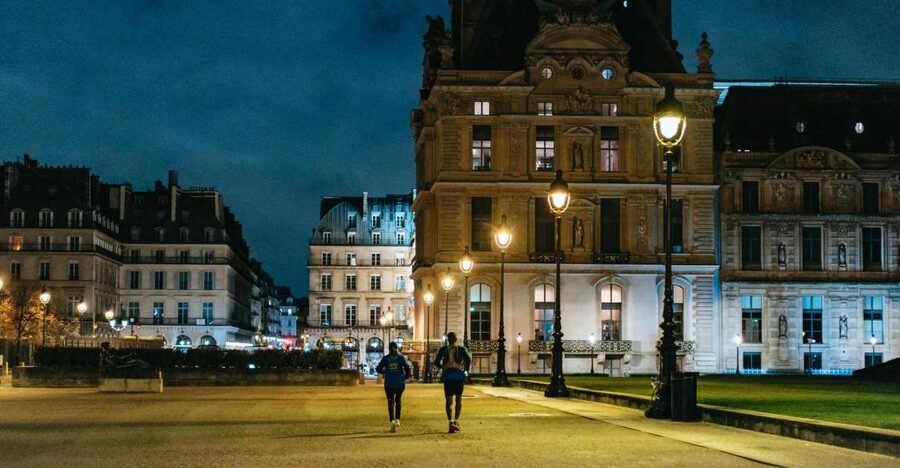
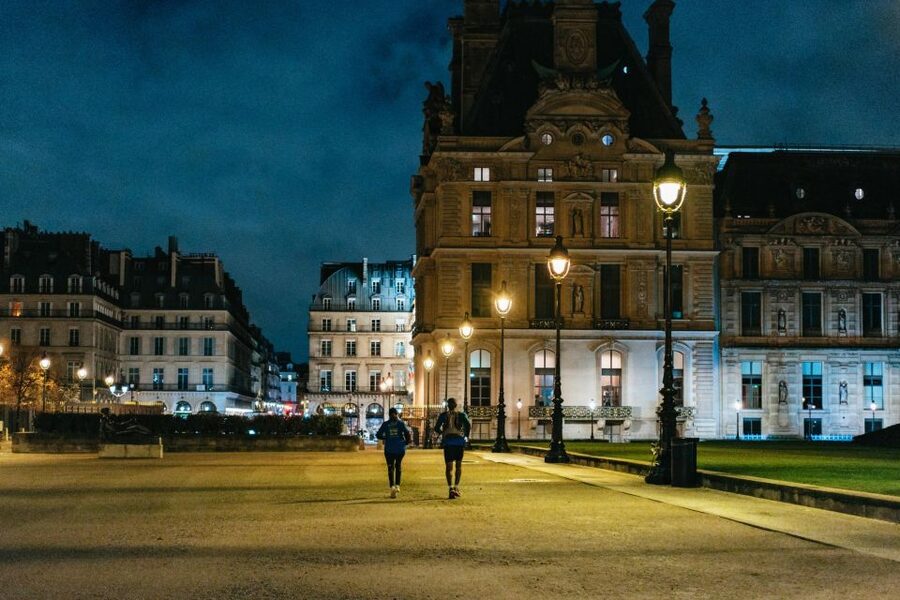
The Louvre is one of the route’s biggest visual rewards. You run past the museum and stop for photos, but entrance is not part of the experience. You will not see the Mona Lisa or the galleries on this outing.
That is not a weakness if you treat this as an orientation tour. The Louvre exterior, courtyards, and surrounding streets give you a sense of the museum’s scale. You can return later with a timed admission ticket and a better idea of how the area fits together.
The route then passes through or beside Tuileries Garden. This formal garden gives you a brief change of pace from stone façades and traffic. You will see the long avenues and open views while the day is still getting started.
At this stage, you may appreciate the tour’s stop-and-go design. The running gets you from place to place, while the pauses let the guide explain what you are seeing. You will need some conditioning, but you do not have to run hard every minute.
A different way to spend the day, same corner of France:
- Paris: Louvre Museum Timed-Entrance Ticket
★ 4.6 · 71,977 reviews - Disneyland® Paris 1-Day Ticket
★ 4.6 · 49,412 reviews - Paris: Versailles Palace and Gardens Full Access Ticket
★ 4.6 · 41,579 reviews - Paris: Evening River Cruise with Music
★ 4.4 · 22,721 reviews
Place de la Concorde and the grand bridges
Place de la Concorde opens the route into a bigger, more monumental part of Paris. It is a broad square with long sightlines toward the Champs-Élysées and the Seine. The guide stops here for photos and commentary.
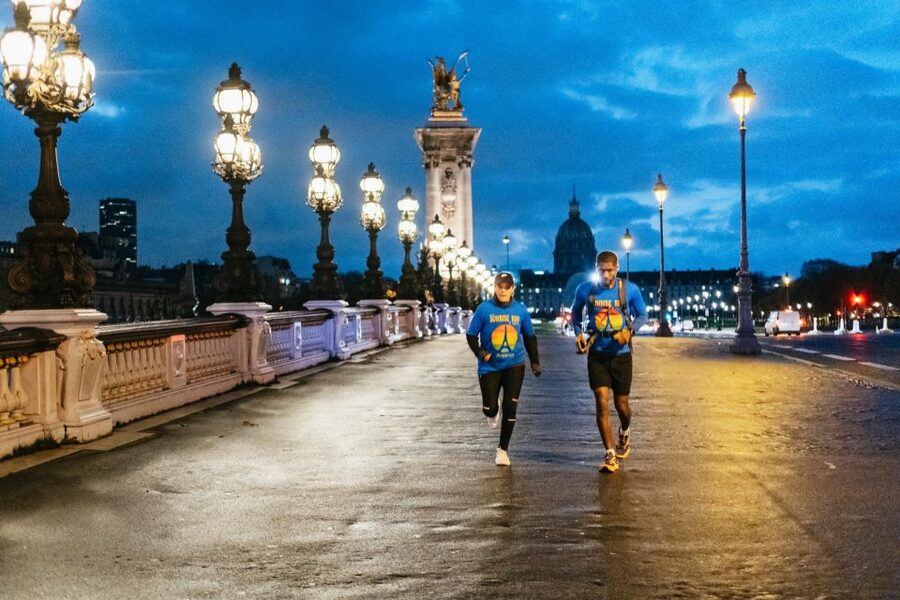
Pont Alexandre III is another highlight. Its ornate design and views toward Les Invalides make it one of the most rewarding photo stops on the run. Early morning light can bring out the bridge’s details without the usual crowd pressing around you.
This is where the tour delivers more than a standard jog through city streets. You get the pleasure of moving through Paris under your own power, then stopping at places that deserve a closer look. The guide also handles photos, which means you do not have to keep asking a companion to step out of the frame.
The experience includes digital photos from the run. The quality and number will depend on the guide and conditions, but this is a useful extra for anyone who wants more than a few hurried phone shots.
Les Invalides, Grand Palais, and the Champs-Élysées
The route continues past Les Invalides, whose golden dome is one of the most recognizable features in this part of Paris. You stop for sightseeing and photos, but the visit remains outside. Entry to museums and monuments is not included.
You then pass the Grand Palais and Petit Palais before reaching the Champs-Élysées. These buildings and the avenue give this section a grand, ceremonial feel. At sunrise, the broad boulevard is usually a much calmer place to run than it is later in the day.
The Champs-Élysées is not a quiet village street, so you should still expect normal city conditions. The reward is the scale: long views, major monuments, and a direct connection between Place de la Concorde and the Arc de Triomphe area, although the Arc itself is not listed as a stop.
One participant described running and walking about 8.4 miles over two and a half hours, with frequent breaks. The advertised duration is two hours, so distance and total time can vary with the group, pace, and stops. If you prefer a measured training run, ask for the expected pace before setting out.
The Seine, Trocadéro, and the Eiffel Tower
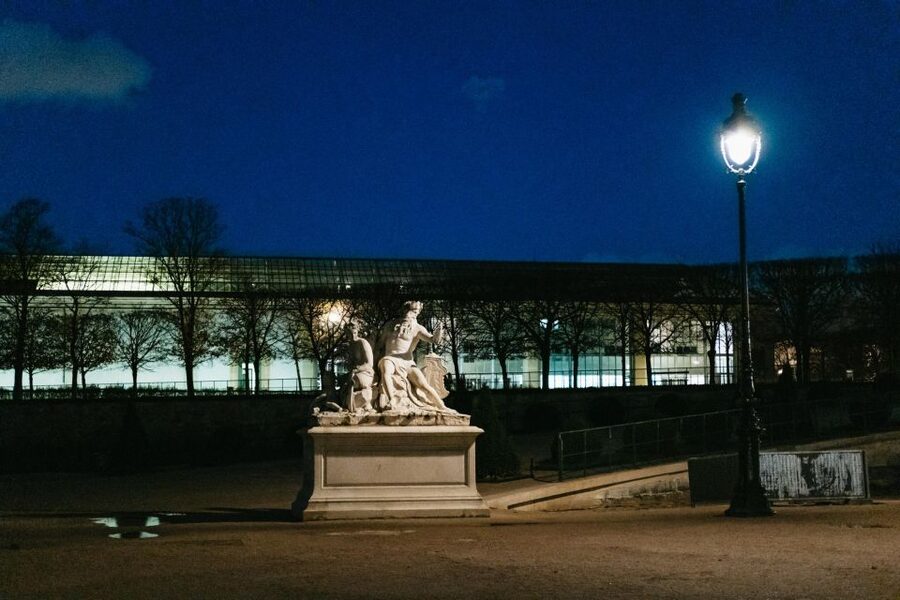
From the Champs-Élysées, the route heads toward Pont de l’Alma, Palais de Tokyo, Place du Trocadéro, and the Eiffel Tower. Pont de l’Alma provides another river pause, while the Palais de Tokyo section gives you a different view of the city’s monumental western side.
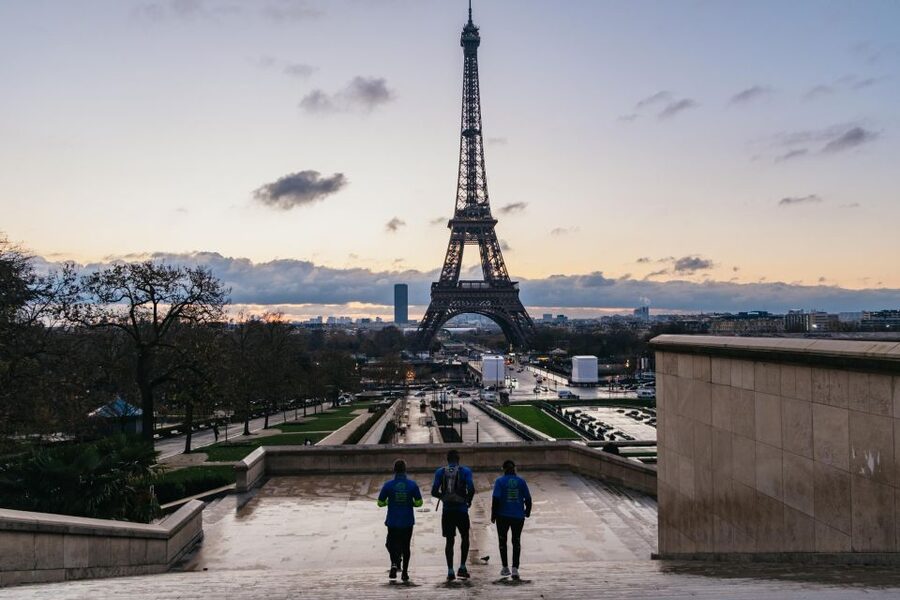
Place du Trocadéro is one of the best places for an Eiffel Tower photograph. You get broad views across the Seine and a classic elevated angle toward the tower. At sunrise, the open plaza can feel almost private compared with the daytime crush.
The Eiffel Tower is the natural high point of the tour. You stop for photos and a guide-led look at the monument, but you do not go up. If tower access matters to you, plan a separate visit and reserve it independently.
I like ending the outward route here because you have earned the view. You have crossed a large portion of central Paris, seen the city wake up, and reached the monument most people associate with the city. The run turns the Eiffel Tower into a finish-line reward, even though the official route continues back toward Saint-Michel.
The return walk and Musée d’Orsay
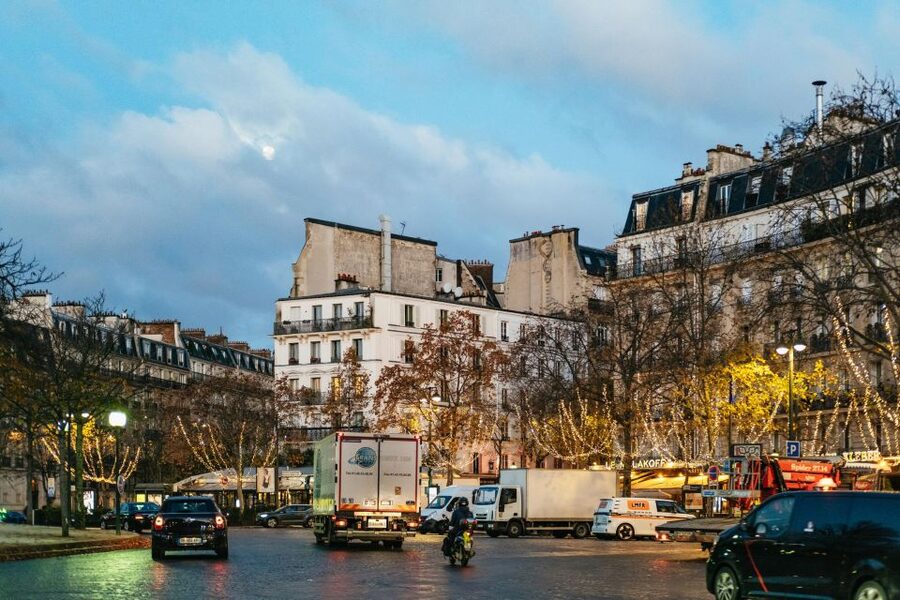
The itinerary includes about 30 minutes on foot on the return. That detail matters. You will not be running every meter of the route, and the walking section gives your legs a break after the western stretch.
You pass the Musée d’Orsay on the way back. Again, this is an exterior pass rather than a museum visit. If you plan to visit the collection later, the morning run gives you a useful look at its riverside location without using up your museum time.
The experience returns to 4 Place Saint-Michel. Since the tour begins and ends in the same central area, it can fit neatly before a full day of sightseeing. You can finish, find breakfast nearby, and continue exploring without arranging a second transfer across town.
What the guide adds to the run
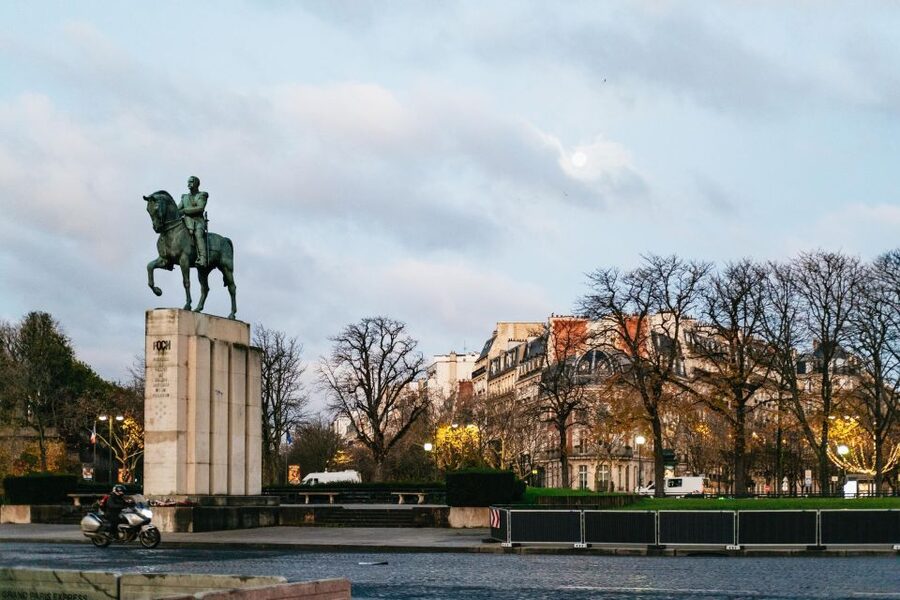
The guide’s role is more than leading the route. You receive short historical explanations, photo stops, practical help, and encouragement across a group with different abilities. The supplied feedback gives particular credit to Andrea for combining running skill with clear Paris stories and for taking photos and videos.
That combination is important. A running guide who only focuses on speed can leave slower participants behind. A sightseeing guide who treats the run as an afterthought may create a clumsy pace. The strongest part of this experience is the balance between movement, explanation, and regular regrouping.
English and French are available. If you have a strong preference, select the appropriate language when booking or confirm it before the meeting time.
The guide can carry small personal items in a backpack. You also receive still bottled water, dried fruit or nuts, and a waterproof running jacket. Do not treat this as luggage storage. Large bags, suitcases, and bulky clothing cannot be stored.
Fitness, clothing, and practical limits
You do not need to be a fast runner. You do need enough conditioning to run at least 5 kilometers without stopping. That requirement separates this experience from a walking tour with a token jog.
Bring sports shoes and clothing suited to the weather. Paris mornings can feel cool, damp, or chilly depending on the season, so layers are sensible. The waterproof jacket supplied by the guide is useful, but it does not replace proper running gear.
The tour is not suitable for people with back problems, mobility impairments, or heart problems. Children can join if they are used to running and a parent comes along. For ages 16 and 17, it is preferable that a parent makes the reservation in the child’s name and attends the meeting point. Toddlers may join in a suitable running stroller, but the city is not very wheelchair friendly.
You will also need your own transport ticket. The tour does not include metro or train fares, though you may not need public transport during the run itself.
Is $55 a fair price?
At $55, this is not the cheapest way to see Paris. You can walk along the Seine for free, and many of the exterior sights cost nothing to view. The price makes more sense when you value the route planning, guide, small group, photos, refreshments, jacket, and the chance to see the city before the crowds.
It is also a good use of time. In two hours, you connect sights that could otherwise take much of a day to reach on foot. You get exercise at the same time, then keep the rest of your day free for museums, cafés, or a slower neighborhood visit.
The price does not cover admissions, transport, running shoes, or storage for large items. Add those costs only if you plan to enter a monument or need public transport before or after the run.
Free cancellation is available up to 24 hours in advance, and you can reserve now and pay later. Those terms help if your Paris schedule is still shifting, but the main decision is your fitness level and comfort with an early start.
Who should book this Paris running tour?
I would choose this tour if you like running, want a broad first look at Paris, and prefer quiet streets to crowded midday viewpoints. It suits solo runners, couples, and small groups who enjoy learning a few stories while staying active.
It is also a smart first-morning activity early in your trip. You get your bearings around the Seine, Louvre, western monuments, and Eiffel Tower in one outing. Later, you can return to the places that deserve more time.
I would skip it if you want leisurely photography, interior visits, or a gentle pace. You should also think twice if you are recovering from an injury, dislike running on city streets, or cannot comfortably manage at least 5 kilometers without stopping.
FAQ
How long is the Paris sunrise running tour?
The advertised duration is two hours. The exact start time depends on availability, and the pace and stopping time can affect the total experience.
Where does the tour meet?
Meet at 4 Place Saint-Michel, between the Saint-Michel fountain and the metro exit.
How do I reach Place Saint-Michel by public transport?
Use Saint-Michel station on metro line 4, Cluny-La-Sorbonne on line 10, or Saint-Michel-Notre-Dame on RER B and C. At Saint-Michel, use exit 3, Fontaine Saint-Michel.
Which landmarks do you see?
The route includes Notre Dame, Palais de Justice, the Conciergerie, Sainte-Chapelle, Pont Neuf, Pont des Arts, the Louvre, Tuileries Garden, Place de la Concorde, Pont Alexandre III, Les Invalides, Grand Palais, Petit Palais, Champs-Élysées, Pont de l’Alma, Palais de Tokyo, Place du Trocadéro, the Eiffel Tower, and a pass by Musée d’Orsay.
Do I need to be a fast runner?
No, but you should be able to run at least 5 kilometers without stopping. The tour includes breaks and a walking section.
Are museum and monument tickets included?
No. The tour does not include entry to museums or monuments along the route.
What does the tour provide?
You receive the guided running tour, a waterproof running jacket, bottled water, dried fruit or nuts, and digital photos.
Can I bring a suitcase or large bag?
No. Large bags, luggage, and bulky clothing cannot be stored. The guide can carry only small personal items in a backpack.
Is the tour available in English?
Yes. The live guide service is available in English and French.
Should you book it?
Book this tour if you want to see a lot of Paris before breakfast and are happy to trade a slow stroll for a steady run with breaks. The early light, Eiffel Tower finish, small group, and guide-led photos give it real value.
Skip it if your priority is going inside the Louvre, Sainte-Chapelle, or the Eiffel Tower, or if 5 kilometers of running sounds uncomfortable. For fit visitors who want an active introduction to Paris, this is a smart, memorable start to the day.
Recently reviewed around Paris
- Louvre Private Tour – The Essentials and More with Expert Guide★ 5.0 · 227 reviews
- 2CV tour by night★ 5.0 · 55 reviews
- Eiffel Tower Second or Summit Floor Access by Elevator with Views★ 3.5 · 161 reviews
- The only Paris Wine Tasting experience you need to do – 2 hours★ 5.0 · 265 reviews
- 2 Hour Street-art Walk and Space Invaders Hunt in Paris★ 5.0 · 27 reviews
- 2 hour outdoor group activity in Paris: SAINT GERMAIN★ 5.0 · 48 reviews
- Private 2 – Hour Paris Landmarks Tour by Golf Cart Mini Moke★ 5.0 · 38 reviews
- Orsay Museum Private or Small-Group Guided Tour★ 4.0 · 381 reviews
Morning, compared.
A Morning in Paris Food Tour: Croissants, Baguettes & Chocolate
Read our review →

Omaha Beach Half-Day Morning Trip From Bayeux (A1)
Read our review →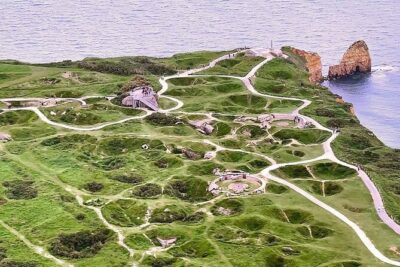
Omaha Morning Half Day Tour to visit the landing areas at Omaha Beach
Read our review →
Saint Emilion Morning Wine Tour – Winery & Tastings from Bordeaux
Read our review →
Morning – Loire Valley Wine Tour & Food Pairing, Vouvray
Read our review →
Hyères : Morning Discovery or Relaxing Afternoon cruise
Read our review →