
Reviewed · LYON TOURS
The Full Story of Lyon and Its Must-See With a Local
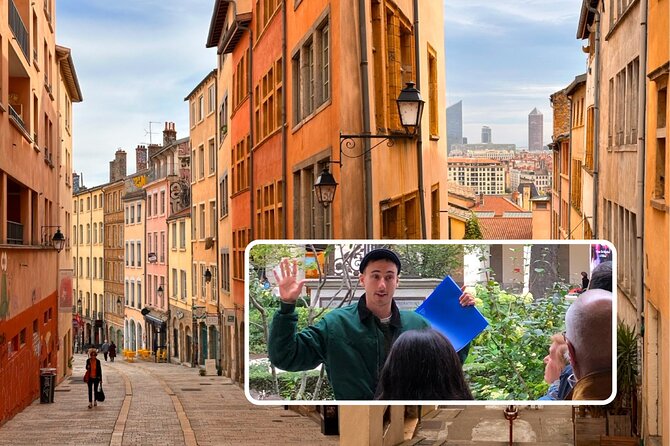
Lyon’s best stories are tucked into its passageways, stairways, courtyards, and old working neighborhoods. This 1-hour-45-minute walk with Quentin Dubourg links Croix-Rousse to Old Lyon, covering silk workers, Roman Lugdunum, dramatic labor revolts, wartime history, and the city’s food culture. I like the route’s two clear strengths: the downhill direction makes a hilltop visit easier, and the mix of famous sights with less obvious traboules gives you a useful first look at Lyon.
I also like the ending at Place du Gouvernement, where Quentin can point you toward a bouchon lyonnais, street food, the Asian district, or a French fusion restaurant. The main drawback is pace. Eleven stops fit into less than two hours, so you should expect a brisk introduction rather than long museum visits or detailed time inside each site. A few stairs remain, and Croix-Rousse is still a hill.
In This Review
- Key points at a glance
- Why Lyon Makes Sense on Foot
- Starting in Croix-Rousse and Its Silk Passageways
- Roman Lyon at the Amphitheater of the Three Gauls
- Montée de la Grande Côte, Cafés, and the Walk Down
- Place des Terreaux and the Bartholdi Fountain
- Fresque des Lyonnais and the City’s Public Characters
- Old Lyon, Traboules, and Wartime Stories
- What the One-Hour-45-Minute Format Really Gives You
- Food Advice at the End of the Route
- Who Should Book This Lyon Walk?
- Booking and Cancellation Details
- Should You Book The Full Story of Lyon?
- FAQ
- How long does the Lyon walking tour last?
- What time does the tour start?
- Where does the tour begin?
- Where does the tour end?
- Is the route difficult?
- How large is the group?
- Can I cancel for a refund?
Key points at a glance
- Silk-worker passageways: Enter the Cour des Voraces traboule and learn how Lyon’s silk trade shaped the city.
- Downhill city route: Begin in Croix-Rousse and walk toward the center, with stairs but less uphill effort.
- Roman and wartime stories: See the Amphitheater of the Three Gauls and hear about Lyon’s powerful WW2 past.
- Major central sights: Pass Place des Terreaux, the Bartholdi Fountain, Lyon City Hall, and the Fine Arts Museum.
- Old Lyon finish: End near Place du Gouvernement, a handy area for finding lunch or dinner.
- Small-group format: The group is limited to 20 people, and the tour has a five-star rating from 31 reviews with 100% recommending it.
Why Lyon Makes Sense on Foot
Lyon can feel like several cities joined together. Croix-Rousse rises above the center and carries the memory of silk workers. The Presqu’île gathers grand squares, city buildings, and museums. Old Lyon brings narrow streets, courtyards, and passageways beside the river.
This tour works because it connects those areas in one direction. You start at 9 Montée de la Grande-Côte at 10 a.m., then move downhill toward the center and finish in Old Lyon. That gives you a useful sense of how Lyon fits together instead of leaving you in one square with a list of facts.
At $5.93 per person, the value is unusually strong if that price is available when you book. You are paying for a local guide, a planned route, and a compact introduction to several districts. The tradeoff is simple: this is not a full-day experience, and the low price does not mean every landmark gets an extended visit.
Quentin Dubourg presents the walk as a way to experience Lyon like a local. The tour’s five-star rating from 31 reviews supports the idea that the format works well for people seeking a clear, lively orientation. One especially useful detail from the feedback is the praise for the length. You can fit it into a morning without giving up the rest of your day.
Other Lyon days travellers weigh against this one:
- Lyon City Hop-on Hop-off Sightseeing Bus Tour
★ 4.0 · 1,614 reviews - Lyon: Musée de l’illusion Entrance Ticket
★ 3.9 · 1,023 reviews - Vieux Lyon Cultural & Historical Walking Guided Tour (English)
★ 5.0 · 942 reviews
Starting in Croix-Rousse and Its Silk Passageways
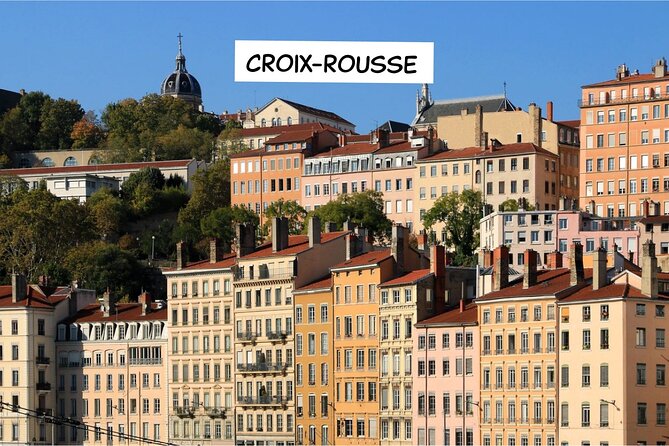
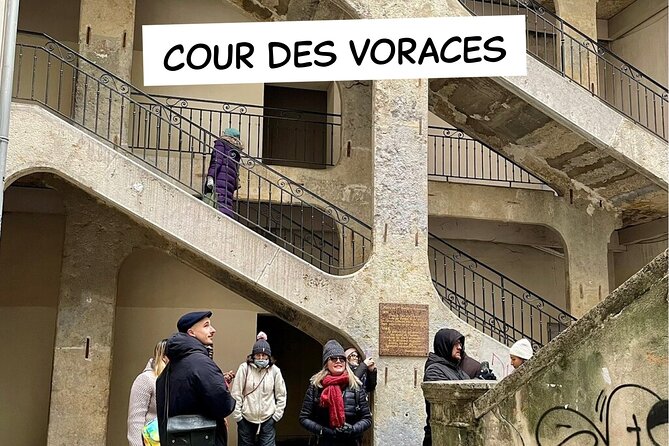
The route begins at Traboule et Cour des Voraces, one of Lyon’s most impressive passageways. A traboule is a route through buildings, courtyards, and covered spaces, and these passages are a key part of Lyon’s character.
This particular one is tied to the city’s silk workers. They used the route to move fabric toward the center, linking the working district with the commercial heart of Lyon. That detail gives the architecture a practical purpose. You are not just looking at an attractive old courtyard. You are seeing part of the system that made Lyon a major silk center.
Quentin’s focus on Lyon’s silk heritage should help you read the streets around you. The buildings of Croix-Rousse are connected to work, trade, and the people who lived there. That makes this opening more useful than a quick photo stop.
The tour then reaches Place Chardonnet, where you begin the descent from Croix-Rousse. The square is a natural point to understand the hill’s relationship with the center below. You should pause here for the views, but keep your expectations realistic. The schedule allows about 10 minutes at each stop, so the tour is designed for explanation and movement, not a long scenic break.
The walk is described as suitable for all ages, but the practical point is the terrain. You will go downhill, which is easier than climbing the full hill, yet you still need to manage stairs. If stairs or slopes are a concern, contact Quentin before booking.
Roman Lyon at the Amphitheater of the Three Gauls
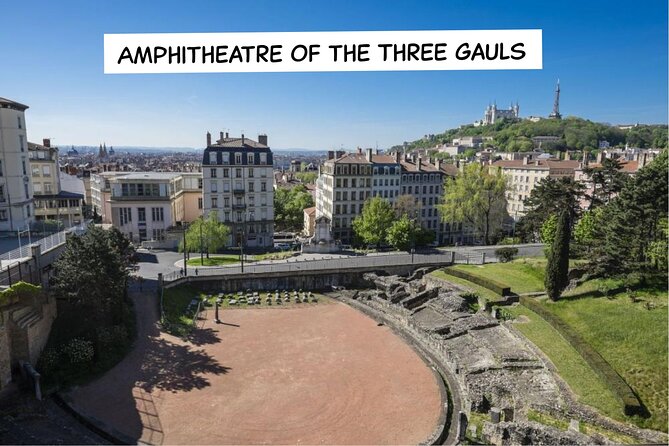
The Amphitheater of the Three Gauls shifts the story from silk workers to ancient Lugdunum, Lyon’s Roman name. It is one of Lyon’s two amphitheaters and offers a chance to discuss the city’s Roman growth and later decline.
This is one of the tour’s most useful changes of subject. In a short time, you move from a working-class neighborhood shaped by textiles to a site linked with Roman power. The stop helps show that Lyon’s importance did not begin with modern commerce or gastronomy.
You should expect an outdoor visit and a short explanation rather than a long archaeological session. The schedule gives the amphitheater about 10 minutes. That is enough to place it in the city’s story and understand why the site matters, but not enough for a detailed study of every surviving feature.
If ancient history is your main reason for visiting Lyon, you may want extra time elsewhere. If you want a broad first look at the city, this stop adds welcome scale to the walk.
Montée de la Grande Côte, Cafés, and the Walk Down
Next comes Montée de la Grande Côte, described as the fastest route from Croix-Rousse to the center. The street is lined with cafés and vintage shops, so it gives the walk a more everyday feel after the earlier historic sites.
This section is where the route’s downhill design matters most. You can take in the changing streetscape without spending your energy on a long climb. It also lets you see how the upper neighborhood connects to the central districts.
The word downhill should not make you think effortless. You will still walk for nearly two hours, and the route includes stairs. Comfortable shoes are a sensible choice. The supplied information says most people can participate, but it also asks anyone concerned about the hill to contact the guide.
The walk’s pace may suit you if you prefer steady movement and short explanations. It may feel quick if you want to stop at shops, order coffee, or take many photographs. Save those extra stops for after the tour.
A different way to spend the day, same corner of France:
- Lyon: Private Walking Tour of “Traboules” in the Old Town
★ 5.0 · 866 reviews - Lyon: City Highlights Walking Tour
★ 4.9 · 847 reviews - Lyon Highlights & Secrets Walking Guided Tour (small group) including Funicular
★ 5.0 · 831 reviews - Highlights and Hidden Gems of Lyon Guided Walking Tour (English)
★ 5.0 · 750 reviews
Place des Terreaux and the Bartholdi Fountain
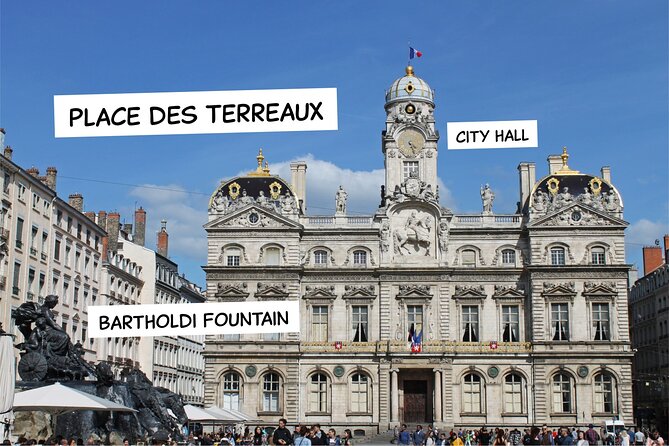
At La Fontaine Bartholdi, Quentin can explain an appealing bit of civic history: the fountain was intended to face the city hall, and it was not originally created for Lyon. That small detail shows how public monuments can acquire new meaning when they are moved into a different city setting.
The fountain leads naturally to Place des Terreaux, one of Lyon’s two main squares. Here you see Lyon City Hall and the Fine Arts Museum. The square provides a grand contrast to the close passageways and steep streets of Croix-Rousse.
The Fine Arts Museum is an important sight, but this walking tour does not include a museum visit. You get the building and the setting, along with Quentin’s explanation, then continue. If you want time with the museum’s collections, plan a separate visit.
The same applies to Lyon City Hall. The building is beautiful and worth seeing from the square, but the schedule gives it only about five minutes. Think of this part of the tour as city orientation. Quentin helps you decide which places deserve a longer return visit.
Fresque des Lyonnais and the City’s Public Characters
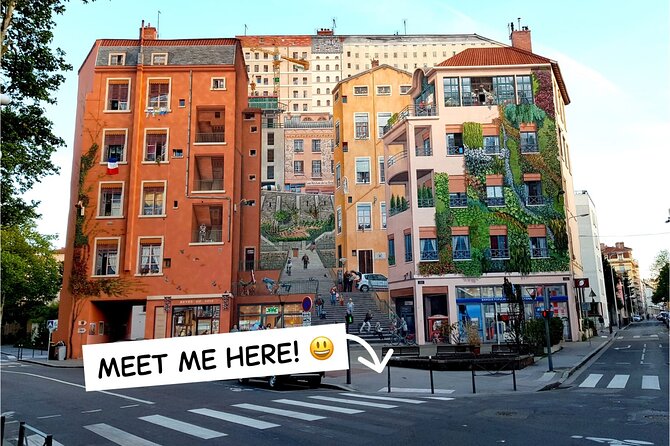
The Fresque des Lyonnais is a mural showing famous Lyonnaise figures. It is a useful stop because it presents local identity in a single public artwork.
A mural like this can be easy to pass without understanding. With a local guide, you can connect the painted figures to Lyon’s culture and past. The stop also breaks up the stonework and formal squares with a large piece of modern public art.
Again, the planned time is about 10 minutes. That should be enough for a look and an explanation, though you may want to return later if you enjoy murals or want better photographs. The route is not trying to cover every name in Lyon. It is giving you a starting point for understanding who the city chooses to celebrate.
Old Lyon, Traboules, and Wartime Stories
The final stretch moves into Old Lyon, with stops at Hôtel Bullioud, Place du Change, and Place du Gouvernement. Hôtel Bullioud is another traboule, with architecture that differs from the Cour des Voraces. Seeing more than one passageway matters because Lyon’s traboules are not all the same. Their layouts and details help explain how the old districts were built and used.
Place du Change brings the story of exchange and commerce into view. The name points to the financial role of this part of Lyon, and it fits neatly with the earlier discussion of silk, fabric, and movement through the city.
At Place du Gouvernement, you reach the center of the old town. The route includes another beautiful passageway leading toward the river, giving the walk a fitting close. You finish in a part of Lyon where it is easy to continue on foot and find a meal.
The tour also promises stories about Lyon during World War II, including powerful wartime events. The supplied details do not name each location or story, so you should expect the subject to be woven into Quentin’s commentary rather than tied to a separate museum stop. That is still valuable. Lyon’s wartime past adds moral weight to a walk that already covers trade, labor, religion, architecture, and public life.
What the One-Hour-45-Minute Format Really Gives You
The stop times add up to the full 105-minute duration. That tells you something important about the experience: it is tightly planned.
You receive:
- A route through Croix-Rousse, central Lyon, and Old Lyon
- Short explanations at 11 named locations
- Several traboules and courtyards
- Views on the descent from the hill
- Roman, silk, labor, wartime, architectural, and food-related context
- A practical finish near places to eat
You do not receive long interior visits, extended free time, or a slow photography walk. Quentin’s tour is best used as a first-day orientation. Afterward, you can choose which places deserve a return visit.
The group limit is 20 people. That is not a private tour, but it is small enough to keep the route manageable. A group of that size can still make narrow passageways feel crowded, especially when the walk pauses, so people who want complete solitude should choose a private experience instead.
Food Advice at the End of the Route
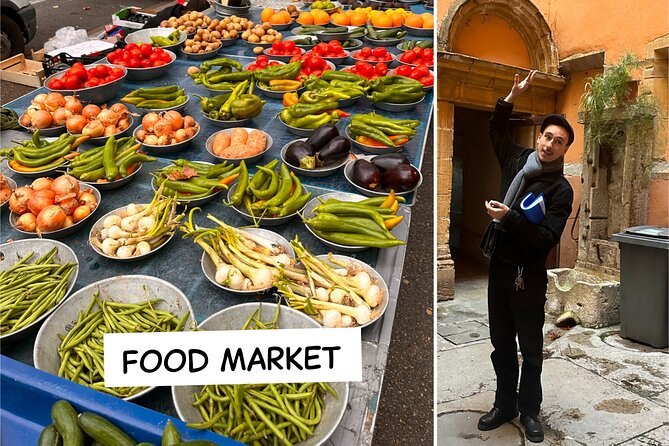
The ending is one of the tour’s most practical features. Quentin offers to help you find a place to eat that fits your plans, including a bouchon lyonnais, street food, the Asian district, or a French fusion restaurant.
That matters in Lyon because food is part of the city’s identity, not just a break between sightseeing stops. A bouchon lyonnais gives you a traditional local option, while street food or the Asian district may suit a quicker or different meal. The choice is yours, and Quentin’s role is to help you match the area and style to what you want.
Since the walk ends at Place du Gouvernement, you do not need to return to the starting point. That saves time and puts you near the old town and river area. You can continue exploring, stop for lunch, or use the location as a base for the next part of your day.
Who Should Book This Lyon Walk?
I would choose this tour if you have limited time in Lyon and want one local-led route to explain the city’s layout. It is especially useful on your first morning, when the hill, old town, central squares, and food districts may still feel disconnected.
It also suits you if you like:
- Short stops with a clear story
- Local history tied to actual streets and buildings
- Traboules and lesser-known passageways
- A downhill route instead of a hill climb
- Meeting people in a group of up to 20
- Practical restaurant suggestions after sightseeing
Families and mixed-age groups may appreciate the short duration and downhill direction, though everyone should be ready for stairs. The tour is also near public transportation, and service animals are allowed.
I would look elsewhere if you want a museum-heavy experience, a private guide, a slow architectural study, or a tour devoted only to Roman Lyon. You may also find the pace too brisk if you want to linger at each square.
Booking and Cancellation Details
The tour starts at 10 a.m. from 9 Montée de la Grande-Côte and ends at Place du Gouvernement in Old Lyon. A mobile ticket is provided, and confirmation arrives when you book.
Free cancellation is available if you cancel at least 24 hours before the local start time. Cancellations or changes made within 24 hours are not refunded or accepted, so keep that deadline in mind.
Should You Book The Full Story of Lyon?
At $5.93, this is a strong-value way to get your bearings in Lyon, especially if the price remains available for your date. Quentin Dubourg covers an unusually wide range of subjects in 105 minutes, from silk workers and Roman ruins to traboules, wartime stories, public art, and food.
Book it if you want a lively first look, a downhill route, and direct help deciding where to eat afterward. Skip it if you need long visits inside museums or monuments. For most first-time visitors with a free morning, the combination of route, local context, and low cost makes this an easy addition to a Lyon stay.
FAQ
How long does the Lyon walking tour last?
The tour lasts approximately 1 hour and 45 minutes.
What time does the tour start?
It starts at 10 a.m.
Where does the tour begin?
The meeting point is 9 Montée de la Grande-Côte, 69001 Lyon, France.
Where does the tour end?
The tour ends at Place du Gouvernement in Old Lyon.
Is the route difficult?
The route goes downhill from Croix-Rousse, but it includes some stairs. You can contact Quentin if you have concerns about the hill.
How large is the group?
The tour has a maximum of 20 people.
Can I cancel for a refund?
Yes. You can receive a full refund if you cancel at least 24 hours before the experience start time. Changes or cancellations made within 24 hours are not accepted or refunded.
Recently reviewed around Lyon
- Taste Wine in Lyon: Burgundy, Beaujolais, Rhône, and more★ 5.0 · 211 reviews
- 1 or 2-Hour Pedicab tour of Lyon★ 5.0 · 213 reviews
- Hameau Duboeuf, 1st theme park on Vine and Wine in Europe★ 4.5 · 63 reviews
- Northern Rhône Valley Wine tour from Lyon Half Day★ 4.5 · 113 reviews
- Storytelling tour of Old Lyon★ 5.0 · 39 reviews
- Segway – Ride along the rivers 1h30★ 5.0 · 43 reviews
- Lyon Old Town Private Food Tour with 6 French Delicacies & Wines★ 5.0 · 85 reviews
- Rhône Valley Wine Tasting Private Day Tour from Lyon★ 5.0 · 43 reviews
Lyon Tours, compared.
Lyon Highlights & Secrets Walking Guided Tour (small group) including Funicular
Read our review →
Highlights and Hidden Gems of Lyon Guided Walking Tour (English)
Read our review →
Food Tour in Lyon – A Full Taste of France by Do Eat Better
Read our review →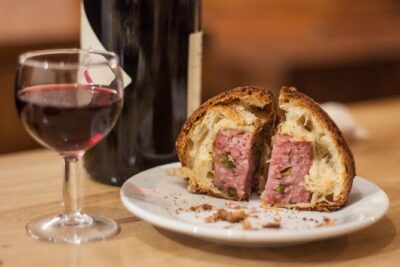
Lyon Old Town Food Tour with 6 French Delicacies & Fine Wine
Read our review →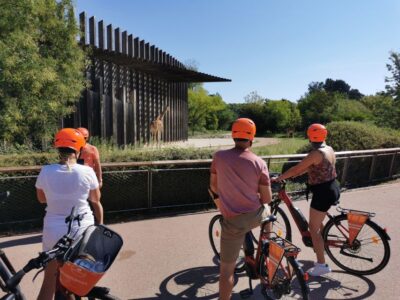
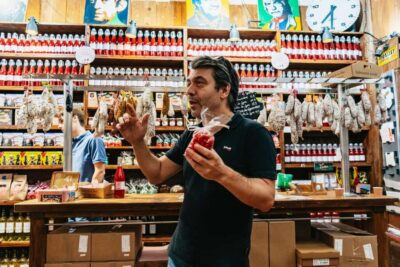
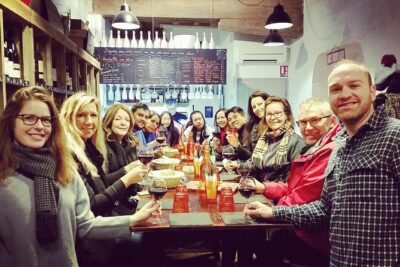
Lyon Old Town Food Tour with Local Specialties Tasting & Lunch
Read our review →Browse the lists this tour appears in