
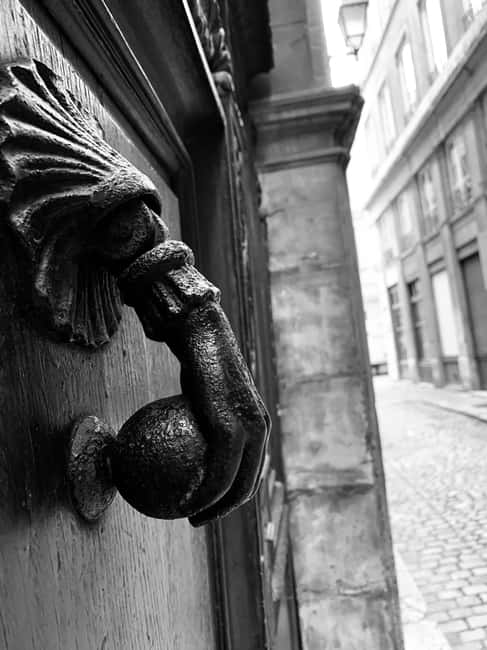
Reviewed · WALKING TOURS
Lyon: Private Walking Tour of “Traboules” in the Old Town
Lyon’s traboules are not grand monuments you spot from a boulevard. They are quiet passageways threaded through courtyards, stairways, and old buildings, often easy to miss unless someone knows which doors to try. This 150-minute walk through Vieux Lyon uses those corridors to explain the city’s silk trade, religious power struggles, architecture, and wartime past.
I like two things right away: the small group, limited to 10, keeps the walk personal, and guide Yannick, also called Yan, brings a sharp sense of humor to serious history. I also like that the route includes lesser-known passageways instead of stopping only at the best-known sights. The drawback is practical: stairs and uneven routes make this a poor choice for wheelchair users or anyone with major mobility limits, and strollers can be awkward.
In This Review
- Key points to know before you book
- Starting at the cathedral fountain in Vieux Lyon
- Why the traboules are more than shortcuts
- Silk workers, courtyards, and the working city
- Renaissance Lyon told through people and power
- French Resistance stories inside quiet corridors
- What the 150-minute route feels like
- Yannick’s storytelling and local advice
- The physical side: stairs, stones, and narrow entries
- Is $43 a fair price?
- Who should take this Lyon walking tour?
- Should you book the traboules tour?
- FAQ
- Where does the traboules tour meet?
- How long does the tour last?
- What languages does the guide speak?
- How many people can join the group?
- What should I bring?
- Is the tour suitable for wheelchair users or strollers?
Key points to know before you book
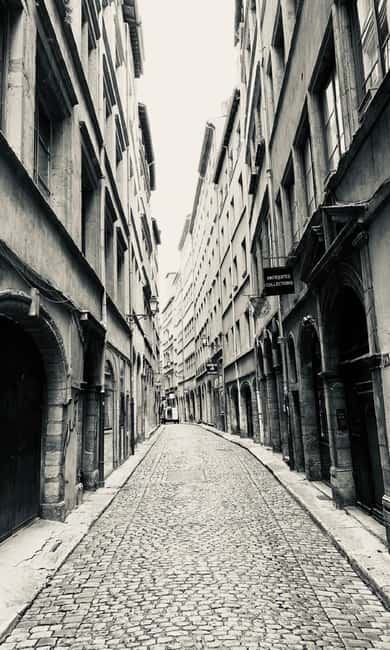
- The tour enters lesser-known traboules: You see passageways that are difficult to find on your own.
- Yannick is the main attraction: His storytelling connects architecture with politics, religion, commerce, and daily life.
- Vieux Lyon provides the setting: The walk takes place in Lyon’s largest Renaissance district.
- Silk and wartime history shape the route: You learn how the corridors served workers, residents, and French Resistance groups.
- Small groups make a difference: With no more than 10 people, it is easier to hear, ask questions, and respect residents.
- Allow 2.5 hours on foot: Wear comfortable shoes and expect stairs, stairways, and periods of standing.
Starting at the cathedral fountain in Vieux Lyon
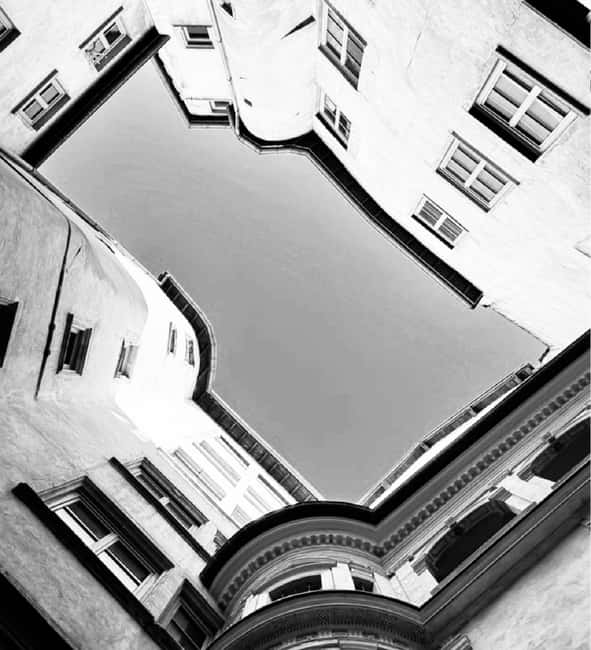
You meet the guide in front of the old fountain in the middle of the cathedral square. This is a sensible starting point because you are already in the heart of Vieux Lyon, the district where the tour makes the most sense.
The square gives you a clear reference point before the route turns into a maze of narrow lanes and private-looking entrances. Arrive with your bearings sorted and comfortable shoes on. Once the group moves into the old quarter, there may be little room to pause while you search for the right doorway.
The format is private in the sense that the walk is reserved for a limited party, with a maximum of 10 participants. That matters in the traboules. A large crowd would make the corridors feel like a procession, while a small group can stop briefly, listen, and move quietly through shared residential spaces.
The tour is offered in English or French. The guide has lived in this neighborhood for more than 25 years, which gives the walk a local point of view rather than a simple list of dates and architectural labels.
More Walking Tours in Lyon
- Vieux Lyon Cultural & Historical Walking Guided Tour (English)
★ 5.0 · 942 reviews - Lyon: City Highlights Walking Tour
★ 4.9 · 847 reviews - Lyon Highlights & Secrets Walking Guided Tour (small group) including Funicular
★ 5.0 · 831 reviews
Why the traboules are more than shortcuts
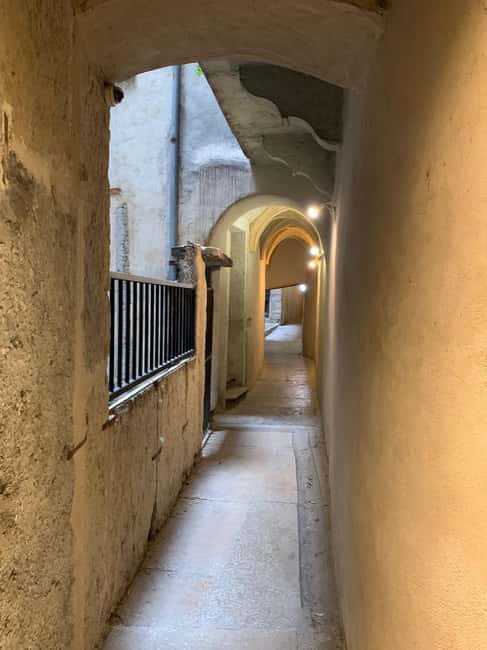
The word traboule refers to Lyon’s covered passageways, which link streets through courtyards and buildings. You will not simply walk down one corridor and tick it off a sightseeing list. The value is in seeing how these routes fit into the structure of Vieux Lyon.
Some passages are open to the public, while others are tucked behind doors or connected to occupied buildings. The tour focuses on some of the roughly 50 passageways still open to the public. The less obvious entrances are part of the appeal, since an ordinary walk through the neighborhood can easily pass them by.
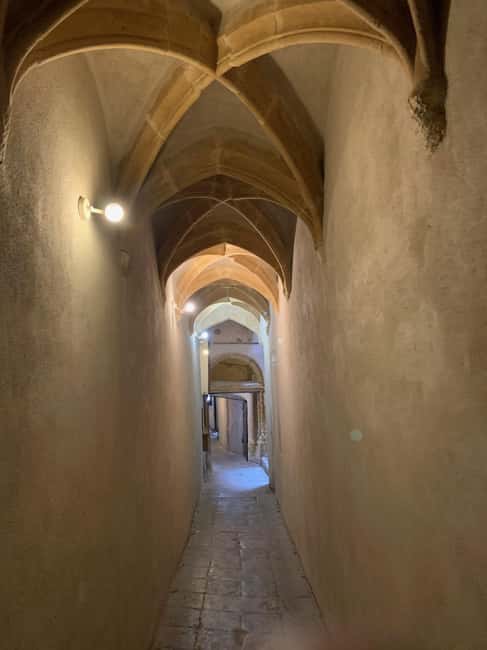
Pay attention to the transitions. One moment you are on a street lined with old façades, and the next you are moving through an interior space with stairs, stonework, and a different sense of light and sound. These changes help you understand how the district was built and how people used it.
The guide also asks the group to keep noise down. That is not a fussy rule. Many traboules remain part of residential buildings, so you are passing through places where people live rather than through a museum built for sightseeing.
Silk workers, courtyards, and the working city
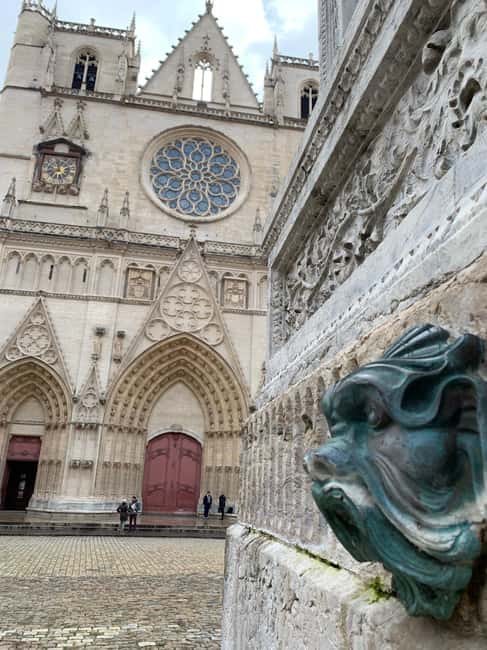
Lyon’s silk trade is one of the central threads of the walk. The traboules were tied to the practical needs of a city shaped by textile work, commerce, and dense old housing.
You learn about the people who worked in and around these buildings, including ordinary workers whose lives are often left out of grand city histories. The architecture becomes easier to read once you know what pressures shaped it: movement of goods, limited space, social class, and the need to connect streets through tightly packed blocks.
This is where Yannick’s style seems especially useful. He does not treat the passageways as isolated curiosities. He relates the physical details to questions of work, status, religion, politics, and daily life. You may come away looking at doors, windows, courtyards, and staircases with a sharper eye during the rest of your stay.
The tour also considers how architecture expressed social position. That gives the route more substance than a series of pretty views. You are not only asking how old a building is. You are asking who used it, who controlled it, and what its design said about the people connected to it.
Renaissance Lyon told through people and power
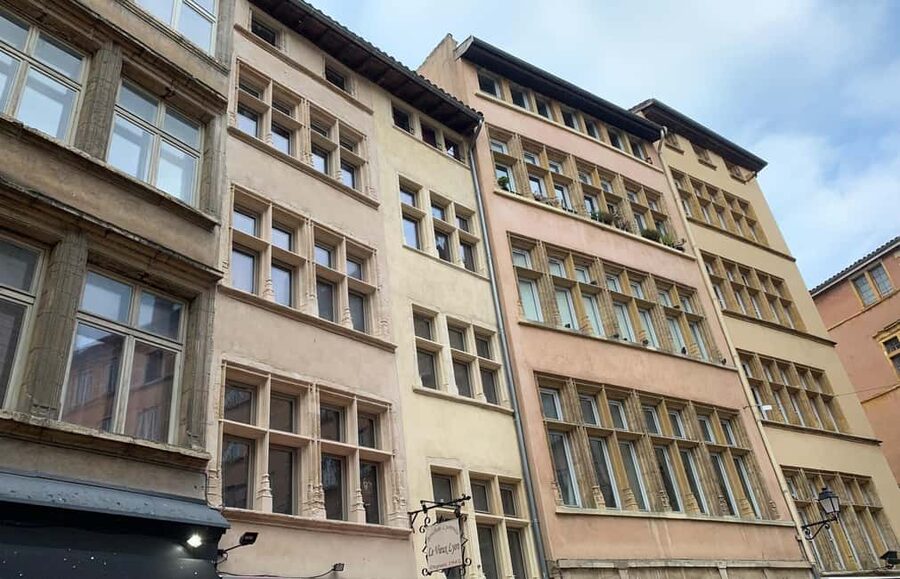
Vieux Lyon is the largest Renaissance district in Lyon, and the walk uses its buildings as evidence of changing power. The guide covers the rivalry between religious and civic authority, including the tension between the bishop and the governor.
That kind of political background helps explain why Lyon developed as it did. Religious influence, commerce, and city government did not always point in the same direction. Traboules, courtyards, and major buildings become clues in a larger story about who had authority and how that authority appeared in public space.
The Medici family also enters the story, adding a wider European connection to the local streets. The point is not to turn the walk into a lecture on one dynasty. It is to show that Lyon was linked to forces beyond its immediate neighborhoods.
The guide’s humor is a major part of the delivery. One memorable description of the Swiss soldiers who sacked Lyon in the 16th century compares them to nasty chocolate soldiers. It is an odd phrase, but that is precisely why it sticks. A good guide gives you handles for remembering complicated material, and Yannick appears to have plenty of them.
More Lyon walks with a guide:
- Highlights and Hidden Gems of Lyon Guided Walking Tour (English)
★ 5.0 · 750 reviews - Lyon: Vieux Lyon Food Tasting Walking Tour
★ 4.9 · 453 reviews - 4h Complete Lyon Experience: E-Bike, Food Tasting & Old Town Walk
★ 5.0 · 228 reviews - Lyon: Food Walking Tour with a Local Guide
★ 4.8 · 198 reviews
French Resistance stories inside quiet corridors
The traboules also carry a darker 20th-century role. During the Second World War, some of these connected passages were used for French Resistance meetings and movement through the city.
The contrast is powerful. A corridor that now seems calm and almost private could once have offered a way to communicate or move discreetly. The tour does not present the Resistance as a detached chapter in a textbook. Instead, it places wartime events within the same streets where earlier generations worked, worshipped, traded, and argued over power.
This is one reason I would take the tour early in a Lyon visit. Once you understand the routes and the layers of use, independent walks through Vieux Lyon become more rewarding. You start noticing how the city’s past is present in plain sight, even when no sign explains it.
The experience is not designed as a memorial tour, and you should not expect a long, specialized study of the Second World War. Its strength is the broad connection between different periods. Silk production, Renaissance politics, local religion, architecture, and wartime activity all meet in the same compact district.
What the 150-minute route feels like
Two and a half hours is long enough to build a story, but it is still a walking tour rather than a full-day commitment. The pace includes regular stops for explanation, questions, and entry into passageways, though you should expect to stand and walk for most of the time.
The route appears to move chronologically and geographically at once. You explore Vieux Lyon while the guide develops the city’s story across roughly five centuries. The structure helps prevent the tour from becoming a random collection of anecdotes.
You may see the group pause at an architectural detail, then move into a traboule to explain how it functioned. From there, the conversation can shift to commerce, class, religion, or local customs. This approach gives the old quarter a sense of cause and effect.
The small size is especially valuable when the guide adjusts his explanations to the group. Families, teenagers, history fans, and casual sightseers can all follow the route because the material is delivered through stories rather than specialist language.
Still, the length may feel greater in cold weather. A winter walk through stone corridors and open streets can be tiring, even when the content is engaging. Plan your clothing with the forecast in mind, and do not treat comfortable footwear as optional.
Yannick’s storytelling and local advice
The strongest feature of this experience is the guide. Yannick is repeatedly described as funny, warm, animated, and deeply familiar with Lyon. Those qualities matter because the subject includes political changes, religious disputes, architecture, and social history, topics that can become dry when presented without a human angle.
His method seems to be a mix of clear explanation, visual detail, audience interaction, and jokes. He brings the group into the story rather than speaking over it. That makes it easier to ask questions and follow the route even if you are not already interested in French history.
The walk also includes useful local pointers. You can hear about truly local bouchons and ways to avoid tourist traps. That advice adds value beyond the 150-minute route, especially if Lyon is new to you and you want to choose restaurants with more care.
Do not book this expecting a silent architectural survey. Yannick’s humor is a defining part of the experience. If you prefer a formal, restrained lecture, his lively style may feel too much. If you like a guide who can explain a complicated past and make you laugh at the same time, it is a strong match.
Some groups have found the guide especially considerate when participants moved at different speeds. That does not remove the physical demands of the route, but it suggests the walk can be handled thoughtfully when someone needs a little extra time.
The physical side: stairs, stones, and narrow entries
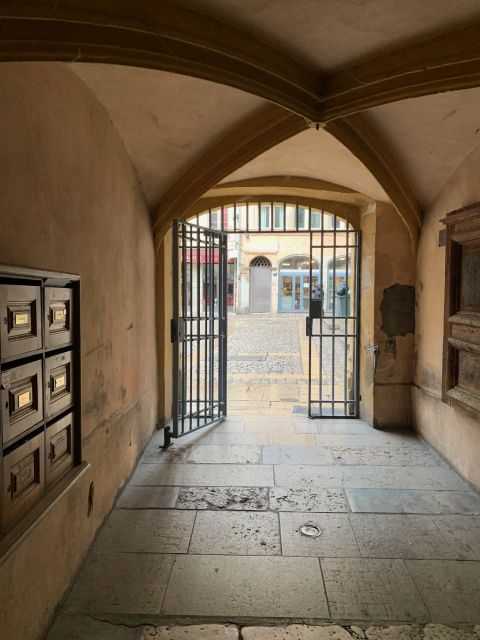
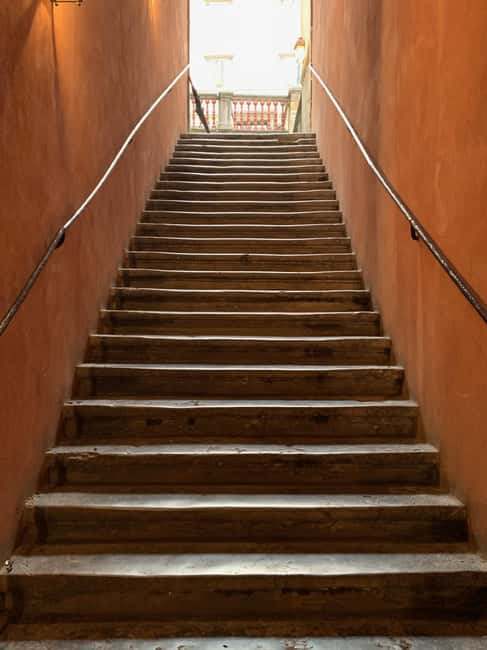
You need comfortable shoes. The tour goes through old passageways with stairs and stairways, and the surfaces may not feel as easy as a flat modern sidewalk.
This experience is not suitable for wheelchair users or people with mobility impairments. Strollers can also be difficult to manage inside the traboules. If someone in your party has trouble with stairs, standing, or narrow routes, contact the provider before booking rather than hoping the route will work out on the day.
The group is also expected to keep noise to a minimum. That limits the kind of casual chatter you might have on a broad city walk, but it is the right approach in residential passageways. You are being shown a living part of Lyon, not a stage set.
The practical upside is that the physical setting is exactly what makes the tour distinctive. A route through ordinary streets would be easier, but it would not reveal the same layered design. Accept the stairs as part of the subject.
Is $43 a fair price?
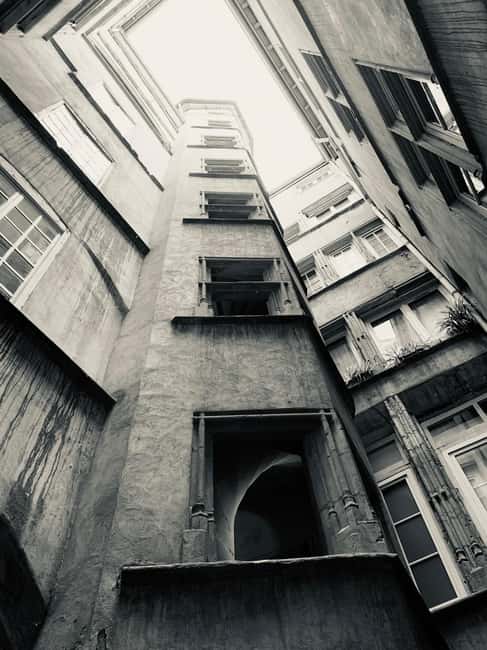
At $43 per person, the tour is not the cheapest way to stroll through Vieux Lyon. You can walk the streets without paying anything, and some public traboules can be found independently.
The question is what you would miss. Without a guide, you may notice the doors and courtyards but not understand their connection to silk workers, Renaissance power, Resistance activity, or the people who still live in the district. You may also pass the less obvious entrances without realizing what lies beyond them.
For a small group of up to 10, the price feels reasonable if you value context and conversation. You are paying for access to a local guide’s time, a carefully chosen route, and explanations that would take considerable reading to assemble on your own.
The value is strongest for first-time visitors, history fans, and anyone who wants to understand how Lyon developed. It is less compelling if you only want photographs or a quick orientation walk. The tour lasts 150 minutes, so make sure you have the energy and interest to give it that time.
The experience has earned a 5 rating from 866 bookings, with especially strong praise for Yannick’s humor, storytelling, passion, and command of local history. That pattern points to a guide-led experience in which the person leading the walk matters as much as the passageways themselves.
Who should take this Lyon walking tour?
I would recommend it to you if you enjoy seeing a city through its working people, political conflicts, and built details rather than only its famous façades.
It is a particularly good fit for:
- First-time visitors who want a useful introduction to Vieux Lyon
- People interested in silk production and urban history
- Architecture fans who want help reading old buildings
- Families with older children or teenagers who respond to stories and humor
- Visitors who prefer small groups to large city tours
- Anyone planning to explore Vieux Lyon independently afterward
Children can enjoy it, especially if they like puzzles, corridors, and stories with unusual characters. Very young children may find the length and stairs harder, and a stroller may be inconvenient.
I would skip it if you have serious mobility concerns, dislike standing for long periods, or want a short photo stop with little explanation. I would also think twice if cold weather will make 2.5 hours outdoors uncomfortable for you.
Booking is flexible, with cancellation up to 24 hours ahead for a full refund and a reserve-now, pay-later option. Check the available start times before you commit, since the activity lasts a fixed 150 minutes.
Should you book the traboules tour?
Yes, if you want Vieux Lyon to make sense rather than simply look old and attractive. The route gives you a practical way to understand why the district is full of connected passageways and how those spaces served commerce, residents, religious interests, and wartime networks.
The best reason to book is Yannick’s delivery. His jokes, local experience, and ability to connect small architectural details with major events turn a difficult subject into a memorable walk. The small group also protects the experience from becoming a crowded march.
Book it early in your stay so the stories and visual clues can guide your later walks. Bring good shoes, keep your voice down inside the traboules, and be honest about the stairs. If those conditions suit you, $43 buys more than a look at secret corridors. It gives you a working key to Lyon’s oldest quarter.
FAQ
Where does the traboules tour meet?
Meet your guide in front of the old fountain in the middle of the cathedral square in Vieux Lyon.
How long does the tour last?
The walking tour lasts 150 minutes, or two and a half hours.
What languages does the guide speak?
The tour is offered in English and French.
How many people can join the group?
The group is limited to 10 participants.
What should I bring?
Bring comfortable shoes because the route includes walking through traboules, stairs, and stairways.
Is the tour suitable for wheelchair users or strollers?
The tour is not suitable for wheelchair users or people with mobility impairments. Strollers can be difficult to manage inside the traboules because of the stairs and narrow routes.
Recently reviewed around Lyon
- Taste Wine in Lyon: Burgundy, Beaujolais, Rhône, and more★ 5.0 · 211 reviews
- 1 or 2-Hour Pedicab tour of Lyon★ 5.0 · 213 reviews
- Hameau Duboeuf, 1st theme park on Vine and Wine in Europe★ 4.5 · 63 reviews
- Storytelling tour of Old Lyon★ 5.0 · 39 reviews
- Segway – Ride along the rivers 1h30★ 5.0 · 43 reviews
- Northern Rhône Valley Wine tour from Lyon Half Day★ 4.5 · 113 reviews
- Lyon Old Town Private Food Tour with 6 French Delicacies & Wines★ 5.0 · 85 reviews
- Rhône Valley Wine Tasting Private Day Tour from Lyon★ 5.0 · 43 reviews
Walking Tours, compared.
Paris Top Sights Half Day Walking Tour with a Fun Guide
Read our review →
Montmartre Hidden Gems and Scenic Highlights Walking Tour
Read our review →
Montmartre Hill French Gourmet Food and Wine Tasting Walking Tour
Read our review →
Paris Île de la Cité and Notre-Dame Walking Tour With Crypt
Read our review →
Montmartre Cheese, Wine & Pastry Guided Walking Tour
Read our review →
Paris in a Day: Louvre or Orsay, Eiffel Tower, City Walk & Cruise
Read our review →
Montmartre Highlights Walking Tour with a Local Guide
Read our review →
Browse the lists this tour appears in