
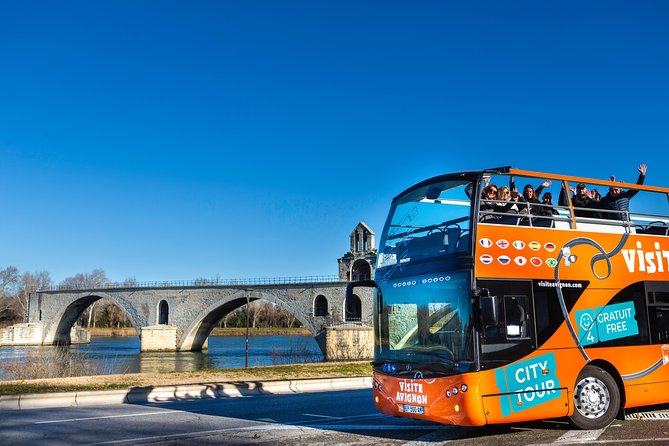
Reviewed · AVIGNON TOURS
Visit Avignon and Villeneuve lez Avignon aboard a Double-Decker Bus
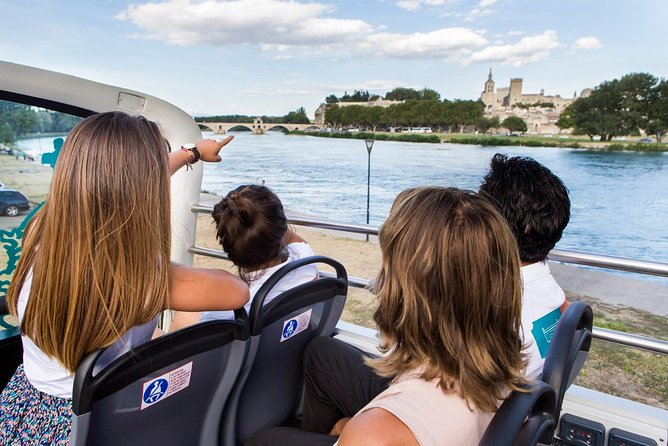
Avignon’s best surprise is how quickly this bus carries you from the Papal City to the other side of the Rhône. From the upper deck, you can place the medieval walls, Pont d’Avignon, Villeneuve-lès-Avignon, and Île de la Barthelasse in one broad view. I like the cross-river route, and I like that it shows you places you might otherwise skip, especially Fort Saint-André and the Philippe le Bel Tower.
The main caution is simple: this may not work like a traditional hop-on hop-off bus. The route can feel like one sightseeing circuit rather than a bus you use all day to make independent stops. Traffic, a midday break from 1 to 2 p.m., unclear stop information, and occasional audio problems can also affect the experience.
In This Review
- Key points before you board
- What this Avignon bus tour really offers
- Starting at 40 Cours Jean Jaurès
- Pont Saint-Bénézet, the bridge that stops in mid-river
- The Lambert Collection and Avignon’s modern side
- Crossing to Villeneuve at the Philippe le Bel Tower
- Fort Saint-André and the gardens above the Rhône
- The Abbey of Saint-André’s Romanesque and Renaissance setting
- Chartreuse de Villeneuve-lès-Avignon and the cardinal’s residence
- Île de la Barthelasse, a quiet pause with the best panorama
- Audio commentary, speed, and seating
- Who gets the best value from the $16.30 fare
- Timing problems you should avoid
- Should you book this Avignon bus tour?
- FAQ
- Where does the bus tour start and finish?
- How long does the experience last?
- Is the Pont d’Avignon admission included?
- Is admission to the Chartreuse de Villeneuve-lès-Avignon included?
- Is the tour offered in English?
- Can I cancel for a full refund?
Key points before you board
- A scenic Rhône crossing: The bus links Avignon with Villeneuve-lès-Avignon and Île de la Barthelasse.
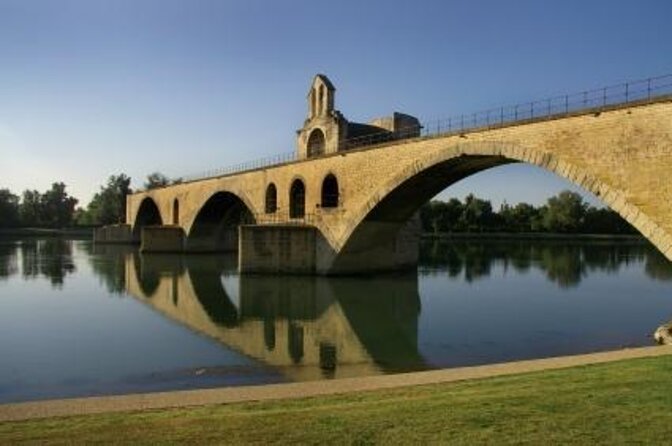
- Pont d’Avignon is a highlight: You see the famous broken bridge, but its admission ticket is not included.
- English audio commentary: Commentary explains the sights, though check your audio connection as soon as you board.
- Better for orientation than deep sightseeing: One loop helps you understand the area, but the stop pattern may not support a full day of hopping on and off.
- Fort Saint-André has free admission: Its gardens are a strong reason to consider getting off, if the timetable allows.
- Check the operating day: Service has been reported as unavailable on Sundays and Mondays during one May period, so confirm the schedule before setting out.
What this Avignon bus tour really offers
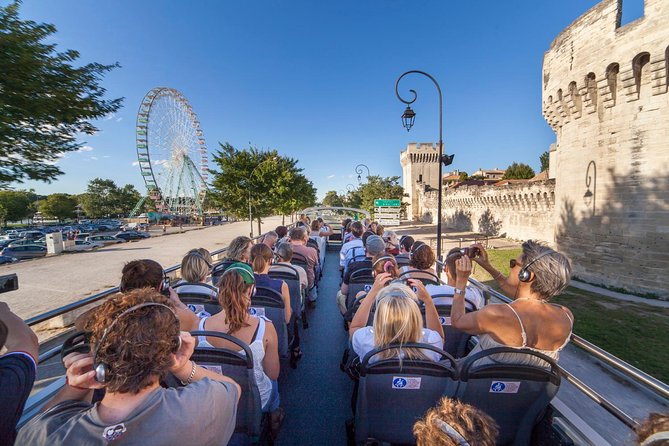
At about $16.30 per person, this is an inexpensive way to see the shape of Avignon and its neighboring town. You receive a paper ticket and English audio commentary, and the bus can carry up to 73 people. That price is reasonable if you use it as a one-hour orientation ride, particularly on a first visit.
The value drops if you expect a polished all-day hop-on hop-off system. Some stops are more useful as passing views than as practical drop-off points, and at least one timetable includes a lunch pause from 1 to 2 p.m. A one-hour loop can also lose much of its time to traffic, especially around the city walls.
I would think of this as a moving viewpoint with optional stops, not as your main transportation around Avignon. If you want to tour the Palais des Papes, Pont d’Avignon, and museums at your own pace, walking and separate admission tickets may serve you better. If you want an easy first look at both sides of the Rhône, the bus earns its modest price.
Other Avignon days travellers weigh against this one:
- Provence Highlights Full-Day Tour from Avignon
★ 5.0 · 499 reviews - Chateauneuf du Pape wine tour
★ 5.0 · 484 reviews - From Avignon: Châteauneuf du Pape Half-Day Wine Tour
★ 4.7 · 365 reviews
Starting at 40 Cours Jean Jaurès
The stated meeting point is 40 Cours Jean Jaurès in Avignon, and the bus returns there at the end. Give yourself time to identify the exact boarding place. The stop information has caused confusion, and the published map has not always made the location clear.
This matters because the route is not especially forgiving if you miss the bus. A bus that has already left may not return in a useful way, and one stop may allow you to ride onward without making it easy to return to your original starting point. I would confirm the precise departure point and current operating hours before walking over.
The bus uses the familiar double-decker format found in many European cities. The upper deck gives you the best view, especially across the Rhône, but it also leaves you more exposed to sun and weather. The lower deck is the practical choice on a hot or rainy day.
Pont Saint-Bénézet, the bridge that stops in mid-river
Pont Saint-Bénézet, better known as Pont d’Avignon, is the route’s star attraction. The famous medieval bridge once stretched much farther than the four surviving arches you see today. Its original construction began in 1177, and the early bridge reached about 920 meters with 22 arches.
Floods, war, and repeated damage eventually left only part of the structure. The bridge was rebuilt after the siege of 1226, but later repairs could not prevent its decline. By the seventeenth century, it had reached its final broken form.
The bridge mattered for more than its connection to a catchy song. In the Middle Ages, it formed part of a major pilgrimage route between Italy and Spain. After the papal court moved to Avignon in the fourteenth century, the bridge connected the papal residences in Villeneuve with the Palais des Papes inside Avignon’s walls.
Popes and cardinals reportedly paused at the Bénezet chapel during crossings, offering an alms of a florin. The bridge was paved in 1377 after repeated slips caused accidents and drownings. These details give the structure a human scale: it was not simply a pretty ruin, but a busy crossing with religious, political, and practical importance.
The bus gives you a useful outside view, but admission to the bridge is not included. If you want to walk across the surviving arches and visit the chapel, plan that as a separate stop. For photographs, the bus can be frustrating because it may move too quickly for a careful shot. Use the ride to understand the setting, then return on foot for the close look.
The Lambert Collection and Avignon’s modern side
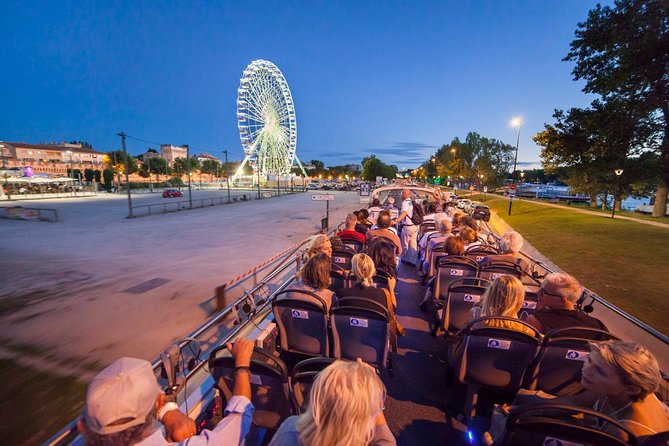
The Lambert Collection offers a sharp change of mood from medieval stone. It opened in 2000 during Avignon’s year as European Capital of Culture. Gallerist and collector Yvon Lambert placed his personal collection in an eighteenth-century mansion, with the intention of creating a long-term public art center.
The collection began with about 350 works from the 1960s onward and later grew to more than 1,200 references. The museum uses roughly 2,000 square meters for exhibitions, conservation, activities for younger audiences, a bookshop, artists’ editions, and a restaurant in the mansion courtyard.
You should not expect the bus ride itself to replace a museum visit. The route introduces the place, but it does not provide the time needed to study the art. If modern art interests you, check the opening hours and make a separate visit. If not, the Lambert Collection still helps show that Avignon is more than papal buildings and medieval walls.
A different way to spend the day, same corner of France:
- From Avignon: Full-Day Best of Provence Tour
★ 4.7 · 338 reviews - From Avignon: Half-Day Great Vineyards Tour
★ 4.7 · 321 reviews - Provence Cru Wine Small-Group Half-Day Tour from Avignon
★ 4.5 · 290 reviews - Châteauneuf du Pape Wine Day Tasting Tour including Lunch from Avignon
★ 5.0 · 287 reviews
Crossing to Villeneuve at the Philippe le Bel Tower
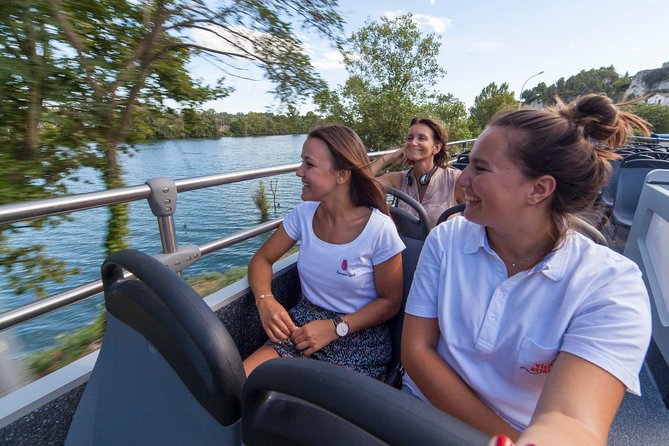
The Philippe le Bel Tower marks the entrance to Villeneuve-lès-Avignon and gives the route a clear political story. The Capetian king Philippe le Bel built it in the thirteenth century to control access to Pont d’Avignon.
That purpose explains why the tower feels more than decorative. It represented royal authority on one side of the Rhône, facing the power of the papal court on the other. The bridge connected the two towns, but the tower watched over that connection.
From the bus, you gain the helpful big picture: Avignon was not an isolated medieval town. The Rhône formed a boundary, and control of its crossings mattered. If you want detailed architectural study, the tower requires more time than a passing view can provide. The tour is strongest here as an introduction to the relationship between the two towns.
Fort Saint-André and the gardens above the Rhône
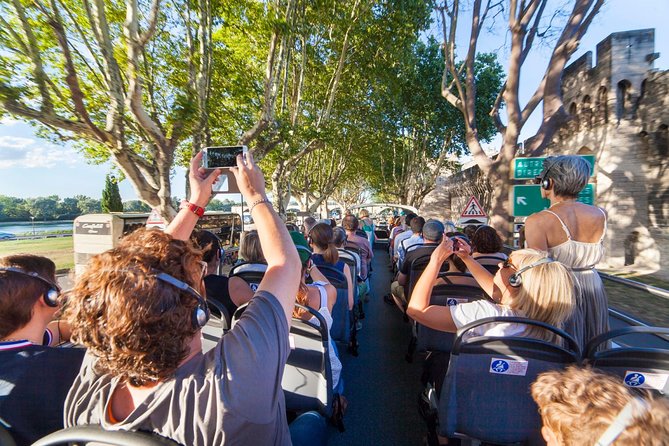
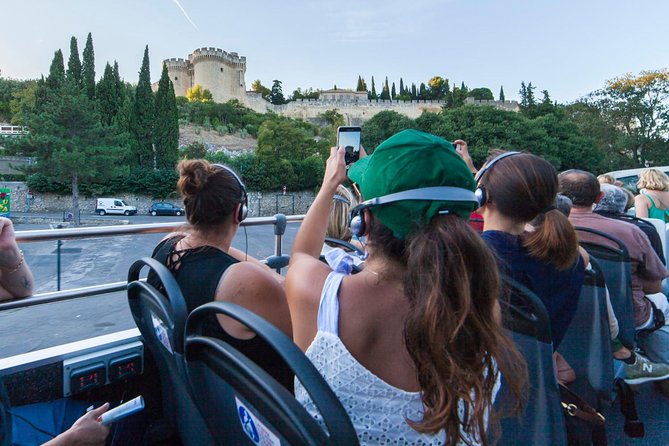
Fort Saint-André began at the end of the twelfth century and later protected the Benedictine abbey of the same name. Its position gives it a commanding view toward Avignon and the Rhône.
The fort itself represents the military side of the area’s medieval story. Across the river, the papal court shaped Avignon. Here, fortifications defended a Benedictine foundation and reinforced royal power. That contrast makes Villeneuve-lès-Avignon worth more than a quick bus crossing.
Admission to Fort Saint-André is free, according to the tour information. That improves the value of getting off, provided the service schedule gives you enough time and a dependable return. The fort’s gardens are labeled Remarkable Gardens and combine Romanesque remains, Renaissance Tuscan-style ornaments, roses, and Mediterranean plants.
I would give this stop priority if the bus timetable is clear. The gardens offer a calmer break from city traffic, and the elevated setting should give you some of the route’s best views. Just do not assume that a bus will arrive immediately when you are ready to leave. Confirm the next departure before entering the fort.
The Abbey of Saint-André’s Romanesque and Renaissance setting
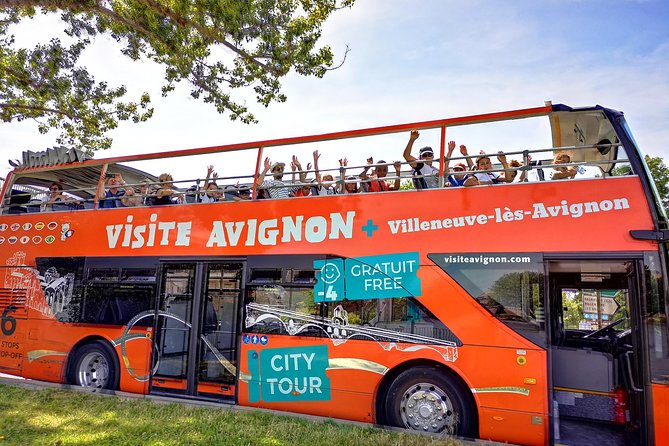
The Abbey of Saint-André adds another layer to Villeneuve’s story. Inside are vaulted rooms decorated in the seventeenth century. Outside, the gardens mix older Romanesque remains with Renaissance Tuscan-style features and planted beds.
This is a good example of why the double-decker route can be useful. Avignon’s famous center gets most of the attention, but Villeneuve offers a different atmosphere and a different mix of religious and royal history. You can see how buildings changed over time rather than viewing the region as one single medieval set piece.
The bus does not give you a full abbey visit. Think of the stop as a prompt to return, especially if you prefer gardens and architecture over a quick ride. The free access noted for Fort Saint-André does not automatically apply to every part of the abbey, so check admission details locally if you plan to enter.
Chartreuse de Villeneuve-lès-Avignon and the cardinal’s residence
The Chartreuse du Val de Bénédiction was built from 1353 under the direction of Pope Innocent VI. It served as a former cardinal’s residence, and the complex reflects the wealth and influence gathered around the papal court.
A mansion dating from the fourteenth century housed several cardinals. That fact helps explain Villeneuve’s importance. Cardinals moved across the river partly to escape the crowded conditions of Avignon, while remaining close to the papal center.
The Chartreuse requires a separate admission ticket. The ride can show you where it fits into the wider area, but it cannot convey the full scale of a former religious and aristocratic complex in a few minutes. If you are interested in the Avignon papacy, this is one of the places worth scheduling independently rather than relying on a bus stop alone.
Île de la Barthelasse, a quiet pause with the best panorama
Île de la Barthelasse is the route’s green break. At about 700 hectares, it occupies the Rhône between Avignon and Villeneuve and provides a broad view back toward the City of Popes.
The scheduled pause here lasts about 10 to 15 minutes. That is enough to stretch your legs, take in the view, and photograph Avignon from across the water. It is not enough for a proper walk around the island, so keep your expectations modest.
The island also offers two alternatives mentioned in the tour plan: a bike ride or the free river shuttle to the historic center. Those options may be useful, but the bus is not necessarily a flexible transport pass. Confirm exactly what your ticket permits before leaving the bus route.
For me, this stop is one of the strongest reasons to choose the experience. The view from the island helps you understand the geography in a way that streets inside Avignon cannot. You see the Rhône, the bridge, the walls, and the papal skyline together.
Audio commentary, speed, and seating
The tour provides English audio commentary rather than a live guide. That keeps the price down, and a good audio connection can give you useful background while you ride. Commentary covers the destinations and the history along the route.
Audio equipment has not always worked consistently. Check your connection immediately after boarding and tell the driver if a seat’s guide does not function. Staff have indicated that replacement audio equipment may be available, but you should not wait until the end of the loop to report the problem.
The driving pace is another practical issue. The bus may move too quickly for photographs, and a one-hour circuit can feel rushed when traffic takes up a large part of the ride. Sit upstairs for views, but listen closely as you pass each sight. If photography is your main goal, treat the bus as a scouting run and revisit the places you want to capture.
Who gets the best value from the $16.30 fare
I see three good uses for this ticket:
- You are arriving in Avignon and want a quick sense of direction.
- You want to see Villeneuve-lès-Avignon without arranging separate transport.
- Walking for a full day is difficult, and you prefer a seated overview with English commentary.
Families may also appreciate the simple format. Most people can participate, and service animals are allowed. The maximum group size is 73, so the bus may feel busy rather than intimate.
The fare is less attractive if you want a full day of independent sightseeing. Separate admission is needed for Pont d’Avignon and Chartreuse de Villeneuve-lès-Avignon, and the route may not operate as a true hop-on hop-off service. Add the cost of those visits before deciding that the bus is your cheapest way to see everything.
Timing problems you should avoid
Operating information deserves special care. A midday driver break from 1 to 2 p.m. can catch you out if you plan your day around continuous departures. The service has also been unavailable on Sundays and Mondays during a May period, even though tickets were sold for dates that did not run.
That kind of mismatch is more than a minor annoyance. If you have only one day in Avignon, a missing bus can disrupt your entire plan. Confirm the date, departure time, meeting point, and return arrangements directly before you set off.
The experience depends on good weather. If poor weather cancels the tour, you are offered another date or a full refund. If the minimum number of participants is not reached, the same choices apply. Standard cancellation allows a full refund when you cancel at least 24 hours before the start time. Changes or cancellations inside that period are not accepted for a refund.
Should you book this Avignon bus tour?
Book it if you want a short, affordable orientation ride that crosses the Rhône and shows you more than central Avignon. The view from Île de la Barthelasse, the approach to Villeneuve, and the chance to spot Fort Saint-André and the Philippe le Bel Tower give the ride real geographic value.
Skip it if you expect a dependable all-day hop-on hop-off service with frequent, clearly marked stops. For that plan, walking through Avignon and booking individual sights may be less frustrating.
My practical choice would be to book only after confirming the operating day and exact boarding point. Then use the ride as a first look, not as your entire sightseeing plan. Get off at Fort Saint-André if the schedule works, save Pont d’Avignon and the Chartreuse for separate visits, and keep Île de la Barthelasse as the scenic pause that ties the whole area together.
FAQ
Where does the bus tour start and finish?
The stated meeting point is 40 Cours Jean Jaurès, 84000 Avignon, France. The activity ends back at the meeting point.
How long does the experience last?
The listed duration ranges from about one hour to one day. A single city circuit is approximately one hour, while the full stop-and-visit schedule can take longer.
Is the Pont d’Avignon admission included?
No. Admission to Pont Saint-Bénézet is not included in the tour price.
Is admission to the Chartreuse de Villeneuve-lès-Avignon included?
No. Admission to the Chartreuse de Villeneuve-lès-Avignon is not included.
Is the tour offered in English?
Yes. The experience includes English audio commentary and a paper ticket.
Can I cancel for a full refund?
Yes, if you cancel at least 24 hours before the experience’s start time. Poor weather or failure to meet the minimum number of participants may also result in an alternative date or a full refund.
Recently reviewed around Avignon
- Wine Tasting Tour at Châteauneuf du Pape★ 5.0 · 36 reviews
- Châteauneuf du Pape Wine Day Tasting Tour including Lunch from Avignon★ 5.0 · 287 reviews
- In the footsteps of Van Gogh in Provence from Avignon★ 4.5 · 102 reviews
- Wines from Châteauneuf-du-Pape and surrounding areas in 1/2 day★ 5.0 · 96 reviews
- Van Gogh & Carrières de Lumières Half-Day Tour from Avignon★ 4.5 · 29 reviews
- Morning Wine Tour to Chateauneuf du Pape from Avignon★ 4.5 · 70 reviews
- Lavender Route – Small-Group Day Trip from Avignon★ 5.0 · 120 reviews
- Nimes, Uzes & Pont du Gard Small Group FULL DAY Tour from Avignon★ 4.5 · 187 reviews
Avignon Tours, compared.
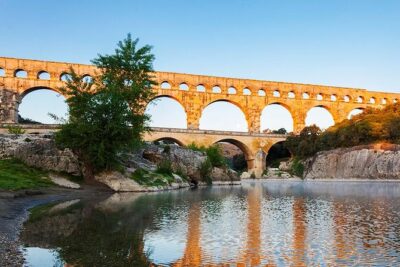
Provence Highlights Full-Day Tour from Avignon
Read our review →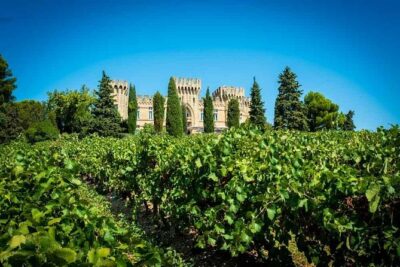

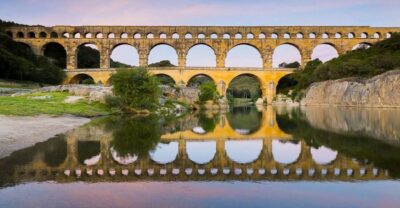

Provence Cru Wine Small-Group Half-Day Tour from Avignon
Read our review →
Châteauneuf du Pape Wine Day Tasting Tour including Lunch from Avignon
Read our review →
Pont du Gard, Saint Remy and Les Baux Half-Day Tour
Read our review →Browse the lists this tour appears in