
Reviewed · NORMANDY TOURS
Arromanches 360 Circular Cinema Entrance Ticket
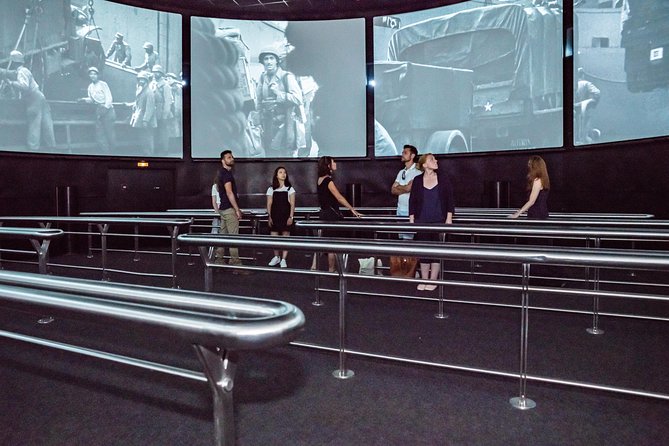
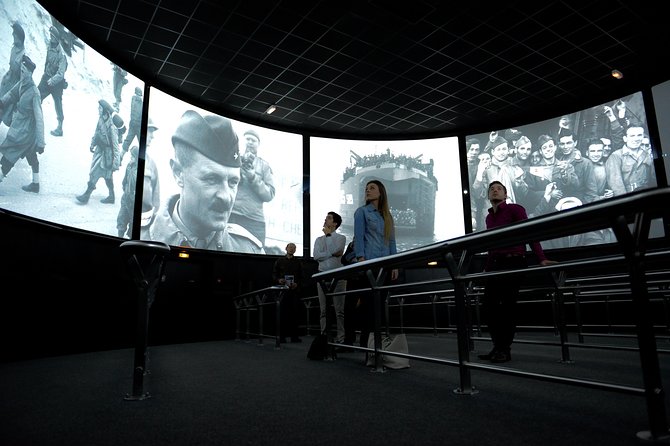
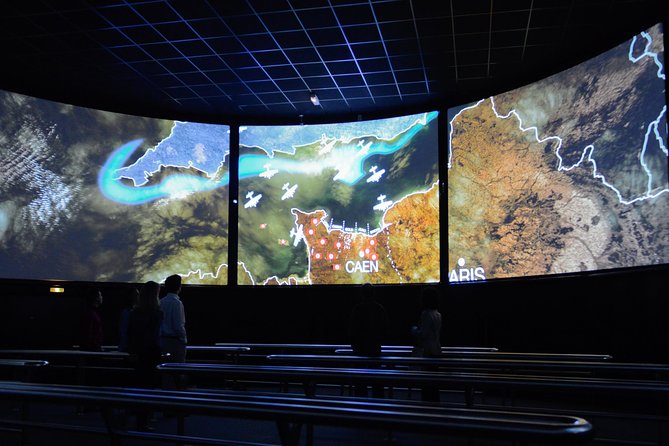
Arromanches 360 turns the D-Day story into a short, powerful film that surrounds you with images from the landings and the Battle of Normandy. The nine-screen format matters here: instead of watching a standard movie head-on, you look around as the story moves from the beaches to the battles that followed.
I like the rare archive footage drawn from British, Canadian, German, American, and French collections. I also like the simple timing: screenings run at the top and bottom of each hour, so you can fit this visit around Arromanches village, the shore, and the remains of the Mulberry harbor. The main drawback is the short running time. At 19 minutes, the film gives you a strong overview, but anyone hoping for a detailed military history lesson may want more.
In This Review
- Key points to know before you go
- What the Arromanches 360 film actually gives you
- Why nine screens change the experience
- The archive footage comes from five sides of the story
- A good addition to a wider Arromanches visit
- Timing is easy, but plan around the screening clock
- Is $9.01 a fair price for 20 minutes?
- How moving is the presentation?
- Who should choose this experience?
- Practical details that affect your visit
- Should you book Arromanches 360?
- FAQ
- How long is the Arromanches 360 film?
- When is the film shown?
- What are the opening hours?
- What does the admission ticket include?
- Is parking included?
- Who qualifies for free or reduced admission?
Key points to know before you go
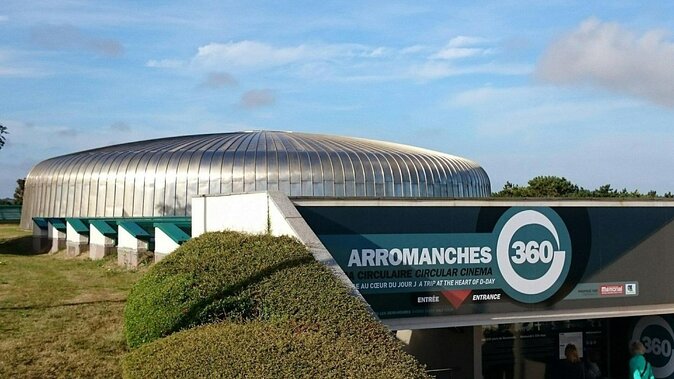
- Nine screens surround the audience, giving the D-Day film a wide, cinematic presentation rather than a regular theater view.
- The film lasts 19 minutes, usually beginning on the hour and half past the hour.
- Five national archives contribute footage, including British, Canadian, German, American, and French sources.
- The story covers 100 days, from the June 6, 1944 landings through the bombing of Le Havre on September 12.
- Your ticket costs about $9.01, with reduced prices for ages 10 to 18, people over 65, and military personnel.
- The cinema pairs well with the outdoor site, where you can see the remains of the artificial harbor and a nearby monument.
What the Arromanches 360 film actually gives you
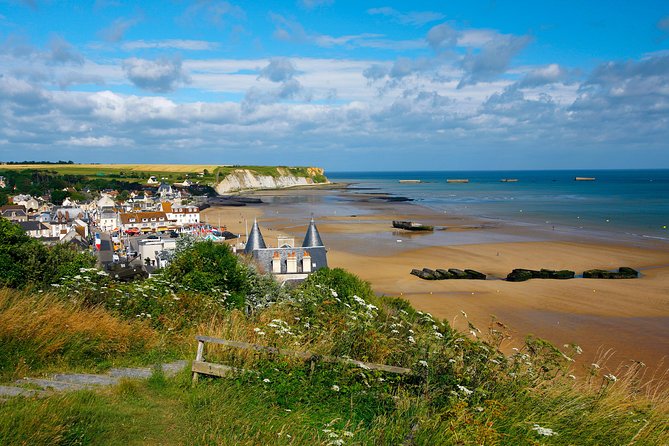
Arromanches is not just another stop for a quick wartime display. The town was central to the Allied effort to supply the invasion forces after D-Day, and the shore still holds traces of the artificial harbor built there. The cinema gives that setting a focused historical introduction.
The film begins with the preparation for the long-awaited Allied assault. It then moves into the morning of June 6, 1944, when troops landed on the five beaches along the Manche and Calvados coast. From there, the story follows the Battle of Normandy across 100 days, ending with the September 12 bombing of Le Havre.
That broad time span is important. D-Day often gets treated as a single morning, but the campaign did not end when the landing craft reached shore. The film helps place the landings within the longer struggle to move inland, keep armies supplied, and push German forces out of Normandy.
You should not expect a lecture packed with dates, commanders, maps, or tactical detail. This is a visual introduction, built around wartime footage and emotional force. If you already know the campaign well, you may find the historical explanation familiar, but the presentation still gives the material a different impact.
More Bayeux trips worth a second look
- Paris: Louvre Museum Timed-Entrance Ticket
★ 4.6 · 71,977 reviews - Disneyland® Paris 1-Day Ticket
★ 4.6 · 49,412 reviews - Paris: Versailles Palace and Gardens Full Access Ticket
★ 4.6 · 41,579 reviews
Why nine screens change the experience
The cinema’s main feature is its circular design. Images are projected across nine screens, creating a wide field of view around the audience. You are not simply watching a rectangular screen with empty walls beside it.
That design works especially well with footage of ships, aircraft, landing beaches, and large troop movements. It gives the film a sense of scale and places you closer to the action without pretending that a modern presentation can recreate combat itself.
The high-definition projection should make the archival material easier to follow than a grainy clip shown on a small monitor. Still, the footage comes from old military and news archives, so you should expect a mix of image quality. The value lies in seeing the actual wartime record from several countries, not in watching a polished modern documentary.
The circular format can also be visually intense. If you prefer a calm, conventional film, the nine-screen arrangement may feel more forceful than necessary. For most people, though, the format is the reason to choose this cinema instead of reading a few information panels elsewhere.
The archive footage comes from five sides of the story
One of the strongest parts of the presentation is the range of national archives. British, Canadian, German, American, and French footage all contribute to the film.
That mix gives the story more than one national viewpoint. The Allied preparations and landings are central, but the German material helps show that the campaign was not experienced from only one side. French footage connects the fighting to the country being liberated, while British, Canadian, and American sources reflect the combined effort behind the invasion.
You should keep your expectations in check. The information provided does not promise narration in every language, an audio guide, or subtitles. One visitor specifically wished for Italian subtitles or an audio guide, so language support may be limited depending on the screening. If you need a particular language, confirm it before booking.
The film is also not designed as a children’s entertainment attraction. Its subject is war, and some of the images and themes may be difficult for younger children. Children from age 0 to 9 enter free, but the age policy does not mean the film is ideal for preschoolers. An adult must accompany all children, and the short length may help, but very young children may not get much from it.
A good addition to a wider Arromanches visit
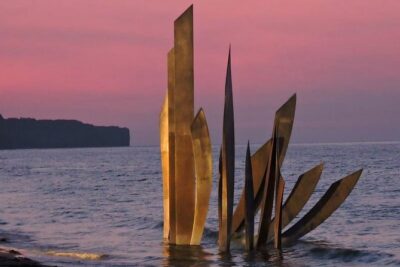
The cinema works best as part of a visit to Arromanches, rather than as your only reason to come to town. The outdoor area around it includes a monument that one visitor considered a personal highlight, along with views toward the remains of the harbor.
That combination gives you a useful before-and-after rhythm. You first watch how the invasion and supply operation unfolded. Then you step outside and look at the physical remains connected to that story.
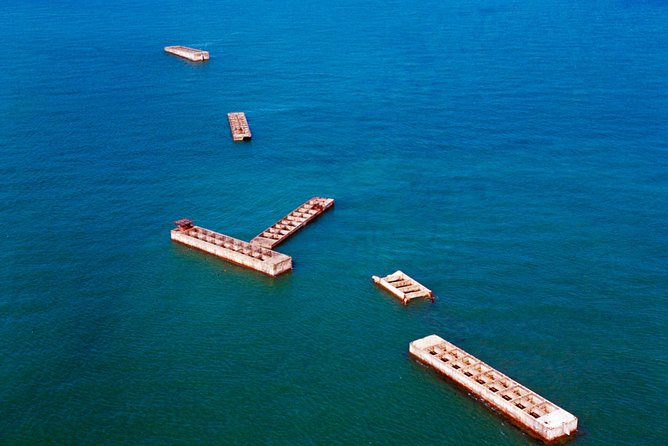
The shore views are particularly useful because they turn an abstract historical event into a real place. From inside the cinema, you see the campaign through archive footage. Outside, you can look toward the water and consider the engineering and logistics needed to support an army after the landings.
Allow more time than the film itself if you want to appreciate the setting. The screening takes 19 minutes, but the harbor remains, monument, and views deserve a pause. You can also use the cinema as an anchor for a day visiting other Normandy sites, though no hotel pickup, drop-off, or guided transportation is included.
A different way to spend the day, same corner of France:
- Normandy American D-Day Beaches Full Day Tour from Bayeux
★ 5.0 · 2,103 reviews - Normandy American D-Day Experience – Group tour from Bayeux
★ 5.0 · 1,566 reviews - Normandy Beaches Half-Day Afternoon Trip from Bayeux (A2)
★ 4.5 · 1,116 reviews - Omaha and Band Of Brothers Full Day Tour
★ 5.0 · 1,104 reviews
Timing is easy, but plan around the screening clock
The film runs on a reliable schedule, beginning at 10 minutes past neither the hour nor the half hour. In practical terms, screenings are shown on the hour and at half past every hour, and the film lasts 19 minutes.
That gives you a useful planning window. If you arrive shortly before a screening, you should not face a long wait. If you miss one, the next showing is normally no more than 30 minutes away during opening hours.
The cinema is listed as open daily from 10:00 a.m. to 5:00 p.m. for the period beginning January 27, 2026, through December 31, 2026. Check the date of your visit carefully, since the supplied schedule applies to that period.
Pre-booking is most useful when your day is built around several Normandy stops. A reserved admission ticket can help you avoid time at the ticket counter, although you still need to arrive in time for the screening you intend to attend. Online booking is also handy if you are visiting at a busy time and want fewer small delays.
The ticket does not include parking. A review refers to paying €4 for the parking lot rather than leaving a car farther up the hill by the roadside. Treat that as a practical on-site cost, not part of the cinema admission price.
Is $9.01 a fair price for 20 minutes?
At about $9.01 per person, this is not the cheapest museum-style stop in Normandy when measured by minutes alone. The film lasts only 19 minutes, so a family can spend a noticeable amount for a brief presentation.
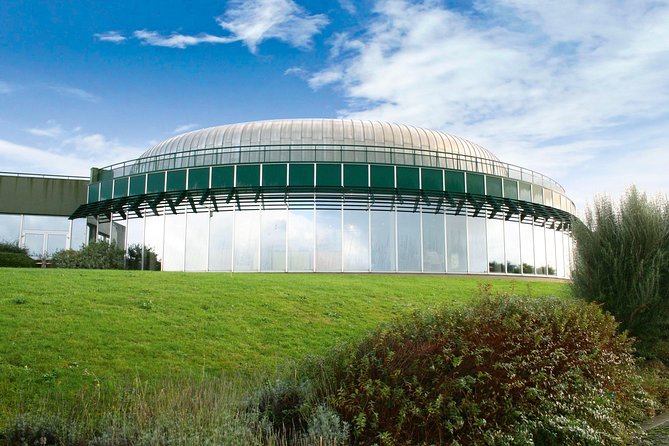
The better way to judge the price is by what you are paying for. The ticket includes access to a purpose-built circular cinema, high-definition projection, and archive footage from five national sources. You are also paying for a presentation that makes use of the Arromanches setting rather than showing a generic D-Day documentary in an ordinary room.
I think the value is strongest if you already plan to visit the town and harbor. In that case, the cinema adds a focused historical layer for a modest extra cost. It is less compelling if you are making a long detour only for the film and have little interest in the physical site outside.
There are reduced rates for children ages 10 to 18, people over 65, and military service personnel. A valid form of identification is required for those rates. Children ages 0 to 9 and war veterans enter free, which can make the admission easier to manage for some families and military groups.
How moving is the presentation?
The film’s emotional weight comes from the subject itself, but also from its directness. The images cover the landing beaches, the fighting that followed, and the cost of the campaign. The presentation is meant to make you feel the pressure and scale of those 100 days, not simply memorize a timeline.
A visit to Arromanches can carry a special meaning for military personnel and families paying respects to those who served. The site is tied to sacrifice, courage, liberation, and the long effort to defeat Nazi Germany. The cinema does not replace a cemetery visit or a detailed museum, but it can provide a thoughtful starting point.
The reactions to the film range from educational and impressive to heartbreaking and spiritual. That range tells you something useful: this is not a light sightseeing stop. You may leave energized by the historical importance of the place, but you may also need a quiet moment outside afterward.
I would avoid rushing straight from the theater into another attraction. Use the outdoor area to process what you have seen. The harbor remnants and monument give you that chance without requiring another ticket.
Who should choose this experience?
I would recommend Arromanches 360 to:
- First-time visitors to the Normandy beaches who want a clear introduction before exploring further.
- People who learn best through film and photographs rather than long museum labels.
- Military families and anyone making a respectful visit to D-Day sites.
- History enthusiasts who want to see archive material from several national collections.
- Drivers building a flexible day around Arromanches and nearby coastal sites.
- Older children and teenagers who can engage with serious wartime material.
I would be more cautious about booking it for toddlers or preschoolers. The film is short, but the subject is heavy, and the nine-screen presentation may not hold the attention of very young children.
I would also temper expectations for serious military historians. The film is a concise overview, not a full study of strategy, equipment, commanders, or the supply chain. You may appreciate the footage while still wanting a longer museum visit or a specialist guide elsewhere.
Practical details that affect your visit
Your confirmation is provided at booking. The admission ticket covers the cinema only. Hotel transportation, drop-off, and parking are not included, so plan your route and car costs separately.
Most people can take part, and the activity is not described as requiring a special level of fitness. Children must be accompanied by an adult. For reduced admission, bring valid identification, since the discount is tied to age or military status.
Free cancellation is available if you cancel at least 24 hours before the experience begins. If you cancel later, the payment is not refunded, and changes made within that same 24-hour period are not accepted. The cut-off follows local time in France.
The cinema is operated by the Memorial de Caen, a respected name in Normandy’s wartime interpretation. That connection is useful context, but the experience itself remains a short film rather than a full guided tour.
Should you book Arromanches 360?
Book it if you are already visiting Arromanches, want a strong visual introduction to D-Day, or value seeing original footage across a nine-screen cinema. The harbor remains, monument, and coastal views make the stop more worthwhile than the film length alone suggests.
Skip it if your schedule is extremely tight, you want detailed military analysis, or your group includes very young children who may not cope well with a serious wartime film. For most adults and older children, though, the modest ticket price and flexible half-hour schedule make this an easy addition to a Normandy day.
FAQ
How long is the Arromanches 360 film?
The film lasts 19 minutes, although the experience is commonly described as approximately 20 minutes.
When is the film shown?
Screenings begin on the hour and at half past every hour during opening hours.
What are the opening hours?
The cinema is listed as open daily from 10:00 a.m. to 5:00 p.m. from January 27, 2026, through December 31, 2026.
What does the admission ticket include?
The ticket includes admission to the Arromanches 360 Circular Cinema and its film presentation.
Is parking included?
No. Parking is not included in the admission price.
Who qualifies for free or reduced admission?
Children ages 0 to 9 and war veterans enter free. Reduced admission is available for children ages 10 to 18, people over 65, and military service personnel. A valid form of identification is required for the reduced rate.
Recently reviewed around Bayeux
- 2- to 6-hour sidecar excursion on the D-Day Landing Beaches★ 5.0 · 131 reviews
- WW2 Jeep or Dodge truck tour of the Omaha Beach site★ 5.0 · 51 reviews
- Normandy U.S. D-Day Sites Half Day Tour From Bayeux★ 5.0 · 325 reviews
- Mont Saint Michel Experience – Shuttle Service from Bayeux★ 5.0 · 194 reviews
- Normandy Battlefields D-Day Private Trip with VIP Services from Paris★ 5.0 · 240 reviews
- Private Walking Guided Tour of Historic Bayeux English or French★ 5.0 · 36 reviews
- Private Full day American D-Day Guided Tour in Bayeux★ 5.0 · 133 reviews
- Private vintage sidecar tour of the D-Day Landing Beaches★ 5.0 · 130 reviews
Normandy Tours, compared.
Normandy American D-Day Beaches Full Day Tour from Bayeux
Read our review →
Normandy American D-Day Experience – Group tour from Bayeux
Read our review →
Normandy Beaches Half-Day Afternoon Trip from Bayeux (A2)
Read our review →

Omaha Beach D-Day Experience – Afternoon group tour from Bayeux
Read our review →
Normandy Battlefields Tour – American Sites (A3)
Read our review →
American D-Day Sites in Normandy Half-Day Tour
Read our review →Browse the lists this tour appears in