
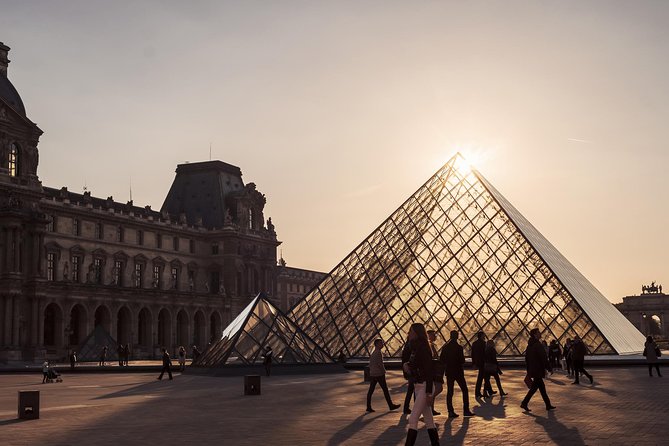
Reviewed · LOUVRE MUSEUM TOURS
Closing Time at the Louvre: The Mona Lisa at her Most Peaceful
The Mona Lisa is the star here, but the smartest part of this three-hour Louvre tour is the route that gets you ready to see her. You begin with the palace itself, then move through Greek sculpture and major paintings before reaching Leonardo’s famous portrait near closing time. The timing can make the visit feel calmer, though it is not guaranteed to be peaceful in peak season.
I like the way the guides give the enormous museum a clear shape instead of leaving you to wander at random. I also like the small-group setup, headset, and group entrance, which help you keep up with guides such as Adam, Julie, Felicia, and Nazli while still hearing their explanations.
The main caution is the title. A late visit can mean fewer people, especially in winter, but June and other busy periods may still bring heat, noise, and a thick crowd around the Mona Lisa. This is a focused highlights tour, not a quiet evening alone in the Louvre.
In This Review
- Key points to know before booking
- Why the closing-time idea matters at the Louvre
- Meeting at the Carrousel and entering the Louvre
- The moat and palace foundations
- Venus de Milo and Winged Victory of Samothrace
- Caravaggio, Raphael, Leonardo, and the major paintings
- The Raft of Medusa and art beyond the checklist
- Reaching the Mona Lisa near closing
- How the guides shape the experience
- Price, group size, and who gets the best value
- Practical details that can change your visit
- Should you book Closing Time at the Louvre?
- FAQ
- How long does the Louvre tour last?
- Is the Mona Lisa included?
- Is museum admission included in the price?
- What language is the tour offered in?
- Where does the tour begin?
- How many people can join the group?
Key points to know before booking
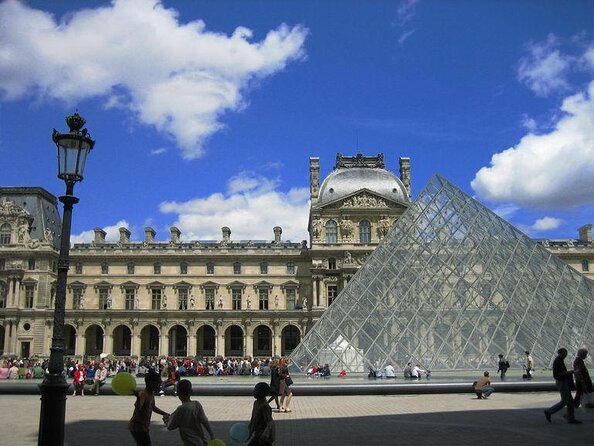
- Mona Lisa near closing time: The final part of the tour aims for a less crowded look at Leonardo’s portrait, but seasonal crowds still matter.
- A smart first visit: Your guide covers the Louvre’s essential works, from Venus de Milo to The Raft of Medusa, without trying to show you everything.
- Strong guide-led experience: Guides including Adam, Julie, Sara, Antoine, Felicia, and Nazli have earned especially warm praise for clear explanations and engaging delivery.
- Group entry and headsets: The €22 adult museum ticket, guided entry, and earpiece save time and make it easier to follow the commentary.
- Fast but purposeful pace: You will walk steadily through large galleries, with stops for focused discussion and questions.
- Good for families and art newcomers: Several guides have kept children and teenagers interested, while art-history specialists add detail for serious art lovers.
Why the closing-time idea matters at the Louvre
The Louvre is not simply a museum with a few famous pictures. It is a former royal palace with layers of use, grand corridors, sculpture courts, and enough art to overwhelm even a well-prepared visitor.
That is why the late timing is useful. You are not trying to plan a route through every wing on your own. You are following a guide who knows which rooms matter most and how to connect the building to the works inside it.
The timing also gives the tour a natural ending. You begin while the museum is still open and finish as the doors close. If the crowd thins, the final look at the Mona Lisa can feel like a proper conclusion rather than a hurried stop in the middle of a long museum day.
Still, you should keep your expectations realistic. The phrase most peaceful is a goal, not a promise. One visit in winter may feel wonderfully open, with enough space to sit near paintings and talk. A summer afternoon or busy June date can remain hot and crowded, particularly around Leonardo’s portrait.
Other Paris days travellers weigh against this one:
- Paris: Louvre Museum Timed-Entrance Ticket
★ 4.6 · 71,977 reviews - Disneyland® Paris 1-Day Ticket
★ 4.6 · 49,412 reviews - Paris: Versailles Palace and Gardens Full Access Ticket
★ 4.6 · 41,579 reviews
Meeting at the Carrousel and entering the Louvre
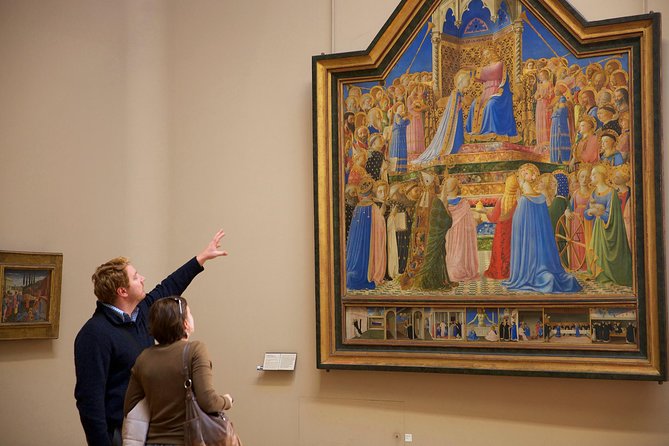
The tour begins at the Arc de Triomphe du Carrousel, at Place du Carrousel, near the Louvre Pyramid. This is a practical starting point because the area is easy to reach by public transportation and puts you directly beside the museum complex.
Give yourself enough time to find the meeting point. One poor experience involved confusion between the Louvre and the stated meeting location, so I would not arrive at the last minute. Check the exact booking instructions, look for the guide or group sign, and stay at the designated point rather than moving back and forth between entrances.
Once the group is assembled, the guide leads you into the museum. The adult admission ticket is included, as is a headset. The headset matters more than it may sound. The Louvre’s rooms can be noisy, and a guide speaking to a group of up to 20 people is much easier to follow through an earpiece than by standing shoulder to shoulder around a painting.
The group maximum is 20, though some departures may be smaller. One particularly intimate outing had only six people. You should not count on that number, but a small group gives you a better chance to ask questions and stay close to the guide.
The tour ends inside or at the Louvre Museum area, rather than returning you to a hotel. Hotel pickup and drop-off are not included.
The moat and palace foundations
Before the famous masterpieces, you see the Louvre’s foundations at the moat. This is an easy section to rush past, but it gives the building a useful sense of place.
The Louvre began as a fortress, and the remains beneath the present palace help explain why the museum feels so different from a modern gallery. You can see that the building was not created in one clean stroke. Its function changed over time, and its architecture grew along with the power and ambitions of France’s rulers.
I like this opening because it stops the Louvre from becoming a checklist of famous names. The building is part of the story. When your guide later places royal decoration, monumental rooms, and old palace wings beside paintings and sculptures, the museum makes more sense.
This is also where an expert guide can add value that an audio guide may not provide. You can ask why a certain room looks the way it does, how the palace developed, or how the museum’s layout affects the collection. The exact commentary varies by guide, but the tour is designed to explain the building as well as the art.
Venus de Milo and Winged Victory of Samothrace
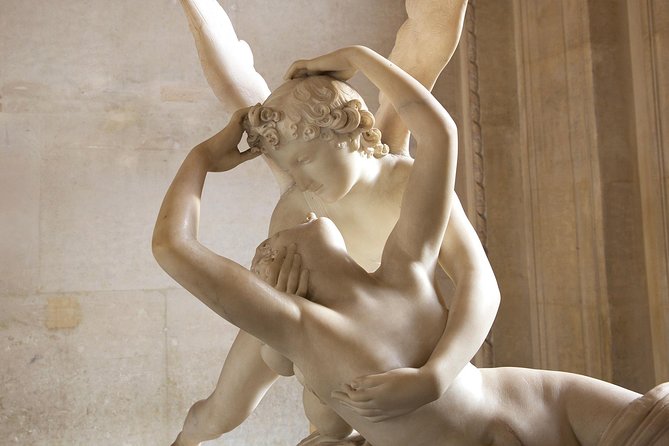
The Greek sculpture section brings two of the Louvre’s best-known figures into view: the Venus de Milo and the Winged Victory of Samothrace.
Venus is famous partly because she appears so complete despite her missing arms. Winged Victory is famous for a different reason. Her head and arms are gone, yet the forward movement of her body, wings, and drapery creates a powerful sense of arrival. The dramatic staircase setting adds to the effect.
This is a good example of why a guided visit helps. You can admire both sculptures on your own, but the guide draws your attention to posture, fabric, scale, damage, display, and the way each figure occupies its room. You are not only being told that these are important works. You are given a way to look at them.
The route can feel fast. The Louvre is huge, and guides must cover a lot of ground before closing. Folding stools supplied by the museum may be available for stops, which can be welcome when the guide pauses for a detailed explanation. Wear comfortable shoes and expect a moderate walking pace.
A different way to spend the day, same corner of France:
- Paris: Evening River Cruise with Music
★ 4.4 · 22,721 reviews - Paris: Eiffel Tower Entry Ticket with Optional Summit Access
★ 4.4 · 20,035 reviews - Paris: Eiffel Tower Summit or Second Floor Access
★ 4.3 · 17,248 reviews - Paris: Louvre Guided Tour with Reserved Access & Boat Cruise
★ 4.3 · 16,353 reviews
Caravaggio, Raphael, Leonardo, and the major paintings
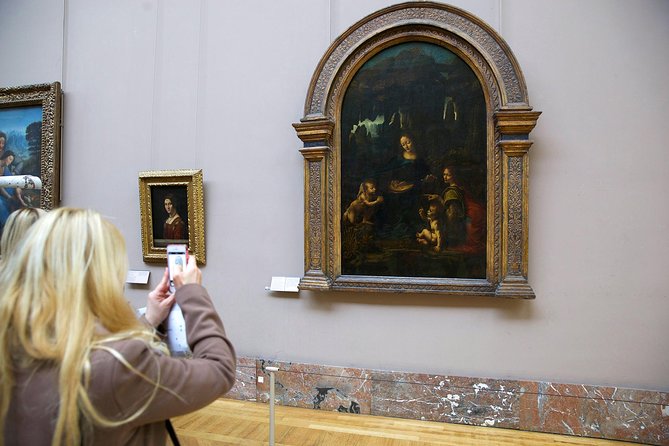
The painting section is where the tour becomes especially useful for first-time visitors. Instead of sending you into room after room of names and dates, the guide selects major works and explains what to notice.
You may study paintings by Caravaggio, Raphael, and Leonardo da Vinci, along with other important works. The exact rooms can change because museum areas may close, so the guide may alter the route on the day.
A strong guide makes this section more than a parade of masterpieces. Adam has been praised for using humor and questions to make the group think about the art. Julie is known for mixing jokes with clear explanations. Felicia has been especially attentive to the group’s pace, restroom needs, and comfort. Nazli has taken time to show additional areas when the group’s interests allowed.
Those differences matter. The museum provides the setting, but the guide shapes your experience. One guide may focus on symbolism, another on technique, and another on the story of the building. The supplied headsets let you keep listening while standing at a sensible distance from the artwork.
An iPad can also be used to show related examples or details that are difficult to see in a crowded room. That is a helpful touch when a guide wants to compare a composition, point out a small feature, or explain how a work fits into a broader artistic period.
The tour is not aimed only at specialists. Several guides have kept children and teenagers involved, using humor and direct questions rather than a lecture-like approach. If you already know European art well, you may prefer a tour with more time in fewer rooms. If you are new to the Louvre, the selection should give you a strong first framework.
The Raft of Medusa and art beyond the checklist
Géricault’s The Raft of Medusa is one of the tour’s important stops. The painting is enormous, emotionally intense, and full of visual movement. It rewards time and guidance because your eye can easily miss the way bodies, gestures, and light lead you through the scene.
This is where the tour’s art-historian approach can pay off. You learn to look at how a work is built, not just what event it depicts. A guide may point out details you would otherwise pass without noticing, then connect the painting to its period and public meaning.
The tour also reaches beyond the most predictable names. You can see art from different countries and periods, and the guide may include less famous works when they help explain the Louvre’s collection. That balance is valuable. If every minute were devoted only to the Mona Lisa, Venus de Milo, and Winged Victory, you would leave knowing the icons but not the range of the museum.
The tradeoff is time. A three-hour tour can offer only a small taste of a magnificent banquet. You will see a carefully chosen set of highlights, not a complete survey. If you want Egyptian antiquities, Islamic art, decorative arts, or a particular painter, ask before booking if the route is likely to include them. Areas may close, and the advertised essential route is the safer expectation.
Reaching the Mona Lisa near closing
The tour builds toward Leonardo’s Mona Lisa, the painting most people already know before they arrive. Seeing it with a guide can make the moment less confusing because you have a sense of where you are going and what to expect.
You cannot stand right against the painting. A barrier keeps visitors at a distance, and the room can still draw a crowd. On a quiet winter evening, you might reach the front with very little trouble. One departure reached the portrait around 5:30 p.m. with no one directly in front of it. At other times, the crowd has been manageable but far from empty.
The late timing helps in two ways. First, the tour uses a group entrance, so you avoid wasting time in the general entry line. Second, the museum may begin to feel less packed as closing approaches. That can give you a better view and a more relaxed chance to take a photograph.
Do not assume every late entry will produce an empty room. A 3:30 p.m. visit in a busy period was described as hot and crowded, and the Mona Lisa area remained difficult. The tour operator cannot control attendance, museum closures, school groups, or seasonal demand.
The best way to think about the timing is this: you are improving your odds, not buying a private viewing. That is still meaningful at the Louvre, where a smoother approach and a clear view can save you from the usual experience of trying to glimpse the painting over a wall of raised phones.
How the guides shape the experience
The strongest praise goes to the guides, not simply to the museum. Adam has been singled out for humor, insight, and a talent for getting people to think about art. Omar, Felix, Nancy, Laurence, Antoine, Ahmed, Aurelia, Lee, Stephanie, and Daniel have also received warm marks for their different styles.
You cannot usually choose your guide, so do not book on the assumption that one named person will lead your departure. The useful takeaway is that the company has several guides who bring subject knowledge and personality to the route.
You should also expect variation in pace. Laurence was described as a fast walker, while Felicia was praised for making sure nobody was left behind or uncomfortable. The group is expected to walk at a moderate pace, and you should be able to manage several hours on your feet.
A good guide will make the tour feel personal even when the group is not tiny. You can ask questions, pause for a closer look, and sometimes linger over a work that catches your attention. The schedule remains fixed, however, and the tour ends at closing, so there is no built-in time to wander independently afterward.
Price, group size, and who gets the best value
The listed price is $101.58 per person, with the €22 adult museum ticket included. That leaves a sizeable amount paying for the guide, group entry, headset, route planning, and the time saved inside the museum.
For a first Louvre visit, I think the price can make sense. The museum is so large that poor planning costs you more than time. You may spend an hour finding your way, miss several major rooms, and still feel unsure about what you saw. A guided route gives you structure and context.
The value is less clear if you already know exactly what you want to see or if you are happy to explore slowly on your own. The tour moves at a set pace and concentrates on the major works. You are paying for direction and interpretation, not unlimited museum time.
The free museum admission rules are worth noting. Visitors under 18 and residents of the European Economic Area under 26 may qualify for free museum entry with valid identification and proof of residency. The tour price may still include guiding and other services, so check the booking terms before assuming the full price is removed.
With a maximum of 20 people, this is not a private tour. It is still more manageable than a large coach group, and the headset helps keep the experience orderly. A couple, solo visitor, family with older children, or art-minded first-time visitor should find the format useful.
Practical details that can change your visit
The tour is offered in English and includes an English-speaking local guide. You should be comfortable walking at a moderate pace without difficulty. Comfortable shoes are sensible, and a small amount of flexibility helps because the museum may close certain rooms or adjust the route.
The Louvre can be warm in hot weather because the historic building has limited air conditioning. The heat may not ruin the visit, but it can make a fast-paced route more tiring. A late tour in winter offers the best chance of a calmer atmosphere, though no date guarantees it.
Strike-related closures are possible. If there is enough warning, the operator may contact you, but a last-minute closure may be announced at the meeting point. Free cancellation is available up to 24 hours before the start time for a full refund. Cancellations or changes made within 24 hours are not accepted for a refund.
The activity is offered in English only. That is important if you want detailed art discussion and are not comfortable following a sustained English explanation through a headset.
Should you book Closing Time at the Louvre?
I would book this tour if you are visiting the Louvre for the first time, want the major works explained, and prefer a guided path through the museum’s confusing scale. The combination of palace foundations, Greek sculpture, major paintings, and a late visit to the Mona Lisa gives you a strong three-hour introduction.
I would also consider it for a family. Guides such as Antoine and Daniel have kept children and teenagers engaged, and the short explanations, humor, and clear route are easier for young minds than an unplanned museum marathon.
I would hesitate if your main goal is a truly empty Mona Lisa room. The tour can be wonderfully quiet in winter, but busy dates remain busy. I would also skip it if you want to spend a whole afternoon in one department or continue exploring after the guide finishes.
For most first-time visitors, the tour offers good practical value because it turns a giant museum into a manageable story. Book it for the guide and the route first, and treat the quieter Mona Lisa as a welcome benefit rather than a guarantee.
FAQ
How long does the Louvre tour last?
The tour lasts approximately three hours and ends at the Louvre Museum near closing time.
Is the Mona Lisa included?
Yes. The route includes a visit to the Mona Lisa, with the aim of seeing her near the end of the museum day when crowds may be lighter.
Is museum admission included in the price?
Yes. The adult museum ticket, listed as €22, is included.
What language is the tour offered in?
The tour is offered in English with a local English-speaking guide.
Where does the tour begin?
It begins at the Arc de Triomphe du Carrousel, Place du Carrousel, 75001 Paris, France.
How many people can join the group?
The tour has a maximum of 20 participants. Some departures may be smaller, but the exact group size can vary.
Recently reviewed around Paris
- Louvre Private Tour – The Essentials and More with Expert Guide★ 5.0 · 227 reviews
- 2CV tour by night★ 5.0 · 55 reviews
- Eiffel Tower Second or Summit Floor Access by Elevator with Views★ 3.5 · 161 reviews
- The only Paris Wine Tasting experience you need to do – 2 hours★ 5.0 · 265 reviews
- 2 Hour Street-art Walk and Space Invaders Hunt in Paris★ 5.0 · 27 reviews
- 2 hour outdoor group activity in Paris: SAINT GERMAIN★ 5.0 · 48 reviews
- Sainte-Chapelle, Conciergerie & Palais de Justice Private Tour★ 5.0 · 72 reviews
- Private 2 – Hour Paris Landmarks Tour by Golf Cart Mini Moke★ 5.0 · 38 reviews
Louvre Museum Tours, compared.


Louvre Guided Tour with Reserved Access & Boat Cruise
Read our review →
Louvre Museum Masterpieces Guided Tour with Access
Read our review →
Louvre Museum Entry Ticket With Host and River Cruise
Read our review →
Priority Access Louvre with Host -Direct to Mona Lisa
Read our review →
Mona Lisa & Louvre Masterpieces Tour with Reserved Access
Read our review →
Louvre Museum – Exclusive Guided Tour (Entry Included)
Read our review →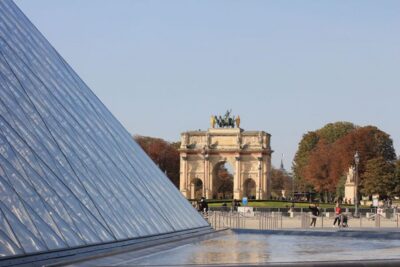
Louvre Reserved Ticket and River Cruise Combo
Read our review →Browse the lists this tour appears in