
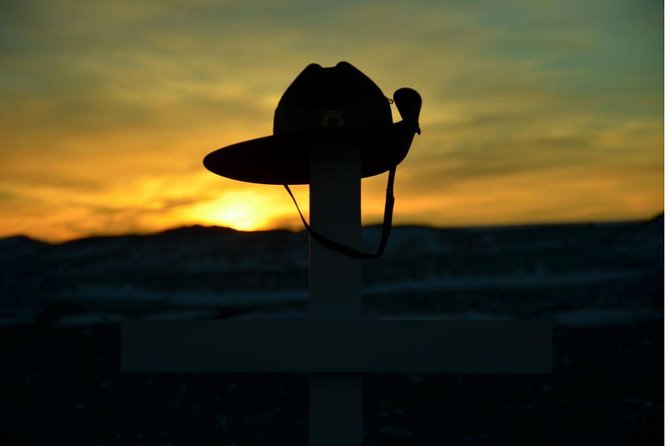
Reviewed · LILLE TOURS
Full day Australian Battlefields Tour
The most moving part of this Australian Battlefields Tour is the way it links huge events to individual lives. You travel from Amiens through Villers-Bretonneux, Pozières, and Beaumont-Hamel, hearing how Australian troops fought, suffered, and were remembered across the Somme.
I like the personal scale. Brigitte De Cuyper guides the private tour herself, and she is a local with a strong grasp of the area. I also like the mix of quiet cemeteries, open battlefield sites, panoramic views, and the excellent Sir John Monash Centre.
The main consideration is the pace. Eight hours covers a lot of ground, and several stops last only 10 or 20 minutes. Lunch is not included, and rainy weather can make the outdoor memorials harder to appreciate.
In This Review
- Key points to know before booking
- Starting in Amiens beneath an 800-year-old cathedral
- Villers-Bretonneux and the Australian story
- The Australian Corps Memorial and the cost of remembrance
- Chipilly and the Somme Valley viewpoint
- Lunch in Albert and the golden Virgin
- Lochnagar Crater and the first day of the Somme
- Pozières and the Australian price of attack
- Thiepval, Ulster Tower, and the missing
- Beaumont-Hamel and the Newfoundland sacrifice
- Brigitte’s guiding style and family connections
- Is the $253.97 price good value?
- Practical details for a smoother day
- Who should book this Somme battlefield day?
- Should you book the Australian Battlefields Tour?
- FAQ
- How long does the Australian Battlefields Tour last?
- What time does the tour start?
- Where does the tour take place?
- Is pickup offered?
- Is this a private tour?
- Is the tour offered in English?
- Is lunch included?
- Is admission to the Sir John Monash Centre included?
- Can I cancel for a full refund?
Key points to know before booking
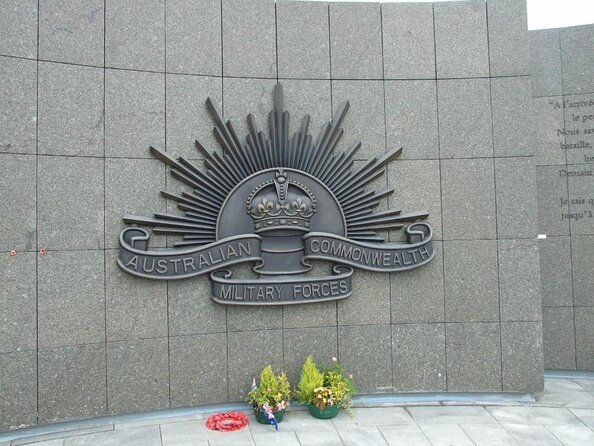
- Australian focus: The day gives special attention to Villers-Bretonneux, Pozières, the 1st Australian Division Memorial, and the Australian Corps Memorial.
- A private experience: Only your own group takes part, allowing Brigitte to adjust the conversation and, when possible, respond to family-history interests.
- The Sir John Monash Centre: Set aside the full hour. Its letters, diaries, life-size images, and interactive displays explain the Western Front in the words of Australian servicemen.
- More than memorials: The route includes Amiens Cathedral, the Somme Valley, Chipilly, Lochnagar Crater, Thiepval, Ulster Tower, and Beaumont-Hamel.
- A full working day: Pickup begins at 9:00 am, and the tour lasts about eight hours. A moderate level of physical fitness is recommended.
- Strong overall record: The experience has a 4.9 rating from 92 reviews, with 98 percent of customers recommending it.
Starting in Amiens beneath an 800-year-old cathedral
The day begins in Amiens at 9:00 am, with pickup offered. The meeting detail says the guide will wear a guide badge, but I would still confirm the exact pickup point carefully. One guest was left waiting at the wrong hotel after a change was not passed on, so clear communication matters.
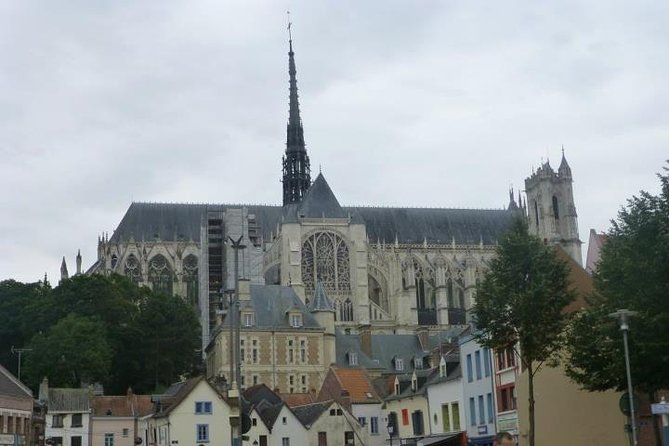
Before heading toward the Somme battlefields, Brigitte explains Amiens and its cathedral. Amiens Cathedral is celebrating its 800th birthday this year and is described as the largest Gothic cathedral in the world. Even if you are primarily here for military history, this opening gives you a useful sense of the French place where the day begins.
The drive toward Villers-Bretonneux crosses the rolling countryside of the Somme. Brigitte uses the journey to explain local culture, the French economy, and the story of Amiens from the Middle Ages to the present. That is a smart beginning. You are not simply being rushed from one war memorial to another. You start to understand the villages and farmland that became a battlefield.
More Lille trips worth a second look
- Nausicaá National Sea Center: Full-Day Entry Ticket
★ 4.5 · 541 reviews - Private Full Day Tour of the Somme Battlefields
★ 5.0 · 28 reviews - Normandy American D-Day Beaches Full Day Tour from Bayeux
★ 5.0 · 2,103 reviews
Villers-Bretonneux and the Australian story
Villers-Bretonneux is the emotional center of the Australian part of the tour. At the military cemetery and Australian memorial, Brigitte explains Australia’s role on the Western Front, with particular attention to the Allied counterattack of April 1918.
Australian troops played a major part in that battle, but the story is not presented as a simple tale of victory. The cost was severe. You have time to pay your respects among the graves of the Diggers, which gives the historical account a quiet human scale.
The cemetery visit is scheduled for about 20 minutes. That is enough for a focused introduction and personal reflection, but not enough for a slow examination of every section. If you have a family grave to find, tell Brigitte before the day begins so she can prepare.
A short walk away, the Sir John Monash Centre receives about an hour. This is likely to be the most polished museum-style part of the day. The center tells Australia’s Western Front story through letters, diaries, recorded voices, life-size images, and interactive displays.
I would protect this hour rather than treat it as a quick stop. The center helps you connect soldiers with the actual places outside. It also moves beyond dates and commanders by showing the war through the words and experiences of ordinary Australians.
One practical warning: the center can occasionally be closed. On one such day, Brigitte replaced it with other relevant stops and kept the tour worthwhile. Still, if this museum is your main reason for booking, check its current opening arrangements before you go.
The Australian Corps Memorial and the cost of remembrance
The Australian National Memorial sits within the Villers-Bretonneux Commonwealth War Graves cemetery. It was inaugurated on July 22, 1922, by King George VI, and the names of 10,729 Australian servicemen are engraved on its walls.
The number is difficult to absorb until you see it written across the memorial. Every April 25, thousands gather here at dawn for ANZAC Day. Brigitte explains that continuing connection, along with the military events that gave the site its meaning.
This is not a stop for hurried sightseeing. The memorial, cemetery, and surrounding countryside work together. The setting is open and calm now, which makes it harder, not easier, to imagine the artillery, trenches, wounded men, and confusion of 1918.
Chipilly and the Somme Valley viewpoint
The route then follows the Somme Valley to Chipilly. A brief stop at the 58th British Division Memorial introduces a different kind of war memorial. The stone sculpture shows a soldier comforting his wounded horse, a tribute not only to the men of the 58th Division but also to the thousands of horses killed during the war.
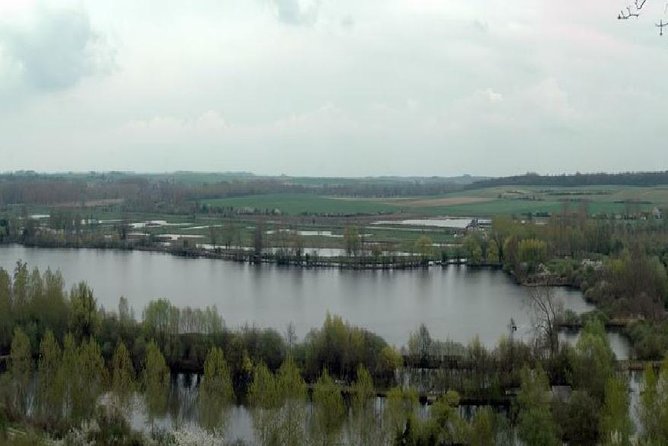
From the Camp Cesar viewpoint, you get a broad view over the valley that gave the Battle of the Somme its name. The stop lasts about 10 minutes, so it is mainly for orientation rather than an extended walk.
This viewpoint is useful because battlefield history can become confusing when you only hear place names. Looking across the valley while Brigitte explains why the battle was planned and which nations took part helps you picture the scale of the operation.
A different way to spend the day, same corner of France:
- Entrance Ticket Nausicaa, the biggest aquarium in Europe
★ 3.5 · 1,135 reviews - Lille Driving Tour by Convertible Citroen 2CV
★ 4.9 · 711 reviews - Unique Tour of Lille by Convertible 2CV – 1h00
★ 5.0 · 470 reviews - Lille: 24, 48 or 72-Hour City Pass & 24-Hour Transportation
★ 4.3 · 205 reviews
Lunch in Albert and the golden Virgin
In Albert, the tour pauses for one hour at Le Hygge Restaurant Brasserie. Lunch is not included in the price, so bring room in your budget. The stop gives you a proper break after the morning’s cemeteries and museum visit.
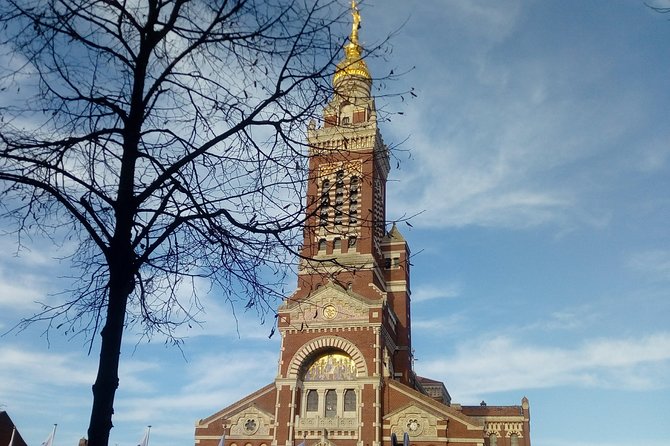
Albert’s Basilica Notre Dame de Brebières is another important part of the town. Built in a Neo-Byzantine style at the end of the 19th century, it has a gold-covered dome topped by the Virgin Mary holding the infant Jesus.
The basilica was destroyed during the Great War and rebuilt in its original form by the son of the first architect, Edmond Duthoit. Brigitte also tells the story connected with the statue during the war. This local detail makes Albert more than a lunch stop and shows how the conflict affected buildings, townspeople, and symbols of daily life.
Lochnagar Crater and the first day of the Somme
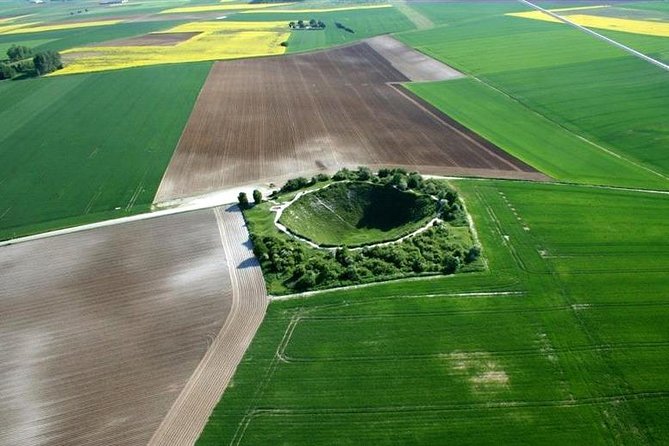
After lunch, the tour enters the 1916 Battle of the Somme sector. Lochnagar Crater was formed by a large mine placed beneath the German front line on the first day of the battle. It was one of 19 mines set under German positions to help the British infantry advance.
The crater is about 70 feet deep and 330 feet wide, making it the largest crater in the Somme. You have roughly 20 minutes here. The size is the main lesson. This is not an abstract mark on a map. It is a physical scar in the earth, still visible more than a century later.
The crater site is open and exposed. Wear practical shoes, especially after rain, and expect the day to involve regular movement between vehicle stops and memorial grounds. The tour does not call for strenuous hiking, but it is not a purely seated outing either.
Pozières and the Australian price of attack
At the 1st Australian Division Memorial, Brigitte explains the fighting at Pozières between July 23 and September 3, 1916. Almost 7,000 Australian men lost their lives here, and the place has a particularly painful meaning in Australian military memory.
The short 20-minute stop is focused and serious. Brigitte’s strength is placing the Australian action inside the wider battle while bringing the discussion back to the men who experienced it.
Nearby, the Windmill site commemorates 23,000 Australian casualties from the Pozières fighting and surrounding countryside. The destroyed windmill became a battlefield reference point and later an Australian memorial site.
Across from it, the Tank Memorial provides a chance to discuss the first use of tanks on the Western Front and the changing nature of modern war. These nearby stops work well together: one deals with sacrifice, while the other considers technology and tactics.
The route also passes Mouquet Farm, another important Australian battlefield location. The available schedule gives no separate stop time, so you should expect Brigitte to explain the site during the drive or a brief roadside pause rather than plan on a long visit.
Thiepval, Ulster Tower, and the missing
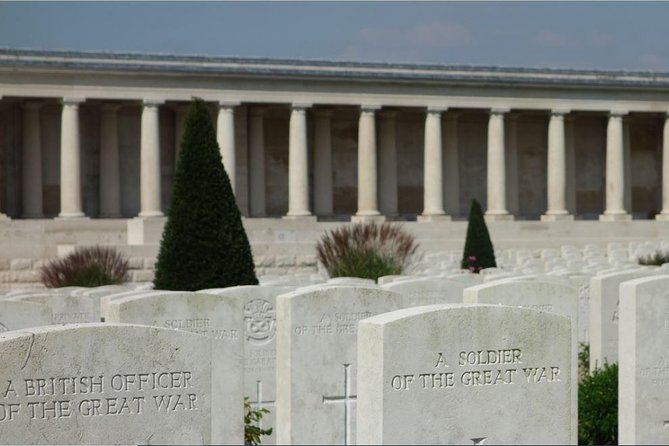
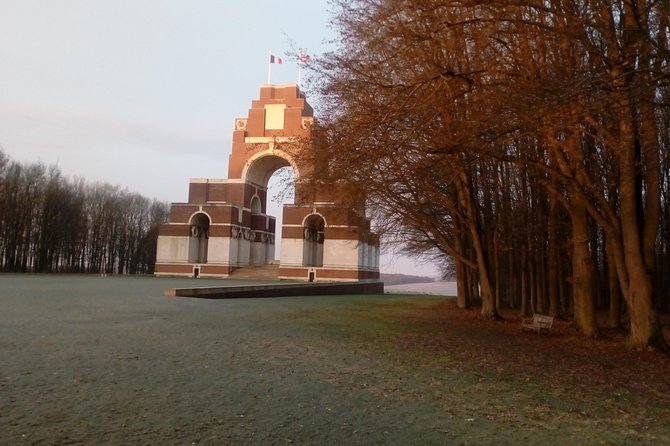
The Memorial to the Missing at Thiepval is one of the largest and most imposing memorials on the Western Front. More than 72,000 names are engraved on its walls. These are men who were missing, or whose bodies were found but could not be identified.
You receive about 45 minutes here, one of the longer outdoor stops. That matters. The scale of Thiepval needs time, and the subject needs care. Brigitte discusses military tactics and explains what being listed as missing meant for families who had no known grave to visit.
The memorial overlooks the surrounding countryside, where the broad views help you understand why military commanders cared so much about ridges, roads, and visibility. The area looks peaceful now, but the names on the stone bring the battle back to individual loss.
The nearby Ulster Tower is Northern Ireland’s national war memorial. It commemorates the men of the 36th Division and others from Ulster who served in the First World War. From the hill, you can see traces of the former Somme front lines and the remains of a German machine-gun post in the opposite field.
This part of the route broadens the day beyond Australia. You see how the Somme was an international battlefield, with British, Irish, French, Australian, Newfoundland, and other forces involved.
Beaumont-Hamel and the Newfoundland sacrifice
The final listed stop is the Newfoundland Memorial Park at Beaumont-Hamel. It is the largest battlefield site in the Somme dedicated to the Newfoundlanders who served during the First World War.
The Newfoundland Regiment suffered terrible losses on July 1, 1916, in its first major engagement. The ground was purchased in 1921 by the women of Newfoundland and the Newfoundland government. It became a place of remembrance and a symbol of the island’s identity.
You have about 30 minutes here. As at the other battlefield sites, the value comes from combining the physical ground with the story. The park is not just another memorial on a long list. It shows how communities carried the memory of the war long after the fighting ended.
Because this is the last major stop, the day ends on a reflective note. You have moved from the Australian experience at Villers-Bretonneux and Pozières to the wider Commonwealth story at Thiepval and Beaumont-Hamel.
Brigitte’s guiding style and family connections
The guide can make or break a battlefield tour, and Brigitte is the central reason this experience works so well. She grew up in the Somme area and brings local familiarity to the roads, villages, cemeteries, and memorials.
Her English is fluent, and her guiding style combines dates, military explanation, personal stories, and plain descriptions of what happened on the ground. She also asks about family members who served. Several visitors supplied names before the tour, and Brigitte researched those relatives in advance.
That option is especially valuable if you are visiting as a pilgrimage. One couple had information about great-uncles who served from Western Australia. Another family received help locating a relative’s cemetery, even though it required a small adjustment to the planned route.
Do not assume every extra request can be added. The day is already tightly timed, and changes depend on distance and opening hours. But the private format gives Brigitte more flexibility than a large coach tour.
Is the $253.97 price good value?
At $253.97 per person, this is not a cheap sightseeing day. The price becomes easier to justify if you are traveling alone, as a couple, or with a small family group and want a private guide rather than a standard group excursion.
You are paying for about eight hours of guiding, pickup, transport around a spread-out battlefield area, and entrance to the Sir John Monash Centre. All fees and taxes are included. Lunch is extra, so add the cost of your meal at Le Hygge Restaurant Brasserie.
The value is strongest for people with Australian military connections or a serious interest in the Western Front. Brigitte’s local background and ability to research family members add something that a printed guidebook cannot provide.
If you mainly want a quick look at a few memorials, the price may feel high. The tour is built for context and conversation, not a fast checklist. The private arrangement also means the day can feel more personal, but you do not get the lower per-person price of a full minibus group.
Practical details for a smoother day
Wear comfortable shoes and dress for changing weather. Much of the tour takes place outdoors at cemeteries, memorials, viewpoints, and open battlefield sites. One account describes rain affecting the whole day, so a waterproof layer is sensible.
Plan on a moderate level of physical fitness. The schedule includes short walks, standing, and movement around uneven outdoor locations, though no long hike is specified.
The tour is offered in English and confirmation is sent at booking. Service animals are allowed. Since the activity is private, only your own group participates.
Cancellation is free up to 24 hours before the start time for a full refund. Changes or cancellations made inside that 24-hour window are not accepted for a refund, and the cut-off follows local time.
Amiens is easy to reach from Paris by train, and several visitors used the tour as a day trip from the capital. You can also stay in Amiens and combine the battlefield day with time in the city.
Who should book this Somme battlefield day?
I would recommend it most strongly to Australians tracing a relative, visitors interested in ANZAC history, and anyone who wants a serious introduction to the Somme without arranging several separate sites alone.
It also suits you if you value a guide who can answer questions as they arise. The day moves through several national stories, but the Australian thread remains clear from Villers-Bretonneux through Pozières.
You may want a different arrangement if you dislike a full day of memorials, prefer a slower museum visit, or want plenty of unplanned time at each site. The schedule is broad, and some stops are brief.
Should you book the Australian Battlefields Tour?
Book it if your aim is to understand the Australian role in the First World War while also seeing the wider Somme battlefield. The strongest features are Brigitte’s local knowledge, the private format, the family-history preparation, and the hour at the Sir John Monash Centre.
Go in prepared for a long, emotional day with outdoor stops, a separate lunch cost, and a fair amount of time in the vehicle. For an Australian family making a pilgrimage, the personal attention can make the price worthwhile. For a casual visitor, the same day may feel too focused.
FAQ
How long does the Australian Battlefields Tour last?
The tour lasts approximately eight hours.
What time does the tour start?
Pickup and the tour start at 9:00 am.
Where does the tour take place?
The tour begins in Amiens and visits battlefield and memorial sites across the Somme, including Villers-Bretonneux, Chipilly, Albert, Lochnagar Crater, Pozières, Thiepval, and Beaumont-Hamel.
Is pickup offered?
Yes. Pickup is offered. The meeting information says the guide will wear a guide badge.
Is this a private tour?
Yes. Only your own group participates in the activity.
Is the tour offered in English?
Yes. The tour is offered in English.
Is lunch included?
No. Lunch at Le Hygge Restaurant Brasserie is not included in the tour price.
Is admission to the Sir John Monash Centre included?
Yes. Admission to the Sir John Monash Centre is included. Other listed memorial and cemetery stops have no admission fee.
Can I cancel for a full refund?
Yes. You can cancel at least 24 hours before the local start time for a full refund. Cancellations or changes made less than 24 hours before the start time are not accepted for a refund.
Recently reviewed around Lille
- Lille Old Town Walking Tour With A Guide★ 4.5 · 40 reviews
- 1 Hour Private Lille Tour by Convertible 2CV with a Local Products Tasting★ 5.0 · 78 reviews
- Rallye “Discoveries and Surprises”★ 5.0 · 52 reviews
- Private Lille Tour by Classic Convertible 2CV with Champagne★ 5.0 · 49 reviews
- 30-Minutes Private Guided Tour of Lille by Convertible 2CV★ 5.0 · 79 reviews
- Lille Scavenger Hunt and City Highlights Walking Tour★ 4.5 · 47 reviews
- Lille Scavenger Hunt and Highlights Self Guided Audio Tour★ 4.0 · 32 reviews
- Private battle of Dunkirk Operation Dynamo Tour★ 5.0 · 99 reviews
Lille Tours, compared.

Entrance Ticket Nausicaa, the biggest aquarium in Europe
Read our review →

Nausicaá National Sea Center: Full-Day Entry Ticket
Read our review →
24, 48 or 72-Hour City Pass & 24-Hour Transportation
Read our review →
Pierrefonds: Château de Pierrefonds Entrance Ticket
Read our review →
Browse the lists this tour appears in