
Reviewed · CITY TOURS
Guided Tour in Marseille: Vieux Port & Old City
Marseille reveals itself best on foot, and this three-hour walk takes you from the fishing boats of the Vieux Port into the narrow lanes of Le Panier, then out toward the cathedral, Mucem, and Fort Saint-Jean. You get a useful first look at the city instead of seeing isolated sights through a vehicle window.
I like two things here. First, the route has a clear story, moving from the port that shaped Marseille to the old neighborhood and the fort that guarded the harbor. Second, guides such as Sarit add practical advice along with history, including help with bus routes and suggestions for shops and restaurants after the tour.
The main catch is simple: this is a real walking tour. Marseille is hilly, Le Panier includes stairs, and one section cannot be avoided. If your knees, balance, or stroller make steps difficult, you should think carefully before booking.
In This Review
- Key points to know before booking
- Starting beneath the Vieux Port canopy
- Le Panier, Marseille’s old quarter
- Centre de la Vieille Charité and its quiet courtyard
- La Major, a dramatic change of scale
- Mucem and the modern waterfront
- Fort Saint-Jean and the best views of the walk
- What the guide adds to the experience
- Group size, timing, and physical effort
- Is $60.46 a fair price?
- Practical advice for cruise visitors and late arrivals
- Who should book the Marseille Old City walk?
- Should you book this Marseille walking tour?
- FAQ
- How long does the guided Marseille tour last?
- Where does the tour begin?
- Where does the tour end?
- Is the tour conducted in English?
- How many people can join the group?
- Does the tour include transportation?
- Is the tour suitable for people with limited mobility or strollers?
- What happens if I need to cancel?
Key points to know before booking
- The route covers six major sights in about three hours, from the Vieux Port to Fort Saint-Jean.
- Sarit is a warm, story-focused guide who explains Marseille’s history, architecture, customs, shops, and local food.
- Expect hills and stairs, especially in Le Panier and the approach to the fort.
- The group can reach 20 people, though some departures are much smaller, with six or fewer people.
- The tour is a good first-day orientation, especially if you have only one day in Marseille or are visiting from a cruise ship.
- Admission is free at each listed stop, but food, drinks, and transportation are not included.
Starting beneath the Vieux Port canopy

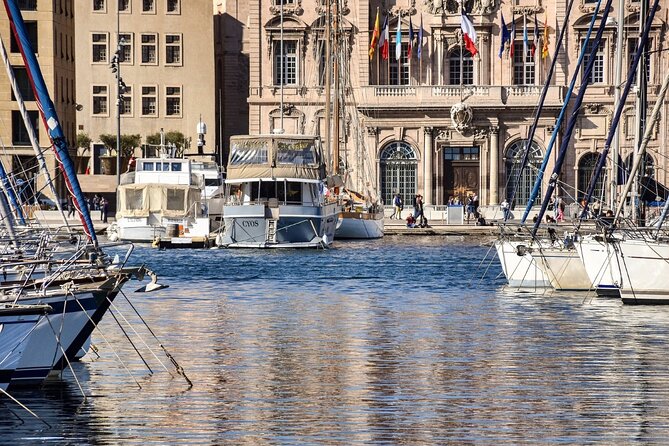
The meeting point is L’Ombrière de Norman Foster, the mirrored canopy on Quai de la Fraternité at the Vieux Port. It is near public transportation and easy to identify once you are at the harbor, but you should still arrive with the exact location saved on your phone.
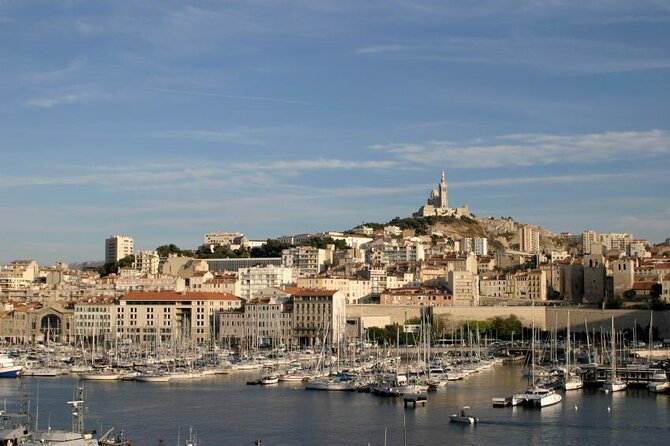
The port is the right place to begin. Marseille grew around this natural harbor, and the tour uses the waterfront to explain the city’s role as a Mediterranean trading center. You spend about 30 minutes walking around the port and looking at the major sights while your guide supplies the background that turns a pleasant waterfront stroll into a lesson in how Marseille developed.
This first section is gentle compared with what comes later. It gives you time to meet the guide and other members of the group, settle into the pace, and get your bearings. If you have just arrived in Marseille, that orientation can save you time later in the day.
The tour ends back at this same meeting point. That matters if you have an onward train, cruise departure, or restaurant reservation. Still, allow extra time after the tour rather than planning a connection immediately, since walking groups can pause for questions and transitions.
More City Tours in Marseille
- Marseille: City Sightseeing Hop-On Hop-Off Bus Tour
★ 3.8 · 2,820 reviews - Marseille: City Highlights Guided Half-Day E-Bike Tour
★ 4.8 · 325 reviews - Marseille Shore Excursion: City Sightseeing Tour of Marseille
★ 4.0 · 321 reviews
Le Panier, Marseille’s old quarter
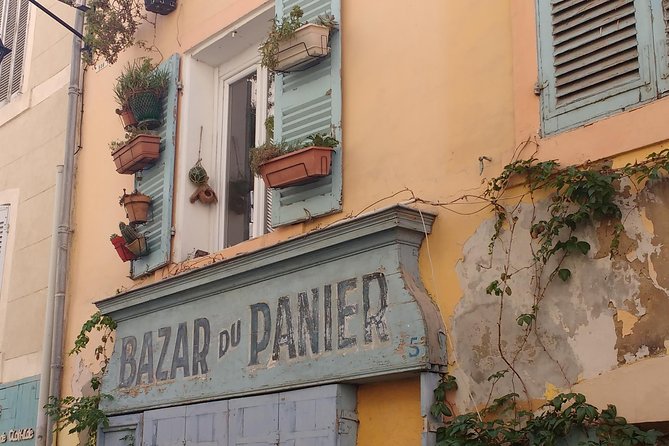
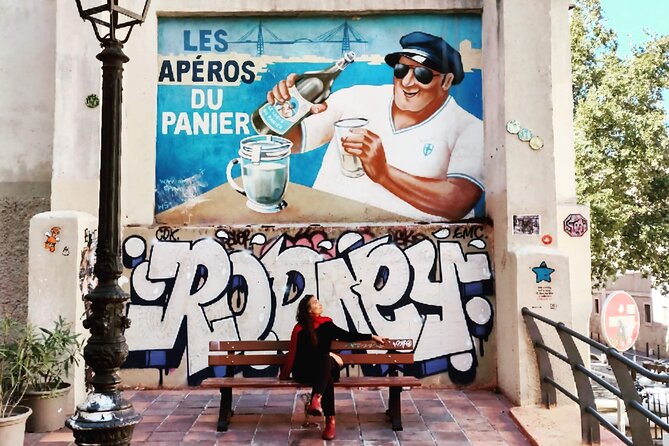
From the port, the route heads into Le Panier, the city’s historic neighborhood. This is where the walk becomes more atmospheric and physically demanding. You move through plazas, residential streets, small shops, old houses, and walls covered with street art.
The guide’s role matters most here. Without context, Le Panier can seem like a maze of attractive lanes. With a good explanation, its streets show how Marseille’s older communities lived, worked, and adapted to the changing city around them.
You spend about 40 minutes in this neighborhood, the longest stop on the route. That allows time for more than a quick photograph. You can look closely at the architecture, hear stories about the area, and get suggestions for places to return to on your own.
There may also be a chance to stop for a drink. Treat this as a possible social pause, not a meal or tasting included in the price. Any drink or snack is your own expense.
This is also the section where you should pay attention to your footing. The route includes hills and stairs, and the pace can be affected by the size and ability of the group. One departure with a visitor using a walking stick managed the route at a comfortable pace, while other people found the steps and inclines demanding. That tells you the tour requires moderate effort, even if it is not an athletic hike.
If you are bringing a stroller, know that some steps may require lifting or carrying it. A stroller was used successfully on the route, but this is not a step-free walk.
Centre de la Vieille Charité and its quiet courtyard
The next stop is the Centre de la Vieille Charité, a former 17th-century asylum. You spend about 15 minutes observing the building and hearing about its past.
This stop is brief, but it adds depth to the Le Panier section. The building is not just another handsome old structure. Its original purpose opens a window onto the way Marseille dealt with poverty and people in need during an earlier period.
Do not expect a long museum visit here. The tour focuses on the exterior and the historical setting rather than giving you extended time inside exhibitions. That is useful if you want a broad introduction to the city, but less useful if your main goal is detailed museum study.
The short stop also helps keep the three-hour route moving. Marseille has enough sights to fill several days, so this experience makes a deliberate choice: cover a lot of ground, explain the setting, and leave you with ideas for places to explore later.
La Major, a dramatic change of scale
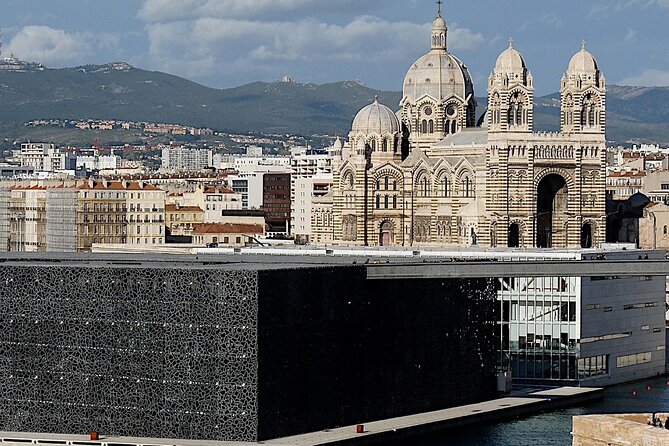
The tour then reaches the Cathédrale de la Major, where you enter for about 25 minutes. The cathedral’s size and unusual architecture provide a strong contrast with the compact lanes of Le Panier.
Inside, you have time to admire the structure while the guide explains its place in Marseille. This is one of the route’s best changes of mood. The old quarter feels close and human in scale; La Major feels grand, formal, and tied to the city’s public identity.
Because the stop is limited to roughly 25 minutes, you should not expect a full architectural lecture or a long period for quiet reflection. You will get an introduction and a chance to look around. If the cathedral captures your interest, make a note to return independently if your schedule allows.
Wear shoes suited to uneven streets and steps. The cathedral itself is not the only consideration. The route connecting these sights includes the changing surfaces and inclines of an old urban district.
More Marseille & Provence trips worth a second look
- Camargue: Half-Day 4×4 Guided Safari Adventure
★ 4.6 · 846 reviews - Marseille: Calanques National Park Guided Hike with Picnic
★ 4.9 · 516 reviews - From Marseille: Calanques National Park Guided Hike
★ 4.8 · 489 reviews - From Marseille: Guided E-Bike Tour to Calanque de Sormiou
★ 4.8 · 308 reviews
Mucem and the modern waterfront
Next comes Mucem, the Museum of European and Mediterranean Civilisations. The tour passes through the area for about 15 minutes, taking in the building, its terrace, and its modern architecture on the way to the fort.
This stop works as a bridge between old Marseille and the city’s newer waterfront. The contrast is part of the point. You have just been walking through centuries-old streets, and suddenly the lines, materials, and open views around Mucem feel distinctly modern.
The tour does not include a full museum visit. Admission to the listed stops is free as part of the walk, but this experience is not an exhibition tour. If you want to see the museum’s galleries, you would need to plan that separately.
The terrace is especially useful for photographs and for understanding the relationship between the port, the sea, and the fort. Your guide can help explain what you are looking at, which is valuable when a modern building and a historic fortress share the same view.
Fort Saint-Jean and the best views of the walk
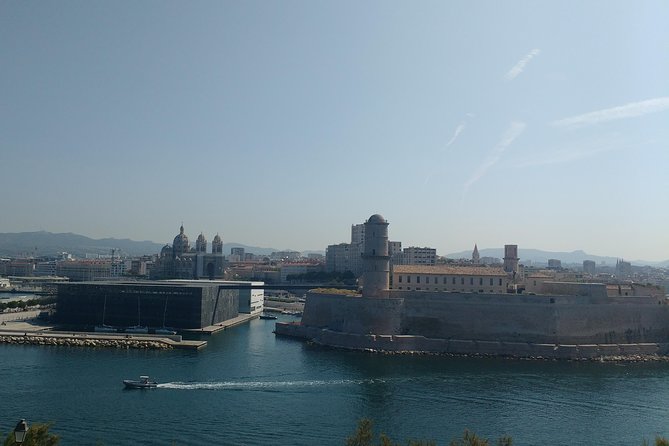
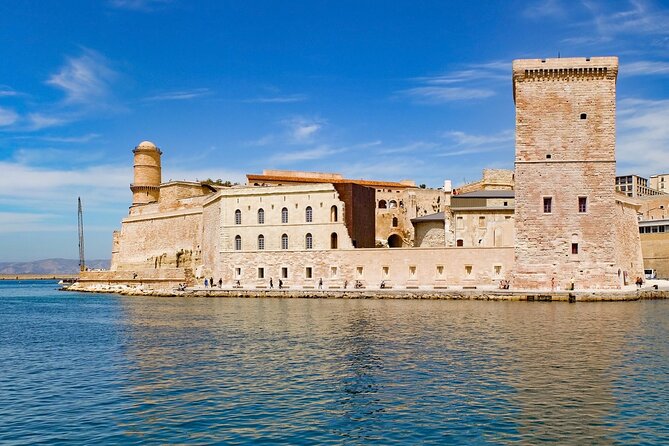
The final sightseeing stop is Fort Saint-Jean, a defensive fort guarding the entrance to Marseille’s city and port. You spend about 25 minutes walking around its walls and taking in broad views across the sea and harbor.
This is the payoff of the route. After the close streets of Le Panier and the formal interior of La Major, the fort opens everything out. You can see why this position mattered. The walls and elevated paths gave defenders a commanding view of ships approaching the port.
The wording 360-degree views is worth taking seriously, but the route to reach those viewpoints involves stairs and inclines. Strong wind can also make the exposed fort feel much tougher than the sheltered port. One group experienced the Mistral, Marseille’s famous strong wind, so bring a layer and secure your hat or loose belongings on a windy day.
Fort Saint-Jean is a good place to end the sightseeing portion because it gives you a mental map of the city. From above, the port, old quarter, cathedral, museum, and sea fit into one picture. After the walk back to the meeting point, you should have a better sense of where to spend the rest of your day.
What the guide adds to the experience
The guide is the main reason to choose this tour instead of following a map. Sarit is described as friendly, patient, and an effective storyteller. Her approach includes history and architecture, but also the practical side of visiting Marseille.
That can mean advice about bus routes to Notre-Dame Basilica, recommendations for restaurants, and suggestions for shops in Le Panier. One particularly local touch involved introducing visitors to Marseille soap and lotion made with donkey milk, along with a warm wine stop. These details give the walk a more personal feel than a checklist of monuments.
Sarit also appears comfortable adjusting the pace for the group. She has accommodated limited mobility and families, and she gives people time to ask questions. That is useful in a city where the route can feel very different depending on your walking ability.
There is one communication issue to keep in mind. Headsets are not normally used for small groups, and the guide may avoid a microphone in the old quarter so local residents are not disturbed. In a group of six, this may be no problem. In a group closer to the 20-person limit, it could be harder to hear, especially if wind or street noise picks up.
Stay close to the guide and speak up if you cannot hear. The guide can move you nearer, repeat a point, or project her voice. This is a small action, but it can make a large difference to the quality of the tour.
Group size, timing, and physical effort
The maximum group size is 20 people. In practice, departures can be much smaller, including groups of six or fewer. A small group makes it easier to ask questions and hear the commentary, while a full group may feel slower in narrow streets and harder to gather around the guide.
The stated duration is about three hours. The six stops account for much of that time, with the rest used for walking between districts. This is enough for an introduction, not a complete study of Marseille.
You should arrive ready to walk continuously. The tour does not use a bus or private vehicle, and private transportation is not included. Public transportation is nearby at the starting point, but getting to and from the meeting point is your responsibility.
A moderate fitness level is advised. You do not need to be a serious walker, but you should be comfortable with hills, stairs, and uneven streets. If you use a walking stick, the tour may still work at a manageable pace. If you have serious knee problems or cannot lift a stroller over steps, a flatter or private option would be a safer choice.
Is $60.46 a fair price?
At $60.46 per person, this is not the cheapest way to walk around Marseille, since you could visit the public areas independently for free. The value comes from the guide’s interpretation, the route planning, and the time saved deciding how to connect the port, Le Panier, La Major, Mucem, and Fort Saint-Jean.
You are paying for a clear three-hour introduction rather than admission tickets. The listed sights do not add an entrance charge to the tour, and the guide is the included service. Drinks, food, and any transportation you use separately are extra.
I think the price makes the most sense on your first day in Marseille, when you want to understand the city before exploring alone. It is also useful for a short visit, including a cruise stop, because the route gives you a broad overview without requiring you to plan every turn.
The value is weaker if you already know Marseille well, dislike group walks, or want long visits inside museums and churches. A private tour would offer more control, but this group experience costs less and gives you the chance to meet other people.
Practical advice for cruise visitors and late arrivals
The start is in the Vieux Port area, not at a cruise terminal. Plan your route carefully and allow time to reach L’Ombrière de Norman Foster.
Keep your phone on and make sure you can receive messages or calls outside the ship. A past meeting problem involved visitors who had no internet connection, arrived late, and could not see the guide’s messages or location. The guide waited, tried several ways to make contact, and eventually left after about an hour.
You do not need to carry a sign or search randomly along the harbor. Save the meeting point, arrive early, and contact the guide if you are delayed. If you are coming from a ship, check whether your phone plan works in France before leaving the vessel.
The tour requires good weather. If poor weather causes cancellation, you are offered another date or a full refund. The same applies if the minimum number of participants is not reached. You can cancel for a full refund when you do so at least 24 hours before the scheduled start time.
Who should book the Marseille Old City walk?
I would choose this tour if you want:
- A fast introduction to Marseille’s port and old quarter
- A guide who can connect buildings to the city’s past
- A route that combines famous sights with ordinary streets and shops
- Advice for the rest of your visit
- A social group experience rather than a private outing
- A three-hour activity in English
I would hesitate if you need a step-free route, want to use a stroller without lifting it, or prefer long periods inside museums. I would also avoid booking it immediately before an important departure, since the walk ends at the starting point but still takes the full three hours.
Should you book this Marseille walking tour?
Book it if you want to get your bearings fast and are willing to work for the views. The route is well chosen, the guide adds real context, and the final approach to Fort Saint-Jean gives you a satisfying look back over the city.
The strongest reason to go is the combination of personal guiding and practical help. Sarit’s stories, restaurant suggestions, bus advice, and attention to different walking speeds make the experience more useful than a simple monument walk.
Just be honest about your fitness. Marseille is not flat, and Le Panier has unavoidable steps. For a first visit, a short stay, or a cruise day with enough time ashore, this is a good-value introduction. For visitors who need an easy, flat outing, choose something less demanding.
FAQ
How long does the guided Marseille tour last?
The tour lasts approximately three hours.
Where does the tour begin?
It begins at L’Ombrière de Norman Foster on Quai de la Fraternité, 13001 Marseille, France.
Where does the tour end?
The activity ends back at the same meeting point.
Is the tour conducted in English?
Yes. The experience is offered in English.
How many people can join the group?
The maximum group size is 20 people.
Does the tour include transportation?
No. This is a walking tour, and private transportation is not included.
Is the tour suitable for people with limited mobility or strollers?
The tour requires moderate physical fitness and includes hills and stairs. A stroller has been used on the route, but some steps may require lifting it. Service animals are allowed.
What happens if I need to cancel?
You can receive a full refund if you cancel at least 24 hours before the scheduled start time. Cancellations or changes made less than 24 hours before the start are not accepted for a refund.
Recently reviewed around Marseille & Provence
- Guided tour Distillery of Lavender between Nîmes & Arles★ 5.0 · 84 reviews
- Skip the Line: Museum of Romanity Ticket★ 4.5 · 45 reviews
- A Private Guided Historical and Cultural Tour in Nîmes★ 4.5 · 32 reviews
- Provence Hot-Air Balloon Ride from Forcalquier★ 4.5 · 75 reviews
- Horse ride in Haute Provence Luberon and Forcalquier★ 5.0 · 77 reviews
- Sailing day in the heart of the Calanques★ 4.5 · 61 reviews
- The Urban Hike of Marseille★ 5.0 · 35 reviews
- Sormiou Calanques National Park Electric Bike Tour from Marseille★ 5.0 · 60 reviews
City Tours, compared.

Eiffel Tower Summit Option with Seine River Cruise and City Tour
Read our review →
Paris in a Day: Louvre or Orsay, Eiffel Tower, City Walk & Cruise
Read our review →

Eiffel Tower Hosted Tour, Seine Cruise and City Tour
Read our review →

City and River Seine Tour on an Amphibious Bus
Read our review →

Eiffel Tower and City Tour by Bus with Seine River Cruise Option
Read our review →Browse the lists this tour appears in