
Reviewed · WALKING TOURS
Paris City Center Free Walking Tour (Tip-Based)
Paris reveals itself best on foot, and this tip-based city-center walk gives you a useful first look at its old heart. In about two hours and 15 minutes, you move from the Seine and Notre-Dame to the Louvre, the Tuileries, and broad views of the Eiffel Tower, with French history told through stories rather than dates alone.
I like the route’s strong sense of place, especially the bullet holes on Pont Saint-Michel and the quiet elegance of Place Dauphine. I also like the guides’ clear, lively delivery. Alberto, Sanna, Ezra, Bruce, and Kiara are praised for humor, storytelling, and keeping groups involved. The main drawback is simple: you see Notre-Dame and the Louvre from outside, and a group of up to 50 can feel large.
In This Review
- Key points at a glance
- Why this route works as a first look at Paris
- Starting at Fontaine Saint-Michel and reaching Ile de la Cité
- Notre-Dame, from medieval cathedral to modern symbol
- Fontaine Saint-Michel, Pont Saint-Michel, and wartime traces
- Place Dauphine and Henri IV beside the Seine
- Pont Neuf and the city’s oldest bridge
- The Louvre and Leonardo da Vinci’s Mona Lisa
- Napoleon’s arch and the Tuileries gardens
- The Eiffel Tower view that closes the walk
- The guide makes the difference
- Walking pace, weather, and what to bring
- The price and the tip-based model
- Who should book this Paris walk
- Should you book it?
- FAQ
- Where does the Paris City Center Walking Tour start?
- Where does the tour end?
- How long does the walking tour last?
- Does the tour enter Notre-Dame Cathedral or the Louvre Museum?
- How are tips paid?
- Is the tour available in languages other than English?
- Can I cancel the booking?
Key points at a glance
- A chronological walk through Paris: Move from the ancient Ile de la Cité to the Revolution, Napoleon, the Haussmann era, and the Eiffel Tower.
- Major sights without museum entry: See Notre-Dame, Pont Neuf, the Louvre, the Arc de Triomphe du Carrousel, and the Eiffel Tower from the streets and gardens.
- Strong guide-led storytelling: Alberto, Sanna, Ezra, Bruce, and Kiara are noted for humor, clear explanations, and a friendly manner.
- Easy, mostly flat route: The pace suits many visitors, including older walkers and families, though you will stand for long stretches.
- Low booking price, tip-based model: The advertised price is $3.62 per group of up to nine, but tips are accepted only by card or electronic payment, with VAT added.
- Useful first-day orientation: Finish near the Tuileries, well placed for further sightseeing, lunch, or a return by public transport.
Why this route works as a first look at Paris
This walk links the city’s best-known landmarks with the people and events that shaped them. You are not simply ticking off monuments. You hear why Paris developed around the Seine, how royal power shaped its bridges and squares, and how Napoleon used grand architecture to project authority.
The route also has a sensible visual rhythm. You begin among medieval and royal sites on Ile de la Cité, cross the river, pass through historic squares, and then reach the Louvre and Tuileries. By the time the Eiffel Tower appears in the distance, you have a basic map of central Paris in your head.
I especially like that the guide talks about smaller details as well as famous buildings. Bullet holes on Pont Saint-Michel, the former tooth pullers of Pont Neuf, and the tile-making origins of the Tuileries give the walk texture. These small points help Paris feel like a lived-in city rather than an outdoor museum.
The format is also family-friendly. Several guides use a microphone or small amplifier, which matters when traffic and city noise rise around the larger sights. The tour is in English, and the guides are described as approachable and willing to answer questions.
More City Tours in Paris
- Eiffel Tower Summit Option with Seine River Cruise and City Tour
★ 3.5 · 2,176 reviews - Paris in a Day: Louvre or Orsay, Eiffel Tower, City Walk & Cruise
★ 5.0 · 1,956 reviews - Paris: City Highlights Bike Tour
★ 4.7 · 1,835 reviews
Starting at Fontaine Saint-Michel and reaching Ile de la Cité
The stated meeting point is Fontaine Saint-Michel, at Place Saint-Michel in the 5th arrondissement. This is a practical place to begin because it is close to the Seine and near public transportation. Bring the mobile ticket and follow the meeting instructions carefully, since central Paris has several nearby squares, bridges, and fountains that can look similar at first glance.
The first major setting is Ile de la Cité, the island at the center of Paris. The story reaches back more than 2,000 years, when the Parisii tribe established temples here before the area came under Roman rule. That opening gives you useful context: Paris did not begin as a grand boulevard city. It grew from a strategic island in the river.
You will spend about 15 minutes here. That is enough for an introduction and orientation, not enough for a full exploration of every lane and building. If you want quiet photographs, return later on your own after the group has moved on.
Notre-Dame, from medieval cathedral to modern symbol
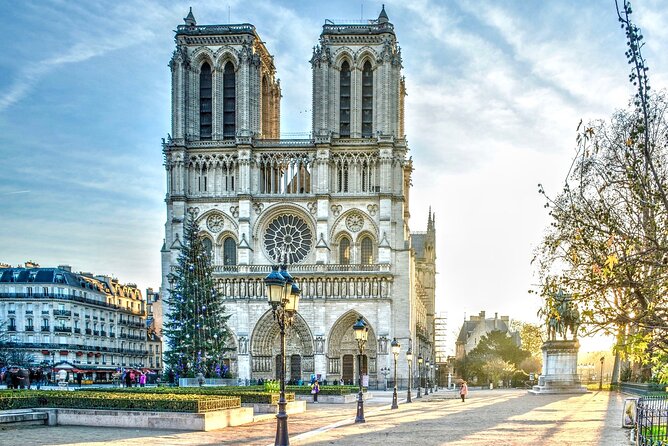
The Notre-Dame stop lasts about 12 minutes and focuses on the cathedral’s long story, from construction beginning in 1163 to the 2019 fire. The guide also connects the building with the French Revolution and Napoleon’s coronation, showing how Notre-Dame served changing political and religious powers.
You do not enter the cathedral on this tour. That is important when comparing it with a dedicated Notre-Dame visit. Here, the value is the explanation and the exterior view. You can use the tour to decide how much time you want to spend inside on another visit.
The cathedral is also a good place to hear how Parisian history is layered. Medieval craftsmanship, revolutionary upheaval, imperial ceremony, and recent restoration all meet at one façade. A good guide can make those periods easy to follow, and Sanna, Alberto, Ezra, and the other named guides are repeatedly praised for turning complicated history into clear stories.
Fontaine Saint-Michel, Pont Saint-Michel, and wartime traces
The route then returns toward the Fontaine Saint-Michel, a 19th-century fountain built during the major reconstruction of Paris. This stop helps explain the newer look of much of central Paris, where broad streets and grand public works replaced parts of the older city.
At Pont Saint-Michel, the guide points out bullet holes left from World War II. This is the kind of detail I value on a walking tour. It takes only a moment to see, but it connects a familiar bridge to the city’s wartime past.
You also hear why Paris was not destroyed during the war. The tour presents this as a story tied to the city’s survival, rather than offering only a list of military dates. Expect about 12 minutes here, with time spent standing while the guide speaks. Comfortable shoes help, but this is not a strenuous hill route.
More Walking Tours in Paris
- Paris Top Sights Half Day Walking Tour with a Fun Guide
★ 5.0 · 2,893 reviews - Montmartre Hidden Gems and Scenic Highlights Walking Tour
★ 5.0 · 2,684 reviews - Montmartre Hill French Gourmet Food and Wine Tasting Walking Tour
★ 5.0 · 2,588 reviews - Paris Île de la Cité and Notre-Dame Walking Tour With Crypt
★ 5.0 · 2,272 reviews
Place Dauphine and Henri IV beside the Seine
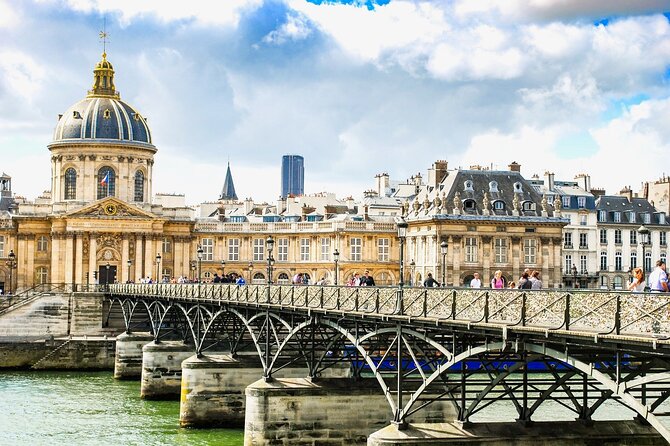
Place Dauphine offers a welcome change of mood. Its triangular square was one of the early projects associated with Henri IV, and its restaurants make it a pleasant place to return for lunch after the tour.
This is one of the route’s more attractive pauses. The square feels calmer than the major sight zones, and the guide can show you how royal planning shaped the island. You get about 12 minutes, so do not expect a meal stop during the official route. One guide has been praised for timing a coffee and croissant pause well, but you should not count on a formal café break every time.
Nearby, the equestrian statue of Henri IV faces the Seine. The guide uses the statue to explain the king’s short but important reign. You also get river views, which add breathing room after the denser history around Notre-Dame.
I like this pair of stops because Henri IV is not treated as a name to memorize. His projects become part of the physical city around you: a square, a bridge, a statue, and a royal vision for Paris.
Pont Neuf and the city’s oldest bridge
Despite its name, Pont Neuf is the oldest bridge in Paris. Henri IV completed it in 1607, and the bridge still offers strong views along the Seine and toward the city’s historic center.
The guide also tells stories about tooth pullers who worked around the bridge. This colorful detail brings you closer to everyday Paris, where public spaces were once filled with trades and spectacles very different from today’s cafés and tour groups.
This section is less about entering a landmark than learning to read the bridge. Look at how it opens views rather than acting as a narrow crossing. Listen for the guide’s explanation of why its design mattered to the city. The stop is short, but the bridge is one of the places where you will want to pause for photographs after the group continues.
The Louvre and Leonardo da Vinci’s Mona Lisa
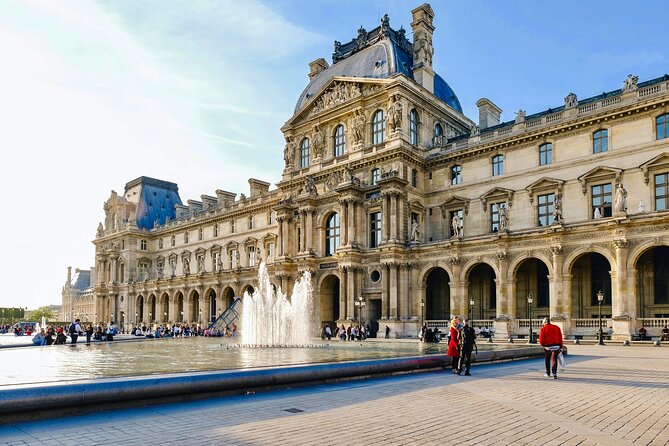
At the Louvre, the focus shifts from royal power to art and public fame. The guide explains how the Louvre began as a fortress and later became a palace, with Francis I playing a key role in laying its foundations as a royal center.
You also hear the true story of Leonardo da Vinci and why the Mona Lisa became so famous. This is useful even if you plan to visit the museum later, because it gives you a bit of background before you face the crowds and galleries.
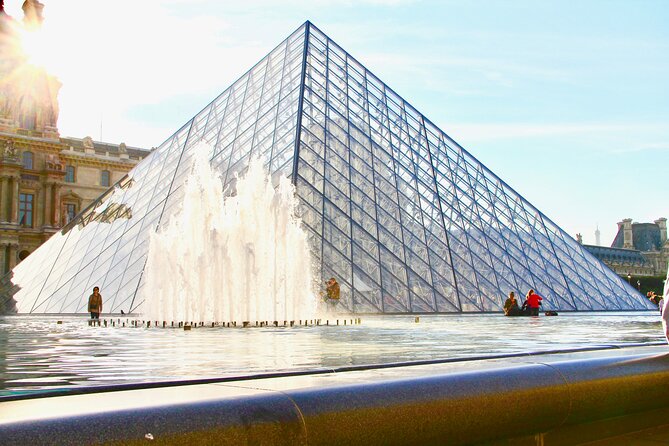
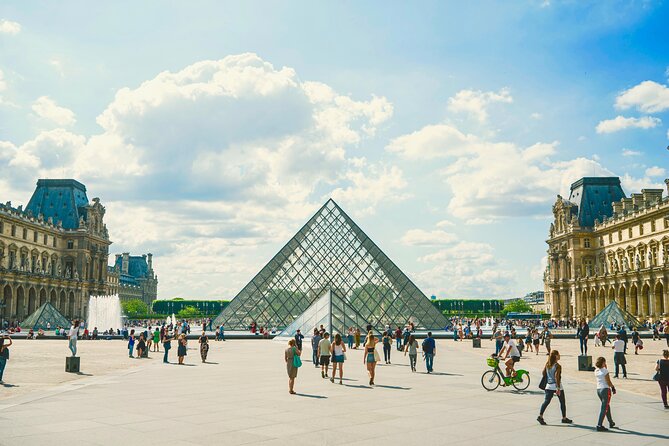
Again, museum admission is not included, and the group does not enter. You see the exterior and the glass pyramid, with about 12 minutes for the stop. That is enough to understand the Louvre’s scale and history, but not enough to deal with its collections.
The pyramid is a strong visual point in the route. It lets the guide discuss the tension between old royal architecture and modern design. If the Louvre is high on your list, schedule a separate visit. This walk is an introduction, not a substitute for museum time.
Napoleon’s arch and the Tuileries gardens
The Arc de Triomphe du Carrousel follows naturally. Built under Napoleon, it reflects his rise as master of Europe and his taste for monuments that linked military power with imperial glory.
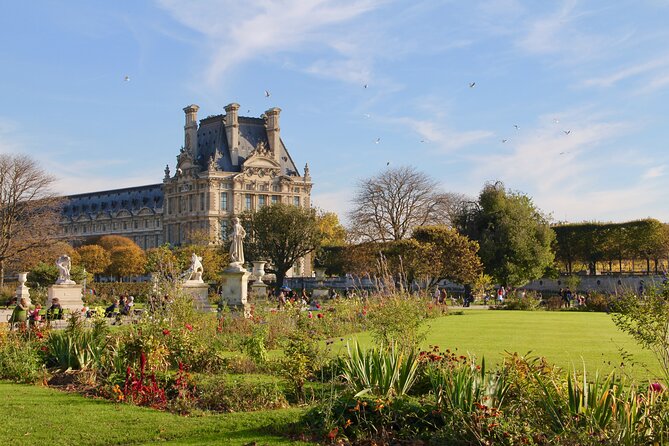
The nearby Tuileries Garden gives the route a softer finish. The garden began with a tile factory, then became a royal garden designed by the same garden planner associated with Versailles. Statues, sculptures, fountains, and long formal paths give you a clear sense of how royal design shaped public space.
The pace here may feel gentler than the earlier city streets. You can listen, look across the gardens, and take in the transition from palace grounds to public park. The official end point is the Tuileries Garden, at 75001 Paris.
This ending is useful. You are not dropped at an obscure side street. You can continue toward the Louvre, explore the gardens, or make your way onward through central Paris. It also gives you a good place to pause after more than two hours of standing and walking.
The Eiffel Tower view that closes the walk
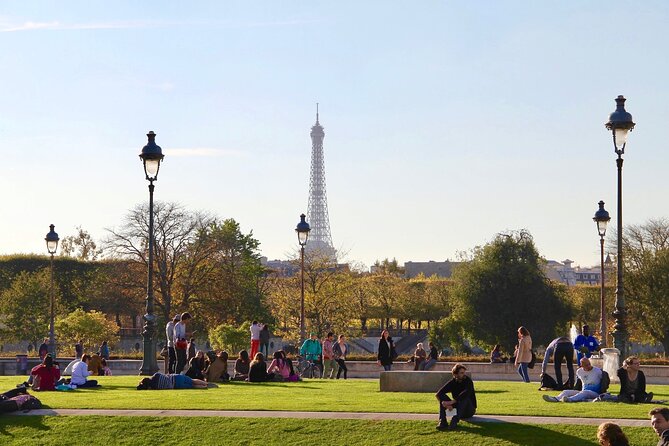
The final stop offers views of the Eiffel Tower from the Tuileries rather than a visit to the tower itself. The guide explains how Gustave Eiffel managed its construction for the 1889 exposition.
That distant view works well at the end because it connects the old city to modern engineering. You begin with ancient Paris on an island and finish by looking toward the city’s most recognizable 19th-century structure.
Do not book this tour expecting an Eiffel Tower entry, lift ride, or close-up architectural tour. The point is the view and the story. If you want to go to the tower, plan that separately.
The guide makes the difference
The route covers a lot of ground, but the guide determines how much of it stays with you. Alberto is praised for clear history, wit, and strong storytelling. Sanna is described as engaging, easy to understand, and good at answering questions. Ezra is noted for warmth, humor, and a willingness to continue conversation beyond the planned time.
Bruce used a microphone and amplifier effectively, which helped a group hear in busy areas. Kiara is also praised for making the tour fun and informative. The experience can vary by guide, but the repeated strengths are clear: friendly delivery, solid command of French history, and an effort to involve the whole group.
The maximum group size is 50. That is not intimate, so you may prefer to stay near the guide and keep an eye on crossings. The microphone helps, but a large group can still make questions and photographs less relaxed. Some groups have been around 22 to 25 people, while the published limit is higher.
Walking pace, weather, and what to bring
The route takes about two hours and 15 minutes, though one guide has extended the time to allow for questions. You will walk between stops and stand while the guide speaks. The terrain is generally flat and manageable, including for older walkers, but it is still a substantial period on your feet.
Use the restroom before meeting the group. A convenient bathroom break may not appear until near the Louvre or the end of the route. Wear shoes suited to pavement and bring water, especially if the weather is warm.
The tour requires good weather. If poor conditions cause cancellation, you are offered another date or a full refund. Paris rain can arrive without much warning, so a waterproof layer is sensible even when the forecast looks fair. The route can still be enjoyable in cold or wet weather, but your comfort will depend on proper clothing.
The price and the tip-based model
The listed booking price is $3.62 per group of up to nine people. That low amount should not lead you to think the service is entirely free. The guide’s income depends on tips, and contributions are accepted only through credit cards, debit cards, or electronic payment. VAT is added to those contributions.
I see the model as good value when you want a broad introduction without paying a large fixed fee. You can hear two hours of guided history, get a practical orientation, and decide which places deserve more of your own time.
You should also arrive ready to tip for the service you receive. Since no standard amount is provided, I would treat the booking price as an access charge and plan a separate electronic payment for the guide. Carrying only cash will not work for the stated payment system.
Who should book this Paris walk
I would choose this tour if you have limited time in Paris, want a history-focused introduction, or prefer to understand the city before tackling museums and major monuments. It also suits families with teenagers, first-time visitors, and older walkers who can manage a flat route at a steady pace.
You might skip it if your main goal is entering Notre-Dame or the Louvre. You should also look elsewhere if you want a small private group, a food tour, or a tour centered on one neighborhood rather than a broad city route.
Book it early if your dates are fixed. It is commonly reserved about three weeks ahead, and free cancellation is available up to 24 hours before the start time. Changes or cancellations inside that window are not accepted, and the stated refund terms do not apply to late cancellation.
Should you book it?
Yes, if you want a lively, efficient introduction to central Paris and are comfortable with the tip-based format. The route covers the city’s essential historical spine, from Ile de la Cité to the Tuileries, and the best guides add the jokes, small details, and clear explanations that make a walking tour worthwhile.
Just set your expectations correctly. This is an outdoor orientation, not a museum tour or a close-up visit to the Eiffel Tower. Meet at Fontaine Saint-Michel, wear good shoes, bring electronic payment for the tip, and stay near the guide in a larger group. For a first morning or first afternoon in Paris, it offers a useful map of the city and plenty of ideas for what to explore next.
FAQ
Where does the Paris City Center Walking Tour start?
The meeting point is Fontaine Saint-Michel at Place Saint-Michel, 75005 Paris, France.
Where does the tour end?
The stated end point is the Tuileries Garden in the 1st arrondissement, at 75001 Paris.
How long does the walking tour last?
The tour lasts approximately 2 hours and 15 minutes. The guide may allow extra time for questions and conversation.
Does the tour enter Notre-Dame Cathedral or the Louvre Museum?
No. The tour discusses both landmarks and views them from outside, but admission to Notre-Dame and the Louvre is not part of the experience.
How are tips paid?
Tips are accepted only through credit cards, debit cards, or electronic payments. VAT is added to contributions.
Is the tour available in languages other than English?
The tour is offered in English.
Can I cancel the booking?
You can cancel up to 24 hours before the experience start time for a full refund. Cancellations or changes made less than 24 hours before the start time are not accepted, and poor-weather cancellations offer either another date or a full refund.
Recently reviewed around Paris
- Louvre Private Tour – The Essentials and More with Expert Guide★ 5.0 · 227 reviews
- 2CV tour by night★ 5.0 · 55 reviews
- Eiffel Tower Second or Summit Floor Access by Elevator with Views★ 3.5 · 161 reviews
- The only Paris Wine Tasting experience you need to do – 2 hours★ 5.0 · 265 reviews
- 2 Hour Street-art Walk and Space Invaders Hunt in Paris★ 5.0 · 27 reviews
- 2 hour outdoor group activity in Paris: SAINT GERMAIN★ 5.0 · 48 reviews
- Sainte-Chapelle, Conciergerie & Palais de Justice Private Tour★ 5.0 · 72 reviews
- Private 2 – Hour Paris Landmarks Tour by Golf Cart Mini Moke★ 5.0 · 38 reviews
Walking Tours, compared.
Paris Top Sights Half Day Walking Tour with a Fun Guide
Read our review →
Montmartre Hidden Gems and Scenic Highlights Walking Tour
Read our review →
Montmartre Hill French Gourmet Food and Wine Tasting Walking Tour
Read our review →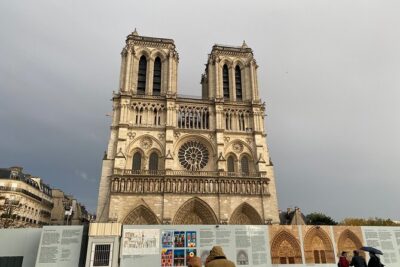
Paris Île de la Cité and Notre-Dame Walking Tour With Crypt
Read our review →
Montmartre Cheese, Wine & Pastry Guided Walking Tour
Read our review →
Paris in a Day: Louvre or Orsay, Eiffel Tower, City Walk & Cruise
Read our review →
Montmartre Highlights Walking Tour with a Local Guide
Read our review →
Browse the lists this tour appears in