
Reviewed · LOUVRE MUSEUM TOURS
Louvre & Mona Lisa Small Group Tour with Reserved Entry
The Louvre can swallow an entire day before you find the Mona Lisa. This three-hour guided route gives you a firm path through the palace and its greatest hits, from ancient sculpture to 19th-century French painting. You meet beside the Arc de Triomphe du Carrousel, then enter with reserved access rather than starting your visit in the ticket queue.
I like the small-group format, which keeps the guide close, and I like the headsets, especially when school groups and packed galleries make normal conversation difficult. The main drawback is pace: some guides pack in a great deal of art history, and one reported group spent about 20 minutes waiting to reach the Mona Lisa.
In This Review
- Key points at a glance
- Starting beside the Arc de Triomphe du Carrousel
- What reserved entry really saves you
- Through the Louvre’s medieval foundations
- Ancient sculpture, royal treasures, and Napoleon’s crown
- Meeting the Mona Lisa without losing the whole afternoon
- The French Wing and Liberty Leading the People
- Why the guide matters more than the gadget
- Three hours on your feet
- Is $115 a fair price?
- Should you book this Louvre tour?
- FAQ
- How long does the Louvre tour last?
- Where does the tour meet?
- Where does the tour finish?
- Is museum entry included?
- Does the tour include skip-the-line access?
- What should I bring?
- Is the tour suitable for wheelchair users?
Key points at a glance
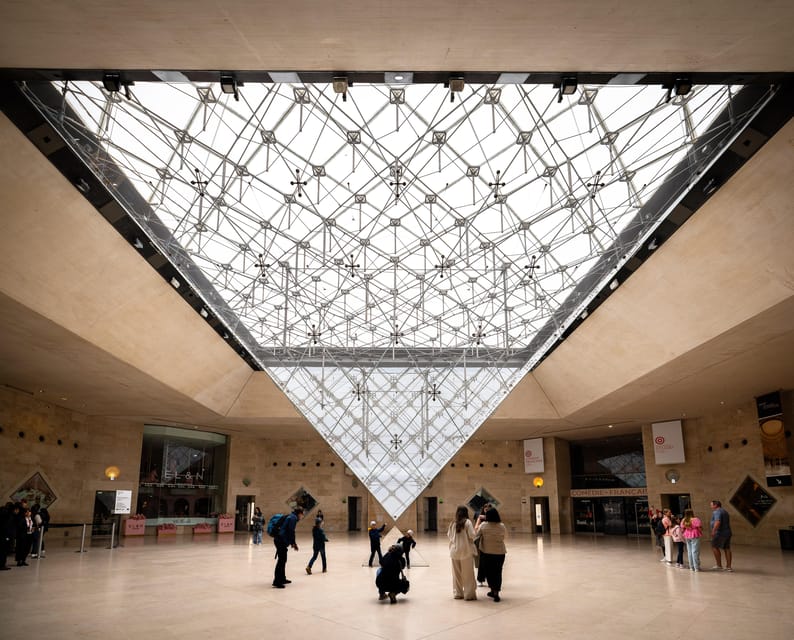
- Meet at the horse-drawn arch: Find the blue-clad staff beside the Arc de Triomphe du Carrousel, across from the Louvre Pyramid.
- See the Louvre’s essential works: The route includes the Mona Lisa, Winged Victory of Samothrace, Psyche and Cupid, and Liberty Leading the People.
- Get useful palace context: You’ll see the medieval foundations and learn how the Louvre changed from fortress to royal residence to museum.
- Stay with the guide: Headsets help you hear commentary through crowded rooms and busy corridors.
- Plan for a brisk three hours: This is a highlights tour, not a full museum visit. You will cover ground and spend much of the time on your feet.
- Know the bag rules: Large bags, umbrellas, luggage, and items over 55 by 35 by 20 centimeters are not allowed in the galleries.
Starting beside the Arc de Triomphe du Carrousel

The meeting point is easy to identify once you know what to look for. Stand with your back to the Louvre Pyramid entrance and face across the road. The Arc de Triomphe du Carrousel is the prominent arch topped by a horse-drawn chariot, just before the entrance to the Tuileries Garden.
The tour staff wear blue and wait to the left of the arch, beside the wall railing. Allow a few extra minutes to get your bearings. The Louvre area has several arches, courtyards, roads, and entrances, so relying on a quick glance at a map can lead you to the wrong side of the complex.
Bring your passport or ID card. Everyone entering the museum must pass security, even with a reserved time and ticket. That reserved access helps you avoid the ticket line, but it does not remove the security check.
The tour finishes at the Louvre Pyramid. That is useful if you want to continue on your own afterward, meet someone nearby, or head toward the Tuileries Garden. Hotel pickup and drop-off are not included, so you must make your own way to and from the meeting point.
Other Paris days travellers weigh against this one:
- Paris: Louvre Museum Timed-Entrance Ticket
★ 4.6 · 71,977 reviews - Disneyland® Paris 1-Day Ticket
★ 4.6 · 49,412 reviews - Paris: Versailles Palace and Gardens Full Access Ticket
★ 4.6 · 41,579 reviews
What reserved entry really saves you
The Louvre is not simply a large museum with one front door. It is a huge former palace with several entrances, long corridors, and crowds that shift throughout the day. A reserved entry time gives the tour a better chance of getting inside without wasting the first part of your visit in the ticket queue.
That does not mean you walk straight through every line. You still pass security, and the Mona Lisa can create its own queue inside the museum. One experience lost around 20 minutes waiting for access to Leonardo’s painting. The guide used that time to keep talking, but standing in line is still time taken from the three-hour tour.
This is why the tour’s reserved access is useful but not magical. It deals with one major bottleneck, the ticket line. It cannot control the crowds around the museum’s most famous painting, nor can it guarantee that every gallery will be quiet.
The ticket and reservation fee are included. The listed price is $115 per person, which is a serious outlay for three hours. I think the price makes sense if you want the Louvre’s major works explained in a logical order and would rather not spend precious Paris time figuring out the building alone.
The value is less clear if you already know the Louvre well, prefer to read labels at your own pace, or plan to spend a full day wandering independently. EU visitors aged 18 to 26 have free museum entry, although the booking still includes the reservation fee and guided service. For them, the tour’s main value is the guide, route, and time saved, not the admission ticket itself.
Through the Louvre’s medieval foundations
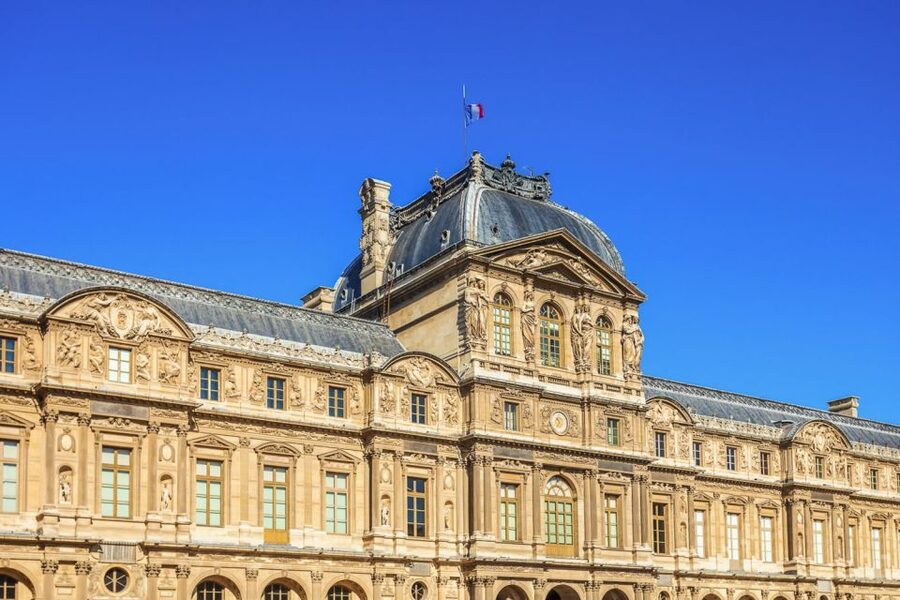
The tour begins inside the building’s oldest layers. The Louvre was once a defensive fortress, and its medieval foundations remain below the later palace rooms. Seeing these foundations helps you understand why the museum feels less like a single building and more like a collection of eras joined together.
This part is easy to skip when you visit alone. You may be focused on famous paintings and sculptures, while the structure itself becomes background. A guide can point out how the building changed and why the galleries do not always follow a simple modern museum plan.
The history lesson can be one of the best parts of the tour, though it depends on how much detail your guide gives. Caroline was praised for explaining the museum’s inner workings during a difficult visit affected by crowds, school groups, and a public workers’ strike. Other guides, including Severine and Addie, were praised for connecting the building’s changing uses with the art on display.
You should expect a lot of information in a short time. If you enjoy stories about kings, collections, and artists, that is a plus. If you mainly want to look, tell the guide early that you prefer shorter explanations and more gallery time. One person found the art history too heavy, while another valued precisely that level of detail.
Ancient sculpture, royal treasures, and Napoleon’s crown
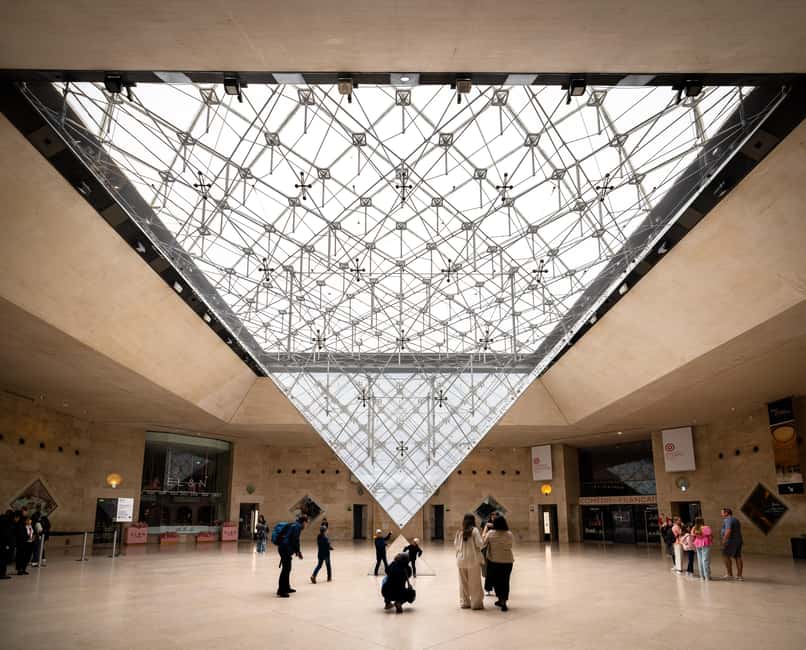
The route moves across several periods rather than staying with one type of art. You may pass from Greek and Roman sculpture to Renaissance painting, then into rooms filled with French royal decoration. That variety keeps the tour moving, but it also means you will not study every work for long.
The Winged Victory of Samothrace is one of the essential stops. This 2nd-century B.C. sculpture sits dramatically at the top of the Daru staircase, where its wings and forward motion make a strong impression even in a crowded museum. The work has no head or arms, yet its pose still suggests movement and triumph. The guide’s explanation gives you a better chance of noticing the sculpture’s setting and physical effect, rather than treating it as another famous object to photograph.
Antonio Canova’s Psyche and Cupid offers a different mood. Its polished marble and delicate pose reward a slower look, even if the tour schedule is tight. You will likely appreciate hearing how the figures are arranged and what makes the sculpture feel so light despite its material.
The royal rooms bring a change of scale. Napoleon’s crown and the treasures associated with King Louis XV show the public side of power, ceremony, and wealth. These displays help balance the famous paintings and ancient statues with objects tied to French political life.
The tour also includes references to the 450 B.C. ancient world and reaches works from the 19th century. In three hours, you get a broad sweep rather than a specialist’s study. That is the right approach for a first Louvre visit, especially if you want a clear framework before returning on your own.
A different way to spend the day, same corner of France:
- Paris: Evening River Cruise with Music
★ 4.4 · 22,721 reviews - Paris: Eiffel Tower Entry Ticket with Optional Summit Access
★ 4.4 · 20,035 reviews - Paris: Eiffel Tower Summit or Second Floor Access
★ 4.3 · 17,248 reviews - Paris: Louvre Guided Tour with Reserved Access & Boat Cruise
★ 4.3 · 16,353 reviews
Meeting the Mona Lisa without losing the whole afternoon
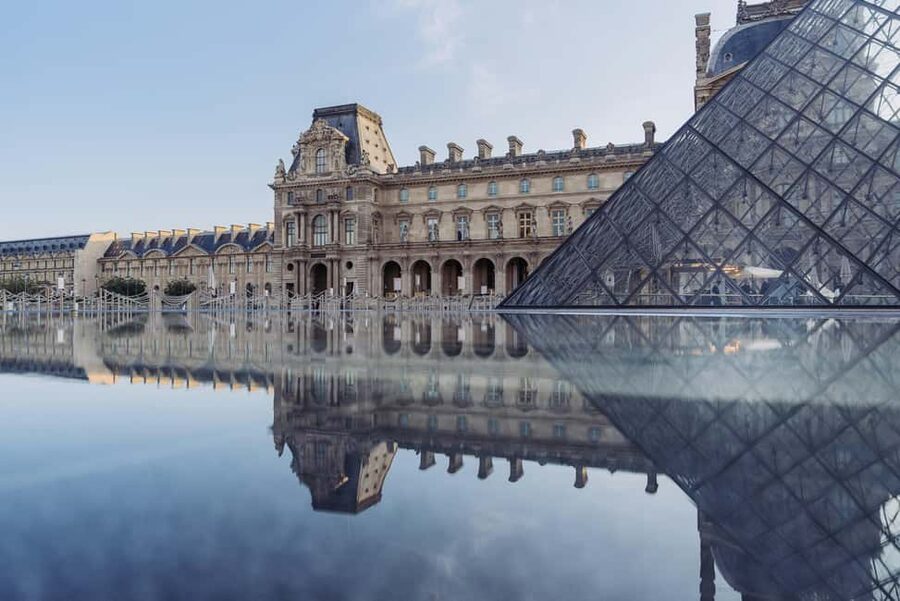
Leonardo da Vinci’s Mona Lisa is the stop most people have in mind when they book. You will see the painting, but you should adjust your expectations. The room can be crowded, and the viewing area may involve a wait, a barrier, and a short turn near the front.
The mysterious smile is worth seeing, but the real benefit of a guide is the context around it. You can learn why the work became so famous, what to look for in the face and landscape, and how to view it when you have only a little time.
The Mona Lisa stop can also expose the tour’s main weakness. If the group waits in a slow-moving line during the scheduled tour, the guide has less time for other rooms. One practical improvement would be to finish the formal tour at the painting and let people remain afterward, but that is not how every departure is handled.
Crowds can change the experience from day to day. An English-speaking guide with a headset makes the wait more useful, but you should still regard the Mona Lisa as one part of the visit, not the entire reason to pay for a guided tour. The Louvre contains far larger paintings, stronger architectural spaces, and sculptures that may give you more room to look.
The French Wing and Liberty Leading the People
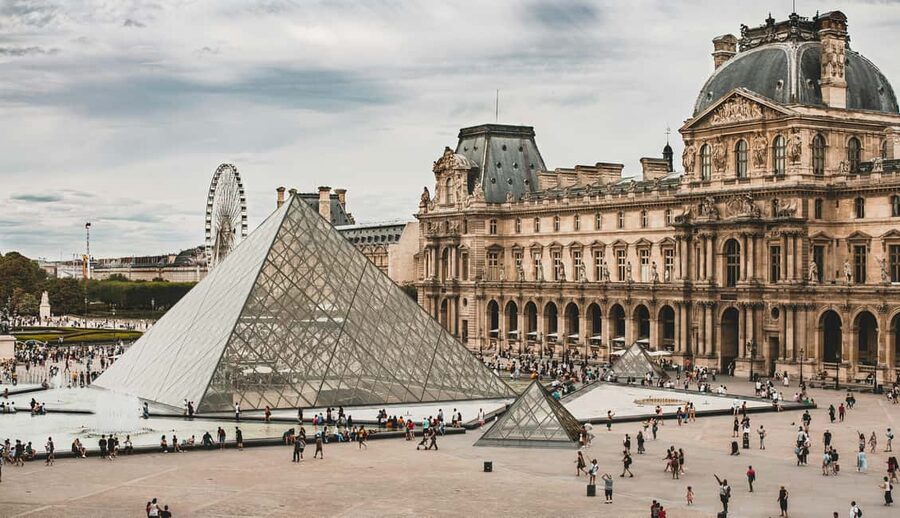
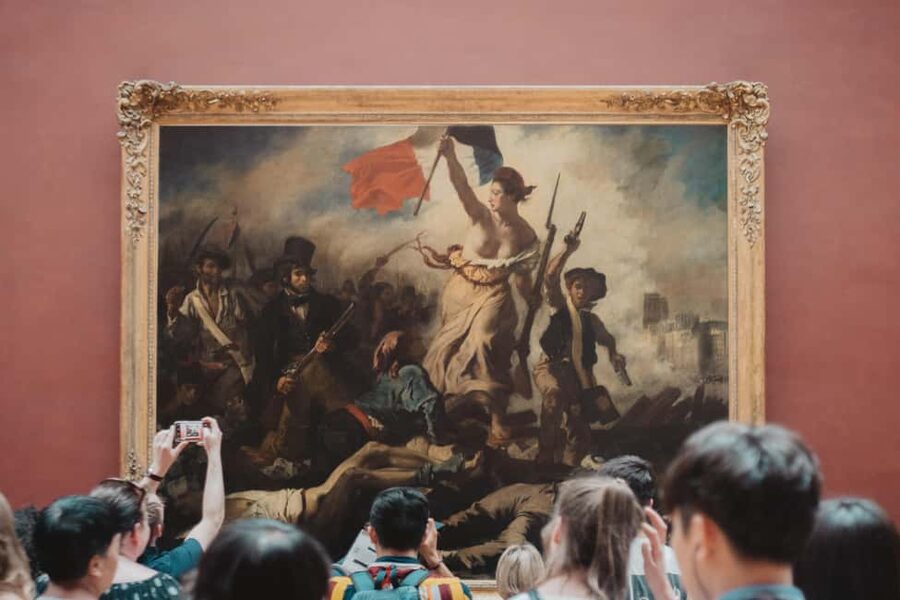
The French Wing brings you to Eugène Delacroix’s Liberty Leading the People, one of the museum’s major 19th-century paintings. Its allegorical figure, raised flag, and chaotic scene turn a political uprising into a powerful national image.
A guide can make this stop more rewarding by explaining the people in the foreground, the symbolic role of Liberty, and the painting’s place in French art. This is also where a fast tour can feel frustrating. The work deserves time, but three hours must cover a large museum, and a busy gallery may limit how long the group can stand in front of it.
Crowds are a real factor around important paintings. One person noted that school groups led the guide to bypass some works, then returned independently to see them. That is sensible advice: keep track of the rooms you miss, and ask the guide where you can find them after the tour.
The guide may also adjust the order or emphasis to suit the group. One experience included a willingness to accommodate interests, which is useful if your party cares more about sculpture, French painting, or royal rooms than ancient art. Do not expect a private custom tour, but a small group gives you a better chance to ask.
Why the guide matters more than the gadget
The Louvre offers ways to visit without a live guide, including audio devices and self-guided tools. Those can work well if you like choosing your own route. I would choose this tour when you want another person to make decisions for you and explain what you are seeing before the museum becomes overwhelming.
Several guides received especially warm praise for their approach. Omar was described as engaging, humorous, and passionate, including for someone who was not especially interested in museums. Maxim kept the route moving while explaining the art, and Caroline helped a group stay calm during crowds and a strike.
Addie was praised for energy and clear explanations, while Annalise was noted for her enthusiasm. Severine brought a lively mix of Greek and Roman sculpture, Renaissance painting, and information about the building. You cannot choose your guide in advance from the information provided, but these examples show the kind of live presentation the tour aims to provide.
The headset is more than a small convenience. In a room full of visitors, a guide speaking at normal volume can easily disappear. With an earpiece, you can stand slightly back, look at the work, and still follow the explanation. It also lets the guide keep the group moving without repeatedly stopping to gather everyone around.
The tradeoff is that some presentations may feel too dense. You are not just being led from room to room. You may hear names, dates, artistic techniques, royal connections, and competing interpretations. If that sounds tiring, say so at the start and use the stops to decide which works deserve your own extra time later.
Three hours on your feet
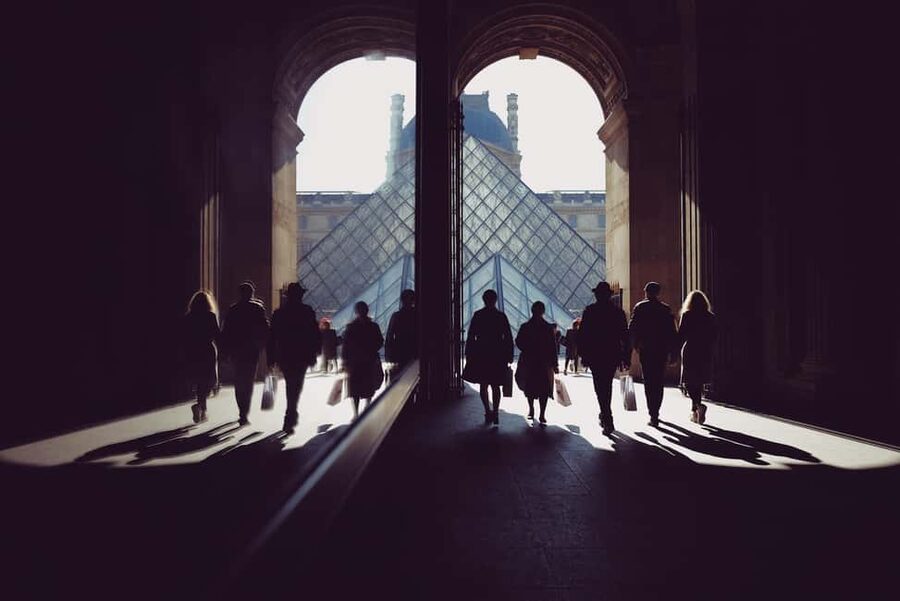
Three hours is a good length for a first Louvre orientation. It is long enough to reach the major highlights, yet short enough to leave room for lunch, the Tuileries, or another Paris sight. The tour is not physically extreme, but expect plenty of walking and standing.
One useful tip is to take an open seat whenever one appears. The Louvre has places to pause, but you should not assume the group will stop often or for long. Comfortable shoes will help, especially if you plan to continue sightseeing afterward.
The group is advertised at 12 people or fewer. That size should give you a more personal experience than a large coach-style group, and the guide can usually answer questions without losing control of the route. One person found the actual group larger than advertised, so I would treat 12 as the stated maximum rather than an absolute guarantee.
The tour is conducted in English. It is best for adults, older children, first-time Louvre visitors, and anyone who wants the famous works placed in context. It is not suitable for wheelchair users, and baby strollers are not allowed. Large bags and umbrellas must go to the free bag check, while items over 55 by 35 by 20 centimeters cannot enter the museum.
Is $115 a fair price?
At $115 per person, you are paying for four things: the English-speaking guide, reserved museum access, the entry ticket and reservation fee, and a three-hour route through a difficult building. The admission ticket is listed as 22 euros, with a 70-euro reservation fee per group included in the booking.
I see the strongest value for a short Paris trip. If you have only one chance at the Louvre, a guide can prevent you from losing an hour to wrong turns, crowded staircases, and indecision. The route also gives you a useful first look at works that would take days to find and understand alone.
I see weaker value for repeat visitors or art specialists. You will move at the group’s speed, hear material you may already know, and possibly spend part of the tour waiting at the Mona Lisa. The best plan may be to use the tour as your introduction, then return independently to the rooms that caught your interest.
Free cancellation up to 24 hours before the start and the option to reserve now and pay later add flexibility. Check the available starting times before booking, since the exact departure schedule is not fixed here.
Should you book this Louvre tour?
Book it if you want the Louvre’s major sights without trying to design your own route. The combination of reserved access, a headset, and a live English-speaking guide is especially useful for first-time visitors who want the Mona Lisa, Winged Victory, Canova, Napoleon’s crown, and Delacroix in one organized visit.
I would skip it if you want a slow, quiet look at individual works or already know the museum. Also think twice if you dislike art history talks, since some guides give a lot of information. For most first visits, though, three focused hours can be a sensible way to meet the Louvre before deciding where to spend more time on your own.
FAQ
How long does the Louvre tour last?
The guided tour lasts three hours.
Where does the tour meet?
Meet the blue-clad staff beside the Arc de Triomphe du Carrousel, to the left of the arch along the wall railing. The arch is across from the Louvre Pyramid, near the entrance to the Tuileries Garden.
Where does the tour finish?
The tour finishes at the Louvre Pyramid.
Is museum entry included?
Yes. The entrance ticket and reservation fee are included in the price. The listed museum ticket price is 22 euros, and the reservation fee is 70 euros per group.
Does the tour include skip-the-line access?
It includes reserved access and lets you skip the ticket line. You must still pass museum security, and you may encounter a separate wait near the Mona Lisa.
What should I bring?
Bring your passport or ID card. Large bags, umbrellas, luggage, and items larger than 55 by 35 by 20 centimeters are not permitted in the museum galleries.
Is the tour suitable for wheelchair users?
No. The activity is not suitable for wheelchair users. Baby strollers are also not allowed.
Recently reviewed around Paris
- Louvre Private Tour – The Essentials and More with Expert Guide★ 5.0 · 227 reviews
- 2CV tour by night★ 5.0 · 55 reviews
- Eiffel Tower Second or Summit Floor Access by Elevator with Views★ 3.5 · 161 reviews
- The only Paris Wine Tasting experience you need to do – 2 hours★ 5.0 · 265 reviews
- 2 Hour Street-art Walk and Space Invaders Hunt in Paris★ 5.0 · 27 reviews
- 2 hour outdoor group activity in Paris: SAINT GERMAIN★ 5.0 · 48 reviews
- Sainte-Chapelle, Conciergerie & Palais de Justice Private Tour★ 5.0 · 72 reviews
- Private 2 – Hour Paris Landmarks Tour by Golf Cart Mini Moke★ 5.0 · 38 reviews
Louvre Museum Tours, compared.


Louvre Guided Tour with Reserved Access & Boat Cruise
Read our review →
Louvre Museum Masterpieces Guided Tour with Access
Read our review →
Louvre Museum Entry Ticket With Host and River Cruise
Read our review →
Priority Access Louvre with Host -Direct to Mona Lisa
Read our review →
Mona Lisa & Louvre Masterpieces Tour with Reserved Access
Read our review →
Louvre Museum – Exclusive Guided Tour (Entry Included)
Read our review →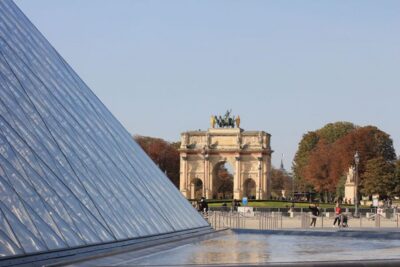
Louvre Reserved Ticket and River Cruise Combo
Read our review →Browse the lists this tour appears in