
Reviewed · LOUVRE MUSEUM TOURS
Louvre Museum Child-Friendly Private Tour for Families
The Louvre can overwhelm adults, let alone children. This private two-hour tour gives your family a clear route through the former palace, with skip-the-ticket-line entry and stories built around famous works, Egyptian gods, French history, and the mysterious Mona Lisa.
I like two things right away: the guide can adjust the pace and explanations to your children, and the route mixes famous paintings with sculpture, ancient Egypt, and the building itself. Guides such as Tatiana, Carole, Joanna, and Anna have been praised for keeping children aged 9 to 15 involved.
The main drawback is the price: $376 per person is a serious outlay for two hours, especially for a larger family. Children under 6 are free, but the tour is recommended for ages over 5, and very young children may not stay interested for the full visit.
In This Review
- Key points to know before you book
- Starting at the Louvre Pyramid
- A two-hour route that keeps the Louvre manageable
- The Mona Lisa without the usual confusion
- Egyptian gods and stories children can follow
- Renaissance paintings, dramatic sculpture, and French art
- What the private format changes
- Is two hours enough?
- Price, ticket access, and what you receive
- Accessibility and practical preparation
- Who should book this Louvre visit?
- Should you book it?
- FAQ
- Where do you meet for the Louvre family tour?
- How long does the tour last?
- What languages are available?
- Are Louvre entrance tickets included?
- Is the tour suitable for young children?
- Can wheelchair users join the tour?
Key points to know before you book
- Meet beneath the Arc de Triomphe du Carrousel: You’ll meet outside, facing the Louvre Pyramid, at Place du Carrousel.
- A focused route through a huge museum: Two hours gives you a strong first look, not a complete Louvre visit.
- Child-friendly storytelling: The tour uses art, myths, codes, and palace history to keep young minds active.
- Major works are included: Expect the Mona Lisa, Egyptian material, Michelangelo, Ingres, Delacroix, Ghirlandaio, Canova, Bernini, and Géricault.
- Private means personal attention: Your guide can respond to your children’s questions and adjust the presentation to the group.
- Plan for comfort: Wear good shoes, bring identification, and leave large luggage behind.
Starting at the Louvre Pyramid
Your meeting point is the Arc de Triomphe du Carrousel, outside the Louvre and facing the glass Pyramid. This is a useful spot because it gives you a clear visual marker in a broad public area, though you should still allow time to find the guide and gather the family.
The opening view helps explain the Louvre before you enter. The present-day museum occupies a former palace, while the site began as a fortress in the 12th century. That change from defensive stronghold to royal residence to public museum gives children a simple story to follow: this is not just a building filled with paintings, but a place that changed along with France.
Your guide then takes you inside using pre-purchased entrance tickets. That means you can avoid the regular ticket line, which matters with children. It does not mean every part of the museum will be quiet or that you can rush straight to each masterpiece. The Louvre remains a large, busy institution, and the Mona Lisa area can be especially crowded.
More Paris museums and collections:
- Paris: Louvre Museum Timed-Entrance Ticket
★ 4.6 · 71,977 reviews - Louvre Museum Masterpieces Guided Tour with Access
★ 4.5 · 12,023 reviews - Paris: Louvre Museum Entry Ticket With Host and River Cruise
★ 4.6 · 9,926 reviews
A two-hour route that keeps the Louvre manageable
A private visit works best when you accept that you are seeing highlights, not every gallery. The Louvre is too large for a meaningful family visit in one short session, so a selected route is a benefit rather than a compromise.
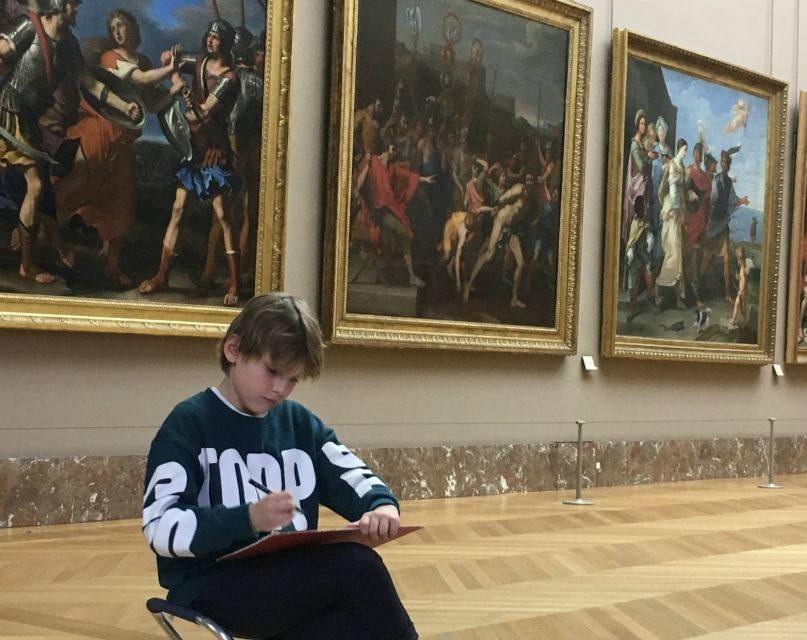
The guide’s job is to connect the objects. Instead of treating each painting as a separate stop, the tour can move between art, mythology, architecture, and French history. That gives children several ways to stay interested. One child may respond to Egyptian gods, another to the Mona Lisa, and another to the drama of a sculpture or the story of a former royal palace.
The route includes works linked to Ghirlandaio, Ingres, Michelangelo, Leonardo da Vinci, Bernini, Delacroix, Canova, and Géricault. You should not expect a full lecture on each artist. The value is in seeing a useful range of major works while a guide points out what deserves your attention and why.
Families with children aged 9 to 15 appear to be the best fit. A 10-year-old and a 13-year-old, for example, can follow explanations about technique, symbolism, and French history without needing every point reduced to a game. A 15-year-old may also appreciate the links between art and politics that are easy to miss when you visit alone.
The Mona Lisa without the usual confusion
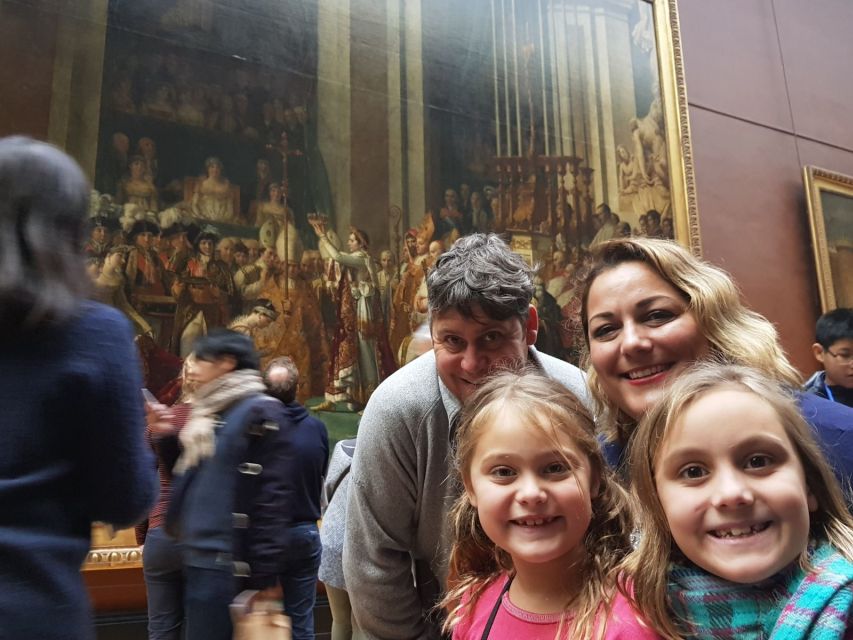
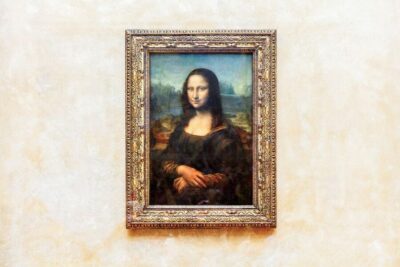
Leonardo da Vinci’s Mona Lisa is the headline stop. Seeing it is simple in theory, but the room can feel confusing if you arrive without a plan. The guide helps you understand why the portrait matters and gives the family a story to carry away, rather than leaving you with a quick look over a crowd of heads.
The tour also introduces the Da Vinci Code connection. This is best viewed as a playful doorway into questions about Leonardo, mystery, and the way popular culture has shaped modern interest in the painting. Children do not need a background in Renaissance art to enjoy that angle.
Keep your expectations sensible. You may get a clear view of the work, but you should not expect a calm, private encounter with it. The private part refers to your guide and group, not exclusive access to the painting. This is still one of the Louvre’s busiest rooms.
Egyptian gods and stories children can follow
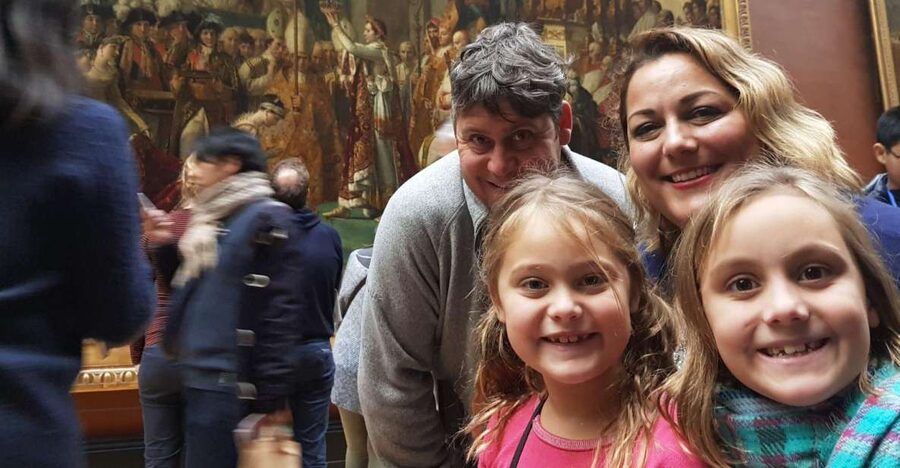
The Egyptian material gives the tour a welcome change of pace. Paintings can ask children to look closely and listen for details, while ancient Egyptian objects and stories offer gods, symbols, and visual clues that are easier to turn into a conversation.
The supplied details specifically mention stories about Egyptian gods and hieroglyphs. That makes this section useful for children who enjoy puzzles and symbols. You can ask your child to look for repeated signs, figures, or poses, then let the guide explain what those details meant.
The three-star rating from one French booking appears to refer simply to les hiéroglyphes, suggesting that not every short piece of feedback gives a full picture of the visit. Still, the broader pattern is clear: families have found the Egyptian material a good way to hold children’s attention.
More Paris trips worth a second look
- Paris: Private Photoshoot at the Eiffel Tower
★ 4.7 · 2,636 reviews - Top Private Cruises in Paris with French Champagne and surprises
★ 5.0 · 1,553 reviews - Private Paris Airport Arrival Transfer – CDG & ORLY Airports
★ 4.5 · 1,119 reviews - Paris Private Arrival Transfer from Charles de Gaulle (CDG) or Orly (ORY)
★ 4.0 · 1,084 reviews
Renaissance paintings, dramatic sculpture, and French art
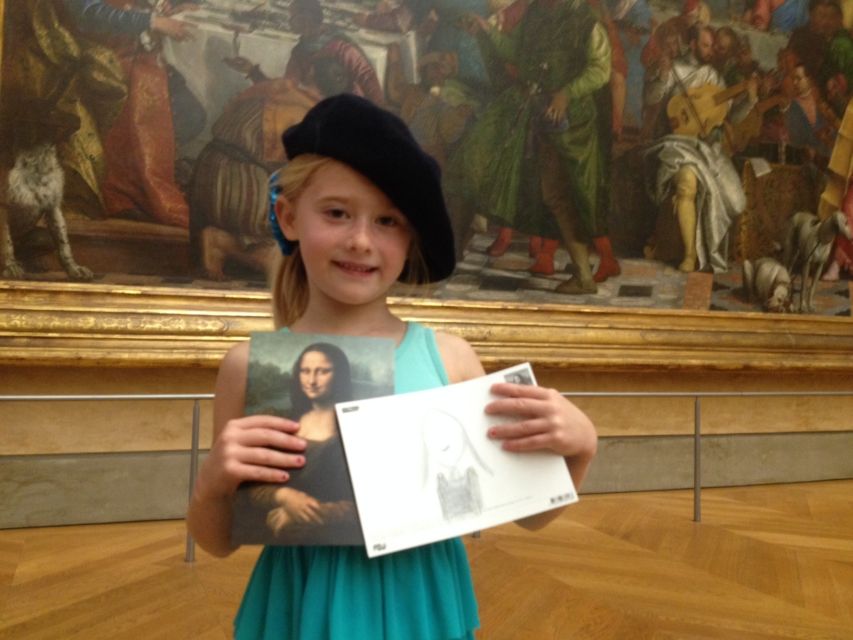
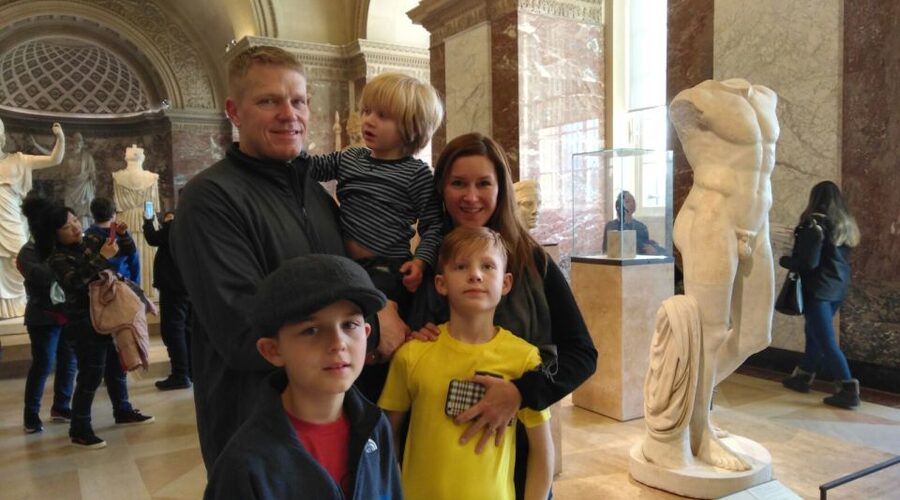
The art selection is broad. Ghirlandaio and Leonardo bring Renaissance painting into the route, while Michelangelo, Bernini, and Canova add sculpture with a very different feel. Children often respond well to sculpture because it is three-dimensional and easier to discuss through movement, posture, faces, and physical detail.
Ingres, Delacroix, and Géricault bring in major French painting. These works can help your guide explain how artists used color, line, scale, and emotion in different periods. You may not leave able to place every painting in art history, but you should come away with a clearer sense that the Louvre is not just a hall of famous names.
The guide also explains parts of the palace itself. That is important. If children are only asked to look at paintings for two hours, attention can fade. The building offers another subject: fortress walls, royal rooms, grand spaces, and the long transformation of the site.
What the private format changes
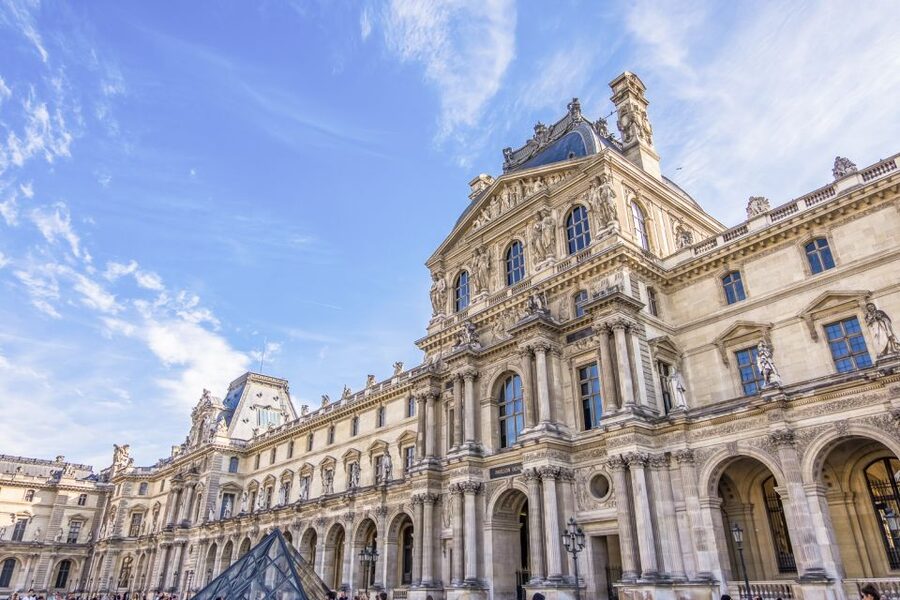
A private group is the strongest reason to choose this experience over a standard group tour. Your guide is working with your family rather than a mixed crowd, so questions from a 10-year-old do not have to compete with a large group’s schedule.
This also makes it easier to adjust the presentation. Carole was praised for shaping the route to suit a family, while Joanna kept a 10-year-old and a 13-year-old involved. Tatiana was noted for making the museum understandable and appealing to children, and Anna focused on helping a nine-year-old understand while having fun.
Those details matter more than a long list of artworks. A guide who notices when a child is losing focus can shorten an explanation, ask a question, or switch from painting to sculpture. You should still tell the guide at the start about your children’s ages and interests. The younger the group, the more useful that information becomes.
The private format also has a practical downside: cost. At $376 per person, a family of four would pay $1,504 before meals or other extras. That may be fair for a family that values time, personal attention, and a structured first visit, but it is not the economical choice for everyone.
Is two hours enough?
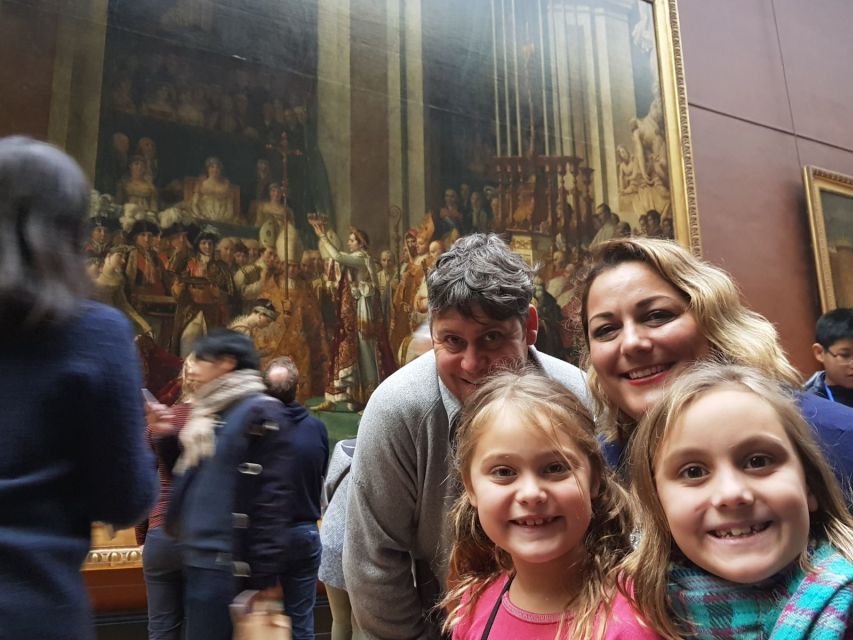
Two hours is enough to see selected highlights and get your bearings inside the Louvre. It is not enough to explore the major wings at a slow pace or spend long periods with each artist.
I see the short duration as a good family choice. Children often do better with a clear finish line, and you can plan something else afterward without turning the day into a museum marathon. One family’s guide, Carole, continued for almost three hours, but that was an unusually extended visit rather than the stated duration you should count on.
The pace may feel brisk if your family wants to stop for every work. It may feel just right if your goal is to see the famous pieces, hear the key stories, and leave before the museum becomes tiring. Tell the guide if your children need a short pause or a slower explanation, but remember that the Louvre’s size limits what can fit into the session.
Price, ticket access, and what you receive
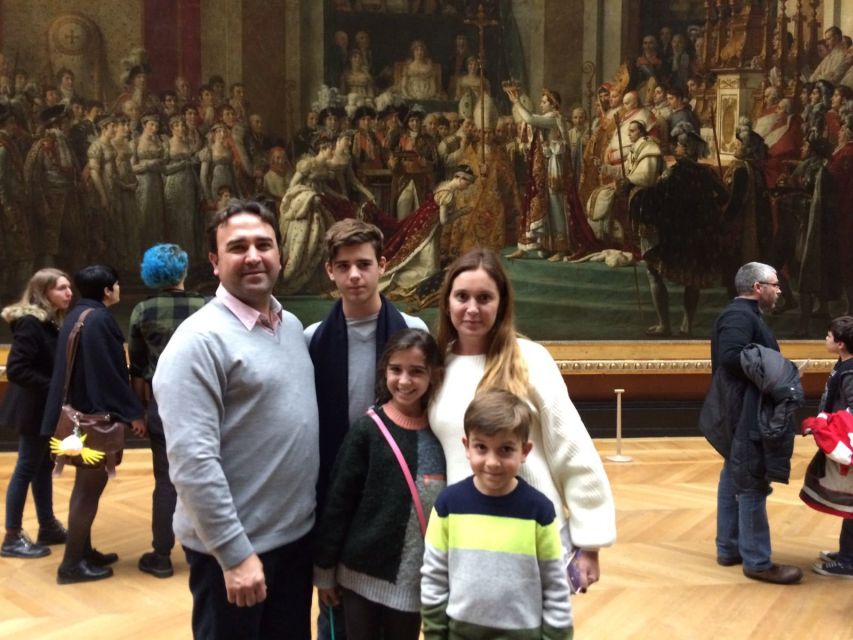
The $376 per-person price includes the entrance ticket and a live guide in English or French. Meals and extras are not included, so you should treat this as a museum service rather than an all-day package.
The ticket access has real value when you are visiting with children. Saving the regular ticket-line wait can preserve energy for the galleries, though you should not read skip the line as a promise of no waiting anywhere inside. Security and crowd movement can still affect your timing.
For a family of adults and older children, the price is easiest to justify when the Louvre is a priority and you want a strong first visit. It is harder to justify if your children are unlikely to listen, if you plan to return several times, or if you are happy to wander without seeing the major works.
Children under 6 are free, but the activity is not really designed around preschool attention spans. The tour is recommended for children over 5, and the practical sweet spot appears to be school-age children who can handle stories and discussion for two hours.
Accessibility and practical preparation
The tour is wheelchair accessible. You should still contact the provider if your family has specific access needs, since the museum is large and the route may cover substantial indoor ground.
Wear comfortable shoes. That advice is not decorative: a two-hour museum visit involves standing and walking, and children become tired faster when their feet hurt. Bring a passport or other identification, as the activity information asks you to have one with you.
Do not bring pets or large bags. Items larger than 55 by 35 by 20 centimeters are not permitted in the museum, so leave suitcases and oversized daypacks elsewhere. A small, practical bag is the safer choice.
You can cancel up to 24 hours before the activity for a full refund, and you can reserve now and pay later. Those terms are useful when your Paris schedule is still changing, but they do not remove the need to arrive at the correct outdoor meeting point.
Who should book this Louvre visit?
I would choose this tour for a family visiting the Louvre for the first time, especially with children around 9 to 15. It is also a good fit if one adult in the group feels unsure about art and wants someone else to select the important stops and explain them in plain language.
The tour suits families who want a private guide, a short route, and a balance of paintings, sculpture, Egyptian stories, and palace history. It is less suitable for toddlers, serious art students seeking long discussions, or budget-conscious families who are comfortable planning their own visit.
The guide quality is central. Names connected with especially strong family visits include Tatiana, Carole, Joanna, and Anna. Guides can vary, so the experience will depend on who leads your group, but the repeated praise for personal attention is a good sign.
Should you book it?
Book it if your family wants the Louvre to feel understandable rather than endless. The skip-the-ticket-line entry, private setting, and child-focused storytelling solve three common problems at once: waiting, wandering, and losing the children halfway through the museum.
Skip it if $376 per person would put pressure on the rest of your Paris plans, or if your children are under 6 and unlikely to stay involved. For older children who can listen, ask questions, and enjoy a mystery or two, this is a practical way to meet the Mona Lisa and see far more than you would by simply following the biggest crowd.
FAQ
Where do you meet for the Louvre family tour?
You meet at the Arc de Triomphe du Carrousel, outside the Louvre Museum and facing the Louvre Pyramid.
How long does the tour last?
The stated duration is two hours. Starting times vary, so you need to check availability when booking.
What languages are available?
The live guide is available in English or French.
Are Louvre entrance tickets included?
Yes. Entrance tickets and the guide are included. Meals and extras are not included.
Is the tour suitable for young children?
The tour is recommended for children over 5 years old. Children under 6 are free, but the activity information notes that younger children may have difficulty staying engaged.
Can wheelchair users join the tour?
Yes. The activity is listed as wheelchair accessible.
Recently reviewed around Paris
- Louvre Private Tour – The Essentials and More with Expert Guide★ 5.0 · 227 reviews
- 2CV tour by night★ 5.0 · 55 reviews
- Eiffel Tower Second or Summit Floor Access by Elevator with Views★ 3.5 · 161 reviews
- The only Paris Wine Tasting experience you need to do – 2 hours★ 5.0 · 265 reviews
- 2 Hour Street-art Walk and Space Invaders Hunt in Paris★ 5.0 · 27 reviews
- 2 hour outdoor group activity in Paris: SAINT GERMAIN★ 5.0 · 48 reviews
- Sainte-Chapelle, Conciergerie & Palais de Justice Private Tour★ 5.0 · 72 reviews
- Private 2 – Hour Paris Landmarks Tour by Golf Cart Mini Moke★ 5.0 · 38 reviews
Louvre Museum Tours, compared.

Louvre Guided Tour with Reserved Access & Boat Cruise
Read our review →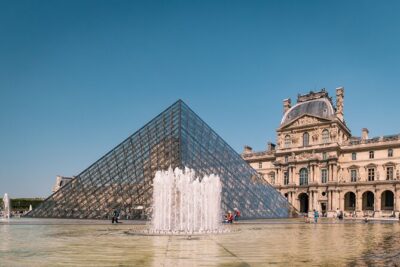
Louvre Museum Masterpieces Guided Tour with Access
Read our review →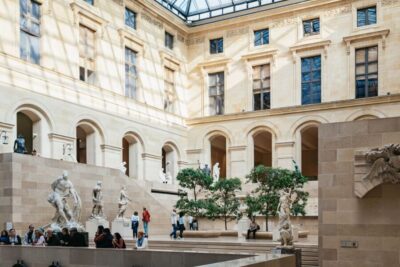
Louvre Museum Entry Ticket With Host and River Cruise
Read our review →
Priority Access Louvre with Host -Direct to Mona Lisa
Read our review →
Mona Lisa & Louvre Masterpieces Tour with Reserved Access
Read our review →
Louvre Museum – Exclusive Guided Tour (Entry Included)
Read our review →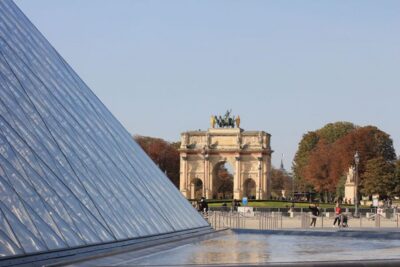
Louvre Reserved Ticket and River Cruise Combo
Read our review →Browse the lists this tour appears in