
Reviewed · LOUVRE MUSEUM TOURS
Louvre Museum: Mona Lisa Without the Crowds Last Entry Tour
The best part of this Louvre tour comes near the end: you reach the Mona Lisa at closing time, when the room is usually calmer and you can get a much better look at Leonardo’s famously small painting. You are not left to wander the world’s largest museum alone. A guide leads you through a brisk route of major works before bringing you to La Joconde.
I like two things right away. The late timing gives you a better chance of seeing the Mona Lisa without the usual crush, and the three-hour route brings order to a museum that can otherwise feel like an art-filled maze. I also like the small-group limit of 15 people, plus headsets that help you hear the guide in busy galleries.
The trade-off is that this is a highlights tour, not a complete Louvre visit. You will walk at a moderate pace, and the museum may change which rooms are open. The meeting point can also be confusing because it is at the Arc de Triomphe du Carrousel, not the better-known Arc de Triomphe at the top of the Champs-Élysées.
In This Review
- Key points at a glance
- Why the last entry matters at the Louvre
- Finding the Arc de Triomphe du Carrousel meeting point
- Starting beneath the Louvre palace
- Greek sculpture: Venus de Milo and Winged Victory
- Michelangelo, Cupid and Psyche, and the power of sculpture
- Painting, politics, and French national memory
- The Raft of Medusa and Romantic drama
- The Crown Jewels and the palace on display
- The final 30 minutes with Mona Lisa
- The guides make or break the experience
- Is $97 a fair price?
- Who should book this Louvre tour?
- Should you book it?
- FAQ
- How long is the Louvre Mona Lisa Last Entry Tour?
- What language is the tour conducted in?
- Where does the tour meet?
- How early should I arrive?
- Does the tour include skip-the-line Louvre entry?
- What artworks are included on the route?
- Can wheelchair users or visitors with strollers join?
- Can I cancel the booking?
Key points at a glance
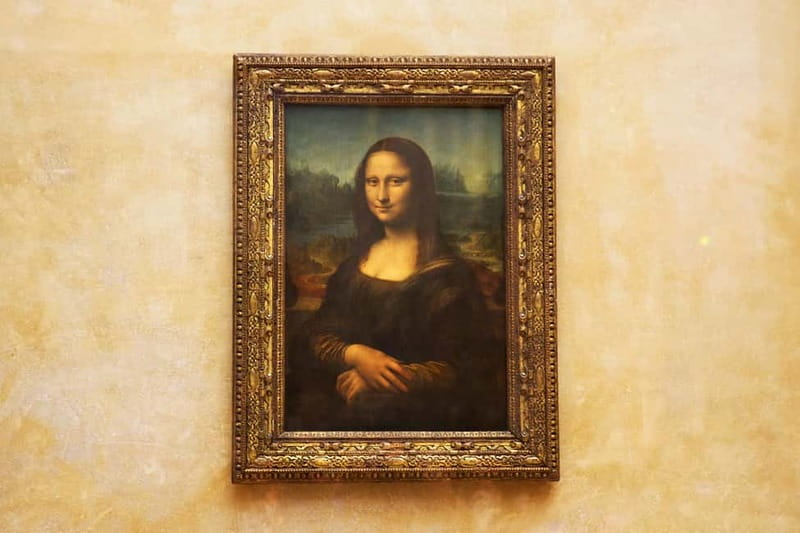
- Mona Lisa at the end: Reach Leonardo’s portrait during the museum’s last entry period, when the room may feel less packed.
- A carefully chosen Louvre route: See the Venus de Milo, Winged Victory of Samothrace, Michelangelo’s Slaves, Liberty Leading the People, The Raft of Medusa, and more.
- Art history with a human voice: Guides such as Hugo, Violette, Laurence, Claire, Antoine, Adam, and Bel have been praised for clear stories, humor, and strong knowledge of art and history.
- Small group, maximum 15: This is a more personal way to move through the museum than a large bus tour.
- Skip-the-line entry: The guide handles the Louvre entry process, saving you time and helping you get inside efficiently.
- Plan for a lot of walking: Comfortable shoes are essential, and the tour is not suitable for wheelchair users, strollers, or people with mobility impairments.
Why the last entry matters at the Louvre
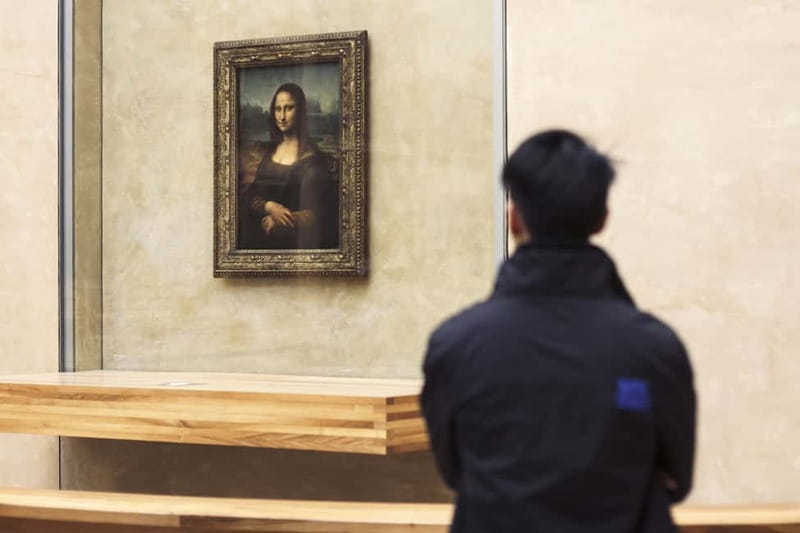
The Louvre is enormous, and the Mona Lisa is its most popular stop. During busy daytime hours, you may find yourself waiting in a controlled line, edging toward the front of a packed room, taking a quick photograph, and moving on before you have had time to study the painting.
This tour uses a different rhythm. You first spend about two and a half hours with your guide in selected galleries. The Mona Lisa comes during the final 30 minutes, close to closing time. That timing is the main reason to book this particular Louvre experience.
It does not promise an empty museum. The Louvre remains a major attraction, and the popular rooms can still have plenty of people. But the final-entry schedule can reduce the pressure, especially compared with the middle of the day. You may have more space to step back, look closely, and appreciate the painting’s scale and expression instead of treating it as a quick photo stop.
The late departure also suits a day when you have already seen other parts of central Paris. Check the available starting time carefully, since the exact schedule varies. You do not want to plan a tight dinner reservation immediately afterward, especially if the group moves more slowly through a crowded museum.
More Paris museums and collections:
- Paris: Louvre Museum Timed-Entrance Ticket
★ 4.6 · 71,977 reviews - Louvre Museum Masterpieces Guided Tour with Access
★ 4.5 · 12,023 reviews - Paris: Louvre Museum Entry Ticket With Host and River Cruise
★ 4.6 · 9,926 reviews
Finding the Arc de Triomphe du Carrousel meeting point
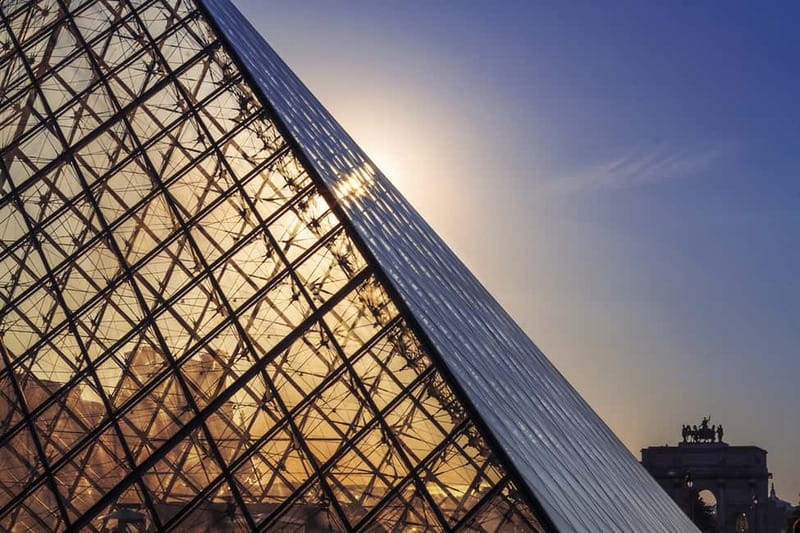
The tour begins outside at the Arc de Triomphe du Carrousel, in front of the Louvre and opposite the pyramid entrance at the Tuileries Gardens. This is not the Arc de Triomphe de l’Étoile on the Champs-Élysées.
When facing the Carrousel arch, meet at the winged statue on the left. Your guide will hold a green Walks sign. Arrive 15 minutes before the start. The meeting point is not directly at the glass pyramid, so allow time to orient yourself.
This detail matters. One person can easily walk toward the wrong monument, and the Louvre’s broad courtyards do not make last-minute searching pleasant. Save the meeting instructions on your phone, identify the Carrousel arch before tour day, and arrive early rather than trying to find the statue at the scheduled start.
The tour ends back at the Louvre meeting point. There is no hotel pickup or drop-off, so you must make your own way to and from the museum.
Starting beneath the Louvre palace
Before heading into the galleries, the guide introduces the Louvre’s foundations at the old moat. This gives you a useful sense of the building beneath the grand palace and helps explain how the site changed over time.
That opening is important because the Louvre is not simply a museum placed inside a convenient building. Its rooms, wings, staircases, and courtyards reflect its long life as a royal residence and public institution. Without context, it is easy to race from painting to painting and miss the story of the place itself.
Your guide then sets the pace for the rest of the visit. The route is designed around major works rather than every room. That is a practical choice for a first visit, since trying to see everything in three hours would leave you tired and still feeling that you had missed most of it.
Greek sculpture: Venus de Milo and Winged Victory
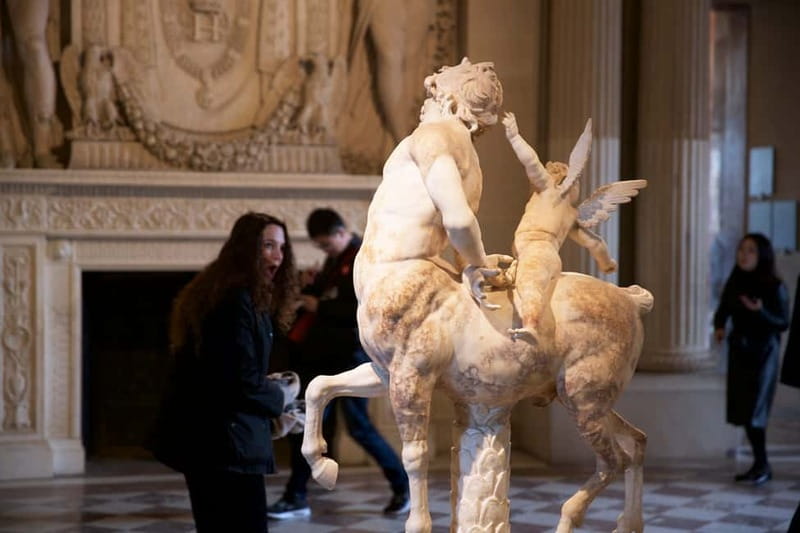
The Classical Greek sculpture galleries bring two of the Louvre’s most famous figures into the route: the Venus de Milo and the Winged Victory of Samothrace.
The Venus de Milo has the kind of fame that can make you forget to look carefully. A guide can point out the sculpture’s pose, missing arms, and enduring mystery, giving you something more useful than a quick photograph. You get a reason to study the figure rather than simply recognize it.
Winged Victory is a different experience. Positioned dramatically at the top of a staircase, the sculpture feels full of forward motion even though it has no head or arms. The setting is part of its power. Your guide can help you notice how the figure, drapery, and ship-like base work together.
These stops also show why a guided route helps. The Louvre’s galleries can pull you in several directions at once. A guide keeps the group moving toward the essential works while still providing enough time to look and ask questions.
A different way to spend the day, same corner of France:
- Disneyland® Paris 1-Day Ticket
★ 4.6 · 49,412 reviews - Paris: Versailles Palace and Gardens Full Access Ticket
★ 4.6 · 41,579 reviews - Paris: Evening River Cruise with Music
★ 4.4 · 22,721 reviews - Paris: Eiffel Tower Entry Ticket with Optional Summit Access
★ 4.4 · 20,035 reviews
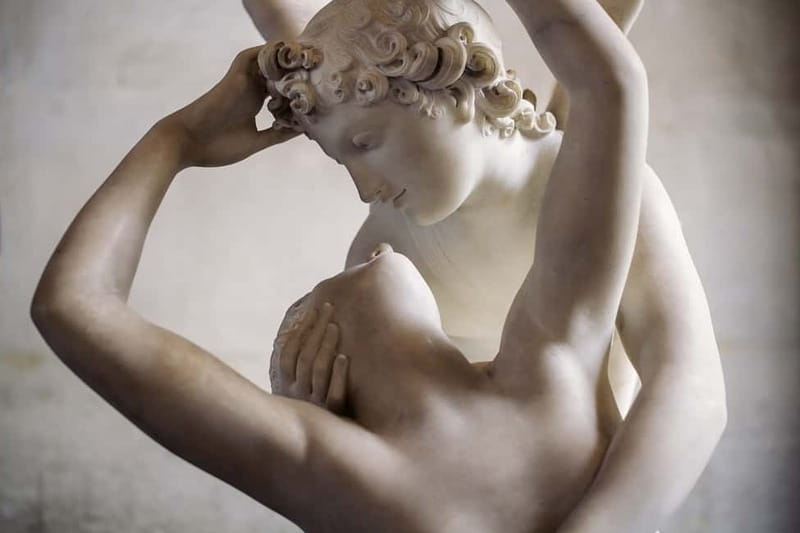
Michelangelo, Cupid and Psyche, and the power of sculpture
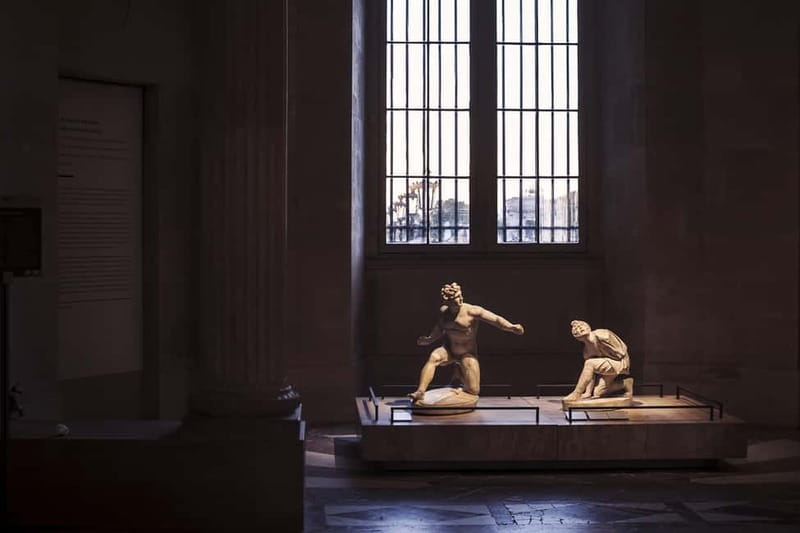
The tour continues to sculptural highlights, including Cupid and Psyche and Michelangelo’s Slaves.
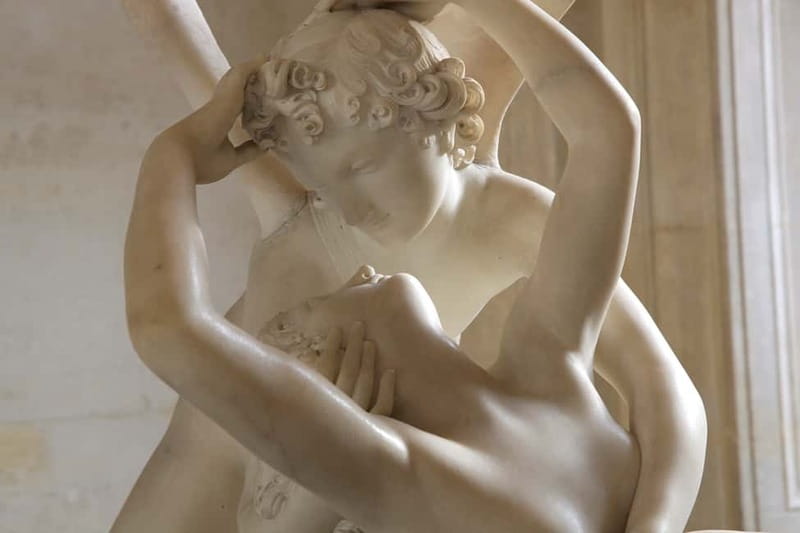
Cupid and Psyche is a chance to see how marble can suggest soft skin, flowing hair, and a moment of movement. The work is not just about technical skill. Its story and emotional tension give the sculpture a human quality that is easy to miss when you are focused only on the polished surface.
Michelangelo’s Slaves offer a different kind of impact. The unfinished sections matter. You can see figures appearing to struggle out of the stone, which opens a useful discussion about Michelangelo’s process and the line between a finished statue and a work left in progress.
This portion of the tour is especially good for you if sculpture is not normally your first priority. The guide’s interpretation can turn a familiar name into a close look at form, posture, material, and artistic intent.
Painting, politics, and French national memory
The painting route includes Delacroix’s Liberty Leading the People, a work tied to revolution and French political identity.
You can appreciate the dramatic composition on your own, but the painting becomes more meaningful when you understand the events and symbols behind it. The central figure, the fallen bodies, the smoke, and the advancing crowd create a scene that is both historical and deliberately heroic.
The guide also discusses works by Caravaggio, Raphael, and Leonardo da Vinci. The value here is not simply ticking off famous names. A good explanation connects the art to the period in which it was made, showing how artists handled light, movement, religious subjects, portraiture, and human emotion.
Several guides associated with this tour have been praised for making social and political history part of the art discussion. Laurence, for example, is known for linking the works to the events and ideas of their time, while Bel has been praised for tying art to wider world history. Those connections can make the Louvre feel less like a room full of isolated masterpieces.
The Raft of Medusa and Romantic drama
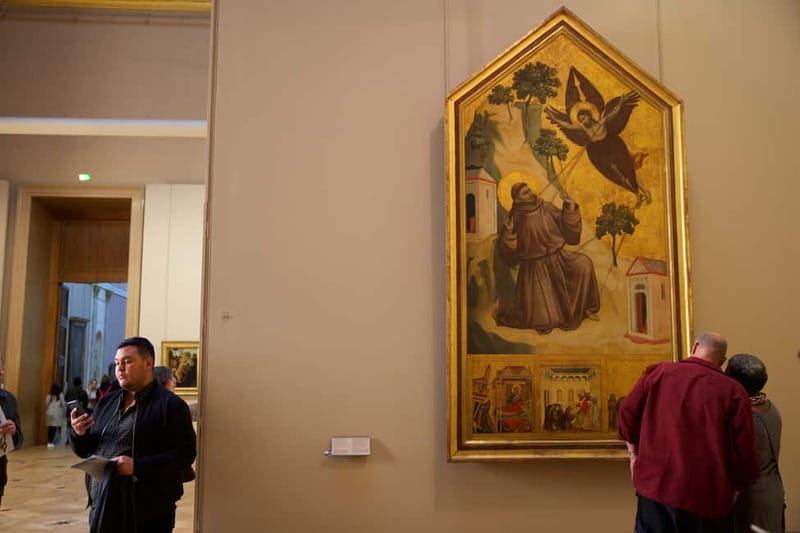
Géricault’s The Raft of Medusa is one of the route’s most powerful paintings. Its scale, desperate figures, and turbulent arrangement make it difficult to pass without stopping.
A guide can help you read the composition from foreground to background and understand how the painting builds tension. The work is not merely a dramatic scene. It also carries a political charge, since the real disaster exposed failures and controversy in French public life.
This is the sort of stop where a short, well-told explanation earns its place. You might notice the bodies and the storm on your own, but the background gives the painting more weight. It also helps you see how art can comment on current events, not just illustrate old stories.
The Crown Jewels and the palace on display
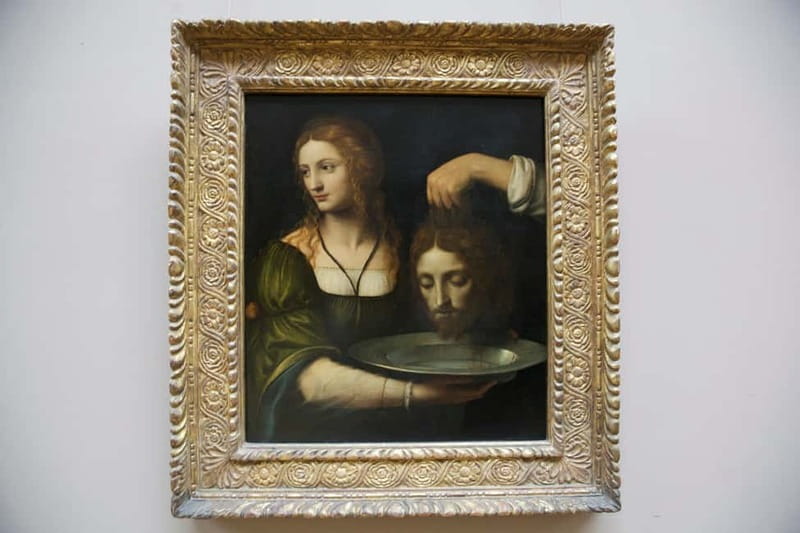
The tour includes a room filled with Crown Jewels. This section shifts the mood from individual paintings and sculptures to royal ceremony, wealth, and power.
The jewels offer a direct look at the courtly world connected with the Louvre’s earlier role. They are visually impressive, but their real interest lies in what they reveal about monarchy and public display. A guide can add the historical frame that turns glitter into evidence of how rulers presented themselves.
The route may also include newly opened or temporarily available rooms, such as the former Financial Minister’s Apartments mentioned in connection with one visit. Do not assume every special room will be open on your date. Museum galleries can close without much warning, and the guide may need to change the route.
That flexibility is normal at a large working museum. The important point is that the guide can substitute other major works rather than leaving you to navigate around a locked gallery by yourself.
The final 30 minutes with Mona Lisa
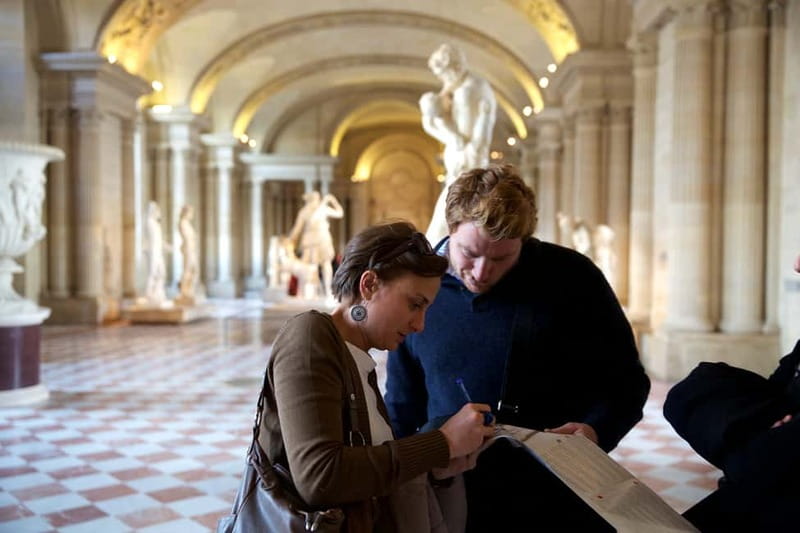
The last stop is the Mona Lisa room, where you have about 30 minutes for the painting and the surrounding experience.
Leonardo’s portrait is smaller than many first-time visitors expect. That surprise is part of the visit. The painting’s fame can make it seem monumental in reproduction, but in person you are looking at a compact portrait behind protective measures and within a room designed for heavy demand.
The advantage of this tour is time and access at the end of the route. You can move closer, take a photograph, then step back and examine the face, hands, veil, and landscape behind the figure. The famous expression remains open to interpretation, which is precisely why people keep returning to it.
The room may still be crowded, and without the crowds should be understood as a quieter period, not a private viewing. Still, the late schedule gives you a better chance of getting close without the daytime rush. Several people have found the reduced crowd the highlight of the whole experience.
The guide finishes the visit at the museum. This is not the moment for an extended independent tour of other wings. If you have a personal list of less famous works, you may want to visit the Louvre independently at another time.
The guides make or break the experience
The route is strong, but the guide is central to the tour’s value. You are paying for more than entry. You are paying for someone to choose what matters, explain why it matters, and lead you through a huge building without wasting time.
The guides praised most warmly include Hugo, Violette, Laurence, Claire, Antoine, Adam, Manuel, Bel, Karen, Daniel, Abby, and Lee. Their styles differ, but the common strengths are clear: lively storytelling, strong command of art and history, humor, clear directions, and the ability to keep several generations engaged.
Hugo has been noted for adding music clips to his explanations. Violette is known for energy, humor, and a strong sense of timing. Claire has been praised for mixing fun facts with clear explanations, while Adam brings visible enthusiasm for Paris, art, and historical objects.
You should not book expecting a particular guide unless the booking specifically confirms one. These names give you a sense of the standard you can hope for, not a guaranteed assignment.
The group size of up to 15 helps. You can hear through the provided headsets, ask questions, and keep closer to the guide. A larger group would make the narrow galleries and crowded rooms harder to manage.
Is $97 a fair price?
At $97 per person, this is not the cheapest way into the Louvre. You can buy museum admission independently and spend less, especially if you already know what you want to see and enjoy navigating museums alone.
The price makes more sense if you value three things: skip-the-line entry, an English-speaking art historian, and the late Mona Lisa timing. The guide saves you from building your own route through a vast museum, and the explanations add meaning to works that can otherwise blur together.
For a first Louvre visit, I consider the price reasonable if you have limited time in Paris or want a guided introduction rather than a self-guided march to the Mona Lisa. For a repeat visitor with a carefully planned list, the tour may feel restrictive because it focuses on selected highlights and keeps a steady walking pace.
The three-hour length is also well judged for a first visit. It is long enough to see major works but short enough to leave you with energy for the rest of Paris. You should not expect to cover every celebrated gallery.
Who should book this Louvre tour?
I would choose this experience if you are visiting the Louvre for the first time, especially if you want the major works explained in plain language. It also suits families and mixed-age groups. One guide successfully handled a group ranging from age 14 to 81, keeping directions clear and the material engaging.
It is a good fit if the Mona Lisa is a priority but you do not want the busiest possible viewing. It also helps if you feel overwhelmed by large museums or dislike spending time studying maps and room numbers.
You should think twice if you use a wheelchair, have a mobility impairment, need a stroller, or cannot walk at a moderate pace. Strollers, luggage, large bags, and oversize luggage are not allowed on this tour, and the route involves substantial walking.
Wear comfortable shoes and bring a passport or ID card. Full names for everyone in your party, including children, must be provided at booking. The tour is conducted in English.
Should you book it?
Book this Louvre tour if you want a focused first look, a capable guide, and the best available chance of seeing the Mona Lisa during a quieter closing period. The strongest reasons are the small group, the well-chosen route, and the guides’ ability to connect art with politics, society, and the story of Paris.
Skip it if you prefer to wander slowly, have specific lesser-known works in mind, or want to stay after the guided route and explore independently. The museum’s schedule can change, and the late timing is not a guarantee of an empty Mona Lisa room.
For most first-time visitors with only one Louvre visit in their Paris plans, I would book it. You will see the essential works, hear why they matter, and finish with a more relaxed look at Leonardo’s most famous portrait.
FAQ
How long is the Louvre Mona Lisa Last Entry Tour?
The tour lasts three hours. About two and a half hours are spent on the guided Louvre route, followed by about 30 minutes in the Mona Lisa area.
What language is the tour conducted in?
The tour is conducted in English with a live English-speaking guide.
Where does the tour meet?
The meeting point is at the Arc de Triomphe du Carrousel in front of the Louvre, opposite the pyramid at the entrance to the Tuileries Gardens. When facing the arch, meet at the winged statue on the left.
How early should I arrive?
Arrive 15 minutes before the scheduled start time. The guide will be holding a green Walks sign.
Does the tour include skip-the-line Louvre entry?
Yes. Skip-the-line entry to the Louvre Museum is included.
What artworks are included on the route?
The route can include the Venus de Milo, Winged Victory of Samothrace, Cupid and Psyche, Michelangelo’s Slaves, Liberty Leading the People, works by Caravaggio, Raphael, and Leonardo da Vinci, The Raft of Medusa, the Crown Jewels, and the Mona Lisa.
Can wheelchair users or visitors with strollers join?
No. The tour is not suitable for wheelchair users, people with mobility impairments, or strollers. Baby strollers, luggage, large bags, and oversize luggage are not allowed.
Can I cancel the booking?
Yes. You can cancel up to 24 hours in advance for a full refund. The reserve-now, pay-later option is also available.
Recently reviewed around Paris
- Louvre Private Tour – The Essentials and More with Expert Guide★ 5.0 · 227 reviews
- 2CV tour by night★ 5.0 · 55 reviews
- Eiffel Tower Second or Summit Floor Access by Elevator with Views★ 3.5 · 161 reviews
- The only Paris Wine Tasting experience you need to do – 2 hours★ 5.0 · 265 reviews
- 2 Hour Street-art Walk and Space Invaders Hunt in Paris★ 5.0 · 27 reviews
- 2 hour outdoor group activity in Paris: SAINT GERMAIN★ 5.0 · 48 reviews
- Sainte-Chapelle, Conciergerie & Palais de Justice Private Tour★ 5.0 · 72 reviews
- Private 2 – Hour Paris Landmarks Tour by Golf Cart Mini Moke★ 5.0 · 38 reviews
Louvre Museum Tours, compared.


Louvre Guided Tour with Reserved Access & Boat Cruise
Read our review →
Louvre Museum Masterpieces Guided Tour with Access
Read our review →
Louvre Museum Entry Ticket With Host and River Cruise
Read our review →
Priority Access Louvre with Host -Direct to Mona Lisa
Read our review →
Mona Lisa & Louvre Masterpieces Tour with Reserved Access
Read our review →
Louvre Museum – Exclusive Guided Tour (Entry Included)
Read our review →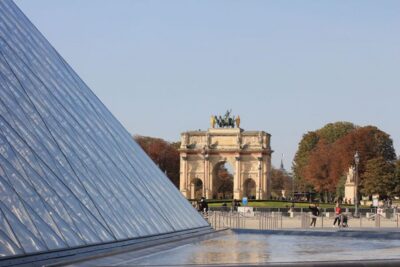
Louvre Reserved Ticket and River Cruise Combo
Read our review →Browse the lists this tour appears in