
Reviewed · LOUVRE MUSEUM TOURS
Louvre Museum: Skip-the-Line Small Group Guided Tour
The Louvre is too large to tackle casually, especially on a first visit. This two-hour small-group tour gives you a clear route through its best-known rooms, from the Venus de Milo and Mona Lisa to Egyptian mummies and Napoleon’s glittering apartments. Guides such as Ivan, Benedict, Frederic, and Laurent are praised for making the art easier to understand rather than simply pointing at it.
I like the priority entrance and the use of a headset, since both can save time and help you hear the guide in crowded galleries. I also like the mix of famous art, palace rooms, ancient Egypt, and the medieval foundations below the museum. The main caution is that advertised stops are not always guaranteed, with one booking missing Napoleon’s apartments, and security can still take up to 20 minutes.
In This Review
- Key points to know before booking
- Why a guide helps at the Louvre
- Meeting up near the Louvre Pyramid
- Priority entry, with one important limitation
- Venus de Milo and the art of seeing a sculpture
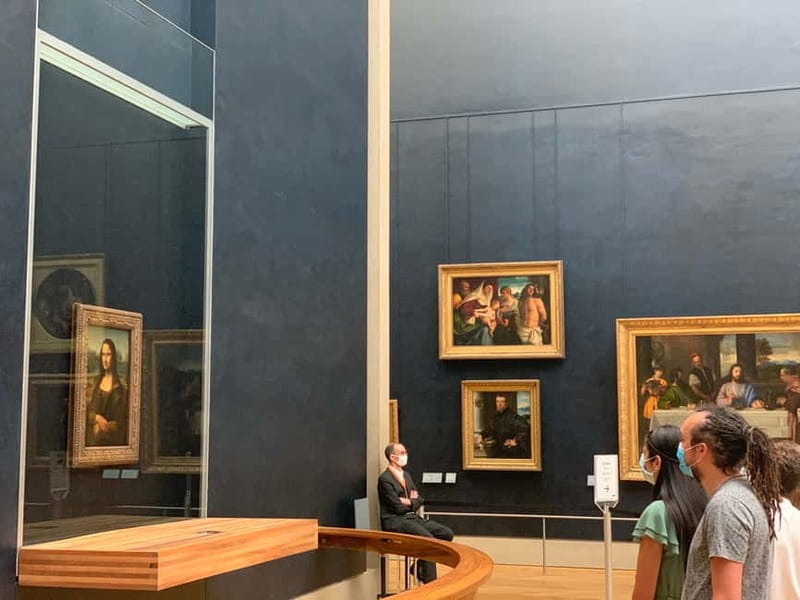
- The Mona Lisa and the crush around the masterpiece
- Psyche Revived and the Raft of Medusa
- Napoleon’s apartments and palace decoration
- Egyptian antiquities, sphinxes, and mummies
- Below the palace, the Louvre’s earlier foundations
- Two hours, group size, and the pace
- Is $114 a fair price?
- Who should book this Louvre tour?
- FAQ
- How long does the Louvre guided tour last?
- What is included in the price?
- Does the tour include transportation to the Louvre?
- Does the tour include priority entry?
- Can I still wait at security with priority access?
- Which languages are available?
- Is the Mona Lisa included?
- Will I see Napoleon’s apartments?
- Is the Louvre open on Tuesdays?
- What can I bring into the Louvre?
Key points to know before booking
- A focused Louvre route: See major works without trying to cover every wing in one exhausting visit.
- Priority access: Enter through a separate entrance, though security screening still applies.
- More than paintings: The route includes sculpture, Egyptian antiquities, royal décor, crown jewels, and medieval foundations.
- Strong guide element: Ivan, Benedict, Frederic, Laurent, Claudia, Habib, Bea, and Merveille are among the guides praised for clear explanations and friendly help.
- Two hours means highlights only: This is an introduction, not a full museum visit.
- Watch the meeting details: The starting location varies by booking option, and some people have had trouble finding the correct street.
Why a guide helps at the Louvre

The Louvre is not just a large museum. It is a former royal palace with enormous galleries, several collections, and more famous works than you can sensibly see in one afternoon. You can enter on your own and wander, but it is easy to spend half an hour finding the right staircase or to miss a major room altogether.
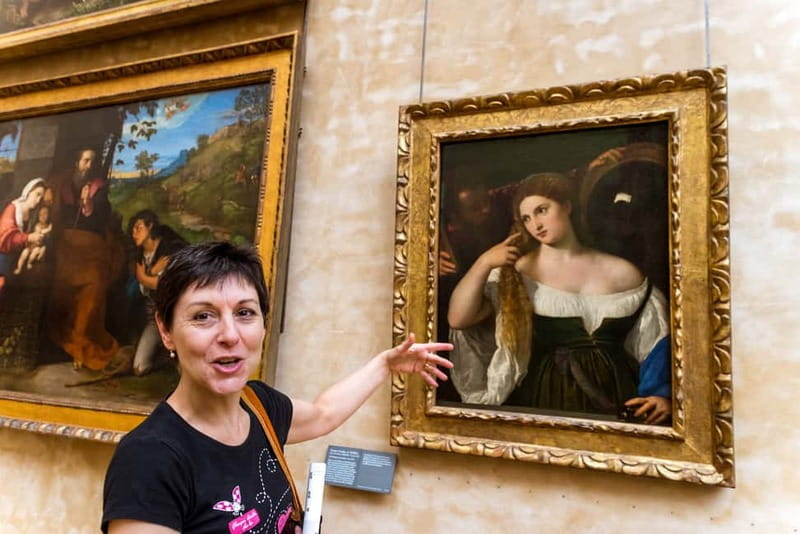
This tour gives you a route and a story. A good guide explains why a work matters, what you are looking at, and how it fits into the building around you. That context can turn a quick look at a painting into something memorable.
The guide also handles practical details. Several guides are praised for helping with reception, lockers, restrooms, photo spots, and the best way to use limited time. That matters at the Louvre, where even a simple break can interrupt your route.
The supplied headset is useful in crowded rooms. You do not need to stand shoulder to shoulder with the guide to hear the explanation, although you should still stay close enough to follow the group.
More Paris museums and collections:
- Paris: Louvre Museum Timed-Entrance Ticket
★ 4.6 · 71,977 reviews - Louvre Museum Masterpieces Guided Tour with Access
★ 4.5 · 12,023 reviews - Paris: Louvre Museum Entry Ticket With Host and River Cruise
★ 4.6 · 9,926 reviews
Meeting up near the Louvre Pyramid
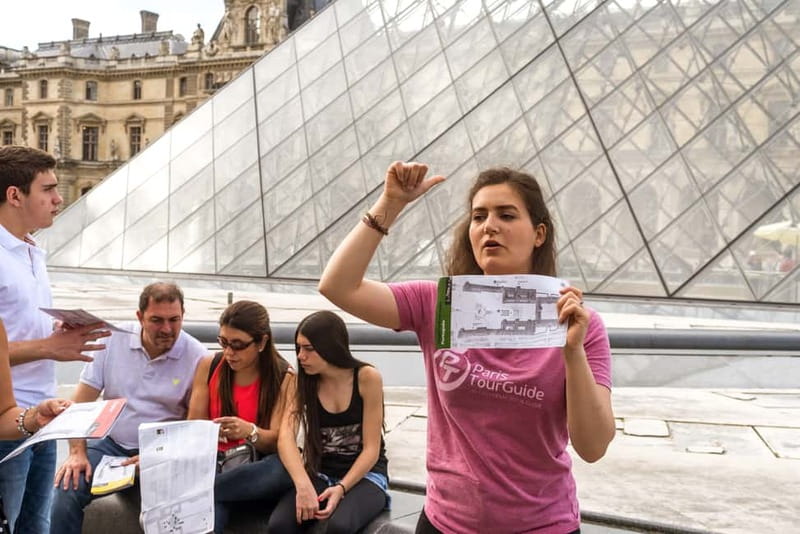
Your meeting point depends on the option you book. The listed starting locations include Invoxis and addresses along Rue de Rivoli, including 162 Rue de Rivoli. The group then heads toward the Louvre Pyramid and the museum entrance.
Give yourself extra time to find the exact spot. One booking included a frustrating search caused by a map directing the group to the wrong address. Nearby shop workers were not able to clarify the location, either. The practical lesson is simple: check the meeting address carefully before leaving your hotel, and do not cut it close.
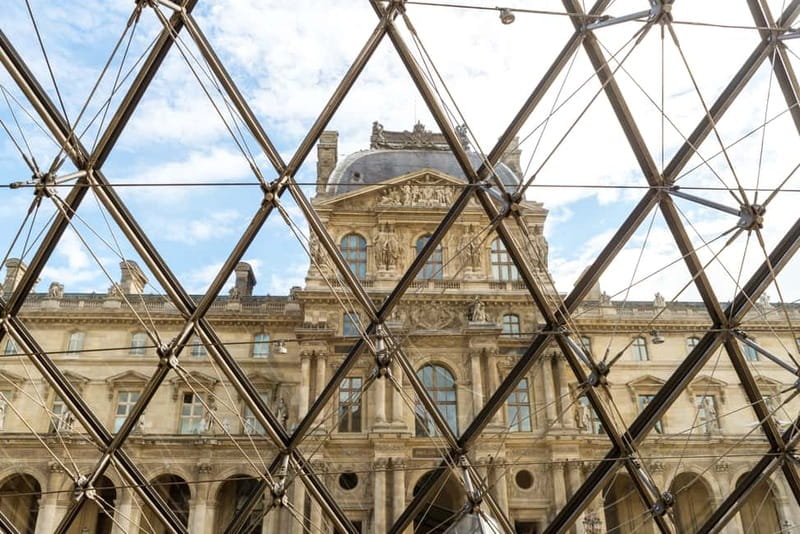
The Pyramid itself is passed rather than treated as a separate tour stop. It is still a useful landmark for getting oriented, but the important part is meeting the guide at the correct location.
Once the group is assembled, the guide handles entry. In peak season, groups can become larger, and parties of more than six may be separated into different groups. The tour is described as a small-group experience, but you should not assume that every departure will feel like a private tour.
Priority entry, with one important limitation
The separate entrance is a major reason to consider this tour. The Louvre’s regular ticket line can consume valuable sightseeing time, particularly when you have only a short stay in Paris.
Priority access does not mean walking straight through every checkpoint. Security screening remains mandatory, and the wait can reach 20 minutes during the busiest periods. That is still different from skipping security, which no museum tour can promise.
Leave luggage and large bags behind. Items larger than 55 by 35 by 20 centimeters are not permitted in the museum. Comfortable shoes are the only listed item to bring, but they are a smart choice because even a tightly planned Louvre route involves plenty of walking and standing.
Venus de Milo and the art of seeing a sculpture
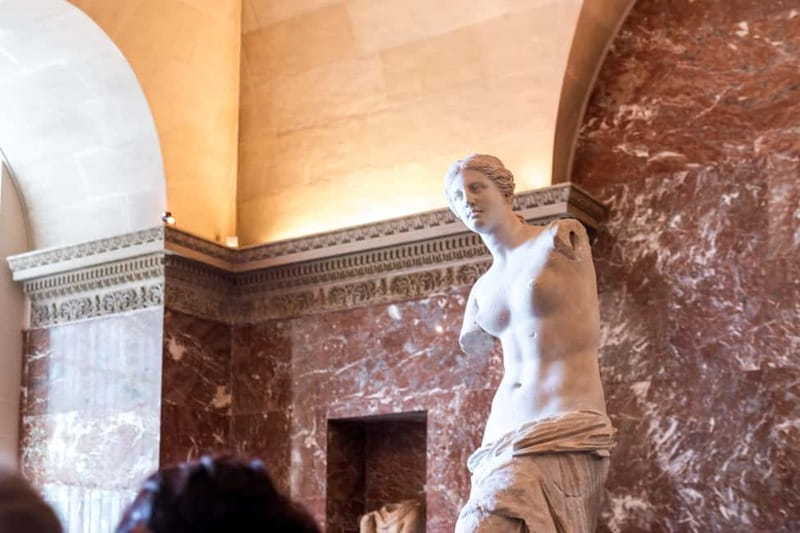
The Venus de Milo is one of the tour’s key stops. You will see the celebrated ancient Greek sculpture and hear how it influenced later artists.
A guide adds useful value here because a famous statue can be hard to appreciate when you first encounter it surrounded by crowds. You may already know the name, but the guide can point out the pose, the missing arms, and the way the figure’s form draws your eye.
The route does not treat the Louvre as a checklist of famous names only. Guides also provide comments on pieces passed along the way, so you get some sense of the surrounding collection instead of moving from one isolated masterpiece to the next.
This is a good stop for anyone who feels uncertain in art museums. You do not need a background in art history. The explanations are designed to give you a way into the work.
More Paris trips worth a second look
- Versailles: Skip-the-Line Tour of Palace with Gardens Access
★ 4.7 · 9,778 reviews - Versailles: Skip-the-Line Guided Palace Tour and Full Access
★ 4.6 · 5,214 reviews - From Paris: Versailles Skip-the-Line Tour & Gardens Access
★ 4.7 · 3,011 reviews - From Paris: Versailles Guided Tour with Skip-the-Line Entry
★ 4.2 · 2,422 reviews
The Mona Lisa and the crush around the masterpiece
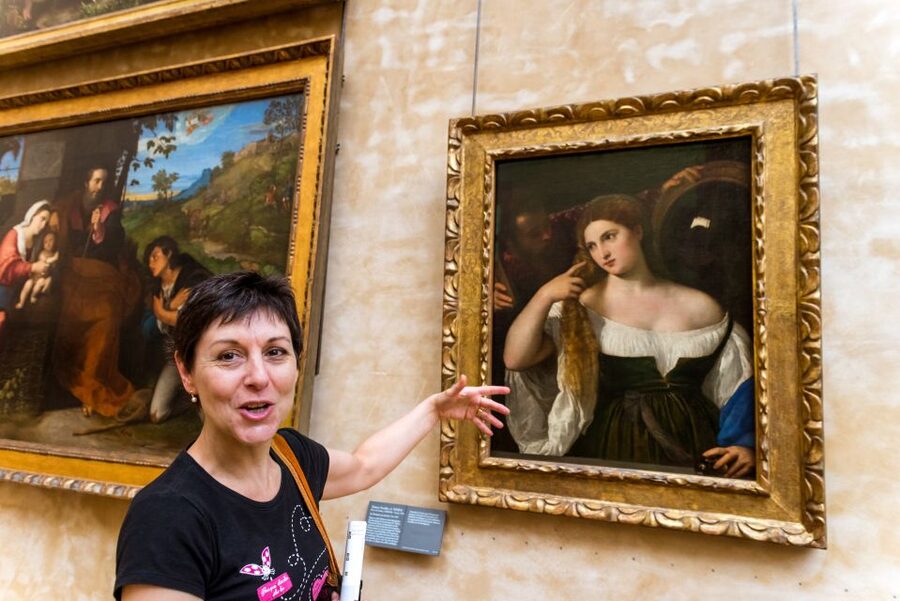
Leonardo da Vinci’s Mona Lisa is the unavoidable centerpiece of a first Louvre visit. The tour takes you to the painting and gives you a chance to see it within a planned route rather than trying to locate it on your own.
Expect this part to be busy. The painting is small compared with the room and the crowds it draws, so your viewing time may feel brief. That is not a flaw unique to this tour, but it is worth knowing before you arrive.
A guide helps by supplying context before or after the viewing. Instead of using all your energy to navigate toward the painting, you can focus on what makes it important and then continue to other works that may offer more room for a relaxed look.
I would treat the Mona Lisa as one part of the visit, not the entire reason to book. The tour is stronger because it pairs the painting with sculpture, palace interiors, Egyptian objects, and other works that may leave a stronger personal impression.
Psyche Revived and the Raft of Medusa
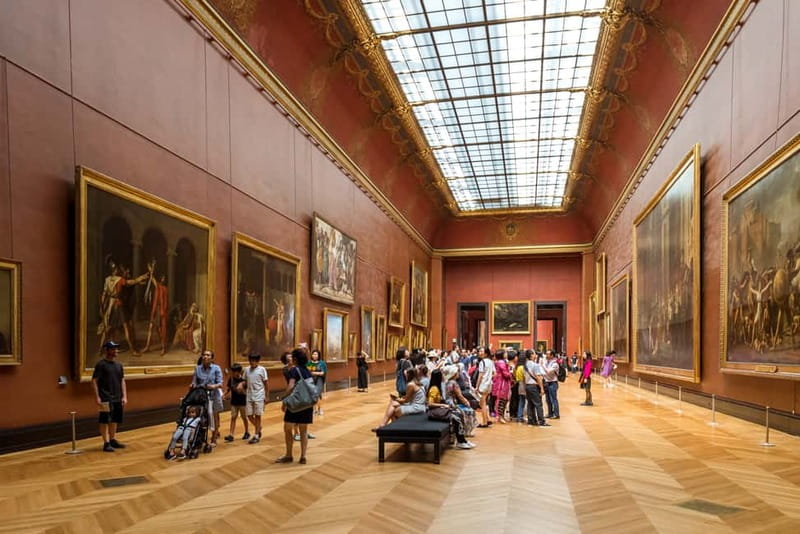
Antonio Canova’s Psyche Revived by Cupid’s Kiss brings a different mood to the route. The sculpture is known for its emotional quality and carefully balanced forms. Seeing it after the Mona Lisa helps show how varied the Louvre’s collection can be.
The tour also explains Théodore Géricault’s Raft of Medusa. The work depicts a real and tragic episode, and a guide can explain the story behind the scene rather than leaving you to guess from the painting alone.
These stops are where the guide’s storytelling matters most. The strongest comments in the supplied feedback praise guides for bringing meaning to each masterpiece and answering questions with patience. Ivan is repeatedly singled out for combining art knowledge with humor and enthusiasm, while Frederic is praised for being clear and concise.
The exact order can vary. Museums adjust routes, and a two-hour tour cannot spend equal time in every room. Think of these works as important targets within a larger highlights route, not a promise that every stop will receive the same amount of attention.
Napoleon’s apartments and palace decoration
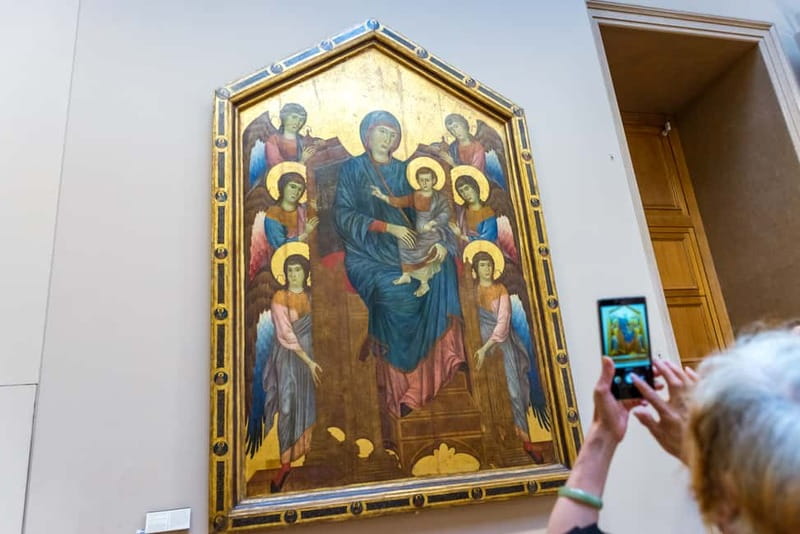
Napoleon’s former apartments offer a sharp change from the museum’s paintings and ancient sculpture. Here the focus is on the Louvre as a palace, with grand decoration, ornate rooms, and a collection of crown jewels.
I consider this one of the most useful parts of the tour because it explains the building itself. You are not only looking at objects placed in a museum. You are seeing rooms designed to impress and reflect power.
There is one practical caution. Although Napoleon’s apartments are listed among the highlights, one booking specifically noted that this section was missed. Routes can change, time can run short, or access to a room can be affected by museum operations. If this stop matters greatly to you, confirm its availability with the guide at the start.
That uncertainty does not cancel the value of the tour, but it does mean you should not book solely for the apartments. The Mona Lisa, Venus de Milo, and the other main collections remain central reasons to go.
Egyptian antiquities, sphinxes, and mummies
The Egyptian department broadens the visit beyond European art. The route includes a sphinx and mummies, giving you a look at the Louvre’s ancient collections.
This section is especially helpful for families and for anyone who is more interested in objects and archaeology than in court portraits. The guide can explain what you are seeing and keep the visit moving, which is useful when the museum’s Egyptian rooms begin to feel like a maze.
The Egyptian stop also helps break up the concentration required for the major paintings. A quick look at ancient objects, palace architecture, and sculpture gives the two-hour route a good rhythm.
Do not expect an exhaustive tour of the Egyptian department. The Louvre’s collection is far too large for that. You are getting a selected introduction, with enough detail to help you decide what deserves a longer return visit.
Below the palace, the Louvre’s earlier foundations

The tour goes below the present museum to see the foundations of the castle that once occupied the site. This is one of the more unusual stops because it connects the museum to its earlier role as a fortified building.
It also gives you a break from the famous works upstairs. You can see that the Louvre was built in stages, not created all at once as a museum for the public.
For me, this kind of stop makes the visit feel more complete. You understand the building as part of Paris history, not just as a grand container for art. The guide’s explanation is important here, since bare foundations can be difficult to interpret without a clear account of what stood on the site.
Two hours, group size, and the pace
Two hours is enough for a strong first orientation, but not enough for a slow museum day. You will move between departments and pause at selected works. If you stop at every painting that catches your eye, you will fall behind.
The pace suits you if you want the essential sights before lunch, dinner, or another Paris activity. It also works well if you are not a dedicated museum visitor and would rather see the biggest works without spending an entire day indoors.
The small-group format can make questions easier, especially when the guide is attentive. One departure became nearly private because several people did not arrive, but you should treat that as good fortune rather than a standard feature.
During peak season, larger groups are possible. A headset helps, but a bigger group can still feel less personal. If you are traveling with more than six people, be prepared for the party to be split into separate groups.
Several guides receive especially warm praise for patience with children, accommodating requests, and keeping explanations interesting. Benedict is noted for being patient with a family that had two young children, while Habib is praised for taking time with explanations. Those details suggest the tour can work for families, though the walking and standing still require reasonable stamina.
Is $114 a fair price?
At $114 per person, this is not a budget museum entry. The value comes from combining the entrance ticket, a licensed guide, a headset, and priority access in one two-hour visit.
I would consider the price reasonable if you have limited time in Paris, feel uneasy navigating a huge museum, or want the stories behind the famous works. The guide is the main reason to pay more than a basic ticket. A strong guide can prevent wasted time and make the art easier to remember.
The value is weaker if you already know the Louvre well, prefer to choose every room yourself, or want several hours for quiet viewing. You are paying for structure and interpretation, not unrestricted time.
The 4.6 rating from 3,960 reviews indicates a consistently well-received activity, but the individual experience can still depend on the guide, group size, and route that day. Ivan, Benedict, Frederic, Laurent, Claudia, Habib, Bea, and Merveille are among the guides praised for clear explanations, warmth, humor, and passion. The occasional chaotic start and the missed Napoleon apartment are useful reminders to keep expectations practical.
Free cancellation is available up to 24 hours before the tour for a full refund, and you can reserve now and pay later. The activity ends back at the meeting point. Transportation to and from the Louvre is not included, so you arrange your own way there.
Who should book this Louvre tour?
I would choose this tour for a first visit, a short Paris stay, or a family that wants a manageable introduction. It is also a good fit if the Mona Lisa is on your list but you would rather not spend time plotting a route through the museum.
You will get the most from it if you listen closely, stay with the group, and accept that the itinerary is selective. Ask the guide questions when there is time, especially about works that interest you beyond the headline attractions.
I would skip it if your main goal is an unhurried study of one department or if you dislike guided schedules. The Louvre rewards repeat visits, and this tour is best seen as a well-organized first look rather than a final word on the museum.
If you book, check the meeting address twice, wear comfortable shoes, avoid bringing a large bag, and arrive ready for a possible security wait. Most important, keep a little flexibility around the route. The Mona Lisa and Venus de Milo are central, while Napoleon’s apartments can depend on the day.
FAQ
How long does the Louvre guided tour last?
The tour lasts two hours.
What is included in the price?
The price includes a licensed guide, the Louvre Museum tour, the entrance ticket, and a headset.
Does the tour include transportation to the Louvre?
No. Transportation to and from the Louvre Museum is not included.
Does the tour include priority entry?
Yes. The tour uses a separate entrance for priority access.
Can I still wait at security with priority access?
Yes. Priority access does not remove the security check. During high season, the security wait can be up to 20 minutes.
Which languages are available?
Tours are available in German, Spanish, Portuguese, and French. The tour can also be bilingual.
Is the Mona Lisa included?
Yes. The route includes Leonardo da Vinci’s Mona Lisa.
Will I see Napoleon’s apartments?
Napoleon’s former apartments are included among the planned highlights, but access can vary. One booking did not visit this section, so it is best not to treat it as guaranteed.
Is the Louvre open on Tuesdays?
No. The Louvre Museum is closed on Tuesdays.
What can I bring into the Louvre?
Comfortable shoes are recommended. Luggage and large bags are not allowed, and items larger than 55 by 35 by 20 centimeters cannot enter the museum.
Recently reviewed around Paris
- Louvre Private Tour – The Essentials and More with Expert Guide★ 5.0 · 227 reviews
- 2CV tour by night★ 5.0 · 55 reviews
- Eiffel Tower Second or Summit Floor Access by Elevator with Views★ 3.5 · 161 reviews
- The only Paris Wine Tasting experience you need to do – 2 hours★ 5.0 · 265 reviews
- 2 Hour Street-art Walk and Space Invaders Hunt in Paris★ 5.0 · 27 reviews
- 2 hour outdoor group activity in Paris: SAINT GERMAIN★ 5.0 · 48 reviews
- Sainte-Chapelle, Conciergerie & Palais de Justice Private Tour★ 5.0 · 72 reviews
- Private 2 – Hour Paris Landmarks Tour by Golf Cart Mini Moke★ 5.0 · 38 reviews
Louvre Museum Tours, compared.


Louvre Guided Tour with Reserved Access & Boat Cruise
Read our review →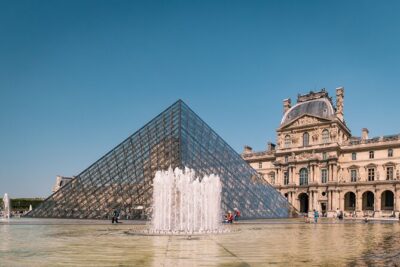
Louvre Museum Masterpieces Guided Tour with Access
Read our review →
Louvre Museum Entry Ticket With Host and River Cruise
Read our review →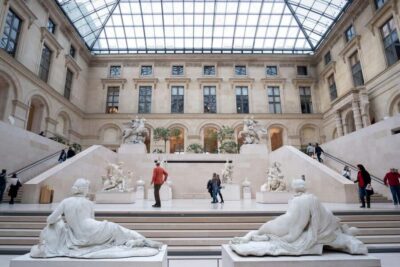
Priority Access Louvre with Host -Direct to Mona Lisa
Read our review →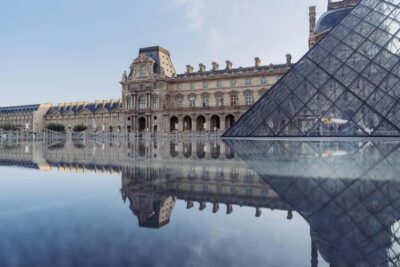
Mona Lisa & Louvre Masterpieces Tour with Reserved Access
Read our review →
Louvre Museum – Exclusive Guided Tour (Entry Included)
Read our review →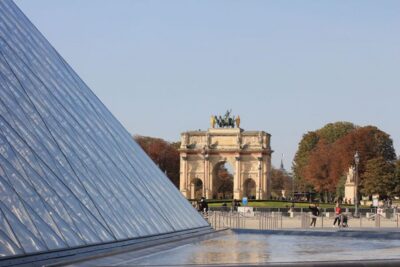
Louvre Reserved Ticket and River Cruise Combo
Read our review →Browse the lists this tour appears in