
Reviewed · LOUVRE MUSEUM TOURS
Louvre Museum Small-Group English Guided Tour
The clever part of this Louvre visit is not simply seeing the Mona Lisa. It is getting through one of the world’s largest museums with a guide who knows which corridors, galleries, and masterpieces matter most. With a pre-booked ticket and a group capped at six, you spend less time sorting out the building and more time looking at art.
I like the tiny group, which makes it easier to hear the guide and ask questions. I also like the useful finish: your ticket remains valid for the day, so you can continue exploring after the two-hour tour. The catch is that the tour meets at 6 Rue de l’Amiral de Coligny, not directly at the Louvre entrance, and one less-engaging guide can make the experience feel hurried or scripted.
In This Review
- Key points to know before booking
- Why a small Louvre tour can save your morning
- Meeting at 6 Rue de l’Amiral de Coligny
- Priority entry is the first real advantage
- The Louvre route: a fast look at the essential works
- The Mona Lisa
- The Venus de Milo
- Nike of Samothrace
- Antiquities and medieval areas
- What the guide adds to the art
- Two hours is a useful introduction, not a complete Louvre visit
- Is $99.11 a fair price?
- Who should book this Louvre experience?
- Practical details that affect your visit
- Should you book the six-person Louvre tour?
- FAQ
- How long does the Louvre guided tour last?
- What works are included on the tour?
- Can I stay in the Louvre after the tour?
- Where does the tour meet?
- Does the tour end inside the Louvre?
- How many people are in the group?
- What languages are available?
- Is admission to the Louvre included?
- Can I cancel or change my booking?
Key points to know before booking

- Only six people per booking: A small group lets your guide move through crowded rooms more efficiently and answer questions without shouting.
- Priority entry matters here: The Louvre can have long lines, and pre-booked admission helps you avoid spending a large part of your visit waiting.
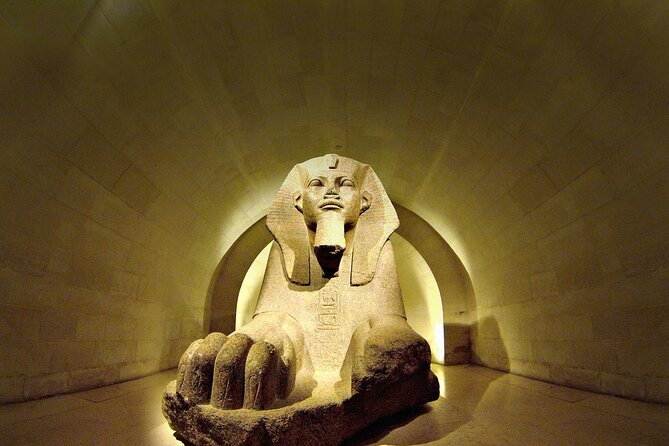
- The route focuses on famous works: Expect the Mona Lisa, Venus de Milo, Nike of Samothrace, antiquities, medieval areas, and other major highlights.
- You keep the ticket afterward: The guided portion lasts about two hours, but you can stay inside the museum for the rest of the day.
- Guides speak several languages: The tour is offered with a professional guide in English, French, or Spanish.
- The meeting point needs care: Find 6 Rue de l’Amiral de Coligny before the start time, rather than assuming the guide will meet you at the Louvre galleries.
Why a small Louvre tour can save your morning
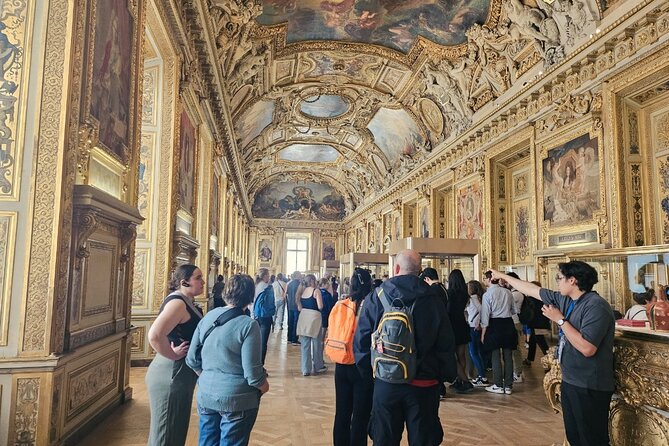
The Louvre is not a museum you casually wander into and understand in one go. It began as a fortress, later became a royal palace, and now holds vast collections spread through a building complex that can overwhelm first-time visitors. A two-hour guided route gives you a useful frame for the place.
This experience is limited to six people. That number matters. Your guide can keep the group together in crowded galleries, stop without creating a traffic jam, and respond to questions from children or adults. Several guides have been praised for explaining art in a clear, lively way, with special attention to the materials, painters, legends, and stories behind the works.
The small group does not guarantee a perfect visit. The quality depends heavily on who leads your tour. Some guides are warm, funny, and flexible. Others may stick closely to a prepared script or watch the clock. That is an important point at the Louvre, where a good guide can turn a famous painting into a memorable story, while a flat presentation can feel like a fast march between rooms.
More Paris museums and collections:
- Paris: Louvre Museum Timed-Entrance Ticket
★ 4.6 · 71,977 reviews - Louvre Museum Masterpieces Guided Tour with Access
★ 4.5 · 12,023 reviews - Paris: Louvre Museum Entry Ticket With Host and River Cruise
★ 4.6 · 9,926 reviews
Meeting at 6 Rue de l’Amiral de Coligny
Your starting point is 6 Rue de l’Amiral de Coligny, 75001 Paris, near the Louvre. The tour does not begin with the guide waiting inside the museum galleries. You need to locate this meeting point first, then join the group before entering.
That arrangement has one practical benefit: it gives the guide a clear place to gather everyone before dealing with the busy museum entrance. It also avoids the confusion of trying to find one another beneath the Louvre pyramid or among several entrances.
Still, allow time to find the address. A visitor who heads straight to the museum may wonder where the group is. Check the location before leaving your hotel, and do not treat the meeting point as an afterthought. Once the group is together, the short walk and entry process should be much easier than trying to navigate the museum on your own.
The tour includes admission. Confirmation arrives when you book, and the experience is near public transportation. Service animals are allowed, and most people can participate.
Priority entry is the first real advantage
The Louvre is among the most visited museums in the world, with more than 10 million people a year. That scale explains why entry can be stressful, especially during popular morning periods or busy Paris travel seasons.
This tour uses pre-booked tickets and priority access. It is best to think of this as a major time-saving feature, not a magical promise that every line disappears. Museum security and crowd control can still affect your pace, but the tour is designed to take you through the entry process efficiently.
That saved time has real value. If you have only a few days in Paris, standing outside the Louvre is a poor use of your morning. The experience becomes especially useful for families, first-time visitors, and anyone who would feel lost inside a building with far too many possible directions.
Several people have praised the early morning timing when available, saying it helped them reach the highlights before the museum became even harder to navigate. The exact start time depends on the booking you select, so check your confirmation carefully.
The Louvre route: a fast look at the essential works
The guided visit lasts about two hours. That is enough time for a focused introduction, not enough time to see the Louvre in full. Go in with the right expectation and the pace makes sense.
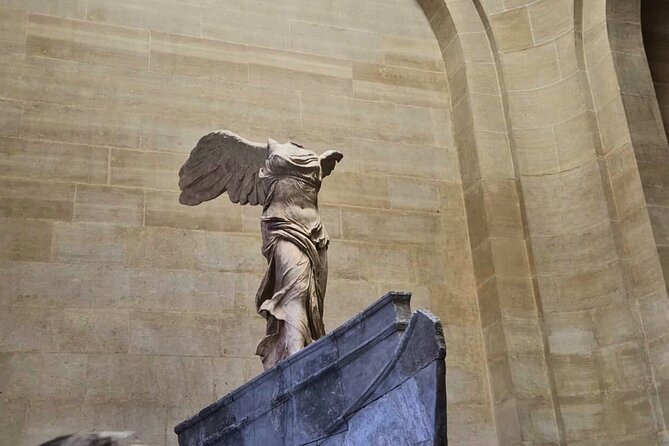
Your guide leads you toward famous works such as the Mona Lisa, Venus de Milo, and Nike of Samothrace. You may also pass through antiquities and medieval sections, depending on the route and museum conditions. One guide has been praised for beginning with the Louvre’s earlier life as a fortress, a useful reminder that this is not just a picture gallery. The building itself is part of the story.
More Paris trips worth a second look
- Paris: Louvre Guided Tour with Reserved Access & Boat Cruise
★ 4.3 · 16,353 reviews - Louvre Museum – Exclusive Guided Tour (Entry Included)
★ 5.0 · 6,296 reviews - Versailles: Skip-the-Line Guided Palace Tour and Full Access
★ 4.6 · 5,214 reviews - Louvre Priority Access with Mona Lisa Escort or Guided Option
★ 4.0 · 4,420 reviews
The Mona Lisa
The Mona Lisa is the stop most people have in mind, and the room can be crowded. The painting is smaller than many first-time visitors expect, and the viewing area may feel more like a controlled flow of people than a quiet art lesson.
A guide helps by explaining what to look for instead of leaving you to fight for a quick photograph. You may hear about the painting’s fame, artistic details, and the legends that have grown around it. The guide typically concludes the formal route near the entrance to the Mona Lisa room, although the precise order can vary.
Do not assume that seeing the Mona Lisa means you have seen the Louvre. It is one brief stop in a museum filled with art from many periods and places. The best part of the tour is the wider route that gives this famous portrait some context.
The Venus de Milo
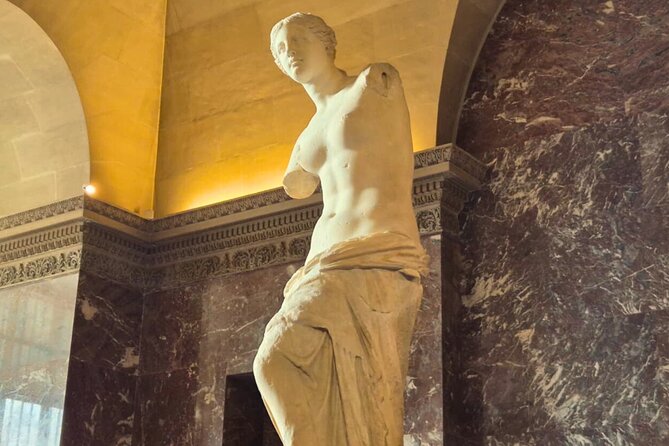
The Venus de Milo is another major stop. Your guide can help you understand why the sculpture remains important beyond its missing arms and familiar silhouette. In a short visit, a few clear points about the work, its materials, and its place in the collection are more useful than a long lecture.
This is where a small group helps. Sculpture often attracts clusters of people, and six visitors can gather close enough to hear without blocking the room. You can ask about the work directly, rather than waiting for a large group to catch up.
Nike of Samothrace
The winged Nike is one of the Louvre’s most dramatic sculptures, partly because of its setting and the way it appears as you approach. A guide can point out details you might miss if you were simply following a map toward the next famous object.
The route is not just a checklist of names. The better guides explain why each work matters, connect art to history, and add facts that make the rooms easier to remember. The weaker version of the tour may give you the names and dates but not much sense of why you should care.
Antiquities and medieval areas
The Louvre’s older collections can be as rewarding as its headline attractions. Guided sections may include antiquities and medieval rooms, as well as the remains of the original fortress. These areas give you a broader view of the museum and help explain how a royal residence became a public institution.
You should ask questions if a particular period interests you. One strength of a six-person visit is the chance to request extra attention within the limits of a two-hour route. One limitation is that not every wing or special display can fit into the schedule.
What the guide adds to the art
A self-guided Louvre visit gives you freedom, but it also gives you a lot of homework. You need to choose a route, find each gallery, understand what you are seeing, and keep track of time. A guide handles much of that work.
The best guide style reported for this experience is practical and story-driven. Guides have explained the history of the fortress, the materials used in paintings, the working methods of artists, and the legends connected with major pieces. Some have adapted their explanations for an 11-year-old while still keeping adults interested.
Several guide names have appeared in positive experiences, including Ely and Sincen, although guide assignment is not guaranteed. Ely has been described as kind, responsive, and able to answer questions. Sincen, with the spelling uncertain, has been praised for an interesting introduction to the Louvre’s earlier history.
You should also be ready for variation. One guide may use humor and invite questions. Another may follow a fixed script and move quickly. A two-hour tour leaves little room for a slow, reflective conversation, particularly when the galleries are packed.
Two hours is a useful introduction, not a complete Louvre visit
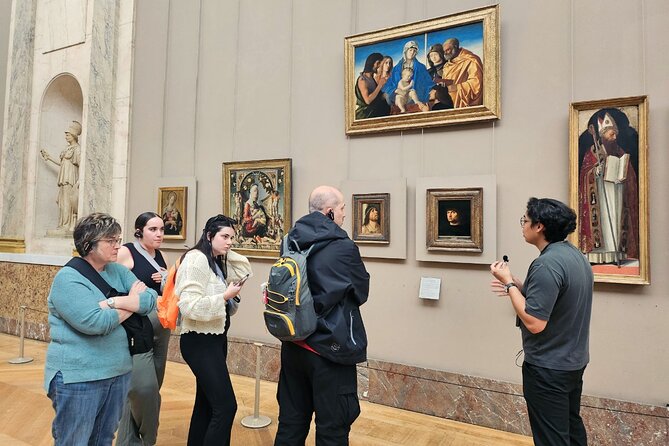
The timing is both a strength and a limit. Two hours is short enough to fit into a busy Paris day and long enough to cover the museum’s central highlights. It works well if you want orientation before spending the rest of your day independently.
The pace can be brisk. The Louvre is enormous, and even a route focused on major works involves walking, waiting for space around paintings, and moving through crowded halls. If you want to study every object or spend 20 minutes with one painting, this is not the right format.
At the end of the guided visit, you can stay in the Louvre and continue on your own. This is one of the strongest features of the booking. You can follow the guide’s route, pause for a meal or rest, then return to a wing that caught your attention. Your entrance ticket is valid for the day.
That extra time changes the value calculation. You are not paying for only two hours inside the museum. You are paying for a guided introduction plus the chance to keep using the ticket afterward. The benefit is greatest if you are willing to plan a second phase of the visit.
Is $99.11 a fair price?
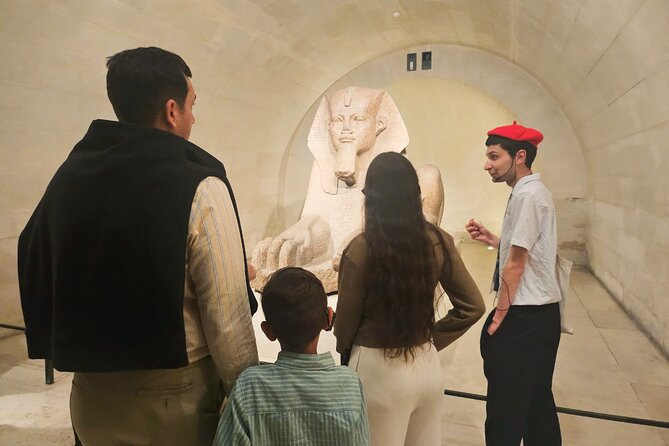
At $99.11 per person, this is not the cheapest way to enter the Louvre. You can save money with a museum admission option and a self-guided plan, especially if you already know which works you want to see.
The price becomes easier to justify for a first visit, a short Paris stay, or a family that does not want to lose time figuring out the building. Priority entry may save a long wait, while the guide brings order to a museum that can feel confusing even with a map.
The group limit is also important. A six-person tour is a different product from a large coach-style group. You get a better chance of hearing the explanation, asking a question, and moving as a unit through crowded rooms. One especially positive experience compared this six-person format with a much larger museum tour elsewhere and found the smaller group far more efficient.
Still, value depends on your interests. If you mainly want a quick photograph of the Mona Lisa and have no interest in guided art history, the cost may feel high. If you want a route through the major works and a guide to explain what you are seeing, the fee is more reasonable.
The tour is booked, on average, about 44 days ahead. That suggests you should not leave it until the last minute if you have fixed Paris dates.
Who should book this Louvre experience?
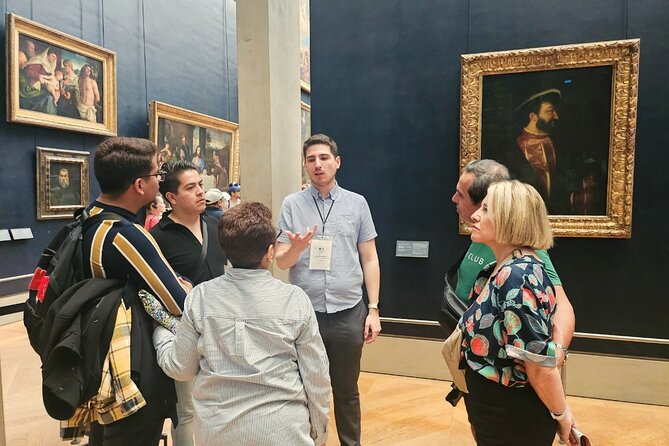
I would point this tour toward:
- First-time Louvre visitors who want a clear route
- Families that need a manageable museum introduction
- People with limited time in Paris
- Visitors who value priority access
- Anyone who wants to keep exploring after the guided portion
- Small parties that prefer a quiet group over a large tour
It may not suit you if you prefer to wander without a plan, study one collection at length, or visit special exhibitions that are not part of the standard route. One person learned only after leaving about a fashion exhibition they would have liked to see, so ask about current displays if they matter to you. The guide follows a planned route, and special exhibits are not promised.
Practical details that affect your visit
The tour is offered in English, French, or Spanish with a professional multilingual guide. Confirm your selected language at booking so you know what to expect.
The maximum is six people per booking, and the total activity also has a maximum of six participants. A smaller group can sometimes become even smaller if others do not appear, but you should not book expecting a private tour.
The experience requires a minimum number of participants. If the operator cancels because that minimum is not reached, you will be offered another date or experience, or receive a full refund. Your own booking is non-refundable and cannot be changed for any reason, so select the date carefully.
Most people can participate, and the meeting point is near public transportation. The end point is the Louvre, and you may remain inside after the guided visit using your day-valid ticket.
Should you book the six-person Louvre tour?
Book it if you want the Louvre’s famous works without spending your first hour lost in the corridors or waiting in a long entry line. The strongest reasons are the six-person limit, the pre-booked admission, and the free time afterward.
I would be cautious if the $99.11 price strains your budget or if you want a very specialized art tour. The guide makes a major difference, and the experience can range from lively and personal to informative but rushed. Still, for a first Louvre visit, the structure is sensible: enter efficiently, see the major works, learn the stories, then stay and make the museum your own.
FAQ
How long does the Louvre guided tour last?
The guided portion lasts approximately two hours.
What works are included on the tour?
The route includes major Louvre highlights such as the Mona Lisa, Venus de Milo, and Nike of Samothrace. It may also include antiquities, medieval areas, and other important museum works.
Can I stay in the Louvre after the tour?
Yes. Your entrance ticket is valid for the day, so you can continue exploring the museum after the guided visit.
Where does the tour meet?
The meeting point is 6 Rue de l’Amiral de Coligny, 75001 Paris, France.
Does the tour end inside the Louvre?
Yes. The stated end point is the Louvre Museum, where you can remain after the tour.
How many people are in the group?
The maximum is six people per booking, and the activity has a maximum of six participants.
What languages are available?
The professional multilingual guide may conduct the tour in French, English, or Spanish.
Is admission to the Louvre included?
Yes. The Louvre admission ticket is included.
Can I cancel or change my booking?
No. The experience is non-refundable and cannot be changed for any reason. If the operator cancels because the minimum number of participants is not reached, you will be offered another date or experience, or a full refund.
Recently reviewed around Paris
- Louvre Private Tour – The Essentials and More with Expert Guide★ 5.0 · 227 reviews
- 2CV tour by night★ 5.0 · 55 reviews
- Eiffel Tower Second or Summit Floor Access by Elevator with Views★ 3.5 · 161 reviews
- The only Paris Wine Tasting experience you need to do – 2 hours★ 5.0 · 265 reviews
- 2 Hour Street-art Walk and Space Invaders Hunt in Paris★ 5.0 · 27 reviews
- 2 hour outdoor group activity in Paris: SAINT GERMAIN★ 5.0 · 48 reviews
- Sainte-Chapelle, Conciergerie & Palais de Justice Private Tour★ 5.0 · 72 reviews
- Private 2 – Hour Paris Landmarks Tour by Golf Cart Mini Moke★ 5.0 · 38 reviews
Louvre Museum Tours, compared.


Louvre Guided Tour with Reserved Access & Boat Cruise
Read our review →
Louvre Museum Masterpieces Guided Tour with Access
Read our review →
Louvre Museum Entry Ticket With Host and River Cruise
Read our review →
Priority Access Louvre with Host -Direct to Mona Lisa
Read our review →
Mona Lisa & Louvre Masterpieces Tour with Reserved Access
Read our review →
Louvre Museum – Exclusive Guided Tour (Entry Included)
Read our review →
Louvre Reserved Ticket and River Cruise Combo
Read our review →Browse the lists this tour appears in