

Reviewed · LOUVRE MUSEUM TOURS
Murders and Mysteries of the Louvre Museum
The Louvre is more than a parade of famous pictures. Beneath the glass pyramid, this tour takes you into a museum shaped by royal power, betrayal, and murder, then connects those stories to paintings, sculptures, and ancient rituals. You still see the Mona Lisa, Venus de Milo, Egyptian collections, crown jewels, and major French works, but with a darker thread running through the visit.
I like the small group of up to eight, which gives your guide a real chance to answer questions and keep the route moving. I also like that your ticket lets you stay inside after the two-hour tour, so the visit can continue at your own pace. The main caution is communication: one participant found the guide’s English difficult to hear in the noisy galleries, and the tour’s murder theme may feel lighter than expected if your guide focuses more on general Louvre highlights.
In This Review
- Key points to know before booking
- Why the Louvre works so well with a mystery theme
- Meeting beneath the pyramid and getting inside
- The medieval fortress beneath the palace
- Egyptian collections, magic, and ancient rituals
- Venus de Milo and the mystery of a famous statue
- Crown jewels and the dangerous side of royal power
- French masterpieces and violence on the walls
- The Mona Lisa from a less familiar angle
- What the two-hour format really gives you
- Is $200 a fair price?
- Who should book this Louvre tour?
- Final verdict: book for the stories, not just the checklist
- FAQ
- Where does the Louvre mystery tour meet?
- How long does the tour last?
- What languages are available?
- How large is the group?
- Does the tour include Louvre admission?
- Does skip-the-line access include security?
- Can I stay at the Louvre after the tour?
- What identification should I bring?
- Can I bring luggage into the Louvre?
- Can I cancel for a refund?
Key points to know before booking
- Medieval Louvre remains: See the original fortress foundations beneath the modern museum and learn how the building changed from defensive stronghold to royal residence.
- Dark stories behind famous art: Ancient rituals, magic, violence, betrayal, and scandal give familiar works a new angle.
- Major sights in two hours: The route includes the Mona Lisa, Venus de Milo, Egyptian collections, crown jewelry, French masterpieces, and medieval remains.
- Small group format: No more than eight participants makes this a more personal choice than a large museum walk.
- Skip the ticket line, not security: Your guide helps you bypass the ticket queue, but everyone still waits for the museum security check.
- Stay afterward: The included entrance ticket remains useful once the guided portion ends, allowing you to continue exploring alone.
Why the Louvre works so well with a mystery theme
The Louvre can be hard to grasp on a first visit. It is huge, its collections cover thousands of years, and the famous works are scattered through a palace-sized building. A guide who gives you a clear story can make those rooms feel less like a long list of names and more like a sequence of human dramas.
This tour uses murder and mystery as its hook, but it also gives you a broad introduction to the museum. You are not spending two hours in one narrow gallery. Instead, you move through several major parts of the Louvre, seeing how its building and collections grew over time.
That wide reach is useful if you have limited time in Paris. In two hours, you get an organized route through some of the museum’s best-known sights, plus works and spaces you might miss on your own. The tradeoff is depth. You will not have time for a close study of every gallery, and the darker theme may appear in short stories rather than one continuous investigation.
I especially like the idea of looking at familiar art through a different lens. The Mona Lisa is often reduced to her smile and the crowds around her. Here, your guide asks you to think about the mystery of her expression and the ways an artwork can keep its secrets even after centuries of study.
More Paris museums and collections:
- Paris: Louvre Museum Timed-Entrance Ticket
★ 4.6 · 71,977 reviews - Louvre Museum Masterpieces Guided Tour with Access
★ 4.5 · 12,023 reviews - Paris: Louvre Museum Entry Ticket With Host and River Cruise
★ 4.6 · 9,926 reviews
Meeting beneath the pyramid and getting inside

You meet at the Statue of Louis XIV in front of the Louvre Pyramid, on Rue de Rivoli. The precise arrangement is tied to the voucher, so read your confirmation carefully and arrive with enough time to locate the statue.
The meeting point is outside the ticketed entrance, underneath the immense glass pyramid. You will first go through the security check, then meet your guide before entering the museum with the group. This detail matters because skip-the-line access does not mean walking straight past every queue. You still need to wait for security, and the museum does not permit large bags or luggage.
Bring a passport or other identification, as required for the activity. Bags exceeding 55 by 35 by 20 centimeters are not allowed inside. Pack lightly. A small day bag is a much better choice than arriving with a suitcase and discovering that you cannot take it in.
The guide provides the museum entrance ticket. Tips are optional and not included. English and French tours are available, and the small group limit is eight people.
The medieval fortress beneath the palace
One of the most useful parts of the route is the chance to see the Louvre’s medieval remains. Before it became a royal palace and then a museum, the site served as a fortress. The surviving foundations help you picture a very different Louvre, one built for defense rather than art.
This is where the title of the tour has a firm historical base. The building itself carries stories of power, confinement, royal decisions, and changing rulers. Your guide explains how the fortress became a royal residence and how the Louvre grew into the enormous complex you see today.
For me, this architectural stop gives the rest of the tour a better frame. The paintings are not displayed in a neutral box. They are housed in a place tied to the monarchy, court life, political ambition, and personal danger. When the guide later discusses betrayal or scandal, the setting helps those stories feel connected to the building around you.
Do not expect the medieval remains to be a complete castle visit. You see remnants within the museum, not a separate fortress experience. Their value comes from context, especially if you have never considered that the Louvre began as a defensive structure.
Egyptian collections, magic, and ancient rituals
The Egyptian collection adds the tour’s most natural connection to magic and mystery. Ancient objects and images can look strange when viewed without context, and your guide explains how rituals, symbols, and beliefs shaped the works.
The emphasis is not simply on identifying statues or objects. You learn about long-forgotten practices and the way ancient people understood death, power, protection, and the unseen world. That approach can make the collection more memorable than a standard list of dates and dynasties.
This section should suit you if you enjoy stories that sit between art, religion, and daily life. It also gives the tour some variety. The Louvre’s dark side is not limited to scenes of bloodshed in European paintings. It can also be found in the beliefs and ceremonies represented by ancient objects.
The exact amount of time spent in the Egyptian galleries can vary with the guide and the group. With only two hours, you should expect selected stops rather than a full survey of the entire collection.
A different way to spend the day, same corner of France:
- Disneyland® Paris 1-Day Ticket
★ 4.6 · 49,412 reviews - Paris: Versailles Palace and Gardens Full Access Ticket
★ 4.6 · 41,579 reviews - Paris: Evening River Cruise with Music
★ 4.4 · 22,721 reviews - Paris: Eiffel Tower Entry Ticket with Optional Summit Access
★ 4.4 · 20,035 reviews
Venus de Milo and the mystery of a famous statue
The Venus de Milo is one of the Louvre’s essential stops, but the tour’s approach should help keep it from feeling like another quick photo pause. The statue is famous for its missing arms, graceful pose, and uncertain story, all of which give it a natural air of mystery.
Your guide places the work within the museum’s larger collection and helps you consider what makes a sculpture so powerful even when key details are missing. The absence of the arms is not just a physical feature. It also leaves room for speculation and interpretation.
This is a good example of the tour’s broader appeal. You see an iconic work, but the guide encourages you to look beyond the name. If you have already seen images of the Venus de Milo many times, a story-based explanation can make the actual encounter feel less routine.
The stop will not turn the Louvre into a crime scene. The mystery comes from gaps, questions, and changing interpretations as much as from violence or murder.
Crown jewels and the dangerous side of royal power
The crown jewelry collection brings the tour back to monarchy and human ambition. Jewels are beautiful objects, but they also point to rank, wealth, succession, and the pressure surrounding royal life.
This is an effective stop for understanding how the Louvre’s collections connect with French political history. The objects are not only decorative. They represent the concentration of power and the risks that came with it.
A guide can make these pieces more engaging by explaining the people and events linked to them. The supplied experience details promise stories of betrayal, scandal, and murder within the Louvre’s royal past. You should expect the jewelry section to support that theme by showing the material world of the court.
The practical limitation is time. You may see selected pieces rather than examine every display. Still, this is exactly the kind of area a first-time visitor might pass without understanding why it matters.
French masterpieces and violence on the walls
The French painting galleries give your guide room to discuss the darker stories shown in art. Some scenes depict battles, executions, revenge, religious violence, or other grim events. The tour uses these works to explain how artists represented fear, power, suffering, and moral conflict.
This part will appeal to you if you prefer art with a story attached. A painting can become much easier to remember when you understand the event, figures, or human tension within it. Your guide also discusses artistic techniques and relationships between artists, adding useful art history beyond the murder theme.
One participant praised a guide for explaining major works as well as lesser-known pieces, including artistic methods and links between artists. That is the best version of this tour: not just pointing at a gory image, but showing how the work was made and why its story matters.
There is a possible mismatch here. One participant felt the guide selected several violent paintings without creating much intrigue around them. If you book this tour mainly for a tightly developed murder narrative, keep your expectations measured. The actual experience can depend heavily on the guide’s storytelling style and command of the tour language.
The Mona Lisa from a less familiar angle
The Mona Lisa is usually the busiest and most predictable stop at the Louvre. You will see her here, but the guide uses the familiar portrait as a chance to discuss the mystery of her smile and the questions that keep the image so famous.
The value is not simply getting closer to the painting. In fact, crowds and viewing limits can make the moment brief. The useful part is having someone direct your attention to details and ideas you might otherwise overlook.
I like that the tour does not treat the Mona Lisa as the only reason to visit. She appears near the end of a broader route that includes architecture, sculpture, ancient objects, jewelry, and French art. That balance helps prevent the visit from becoming a one-picture checklist.
You should also accept that this is a major public attraction, not a quiet private viewing. The tour includes access to the museum, but it cannot remove the crowds gathered around one of the world’s best-known paintings.
What the two-hour format really gives you
Two hours is short for the Louvre, but it is long enough for a strong first orientation. The guide can take you to major highlights, add selected lesser-known works, and give the museum a storyline instead of leaving you to wander without a plan.
The small group matters here. A maximum of eight people makes it easier to hear explanations, ask questions, and stay near the guide than it would be in a large group. One participant specifically valued the individualized feel and the guide’s ability to move the group through many important exhibits.
Still, a small group is not a guarantee of perfect communication. The Louvre can be loud, and one participant found a soft voice and difficult-to-understand English frustrating. There is no mention of an audio microphone, so stand close to the guide and speak up if you miss an explanation.
At the end of the two hours, you do not have to leave. Your entrance ticket allows you to continue exploring the museum independently. This adds real value, especially if you want to revisit the Mona Lisa, spend more time with the Egyptian collection, or explore rooms not included in the guided route.
Is $200 a fair price?
At $200 per person, this is an expensive two-hour activity. The price includes museum entrance and a live guide, but it does not include tips. The small group size is the main reason to consider paying more than a basic museum ticket or a large-group tour.
For a first visit with very limited time, the value can be strong. You receive a planned route, background on the Louvre’s development, access to key works, and a guide who can connect the museum’s art with stories of magic, scandal, and violence. You also keep the option to remain inside afterward.
The value is weaker if you already know the Louvre well, prefer to wander alone, or mainly want a serious, specialist study of murders connected to the building. At this price, you should want both the highlights and the storytelling angle.
I would compare the cost with your schedule rather than with the ticket alone. If two hours is all you have and you want structure, the guided format may save time and reduce confusion. If you have a full day, independent exploration gives you more control and may feel like better value.
Who should book this Louvre tour?
This experience suits you best if you want to see the famous works but need a reason to look at them more closely. It is also a good fit for couples, families with older children, and first-time Louvre visitors who enjoy history with a slightly eerie edge.
You will likely appreciate it if you:
- Have limited time in Paris and want a planned introduction
- Prefer a small group to a large museum crowd
- Like stories about royal scandal, ancient rituals, and artistic violence
- Want to see major works without planning your own route
- Hope to stay inside and continue alone after the guide finishes
It may not suit you if you want a quiet visit, dislike dark subject matter, or need every explanation delivered slowly and with a microphone. The route covers a lot, so anyone seeking detailed study of one collection should choose a more focused format.
Final verdict: book for the stories, not just the checklist
I would book this tour if you want a fast, guided introduction to the Louvre with a darker tone. The medieval fortress, Egyptian rituals, crown jewelry, French masterpieces, Venus de Milo, and Mona Lisa create a varied two hours, and the small group is a real advantage.
I would not book it solely for a guaranteed murder investigation. The theme can be strong, but it may also appear as a series of dark stories attached to selected works. At $200, make sure you value the guide, the limited group size, and the time saved.
Bring identification, leave large luggage behind, prepare for the security queue, and arrive at the Louis XIV statue by the pyramid. If the guide’s explanations are clear and engaging, you get something an audio guide cannot provide: a human connection between the Louvre’s rooms, its art, and its unsettling past.
FAQ
Where does the Louvre mystery tour meet?
Meet at the Statue of Louis XIV in front of the Louvre Pyramid, at the Louvre Museum on Rue de Rivoli in Paris. The precise meeting details will be provided on your voucher.
How long does the tour last?
The guided visit lasts two hours.
What languages are available?
The tour is offered in English and French.
How large is the group?
The experience is limited to eight participants.
Does the tour include Louvre admission?
Yes. Museum entrance fees are included in the ticket price.
Does skip-the-line access include security?
No. Skip-the-line access helps you bypass the ticket queue, but you still need to wait for the museum security check.
Can I stay at the Louvre after the tour?
Yes. Your ticket allows you to remain inside and explore the rest of the museum on your own after the guided visit.
What identification should I bring?
Bring a passport or ID card.
Can I bring luggage into the Louvre?
No. Luggage and large bags are not allowed. Items larger than 55 by 35 by 20 centimeters are not permitted in the museum.
Can I cancel for a refund?
Yes. You can cancel up to 24 hours in advance for a full refund. You can also reserve now and pay later.
Recently reviewed around Paris
- Louvre Private Tour – The Essentials and More with Expert Guide★ 5.0 · 227 reviews
- 2CV tour by night★ 5.0 · 55 reviews
- Eiffel Tower Second or Summit Floor Access by Elevator with Views★ 3.5 · 161 reviews
- The only Paris Wine Tasting experience you need to do – 2 hours★ 5.0 · 265 reviews
- 2 Hour Street-art Walk and Space Invaders Hunt in Paris★ 5.0 · 27 reviews
- 2 hour outdoor group activity in Paris: SAINT GERMAIN★ 5.0 · 48 reviews
- Sainte-Chapelle, Conciergerie & Palais de Justice Private Tour★ 5.0 · 72 reviews
- Private 2 – Hour Paris Landmarks Tour by Golf Cart Mini Moke★ 5.0 · 38 reviews
Louvre Museum Tours, compared.


Louvre Guided Tour with Reserved Access & Boat Cruise
Read our review →
Louvre Museum Masterpieces Guided Tour with Access
Read our review →
Louvre Museum Entry Ticket With Host and River Cruise
Read our review →
Priority Access Louvre with Host -Direct to Mona Lisa
Read our review →
Mona Lisa & Louvre Masterpieces Tour with Reserved Access
Read our review →
Louvre Museum – Exclusive Guided Tour (Entry Included)
Read our review →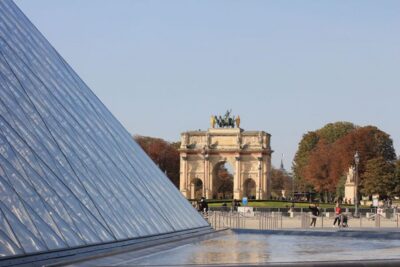
Louvre Reserved Ticket and River Cruise Combo
Read our review →Browse the lists this tour appears in