
Reviewed · NORMANDY D-DAY TOURS
Normandy D-Day Sites & Cemetery Day Trip from Paris with Lunch
The most powerful part of this day is the shift from classroom history to the actual ground where D-Day unfolded. You walk Utah Beach, look across the cliffs at Pointe du Hoc, follow the shoreline at Omaha Beach, and finish among the white crosses above the sea at Colleville-sur-Mer.
I like the well-chosen route, which covers both Utah and Omaha without asking you to arrange several separate visits. I also like having lunch booked in advance, since it keeps the day moving and avoids hunting for a table in a small Normandy town.
The catch is the clock. This is a 14-hour day, with roughly six hours spent getting to and from Paris, so each stop is tightly managed. Lunch quality can vary, and anyone wanting a slow, detailed visit should consider staying overnight in Normandy instead.
In This Review
- Key points to know before booking
- What this Normandy day trip really covers
- Leaving Paris before the city wakes up
- Utah Beach Museum: the operation becomes personal
- Utah Beach: a quieter landing site
- Lunch in a Normandy port town
- Pointe du Hoc: craters, cliffs, and exposed concrete
- Omaha Beach: the place to pause
- Colleville-sur-Mer American Cemetery
- Why the guide matters so much
- Who should book this, and who should not
- Booking details and practical value
- Should you book this Normandy trip from Paris?
- FAQ
- How long does the Normandy D-Day tour last?
- Where does the tour start and finish?
- Is transportation from Paris included?
- What meals are included?
- Which D-Day sites are visited?
- Can I cancel for a full refund?
Key points to know before booking
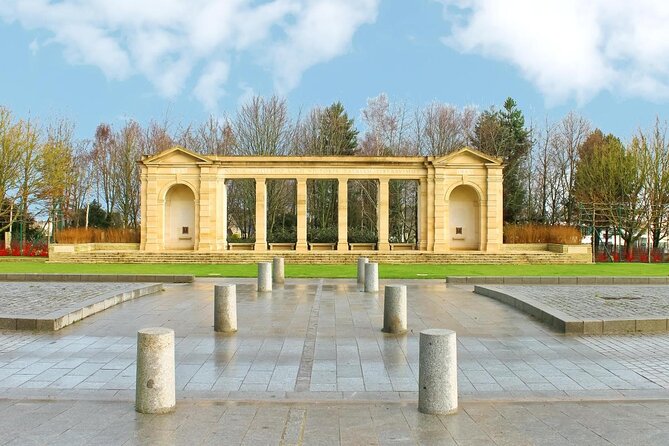
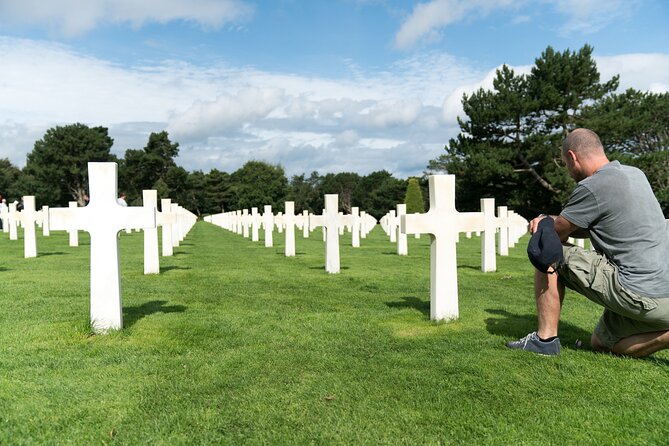
- The American Cemetery is the emotional finish: You get about 75 minutes among the memorial, chapel, reflecting pool, and nearly 10,000 graves overlooking Omaha Beach.
- Pointe du Hoc is the most dramatic battlefield: Original bunkers and huge bomb craters make this stop feel remarkably immediate.
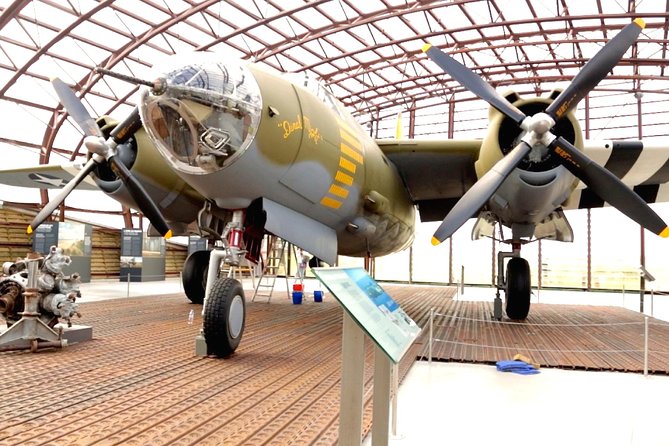
- The Utah Beach Museum is included: The museum occupies a German bunker and displays an original B-26 aircraft and soldiers’ letters.
- The coach ride is a major part of the day: The journey takes about three to four hours each way, with a rest stop reported along the route.
- Lunch is arranged, but not the main attraction: A two-course meal and one glass of Norman cider are included, while extra drinks cost more.
- This works best as a first look at Normandy: It gives you the broad picture in one day, but not much time for wandering.
What this Normandy day trip really covers
At $120.93 per person, this is a practical way to reach the D-Day sites from Paris without renting a car, learning rural French road routes, or paying for several separate admissions. Your price covers round-trip coach transport, an English-speaking guide for the full day, the Utah Beach Museum, lunch, and cider.
The value depends on what you want. If you have only one free day and want to see the major American landing sites, the price is fair. If you dislike long bus rides or want time to study every bunker and memorial, the same money may be better spent on a two-day Normandy visit.
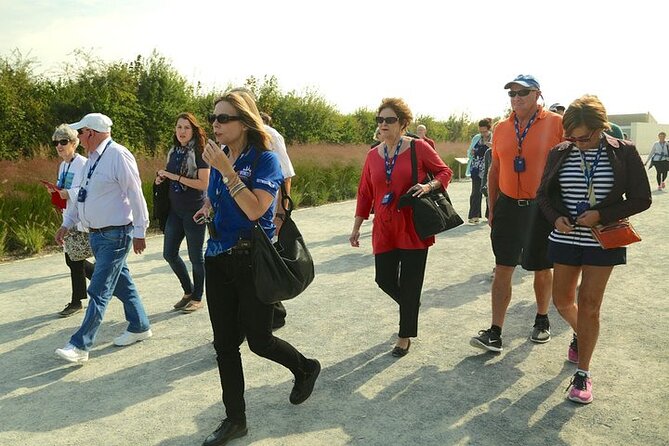
The group can reach 50 people. That is large enough to make the day feel organized rather than private, but you should not expect a quiet, custom-paced tour. The guide needs to keep everyone together and get the coach moving on time.
The strongest part of the experience is usually the guide. Maja, John, Sam, Raymond, and Thelma are among the guides associated with especially warm and informative departures. A strong guide makes the long ride useful, explaining the Allied preparations, the sequence of the invasion, and small details that help you understand what you are seeing.
Guide quality can vary from one departure to another, and accents or speaking styles may affect how easily you follow the commentary. Sit near the front if you want to hear every explanation clearly, and ask questions when the guide opens the floor.
More Paris trips worth a second look
- Bateaux Parisiens Seine River Gourmet Lunch & Sightseeing Cruise
★ 4.5 · 2,680 reviews - Paris: 3-Course Lunch at Eiffel Tower’s Madame Brasserie
★ 4.3 · 2,097 reviews - Paris: Eiffel Tower’s Madame Brasserie 3-course lunch 12:00
★ 4.4 · 1,957 reviews
Leaving Paris before the city wakes up
The coach leaves at 7:00 a.m. from Église Notre-Dame de Compassion at Place du Général Kœnig in the 17th arrondissement. You arrange your own way to the meeting point, since hotel pickup is not included.
The end point is different: Place de la Porte Maillot. That matters if you have an evening train, restaurant reservation, or hotel on the other side of Paris. Allow extra time after the scheduled return because traffic can affect a day that already has a long road schedule.
The coach is air-conditioned, and several departures have been described as comfortable. Still, bus comfort is personal. Temperature control can be a problem in very cold weather, so bring layers that you can remove or add without relying on the driver to find a perfect setting.
The journey is not wasted time if your guide uses it well. The road to Normandy gives you a chance to understand why the invasion required such vast planning, and a midway food or restroom break helps break up the ride. Bring water and a light snack, particularly if you are traveling with children.
Utah Beach Museum: the operation becomes personal
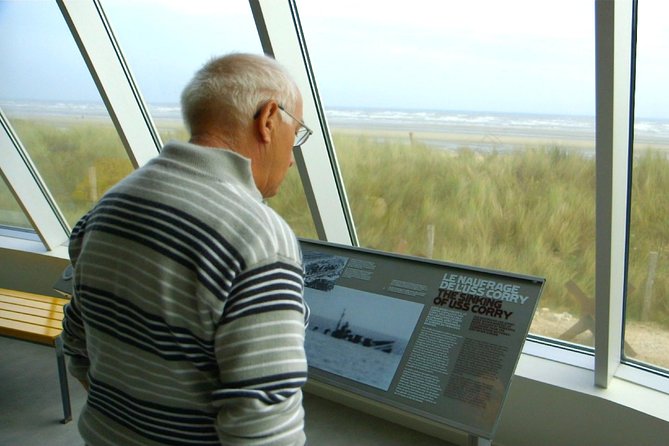
The first major visit is the Utah Beach Museum, housed in an old German bunker on the landing beach. You have about 45 minutes here, with admission included.
The museum focuses on the Utah landing and the wider Allied effort. An original B-26 aircraft gives scale to the military operation, while soldiers’ letters bring the story down to an individual level. Those letters are often more affecting than a wall of dates and troop numbers because they show what young men were trying to explain to families at home.
Forty-five minutes is enough for a purposeful visit, but not enough to read everything at length. If a particular display catches your attention, you may need to choose between staying with it and keeping up with the group.
The museum is a good opening stop because it gives you context before you walk onto the beach. You are not simply looking at sand and water. You have just learned something about the people, equipment, and planning that shaped what happened there.
Utah Beach: a quieter landing site

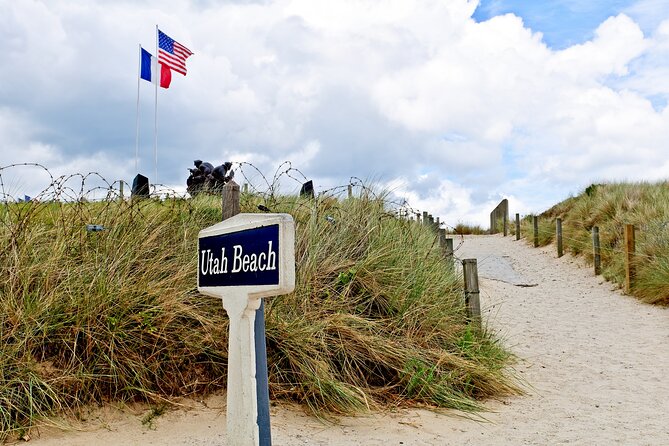
You then get about 30 minutes at Utah Beach itself. This was the westernmost of the five main D-Day landing beaches, and the American troops here met less resistance than those landing at Omaha.
The beach is broad and open, which makes the scale of the operation difficult to miss. Take a moment to look inland as well as out toward the water. The invasion was not only about reaching the shore. Soldiers had to move away from the beach, secure roads and bridges, and push into occupied France.
Thirty minutes is brief, but it gives you time to walk, take photographs, and think about the contrast between the calm setting today and the confusion of June 6, 1944. Wear shoes suitable for sand and uneven ground, and dress for wind and changing coastal weather.
This stop is less dramatic than Pointe du Hoc, but it helps balance the day. Utah gives you a broad sense of the landing area, while the museum supplies the objects and personal stories.
A different way to spend the day, same corner of France:
- Paris: Louvre Museum Timed-Entrance Ticket
★ 4.6 · 71,977 reviews - Disneyland® Paris 1-Day Ticket
★ 4.6 · 49,412 reviews - Paris: Versailles Palace and Gardens Full Access Ticket
★ 4.6 · 41,579 reviews - Paris: Evening River Cruise with Music
★ 4.4 · 22,721 reviews
Lunch in a Normandy port town
Lunch lasts about an hour at L Estran, in a coastal port setting. The included meal is two courses with a glass of Norman cider. Extra drinks are not included, and dietary requirements should be entered when you book.
Having lunch reserved is useful on a schedule this tight. You do not lose half an hour comparing menus, waiting for a table, or trying to find an open restaurant with a large group. In a small town, that convenience can make the difference between reaching the next battlefield on time and cutting a later visit short.
The meal is also the least dependable part of the experience. Some departures have had a pleasant meal in a fishing village, while others have found the food cold, poor in quality, or badly organized. Vegetarian options may include pizza, but that choice has not always impressed families.
A serious service problem has also been reported when a large family could not find enough seats and some members were told to stand. That is not a minor complaint. If lunch matters greatly to you, ask about the menu and seating when you arrive, and carry a snack so one weak meal does not affect the rest of your day.
Even with those concerns, the stop serves a useful purpose. You get a proper break from the coach, a chance to use the facilities, and a taste of Normandy without spending extra time searching for food.
Pointe du Hoc: craters, cliffs, and exposed concrete

Pointe du Hoc is the battlefield most likely to stay with you. You have about an hour to walk across the site, where American Army Rangers climbed cliffs nearly 100 feet high under fire to seize German gun positions.
The ground remains rough and open, marked by enormous bomb craters and damaged German bunkers. This is not a polished memorial park. The broken earth helps you picture the difficulty of moving, finding cover, and locating enemy positions under attack.
The cliffs provide a strong view over the English Channel, but the setting is more than scenic. Allied planners considered the German guns here a threat to the landing beaches, so capturing this position was a key task. The Rangers found that the expected guns had been moved, yet the assault still cost many lives and held major military importance.
An hour allows a solid guided visit and some free movement, but you may wish for longer. You can walk only so far before the guide calls the group back to the coach. Stay aware of the time and follow instructions closely, since the terrain is uneven and the schedule is strict.
For many people, this is the best battlefield stop because the physical remains are so clear. At Utah and Omaha, the sea and sand have softened the visual evidence. At Pointe du Hoc, the craters and bunkers keep the battle close.
Omaha Beach: the place to pause
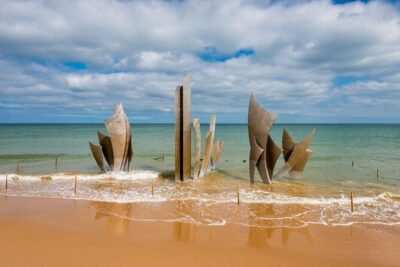
The coach then stops at Omaha Beach for about 30 minutes. This was the most heavily defended of the American landing beaches, and the fighting here caused terrible losses.
You are given free time rather than a long formal presentation. That is appropriate. A beach can be hard to explain with words, and a quiet walk along the shore may do more than another lecture.
Look back toward the bluffs and imagine the problem facing the troops below. They had to cross open sand while under fire, reach the higher ground, and keep moving despite confusion and casualties. The peaceful shoreline today can make that mental picture even more difficult.
Thirty minutes is enough to stand at the water, take in the width of the beach, and reflect. It is not enough for a full exploration of the nearby memorial area or surrounding sites. If Omaha is your main reason for visiting Normandy, a longer stay will feel more satisfying.
The stop also prepares you for the American Cemetery. Omaha shows the scale of the fight. Colleville-sur-Mer shows the human cost.
Colleville-sur-Mer American Cemetery
The final major stop is the American Cemetery at Colleville-sur-Mer, with about 75 minutes for a guided visit and free time. It is set above Omaha Beach and contains nearly 10,000 American graves from the Normandy campaign.
The rows of white crosses and Stars of David are carefully arranged across the grounds. The setting is quiet, formal, and restrained. The memorial, reflecting pool, and chapel create a place for remembrance rather than spectacle.
Your guide provides context, then gives you time to walk on your own. Use it. This is the stop where rushing from one point to another feels least appropriate, and 75 minutes is helpful because the grounds cover a sizable area.
You may want to begin with the main memorial and reflecting pool, then spend a few minutes walking among the graves. Read some names and dates. The scale becomes easier to understand when you stop treating the cemetery as one large image and look at individual markers.
This is also the place to let the day’s information settle. The museum showed personal letters. The beaches showed the physical challenge. The cemetery brings those two threads together.
Why the guide matters so much
The bus ride gives the guide many hours to shape the experience. The best guides do more than list dates. They connect the invasion plans to the beaches, explain why each site mattered, and point out details you might miss while walking.
John has been praised for bringing the history to life, while Maja has been described as both warm and energetic. Sam is noted for pacing the day so the subject does not become overwhelming. Raymond has been credited with clear explanations and good time management.
You cannot choose your guide from the booking details, so treat these names as examples rather than a promise. What you can do is arrive ready to listen, keep questions for the right moments, and sit where the coach commentary is easiest to hear.
The day covers World War II, but the best departures also place D-Day within the larger story of occupied France and the liberation of Europe. That wider frame helps you understand why the landing beaches mattered beyond their military objectives.
Who should book this, and who should not
I would recommend this trip to you if:
- You have only one day available from Paris.
- You want the main American D-Day sites in one organized route.
- You prefer a guide to explain the military context as you go.
- You are comfortable with a long coach ride and a full schedule.
- You want the American Cemetery included without arranging a separate visit.
I would look for a two-day Normandy trip instead if you want to explore museums at length, spend more time on the beaches, or visit additional sites at your own pace. The schedule is an overview, not a specialist battlefield study.
The tour also requires moderate physical fitness. You will walk on beaches, across uneven ground, and around the Pointe du Hoc craters. Comfortable shoes are essential, and you should dress for wind, rain, or cold rather than assuming summer conditions.
For families, the history can be meaningful, but the early start and late return may be tiring. Children may also have limited patience for long commentary and a solemn cemetery visit. A snack, water bottle, and realistic expectations will help.
Booking details and practical value
The tour is offered in English and has a maximum of 50 people. Confirmation arrives when you book, and the meeting point is near public transportation, but you must make your own way there.
The price includes the coach, guide, museum entry, lunch, and cider. It does not include hotel transfers or additional drinks. Free cancellation is available up to 24 hours before the start time, while cancellations or changes inside that window are not refunded or accepted.
The 95 percent recommendation rate and 4.8 rating from 6,877 reviews suggest a strong overall record, especially for the guides and the selection of sites. Those numbers should not hide the real tradeoff: the day succeeds because it is tightly planned, and that same planning limits your time at each place.
Should you book this Normandy trip from Paris?
Book it if you want a single-day introduction to D-Day and accept the long ride. You will see Utah Beach, Omaha Beach, Pointe du Hoc, and the American Cemetery, with a guide to connect them into one story.
Do not book it expecting a relaxed country outing or a slow museum day. Lunch may disappoint, weather can make the coach ride and coastal stops harder, and the schedule leaves little room for lingering.
For a first visit from Paris, I think the route offers solid value. The Utah Museum and American Cemetery alone give the day emotional weight, while Pointe du Hoc provides the clearest physical sense of the battle. If Normandy becomes a central part of your trip rather than a one-day priority, stay overnight and return to these sites at a slower pace.
FAQ
How long does the Normandy D-Day tour last?
The experience lasts approximately 14 hours. It begins at 7:00 a.m. in Paris and ends at Porte Maillot after the return coach journey.
Where does the tour start and finish?
The morning meeting point is Église Notre-Dame de Compassion at Place du Général Kœnig in Paris. The tour ends at Place de la Porte Maillot, which is different from the starting point.
Is transportation from Paris included?
Yes. Round-trip transportation by air-conditioned coach is included. Hotel pickup and drop-off are not included.
What meals are included?
A two-course lunch and one glass of Norman cider are included. Extra drinks cost more, and you should provide dietary requirements in the Special Requirements field when booking.
Which D-Day sites are visited?
The route includes the Utah Beach Museum, Utah Beach, Pointe du Hoc, Omaha Beach, and the American Cemetery at Colleville-sur-Mer.
Can I cancel for a full refund?
Yes, if you cancel at least 24 hours before the experience start time. Cancellations and changes made less than 24 hours before the start are not accepted and are not refunded.
Recently reviewed around Paris
- Louvre Private Tour – The Essentials and More with Expert Guide★ 5.0 · 227 reviews
- 2CV tour by night★ 5.0 · 55 reviews
- Eiffel Tower Second or Summit Floor Access by Elevator with Views★ 3.5 · 161 reviews
- 2 hour outdoor group activity in Paris: SAINT GERMAIN★ 5.0 · 48 reviews
- The only Paris Wine Tasting experience you need to do – 2 hours★ 5.0 · 265 reviews
- 2 Hour Street-art Walk and Space Invaders Hunt in Paris★ 5.0 · 27 reviews
- Sainte-Chapelle, Conciergerie & Palais de Justice Private Tour★ 5.0 · 72 reviews
- Private 2 – Hour Paris Landmarks Tour by Golf Cart Mini Moke★ 5.0 · 38 reviews
Normandy D-Day Tours, compared.
Normandy D-Day Small-Group Day Trip with Omaha Beach, Cemetery & Cider Tasting
Read our review →
Normandy D-Day Beaches and American Cemetery Day Trip from Paris
Read our review →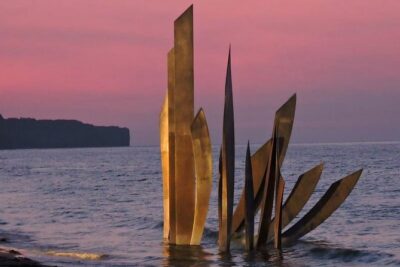
Normandy American D-Day Beaches Full Day Tour from Bayeux
Read our review →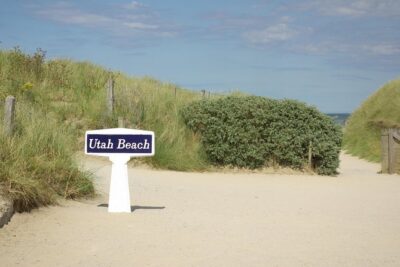
Normandy American D-Day Experience – Group tour from Bayeux
Read our review →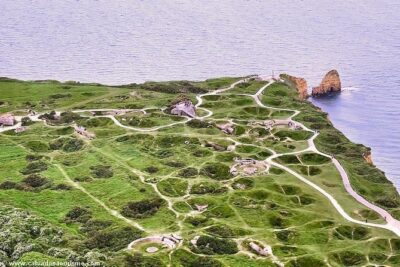
Normandy Beaches Half-Day Afternoon Trip from Bayeux (A2)
Read our review →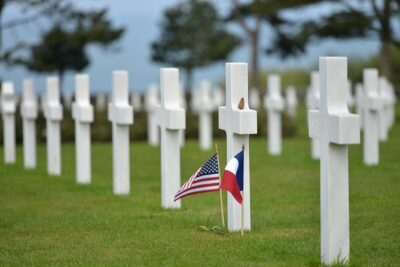
Omaha Beach D-Day Experience – Afternoon group tour from Bayeux
Read our review →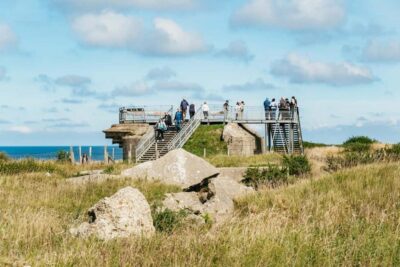
Normandy D-Day Sites Guided Day Trip with Lunch
Read our review →
Normandy Battlefields Tour – American Sites (A3)
Read our review →Browse the lists this tour appears in