
Reviewed · LOUVRE MUSEUM TOURS
Paris: Guided Tour of the Must-Sees of the Louvre Museum
The Louvre is too large for casual wandering, especially when you have only part of a Paris day. This 90-minute guided visit gives you a clear route through the museum, with reserved entry and a live English-speaking guide who keeps the group moving toward the big works.
I like the crowd management and the useful historical context. Guides such as Sara, Anthony, Ivan, and Sylvanie have been praised for explaining symbolism, architecture, and the stories behind the art without turning the tour into a dry lecture. I also like that the route can include a few lesser-known pieces along with the famous three: the Mona Lisa, Venus de Milo, and Winged Victory.
The trade-off is simple: this is a brisk introduction, not a leisurely museum day. Security can still take up to 20 minutes, the Mona Lisa area can feel packed, and wheelchair users cannot take this tour.
In This Review
- Key points to know before you book
- Meeting at the Arc de Triomphe du Carrousel
- Getting into the Louvre with a reserved ticket
- The Louvre’s royal corridors and grand setting
- The Mona Lisa, with crowds included
- Venus de Milo and Winged Victory
- Italian Renaissance paintings and art with a story
- Ancient Egypt, Greece, Rome, and 19th-century France
- Why the guide makes such a difference
- Is $82 a fair price for 90 minutes?
- Timing, pace, and what to bring
- Who should choose this Louvre tour?
- Should you book it?
- FAQ
- How long does the Louvre tour last?
- What works of art will I see?
- Is admission to the Louvre included?
- Can I skip the Louvre ticket line?
- Where do I meet the guide?
- What language is the tour offered in?
- Are headsets provided?
- Can I bring luggage or a stroller?
- Is the tour suitable for wheelchair users?
Key points to know before you book
- Reserved entry saves useful time: You avoid the regular ticket line, though everyone still passes through museum security.
- The route covers the Louvre’s greatest hits: Expect the Mona Lisa, Venus de Milo, Winged Victory, major European paintings, and rooms tied to the Louvre’s royal past.
- The tour is fast but focused: The advertised duration is 90 minutes, despite some descriptions calling it a two-hour visit.
- Headsets make the commentary easier to follow: You can hear the guide while standing back from a painting or moving through a crowded gallery.
- Guides shape the experience: Anthony, Sara, Ivan, Sylvanie, and others have been praised for humor, clear explanations, and keeping the group together.
- Plan to walk: Comfortable shoes are essential, and large bags, luggage, and baby strollers are not allowed.
Meeting at the Arc de Triomphe du Carrousel
Your tour begins at the Arc de Triomphe du Carrousel, the small triumphal arch beside the Louvre and opposite the glass pyramid. This is an easy location to recognize, but do not arrive at the last second. The museum is enormous, and a late arrival can mean missing the group entirely.
Look for a guide wearing a guide card on an orange lanyard with the Memories France logo. That detail matters in a crowded public square, where several tour groups may be gathering at the same time.
You walk from the arch to the museum with your guide. This short approach helps the group get organized before entering, and it gives you a chance to hear what the visit will cover. Hotel pickup is not included, so you must make your own way to the meeting point.
More Paris museums and collections:
- Paris: Louvre Museum Timed-Entrance Ticket
★ 4.6 · 71,977 reviews - Louvre Museum Masterpieces Guided Tour with Access
★ 4.5 · 12,023 reviews - Paris: Louvre Museum Entry Ticket With Host and River Cruise
★ 4.6 · 9,926 reviews
Getting into the Louvre with a reserved ticket
The main practical benefit here is the pre-reserved entrance ticket. The Louvre is one of Paris’s busiest sights, and skipping the standard ticket line can make a real difference when your schedule is tight.
Reserved entry does not mean you walk through every doorway without waiting. Security checks still apply, and during busy periods the wait can reach about 20 minutes. That is an important distinction. The tour reduces one major delay, but it cannot remove the museum’s security process or the crowds inside.
Once you are through, your guide takes responsibility for the route. I find this especially valuable at the Louvre because the building is not a simple series of rooms. It spreads across vast wings and levels, and it is easy to spend half an hour looking for a famous work while passing dozens of other worthwhile rooms.
The supplied headsets are another practical plus. You can hear the guide without standing shoulder to shoulder with the group, and you may have enough freedom to step back for a better look while still following the explanation.
The Louvre’s royal corridors and grand setting
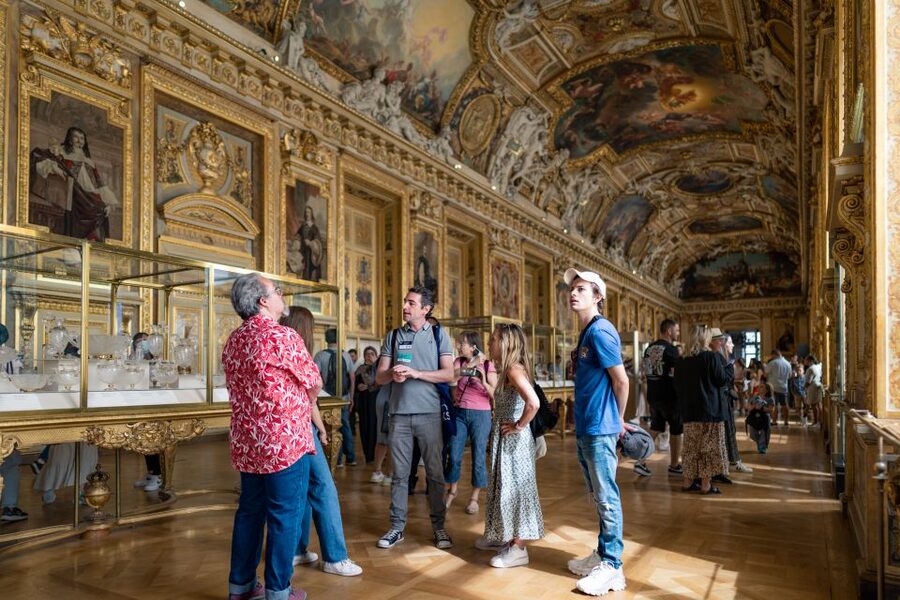
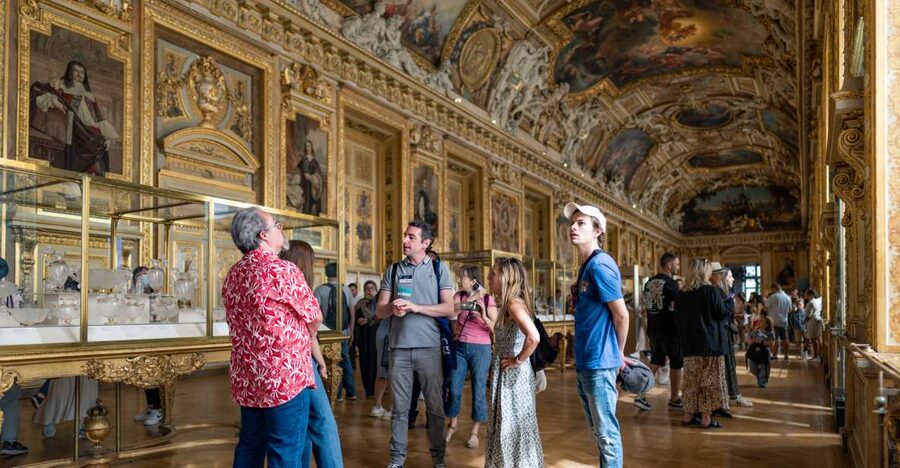
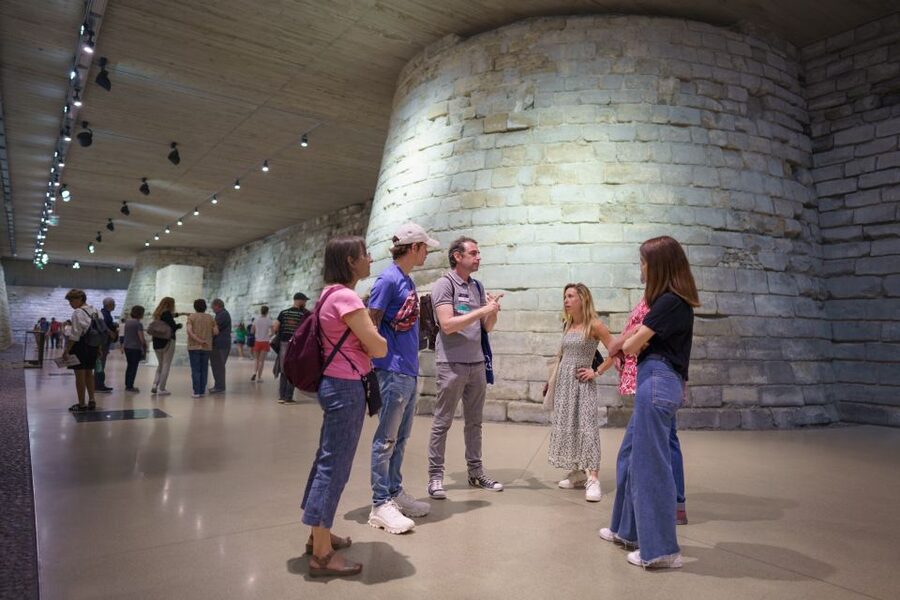
The Louvre is not only a container for art. The building itself is part of the visit. This tour places the works within the former royal palace, so you pass through grand corridors and decorated rooms once used by kings, queens, and emperors.
That context changes how you see the museum. A painting is no longer just an isolated object on a wall. The size of the rooms, the ceremonial design, and the old palace routes help explain how power and art once worked together in France.
Guides have also been praised for discussing the museum’s architecture and Parisian history along with the collection. Meghan, for example, was singled out for connecting the building to the art inside. If you enjoy grand interiors as much as paintings, this part adds real value.
The pace can feel quick in these spaces. You will stop for explanations, but you will not have unlimited time to admire every ceiling or corridor. I recommend taking mental notes of the rooms you want to revisit after the guided portion ends.
The Mona Lisa, with crowds included
The Mona Lisa is the stop most people are waiting for, and the tour makes sure it is on the route. Leonardo da Vinci’s painting is small compared with the expectations built around it, and the room can be crowded, noisy, and tightly managed.
A guide helps here by getting you to the correct area and explaining what to look for before or after the viewing point. You may not receive a quiet, private moment with the painting. That is not a realistic promise at the Louvre. You should expect a short look, a crowd, and the need to keep moving.
Several guides have been praised for arranging a good position near the painting or reaching it efficiently through the museum. Still, crowd levels change from day to day. The tour improves your chances of seeing the work without getting lost, but it cannot guarantee an empty room or unlimited viewing time.
I like that the visit does not treat the Mona Lisa as the whole museum. You see it as one stop in a larger story about Italian Renaissance art, artistic technique, fame, and the way museums turn certain works into global symbols.
More Paris trips worth a second look
- Paris: Louvre Guided Tour with Reserved Access & Boat Cruise
★ 4.3 · 16,353 reviews - Louvre Museum – Exclusive Guided Tour (Entry Included)
★ 5.0 · 6,296 reviews - Versailles: Skip-the-Line Guided Palace Tour and Full Access
★ 4.6 · 5,214 reviews - Louvre Priority Access with Mona Lisa Escort or Guided Option
★ 4.0 · 4,420 reviews
Venus de Milo and Winged Victory
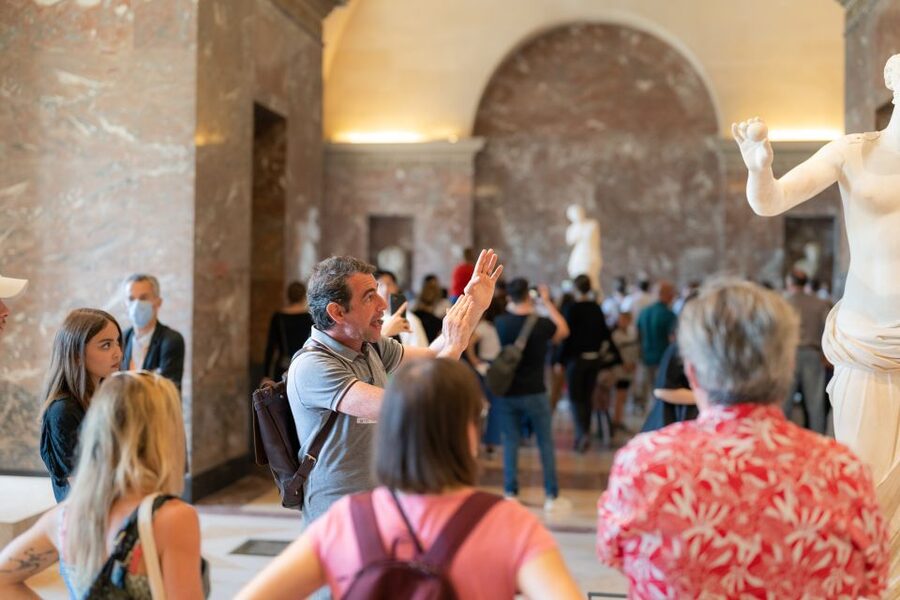
The next pair of major stops gives the tour a useful change of mood. The Venus de Milo introduces ancient Greek sculpture, while the Winged Victory of Samothrace offers a dramatic example of movement, scale, and presentation.
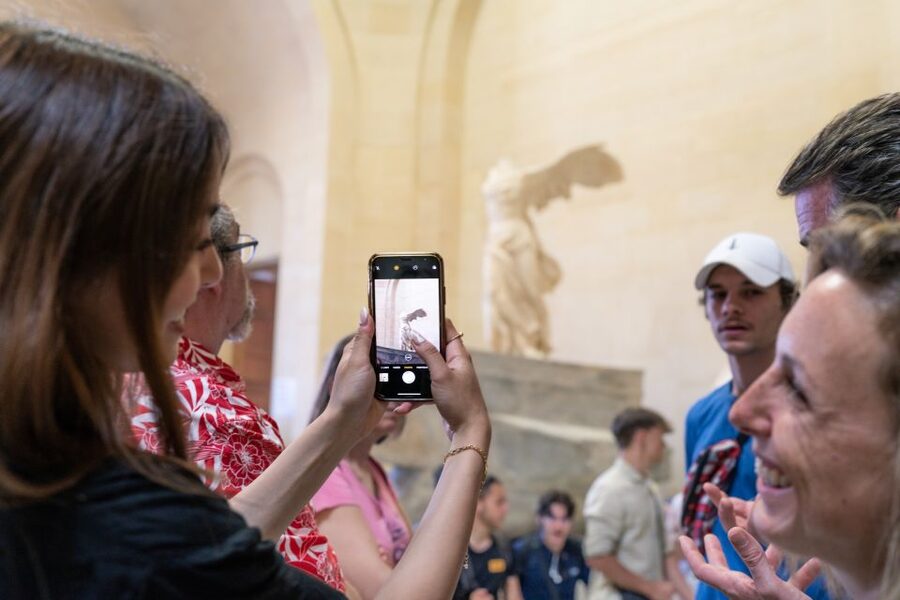
The Venus de Milo is famous for what is missing as much as for what remains. Your guide can draw attention to the sculpture’s pose, proportions, and the questions surrounding its original appearance. The Winged Victory is less intimate and more theatrical, especially as it is displayed at the top of a monumental staircase.
These works help break up the route through the paintings. They also show why the Louvre can feel overwhelming on your own. The collection crosses ancient Egypt, Greece, Rome, the Italian Renaissance, and 19th-century France. Without a plan, you may see plenty but understand little of how the pieces relate to one another.
The guides who received the strongest praise tend to explain symbolism and visual details rather than simply naming the artist and date. Anthony, described as a passionate historian, was appreciated for asking the group to think about how the works achieved their effect. That style suits the Louvre well because a small observation can make a familiar statue or painting feel new.
Italian Renaissance paintings and art with a story
The Italian Renaissance section is one of the core parts of this route. You can expect attention to major works and to the artists behind them, with explanations about why certain paintings became so important.
The value of a guide here is not just identification. A good explanation can point out composition, gesture, symbolism, and the way an artist guides your eye across a scene. Sara has been praised for presenting the museum and its art in a clear chronological order, which can help you understand how one period leads into another.
This is also where the tour’s brisk pace is most noticeable. You stop for short talks rather than long, quiet study. If you already have a serious interest in Renaissance painting, you may want to return after the tour and spend more time with the works that caught your attention.
The tour may include additional pieces beyond the three headline works. Those extra stops are often where the guide’s personality matters most. A well-chosen painting can give you a stronger sense of the collection than another quick glance at a famous name.
Ancient Egypt, Greece, Rome, and 19th-century France

The route reaches across several major eras, including ancient Egypt, Greece, Rome, and French painting of the 19th century. It is not a full survey of each collection, and you should not expect equal time in every department. The point is to sample the Louvre’s wide range while staying focused on its best-known sights.
One past participant was pleased to see the medieval section, which is easy to miss if you follow only the headline route. The Louvre’s medieval remains offer a reminder that the site began as a fortified structure before becoming the palace and museum you see today.
This variety works well for first-time visitors and families. A child may respond more strongly to a massive statue, an Egyptian object, or the palace rooms than to a long discussion of Renaissance technique. Perrine was praised for making sure a child in the group stayed included, while other guides have used humor to keep people engaged even when they do not think of themselves as art lovers.
You should keep your expectations measured. A 90-minute visit cannot cover the Louvre’s departments in depth. It gives you a map in your head, a first look at key works, and a better idea of where to spend your own time afterward.
Why the guide makes such a difference

The strongest reason to choose this tour is not simply the ticket. It is the human navigation. The Louvre’s size, crowds, confusing routes, and busy galleries can drain your energy before you reach the art you came to see.
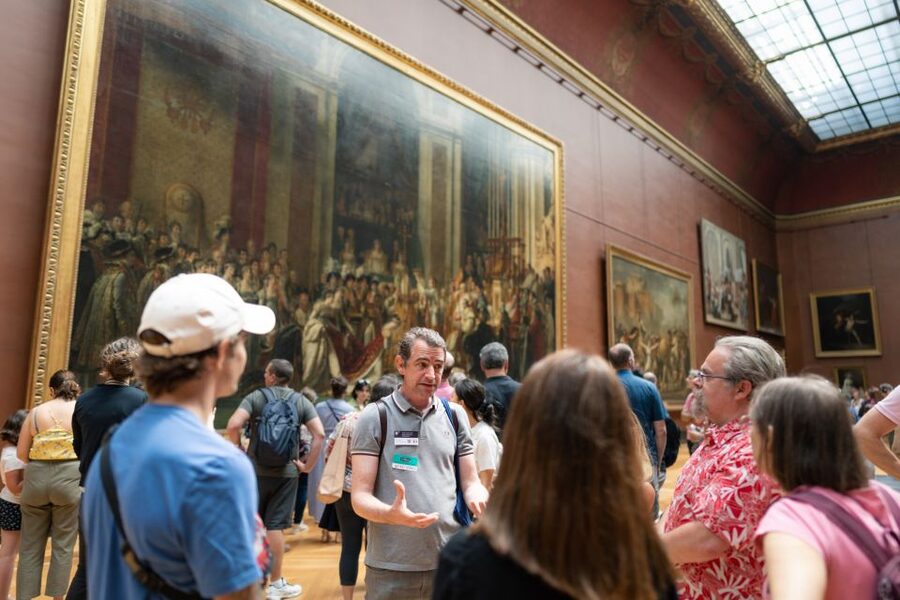
Guides have been praised for keeping the group together, checking that everyone is doing well, and waiting at clear meeting spots between rooms. That matters when the museum is crowded and a family member walks more slowly. One guide even helped a participant using a cane find an elevator and rejoin the group on another floor, though the tour is not designed for wheelchair users.
The best guides also make the visit feel less like a march. Saeed was praised for being funny and gentle while explaining hidden details. Ivan was appreciated for covering the main works in a short time and making sure no one was left behind. Stephanie and Sarah were both praised for warmth, clear English, and genuine enthusiasm for the Louvre.
Your guide may be different, so the exact tone will vary. The consistent advantage is having someone who knows which rooms matter, how to move through the crowds, and which details are worth your limited time.
Is $82 a fair price for 90 minutes?
At $82 per person, this is not a bargain museum ticket. You are paying for reserved admission, an English-speaking guide, headsets, and a planned route through one of Paris’s most difficult museums to tackle alone.
I think the price can be fair if you are visiting the Louvre for the first time, have only a short window, or are traveling with people who would otherwise lose interest in the maze of galleries. The cost buys structure and saves you from spending valuable Paris time finding the Mona Lisa, Venus de Milo, and Winged Victory on your own.
The value is weaker if you already know the Louvre well or want to spend several hours studying a small group of paintings. In that case, a self-guided visit may give you more freedom. You would still need to manage the entrance, route, and crowds yourself.
A useful strategy is to treat this as an orientation. After the guided visit ends at the Musée du Louvre, you know which rooms and works deserve a longer look. Some people have found the finish point convenient because it leaves them in the museum with a clear plan for the rest of the day.
Timing, pace, and what to bring
The stated duration is 90 minutes, and the detailed itinerary also describes a 1.5-hour guided visit. Some promotional wording calls it two hours, so check the exact departure details when booking and plan around 90 minutes of guiding rather than assuming a full two-hour session.
Wear comfortable shoes. You will walk through a large building, change rooms and levels, and move with the group through crowded areas. The tour is not suitable for wheelchair users, and baby strollers, luggage, and large bags are not allowed.
Bring a passport or ID card, as identification is listed among the items to carry. Hotel transportation is not provided, so allow time to reach the Arc de Triomphe du Carrousel and find the orange Memories France lanyard.
If you miss the tour, a refund is not available. You can cancel up to 24 hours before departure for a full refund, and the reserve-now, pay-later option can help if your Paris plans are still changing.
Who should choose this Louvre tour?
I would choose this tour for a first visit, a short Paris stay, or a family that wants the main works without spending all day inside. It is also a sensible choice for anyone who feels uneasy navigating a huge museum in a foreign city.
It suits you especially well if you value clear storytelling over solitary browsing. The guides explain the art, the palace, and the periods in a way that gives the collection a basic shape. You can then decide what deserves a second look.
I would hesitate if you use a wheelchair, need a slow pace, dislike group schedules, or want to focus on one department for several hours. The Mona Lisa area may be uncomfortable in heavy crowds, and the tour cannot make the Louvre feel private.
Should you book it?
Book this Louvre tour if you want to see the major works, avoid the regular ticket line, and leave with a useful understanding of what you just saw. The guides are the main strength, with repeated praise for clear explanations, humor, passion, crowd handling, and care for the group.
Do not book it expecting a quiet art seminar or a complete museum tour. At $82, the best value comes from the combination of reserved access and expert direction during a short visit. For a first-time Louvre stop, that trade can be worthwhile. For a returning visitor with plenty of time, I would choose a slower, more selective plan instead.
FAQ
How long does the Louvre tour last?
The activity is listed as lasting 90 minutes, and the guided itinerary describes a 1.5-hour visit. Some descriptions refer to two hours, so you should plan on approximately 90 minutes of guided touring.
What works of art will I see?
The route includes the Mona Lisa, Venus de Milo, and Winged Victory of Samothrace. It also covers additional works from the Italian Renaissance, ancient Egypt, Greece, Rome, and 19th-century French painting.
Is admission to the Louvre included?
Yes. The price includes a guided Louvre visit and pre-reserved entrance tickets.
Can I skip the Louvre ticket line?
Yes. The tour includes reserved access that lets you skip the regular ticket line. You must still pass through security, and this may take up to 20 minutes during busy periods.
Where do I meet the guide?
Meet at the Arc de Triomphe du Carrousel du Louvre, beside the Louvre and opposite the glass pyramid. The guide wears an orange lanyard with the Memories France logo and a guide card.
What language is the tour offered in?
The tour is conducted in English with a live English-speaking guide.
Are headsets provided?
Yes. Headsets are included so you can hear the guide more easily in the large and crowded galleries.
Can I bring luggage or a stroller?
No. Luggage, large bags, and baby strollers are not allowed on this activity. Comfortable shoes are recommended because the tour involves a reasonable amount of walking.
Is the tour suitable for wheelchair users?
No. The activity is listed as unsuitable for wheelchair users. A guide may be able to help someone using a cane or needing an elevator, but wheelchair access is not offered for this tour.
Recently reviewed around Paris
- Louvre Private Tour – The Essentials and More with Expert Guide★ 5.0 · 227 reviews
- 2CV tour by night★ 5.0 · 55 reviews
- Eiffel Tower Second or Summit Floor Access by Elevator with Views★ 3.5 · 161 reviews
- The only Paris Wine Tasting experience you need to do – 2 hours★ 5.0 · 265 reviews
- 2 Hour Street-art Walk and Space Invaders Hunt in Paris★ 5.0 · 27 reviews
- 2 hour outdoor group activity in Paris: SAINT GERMAIN★ 5.0 · 48 reviews
- Sainte-Chapelle, Conciergerie & Palais de Justice Private Tour★ 5.0 · 72 reviews
- Private 2 – Hour Paris Landmarks Tour by Golf Cart Mini Moke★ 5.0 · 38 reviews
Louvre Museum Tours, compared.


Louvre Guided Tour with Reserved Access & Boat Cruise
Read our review →
Louvre Museum Masterpieces Guided Tour with Access
Read our review →
Louvre Museum Entry Ticket With Host and River Cruise
Read our review →
Priority Access Louvre with Host -Direct to Mona Lisa
Read our review →
Mona Lisa & Louvre Masterpieces Tour with Reserved Access
Read our review →
Louvre Museum – Exclusive Guided Tour (Entry Included)
Read our review →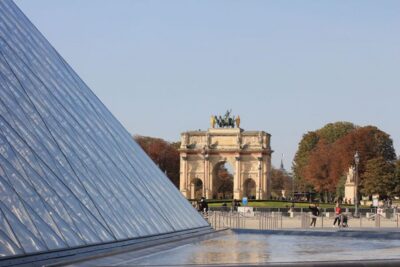
Louvre Reserved Ticket and River Cruise Combo
Read our review →Browse the lists this tour appears in