
Reviewed · LOUVRE MUSEUM TOURS
Paris: Louvre Museum Highlights and Mona Lisa Tour
The Louvre can swallow an entire day before you find the Mona Lisa. This two-hour highlights tour gives you a sensible route through the palace, with an English-speaking guide explaining what you are seeing instead of leaving you to wander past thousands of paintings.
I like the pre-reserved museum entry and the way the guide narrows the collection to the pieces that matter most. I also like the stories: the Mona Lisa’s 1911 theft, the purpose of Winged Victory, and the Louvre’s earlier life as a fortress all give the art a human shape. The catch is simple: a two-hour visit cannot cover the Louvre, and security can still take up to 20 minutes in peak season.
In This Review
- Key points at a glance
- Why a guided Louvre visit makes sense
- Meeting at the Arc du Carrousel du Louvre
- Entering the Louvre, with one security line still to face
- The Louvre as palace, fortress, and museum
- Venus de Milo and the art of the ideal figure
- Winged Victory of Samothrace on the grand staircase
- Renaissance art and the Mona Lisa
- Lesser-known works and quieter corners
- How much can you see in two hours?
- Is $116 a fair price?
- Who should book this Louvre tour?
- Practical details before you go
- Should you book it?
- FAQ
- How long does the Louvre highlights tour last?
- What language is the tour conducted in?
- Which famous artworks are included?
- Is museum entry included?
- Can I skip the Louvre ticket line?
- Is security still required?
- Where do I meet the guide?
- Can I explore the Louvre after the guided tour?
- Is the tour suitable for wheelchair users?
- What should I bring?
Key points at a glance

- The route ends at the Mona Lisa, after stops at Venus de Milo, Winged Victory, Renaissance paintings, Greek antiquities, and other major works.
- The Louvre’s history is part of the tour, including the underground remains of the original medieval fortress.
- Pre-reserved entry saves time, but every visitor still passes through airport-style security.
- English-speaking guides set the tone, with Barbara, Sally, Rodrigo, Pauline, and others praised for humor, clear explanations, and good pacing.
- Groups are limited to 20 people, with headsets supplied so you can hear the guide in crowded galleries.
- You need to walk and climb stairs, and the tour is not suitable for people with mobility impairments.
Why a guided Louvre visit makes sense
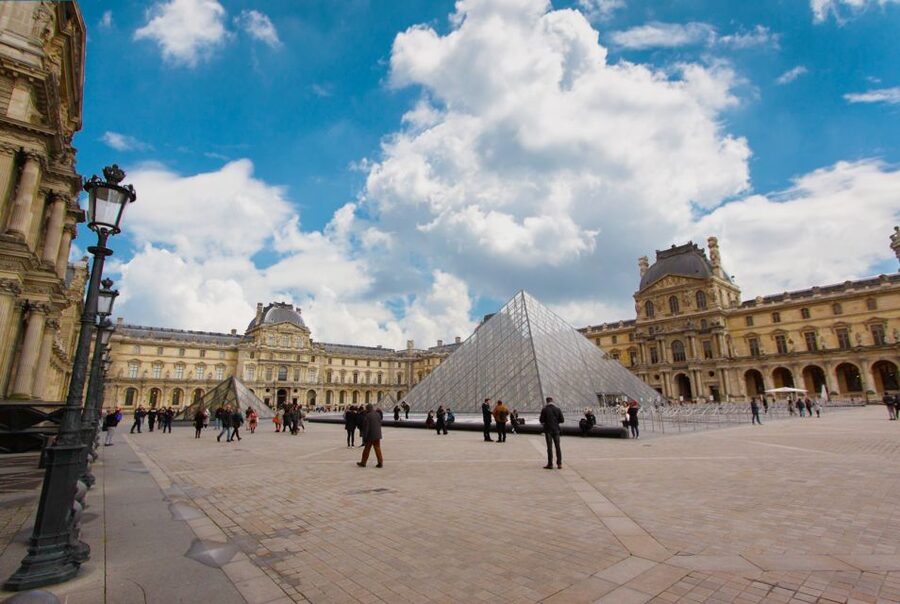
The Louvre is not a museum you casually drop into for an hour. It is a former royal residence with vast collections spanning ancient civilizations through the mid-19th century. Even with a map, you can spend precious time finding the right wing, taking a wrong turn, and arriving at a famous work without knowing why it matters.
This tour solves that first-visit problem. Your guide selects the main works, explains their place in art history, and keeps the group moving through the enormous building. That is useful for you if the Louvre feels intimidating, or if you want an introduction before exploring on your own.
The group size is capped at 20 people. That is not intimate, but it is manageable for a major museum. Headsets help when the galleries are crowded, and the guide can speak without shouting across a room.
The strongest part of the experience is the human explanation. Guides including Sally, Barbara, Rodrigo, Pauline, Camille, Guillaume, Veronica, and Pierre have been praised for making complex art easier to follow. Several guides also kept children interested, which matters if you are visiting as a family.
More Paris museums and collections:
- Paris: Louvre Museum Timed-Entrance Ticket
★ 4.6 · 71,977 reviews - Louvre Museum Masterpieces Guided Tour with Access
★ 4.5 · 12,023 reviews - Paris: Louvre Museum Entry Ticket With Host and River Cruise
★ 4.6 · 9,926 reviews
Meeting at the Arc du Carrousel du Louvre
You meet outside the museum at the Arc du Carrousel du Louvre, although the exact meeting point can change with the option you book. Do not go directly to the museum entrance. The guide must gather the group first and provide the reserved tickets.
Arrive early. If you are late, the group booking may not allow a ticket to be issued, and the tour cannot simply wait for one missing person. Bring your passport or ID card, wear comfortable shoes, and leave luggage or large bags behind.
This meeting arrangement is more important than it may sound. The Louvre has several entrances and a huge surrounding complex. Walking to the wrong door can turn a calm arrival into a frantic search. Check your booking details carefully, then give yourself enough time to find the Arc du Carrousel.
Entering the Louvre, with one security line still to face
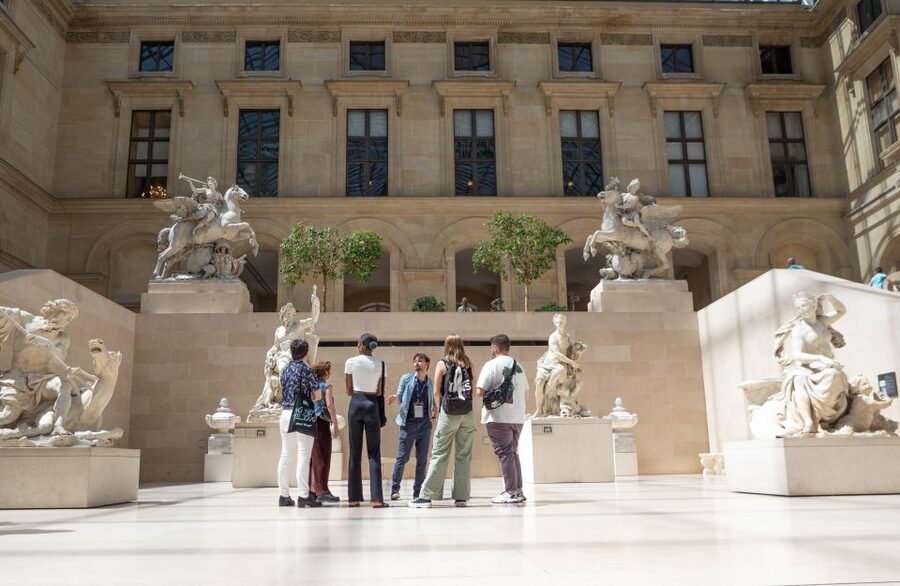
The reserved ticket lets the group use a separate entrance and bypass the ordinary ticket line. That is the main practical saving. In a city where a long queue can eat a large part of your sightseeing day, this access alone adds real value to the $116 price.
Still, skip-the-line does not mean walk straight inside. All visitors pass through airport-style security. During busy summer periods, the security check can take up to 20 minutes. One visitor found that roughly 35 to 40 minutes of a two-hour visit went toward getting into the museum, so keep your expectations realistic.
Once inside, the guide takes charge of the route. The Louvre’s famous pyramid area is only the beginning. The museum spreads through several wings and levels, and the pace needs to be steady to reach the main works within the scheduled time.
The headphones are useful here. Crowds gather around the best-known pieces, and the room may be noisy. You can listen while looking rather than trying to stand shoulder to shoulder with the guide.
The Louvre as palace, fortress, and museum
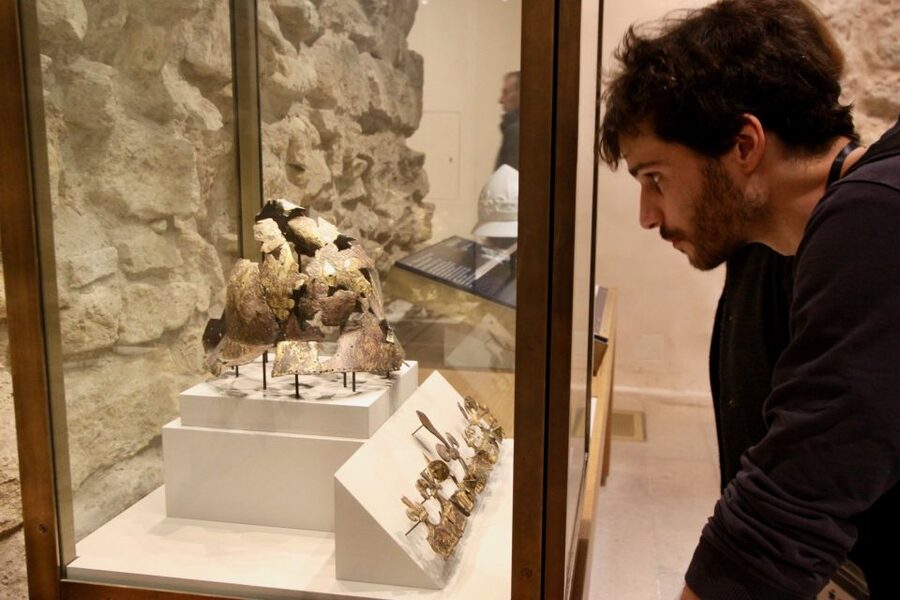
Before the famous paintings and sculptures, the building itself gives the visit its backbone. The Louvre began as a medieval fortress, and parts of the original structure remain in the underground galleries.
These foundations help you understand the museum as more than a box filled with art. The palace grew over centuries, changing with the needs and tastes of French rulers. That long development explains why the corridors feel grand, irregular, and sometimes confusing.
The underground remains are also a welcome change from the packed rooms around the Mona Lisa. You might find these quieter sections especially useful for getting your bearings and understanding the site before the art takes over.
A good guide connects the building to the objects inside. The tour is not only a procession from one famous work to another. It gives you a basic map of how the former royal residence became one of the world’s most visited museums.
A different way to spend the day, same corner of France:
- Disneyland® Paris 1-Day Ticket
★ 4.6 · 49,412 reviews - Paris: Versailles Palace and Gardens Full Access Ticket
★ 4.6 · 41,579 reviews - Paris: Evening River Cruise with Music
★ 4.4 · 22,721 reviews - Paris: Eiffel Tower Entry Ticket with Optional Summit Access
★ 4.4 · 20,035 reviews
Venus de Milo and the art of the ideal figure
The Venus de Milo is one of the Louvre’s essential stops. This ancient Greek sculpture is admired for its balance, posture, and sense of movement, even though the statue is missing its arms.
Your guide can help you look beyond the familiar outline. The sculpture inspired generations of artists, and its fame comes not only from its beauty but also from the questions left open by its missing parts and uncertain original purpose.
Expect a crowd in this area, especially during summer. You may have to shift position to see the statue clearly, and there is little chance of having the room to yourself. The benefit of a guide is that you receive the explanation without needing to study a long wall label while people press past.
This is one of the places where the tour’s focused format works well. You get the central ideas, a chance to take photographs, and enough time to appreciate the work without becoming stuck in one gallery.
Winged Victory of Samothrace on the grand staircase
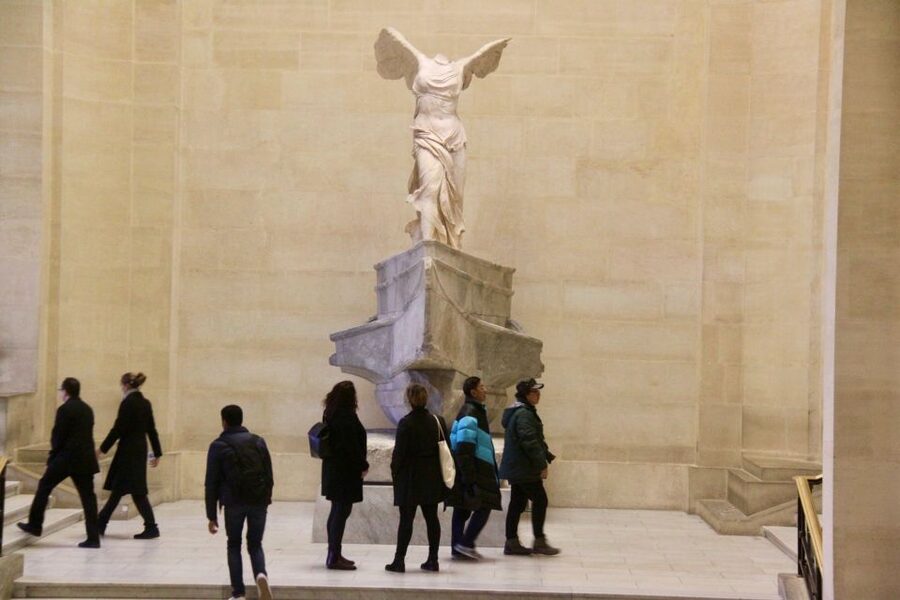
Winged Victory of Samothrace is another major highlight. The Hellenistic statue represents Nike, the Greek goddess of victory, and its placement at the top of the Daru staircase gives it a dramatic arrival.
The sculpture has no head or arms, yet the forward movement remains striking. The wings, flowing clothing, and angled stance suggest wind and motion. Your guide can point out how the statue was designed to be experienced from below and at a distance, rather than viewed as a small object at eye level.
The staircase brings a physical challenge. You should be prepared to walk and climb stairs throughout the visit. This is one reason the experience is not suitable for people with mobility impairments. Museum elevators exist, but their locations do not make them practical for this group route.
For most people who can manage the stairs, the stop is memorable because the architecture and sculpture work together. You are not just looking at a statue in a case. You are seeing it in a setting built to create a sense of arrival.
Renaissance art and the Mona Lisa
The tour includes important Renaissance works and paintings from the 13th to the 19th centuries. The exact selection can vary with crowd flow, museum access, and the guide’s judgment, but the purpose is clear: give you the artistic context needed to understand the Louvre’s best-known painting.
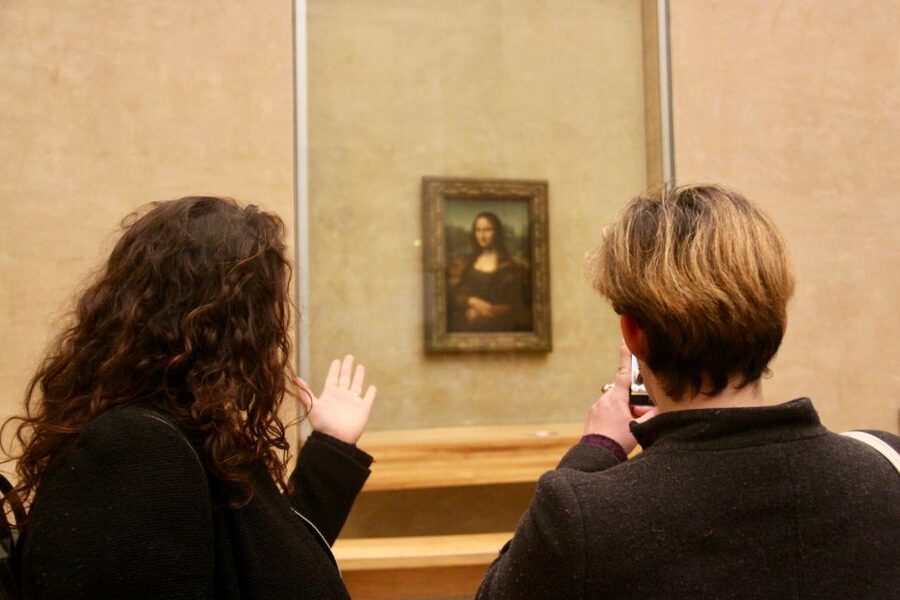
The route finishes at the Mona Lisa. This is a practical choice. You receive the explanation first, then see the portrait in its highly controlled viewing area. The guide can discuss the painting’s expression, composition, fame, and the dramatic theft in 1911 that helped turn it into a worldwide celebrity.
Do not expect a quiet audience with Leonardo’s portrait. This is one of the busiest spots in the building, with barriers and a constant flow of people. You may get only a short viewing opportunity, and the crowd can feel intense.
Several visitors appreciated that the tour ended at the Mona Lisa and then allowed them to continue exploring independently. That arrangement gives you the best of both formats: a guided introduction, followed by freedom to revisit a painting or enter another gallery at your own pace.
There is one important rule. Once you have exited the wings and returned under the pyramid, you cannot re-enter the galleries. So do not leave the exhibition rooms until you are sure you have seen the works you want.
Lesser-known works and quieter corners
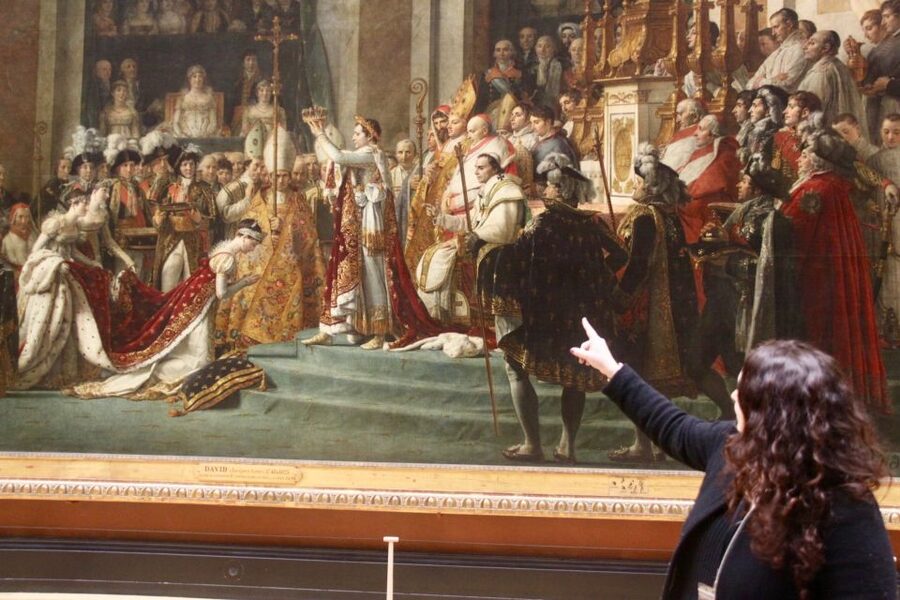
The famous trio gets the attention, but the route also includes less familiar paintings, prints from the Royal Collection, ancient Greek objects, and rooms that many first-time visitors might walk past.
This is where the guide’s storytelling matters most. You may already know the names Mona Lisa and Venus de Milo. You probably need more help noticing a work without a famous label or understanding why a particular room is important.
Several guides have been praised for pointing out pieces people would otherwise ignore. Pierre, for example, was noted for bringing overlooked artworks to life and helping the group find good positions in crowded rooms. Other guides used questions, humor, and unusual details to keep the commentary active rather than turning it into a lecture.
The pace is brisk. One guide was described as moving quickly while still giving a broad overview, and that is a fair description of the format. You are trying to see a lot in about two hours. If you stop for every label, you will lose the group.
How much can you see in two hours?
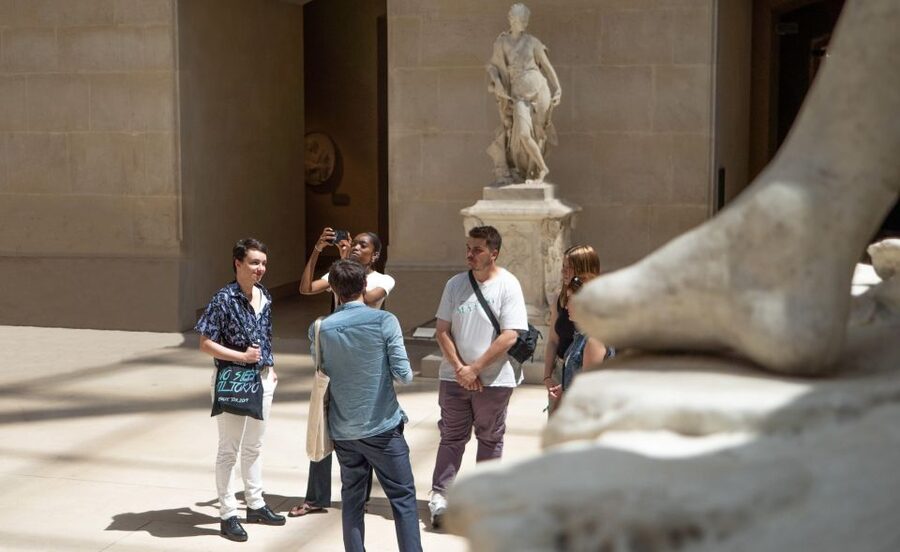
Two hours is enough for a strong first look, not a full museum visit. You can see the signature sculptures, the Mona Lisa, selected paintings, historic rooms, and medieval foundations. You cannot explore every department or spend long periods with individual works.
That limit is actually helpful for a first visit. The Louvre can create decision fatigue. A shorter route gives you a clear starting point and a sense of the building’s scale. Afterward, you can return to one section if your ticket and timing allow, but remember that you cannot re-enter the wings once you are under the pyramid.
The tour may feel shorter than expected because the opening procedures, security, walking, and crowd management take time. A delayed museum opening can also affect the schedule. In one case, a strike delayed opening from 9 a.m. until about 11:30 a.m., though the full two-hour tour was still provided.
Book an early time if you have a choice. Summer is especially crowded, and the main galleries around the Mona Lisa and Venus de Milo can become packed. Earlier access gives you a better chance of moving comfortably through the route.
Is $116 a fair price?
At $116 per person, this is not a cheap museum ticket. You are paying for three things: the reserved Louvre admission, a licensed English-speaking guide, and a route that saves you from planning the visit yourself.
The price makes the most sense for a first-time visitor who values structure. If you arrive with no idea where to begin, the guide can save time and prevent you from getting lost. That practical help is worth more at the Louvre than it would be in a small museum.
The value is also stronger during busy periods, when ordinary entry lines and crowded galleries can consume your morning. The separate entrance helps, although security remains a possible delay.
You may find the price harder to justify if you already know the Louvre well, want to spend several hours in one department, or prefer exploring alone. In that case, a standard ticket and your own plan may suit you better.
The flexible booking terms can help with planning, but check the conditions for the exact option you select. The activity information allows cancellation up to 24 hours in advance for a full refund, while the important notes also state that some bookings are non-refundable and cannot be rescheduled. Treat the specific terms attached to your booking as the final word.
Who should book this Louvre tour?
I would recommend it most strongly to:
- First-time Louvre visitors who want the major works without getting lost.
- Families who need a guide to keep children engaged.
- Anyone with only one or two hours for the museum.
- Art beginners who want clear explanations without an academic lecture.
- Visitors who value reserved entry during busy periods.
- People who want to stay afterward and explore independently.
I would be more cautious if you have mobility limitations, dislike stairs, carry large luggage, or want a slow, detailed study of a single collection. The route is active, the group must stay together, and the Louvre’s crowds can make the famous rooms tiring.
Practical details before you go
The tour is conducted in English and includes a licensed guide, a pre-reserved museum ticket, headsets, and a standard group of no more than 20 people. Hotel pickup, transportation, food, and drinks are not included.
Wear comfortable shoes. You will walk through a large palace and climb stairs. Do not bring luggage, large bags, or a non-folding stroller. Double baby strollers are also not permitted.
Every child must have a booked place on the tour. Most important, arrive at the stated meeting point rather than heading to the museum entrance. A late arrival can mean losing the group ticket.
Should you book it?
Book this tour if you want a clear, efficient first look at the Louvre and would rather hear useful stories than wrestle with the museum map. The guides are the heart of the experience, and names such as Barbara, Sally, Rodrigo, Pauline, and Pierre have been praised for humor, care, and strong explanations.
Skip it if you already have a detailed Louvre plan or want to wander for half a day. For everyone else, the combination of reserved entry, a manageable route, and expert commentary makes the $116 easier to justify. Just allow extra time for security, expect crowds around the Mona Lisa, and accept that two hours gives you the highlights, not the whole museum.
FAQ
How long does the Louvre highlights tour last?
The tour lasts between one and two hours, depending on the option and availability selected.
What language is the tour conducted in?
The live guided tour is conducted in English.
Which famous artworks are included?
The route includes the Mona Lisa, Venus de Milo, and Winged Victory of Samothrace. It also covers selected Renaissance works, ancient Greek relics, paintings from the 13th to the 19th centuries, Royal Collection prints, and medieval fortress remains.
Is museum entry included?
Yes. A Louvre Museum pre-reserved entry ticket is included.
Can I skip the Louvre ticket line?
The tour uses a separate entrance with pre-reserved admission, allowing you to bypass the ordinary ticket line. You must still pass through airport-style security.
Is security still required?
Yes. Every visitor must pass through security, and the wait can reach 20 minutes during peak periods.
Where do I meet the guide?
The meeting point is at the Arc du Carrousel du Louvre, just outside the museum, although it may vary with the option booked. Do not go directly to the museum entrance.
Can I explore the Louvre after the guided tour?
You may stay and continue exploring after the tour, according to the museum access provided. Once you have exited the wings and are under the pyramid, you cannot re-enter the rooms.
Is the tour suitable for wheelchair users?
No. The tour is not suitable for people with mobility impairments because it requires walking and climbing stairs, and the museum elevators are not practical for this route.
What should I bring?
Bring a passport or ID card and wear comfortable shoes. Do not bring luggage, large bags, non-folding strollers, or double baby strollers.
Recently reviewed around Paris
- Louvre Private Tour – The Essentials and More with Expert Guide★ 5.0 · 227 reviews
- 2CV tour by night★ 5.0 · 55 reviews
- Eiffel Tower Second or Summit Floor Access by Elevator with Views★ 3.5 · 161 reviews
- The only Paris Wine Tasting experience you need to do – 2 hours★ 5.0 · 265 reviews
- 2 Hour Street-art Walk and Space Invaders Hunt in Paris★ 5.0 · 27 reviews
- 2 hour outdoor group activity in Paris: SAINT GERMAIN★ 5.0 · 48 reviews
- Sainte-Chapelle, Conciergerie & Palais de Justice Private Tour★ 5.0 · 72 reviews
- Private 2 – Hour Paris Landmarks Tour by Golf Cart Mini Moke★ 5.0 · 38 reviews
Louvre Museum Tours, compared.


Louvre Guided Tour with Reserved Access & Boat Cruise
Read our review →
Louvre Museum Masterpieces Guided Tour with Access
Read our review →
Louvre Museum Entry Ticket With Host and River Cruise
Read our review →
Priority Access Louvre with Host -Direct to Mona Lisa
Read our review →
Mona Lisa & Louvre Masterpieces Tour with Reserved Access
Read our review →
Louvre Museum – Exclusive Guided Tour (Entry Included)
Read our review →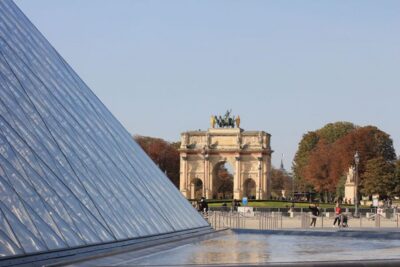
Louvre Reserved Ticket and River Cruise Combo
Read our review →Browse the lists this tour appears in