
Reviewed · LOUVRE MUSEUM TOURS
Paris: Louvre Museum Highlights Small-Group Guided Tour
The clever part of this Louvre visit is not simply seeing the Mona Lisa. It is having a guide lead you through one of the world’s largest museums without wasting your limited Paris time on wrong turns, crowded corridors, and random rooms. Guides such as Walid, Wei, Hamish, John, and Romain bring different strengths, but all are expected to shape the visit around your group.
I like the private or small-group format, which gives you room to ask questions and set the pace. I also like the careful route planning, especially for families and first-time visitors. The main consideration is the $262 per-person price. That is a serious outlay, particularly for a larger family, and the experience may feel rushed if you expect to see the Louvre in full.
In This Review
- Key points at a glance
- Why a guide helps inside the Louvre
- Starting at the horse statue by the Pyramid
- The two-hour route: the Louvre’s essential works
- The three-hour route for a fuller first look
- The four-hour option for art-focused visitors
- What the private format really changes
- The guides: personality matters here
- Crowds, security, and museum changes
- After the guided portion ends
- Who should book this Louvre tour?
- Should you book it?
- FAQ
- How long does the Louvre tour last?
- What famous artworks are included?
- Where do I meet the guide?
- Does the tour include Louvre admission?
- Is the tour private or shared?
- Which languages are available?
- Can I stay in the Louvre after the tour?
Key points at a glance
- Meet by the Louvre Pyramid: Find the horse statue in front of the pyramid and look for the blue Dayin sign.
- Three tour lengths: Pick a 2-hour highlights route, a 3-hour extended visit, or a 4-hour focused exploration.
- Major works made manageable: The route includes the Mona Lisa, Venus de Milo, and Winged Victory of Samothrace.
- Guides can adapt the visit: Previous guests have praised Walid for a Mesopotamia-focused route and guides for keeping children involved.
- Skip the ticket line, not every line: Security can still take up to 20 minutes in the busy season.
- Keep your ticket afterward: Once the guided portion ends, you can continue through the museum by yourself.
Why a guide helps inside the Louvre
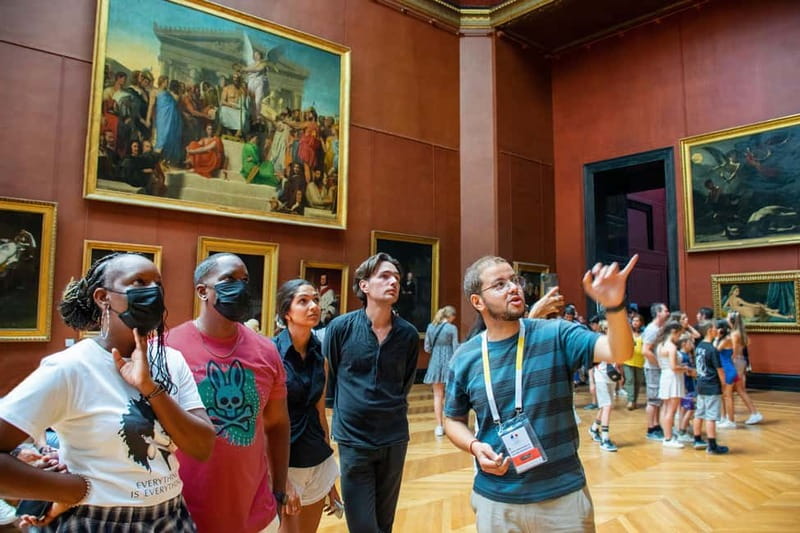
The Louvre is not one tidy gallery with a few famous paintings. It is a huge former palace with collections covering many centuries and cultures. Without a plan, you can spend much of your visit finding the right staircase, circling back through the same hallway, or standing in a crowd without understanding what you are seeing.
A good guide gives the museum a shape. You might begin with ancient sculpture, move through major European paintings, and finish at the Mona Lisa, or your guide may reverse that order to avoid the worst crush. The exact path depends on the day, gallery access, crowd levels, and your interests.
That matters because the Louvre’s most famous works can blur together when you see them without context. The Venus de Milo is not just a graceful marble figure, and the Winged Victory of Samothrace is not merely a dramatic statue on a staircase. A guide can explain what makes each work important, point out details you might miss, and connect art to the people and periods that produced it.
This is especially helpful for children. Wei has been praised for keeping children involved, while another guide managed to maintain interest among four children aged 7, 10, 12, and 12. The route still moves at a good pace, but the explanations are designed to hold attention rather than sound like a lecture.
More Paris museums and collections:
- Paris: Louvre Museum Timed-Entrance Ticket
★ 4.6 · 71,977 reviews - Louvre Museum Masterpieces Guided Tour with Access
★ 4.5 · 12,023 reviews - Paris: Louvre Museum Entry Ticket With Host and River Cruise
★ 4.6 · 9,926 reviews
Starting at the horse statue by the Pyramid
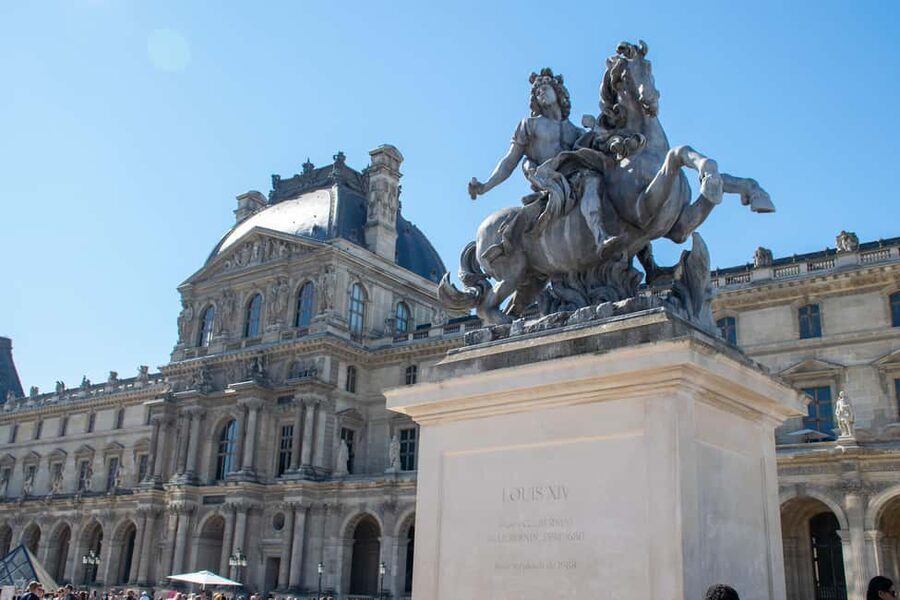
Your meeting point is next to the horse statue in front of the Louvre Pyramid, identified as Louis XIV sous les traits de Marcus Curtius, a copy. If you use a map app, type in Louvre Pyramid rather than relying on a vague search for the museum entrance.
Look for the blue Dayin sign. This detail is worth taking seriously. One person had trouble finding the guide because the sign displayed the company name rather than the guide’s personal name. Leave extra time, especially if you are crossing Paris by taxi or public transport, and keep your phone available in case you need to contact the guide.
The tour ends back at the meeting point. Hotel pickup and drop-off are not included, so you handle your own journey to and from the Louvre. That is easy enough if you are already in central Paris, but it means you should allow a cushion before the start time. Arriving late can be costly when timed museum entry is involved.
You must provide each participant’s full first and last name when booking, including children. Bring a passport or identity card, or an accepted copy. Large bags, luggage, selfie sticks, and flash photography are not permitted.
The two-hour route: the Louvre’s essential works
The standard 2-hour tour is the sensible choice for a first visit, a short Paris stop, or a family with limited patience for museums. It focuses on the works most people hope to see, including the Mona Lisa, Venus de Milo, and Victory of Samothrace.
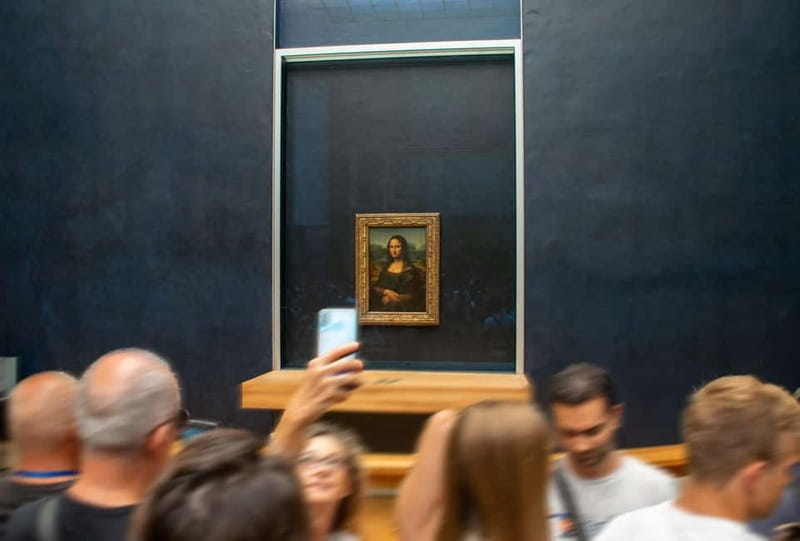
The Mona Lisa is usually the biggest crowd magnet. Skip-the-ticket-line access helps you get into the museum, but it does not guarantee a quiet viewing. There can still be a wait at security, and the painting itself may be surrounded by a dense audience.
One useful strategy is to see the Mona Lisa during the guided route, then return afterward if you want another look. You are free to continue in the museum once the tour finishes. This gives you both the guide’s explanation and a chance to revisit the painting at your own speed.
The Venus de Milo offers a different experience. Its appeal is not only the missing arms or smooth marble surface, but also the way the statue has become one of the world’s best-known symbols of ancient Greek art. The Winged Victory of Samothrace provides a grand change of scale, with its powerful pose and dramatic placement.
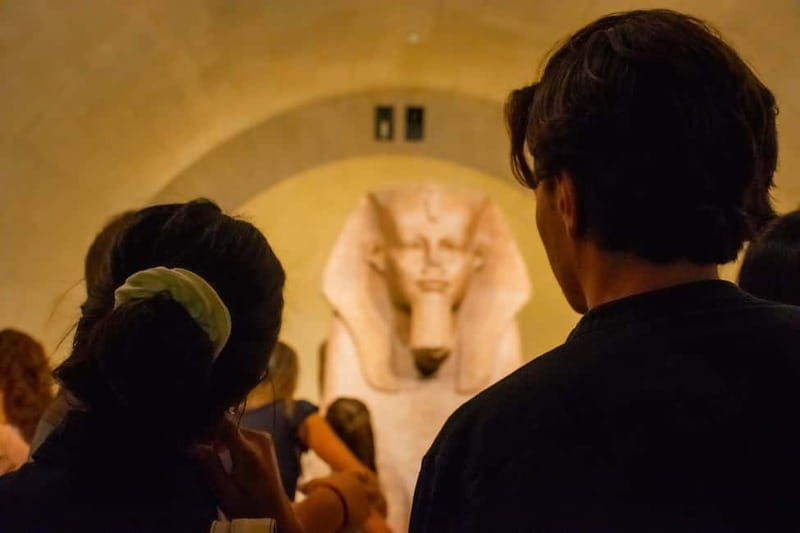
The short route cannot cover everything. That is its strength and its limit. You get a useful framework instead of wandering for hours, but you should not expect a full survey of French painting, Egyptian antiquities, Near Eastern objects, sculpture, and decorative arts in one sitting.
The three-hour route for a fuller first look
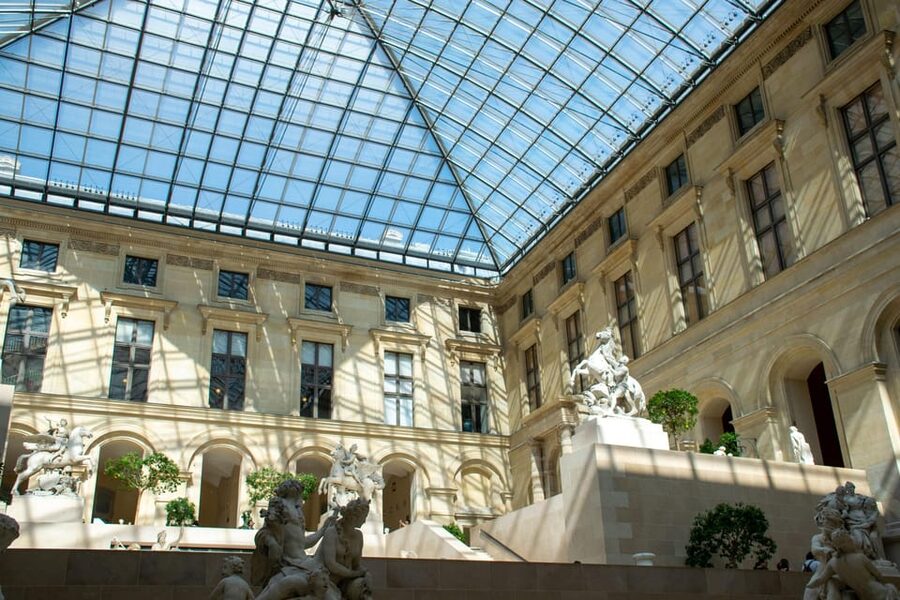
The 3-hour option gives your guide more breathing room. You can still see the headline works, but there is time for less famous pieces and for questions that would be cut short on the 2-hour route.
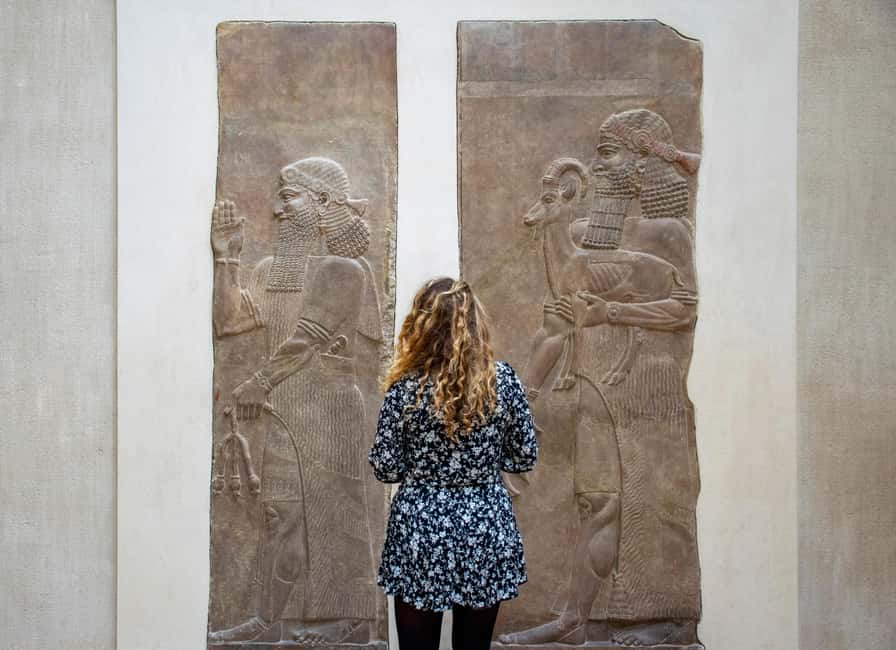
This length suits couples, older children, and people who have visited the Louvre once before. It also works well if your group has a clear interest in a period or collection. A previous route was adjusted for someone who wanted more than a standard run through the European masters, with extra attention given to Mesopotamian art.
That kind of adjustment is one of the strongest reasons to book a private tour rather than a large group. You can tell the guide what has already been seen, what you want to avoid, and what deserves more attention. The guide may still need to change the plan because galleries can close without notice or works can be removed for restoration or loan, but the conversation is more personal.
Three hours is also a better fit if you want the museum itself explained, not just its famous objects. The Louvre’s building, former royal role, and long development as a museum add useful context to the art. Still, you should expect to walk and keep moving. This is not a slow session in one quiet gallery.
More Paris trips worth a second look
- Paris: Louvre Guided Tour with Reserved Access & Boat Cruise
★ 4.3 · 16,353 reviews - Louvre Museum – Exclusive Guided Tour (Entry Included)
★ 5.0 · 6,296 reviews - Versailles: Skip-the-Line Guided Palace Tour and Full Access
★ 4.6 · 5,214 reviews - Louvre Priority Access with Mona Lisa Escort or Guided Option
★ 4.0 · 4,420 reviews
The four-hour option for art-focused visitors
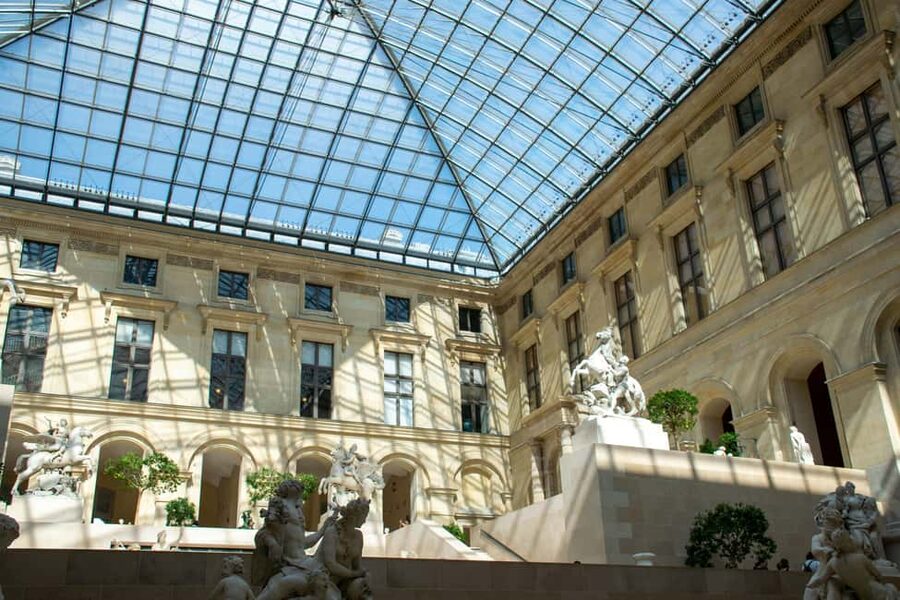
The 4-hour route is aimed at people who want a sustained visit and more room for personal interests. The supplied description calls it a deeper exploration, but even four hours cover only a small part of the Louvre’s holdings. Think of it as a focused half-day, not a complete museum tour.
This is the best choice if you have already seen the central masterpieces or if your group wants to spend time with specific collections. It may also be worthwhile for serious art fans who want more discussion and fewer quick stops.
The extra time can make the museum feel less like a checklist. Your guide can linger over works that interest you, compare objects from different periods, and answer the sort of questions that do not fit into a tightly timed highlights route.
There is a practical warning here. One person found a guided visit so fast that the group felt worn out by the end, even while appreciating the guide’s humor and command of the museum. A longer booking does not automatically mean a relaxed pace. Tell your guide if you need breaks, a slower route, or fewer stops with more explanation.
What the private format really changes

A private tour does not remove the crowds. It does remove the need to keep up with a large group of strangers. Your guide can pause when your child asks a question, adjust the route for an older participant, or spend more time on a subject that catches your attention.
That flexibility has practical value. Walid helped one visitor with a cane after knee replacement by using elevators and paths with fewer obstacles. The experience may therefore work better for people who need some route planning, although the supplied information does not promise a fully accessible tour or guarantee that every gallery will be easy to reach.
Small groups also make communication easier. You can hear the guide more clearly, ask about a detail in a painting, and avoid the awkward stop-start movement of a large party. Aurele and Hamish were both singled out for making the small-group setup work well, and one small group included only another pair, which created a more personal visit.
The tradeoff is price. At $262 per person, this is not a budget museum entry. You are paying for the guide’s time, the private arrangement, the museum ticket, and the ability to use a carefully chosen route. The value is strongest when your time in Paris is short, your party has mixed interests, or you would otherwise hire a guide separately.
For a solo visitor or a couple with a flexible schedule, the cost may be harder to justify. For a family of four that wants to avoid a failed museum morning, the price can make more sense, though the total bill rises quickly.
The guides: personality matters here
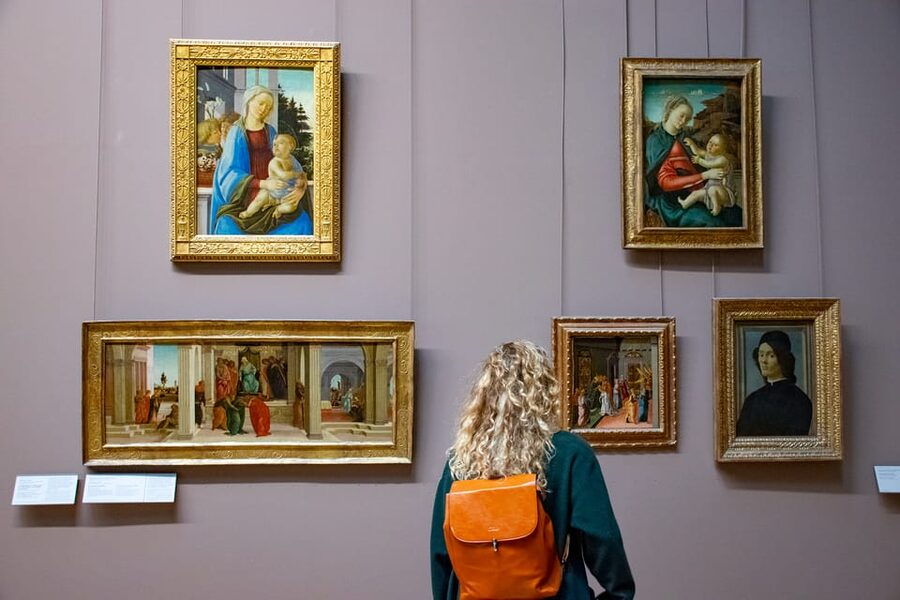
The company uses guides who speak English, French, Spanish, Chinese, Traditional Chinese, and Arabic. The guide you receive depends on availability, so you should not assume that a particular person can be requested unless the booking process confirms it.
Several names have received especially strong praise. Romain is described as bringing infectious enthusiasm to art and history. Vincent is praised for clear subject knowledge, while John is noted for a structured and engaging presentation. Hamish has impressed groups with his ability to answer unexpected questions and navigate very crowded rooms.
Walid appears particularly strong at customization. He created a Mesopotamia-focused visit for a repeat Louvre visitor, while also adding personal favorites and useful stories for first-time guests. Wei has been praised for combining clear explanations with an easy way of engaging both adults and children.
Guide quality can vary in any human-led experience. One guide was found informative and funny but spoke English less clearly than the group hoped. Another arrived late after a public transport problem, although the wait was followed by a very strong tour. Build in time at the meeting point and remember that the Dayin sign may not show the guide’s name.
Crowds, security, and museum changes
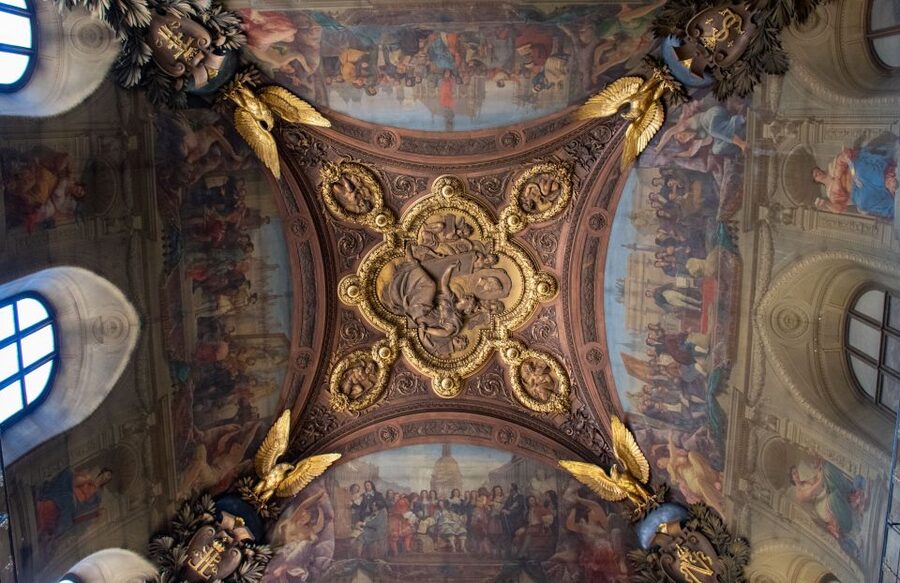
Skip-the-ticket-line entry is useful, but the phrase needs a realistic reading. You skip the main ticket queue with your guide, yet everyone must still pass security. In high season, that check can take up to 20 minutes.
Inside, the Mona Lisa area can be particularly crowded. A guide who knows the museum can often choose a better order and locate an entrance with little or no line, as Wei did for one group. Still, no guide controls the number of people in the building.
Galleries can close without warning, and individual works may be away for restoration or on loan. If your entire reason for booking is one particular painting, accept that there is a small risk of change. The tour remains useful because the guide can redirect the visit, but the promised route should not be treated as fixed.
Wear comfortable shoes and keep your belongings light. Luggage and large bags are not allowed, and selfie sticks and flash photography are prohibited. You may take photographs where museum rules allow, but flash is out.
After the guided portion ends
The official guided portion is listed as two hours for the highlights route, with 3-hour and 4-hour choices available. Afterward, you can remain in the museum and continue exploring independently.
This is an important part of the value. The guide gets you oriented, explains the major works, and shows you how the building fits together. You can then return to a gallery that caught your interest without needing the guide to keep moving.
Ask for suggestions before saying goodbye. Guides have recommended areas and attractions to explore afterward, and they can offer tips for navigating the city. The activity itself ends back at the meeting point, so plan your next stop from there.
Who should book this Louvre tour?
I would give this tour serious thought if you are visiting the Louvre for the first time, have only a few hours, or are traveling with children. The strongest benefit is not simply saving time at the entrance. It is avoiding the mental work of deciding what to see in a museum that can easily overwhelm a first visit.
It also suits repeat visitors who want a custom route. Walid’s Mesopotamia-focused tour shows how different the experience can be when you explain your interests in advance.
Art specialists may prefer the 4-hour option, but should still ask what can realistically be covered. If your goal is quiet, unhurried study of a small number of works, say so before the tour begins. The default highlights route is active and efficient.
This is less appealing if you enjoy wandering alone, already know the Louvre well, or are trying to keep your Paris budget tight. You can get museum entry without paying for a private guide, and you may prefer to spend that money on several separate attractions.
Should you book it?
Book this Dayin tour if you want the Louvre to make sense quickly, value direct access to an expert, and like the freedom to ask questions or change the emphasis. The strongest signs are the repeated praise for clear explanations, crowd navigation, family engagement, and custom routes from guides including Walid, Wei, Hamish, John, and Romain.
Choose the 2-hour option for the essential works, 3 hours for a more rounded first visit, and 4 hours for a personal art-focused route. At $262 per person, it is a premium choice, but it can be worthwhile when your Paris schedule is short or your group would otherwise struggle to manage the museum. Confirm the group format, arrive early, and treat skip-the-line access as a way past the ticket queue, not a promise of an empty Louvre.
FAQ
How long does the Louvre tour last?
The experience lasts from 2 to 4 hours, depending on the option selected. The 2-hour highlights tour covers the main works, while the 3-hour and 4-hour options allow more time for additional art and personal interests.
What famous artworks are included?
The route includes the Mona Lisa, Venus de Milo, and Victory of Samothrace. The exact galleries and works can change if areas close or pieces are removed for restoration or loan.
Where do I meet the guide?
Meet next to the horse statue in front of the Louvre Pyramid. Enter Louvre Pyramid into Google Maps and look for a guide holding a blue Dayin sign.
Does the tour include Louvre admission?
Yes. Louvre Museum entry is included in the price.
Is the tour private or shared?
Private and small-group options are available. Check the specific booking choice to confirm which format you are selecting.
Which languages are available?
Guides are available in English, French, Spanish, Chinese, Traditional Chinese, and Arabic.
Can I stay in the Louvre after the tour?
Yes. After the guided visit ends, you are free to continue exploring the museum at your own pace.
Recently reviewed around Paris
- Louvre Private Tour – The Essentials and More with Expert Guide★ 5.0 · 227 reviews
- 2CV tour by night★ 5.0 · 55 reviews
- Eiffel Tower Second or Summit Floor Access by Elevator with Views★ 3.5 · 161 reviews
- 2 Hour Street-art Walk and Space Invaders Hunt in Paris★ 5.0 · 27 reviews
- 2 hour outdoor group activity in Paris: SAINT GERMAIN★ 5.0 · 48 reviews
- The only Paris Wine Tasting experience you need to do – 2 hours★ 5.0 · 265 reviews
- Sainte-Chapelle, Conciergerie & Palais de Justice Private Tour★ 5.0 · 72 reviews
- Private 2 – Hour Paris Landmarks Tour by Golf Cart Mini Moke★ 5.0 · 38 reviews
Louvre Museum Tours, compared.


Louvre Guided Tour with Reserved Access & Boat Cruise
Read our review →
Louvre Museum Masterpieces Guided Tour with Access
Read our review →
Louvre Museum Entry Ticket With Host and River Cruise
Read our review →
Priority Access Louvre with Host -Direct to Mona Lisa
Read our review →
Mona Lisa & Louvre Masterpieces Tour with Reserved Access
Read our review →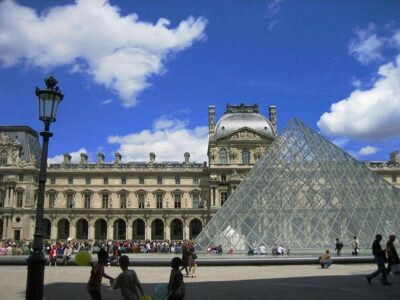
Louvre Museum – Exclusive Guided Tour (Entry Included)
Read our review →
Louvre Reserved Ticket and River Cruise Combo
Read our review →Browse the lists this tour appears in