
Reviewed · LOUVRE MUSEUM TOURS
Paris: Louvre Museum Tour Mona Lisa & Iconic Masterpieces
The Louvre is so large that a first visit can feel like an art-history exam with no study guide. This two-hour highlights tour gives you a clear route to the Mona Lisa, Venus de Milo, Winged Victory of Samothrace, major Renaissance works, and the old castle foundations beneath the palace. You enter through the glass pyramid with a pre-reserved ticket, then let a guide turn famous objects into understandable stories.
I like the efficient route and the chance to stay in the museum after the tour. I also like the human touch: guides such as Sophie, Gabriela, Megan, Lucia, and René have been praised for lively storytelling, humor, and calm group management. The catch is simple: two hours can only introduce the Louvre. You will see the headline works, not every room, and busy summer days can bring a security wait of up to 20 minutes.
In This Review
- Key points to know before booking
- Why a guided route helps inside the Louvre
- Meeting the guide at the Kiosque des Noctambules
- Entering through the glass pyramid
- The Venus de Milo and Greek sculpture
- The Mona Lisa and the price of fame
- Renaissance paintings and lesser-known works
- Beneath the palace: the Louvre before the Louvre
- What happens after the two-hour tour
- Price, group size, and overall value
- Who should book this Louvre tour?
- Final verdict: a smart first look at an overwhelming museum
- FAQ
- How long does the Louvre tour last?
- What artworks are included?
- Where is the meeting point?
- Can I go directly to the Louvre entrance?
- What languages are available?
- How large is the group?
- Is the tour suitable for wheelchair users?
- Can I bring luggage or a large bag?
Key points to know before booking
- The meeting point is outside the museum: Find the colorful Kiosque des Noctambules opposite the Comédie Française, not the Louvre entrance.
- The route covers the major icons: Expect the Mona Lisa, Venus de Milo, Winged Victory of Samothrace, Renaissance art, Greek sculpture, royal prints, and the palace foundations.
- The group can reach 20 people: Headsets help you hear the guide, but this is not a private or small-group experience.
- The guide makes the difference: Sophie, Gabriela, Megan, Lucia, and other guides have been praised for clear explanations, humor, and strong pacing.
- You can remain after the tour: Once the guided route ends, you may continue exploring, but leaving the wings and returning beneath the pyramid does not allow re-entry to the galleries.
- Stairs and crowds matter: This tour is not suitable for wheelchair users or people with mobility impairments, and large bags, luggage, selfie sticks, and double baby strollers are not permitted.
Why a guided route helps inside the Louvre
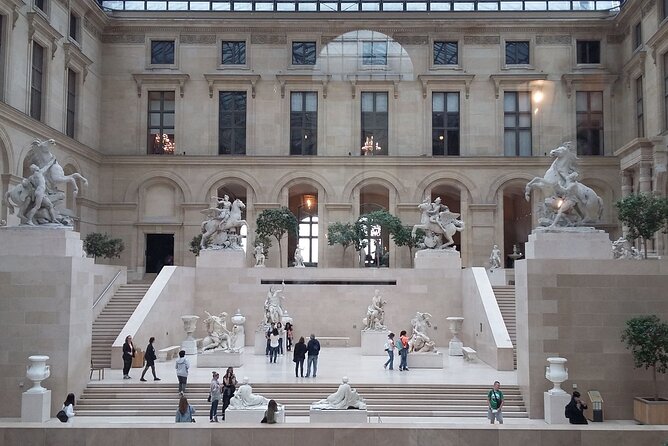
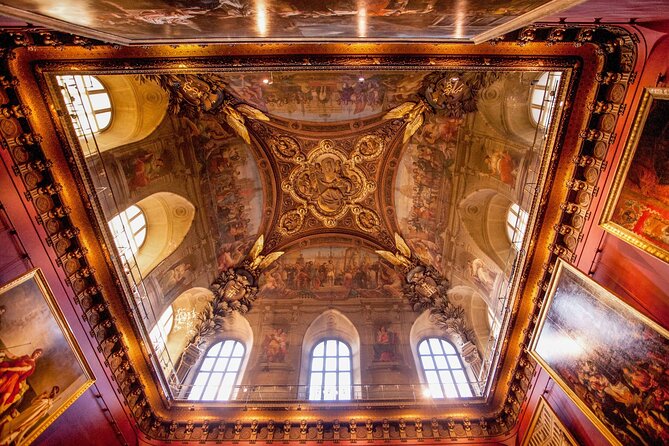
The Louvre is not merely a large museum. It is a former royal residence with collections stretching from ancient civilizations through the mid-19th century. Its galleries cover sculpture, painting, prints, decorative arts, and archaeological objects across an enormous building.
That scale is the main reason I would consider a guide. On your own, you can certainly find the Mona Lisa, but the visit can turn into a march from sign to sign. A good guide gives each stop a reason to matter. You hear why a work was made, how it was viewed in its own time, and why it became famous.
The strongest part of this experience is the storytelling. Sophie has been praised for an upbeat, easy-to-follow presentation, while Gabriela has been singled out for making a large number of periods and objects manageable in two hours. Megan’s tours have been described as friendly, interactive, and funny. These names do not guarantee your assigned guide, but they show the kind of approach you can expect from the better-led groups.
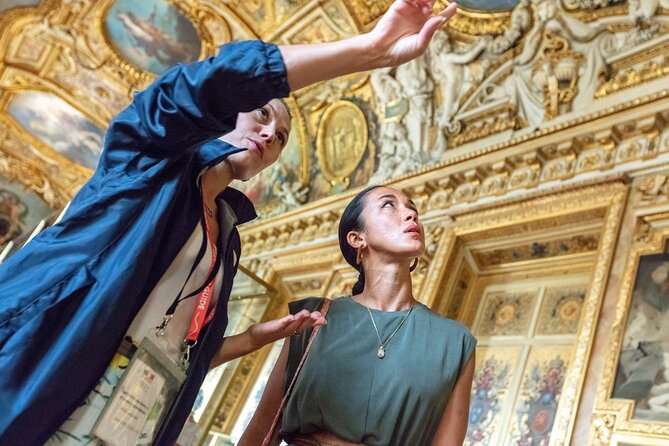
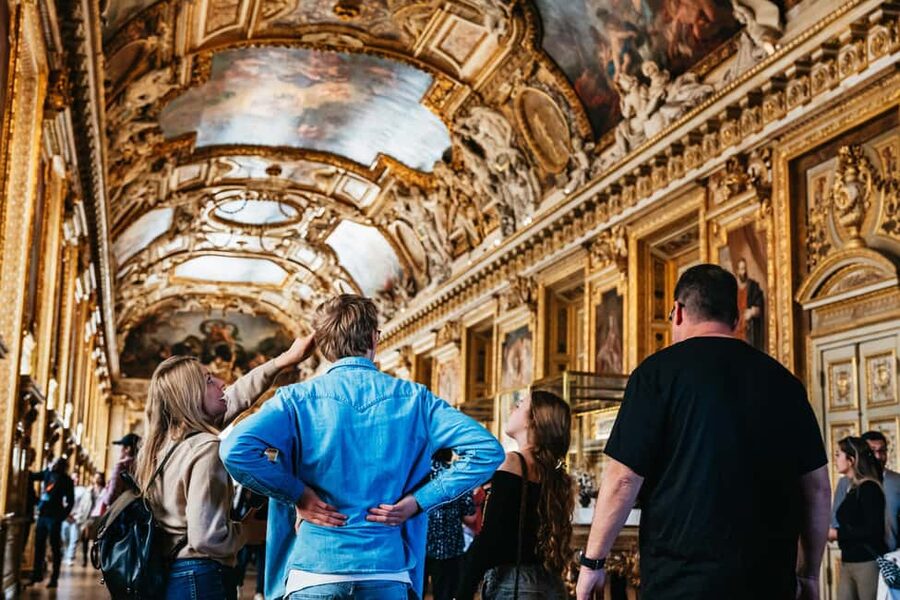
The headsets are useful. In a museum filled with footsteps, voices, and camera clicks, you can keep your eyes on a sculpture while hearing the explanation. With a group of up to 20, this matters. You still need to stay close to the guide, but you are less likely to miss a sentence when the room gets noisy.
More Paris museums and collections:
- Paris: Louvre Museum Timed-Entrance Ticket
★ 4.6 · 71,977 reviews - Louvre Museum Masterpieces Guided Tour with Access
★ 4.5 · 12,023 reviews - Paris: Louvre Museum Entry Ticket With Host and River Cruise
★ 4.6 · 9,926 reviews
Meeting the guide at the Kiosque des Noctambules
Do not head straight to the Louvre entrance. The meeting point is the Kiosque des Noctambules, a colorful structure decorated with Murano glass beads and located across from the Comédie Française.
The nearest metro stop is Palais Royal, Musée du Louvre. Use the Place Colette exit. From there, the meeting point is about a five-minute walk from the Louvre entrance.
This is one place where you should allow extra time. One person had trouble because copying the address into a map sent him to the wrong location. Use the exact meeting-point instructions and arrive early enough to orient yourself. The guide is expected to arrive at the scheduled start time, not before, and will carry a GetYourGuide flag.
Lateness is a serious problem here. The group has a reserved booking, and a ticket may not be issued if you miss the departure. The practical rule is to treat the meeting time as a firm appointment, not a suggestion.
You should also use the restroom before entering if needed. René reportedly arranged a bathroom break and helped a couple with lockers, but do not count on every guide being able to solve every last-minute need. The Louvre’s rules about bags are strict, so travel light.
Entering through the glass pyramid
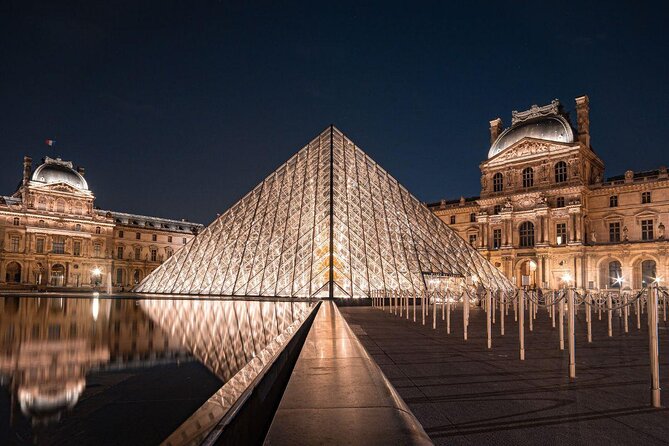
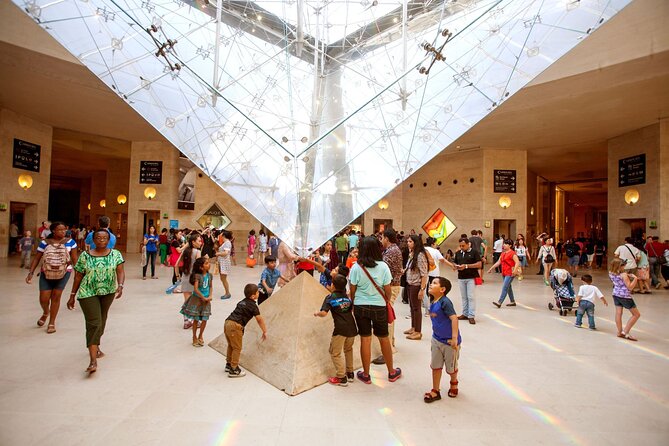
The glass pyramid is one of Paris’s most recognizable entrances, but it is also where security and ticket checks can slow you down. Your pre-reserved museum ticket provides access to the group booking, and the tour is described as skipping the ticket line. It does not mean you bypass every security procedure.
During busy periods, security can still take up to 20 minutes. Summer is especially crowded. You may move past people waiting to buy or validate tickets, then join the security queue before entering the museum.
This distinction matters when you plan your day. Do not book a tightly timed lunch, train, or second attraction immediately after the stated two-hour finish. The tour itself lasts two hours, but crowd conditions can affect the start and the pace.
Once inside, the guide takes charge of the route. The goal is not to cover every department. It is to make the museum’s most important rooms and objects easier to understand before giving you time to continue alone.
The Venus de Milo and Greek sculpture
The Venus de Milo is one of the Louvre’s essential stops. This ancient Greek statue has inspired generations of artists, and its missing arms have helped make it one of the world’s most recognizable sculptures.
A guide can help you look past the postcard image. Instead of simply pausing for a photograph, you get a chance to consider the statue’s pose, proportions, and place within the development of Greek sculpture. The tour also includes discussion of Greek artistic change, which gives the object more context than a quick solo glance.
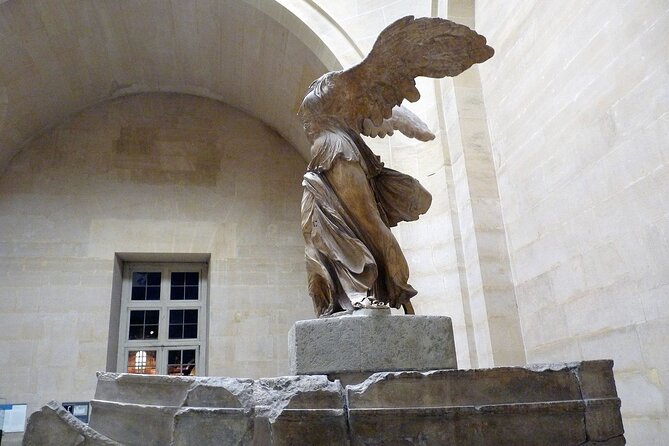
The Winged Victory of Samothrace offers a different effect. Carved in the form of Nike, the Greek goddess of victory, the statue is set to command attention as you approach it. Its movement and drapery make it especially effective in person.
These two sculptures are worth seeing even if you are not an art specialist. They are large, direct, and visually powerful. The drawback is that these rooms can be busy, and the group may need to keep moving. If you want long, quiet time with either statue, plan to return after the guided portion.
A different way to spend the day, same corner of France:
- Disneyland® Paris 1-Day Ticket
★ 4.6 · 49,412 reviews - Paris: Versailles Palace and Gardens Full Access Ticket
★ 4.6 · 41,579 reviews - Paris: Evening River Cruise with Music
★ 4.4 · 22,721 reviews - Paris: Eiffel Tower Entry Ticket with Optional Summit Access
★ 4.4 · 20,035 reviews
The Mona Lisa and the price of fame
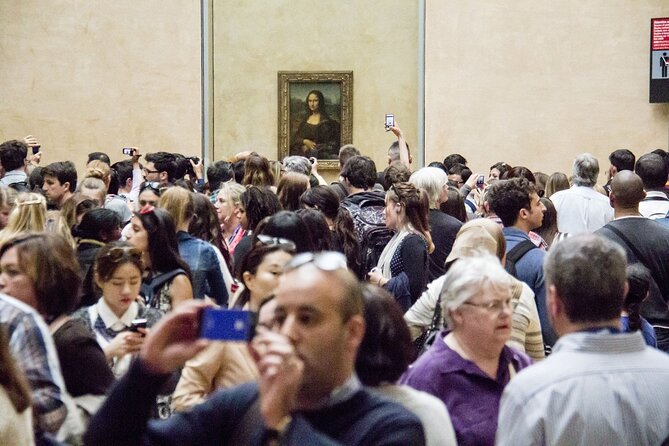
The Mona Lisa is the stop most people have in mind when booking. The guide brings you to Leonardo da Vinci’s famous Renaissance portrait, whose theft in 1911 helped turn it into a global celebrity.
That story is useful because the painting’s fame is not based only on the image itself. You learn how public attention, the theft, and later reproduction helped shape the way people see the portrait today.
Expect a crowd around the painting. One guide was able to bring the group near the front of the rope, which can make a difference, but the exact position depends on museum conditions. You will likely have a brief viewing opportunity rather than a long private encounter.
Keep your expectations sensible. The Mona Lisa is smaller than many first-time visitors imagine, and the room can feel more like a public event than a quiet art gallery. The guide helps you understand what you are seeing, but you may still want to return later if you hope to study the portrait closely.
The tour’s value here is not just getting near the painting. It is reaching the room efficiently, hearing the story, and avoiding the confusion of trying to locate it in a building with many wings and levels.
Renaissance paintings and lesser-known works
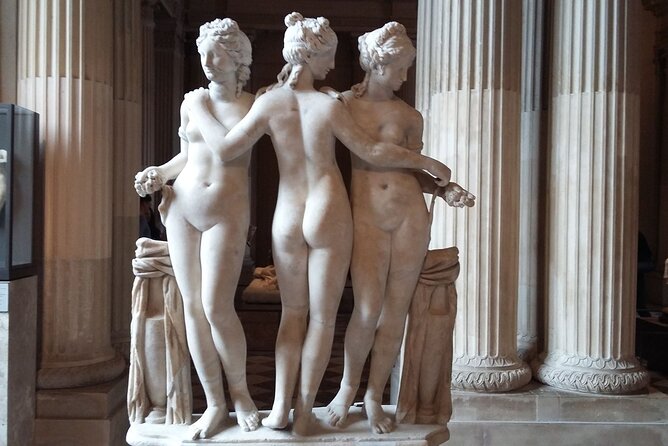
After the headline sculptures and portrait, the route includes Renaissance treasures, paintings from the 13th through 19th centuries, and less famous works that deserve attention.
This is where the guide’s personality matters most. Famous names need little help attracting a crowd. A smaller painting or print can pass unnoticed unless someone explains its subject, technique, patron, or place in the collection.
The tour also includes prints from the Royal Collection. That detail is easy to miss when planning a first Louvre visit, since most people focus on paintings and sculpture. It gives you a glimpse of how royal collecting extended beyond the grand canvases on the walls.
You should expect a selection, not a full survey. The Louvre holds far more art than any two-hour route can cover. The guide’s job is to choose works that create a useful outline of the museum, then point out additional pieces along the way.
The pace may feel quick. One person found the tour moved too fast because there were so many people, while others appreciated how much Gabriela and other guides covered in the allotted time. Both reactions make sense. This format favors first-time visitors who want orientation over repeat visitors who prefer a slow study of a few works.
Beneath the palace: the Louvre before the Louvre
The Louvre was once a royal palace, and the tour includes the foundations of the medieval castle that occupied the site before the later palace complex.
The basement gives the visit a physical sense of time. You are not just looking at objects from different centuries. You are walking through layers of the building itself and seeing evidence of the fortress that came first.
This stop is especially helpful if you want the Louvre to make architectural sense. The museum can feel like a maze of grand staircases, wings, and courtyards. The foundations explain that the building grew over time rather than appearing as one carefully planned museum.
As with the other stops, the guide’s explanation turns a quick look into a connected story. You see how the royal residence, the art collection, and the modern museum fit together.
What happens after the two-hour tour

The guided portion ends after the highlights route, but you can stay in the museum and continue on your own. This is one of the best features of the booking.
Two hours is enough for an introduction, not enough for the Louvre. If you have energy, use the remaining time to revisit a favorite work or explore a department the group did not cover. The museum’s scale means you should not try to see everything. Choose one or two areas and accept that the rest will wait for another visit.
Be careful about leaving. Once you have exited the wings and are back beneath the pyramid, you cannot re-enter the rooms. Plan your bathroom break, photographs, and final gallery visit before you move toward the exit.
The extra time also softens the tour’s quick pace. You can follow the guide’s route for orientation, then slow down afterward. This works better than expecting the guide to provide a long, quiet viewing session at every stop.
Price, group size, and overall value
The tour costs $79 per person. That is not the cheapest way into the Louvre, especially for a couple or family, but the price includes a pre-reserved museum ticket, a licensed guide, headsets, and a structured two-hour route.
For a first visit, I think the value comes from three things: getting into a difficult-to-navigate museum efficiently, reaching the major works without wandering, and hearing explanations that an audio recording cannot provide. One person who had failed to find a ticket on the official museum site felt the guided booking was worth paying for. Another visitor who had already visited alone found the guided experience much more useful the second time.
The group limit is 20 people. That is small enough for a workable walking tour, but it is not intimate. If you want to ask many questions or set the pace yourself, look for a private or small-group option instead. Those upgrades are not included here.
The reviews give the tour a 4.7 rating from 4,536 reviews, and the strongest praise centers on the guides. Their humor, clear explanations, and ability to keep a group together in a crowded museum are more important than polished logistics. A good guide can make the Louvre feel ordered. A rushed guide can make the same two hours feel like a checklist.
There is also an upgrade that adds a morning tour of the Orsay Museum. That may suit an art-focused day, but think about your stamina. The Louvre alone can be tiring, particularly with stairs and long walks between galleries.
Who should book this Louvre tour?
I would choose this tour if you are visiting the Louvre for the first time, have limited time in Paris, or feel uneasy about finding the major works on your own. It is also useful if official timed tickets are unavailable and you value a reserved entry arranged as part of a group.
It suits adults, families with children who are prepared to walk, and anyone who prefers stories to wall labels. Every child must have a booked place. Bring comfortable shoes and keep your belongings small.
I would think twice if you want a slow art-study session, need step-free access, or already know the Louvre well. The tour is not suitable for wheelchair users or people with mobility impairments. Non-folding and electric wheelchairs are not permitted, and the route includes many steps.
Large bags, luggage, selfie sticks, and double baby strollers are not allowed. If you are coming directly from a train station or airport, make another plan for your bags before meeting the guide.
Final verdict: a smart first look at an overwhelming museum
Book this tour if you want the Louvre’s essential works, clear explanations, and a practical route in two hours. The strongest reason to choose it is the guide-led structure, especially if you are likely to feel lost inside the world’s enormous collection.
Do not book it expecting a quiet encounter with the Mona Lisa or a complete visit to the museum. Crowds, security, stairs, and a firm meeting time are part of the deal. At $79, it is a reasonable choice for a first visit when your time matters, provided you stay afterward to explore at your own pace.
Cancellation terms are listed as free cancellation up to 24 hours before the activity with a full refund, while late arrival means the group ticket may not be issued. Check the final booking conditions carefully, arrive early, and meet the guide at the Kiosque des Noctambules rather than at the Louvre door.
FAQ
How long does the Louvre tour last?
The guided tour lasts two hours. Afterward, you may stay in the museum and continue exploring on your own.
What artworks are included?
The route includes the Mona Lisa, Venus de Milo, and Winged Victory of Samothrace. It also covers Renaissance works, ancient Greek objects, paintings from the 13th through 19th centuries, Royal Collection prints, and the foundations of the earlier castle.
Where is the meeting point?
Meet at the Kiosque des Noctambules, the colorful Murano glass structure facing the Comédie Française. It is about a five-minute walk from the Louvre entrance.
Can I go directly to the Louvre entrance?
No. You must meet the guide at the Kiosque des Noctambules. Look for a guide holding a GetYourGuide flag.
What languages are available?
The tour is offered in English and Portuguese.
How large is the group?
The standard group can include up to 20 participants. Headsets are provided so you can hear the licensed guide.
Is the tour suitable for wheelchair users?
No. The tour is not suitable for wheelchair users or people with mobility impairments. The Louvre has many steps, and non-folding and electric wheelchairs are not permitted on this tour.
Can I bring luggage or a large bag?
No. Luggage, large bags, selfie sticks, and double baby strollers are not permitted. Children must also have their own booking.
Recently reviewed around Paris
- Louvre Private Tour – The Essentials and More with Expert Guide★ 5.0 · 227 reviews
- 2CV tour by night★ 5.0 · 55 reviews
- Eiffel Tower Second or Summit Floor Access by Elevator with Views★ 3.5 · 161 reviews
- The only Paris Wine Tasting experience you need to do – 2 hours★ 5.0 · 265 reviews
- 2 Hour Street-art Walk and Space Invaders Hunt in Paris★ 5.0 · 27 reviews
- 2 hour outdoor group activity in Paris: SAINT GERMAIN★ 5.0 · 48 reviews
- Sainte-Chapelle, Conciergerie & Palais de Justice Private Tour★ 5.0 · 72 reviews
- Private 2 – Hour Paris Landmarks Tour by Golf Cart Mini Moke★ 5.0 · 38 reviews
Louvre Museum Tours, compared.


Louvre Guided Tour with Reserved Access & Boat Cruise
Read our review →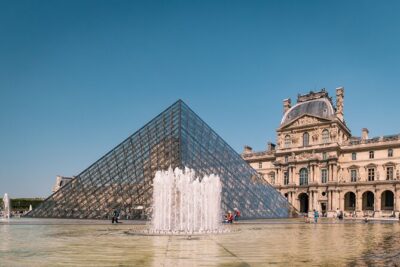
Louvre Museum Masterpieces Guided Tour with Access
Read our review →
Louvre Museum Entry Ticket With Host and River Cruise
Read our review →
Priority Access Louvre with Host -Direct to Mona Lisa
Read our review →
Mona Lisa & Louvre Masterpieces Tour with Reserved Access
Read our review →
Louvre Museum – Exclusive Guided Tour (Entry Included)
Read our review →
Louvre Reserved Ticket and River Cruise Combo
Read our review →Browse the lists this tour appears in