Reviewed · GUIDED
Paris: Roland-Garros Stadium Guided Backstage Tour
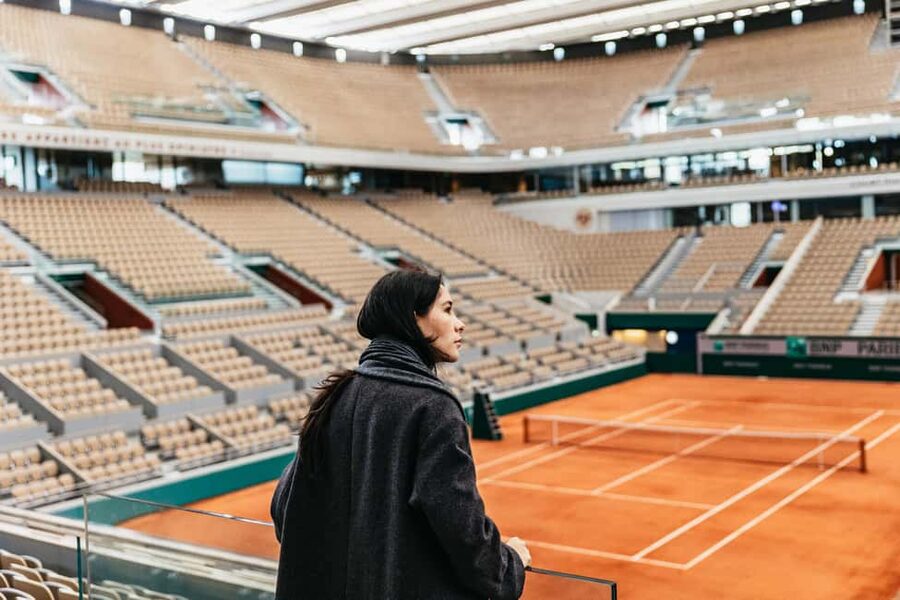
The best part of this Roland-Garros tour is the players’ corridor. You walk the same route toward the clay court used by French Open champions, then enter the Philippe-Chatrier area for a clear look at the stadium’s main court and its retractable roof. It turns a tennis broadcast into a real place with doors, seats, tunnels, and working spaces.
I like the access to the presidential tribune and the chance to hear stories about Rafael Nadal, Steffi Graf, Björn Borg, Chris Evert, and France’s Four Musketeers. I also like the price: at $24, 90 minutes here costs far less than a match ticket and gives you access to parts of the venue you cannot normally see. The main caution is that groups can feel large, and it may be hard to hear every word when the guide starts speaking before everyone has caught up.
In This Review
- Key points at a glance
- Why Roland-Garros feels different from an ordinary stadium tour
- Meeting at Avenue Gordon-Bennett
- Following the corridor to the clay court
- Philippe-Chatrier Court and its retractable roof
- The presidential tribune and media spaces
- French tennis stories beyond Nadal
- Is $24 a fair price?
- Practical advice for a smoother visit
- Who should book the Roland-Garros tour?
- FAQ
- Where does the Roland-Garros tour begin?
- How long does the tour last?
- What language is the tour offered in?
- Is the tour wheelchair accessible?
- What court will I see?
- Can I walk through the players’ corridor?
- Will I see the locker rooms?
- Can I visit the stadium shop?
- Can I cancel for a refund?
- Do I have to pay when I book?
Key points at a glance

- Walk the champions’ route: Follow the corridor leading players toward the Philippe-Chatrier clay court.
- See the main court up close: Admire the stadium’s modern design and retractable roof.
- Visit restricted areas: The tour includes the presidential tribune and behind-the-scenes stadium spaces.
- Hear French tennis stories: Learn about Nadal, Graf, Borg, Evert, and the Four Musketeers.
- Expect a guide-led visit: Tours run for 90 minutes in English, French, or Spanish.
- Check the day’s access: Stadium activity can make some areas unavailable.
Why Roland-Garros feels different from an ordinary stadium tour
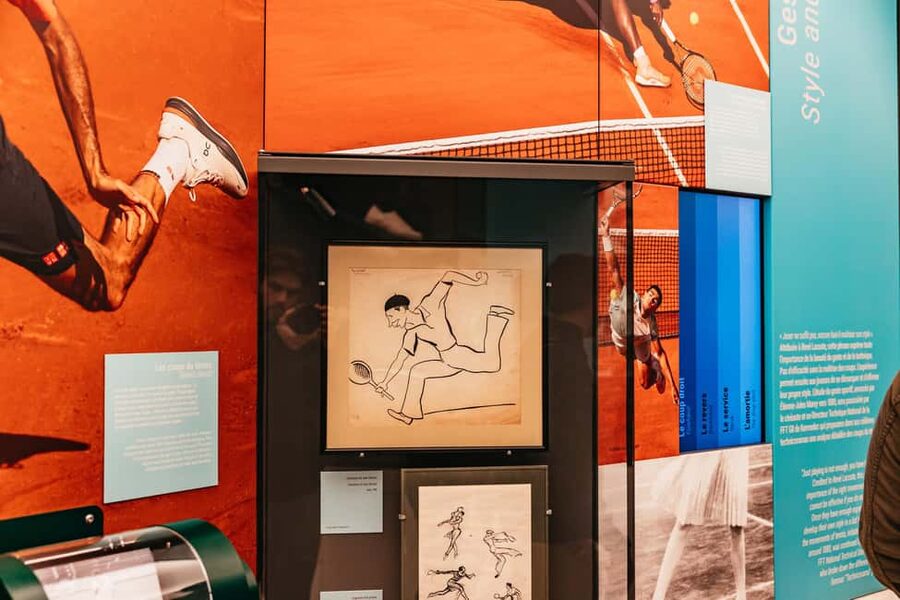
Roland-Garros is not just a large sports venue. Its identity is tied to clay, long rallies, sliding players, and the special rhythm of the French Open. You notice that character even before the guide gets to the famous names.
The stadium’s main court, Philippe-Chatrier, combines old tournament traditions with new engineering. Its retractable roof is the obvious modern feature, but the real appeal is seeing how the court functions as a place where top-level tennis is staged. On television, the roof simply opens or closes. Here, you can study the structure and understand how much planning goes into keeping a clay-court tournament running in changing weather.
I like this kind of visit because it supplies context that a match ticket does not. At a match, you are focused on the score. On the tour, you learn how the venue grew, how French tennis shaped the tournament, and how players move through the building before appearing on court.
The tour is also a useful choice if you are visiting Paris outside the French Open. You will not see a live tournament, and the court may not look exactly as it does during the event. Still, you get close to the setting that tennis fans watch each spring, often with much more freedom to look around.
More Paris trips worth a second look
- Paris: Louvre Guided Tour with Reserved Access & Boat Cruise
★ 4.3 · 16,353 reviews - Louvre Museum Masterpieces Guided Tour with Access
★ 4.5 · 12,023 reviews - Louvre Museum – Exclusive Guided Tour (Entry Included)
★ 5.0 · 6,296 reviews
Meeting at Avenue Gordon-Bennett
The meeting point is inside the Grande Boutique on Avenue Gordon-Bennett, at Gate 36. I would allow extra time to locate the entrance, especially if you are unfamiliar with the far western side of Paris. The tour returns to the same general area, so you do not need to arrange a separate pickup or find your way across the grounds afterward.
The shop is open from 9:30 a.m. to 6:30 p.m. It can be visited before or after the tour, which is handy for souvenirs. One past participant also noted a 10 percent shop discount connected with the visit, though you should confirm the current terms when booking.
The tour lasts about 90 minutes. That is long enough to cover the key rooms and stories without taking over your whole day in Paris. I would pair it with another activity in the western part of the city rather than schedule it between two tight central Paris bookings.
Following the corridor to the clay court
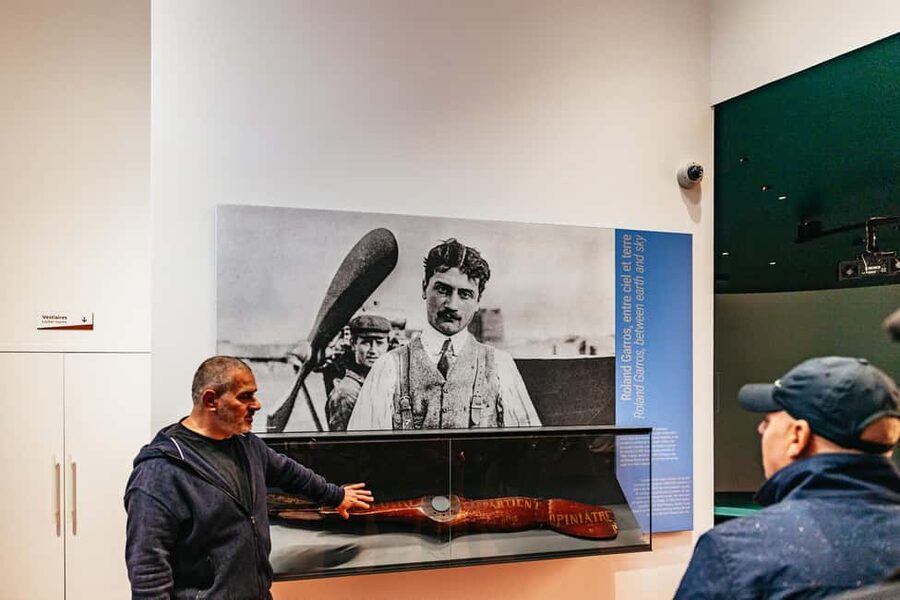
The players’ corridor is the emotional center of the visit. You are not simply looking at a court from a public seat. You are walking through the passage that connects the players’ working world with the arena.
Your guide explains what the route means and places it in the context of the French Open. The names become more immediate here. Rafael Nadal’s record at Roland-Garros, Steffi Graf’s place among the tournament’s great champions, and the achievements of Borg and Evert all feel connected to the physical route in front of you.
If you follow tennis closely, this is the moment that justifies the admission fee. You can picture a player making the final preparations before stepping into the stadium, with the noise of the crowd waiting beyond the tunnel. If you do not follow tennis, the corridor still works as a behind-the-scenes introduction to how a major sporting event operates.
Access can vary. Some people have been able to see locker-room areas, while renovations or stadium work have closed them on other dates. The same applies to other restricted spaces. Treat the advertised route as a strong outline rather than a guarantee that every room will be open.
Philippe-Chatrier Court and its retractable roof
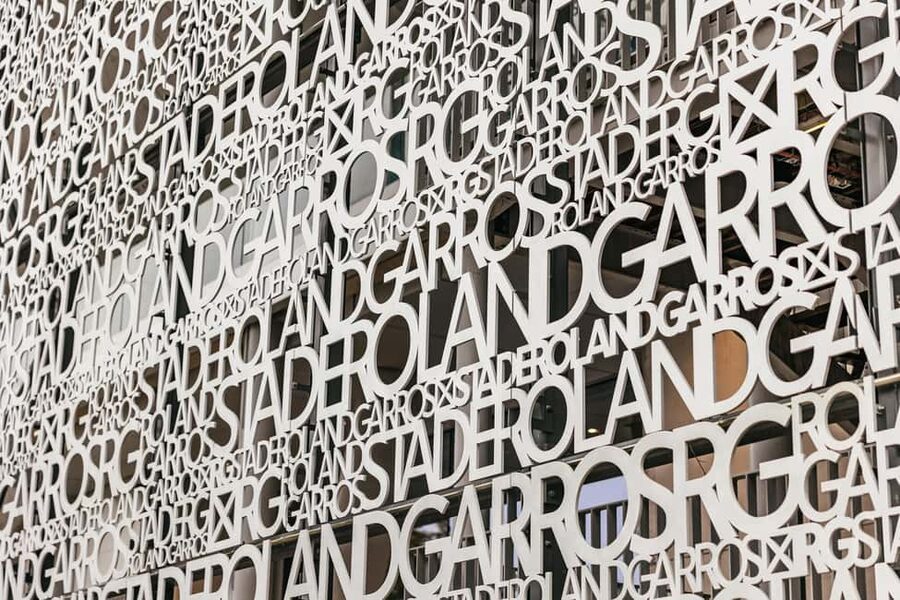
Philippe-Chatrier Court is the visual centerpiece. The guided stop gives you an unobstructed view of the clay court and the surrounding cityscape, along with time to appreciate the seating bowl and roof design.
The retractable roof gives the stadium a very different feel from a simple outdoor tennis court. It is a major piece of architecture, but the guide’s stories help keep the explanation grounded in tennis rather than turning the visit into an engineering lecture. You learn why the court matters and how the modern venue fits the tournament’s older traditions.
Court conditions can change with the season and stadium schedule. One participant found that the main court did not have clay on it during a visit. That does not remove the value of seeing Philippe-Chatrier, but it is worth knowing if your ideal photograph includes a fully prepared tournament court.
You may also see a plaque connected with Nadal and an exhibition honoring his achievements, depending on what is open during your visit. Several tennis fans considered this a highlight, especially those who may never attend a French Open final in person.
A different way to spend the day, same corner of France:
- Paris: Louvre Museum Timed-Entrance Ticket
★ 4.6 · 71,977 reviews - Disneyland® Paris 1-Day Ticket
★ 4.6 · 49,412 reviews - Paris: Versailles Palace and Gardens Full Access Ticket
★ 4.6 · 41,579 reviews - Paris: Evening River Cruise with Music
★ 4.4 · 22,721 reviews
The presidential tribune and media spaces

The presidential tribune gives you a different view of the venue. Instead of sitting among the general audience, you see the type of position reserved for important tournament guests and officials. It helps you understand the stadium as a formal international event site, not just a collection of tennis courts.
The media room adds another useful layer. This is where the tournament’s public story is shaped after matches, and some guides make the stop playful by inviting the group to try mock interviews. That small activity can break up the more serious historical material and gives families or mixed groups something to enjoy.
Other backstage areas may include locker-room spaces and displays related to the tournament. The exact access depends on stadium operations. I would listen carefully at the start, since the guide can tell you which parts of the route are available that day.
This is also where group size matters. A large group can make it harder to hear in a media room or corridor, particularly if people are still moving into position. Stay close to the guide and ask for a repeat if you miss a detail. Guides have generally been described as patient when questions arise, and some have adjusted their pace to help the group.
French tennis stories beyond Nadal
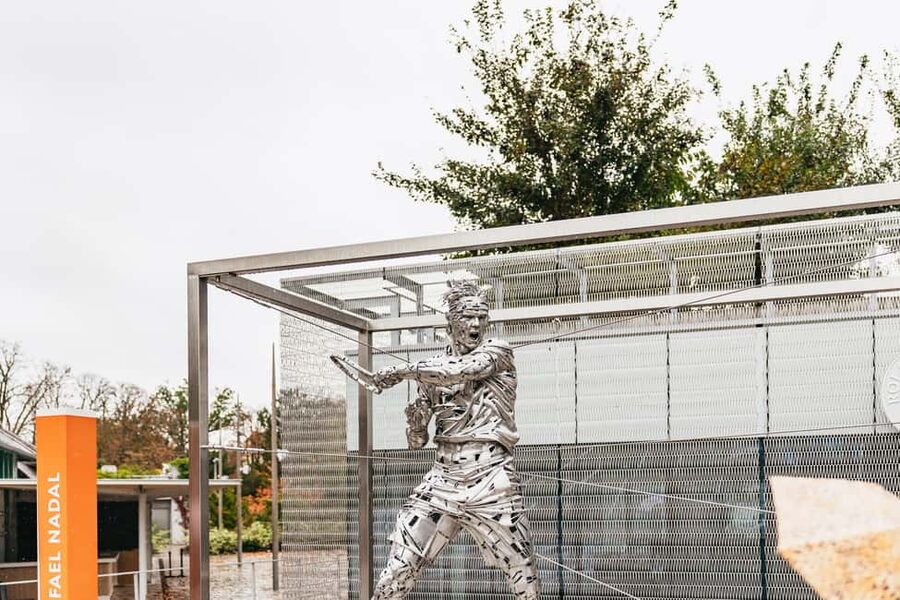
Nadal is an obvious star of the tour, but the visit is not built around one player alone. You hear about Steffi Graf, Björn Borg, Chris Evert, and other champions who shaped the French Open.
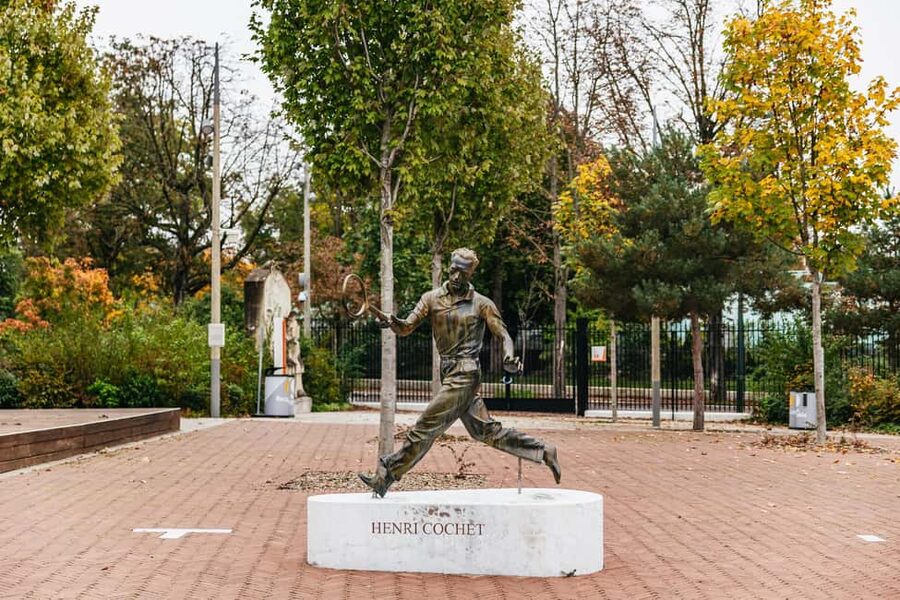
The guide also introduces the Four Musketeers of French tennis: Jean Borotra, Jacques Brugnon, Henri Cochet, and René Lacoste. Their story gives the stadium a national connection and explains why Roland-Garros matters so much in France. It is a useful reminder that the tournament’s identity began long before today’s global stars.
I appreciate this wider focus. A tour devoted only to Nadal would date quickly as new champions emerge. By placing him alongside earlier French and international greats, the guide gives you a fuller sense of the tournament’s development.
The quality of the visit depends heavily on the person leading it. Guides named by participants include Mathieu, Amir, Lionel, Aida, Matt, and Fatah. Lionel was especially praised for his enthusiasm and detailed explanations, while Amir was singled out for friendly storytelling and tournament facts. The roster can change, so you should not book expecting a particular guide unless the operator confirms one.
Tours are offered in English, French, and Spanish. If your group has mixed language needs, tell the guide early. A French-led group has sometimes been divided or adjusted when English speakers were present, but that cannot be promised for every departure.
Is $24 a fair price?
At $24 per person, I consider this a good-value Paris activity, especially if tennis is part of your travel plans. The price includes the guide and admission, and the 90-minute visit gives you access to areas that a regular public outing would not provide.
The comparison with a French Open match is not really fair because match tickets, dates, and access work differently. Still, the tour offers something a match cannot: you can focus on the building, ask questions, follow a route through backstage areas, and hear stories without watching points unfold at the same time.
The value is strongest for three groups:
- Tennis fans who have watched Roland-Garros for years
- Visitors unlikely to attend the tournament itself
- Families or mixed-interest groups looking for a structured activity beyond central Paris
If you have no interest in tennis, the price is still reasonable if you enjoy sports venues, architecture, or unusual Paris attractions. But I would not place it above the city’s major art and historic sights for a first-time visitor with limited time. The tour is specialized, and its strongest moments depend on caring about the people and matches connected to the court.
Practical advice for a smoother visit
Arrive at the Grande Boutique inside Gate 36 on Avenue Gordon-Bennett with enough time to find the meeting point. The tour is guided, so arriving late can mean joining the group after an explanation or missing the beginning of the route.
Wear comfortable shoes. The tour involves walking through stadium spaces, and although it is wheelchair accessible, the route can include different levels and changing access arrangements. If you need an elevator or other assistance, mention it to the guide. One participant specifically received help using elevators, which suggests that staff can make reasonable adjustments when asked.
Bring your questions. Guides often add the most interesting material when people ask about players, court design, tournament routines, or the history of French tennis. A quiet group may receive a more straightforward presentation, while an engaged group can draw out extra anecdotes.
Do not count on every room being open. Stadium activity, renovations, or event preparation can close areas such as locker rooms. The provider makes clear that the route may change, so keep expectations flexible.
The shop is open before and after the visit from 9:30 a.m. to 6:30 p.m. If you want souvenirs, this is the natural time to browse rather than trying to return later from another part of Paris.
Free cancellation is available up to 24 hours before the tour for a full refund, and you can reserve now and pay later. Those terms are useful if your Paris schedule is still shifting, but check the current booking conditions before confirming.
Who should book the Roland-Garros tour?
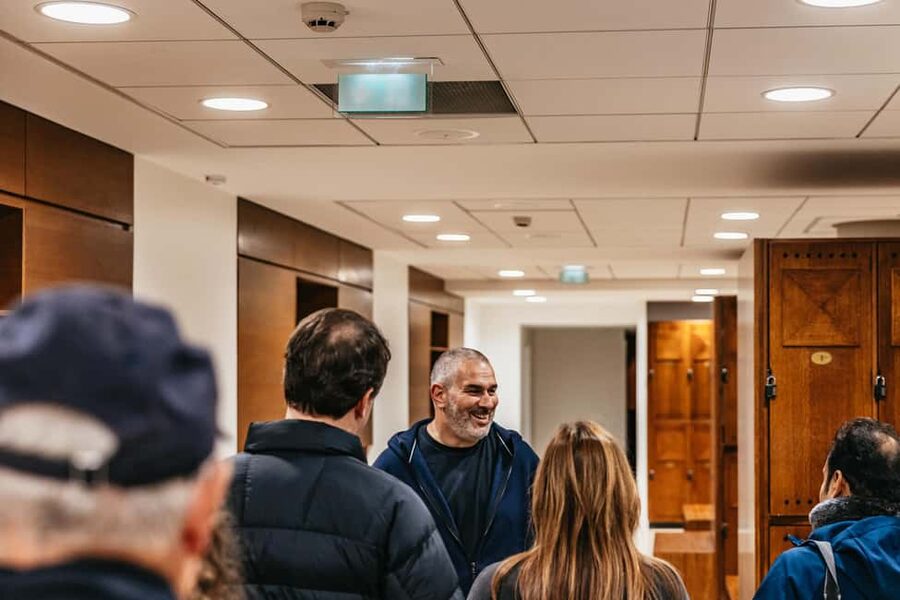
I would book this if you watch the French Open, play tennis, or have a family member who can name the champions faster than you can name Paris metro stops. The players’ corridor, Philippe-Chatrier Court, and the Nadal material give committed fans several moments that feel genuinely personal.
I would also recommend it to anyone who wants an unusual Paris experience outside the standard museum circuit. You get architecture, sport, French culture, and access to working spaces in one compact visit.
I would hesitate only if your Paris schedule is very short or if you expect a fully open tournament venue with every room available. Some areas may be closed, the group may be hard to hear at times, and the main court may not have its tournament clay prepared.
For most tennis fans, though, the decision is easy. At $24, this is an affordable way to walk into the world of Roland-Garros rather than merely watch it on television.
FAQ
Where does the Roland-Garros tour begin?
The meeting point is inside the Grande Boutique on Avenue Gordon-Bennett, at Gate 36.
How long does the tour last?
The guided visit lasts 90 minutes.
What language is the tour offered in?
Tours are offered in English, French, and Spanish.
Is the tour wheelchair accessible?
Yes, the activity is listed as wheelchair accessible.
What court will I see?
The tour includes Philippe-Chatrier Court, Roland-Garros’s main court, with views of its clay surface and retractable roof design.
Can I walk through the players’ corridor?
Yes. The route includes the corridor leading players toward the clay court.
Will I see the locker rooms?
Locker-room access can vary. Some areas may be closed because of renovations or stadium activity on the day of your visit.
Can I visit the stadium shop?
Yes. The stadium shop can be visited before or after the tour and is open from 9:30 a.m. to 6:30 p.m.
Can I cancel for a refund?
You can cancel up to 24 hours in advance for a full refund.
Do I have to pay when I book?
The reserve-now, pay-later option lets you book without paying immediately. Availability and current booking terms should be checked before you confirm.
Recently reviewed around Paris
- Louvre Private Tour – The Essentials and More with Expert Guide★ 5.0 · 227 reviews
- 2CV tour by night★ 5.0 · 55 reviews
- Eiffel Tower Second or Summit Floor Access by Elevator with Views★ 3.5 · 161 reviews
- The only Paris Wine Tasting experience you need to do – 2 hours★ 5.0 · 265 reviews
- 2 Hour Street-art Walk and Space Invaders Hunt in Paris★ 5.0 · 27 reviews
- 2 hour outdoor group activity in Paris: SAINT GERMAIN★ 5.0 · 48 reviews
- Sainte-Chapelle, Conciergerie & Palais de Justice Private Tour★ 5.0 · 72 reviews
- Private 2 – Hour Paris Landmarks Tour by Golf Cart Mini Moke★ 5.0 · 38 reviews
Guided, compared.

Louvre Guided Tour with Reserved Access & Boat Cruise
Read our review →
Louvre Museum Masterpieces Guided Tour with Access
Read our review →
Louvre Museum – Exclusive Guided Tour (Entry Included)
Read our review →
Skip-the-Line Guided Palace Tour and Full Access
Read our review →
Louvre Priority Access with Mona Lisa Escort or Guided Option
Read our review →
Louvre Museum: Skip-the-Line Small Group Guided Tour
Read our review →