
Reviewed · STRASBOURG & ALSACE TOURS
Strasbourg: 90-Minute Sightseeing Tour by Pedicab
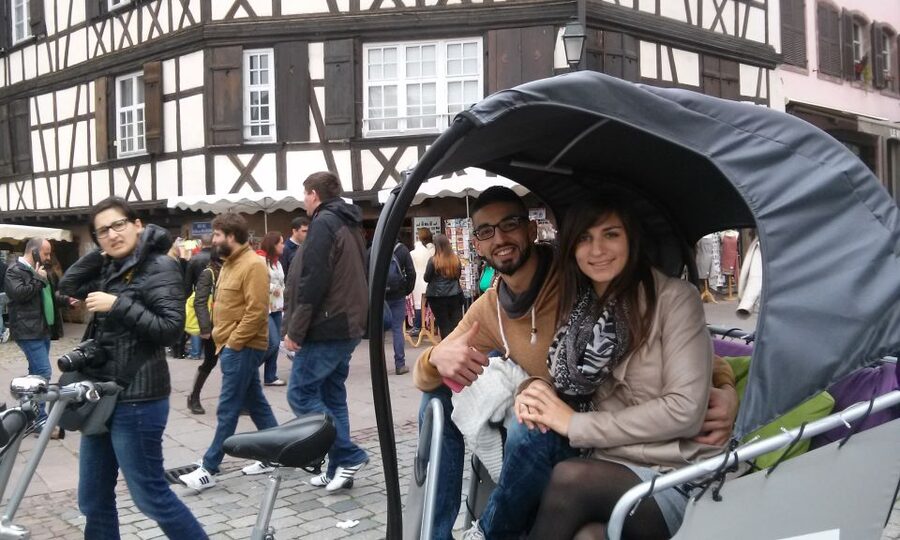
Strasbourg’s old center, canals, grand squares, and European institutions cover a lot of ground. This private 90-minute pedicab tour lets you see the city without wearing out your feet, while your driver handles the streets and explains what you are passing. Jean, a highly praised guide who speaks German, French, and English, is known for answering questions and sharing his affection for Strasbourg.
I like the easy pace and the personal format. You can sit back in a small open vehicle instead of following a large group, and you can ask about restaurants, museums, or anything else that catches your eye. I also like the broad route, which links medieval Petite France with the neoclassical Neustadt and the European Quarter. The main consideration is price: at $141 for up to two people, this is a costly sightseeing ride for solo visitors or anyone mainly interested in walking the compact old town.
In This Review
- Key points to know before you book
- Starting beside Notre-Dame Cathedral
- Petite France and the medieval canal quarter
- Barrage Vauban and the city’s defenses
- Place de la République and Neustadt’s formal architecture
- The European Quarter and Strasbourg’s modern role
- Parc de l’Orangerie and ARTE headquarters
- What the guide adds to the ride
- Comfort, timing, and value at $141
- Who should choose this Strasbourg pedicab tour?
- Should you book it?
- FAQ
- Where does the Strasbourg pedicab tour meet?
- How long does the pedicab tour last?
- How many people can join the private tour?
- What languages does the guide speak?
- What sights are included on the route?
- Is transportation included?
- Can I cancel the tour for a refund?
Key points to know before you book
- A private ride for up to two people: You get your own pedicab and driver rather than joining a shared vehicle.
- A city-spanning route: The tour connects Petite France, the cathedral area, Neustadt, the European Quarter, and Parc de l’Orangerie.
- Jean is a notable guide: He has led tours in German, French, and English, and is praised for answering questions and explaining Strasbourg with warmth.
- A comfortable alternative to a walking tour: Your feet get a break while you still see canals, historic buildings, public squares, and modern European institutions.
- Useful local advice: Use the ride to ask where to eat and what to do after the tour.
- A good first look, not a museum visit: The route takes you past major sights, but admission to museums and detailed interior visits are not included.
Starting beside Notre-Dame Cathedral
The meeting point is outside the tourist office, at the foot of the Kammerzell House, beside Strasbourg’s Notre-Dame Cathedral. This is a practical place to begin because you are already in the heart of the old center, surrounded by some of the city’s most important sights.
The cathedral, also called the Strasbourg Minster, is one of the city’s defining landmarks. The tour includes a look at its famous Astronomical Clock, a complicated 19th-century mechanism inside the cathedral. You should not expect a separate guided cathedral visit or a chance to study the clock at length. Instead, it forms part of a moving city tour.
The starting point also puts you close to the Palais Rohan, the grand baroque palace that houses three major city museums. Seeing the palace from a pedicab gives you useful orientation, especially if you plan to return later for a museum visit. The driver can help you understand where these sights sit in relation to one another, which is useful in a city where canals and narrow streets can make the old center feel larger than it is.
The pedicab itself matters here. Strasbourg’s historic streets are pleasant on foot, but a 90-minute walk that covers this much ground can feel rushed. In the pedicab, you can watch the buildings and listen without constantly checking a map or trying to keep up with a group.
Other Strasbourg & Alsace days travellers weigh against this one:
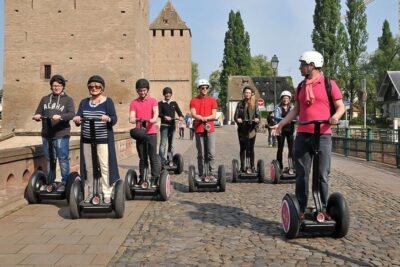
- Strasbourg: Euro Guided Tour by Segway
★ 4.7 · 808 reviews - Colmar, Medieval Village & Castle Small Group from Strasbourg
★ 5.0 · 769 reviews - 2-Hour Strasbourg Euro Tour by Segway
★ 5.0 · 642 reviews
Petite France and the medieval canal quarter
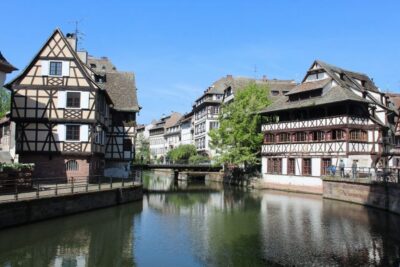
From the cathedral area, the ride heads through Petite France, the part of Strasbourg most associated with half-timbered houses, canals, and the city’s medieval trades. The name sounds gentle, but this district once had a practical working purpose. Tanners and slaughterhouses operated here, using the waterways and the quarter’s position at the edge of the old city.
The route passes the old tanning houses and canals, giving you a chance to see how Strasbourg’s water network shaped daily work. The covered bridges are another highlight. Their name comes from their earlier defensive role, although the roofs are no longer there today. From a pedicab, you get a quick look at the bridges, canal edges, and fortified remains without having to stop every few minutes.
This part of the route is likely to be the most visually striking. The combination of water, old façades, and narrow streets gives Petite France a strong sense of place. It is also where a pedicab has a clear advantage over a larger sightseeing vehicle. The smaller vehicle can move through streets that feel intimate, and you remain close to the details instead of viewing the quarter from a distance.
You should keep your expectations in check. The tour does not promise long stops at each bridge or house, and the exact amount of time in each area can vary. If you want close photographs of every canal corner, you will need to return on foot. The pedicab works best as an introduction, helping you decide where you want to spend more time later.
Barrage Vauban and the city’s defenses
The ride also passes the Barrage Vauban, a 17th-century weir built as part of Strasbourg’s defenses. It is both a military structure and a reminder that the city’s canals were useful for more than trade and transport.
The Barrage Vauban can be easy to treat as just another old building if you do not know its purpose. A good driver gives the structure a place in the story of Strasbourg, explaining how water and fortifications worked together. This is one reason the guide matters more than the vehicle. The ride gives you access to the sight, but the explanation helps you understand why it is there.
Because this is a private tour, you can ask for clarification if the history moves too quickly. That personal exchange is one of the strongest features of the experience. Jean has been praised for responding to questions rather than simply delivering a fixed speech. If you are curious about the city’s defenses, its changing borders, or the relationship between the old center and later districts, this is a good moment to ask.
Place de la République and Neustadt’s formal architecture
The route then moves toward Place de la République and the Neustadt area. The mood changes here. Instead of medieval lanes and half-timbered houses, you see broad streets and handsome neoclassical public buildings.
Place de la République is home to important civic buildings, including the national public lending library. The area offers a useful contrast with Petite France. Strasbourg is not only a postcard old town. Its later architecture shows how the city expanded and how public institutions were given room to make an impression.
I like this part of the route because it keeps the tour from becoming a narrow old-town circuit. You get a better sense of Strasbourg as a full city, with several architectural periods close together. The pedicab also saves time between the cathedral district and Neustadt, allowing both areas to fit into one short outing.
The drawback is that architecture from a moving seat can be easy to miss. You may want to ask the driver to point out the most important façades and explain what makes Neustadt different. If a particular building interests you, note its location and come back later for a slower look.
A different way to spend the day, same corner of France:
- From Strasbourg: Best Of Alsace Historical Day Trip
★ 4.7 · 633 reviews - Strasbourg Food Tour – A Taste of Tradition by Do Eat Better
★ 5.0 · 614 reviews - Strasbourg: Walking Tour with a Local Guide
★ 4.3 · 607 reviews - Strasbourg: Walking Tour with Local Guide
★ 5.0 · 598 reviews
The European Quarter and Strasbourg’s modern role
Strasbourg is home to the European Parliament and the Council of Europe, and the pedicab continues into the Quartier Européen. Here, the focus shifts from old fortifications and medieval trades to the institutions that give Strasbourg an important role in modern Europe.
You pass some of the major administrative buildings of the European Quarter. The point is not an inside visit. This is an outside orientation tour, useful for seeing how the institutions are arranged and for understanding the city’s modern identity.
I find this contrast particularly valuable. In one 90-minute ride, you move from canals once used by working trades to buildings connected with European government and cooperation. That range gives the tour more substance than a simple circuit of pretty streets.
Do not book this expecting access to parliamentary interiors or a detailed political briefing. The information provided covers the outside sights and the route through the quarter. Your driver can explain what you are seeing, but the experience remains a sightseeing ride rather than an institutional tour.
Parc de l’Orangerie and ARTE headquarters
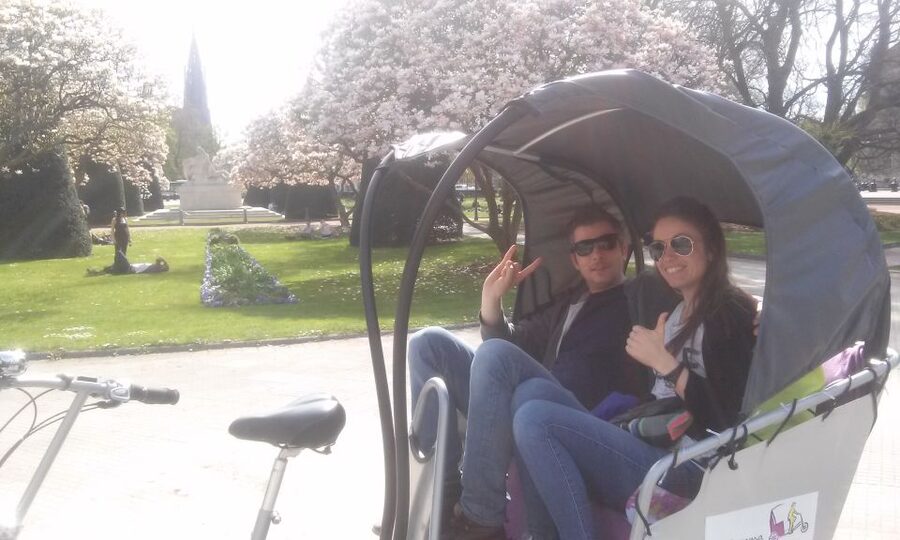
The pedicab also reaches Parc de l’Orangerie, known for its French garden design. The park adds open space and a different kind of visual break after the dense old center and formal public buildings.
The route does not promise time for a long walk through the park, so think of this as an introduction. You can admire the layout from the ride and decide if you want to return later. That is a useful pattern throughout the tour: the pedicab gives you a map in motion, then you choose which places deserve a closer visit.
Near the park, you also see the headquarters of ARTE television. This is an unusual addition to a standard city route. It connects Strasbourg’s European role with its cultural and media life, and it gives you another recognizable point of reference in the eastern part of the city.
The inclusion of the park and ARTE headquarters also shows that the tour is not limited to the most obvious historic sights. You get a wider view of Strasbourg’s public spaces, institutions, and daily identity.
What the guide adds to the ride
The driver is included, and the tour is offered in English, German, or French. That language choice is important because the route covers architecture and history that can be hard to appreciate from names alone.
Jean is the guide most clearly associated with the experience. His strengths are personal attention, historical explanation, and the ability to answer questions. German-speaking visitors in particular have praised the clarity and warmth of his guidance, while French-speaking guests have highlighted his courtesy and attentiveness.
You should use the private setting actively. Ask about the best area for your meal, which museum fits your interests, or what deserves a second visit on foot. The tour specifically makes room for local tips, so do not treat the driver as someone who only pedals and points.
The private format also gives you more control than a tourist train. You are not listening to a general announcement meant for a large crowd. You can ask follow-up questions, and the driver can focus on what interests you. That makes the tour a good choice for couples, friends, or a parent and child who want a relaxed overview.
Comfort, timing, and value at $141
The tour lasts 90 minutes and costs $141 per group of up to two people. For two people, that works out to $70.50 each. That is not a bargain sightseeing option, but the price includes a private vehicle and driver rather than two individual seats on a shared tour.
The value depends on how you use it. If you have only a short time in Strasbourg, the route covers far more ground than a casual walk. If you have several days and enjoy exploring on foot, you may find the price harder to justify. The ride is most useful at the beginning of your stay, when it can help you get your bearings and choose where to return.
It also suits anyone who wants a break from walking. Strasbourg’s center is compact, but a full city visit still involves plenty of pavement. A pedicab lets you see the main districts while sitting comfortably, which can be helpful if you prefer a gentler pace.
The booking terms add flexibility. You can reserve now and pay later, and cancellation is free up to 24 hours before the tour for a full refund. Starting times vary, so you need to check availability for your date. The experience is private, but the stated capacity is limited to two people, so larger parties would need to ask about arrangements rather than assume they can fit.
Who should choose this Strasbourg pedicab tour?
I would recommend it most strongly to first-time visitors who want a quick, personal introduction to Strasbourg. It is also a good fit for couples who prefer a private ride to a large sightseeing vehicle, and for anyone who wants local food advice from a guide who knows the city well.
The tour works especially well if you want to combine old and new Strasbourg. You see Petite France, the Barrage Vauban, the cathedral area, Neustadt, the European Quarter, Parc de l’Orangerie, and ARTE headquarters in one outing.
I would be more cautious if your main goal is entering monuments or spending serious time inside museums. The tour passes the Palais Rohan and the cathedral sights, but it does not include museum admission or a dedicated interior visit. It is also less appealing for solo visitors, since the group price is the same for one or two people.
Should you book it?
Book this pedicab tour if you value comfort, personal conversation, and a wide city overview more than the lowest possible price. The route has real range, and the private format gives you room to ask questions and gather useful ideas for the rest of your stay.
Skip it if you would rather spend $141 on museum visits, meals, or a longer walking tour. But if you are arriving in Strasbourg and want to see the city’s medieval quarter, formal Neustadt buildings, and European institutions without rushing on foot, this is a practical and pleasant way to begin.
FAQ
Where does the Strasbourg pedicab tour meet?
Meet outside the tourist office, at the foot of the Kammerzell House beside Notre-Dame Cathedral, also known as Strasbourg Minster.
How long does the pedicab tour last?
The tour lasts 90 minutes.
How many people can join the private tour?
The listed price covers a private group of up to two people.
What languages does the guide speak?
The live guide service is available in English, German, and French.
What sights are included on the route?
The route passes Petite France, its medieval tanning houses and slaughterhouse area, the covered bridges, Barrage Vauban, Notre-Dame Cathedral and its Astronomical Clock, Palais Rohan, Place de la République, Neustadt, the European Quarter, Parc de l’Orangerie, and ARTE headquarters.
Is transportation included?
Yes. Transportation by pedicab and the driver are included.
Can I cancel the tour for a refund?
You can cancel up to 24 hours in advance for a full refund. You can also reserve now and pay later.
Recently reviewed around Strasbourg & Alsace
- Guided tour of Nancy, Great History and Little Anecdotes★ 5.0 · 89 reviews
- Guided Tour “Unusual Nancy”★ 5.0 · 36 reviews
- Alsace villages half day tour from Colmar★ 5.0 · 186 reviews
- The Emblematic: visit of villages, Haut-Koenigsbourg, Wine tasting★ 5.0 · 81 reviews
- Segway Tours 2h in Colmar★ 5.0 · 116 reviews
- Alsace’s Gems Small Group Day Tour from Colmar★ 5.0 · 84 reviews
- Alsace 4 Wonders Small-Group Day Trip from Colmar★ 5.0 · 380 reviews
- Private and customizable: Alsace Wine Route HIGHLIGHTS in 3 hours★ 5.0 · 63 reviews
Strasbourg & Alsace Tours, compared.
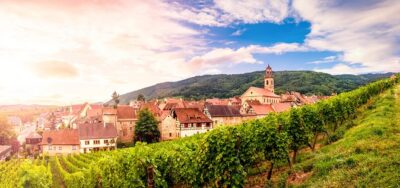
Colmar, Medieval Village & Castle Small Group from Strasbourg
Read our review →
Strasbourg Food Tour – A Taste of Tradition by Do Eat Better
Read our review →

Browse the lists this tour appears in