
Reviewed · WALKING TOURS
Strasbourg: Walking Tour with a Local Guide
Strasbourg reveals itself best on foot, and this two-hour walk gives you a useful first look at its grand cathedral, canals, old houses, and busy city squares. You move through the historic Grande Île, a UNESCO World Heritage Site, with a local guide who adds context to buildings you might otherwise simply photograph and pass.
I especially like the easy route through several key districts and the practical advice on food, photos, and places to explore afterward. Guides such as Alex, Natalie, Emmy, and Catalina have been praised for their warmth, humor, and strong command of Strasbourg’s past. The main consideration is that the tour can be multilingual, so English-speaking visitors may spend time waiting while information is given in German.
In This Review
- Key points to know
- Starting beneath Gutenberg’s statue
- The cathedral’s stonework and scale
- Petite France by canal and bridge
- The Tanners’ Quarter and a taste of local life
- Place Gutenberg and the printing press connection
- Place Kléber, Strasbourg’s main square
- The guides make the difference
- The multilingual format needs attention
- Is $28 good value for two hours?
- Who will get the most from this walk?
- What to bring and how to prepare
- Should you book the Strasbourg walking tour?
- FAQ
- How long is the Strasbourg walking tour?
- How much does the tour cost?
- Where does the tour meet?
- How do I identify the guide?
- What languages are available?
- Is entry to Strasbourg Cathedral included?
- Is food or drink included?
- Can I cancel the booking?
Key points to know
- Two hours on foot: A compact introduction to central Strasbourg, with no transport between stops.
- Cathedral views, not cathedral entry: You see Notre Dame Cathedral and its decoration, but an admission ticket is not included.
- Petite France takes the most time: About an hour is devoted to canals, bridges, colorful houses, and the Tanners’ Quarter.
- Local advice is part of the value: Your guide can suggest places to eat, shop, photograph, and revisit.
- English and German tours: The guide may speak both languages during one outing, which can reduce time for detailed explanations.
- A good orientation walk: You finish knowing which parts of the center deserve a second look.
Starting beneath Gutenberg’s statue
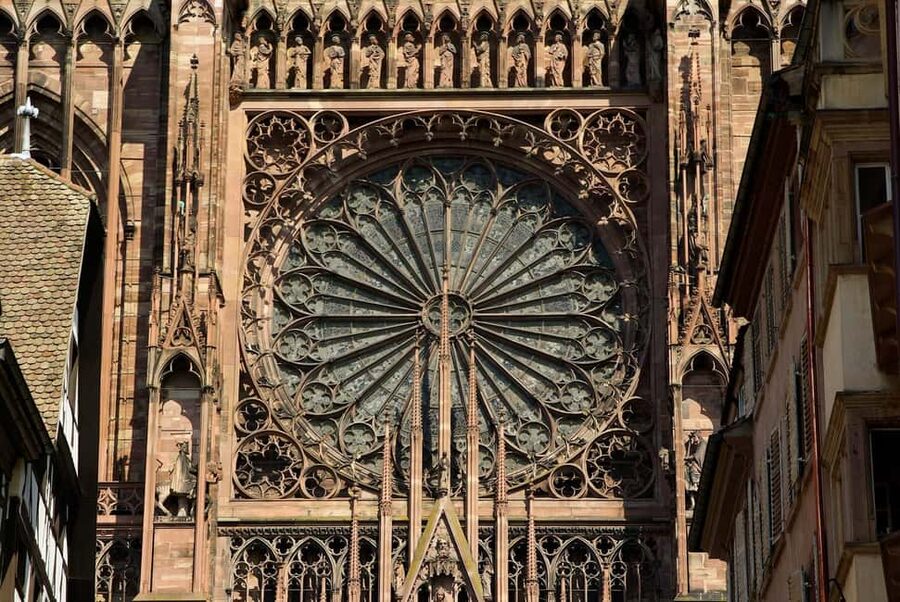
Your meeting point is Place Gutenberg, near the statue and the tree. Look for a guide wearing a blue UTG Experience badge. This is a sensible place to begin because you are already in the heart of Strasbourg’s pedestrian center, surrounded by streets that quickly lead toward the cathedral and Petite France.
The opening part of the walk introduces Strasbourg as a city shaped by both French and German influences. That background matters here. Street names, architecture, public squares, and local traditions reflect a border city with a complicated past, and a local guide can point out those layers as you walk.
I like starting with a guide instead of trying to decode the center from a map. Strasbourg’s old streets are pleasant but can feel confusing at first, especially when canals, small lanes, bridges, and squares keep opening in different directions. The guide gives you a basic mental map before you head off exploring on your own.
The pace is generally described as an easy walk, but it is still a continuous two-hour outing. One visitor found the guide’s natural pace too quick until the guide slowed down after being asked. If you walk slowly or need frequent pauses, say so early. This is a walking tour, not a stop-and-start sightseeing bus.
More Walking Tours in Strasbourg
- Strasbourg: Walking Tour with Local Guide
★ 5.0 · 598 reviews - Strasbourg: Guided Historical Neighborhoods Walking Tour
★ 4.9 · 275 reviews - Strasbourg: Traditional Food Walking Tour with Tastings
★ 4.8 · 219 reviews
The cathedral’s stonework and scale
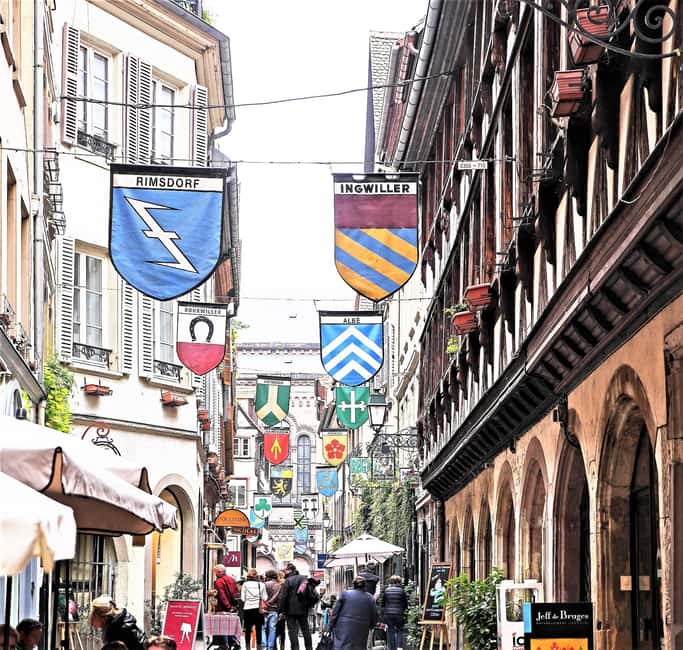
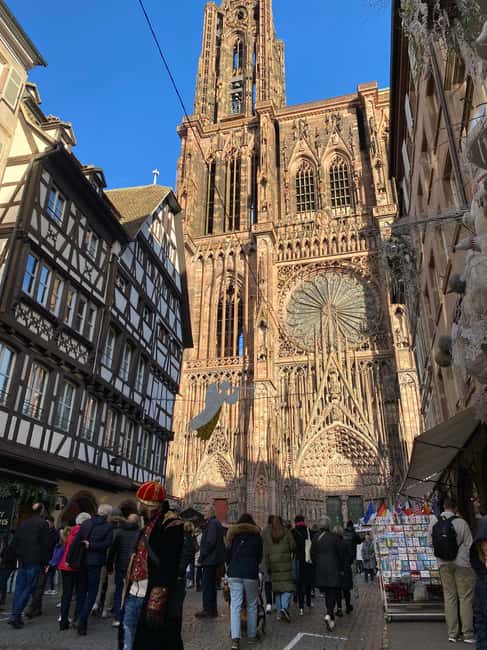
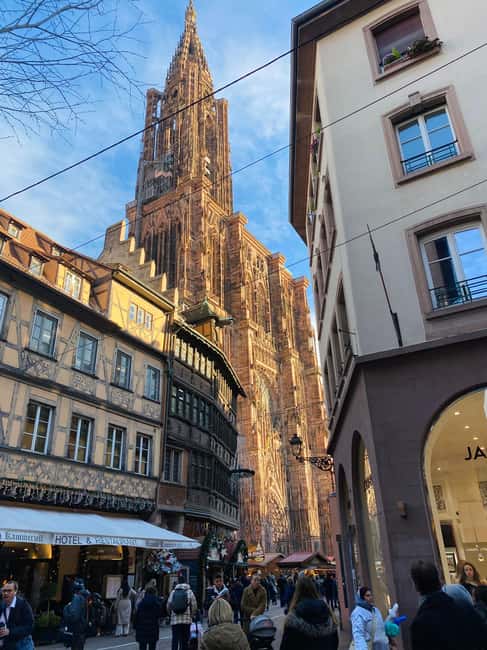
Strasbourg Cathedral is the route’s grand visual centerpiece. From the outside, you get time to study the elaborate facade, towers, carvings, and other details that are easy to miss when you are standing in the square taking a quick photograph.
Your guide can explain what you are looking at and help you find stronger angles for pictures. That photo advice is a useful touch because the cathedral is so large that a standard front-facing photograph often fails to capture its height. You may want a wide shot from the square, then closer images of the stone details and decorative figures.
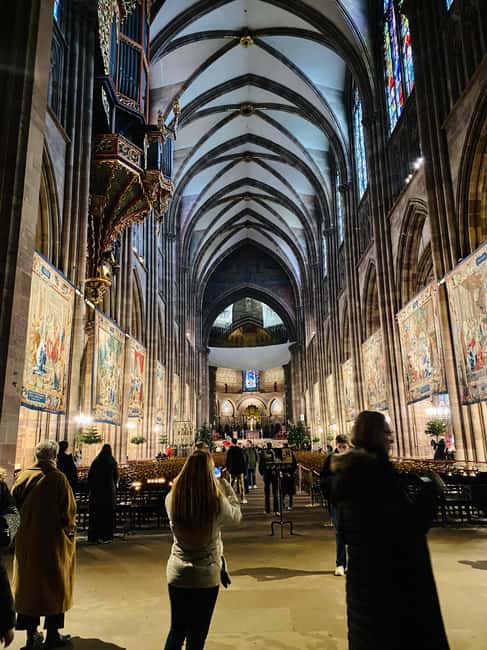
The tour does not include entry into the cathedral. You pass by it and learn about it from outside, so anyone wanting to see the interior, astronomical clock, or other paid attractions will need to arrange that separately. The activity information specifically excludes entry tickets, and it does not promise a guided visit inside.
This distinction affects the value. At $28 per person, the tour is priced as a city orientation rather than a cathedral admission package. If you already know Strasbourg well and only want to go inside Notre Dame, you may prefer to visit the cathedral independently. If you want the building placed in the wider story of the city, the outside explanation adds more.
Petite France by canal and bridge
Petite France is where the walk becomes especially scenic. The district is known for canals, bridges, and colorful old houses, giving you a change of mood after the formal scale of the cathedral. This section takes roughly an hour, so it is not a rushed photo stop.
Your guide points out the best places for pictures and explains who once lived and worked in these buildings. That human detail helps. You are not only looking at pretty facades; you are hearing about the people and trades connected with this part of Strasbourg.
Bring a camera, but also leave room to look up. The most appealing views come from the relationship between water, bridges, timber-framed houses, and narrow streets. Your guide may show you angles that are easy to miss if you simply follow the busiest path through the quarter.
Petite France can also be the most crowded portion of a central Strasbourg walk, especially at popular viewing points. The route information does not promise quiet streets or private access. Think of the guide’s role as helping you read the district and find good viewpoints, not removing the city’s normal foot traffic.
This is also where comfortable shoes matter most. The entire tour is on foot, and cobbled or uneven historic streets can be tiring. A hat, sunscreen, and water are sensible in warm weather. One visitor completed the walk during very hot conditions and found the guide’s stories worth the effort, but heat can still affect your enjoyment.
The Tanners’ Quarter and a taste of local life
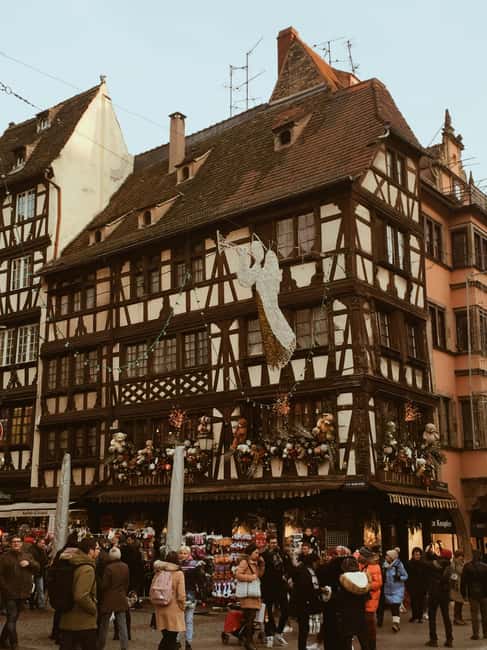
The Tanners’ Quarter is part of the Petite France area and adds a more everyday side to the sightseeing route. Restaurants and bars occupy the old quarter, so the district is not simply an outdoor museum. Your guide can point out places to consider for a meal or drink after the walk.
You should not expect food and drinks to be included. They are specifically separate from the $28 tour price. Still, the restaurant advice can save you from choosing at random in a heavily visited center. Ask your guide for recommendations that fit your budget and the kind of meal you want.
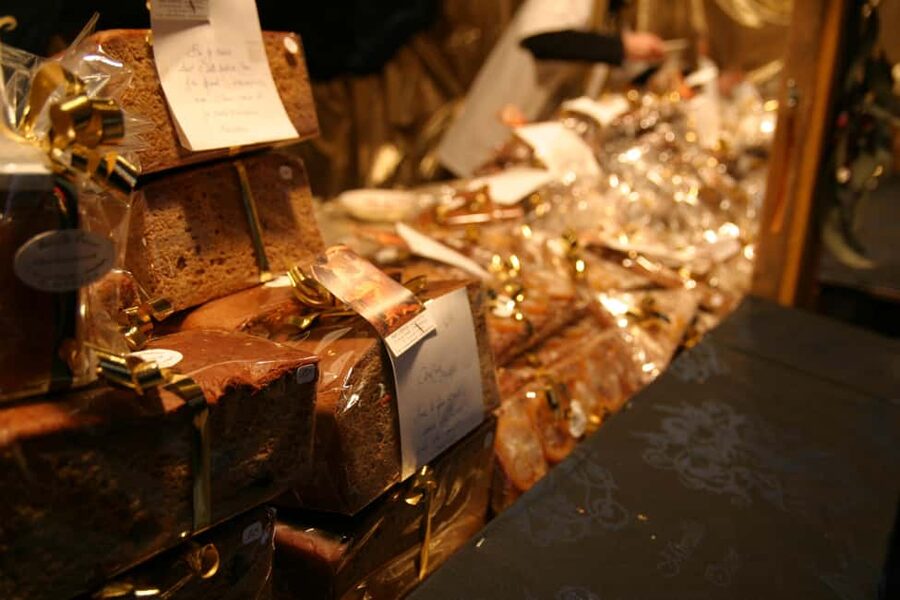
The tour may also pass shops where you can try local specialties. One December outing included stops at several shops for tastings, though this should not be treated as a guaranteed part of every departure. The stronger promise is advice on where to eat and explore, not a formal food tour.
That makes the Tanners’ Quarter useful as a bridge between sightseeing and the rest of your visit. You can mark a restaurant for later, return for evening atmosphere, or simply note which streets deserve a slower look once the group has moved on.
More Strasbourg & Alsace walks with a guide:
- Colmar: Highlights Walking Tour and Wine Tasting
★ 4.9 · 209 reviews - Colmar: Unusual Walking Tour with a local guide
★ 4.9 · 194 reviews - Strasbourg: Guided Walking Tour
★ 4.7 · 127 reviews - Strasbourg: Private Walking Tour of the Historical Center
★ 4.2 · 107 reviews
Place Gutenberg and the printing press connection
Place Gutenberg gives the tour a historical anchor beyond churches and picturesque houses. The square is named for Johannes Gutenberg, associated with the invention of the printing press. Your guide explains why that name matters to Strasbourg and how the square fits into the city’s past.
This stop is particularly helpful if you like knowing why a public space has its name. Without that context, the statue and surrounding buildings can seem like another attractive square. With an explanation, the place becomes part of a larger story about ideas, books, and the spread of information.
The tour begins here, but the exact order of explanations can change. The published route also lists Place Gutenberg as an early guided stop, while the broader description places the cathedral first. The practical point is that Gutenberg Square is both your meeting place and one of the central historical stops.
Place Kléber, Strasbourg’s main square
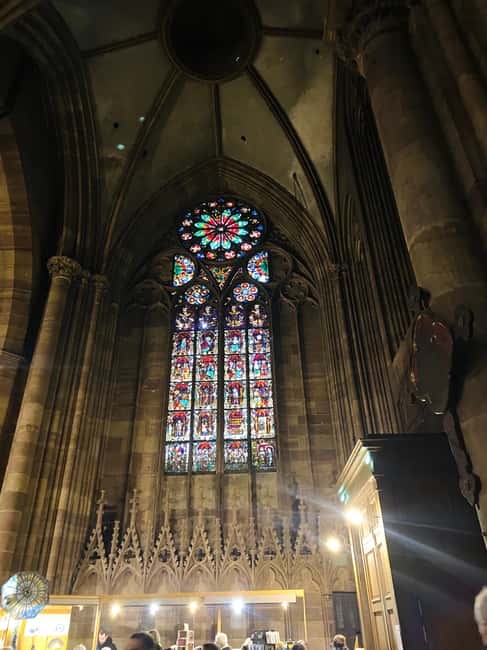
The walk ends, or nearly ends, at Place Kléber, the city’s main square. At around 30 minutes, this is more than a quick glance. You learn about Jean-Baptiste Kléber, a major figure connected with the French Revolution, and see how the square functions as one of Strasbourg’s central public spaces.
Place Kléber makes a useful final stop because it shifts the focus from medieval and early modern streets to a broader civic setting. You can compare the scale of the square with the narrow lanes of Petite France and the cathedral area.
It is also a practical place to continue your day. After the tour, you can return toward the cathedral, head back into the old center, or use your guide’s suggestions to choose a restaurant or another area to explore. The activity does not include onward transport, so you finish within the central city rather than at a distant attraction.
The guides make the difference
The strongest part of this experience is the person leading it. The guide names that appear in the available feedback include Alex, Natalie, Emmy, Eme, Catalina, Katalina, and Ellie. Individual departures naturally vary, but the repeated pattern is clear: guides are often warm, upbeat, and eager to explain their home city.
Alex is praised for his background in Strasbourg, architecture, and local history. Natalie is described as passionate about the city and its buildings. Emmy and Catalina are noted for friendly presentations and for handling both English and German. Those personal qualities matter on a walking tour because two hours can feel long if the guide only recites dates.
The quality of storytelling may vary. One visitor wanted more stories and fewer facts, dates, and figures. Another felt a newer guide was nervous but still gave strong explanations. I would treat this as a sign that the experience depends partly on the individual guide’s style.
If you prefer a detailed historical lecture, ask questions and request more context at each stop. If you want a lighter introduction, the standard pace and broad coverage should suit you. The tour aims to cover many landmarks, so it may not spend long enough at each one for a specialist-level account.
The multilingual format needs attention
Tours are offered in English and German, and a single departure can be multilingual. This is the chief practical drawback. If the guide repeats every explanation in two languages, you receive less uninterrupted English content and may pause while the second language is used.
Several visitors specifically preferred a single-language tour, while others appreciated guides who translated graciously between English and German. The experience may depend on the makeup of your group and how the guide manages the timing.
If detailed English commentary matters to you, confirm the language arrangement before booking if that option is available. If you are comfortable with a bilingual walk, the format can work well. Just set your expectations: this may not be two full hours of English explanation.
The tour is described as wheelchair accessible, which is useful information for planning. The route remains a walking route through the historic center, so anyone with mobility concerns should still consider the length, street surfaces, and need to remain with the group.
Is $28 good value for two hours?
At $28 per person, I see this as a fair price for a first visit to Strasbourg. You receive a local guide, a planned route through the city’s major historic areas, background on the cathedral and public squares, photo suggestions, and recommendations for the rest of your stay.
The value is strongest if you arrive without a clear sense of how the center fits together. A guide can save you time, show you places you might pass without understanding, and help you decide where to return later. The value is weaker if you want interior admission to the cathedral, a food tasting program, or a long specialist lecture, since none of those are included.
The two-hour length is well judged for many people. It is long enough to cover the main core without taking your entire day, and short enough to combine with independent sightseeing. You can schedule the walk early in your stay, then revisit Petite France or the cathedral afterward with a better sense of direction.
Free cancellation up to 24 hours before the start gives you some flexibility, and you can reserve now while paying later. Those terms are useful if your Strasbourg plans are still shifting.
Who will get the most from this walk?
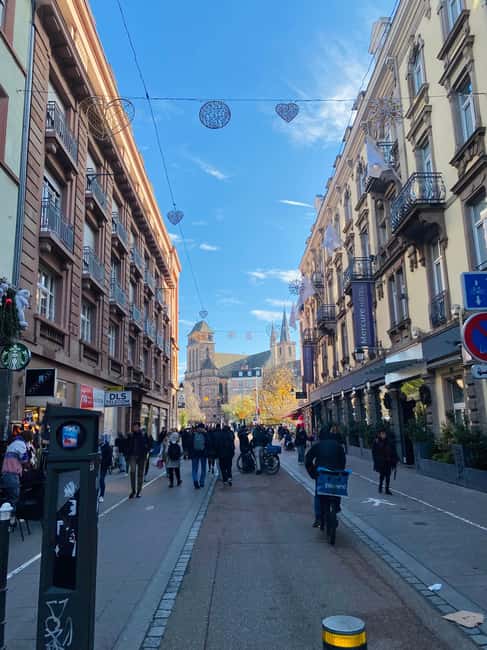
I would recommend it most strongly to first-time visitors, short-stay visitors, and anyone arriving by train or on a wider Alsace trip who wants a quick orientation to the center. It also suits people who enjoy architecture but want a person to explain what they are seeing.
Families and mixed-age groups may appreciate the compact route, though you should bring water and plan for the full walking time. The activity is wheelchair accessible, but individual comfort with historic streets and continuous walking still matters.
This is also a good choice if you like finishing a tour with practical suggestions. You can ask about meals, shops, photo locations, and places to return to. The advice is likely to be most useful when you ask specific questions instead of waiting for general recommendations.
I would choose something else if your priority is going inside the cathedral, tasting Alsatian food as part of the booking, or receiving a private tour in one language. Those needs are outside this activity’s scope.
What to bring and how to prepare
Wear comfortable shoes, especially if you plan to keep exploring afterward. Bring water, a hat, sunscreen, and a camera. The guide may help with photographs, but you will still want your own battery and storage ready for the cathedral and Petite France.
Meet at Place Gutenberg near the statue and tree, and look for the blue UTG Experience badge. Since the tour takes place outdoors, weather will shape your comfort. Winter visitors should dress warmly, while summer visitors should protect themselves from heat and sun.
Arrive ready to walk rather than expecting frequent indoor breaks. One cold-weather visitor suggested a short comfort and warm-drink break, but no scheduled pause is promised. If you need one, speak up politely.
Should you book the Strasbourg walking tour?
Book it if you want a friendly, broad introduction to Strasbourg for $28, especially at the start of your stay. The route covers the cathedral, Petite France, the Tanners’ Quarter, Place Gutenberg, and Place Kléber, while the guide adds local stories and useful advice for the rest of your visit.
Go in knowing that the cathedral is viewed from outside, food is not included, and the tour may be bilingual. If those limits suit you, this is a practical way to get your bearings fast and see why Strasbourg rewards slow walking. If you want an interior cathedral visit or a highly detailed single-language history lesson, use this as an orientation and plan a separate visit for those interests.
FAQ
How long is the Strasbourg walking tour?
The tour lasts two hours.
How much does the tour cost?
The listed price is $28 per person.
Where does the tour meet?
Meet at Place Gutenberg, 67000 Strasbourg, near the statue and the tree.
How do I identify the guide?
The guide will wear a blue company badge with the name UTG Experience.
What languages are available?
The live tour guide service is offered in English and German. The tour may be multilingual.
Is entry to Strasbourg Cathedral included?
No. The tour passes by the cathedral, but entry tickets are not included.
Is food or drink included?
No. Food and drinks are not included, though the guide provides recommendations on where to eat and explore.
Can I cancel the booking?
Yes. You can cancel up to 24 hours in advance for a full refund. You can also reserve now and pay later.
Recently reviewed around Strasbourg & Alsace
- Guided tour of Nancy, Great History and Little Anecdotes★ 5.0 · 89 reviews
- Guided Tour “Unusual Nancy”★ 5.0 · 36 reviews
- Alsace villages half day tour from Colmar★ 5.0 · 186 reviews
- The Emblematic: visit of villages, Haut-Koenigsbourg, Wine tasting★ 5.0 · 81 reviews
- Segway Tours 2h in Colmar★ 5.0 · 116 reviews
- Alsace’s Gems Small Group Day Tour from Colmar★ 5.0 · 84 reviews
- Private and customizable: Alsace Wine Route HIGHLIGHTS in 3 hours★ 5.0 · 63 reviews
- ICONICS Tour: 1/2 day on the Wine Route, visit of 2 Villages + Tasting.★ 5.0 · 159 reviews
Walking Tours, compared.
Paris Top Sights Half Day Walking Tour with a Fun Guide
Read our review →
Montmartre Hidden Gems and Scenic Highlights Walking Tour
Read our review →
Montmartre Hill French Gourmet Food and Wine Tasting Walking Tour
Read our review →
Paris Île de la Cité and Notre-Dame Walking Tour With Crypt
Read our review →
Montmartre Cheese, Wine & Pastry Guided Walking Tour
Read our review →
Paris in a Day: Louvre or Orsay, Eiffel Tower, City Walk & Cruise
Read our review →
Montmartre Highlights Walking Tour with a Local Guide
Read our review →
Browse the lists this tour appears in