
Reviewed · MUSEUMS
Bordeaux: Museum of Illusions Entry Ticket
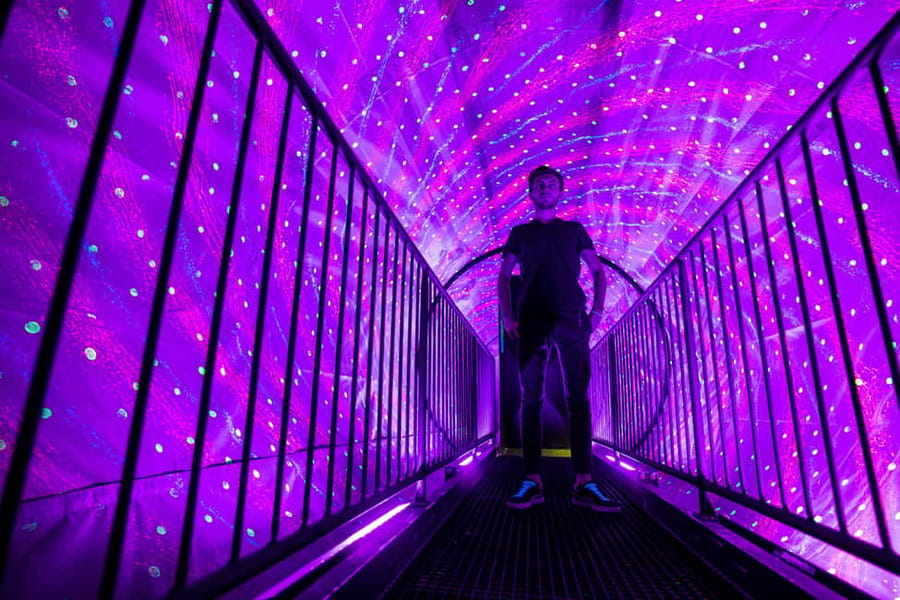
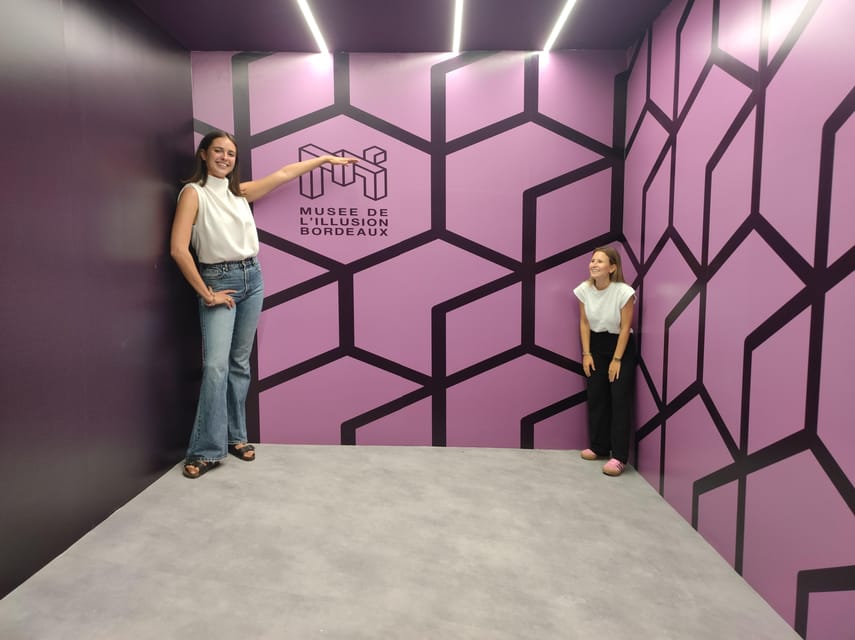
The first surprise here is how quickly your eyes stop being reliable. At Bordeaux’s Musée de l’Illusion, rooms use mirrors, perspective, motion, and visual tricks to make you look upside down, smaller than you are, or suspended in the air. I like the mix of hands-on fun and simple science, and I like that you can move at your own pace rather than follow a guide.
I also like how well this works for families. Children aged 7 and 12 have been known to go from doubtful to delighted once the tricks begin, and the rooms give everyone a reason to laugh together. The main drawback is value: at $22 per person for about an hour, the visit can feel expensive, especially if you expect a large mirror room or a full museum day.
In This Review
- Key points to know
- Entering Bordeaux’s Museum of Illusions
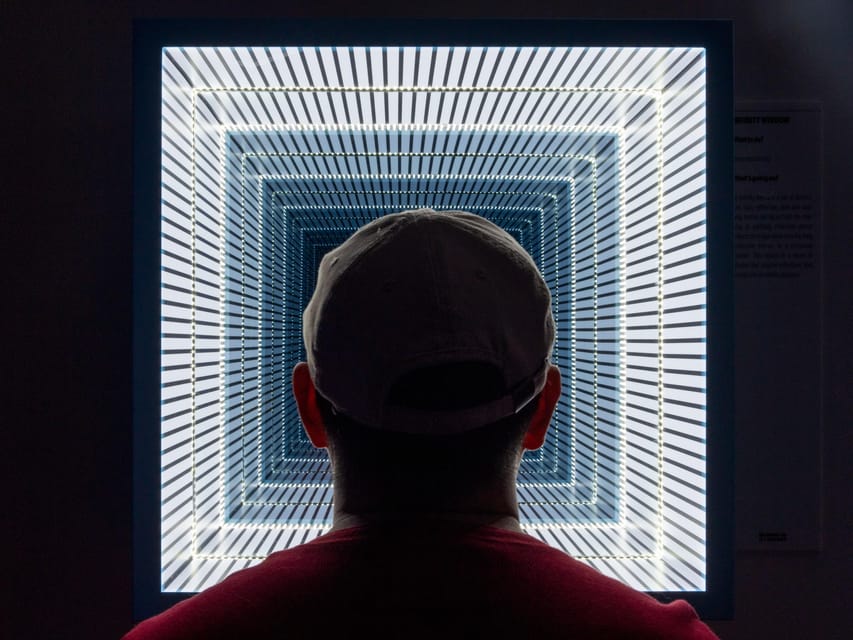
- Holograms, sensory tricks, and changing perspective
- The photo rooms and the small mirror attraction
- Why the science matters
- A one-hour visit at your own pace
- Is $22 a fair price?
- Best for families, couples, and curious minds
- Practical details before you go
- How it compares with a conventional museum stop
- Should you book Musée de l’Illusion Bordeaux?
- FAQ
- Where is Musée de l’Illusion Bordeaux?
- How long does the visit last?
- What does the ticket include?
- Are food and drinks included?
- Can I take photographs?
- Is the museum wheelchair accessible?
- Can I cancel my booking?
- Can I reserve now and pay later?
Key points to know
- Expect a one-hour visit: The ticket covers entry, and you explore independently at your own speed.
- Bring a charged phone: Many rooms are designed for playful photographs, including floating, upside-down, and size-changing effects.
- Learn the science: Visual information explains why your eyes and brain interpret each illusion incorrectly.
- Good for children and adults: The activity combines puzzles, sensory tricks, holograms, and comic photo scenes.
- The mirror room may feel small: You might wait for access, and it may not match the scale of similar attractions.
- Wheelchair accessible: Food, drinks, alcohol, and drugs are not permitted inside.
Entering Bordeaux’s Museum of Illusions
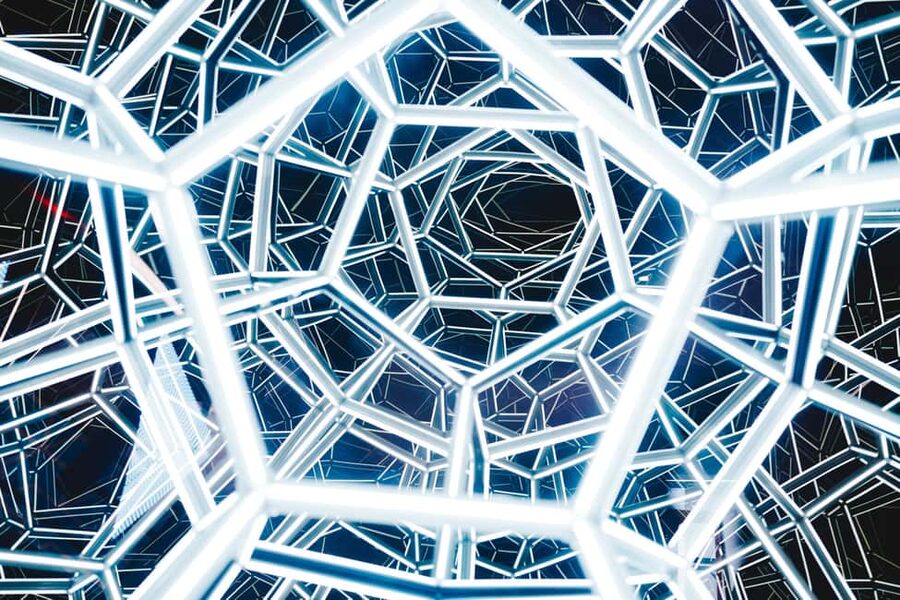
You go directly to Musée de l’Illusion Bordeaux, where your entry ticket begins a compact indoor visit. There is no stated guided tour or named guide, so you should expect to explore the rooms on your own rather than listen to a fixed presentation.
That self-guided format is useful here. Illusions work best when you can pause, try an effect again, and take a photograph without being hurried along by a group. It also lets parents spend more time at the displays that hold a child’s attention and move past the ones that do not.
The museum is built around a simple idea: your eyes collect information, but your brain decides what that information means. When the two do not line up, ordinary rooms, bodies, and objects can look completely wrong.
You do not need a background in science to enjoy it. Short visual explanations help connect the trick to perception, so the visit is more than a series of strange pictures. I find that this small educational layer gives the activity more staying power than a photo studio filled with props alone.
More Bordeaux museums and collections:
- Bordeaux Wine and Trade Museum Admission Ticket with Wine Tasting
★ 4.5 · 599 reviews - Paris: Louvre Museum Timed-Entrance Ticket
★ 4.6 · 71,977 reviews - Louvre Museum Masterpieces Guided Tour with Access
★ 4.5 · 12,023 reviews
Holograms, sensory tricks, and changing perspective
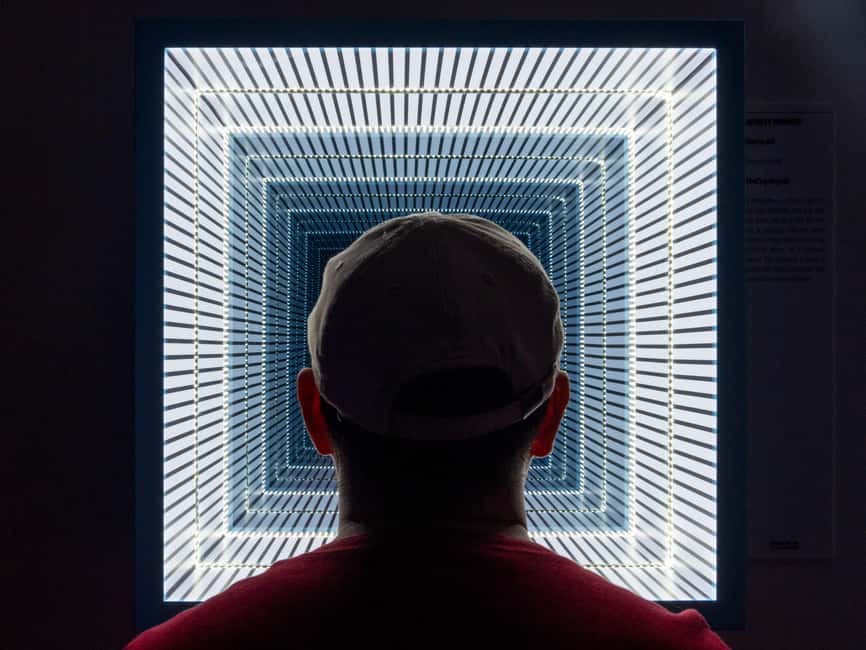
The exhibits include sensory illusions, holograms, perspective puzzles, and other installations that alter the way you see a scene. The exact order of the rooms is not specified, so it is best to think of the visit as a collection of stations rather than a tightly scripted itinerary.
Holograms are especially useful for showing how a flat image can appear to have depth or movement. Perspective puzzles ask you to question size, distance, and position. You may look at an arrangement that seems obvious, then shift your viewpoint and find that the apparent answer changes.
The sensory displays add another layer. They are not just things to look at from behind a barrier. You engage with the exhibits, test your own perception, and compare what you see with what another person sees.
I like this format for mixed-age groups because adults and children can approach the same display in different ways. A child may enjoy the surprise first, while an adult may be more interested in the explanation afterward. Neither approach is wrong.
The museum also gives you useful material for conversation. Instead of simply saying that an effect looks strange, you can ask why the brain fills in missing information or why a familiar shape seems to move. That makes the visit a pleasant change from a standard sightseeing stop.
The photo rooms and the small mirror attraction
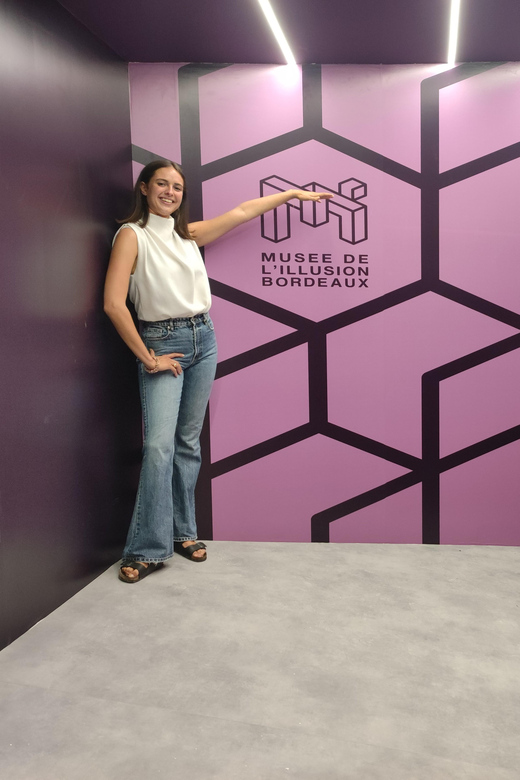
Photography is a major part of the experience. Bring a camera or a charged smartphone, because the rooms are designed to make ordinary poses look impossible.
You can take pictures that make you appear to float in mid-air, stand upside down, or shrink in size. These effects depend on where you stand and how the camera is framed, so it is worth taking a moment to find the right position before snapping several pictures.
This is one of the reasons the museum works well for couples, friends, and families. You do not need to be a serious photographer. Someone can stand in the marked or suggested position while another person takes the picture, then swap places.
Still, keep your expectations sensible. The mirror room has been described as smaller than expected, especially for anyone familiar with larger versions of the attraction elsewhere. There may also be a wait to enter that room.
That does not make it a poor stop, but it does affect the value. If the mirror room is the main reason you are buying a ticket, the one-hour visit may feel less satisfying. If you treat it as one element among holograms, puzzles, sensory displays, and perspective effects, the experience is more balanced.
You should also expect other visitors to be taking photographs. The self-guided setup gives you freedom, but it does not guarantee that every picture will be quick or private. A little patience helps, particularly around the most recognizable photo effects.
Why the science matters
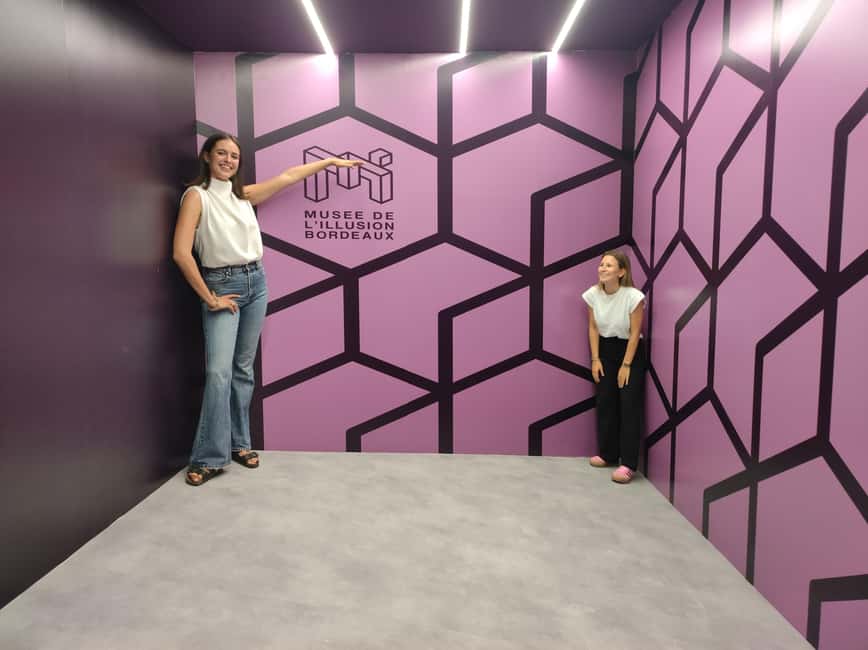
The best part of a museum like this is not simply being fooled. It is understanding how the illusion works after you have been fooled.
Visual information throughout the rooms explains the science behind the effects. You may learn how perspective changes an object, how a mirror can multiply or distort a scene, or how the brain makes a quick judgment from incomplete visual clues.
The explanations are practical rather than academic. You can read them after trying an installation, which makes the information easier to grasp. The order matters: first your senses give you a surprising result, then the display helps explain why.
I appreciate that balance. A purely educational exhibit might not hold a young child for long, while a purely playful attraction can be forgotten as soon as you leave. Here, the puzzle and the explanation support each other.
The museum also makes a good rainy-day activity in Bordeaux. Since the visit lasts about an hour, it fits neatly between other plans rather than taking over your day. You can use it as a short indoor stop, but do not confuse its compact size with a full afternoon attraction.
More Bordeaux trips worth a second look
- Bordeaux: Cité du Vin Entry Ticket and Wine Tasting
★ 4.6 · 3,885 reviews - Royan: Planet Exotica Entry Ticket
★ 4.4 · 37 reviews - Disneyland® Paris 1-Day Ticket
★ 4.6 · 49,412 reviews - Paris: Versailles Palace and Gardens Full Access Ticket
★ 4.6 · 41,579 reviews
A one-hour visit at your own pace
The stated duration is one hour, and that is a useful planning guide. You should have time to see the installations, read the explanations, and take photographs, but you should not expect a long museum visit.
Your actual pace will depend on the crowd and on how many photos you take. A family may spend extra time repeating an illusion or helping children understand a puzzle. A couple focused on quick pictures may finish sooner.
I would plan the museum as a self-contained one-hour stop. That keeps your expectations realistic and leaves room for other Bordeaux sights, meals, or a relaxed walk afterward.
There is no food or drink included, and food and drinks are not allowed inside. Alcohol and drugs are also prohibited. For a short visit, this is easy to manage, but you should handle snacks and drinks before entering or after leaving.
A camera is specifically recommended, and a charged smartphone is the simplest choice. A low battery could leave you enjoying the effects but unable to save the photographs that are part of the attraction’s appeal.
Is $22 a fair price?
The ticket costs $22 per person. That is not a bargain for a one-hour activity, and price is the clearest concern I would consider before booking.
The value improves if you are visiting with children who enjoy puzzles, funny photographs, and interactive displays. A family can share the reactions and help one another with the effects, which gives the ticket more social value than a short exhibit viewed silently.
The price also makes more sense if you want a light, weatherproof activity with an educational angle. You are paying for access to several types of installations, not just a single mirror room or one photo set.
Still, the visit is compact. If you prefer major museums with extensive collections, many galleries, or several hours of content, this attraction may not meet your expectations. The experience is about perception and play, not Bordeaux art, local history, or a traditional museum collection.
I would ask myself one practical question: will I actively use the rooms, try the puzzles, and take photographs? If the answer is yes, $22 may be reasonable. If you plan to walk through quickly and take only a few pictures, the cost will feel harder to justify.
Best for families, couples, and curious minds
The activity has a broad age appeal. Children can enjoy the comic effects and physical puzzles, while adults can focus on the explanations and the odd feeling of seeing something that cannot be true.
It is particularly well suited to families with school-age children. The experience can turn a reluctant child into an enthusiastic participant once the first illusion works. It also gives adults a way to join in instead of simply watching children play.
Couples and friends will find plenty to photograph. The floating and upside-down effects encourage cooperation, since one person often needs to frame the shot while another performs the illusion.
The museum may also suit anyone who likes perception puzzles or visual experiments. You do not need to be interested in art museums to enjoy it, and you do not need to understand the science before you arrive.
I would be more cautious about recommending it to someone seeking a long, quiet cultural visit. The attraction is playful and participatory. It is not designed for a slow study of original artworks or a detailed historical presentation.
Practical details before you go
The meeting point is Musée de l’Illusion Bordeaux, so you go directly to the museum rather than meeting a guide elsewhere. The ticket includes museum entry only.
The experience is wheelchair accessible. That is an important practical point for visitors who need step-free access, although the provided information does not describe the width of individual installations or the exact layout of every room.
You can cancel up to 24 hours before the activity for a full refund. A reserve-now, pay-later option is also available, allowing you to keep your plans flexible and pay nothing at the time of booking.
Starting times depend on availability. Since the visit lasts about an hour, check the available time before booking and leave enough space around it for photographs and any wait at the mirror room.
I would arrive ready to participate rather than simply observe. Wear whatever lets you move comfortably around the installations, keep your phone charged, and decide in advance who will take the photographs. The museum does not provide food or drinks, so plan refreshments outside.
How it compares with a conventional museum stop
A conventional museum asks you to look closely at objects selected for artistic, historical, or cultural reasons. Musée de l’Illusion asks you to test your own senses.
That difference is important. You will not come here to see Bordeaux paintings or learn about the city’s past. You come to experience how perception can be bent, then to understand the trick.
For a city break, that contrast can be refreshing. After churches, monuments, and galleries, a room that makes you look upside down offers a different kind of memory. It is also easier for children to join in than a formal collection where touching is not allowed.
The tradeoff is depth. The museum offers several short encounters rather than a large body of material. Its value comes from the variety of effects and the way people react together.
I think of it as a lively side trip, not a centerpiece of a Bordeaux itinerary. Give it one hour, enjoy the photographs, read the explanations, and then continue with the rest of the city.
Should you book Musée de l’Illusion Bordeaux?
Book it if you want a short, indoor activity that combines visual tricks, simple science, and playful photographs. It is a strong choice for families, couples, and groups with children, especially if everyone is willing to take turns posing and taking pictures.
Think twice if $22 feels high for an hour or if the mirror room is your main goal. The smaller-than-expected mirror attraction and possible wait may disappoint visitors who have seen much larger versions.
For the best value, treat the ticket as access to a full set of interactive illusions rather than a single headline room. Bring a charged phone, allow about an hour, and keep your expectations focused on fun and perception rather than a major museum collection.
FAQ
Where is Musée de l’Illusion Bordeaux?
The meeting point is Musée de l’Illusion Bordeaux in Bordeaux, Nouvelle-Aquitaine, France.
How long does the visit last?
The stated duration is one hour. You explore the museum at your own pace.
What does the ticket include?
The ticket includes entry to Musée de l’Illusion Bordeaux.
Are food and drinks included?
No. Food and drinks are not included, and food and drinks are not allowed inside the museum.
Can I take photographs?
Yes. A camera and charged smartphone are recommended, and the museum includes rooms designed for photographs.
Is the museum wheelchair accessible?
Yes. The activity is listed as wheelchair accessible.
Can I cancel my booking?
Yes. You can cancel up to 24 hours in advance for a full refund.
Can I reserve now and pay later?
Yes. A reserve-now, pay-later option is available, so you can book your spot without paying immediately.
Recently reviewed around Bordeaux
- Au Cœur du Château – VSOP D’USSÉ & XO BARON OTARD★ 4.5 · 108 reviews
- retro road trip/ Méhari, 2CV & Burton in Rochefort, La Rochelle★ 5.0 · 28 reviews
- Discover Braastad Cognac★ 5.0 · 52 reviews
- Bordeaux bike tour “The Best of Bordeaux”★ 5.0 · 164 reviews
- Saint Emilion Full Day Wine and Bike Tour★ 5.0 · 167 reviews
- Saint-Emilion Food and Wine Day Tour★ 5.0 · 323 reviews
- Virtual Room Bordeaux – 1st team virtual reality experience★ 5.0 · 47 reviews
- Private Bordeaux History Tour with a glass of Bordeaux wine.★ 5.0 · 28 reviews
Museums, compared.
Louvre Museum Masterpieces Guided Tour with Access
Read our review →
Louvre Museum Entry Ticket With Host and River Cruise
Read our review →
Les Invalides: Napoleon’s Tomb & Army Museum Entry
Read our review →
Louvre Museum – Exclusive Guided Tour (Entry Included)
Read our review →
Louvre Museum Hosted Entry and Mona Lisa Audioguide
Read our review →
Louvre Museum Tour Mona Lisa & Iconic Masterpieces
Read our review →
Browse the lists this tour appears in