
Reviewed · TOULOUSE TOURS
Carcassonne During World War 2
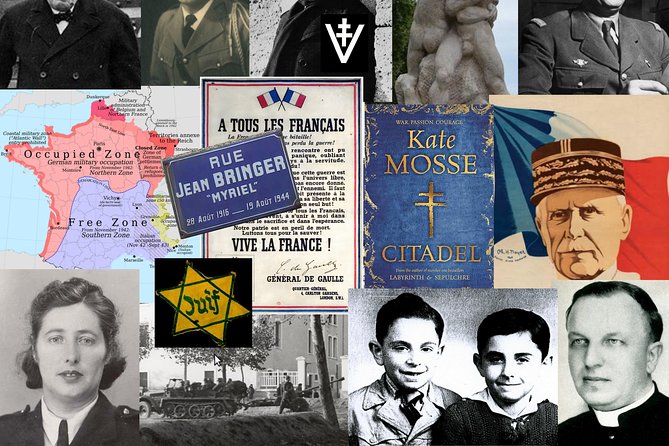
Carcassonne’s medieval walls draw the crowds, but this tour turns your attention to a less familiar chapter: what happened here from 1939 to 1945. You walk through the town with guide Paul, matching present-day streets and monuments with black-and-white photographs from the war years.
I like two things right away. First, the tour keeps the focus local, bringing national events such as the fall of France and the invasion of the Free Zone down to the level of real people. Second, Paul uses photographs, anecdotes, and questions to make you look closely at places you might otherwise pass without a thought.
The main consideration is the walking format. Narrow streets can make it hard to hear in a large group, and one unusually large group of 23 caused problems with sound and safe stopping places. Ask about the group size when booking, especially if a quieter, more personal tour matters to you.
In This Review
- Key points to know before you book
- Carcassonne beyond the postcard citadel
- From the fall of France to the occupied zones
- Rationing, the Milice, and the S.T.O.
- Photographs that connect past and present
- Repression, resistance, and the people behind the labels
- Ending at the Resistance memorial
- How much value do you get for $24.19?
- Who will enjoy this Carcassonne history walk?
- Practical details for a smooth morning
- Should you book Carcassonne During World War 2?
- FAQ
- Where does the Carcassonne World War II tour start?
- Where does the tour finish?
- How long does the tour last?
- Is the tour conducted in English?
- Is this a private tour?
- Can I cancel for a full refund?
Key points to know before you book
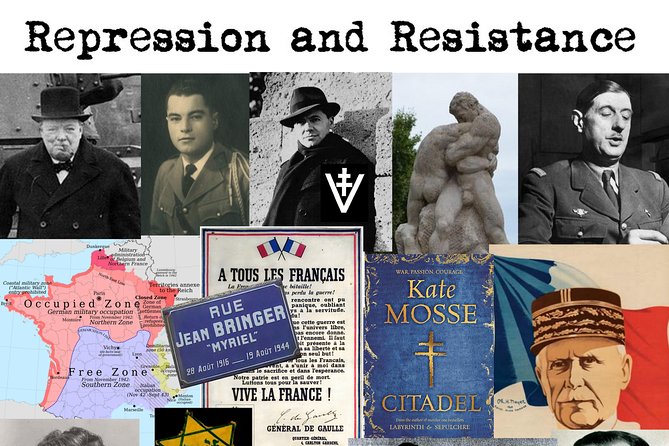
- Local wartime stories: Learn about resistance, collaboration, repression, and liberation through Carcassonne’s own people and places.
- Paul’s photo-based guiding: Old black-and-white images help you compare the wartime town with the streets you see today.
- A different side of Carcassonne: The walk gives careful attention to the lower town, or la Bastide, which can be overlooked beside the famous citadel.
- Two hours of serious but lively history: The subject can turn sombre, but the guide uses humor and questions to keep the pace human and engaging.
- Private booking format: Your group is intended to have the guide to itself, though it is wise to confirm the expected group size.
- Good value at $24.19: For roughly two hours and a quarter of guided history in English, the price is modest, particularly for anyone with an interest in World War II.
Carcassonne beyond the postcard citadel
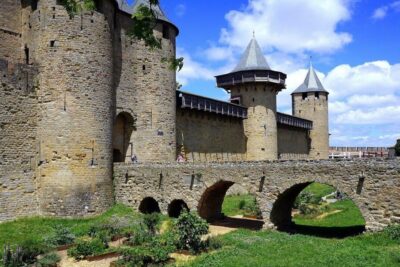
Most people come to Carcassonne for its fortified medieval citadel, towers, and stone walls. This walk asks you to see the town differently. Instead of concentrating on medieval architecture, it follows the traces of the occupation and resistance through streets, memorials, and places connected with the years between 1939 and 1945.
That change of focus is the tour’s strength. You are not simply hearing a broad account of France in World War II while standing in a historic town. You are learning how Carcassonne and its residents responded to events that reshaped the country.
The route gives attention to la Bastide, the lower town. That matters because many people head straight toward la Cité and miss the streets where much of ordinary urban life took place. The lower town becomes a working historical setting rather than a backdrop.
I would not choose this as your only introduction to Carcassonne. It is not designed as a general sightseeing walk covering every famous medieval feature. Choose it after, before, or instead of a standard city tour if you want the modern political and human story.
Other Toulouse days travellers weigh against this one:
- The “Break in Prison” room
★ 5.0 · 609 reviews - Toulouse: Carcassonne Day Trip by Coach with Audioguide
★ 4.4 · 580 reviews - Toulouse Food & History Tour with a Chef (in English)
★ 5.0 · 503 reviews
From the fall of France to the occupied zones
The walk begins with the fall of France and the difficult division between the occupied and non-occupied zones. These subjects can sound abstract in a classroom, but they become easier to understand when tied to the streets and institutions of one particular town.
Paul places Carcassonne within the wider French story without losing sight of local detail. You will hear how daily life changed as France adjusted to defeat, occupation, restrictions, and the growing reach of German power.
The invasion of the Free Zone is another important part of the route. It shows that the supposedly unoccupied part of France was not a permanent refuge. The changing political situation affected choices made by officials, families, workers, and members of resistance networks.
This context helps explain why the tour does not divide people into simple categories of hero and villain. Life under occupation involved fear, pressure, compromise, courage, and betrayal. The walk looks at both the spectrum of resistance and the spectrum of collaboration.
That balance is useful. You will learn about national heroes and local heroes, but also about lesser-known people whose actions did not fit a neat label. The result is a more honest picture of wartime France.
Rationing, the Milice, and the S.T.O.
The tour also covers the practical pressures of wartime life. Rationing is not just a background fact. It affected what people could eat, how they obtained supplies, and how much room there was for black-market activity, favors, and unequal treatment.
The Milice introduces the harsher side of French collaboration. The subject can be sombre, but it is necessary if you want to understand repression inside France, rather than viewing the war only as French resistance against an outside enemy.
The S.T.O., or compulsory labor service, adds another layer. It helps explain why some young people resisted, went into hiding, or joined wider networks. A tour that covers the S.T.O. alongside rationing and repression gives you a clearer sense of the pressures that shaped ordinary decisions.
Paul’s approach appears suited to mixed levels of prior knowledge. If you already know a great deal about World War II, you will find the local names and incidents useful. If your knowledge is basic, the walk supplies the national background needed to follow the story.
I especially like that the tour does not treat resistance as a single organized movement. The phrase spectrum of resistance is important. Different people took different risks, from small acts of help to much more dangerous work, and the walk makes room for those distinctions.
Photographs that connect past and present
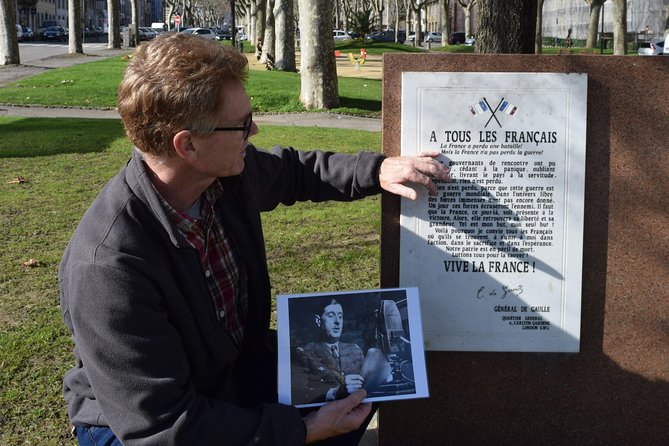
The black-and-white photographs are more than decoration. They give you a visual reference while you stand in the modern town. A street, building, or monument can look ordinary until an old image shows what it meant during the war.
The photographs also help the guide keep the story grounded. Rather than delivering a long lecture while you walk, Paul can point to a place and show how it appeared decades earlier. That makes the history easier to follow and gives you something concrete to watch for.
This method is especially helpful in Carcassonne, where medieval scenery can dominate your attention. The old images pull your eyes away from the stonework and toward the people who lived through the occupation.
The tour also uses artifacts and encourages you to look for details at the sites. That interactive element keeps the walk from becoming a speech delivered at a series of stops. You are asked to observe, connect clues, and consider what a location meant at the time.
The pace is another plus. The walk lasts about two hours, with the full experience listed at approximately two hours and 15 minutes. That leaves enough time for explanation and questions without turning the morning into an exhausting half-day lecture. One account also notes that there was time for a coffee stop, although you should not treat that as a guaranteed part of every departure.
A different way to spend the day, same corner of France:
- Toulouse: Albi and Cordes/Ciel Day Trip with Audio Guides
★ 4.5 · 486 reviews - Toulouse Victor Hugo Market Small Group Tasting Tour
★ 5.0 · 337 reviews - Toulouse: Electric Tuk-Tuk Tour with Photo Stops and Audio
★ 4.8 · 138 reviews - Toulouse: Guided Food Tour with Tastings
★ 4.8 · 80 reviews
Repression, resistance, and the people behind the labels
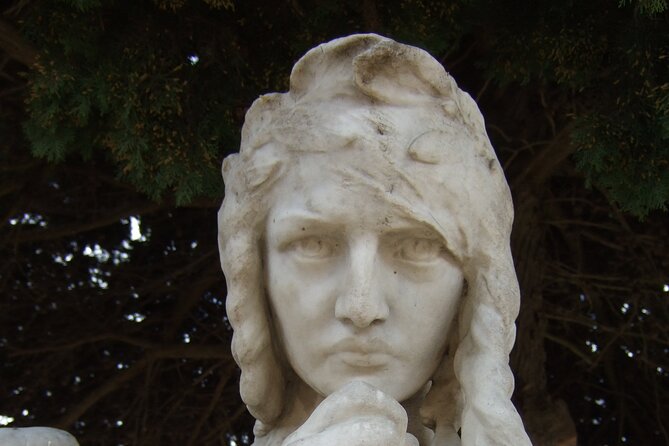
The strongest part of the experience is its attention to individuals. National events provide the framework, but local men and women give the story its emotional weight.
You hear about brave people, collaborators, and figures whose names may not appear in standard accounts of the war. The focus on forgotten heroes is valuable because resistance history can too easily become a parade of famous names. A local walk can show how large events depended on ordinary people making difficult choices.
The material is not light entertainment. Some sections are thoughtful and sombre, particularly when the route reaches repression, collaboration, and post-war purges. At the same time, Paul’s delivery includes humor where it fits, which helps the subject remain approachable rather than relentlessly grim.
I would recommend paying attention to the moral questions, not only the dates and names. How did people respond when food was scarce, information was uncertain, and the consequences of helping someone could be severe? What counted as resistance, and what counted as collaboration? The walk uses Carcassonne to explore those questions without pretending that every answer is simple.
If your interest centers on the French Resistance, this is a particularly good match. If you are more interested in German military operations, the wider strategy of the war, or detailed SS and Gestapo activity, the tour may feel less complete. It gives some wider context, but its center is Carcassonne and the human experience of the town.
Ending at the Resistance memorial
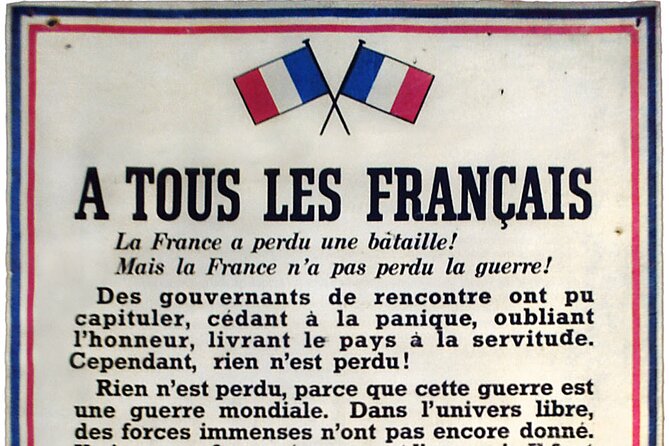
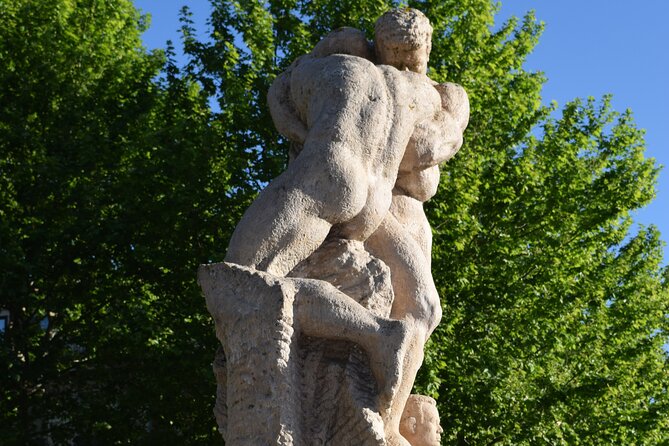
The walk finishes at the memorial to the Resistance in Square Gambetta, listed at 16 Avenue Arthur Mullot. Ending at a memorial gives the route a clear sense of purpose. You move from wartime pressure and personal choices toward liberation and remembrance.
The final subjects include the liberation and the post-war purges. That last stage matters because the end of occupation did not instantly settle every question. France still had to decide how to punish collaboration, restore authority, and remember those who had helped or suffered.
The endpoint also makes practical sense. You finish with a place for reflection rather than being dropped at a random street corner. From there, you can continue exploring Carcassonne on your own, though no onward plan is included in the tour details.
The listed start point is Brasserie a 4 Temps, 2 Boulevard Barbès, with a 9:30 a.m. departure. Arrive early enough to locate the brasserie and meet Paul without rushing. The route is near public transportation, which makes the morning start easier to manage.
How much value do you get for $24.19?
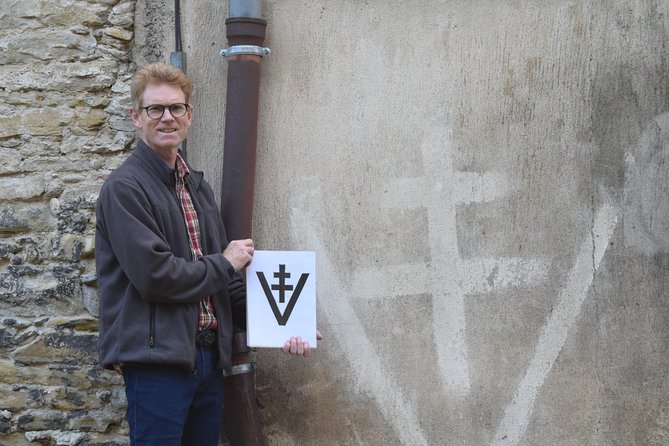
At $24.19 per person, this is priced below many specialist history walks. The value depends on what you want from Carcassonne. If you only need a quick overview of the citadel, a regular orientation tour may suit you better. If you want a focused subject, a human story, and an English-speaking guide who has researched local events, the price is attractive.
You are paying for about two hours of guided interpretation, not an admission ticket to a monument. The itinerary lists no separate entrance fee, and the historical sites are encountered along the walking route.
The private format can make the value even better for a family or small group. You have more chance to ask questions and set the pace when the booking is genuinely limited to your party. However, the unusually large group of 23 noted on one occasion shows why you should confirm this point. A private activity description does not always tell you the final size of the group in practice.
Most people can take part, and the tour is offered in English. Because it is a walking experience on town streets, sensible shoes and weather-appropriate clothing are practical choices, though no special equipment is listed.
The tour requires good weather. If poor weather cancels it, you are offered another date or a full refund. The same applies if the minimum number of participants is not reached.
Who will enjoy this Carcassonne history walk?
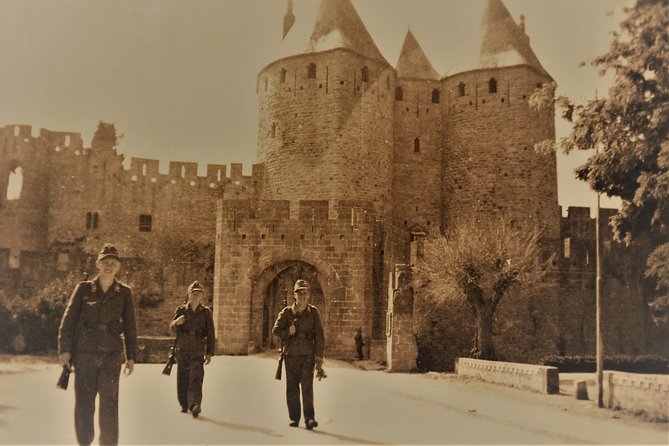
I would choose this tour if you have read about Vichy France, the French Resistance, or the occupation and want to connect that material to a real town. It is also a good fit if you have already seen Carcassonne’s medieval sights and want something less expected.
It suits people who enjoy personal stories more than military hardware or battlefield diagrams. The guide’s use of local anecdotes, photos, and lesser-known figures gives the walk a strong human focus.
You do not need to be a World War II specialist. The national background is explained as part of the route, and the delivery is intended to work for different ages and levels of prior knowledge. Paul’s style is described as clear, engaging, and professional, with time for questions.
Families with older children may find the subject rewarding, but some material is serious. Use your judgment based on how comfortable your group is with repression, collaboration, forced labor, and post-war punishment.
The main group to think twice before booking is anyone seeking a broad Carcassonne tour. You will not get a full survey of medieval architecture, local food, or the city’s entire past. This is a focused World War II walk.
Practical details for a smooth morning
The tour starts at 9:30 a.m. at Brasserie a 4 Temps, 2 Boulevard Barbès, in Carcassonne. It ends at the Resistance memorial in Square Gambetta, listed at 16 Avenue Arthur Mullot. Since the start and finish are different, plan your route back to your accommodation or next sight.
The experience is supplied as a mobile ticket and conducted in English. Confirmation is sent within 48 hours of booking, subject to availability, so do not assume the booking is final until that confirmation arrives.
Free cancellation is available up to 24 hours before the start time for a full refund. Changes or cancellations inside that 24-hour window are not accepted for a refund. Cutoff times use local time in Carcassonne.
The advertised duration is approximately two hours and 15 minutes, while the walking portion is described as two hours. Keep your morning flexible rather than scheduling another activity immediately afterward.
Should you book Carcassonne During World War 2?
Book it if you want Carcassonne to be more than a medieval photo stop. Paul’s careful research, local stories, old photographs, and attention to both resistance and collaboration give the town a strong wartime dimension.
At $24.19, it offers good value for a focused English walking tour. The only real caution is group size. Ask how many people will be on your departure, since narrow streets can make a very large group harder to hear and manage.
I would especially recommend it to anyone interested in the French Resistance, Vichy France, or the personal choices made under occupation. Skip it if your priority is only the citadel’s architecture or a short general introduction to Carcassonne.
FAQ
Where does the Carcassonne World War II tour start?
The tour starts at Brasserie a 4 Temps, 2 Boulevard Barbès, 11000 Carcassonne, France. Departure is scheduled for 9:30 a.m.
Where does the tour finish?
The walk ends at the Resistance memorial in Square Gambetta. The end location is listed as 16 Avenue Arthur Mullot, 11000 Carcassonne.
How long does the tour last?
The walking tour lasts about two hours, with the full experience listed as approximately two hours and 15 minutes.
Is the tour conducted in English?
Yes. The experience is offered in English with an English-speaking guide.
Is this a private tour?
Yes. It is described as a private activity in which only your group participates. Because one departure had 23 people, confirm the expected group size when booking if this is important to you.
Can I cancel for a full refund?
You can cancel at least 24 hours before the local start time for a full refund. Cancellations or changes made less than 24 hours in advance are not accepted for a refund. If poor weather or insufficient numbers cancel the tour, you are offered another date or a full refund.
Recently reviewed around Toulouse
- Carcassonne ‘s Medieval Walls: A Self-Guided Tour★ 4.5 · 43 reviews
- Medieval Carcassonne: Interactive Ghost Story & City Game★ 3.5 · 33 reviews
- Cité de Carcassonne Guided Walking tour. Private tour.★ 5.0 · 42 reviews
- Private guided tour of the city of Carcassonne★ 5.0 · 58 reviews
- Toulouse Food & History Tour with a Chef (in English)★ 5.0 · 59 reviews
- Welcome to Toulouse: Private Walking Tour with a Local★ 4.2 · 47 reviews
- Toulouse: Electric Tuk-Tuk Tour with Photo Stops and Audio★ 4.8 · 138 reviews
- Narbonne: visit the Archbishops’ Palace and Cathedral★ 4.9 · 43 reviews
Toulouse Tours, compared.
Toulouse Food & History Tour with a Chef (in English)
Read our review →
Albi and Cordes/Ciel Day Trip with Audio Guides
Read our review →
Toulouse Victor Hugo Market Small Group Tasting Tour
Read our review →
Carcassonne: Private Guided Tour of the Medieval Fortress
Read our review →Browse the lists this tour appears in