
Reviewed · NORMANDY TOURS
Découverte Bénédictine
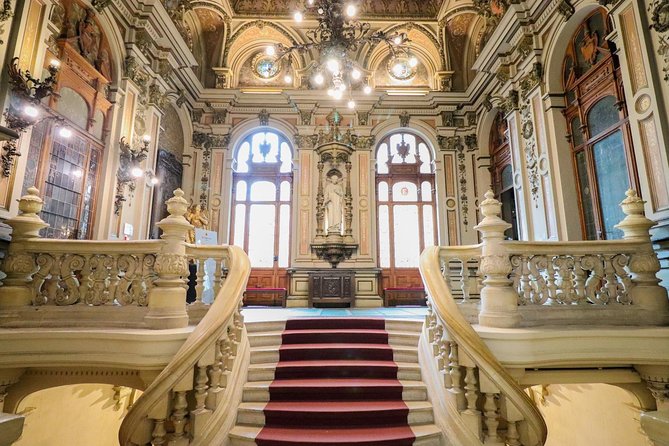
The best part of this Fécamp visit is the contrast: you begin in a fanciful neo-Renaissance palace filled with sacred art, then move into a working distillery with old copper stills and traditional cellars. The story of Bénédictine is just as unusual, involving a Venetian monk, a lost recipe, and a 19th-century businessman who turned an old formula into a famous local product.
I like the freedom to explore the museum at your own pace, and I like that the guided portion focuses on the distillery rather than giving you only a polished brand story. The final liqueur tasting in La Verrière gives the visit a pleasant finish.
The main consideration is that the museum is self-guided, while the distillery portion is guided, so the quality of your visit may depend on the leaflet or available digital material. One practical report also noted French-only content and a QR code that repeatedly cut out, so bring patience and use the printed language leaflet if needed.
In This Review
- Key points to know before you go
- Why the Palais Bénédictine is worth your time
- Starting with sacred art and old books
- The Dom Bernardo Vincelli story
- Seeing the hammered copper stills
- Down into the cellars
- Tasting Bénédictine in La Verrière
- Browsing the palace shop
- Timing, transport, and practical details
- Who will enjoy this visit most
- Should you book the Palais Bénédictine visit?
- FAQ
- Where does the Bénédictine visit start?
- How long does the experience last?
- Is transport included?
- Is the museum guided?
- Is the distillery tour guided?
- Is the tasting included in the price?
- Can children join the visit?
- What is the cancellation policy?
Key points to know before you go
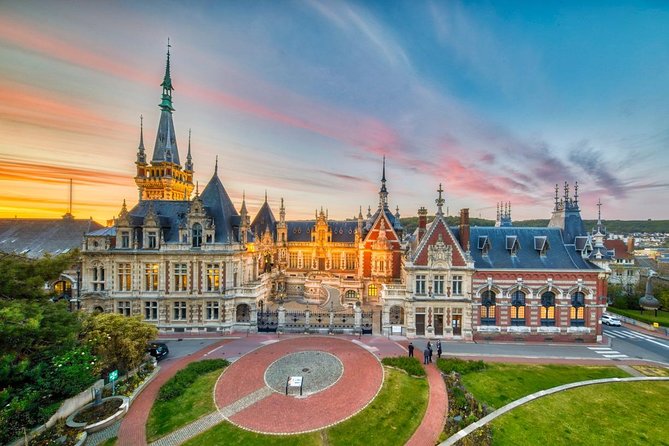
- A palace built for a liqueur: Alexandre Le Grand commissioned this theatrical building in Fécamp after finding an old Bénédictine recipe.
- A 27-ingredient legend: The liqueur’s story reaches back to Dom Bernardo Vincelli, a Venetian monk said to have created a healthful elixir with herbs and spices from around the world.
- The only Bénédictine distillery: The guided section takes you to 19th-century hammered copper stills and the cellars.
- Two different visit styles: You explore the museum independently, then follow a guide through the production areas.
- A tasting with an age limit: Bénédictine tasting and alcohol purchases are only for adults over 18.
- Good value at $12: For about 90 minutes, you get the palace, museum, distillery tour, cellars, and a liqueur tasting.
Why the Palais Bénédictine is worth your time
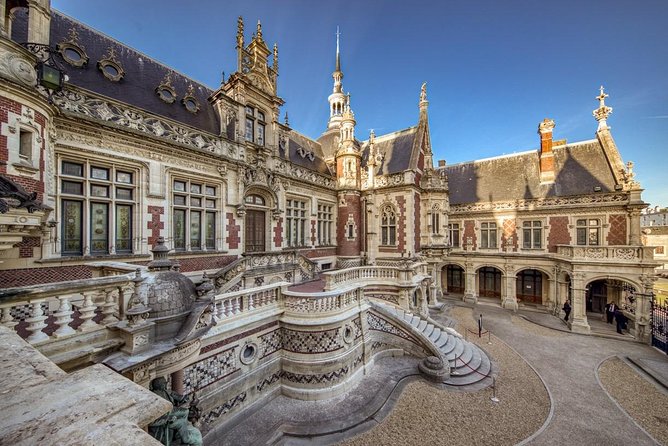
Fécamp is known for its coastal setting, but the Palais Bénédictine gives you a different reason to stop. This is not a plain factory with a gift shop attached. The building itself is part of the attraction, with Gothic and Renaissance influences, tall campaniles, pointed spires, and elaborate stonework.
The palace was created at the end of the 19th century by Alexandre Le Grand, a wine merchant from Fécamp. He found a recipe in an abbey library and began producing Bénédictine. The building became a grand home for the brand, blending religious references, decorative art, and industrial ambition.
I like this setup because you get more than a standard drinks tour. You are learning how a product helped shape a place, while also seeing the highly theatrical building made to promote it. The palace can feel almost fairy-tale-like, but the visit keeps returning to practical details: ingredients, distillation, cellaring, and sales.
At $12, the price is modest for a 90-minute program that includes admission and tasting. If you are already planning to visit Fécamp, this is an easy addition to your day. It also offers a useful indoor stop when the weather turns wet, which is no small matter in Normandy.
Other Normandy days travellers weigh against this one:
- Normandy American D-Day Beaches Full Day Tour from Bayeux
★ 5.0 · 2,103 reviews - Normandy American D-Day Experience – Group tour from Bayeux
★ 5.0 · 1,566 reviews - Normandy Beaches Half-Day Afternoon Trip from Bayeux (A2)
★ 4.5 · 1,116 reviews
Starting with sacred art and old books
Your visit begins at 110 Rue Alexandre le Grand in Fécamp. The first section is self-guided, supported by a leaflet available in French, English, Italian, Dutch, Spanish, Russian, and German.
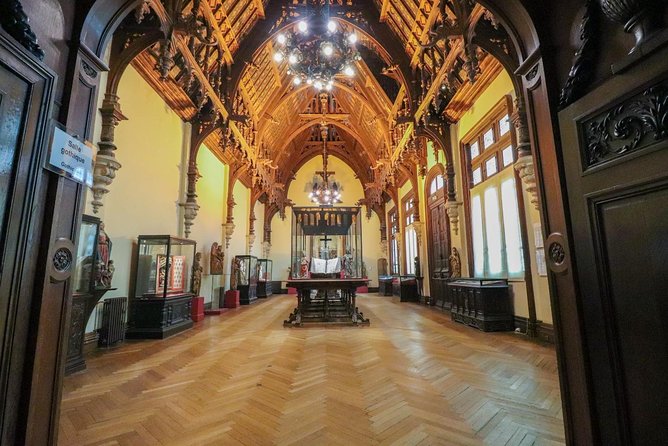
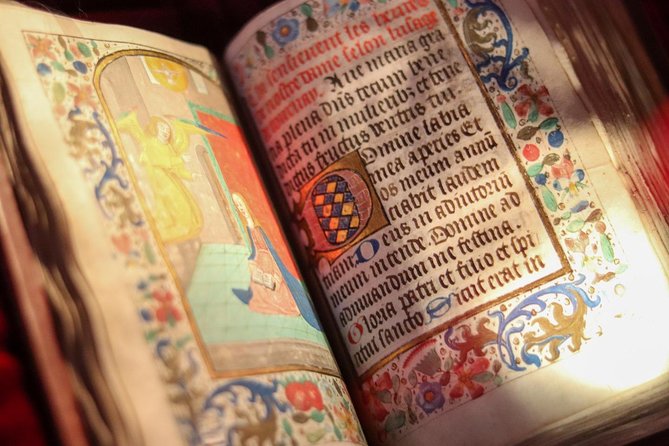
The museum presents sacred and ancient art connected with Bénédictine heritage. You can expect gilded chalices, illuminated books, and other religious objects that help explain why the company’s story is tied so closely to monastic tradition.
This part rewards a slower pace. Do not rush straight toward the stills. Spend time looking at the craftsmanship of the objects, especially the metalwork and decorated pages. Even if you have little interest in liqueur, the museum gives the palace a cultural purpose beyond branding.
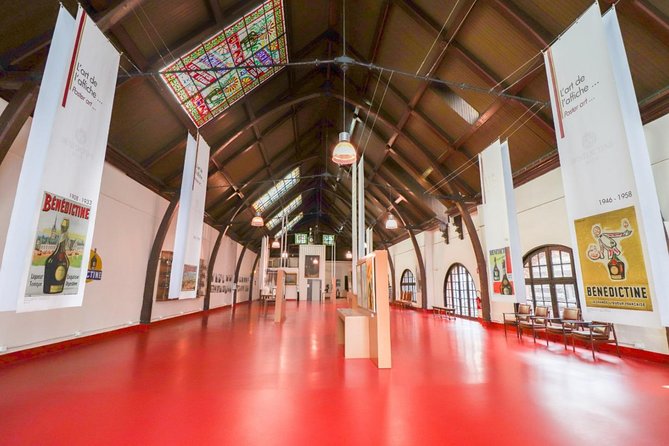
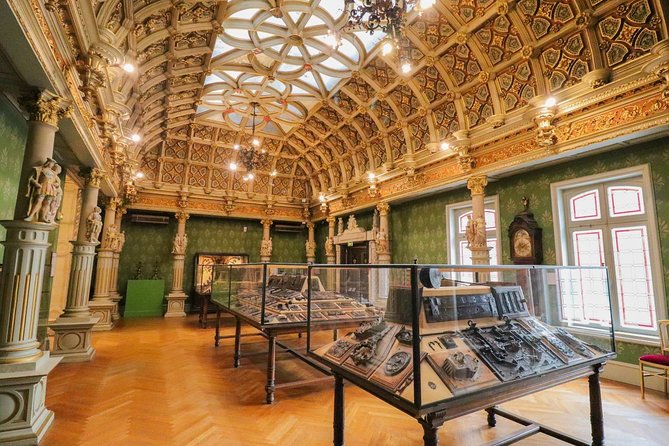
The museum also includes a room devoted to the company’s industrial history. That section helps bridge the gap between the old monastery story and the modern commercial product. Alexandre Le Grand’s discovery is presented as the turning point: an old recipe becomes a manufactured spirit, and a local merchant creates a grand setting around it.
The self-guided format gives you flexibility. You can read carefully, move quickly, or pause for photographs where permitted. The drawback is that you do not have a guide explaining every display as you go. If you prefer a fully narrated museum visit, this first section may feel quiet or uneven.
Printed leaflets are the safer choice if digital access is unreliable inside the thick-walled building. The supplied material includes several languages, so you should not assume that French is your only option.
The Dom Bernardo Vincelli story
The central legend begins with Dom Bernardo Vincelli, described as a Bénédictine monk from Venice. He is said to have created a healthful elixir in 1510 using 27 herbs and spices from around the world.
That number matters because it gives the drink a sense of mystery without requiring you to understand every ingredient. Bénédictine is not presented as a simple single-flavor spirit. Its identity comes from a carefully guarded blend, with plants and spices sourced from different parts of the world.
You should treat the monk’s story as part of the liqueur’s tradition and mythology, not as a dry historical lecture. The story connects the product to monastic medicine, old manuscripts, and the long European habit of making herbal drinks for both pleasure and supposed health benefits.
The later part of the tale belongs to Alexandre Le Grand. After finding the recipe in an abbey library, he began producing the liqueur in the 19th century. His decision to build the palace was not modest. The structure turns a drink into a complete experience, combining art, architecture, history, and production under one roof.
That makes the visit particularly useful for anyone interested in food and drink culture. You see how a regional product can become part of a town’s identity, and how storytelling can be built into the place where the product is made.
Seeing the hammered copper stills
After the museum, the guided portion takes you into the distillery. This is the section most interested in how Bénédictine is made will value most.
The stills date from the 19th century and are made from hammered copper. They are not modern stainless-steel tanks hidden behind a wall. Their age and appearance help you picture the traditional methods that remain part of the Bénédictine story.
The visit explains how the spirit is produced and how ingredients are sourced from around the world. You are not simply shown a bottle and told that it contains herbs. You get a look at the equipment and the process behind the finished drink.
The distillery is described as the only Bénédictine distillery in the world. That gives this stop a real sense of place. You are not touring one branch of a product made everywhere else. The visit is tied directly to Fécamp and to the building where the brand’s story has been developed.
The group can include up to 48 people, so do not expect a private or intimate workshop. A group of that size is manageable in a large palace, but you may need to stay close to the guide and pay attention when the group moves between areas.
The guided format is an advantage here. Production spaces are easier to understand when someone points out what you are seeing and explains how the stills and ingredients fit together. It also gives the visit a better rhythm after the slower museum section.
A different way to spend the day, same corner of France:
- Omaha and Band Of Brothers Full Day Tour
★ 5.0 · 1,104 reviews - Omaha Beach D-Day Experience – Afternoon group tour from Bayeux
★ 5.0 · 1,088 reviews - Omaha and Utah beaches
★ 5.0 · 1,085 reviews - Normandy Battlefields Tour – American Sites (A3)
★ 5.0 · 876 reviews
Down into the cellars
The route continues to the cellars, where you learn about traditional cellaring methods. This is a small but important part of the tour because it shows that making the liqueur does not end when the spirit leaves the still.
Cellaring adds atmosphere to the visit, but it also gives you a clearer picture of the full production chain. Ingredients are sourced, the spirit is made, and the finished product is stored and prepared before it reaches the bottle.
The information provided does not promise a long cellar walk or a chance to handle barrels, so you should keep your expectations reasonable. Think of this as part of a guided production visit rather than a technical distilling course.
Still, the cellars help make the experience feel connected to the original building. The palace is not only a museum of Bénédictine. It remains linked to the production of the drink, which gives your visit more substance than a display of old bottles and advertising material.
Tasting Bénédictine in La Verrière
The visit ends in La Verrière, also described as the Winter Garden. This is where you taste Bénédictine after learning about its ingredients and production.
The setting matters. A tasting in a picturesque glass-filled garden space feels more relaxed than drinking a sample while standing beside a sales counter. You can take a moment to think about the flavors and connect the drink with the story you have just heard.
The tasting is available only to adults over 18. Alcohol products can also be purchased only by adults over 18. Children may take part in the visit if accompanied by an adult, but they will not receive the liqueur tasting.
The tasting is included in the $12 admission, which makes the price particularly fair for adults interested in spirits. You are not paying separately for every part of the visit. The palace, museum, guided distillery tour, cellars, and tasting are bundled into one short program.
La Verrière also has a café where you can buy pastries and drinks. Lunch is not included, so this is not a meal stop, but it gives you the option of a small break after the tour. Save a little time here instead of leaving immediately after the sample.
Browsing the palace shop
The retail shop carries Bénédictine products and unusual bottlings that may not be easy to find elsewhere. It is a useful final stop if you want to take home a bottle or a brand-specific souvenir.
You may also find products connected to the tasting and café experience, including pastries and drink options. The shop is not essential, but it adds value if you collect regional food products or want a gift tied directly to Fécamp.
Keep in mind that alcohol purchases are limited to people over 18. If you are traveling with children, the shop can still be browsed, but the buying rules remain the same.
I would treat the shop as an optional extra, not the reason to book the visit. The strongest parts are the palace, museum, old stills, and tasting. The shop simply gives you a convenient way to continue the experience at home.
Timing, transport, and practical details
The visit lasts about 1 hour and 30 minutes, with a choice of morning or afternoon departure. That makes it easy to fit around other plans in Fécamp. You should allow a little extra time for the shop and café if those interest you.
Transport is not included, so you need to make your own way to 110 Rue Alexandre le Grand. The palace is near public transportation, which helps if you are not driving.
A mobile ticket is accepted, and confirmation is provided at booking. Last admission is one hour before closing, so do not arrive at the end of the day without checking the schedule carefully.
The building has a lift for disabled access, and service animals are allowed. Most people can take part, though the group size may reach 48 people. Children must be accompanied by an adult.
The cancellation policy is generous if your plans may change: cancel at least 24 hours before the start time for a full refund. Within 24 hours, you will not receive a refund, and changes made during that period are not accepted. Cut-off times follow local time in France.
Who will enjoy this visit most
I would recommend the Palais Bénédictine to anyone curious about regional drinks, historic buildings, or the way food and industry shape a town. You do not need to be a liqueur expert. The visit works because it combines several small interests into one manageable stop.
It also suits adults looking for a tasting with cultural context. You learn the origin story first, see the production equipment, and then taste the drink. That order makes the sample more meaningful than an isolated pour.
Families can visit, but the alcohol portion is restricted to adults over 18. Children may find the palace and art displays interesting, though the attraction is clearly built around Bénédictine.
The tour is less suitable if you want a long, hands-on distilling class or a fully guided museum visit from start to finish. The museum section is independent, and the entire visit is fairly short.
Should you book the Palais Bénédictine visit?
Book it if you are in Fécamp and want an affordable, distinctive indoor attraction with a local connection. For $12, you get much more than a sample: a dramatic palace, sacred art, the story of Alexandre Le Grand, old copper stills, cellars, and a tasting in La Verrière.
I especially like it for adults who enjoy seeing how a famous product is made, not just buying it. Go with the printed leaflet, allow the full 90 minutes, and leave time for the café or shop.
Skip it only if you have no interest in spirits, decorative architecture, or company history. For most people spending a day in Fécamp, the visit offers good value and a memorable look at the town’s most distinctive product.
FAQ
Where does the Bénédictine visit start?
It starts at 110 Rue Alexandre le Grand, 76400 Fécamp, France.
How long does the experience last?
The visit lasts approximately 1 hour and 30 minutes.
Is transport included?
No. Transport to and from the Palais Bénédictine is not included.
Is the museum guided?
The museum portion is self-guided. Leaflets are available in French, English, Italian, Dutch, Spanish, Russian, and German.
Is the distillery tour guided?
Yes. A guided tour of the distillery is included, along with a visit to the cellars.
Is the tasting included in the price?
Yes. A Bénédictine liqueur tasting is included in the admission.
Can children join the visit?
Yes, children can participate if accompanied by an adult. The Bénédictine tasting and alcohol purchases are limited to adults over 18.
What is the cancellation policy?
You can cancel at least 24 hours before the start time for a full refund. Cancellations or changes made less than 24 hours before the start time are not accepted for a refund.
Recently reviewed around Normandy
- Le Havre Shore Excursion: Private Day Tour with Omaha Beach & American Cemetery★ 5.0 · 57 reviews
- Immersive tour DISTILLERIE PERE MAGLOIRE★ 5.0 · 314 reviews
- From Cherbourg: D-Day Beaches Shore Excursion★ 5.0 · 28 reviews
- Normandy Victory Museum admission ticket★ 5.0 · 58 reviews
- Mt St. Michel Private Tour with Abbey tickets and tour guide★ 5.0 · 45 reviews
- Mont-St-Michel: Private Walking Tour “Abbey Ticket Included”★ 5.0 · 28 reviews
- Private Guided Tour in WW2 Jeep of the Landing Beaches★ 5.0 · 110 reviews
- Airborne Museum Admission Ticket★ 5.0 · 424 reviews
Normandy Tours, compared.
Normandy American D-Day Beaches Full Day Tour from Bayeux
Read our review →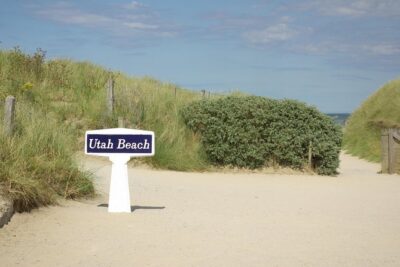
Normandy American D-Day Experience – Group tour from Bayeux
Read our review →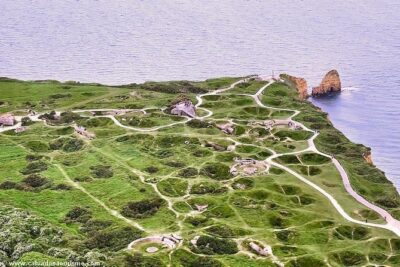
Normandy Beaches Half-Day Afternoon Trip from Bayeux (A2)
Read our review →

Omaha Beach D-Day Experience – Afternoon group tour from Bayeux
Read our review →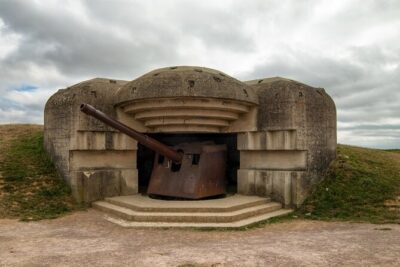
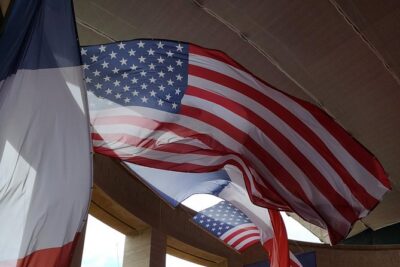
Normandy Battlefields Tour – American Sites (A3)
Read our review →
American D-Day Sites in Normandy Half-Day Tour
Read our review →Browse the lists this tour appears in