
Reviewed · NORMANDY D-DAY TOURS
Normandy Victory Museum admission ticket
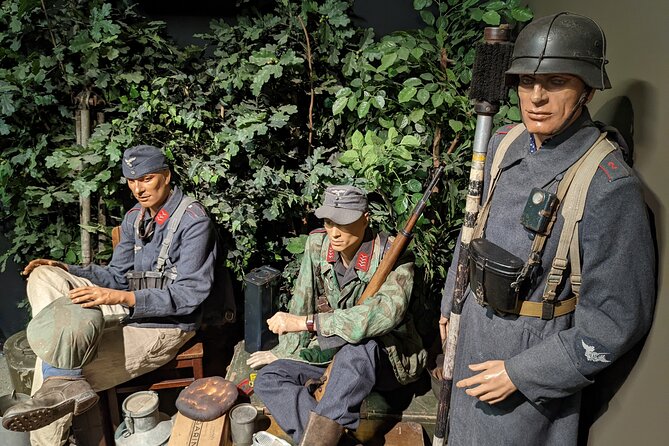
The Normandy Victory Museum shifts attention from the D-Day beaches to what came next: the brutal Battle of the Hedges, when Allied troops fought through Normandy’s thick fields and sunken lanes. Inside, 20 full-size scenes and more than 10,000 original objects create a direct, human-scale look at June 1944 and the weeks that followed. I like the authentic artifacts and the way civilian and military life are shown side by side.
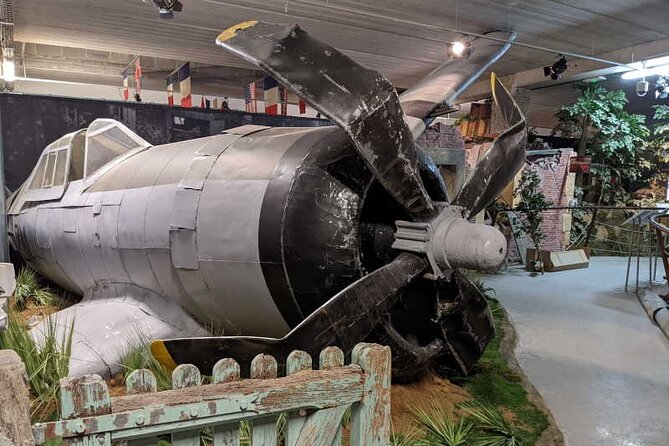
I also like the mix of indoor displays and outdoor vehicles, including jeeps, lorries, a Sherman tank, and a Thunderbolt aircraft. The museum is priced reasonably for a 90-minute to two-hour visit, with free admission for children aged six and under. The main drawback is practical: it can be easy to miss the exit if you are approaching from the road, and some video testimony may be hard to hear beside nearby sound effects.
In This Review
- Key points to know before you go
- Why the Battle of the Hedges matters
- Twenty scenes built for close viewing
- Original objects that make the history personal
- Vehicles outside, from jeeps to a Sherman
- A visit that works for families
- Planning the timing in Carentan
- How it fits into a Normandy museum day
- The shop and the museum atmosphere
- Who should book the Normandy Victory Museum?
- FAQ
- Where is the Normandy Victory Museum located?
- How long should I allow for the museum?
- What is included with admission?
- Is the museum open every day?
- How much do children pay?
- Can I bring a dog or service animal?
Key points to know before you go
- The Battle of the Hedges gets the spotlight: This museum helps explain the difficult fighting after the beach landings, not just the invasion itself.
- More than 10,000 original objects: Uniforms, equipment, household items, and personal effects give the displays a genuine feel.
- Twenty large-scale scenes: Dioramas recreate wartime moments in a way that works well for families and older children.
- Military vehicles add real weight: Outdoor jeeps, lorries, a Sherman, a Thunderbolt, and other vehicles make this more than a display of small artifacts.
- Allow 90 minutes to two hours: You can move quickly, but the information panels reward a slower visit.
- Good value for families: Children aged six and under enter free, and ages 7 to 17 pay €7 at the museum.
Why the Battle of the Hedges matters

Many Normandy museums focus on June 6, the beach landings, and the first hours of the Allied invasion. Those subjects deserve attention, but the fighting did not stop when the beaches were secured. Around Carentan, American forces faced a hard, slow advance through fields divided by tall hedgerows.
These hedges were not simple garden borders. They were thick banks of earth, roots, and vegetation, often topped with trees. They blocked views, slowed vehicles, and gave defenders natural cover. The museum uses this lesser-known part of the campaign as its main subject, giving you a better sense of why the advance inland was so difficult.
I find this focus useful because it fills a gap in a typical Normandy itinerary. You may already understand the broad outline of D-Day, but still have little idea what the next days looked like for soldiers and civilians. Here, the story continues into the countryside and into ordinary homes, roads, and farms.
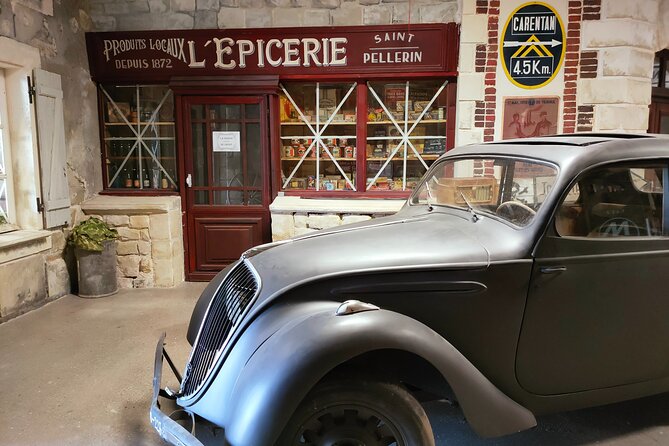
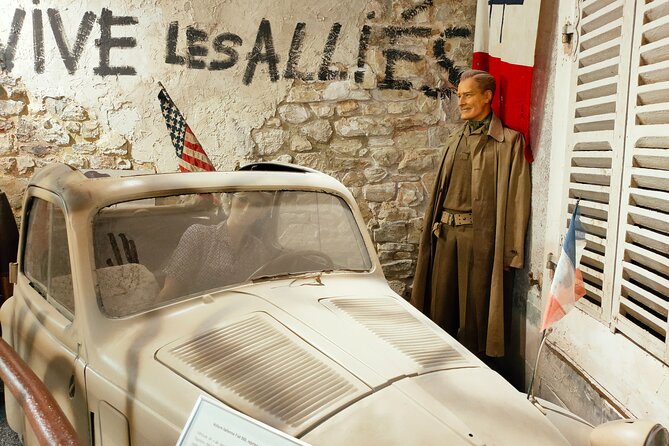
The museum also looks at life on both sides of the conflict. That wider view matters. Military equipment explains how the campaign was fought, while civilian objects show how the war affected people who had no control over where the front line moved.
More Normandy museums and collections:
- Airborne Museum Admission Ticket
★ 5.0 · 424 reviews - Caen: Guided D-Day Sites Tour & Caen Memorial Museum Ticket
★ 4.8 · 385 reviews - Mont Saint-Michel: 3 Museums Entry Pass
★ 3.6 · 304 reviews
Twenty scenes built for close viewing
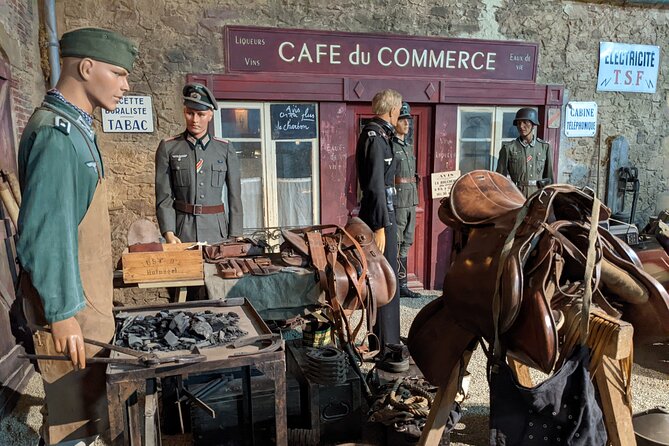
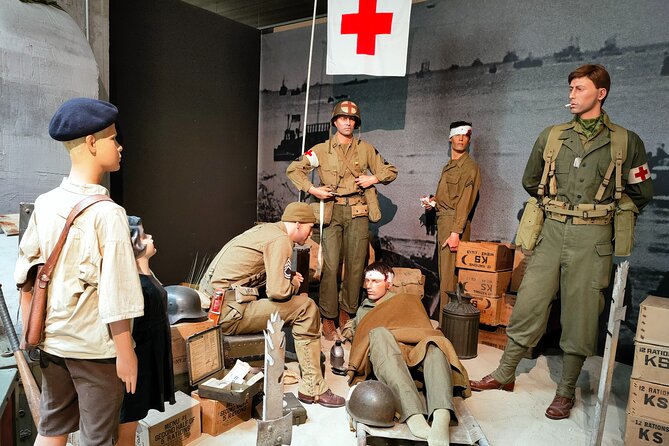
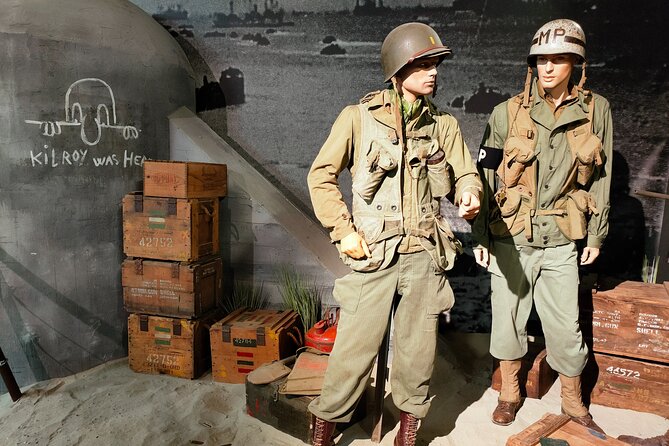
The main indoor route is arranged through 20 large-scale scenes. These are designed to put objects into a setting rather than leave them isolated behind glass. A helmet, radio, tool, uniform, or household item carries more meaning when you can see how it belonged in a wartime scene.
The displays are strongly visual, but you should plan to read. Information panels explain the events and equipment, and the museum has enough written material to keep an interested adult occupied for close to two hours. Older children who enjoy military subjects should have plenty to examine, though younger children may respond more to the vehicles and full-size scenes than to the text.
The scenes are also useful for visitors who do not already know the details of the Normandy campaign. You can follow the story without needing specialist background. I would still allow extra time if you want to read every panel, since the sound effects and visual details can make the route more engaging than a basic collection of cases.
One issue is sound. A video presentation featuring personal accounts may be difficult to hear when sound effects from nearby scenes are playing. If the audio is important to you, ask staff for help rather than quietly moving on. The museum is accessible to everyone, and staff are described as friendly and welcoming, so this is a small problem with a simple possible fix.
Original objects that make the history personal
The museum holds more than 10,000 original objects. That number is impressive, but the real value is how those objects support the story. Original equipment has wear, damage, and small irregularities that replicas cannot quite reproduce. These details make the past feel less polished and more real.
Expect a mix of military material and items connected to daily life. The displays cover the experiences of soldiers, civilians, and the forces involved in the campaign. This helps prevent the visit from becoming only a catalogue of weapons and uniforms.
I especially like museums that show the practical side of war. A vehicle or weapon explains movement and combat, but a household item can suggest what happened inside a village while troops passed through. The Normandy Victory Museum’s wider range makes it a good choice if you want more than a quick look at tanks.
The objects also give the museum a strong sense of place. Carentan and the surrounding area were not just scenery for a military operation. They were lived-in communities caught in a violent campaign. That local connection is one reason to include the museum alongside battlefield sites, cemeteries, and the larger D-Day institutions.
Vehicles outside, from jeeps to a Sherman
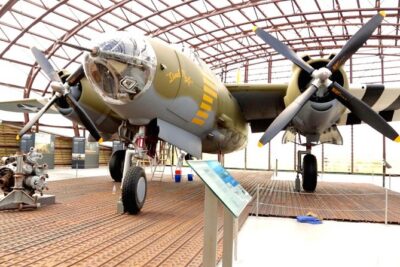
The outdoor collection adds a second layer to the visit. You can see old military vehicles, including jeeps and lorries, as well as a Sherman tank and a Thunderbolt aircraft. One particularly unusual vehicle noted at the museum is one of only two Luchs reconnaissance tanks known to remain, making it worth checking the outdoor area carefully.
Vehicle displays work well for all ages. You can understand the size of a jeep or lorry much faster when you see it at close range rather than in a photograph. Children often find this part more immediate, while adults may appreciate the engineering, markings, and connection to the campaign.
At times, visiting jeeps and lorries may be present, and the museum has also hosted outdoor reenactment events. These events are not guaranteed as part of a normal admission, so you should treat them as an occasional extra rather than a promised feature. On a regular day, the permanent vehicles still give you a solid reason to step outside.
The vehicles are also a good break from reading. I would use the outdoor area to reset your attention, especially if you are visiting several military museums in one day. A short stop outside can keep the experience from becoming a blur of uniforms, maps, and panels.
More Normandy trips worth a second look
- Mont Saint Michel: Walking Tour & Optional Abbey Ticket
★ 4.3 · 562 reviews - Arromanches 360 Circular Cinema Entrance Ticket
★ 4.0 · 71 reviews - Mt St. Michel Private Tour with Abbey tickets and tour guide
★ 5.0 · 45 reviews - Mont-St-Michel: Private Walking Tour “Abbey Ticket Included”
★ 5.0 · 28 reviews
A visit that works for families
The museum is a good fit for families with older children who want to learn about D-Day and the fighting that followed. The large scenes and vehicles give children something concrete to look at, while the written panels provide enough detail for adults.
Children aged six and under are admitted free. Ages 7 to 17 are included at the youth rate of €7 at reception. Students, teachers, military personnel, and people with reduced mobility can receive a reduced €7 ticket at the museum, subject to the stated conditions. These local rates can make a family visit notably cheaper than the listed online price.
The standard online admission price is $11.95 per person. For a visit lasting about 90 minutes to two hours, I consider that fair value, particularly because the ticket covers both the museum and its vehicle displays. The final value depends on how closely you read the panels and how much time you spend with the scenes. A quick 45-minute stop would make the price feel less attractive, but a full visit is easier to justify.
The museum accepts service animals and dogs, and free Wi-Fi is available. Most people can take part, and the venue is described as accessible to everyone. Food and drinks are not included, so plan to buy those separately if needed. An airfield-themed café is on site, but its availability and opening should be checked when you plan your visit.
Planning the timing in Carentan
The experience is listed with Mont-Saint-Michel as its location, but the museum itself is in Carentan. That distinction matters. Carentan is in the area connected to the Battle of the Hedges, so you should check your route carefully before setting out rather than assuming the museum is beside Mont-Saint-Michel.
Opening hours change by season:
- From February 14 to April 3, 2026, it is open daily from 10 a.m. to 5:30 p.m.
- From April 4 to May 29, 2026, it is open daily from 10 a.m. to 6:30 p.m.
- From May 30 to August 23, 2026, it is open daily from 9:30 a.m. to 7 p.m.
The longer summer hours make it easier to fit the museum into a busy Normandy day. You could visit in the morning before other sites, or use it as a late afternoon stop when many smaller attractions may be closing. Still, allow at least 90 minutes if you want the visit to feel worthwhile.
The museum can accept up to 100 people for the activity. That gives you some useful reassurance about capacity, though the atmosphere may vary by day and season. Advance booking is common, with admission typically reserved about 15 days ahead. A mobile ticket makes entry simple, and confirmation is received at booking.
The road approach deserves care. The museum may not look obvious from the outside, and it is possible to miss the exit if you are not watching closely. Use the signs, slow down near the approach, and leave a little extra time for parking and finding the entrance.
How it fits into a Normandy museum day
You can visit the Normandy Victory Museum on its own, but it works best as part of a day focused on the inland campaign. Pairing it with a beach, cemetery, or another museum can help you connect the sequence of events from the landings to the struggle for the countryside.
I would avoid stacking too many museums without breaks. Normandy has many military collections, and after two or three stops the details can begin to run together. The outdoor vehicles and scene-based layout here give the visit a different rhythm from a hall filled with glass cases.
If you are heading toward Cherbourg, the museum can also serve as a practical stop along the way. There is parking, and the café may make it possible to pause for food, though food and drinks are not part of the admission ticket. It is a sensible place to break up a driving day, provided you have checked the opening hours.
For a first-time Normandy visit, I would not use this museum as your only introduction to D-Day. Its strength is the follow-up story, especially the Battle of the Hedges and life around Carentan. Combine it with a site that explains the beach landings, and the overall picture becomes much clearer.
The shop and the museum atmosphere
A military museum’s shop can be an afterthought, but this one has a vintage and militaria focus. It may appeal to collectors or anyone looking for a Normandy-related book, reproduction, or small souvenir. Even if you do not buy anything, it is worth a quick look after the exhibits.
The setting is clean and the staff are described as welcoming. That matters in a small museum, where a friendly reception can make it easier to ask about the vehicles, the displays, or the sound levels in the video area.
The museum does not depend only on grand architecture or a famous beachside location. Its appeal comes from the objects, scenes, and subject matter. You may approach through an industrial-looking area and wonder if you are in the right place, but the contents are the reason to continue inside.
Who should book the Normandy Victory Museum?
I would recommend this admission if you want a close look at the days after D-Day, especially the fighting around Carentan. It is also a strong pick for families with older children, military-history enthusiasts, and anyone who prefers displays with vehicles and realistic scenes.
You may want to skip it if you have very little time in Normandy and have not yet visited the major landing sites. It also may not suit you if you dislike reading panels or detailed wartime displays. The museum is not simply a quick photo stop.
At $11.95, the ticket is sensible for the time available, and the free child admission plus reduced local rates improve the deal. Before booking, confirm the Carentan location, check the seasonal hours, and allow two hours if you want to take the exhibits seriously. With those points in mind, I would book it as a thoughtful second or third Normandy history stop, not as a substitute for seeing the landing beaches themselves.
FAQ
Where is the Normandy Victory Museum located?
The museum is located in Carentan, France, in the area associated with the Battle of the Hedges. The experience information also lists Mont-Saint-Michel as the location, so check the exact route before you travel.
How long should I allow for the museum?
Plan on approximately 1 hour 30 minutes to 2 hours. You can move faster, but the scenes and information panels reward a slower visit.
What is included with admission?
The ticket includes admission to the Normandy Victory Museum. Food and drinks are not included.
Is the museum open every day?
Yes. The published opening periods show daily hours from February 14 through August 23, 2026, with hours changing by season.
How much do children pay?
Children aged six and under enter free. The youth rate for ages 7 to 17 is €7 at reception.
Can I bring a dog or service animal?
Yes. Service animals are allowed, and dogs are accepted.
Recently reviewed around Normandy
- Découverte Bénédictine★ 4.0 · 138 reviews
- Le Havre Shore Excursion: Private Day Tour with Omaha Beach & American Cemetery★ 5.0 · 57 reviews
- Immersive tour DISTILLERIE PERE MAGLOIRE★ 5.0 · 314 reviews
- From Cherbourg: D-Day Beaches Shore Excursion★ 5.0 · 28 reviews
- Mt St. Michel Private Tour with Abbey tickets and tour guide★ 5.0 · 45 reviews
- Mont-St-Michel: Private Walking Tour “Abbey Ticket Included”★ 5.0 · 28 reviews
- Airborne Museum Admission Ticket★ 5.0 · 424 reviews
- Private Guided Tour in WW2 Jeep of the Landing Beaches★ 5.0 · 110 reviews
Normandy D-Day Tours, compared.
Normandy D-Day Sites & Cemetery Day Trip from Paris with Lunch
Read our review →
Normandy D-Day Small-Group Day Trip with Omaha Beach, Cemetery & Cider Tasting
Read our review →
Normandy D-Day Beaches and American Cemetery Day Trip from Paris
Read our review →
Normandy American D-Day Beaches Full Day Tour from Bayeux
Read our review →
Normandy American D-Day Experience – Group tour from Bayeux
Read our review →
Normandy Beaches Half-Day Afternoon Trip from Bayeux (A2)
Read our review →
Omaha Beach D-Day Experience – Afternoon group tour from Bayeux
Read our review →
Normandy D-Day Sites Guided Day Trip with Lunch
Read our review →Browse the lists this tour appears in