
Reviewed · NOTRE DAME TOURS
Early Access Paris Notre Dame Cathedral Walking Tour
Notre Dame is open again, and this tour gives you more than a look at its bright restored interior. Before you enter, your guide sets the cathedral into the story of Paris, from Roman-era foundations and Celtic gods to medieval kings, revolution, and the 2019 fire.
I like the walk through Île de la Cité, where the Seine, Palais de Justice, flower market, old prison, clock tower, and Pont Neuf turn a cathedral visit into a broader lesson in Paris. I also like the chance to see Notre Dame without planning the visit alone, with guides such as Maja, Nina, Abi, and Ife earning especially warm praise for their clear storytelling and friendly manner.
The important catch is simple: the base tour does not include a guide inside Notre Dame. You receive an introduction outside, enter for your own visit, and then rejoin the group for the rest of the island walk. If you expect a fully guided cathedral interior or guaranteed skip-the-line entry, choose carefully.
In This Review
- Key points to know before booking
- What this Notre Dame tour is really designed to do
- Starting at Square Jean XXIII and the Seine
- Île de la Cité, the medieval birthplace of Paris
- Entering the restored Notre Dame Cathedral
- The police prefecture and wartime traces
- The flower market and the courts
- Sainte-Chapelle, the optional stained-glass finale
- The medieval clock and Pont Neuf
- Guide quality and the group experience
- Who should pay $71.20 for this experience?
- Should you book the Early Access Paris Notre Dame Walking Tour?
- FAQ
- Is entry to Notre Dame included?
- Does the guide enter Notre Dame with the group?
- How long is the tour?
- Is Sainte-Chapelle included?
- Where does the tour start?
- Where does the tour end?
- Is the tour suitable for people with limited mobility?
- What should I bring and wear?
Key points to know before booking
- Notre Dame interior entry is included, but your one-hour visit inside is self-guided.
- The tour begins away from the cathedral, at Place Louis Aragon, so allow time to find the meeting point.
- Early access can help, but the newly reopened cathedral is extremely popular and queues can still grow.
- Île de la Cité provides the real substance of the walk, with Roman, royal, revolutionary, and wartime history.
- Sainte-Chapelle is an optional upgrade, with a separate 60-minute interior visit and a different tour ending.
- Expect cobblestones, stairs, inclines, and about two hours on foot, with groups capped at 25 people.
What this Notre Dame tour is really designed to do
At $71.20 per person, this is not simply an admission ticket. Notre Dame itself is free, so the price pays for the guide, the route, the historical explanation, and the arrangement of your cathedral visit.
That distinction matters. If you only want to step inside, you can visit Notre Dame without buying a tour. If you want someone to explain why the cathedral matters, point out details you might miss, and connect it to the birth of Paris, the tour makes more sense.
The format is part guided walk and part independent visit. Your guide leads the outdoor portion, explains Notre Dame before entry, and gives you a set period to explore inside on your own. The cathedral’s silence rules also make this approach practical. The best explanations happen outdoors, where you can hear them clearly. Inside, you can look around without trying to follow a running lecture in a busy church.
The experience is offered in English and lasts about two hours. It is commonly reserved well ahead, with booking often made nearly two months in advance. That suggests you should not leave it until the last day of a short Paris visit, especially if seeing the restored cathedral is a priority.
More Walking Tours in Paris
- Paris Top Sights Half Day Walking Tour with a Fun Guide
★ 5.0 · 2,893 reviews - Montmartre Hidden Gems and Scenic Highlights Walking Tour
★ 5.0 · 2,684 reviews - Montmartre Hill French Gourmet Food and Wine Tasting Walking Tour
★ 5.0 · 2,588 reviews
Starting at Square Jean XXIII and the Seine
The walk begins around Place Louis Aragon, near the eastern end of Île de la Cité. Do not assume this means you meet directly at Notre Dame’s main doors. One person missed the tour after going to the wrong place, so check the exact meeting point and arrive early.
The first stop is Square Jean XXIII, a pleasant green space behind the cathedral. Here, the guide introduces an older Paris, before the familiar medieval church took shape. Archaeological excavations uncovered a pillar connected with the Nautes, a powerful corporation of Parisian traders in the Roman period.
This small monument opens a useful window onto ancient Paris. The Nautes had economic and political influence, and the pillar helped bring Celtic and Greco-Roman religious traditions together. It is the kind of detail that gives the city a human scale. Paris was not born as a grand capital overnight. It grew from trade, river traffic, faith, and political compromise.
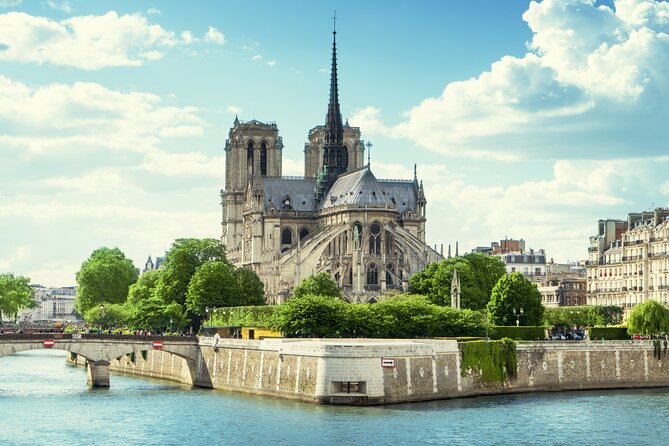
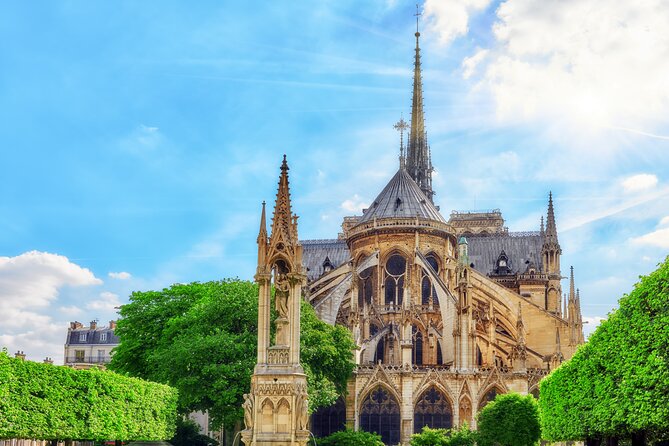
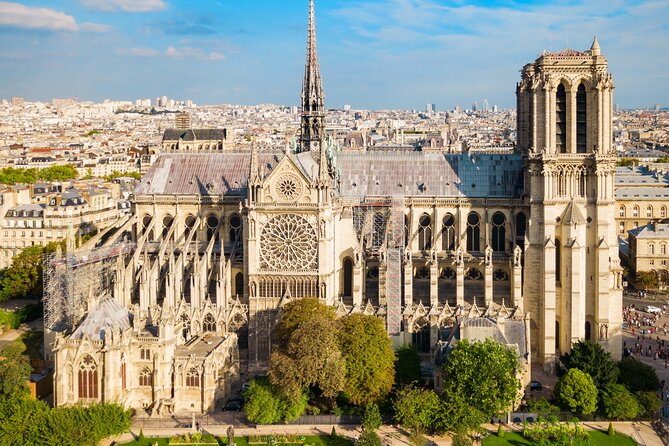
The square also gives you one of the best exterior views of Notre Dame’s flying buttresses. These stone supports are not decorative add-ons. They help carry the pressure of the cathedral’s high walls and vaults outward, allowing Gothic builders to reach upward while opening the walls for larger windows.
From there, the group walks along the Seine. The river and its central banks are protected as a UNESCO World Heritage site, and the short riverside section helps you understand why this island became such an important center. The water was a route for trade and movement, while the island offered a defensible place for government and religious power.
Île de la Cité, the medieval birthplace of Paris
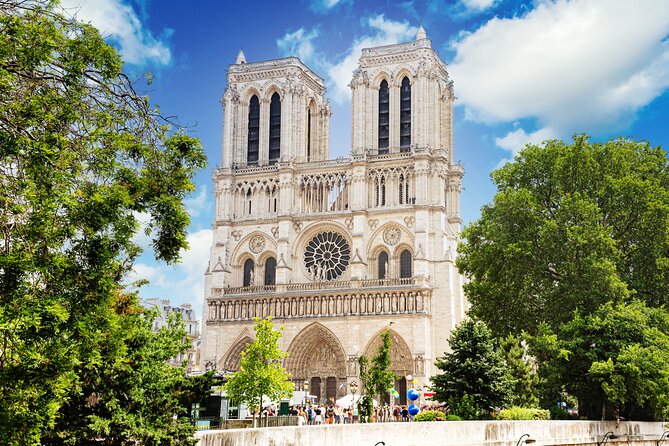
The island is compact, but it carries an unusually large share of Parisian history. Notre Dame and Sainte-Chapelle are the famous names, yet the surrounding buildings explain how religion, law, monarchy, policing, and punishment once operated side by side.
The guide gives you time to take in the setting rather than rushing straight through a door. That is one of the tour’s strengths. The cathedral means more when you understand that this island was also the seat of French kings and the location of major courts of law.
You will pass the Parvis Notre Dame, the large plaza in front of the cathedral. Its design is being adjusted to handle the enormous flow of people around the reopened church and to make the area feel more open toward the Seine. On the plaza, you can see the bronze statue of Charlemagne with his guards while hearing about the ruler’s place in French history.
A marker on the square identifies the point from which distances from Paris are measured. Step on it if you like the small local ritual of promising to return. The same area also recalls a far darker past, since criminals once repented there before execution.
These quick stops are not long enough for a full study of each subject. They work best as links between the major sights. If you enjoy political and social history, you will get more from this walk than someone interested only in church interiors.
Entering the restored Notre Dame Cathedral
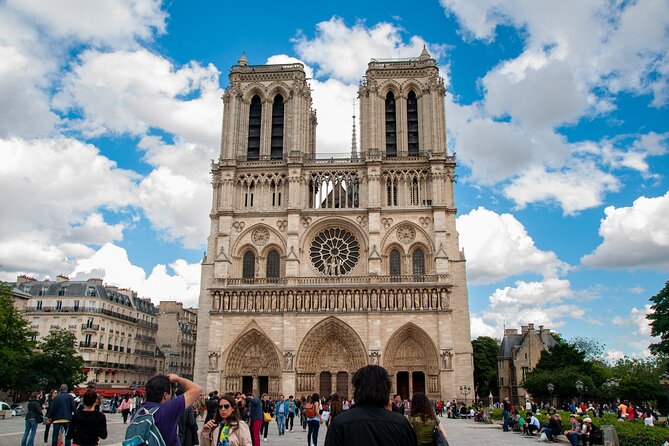
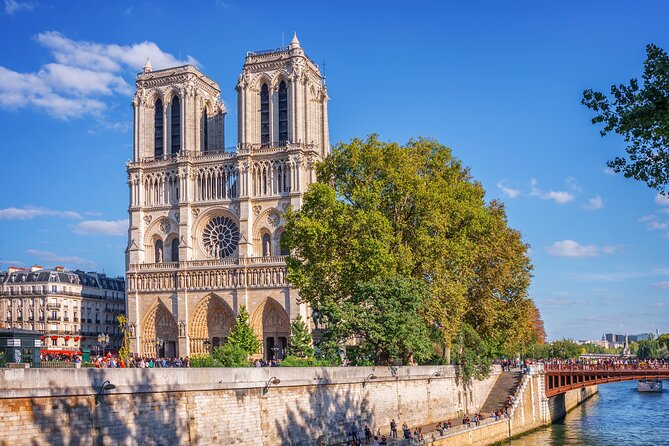
The central event is entry into Notre Dame, the 12th and 13th-century Gothic cathedral. The interior has been cleaned and repaired after the fire, with more than 450,000 square feet of pale limestone stripped of ash, lead dust, and centuries of grime.
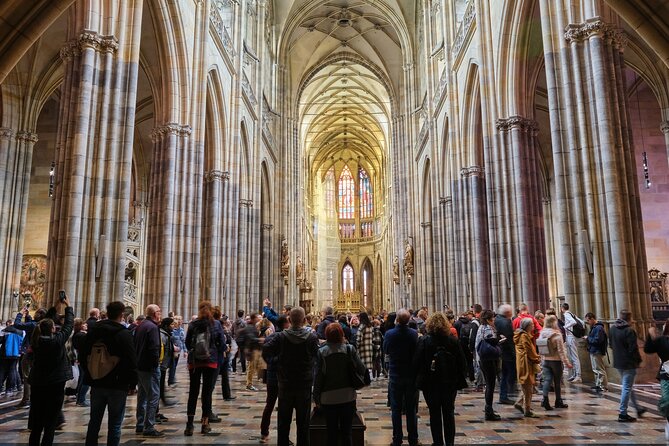
The result is startlingly bright. The restored stone, soaring vaults, tall walls, and thick columns can make the interior feel almost new, even though the building’s structure reaches back to the medieval period. Your guide explains what you are seeing before you enter, then you have time to examine it at your own pace.
Look for the scale of the central nave first. Its long perspective and height show what Gothic architecture was trying to achieve: a sense of upward movement and light. Then study the details that are easy to miss when you are simply staring at the whole room.
The reconstruction involved more than 2,000 workers and craftsmen from across France. The work included structural repairs, cleaning, restoration of decoration, and new furnishings for worship. The new altar is one of the most visible changes, with delicately sculpted scenes from the life of Christ.
In a painted side chapel, look upward for gold stars scattered across a deep blue ceiling. At the crossing of the transept, the oculus carries cherubs around the ring of stone where the four vaults meet. These details reward a slow look, and the self-guided hour gives you room to pause.
This is also where expectations need careful handling. The guide does not accompany the base group through the cathedral interior. You will not receive a running commentary beside each chapel or column. The outdoor briefing aims to prepare you, but you may want to take notes or remember a few key points before entering.
The duration inside can vary in practice. The advertised cathedral portion is about 45 minutes, and some people report having roughly that amount of independent time. The overall visit is affected by the entry line and the cathedral’s crowd controls. Even with an early time, reopening has made Notre Dame very popular, and a wait is possible.
More Paris walks with a guide:
- Paris Île de la Cité and Notre-Dame Walking Tour With Crypt
★ 5.0 · 2,272 reviews - Paris: Montmartre Cheese, Wine & Pastry Guided Walking Tour
★ 4.8 · 2,255 reviews - Paris in a Day: Louvre or Orsay, Eiffel Tower, City Walk & Cruise
★ 5.0 · 1,956 reviews - Paris: Montmartre Highlights Walking Tour with a Local Guide
★ 4.9 · 1,668 reviews
The police prefecture and wartime traces
After Notre Dame, the walk continues through the working and official side of the island. At the Préfecture de Police, you see the headquarters of the Paris police administration, which also oversees emergency services, the Paris Fire Brigade, and several public administrative departments.
The building is worth a pause for its own history. Bullet marks remain visible from the liberation of Paris in World War II, when fighting took place as German control of the city ended. This is a useful reminder that Paris is not only a city of monuments. Its streets and government buildings also carry marks from recent European history.
The stop lasts only about five minutes, so expect an introduction and time for a photograph rather than an interior visit. Admission is not included, and the tour does not present this as a museum stop.
The flower market and the courts
The Marché aux Fleurs occupies Place Louis Lépine between Notre Dame and Sainte-Chapelle. Gardeners and passersby have been coming here since 1830, and its covered and open-air pavilions give this part of the island a gentler feel.
The market is not always open. Even when the stalls are closed, the route still passes through the area, so do not book this walk solely for flower shopping. When operating, it adds a pleasant change of pace after the cathedral and its heavy history.
Nearby, the Palais de Justice occupies one of Paris’s oldest official sites. Government stood here in Roman times, followed by the Merovingian and Capetian dynasties. The guide explains how the island moved from ancient administration to royal residence and then to the legal center you see today.
You also get an exterior introduction to the old prison where Marie Antoinette spent nine months. During the French Revolution, the Revolutionary Tribunal sentenced 2,639 people to execution in Paris during the Reign of Terror. The subject is grim, but it helps explain why the island remains central to the story of French power and revolution.
Sainte-Chapelle, the optional stained-glass finale
The tour pauses outside Sainte-Chapelle, a royal Gothic chapel built for King Louis IX and consecrated in 1248. The exterior introduction takes about five minutes on the standard route.
You can pay for an upgrade that includes a 60-minute interior visit. This changes the ending of the experience, with those who add the chapel finishing there instead of at Pont Neuf. The upgrade is worth considering if you want a second Gothic interior and are especially interested in medieval royal art.
Do not confuse the exterior stop with admission. Sainte-Chapelle entry is not included in the base tour. One useful booking detail comes from the way this option is structured: people who select it join the chapel visit later, while those without the add-on continue to the bridge.
There can be a line for Sainte-Chapelle. If you want to see its interior, select the ticketed option in advance rather than hoping to arrange it casually on the day. The separate admission is also why comparing tour versions matters. A low price can look attractive until you discover that the sight you wanted requires another ticket.
The medieval clock and Pont Neuf
The Tour de l’Horloge is a short but memorable stop. This massive rectangular clock tower rises 47 meters and once served as a watchtower guarding the royal palace. Its walls were nearly a meter thick, a reminder that the royal compound was built for security as well as ceremony.
The clock is about 650 years old and has undergone several periods of restoration. The work restored parts of the tower’s medieval appearance, including its upper sections and vaulted rooms. You will view it from outside and hear the main story in only a few minutes.
The walk then passes a historic square created by Henri IV for his first son. It is also a place where people play pétanque, the French game of tossing metal balls toward a small target. This brief glimpse of everyday Paris keeps the route from becoming a procession of grand monuments.
The final stop is Pont Neuf, the oldest bridge in Paris. From here, you get broad views toward the Louvre, the Seine, the Eiffel Tower, the French Academy, and the Monnaie de Paris. It is a strong place to finish because the river opens the scene and lets you see how the major parts of central Paris connect.
Guide quality and the group experience
The strongest part of this tour is the guide-led outdoor storytelling. Maja, Nina, Abi, Ife, Saeed, Carol, Ben, and Abbie are among the guides praised for warmth, clear explanations, enthusiasm, and an ability to include children and answer questions.
That personal element matters because the itinerary moves quickly. A good guide turns a Roman pillar, bullet marks, a clock tower, and a royal chapel into parts of one story. The best guides also add small facts and ask about your impressions of Paris, making the walk feel less like a list of dates.
Groups can reach 25 people. That is not a private tour, so stay close and make sure you can hear the guide, especially beside the Seine or in busy public squares. The guide waits outside Notre Dame while you explore inside, then the group reunites for the island walk.
The route covers uneven cobblestones, stairs, inclines, and declines. I would choose sturdy, comfortable shoes and bring water. You may wait in the sun, so a hat or light layer helps, while church dress rules call for covered shoulders. The tour runs in all weather.
It is not a good choice if you have limited mobility or are not comfortable with a fair amount of walking. Anyone under 18 must be accompanied by an adult aged 18 or older.
Who should pay $71.20 for this experience?
I see the price as reasonable for someone who wants context and a planned route, but high for someone who only wants entry to Notre Dame. Since cathedral admission is free, the tour earns its cost through the guide and the surrounding walk.
You should book it if:
- You want an English-speaking guide to explain Paris before and after your cathedral visit.
- You are visiting Île de la Cité for the first time.
- You value a clear route through Roman, medieval, royal, revolutionary, and modern history.
- You want the option to add Sainte-Chapelle.
- You prefer having a meeting point, group structure, and assistance rather than organizing every stop alone.
You may want to skip it if:
- You expect a guide to walk inside Notre Dame with you on the standard option.
- You only want cathedral entry and do not care about the island’s history.
- You dislike group walks or cannot manage cobblestones and stairs.
- You need a guaranteed no-wait entrance. The tour does not promise that, and queues can lengthen.
Free cancellation is available until 24 hours before the start time. The tour is near public transportation, but hotel pickup, transport, food, and drinks are not included.
Should you book the Early Access Paris Notre Dame Walking Tour?
Book this tour for the story, not simply for the door into Notre Dame. The restored cathedral is the visual prize, but the Roman Nautes pillar, Seine, royal court, revolutionary prison, clock tower, and Pont Neuf give the visit much more meaning.
I would choose the Sainte-Chapelle upgrade if your schedule allows another hour and you want a second great Gothic interior. I would also confirm exactly which Notre Dame option you are buying, since some versions offer a fully guided interior and this one does not.
For first-time Paris visitors who want a friendly guide and a compact introduction to the heart of the city, this is a strong choice. Just arrive at the correct meeting point, wear good shoes, and keep your expectations clear: guided history outside, independent time inside Notre Dame, and a memorable walk across the oldest core of Paris.
FAQ
Is entry to Notre Dame included?
Yes. The tour includes entry to the interior of Notre Dame, but the cathedral itself is free and open to everyone. The tour fee covers the guided experience and related services.
Does the guide enter Notre Dame with the group?
Not on this base option. The guide explains the cathedral before entry, then you explore the interior independently before meeting the group again.
How long is the tour?
The walking tour lasts about two hours. The Notre Dame portion is listed at about 45 minutes, while the individual outdoor stops are generally brief.
Is Sainte-Chapelle included?
No. Sainte-Chapelle entry requires an optional upgrade. The upgrade includes a 60-minute interior visit, and the tour ends there for people who select it.
Where does the tour start?
The meeting point is Place Louis Aragon, 75004 Paris. It is not directly at the cathedral entrance, so check the location carefully and arrive with time to spare.
Where does the tour end?
The standard tour ends at Pont Neuf, 75001 Paris. People who upgrade to Sainte-Chapelle finish at Sainte-Chapelle instead.
Is the tour suitable for people with limited mobility?
No. The route includes substantial walking over cobblestones and uneven surfaces, along with stairs, hills, inclines, and declines. It is not recommended for people with limited mobility.
What should I bring and wear?
Bring photo identification, comfortable shoes, and water. You may wait in the sun. For Notre Dame and Sainte-Chapelle, cover your shoulders with a scarf or jumper, and dress for the weather because the tour operates in all conditions.
Recently reviewed around Paris
- Louvre Private Tour – The Essentials and More with Expert Guide★ 5.0 · 227 reviews
- Eiffel Tower Second or Summit Floor Access by Elevator with Views★ 3.5 · 161 reviews
- 2CV tour by night★ 5.0 · 55 reviews
- The only Paris Wine Tasting experience you need to do – 2 hours★ 5.0 · 265 reviews
- 2 Hour Street-art Walk and Space Invaders Hunt in Paris★ 5.0 · 27 reviews
- 2 hour outdoor group activity in Paris: SAINT GERMAIN★ 5.0 · 48 reviews
- Sainte-Chapelle, Conciergerie & Palais de Justice Private Tour★ 5.0 · 72 reviews
- Private 2 – Hour Paris Landmarks Tour by Golf Cart Mini Moke★ 5.0 · 38 reviews
Notre Dame Tours, compared.

Paris Île de la Cité and Notre-Dame Walking Tour With Crypt
Read our review →
Notre-Dame Cathedral Exterior Tour & Free Entrance
Read our review →
Paris Highlights Bike Tour: Eiffel Tower, Louvre and Notre-Dame
Read our review →
Sainte-Chapelle, Conciergerie, Notre Dame Guided Tour
Read our review →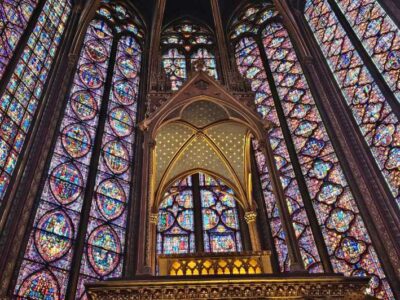
Notre Dame Outdoor Tour with Sainte-Chapelle / Crypt.
Read our review →
Notre Dame Outdoor Walking Tour and Entrance to Sainte Chapelle
Read our review →Île de la Cité and Notre-Dame Walking Tour With Crypt
Read our review →Browse the lists this tour appears in