
Reviewed · MONTMARTRE TOURS
Paris: Montmartre Highlights Walking Tour with a Local Guide
Montmartre is best understood on foot, one crooked lane at a time. This 140-minute walk links the postcard sights with quieter corners, artist hangouts, old cabarets, courtyards, and vineyards. Guides such as Yazid, Sylvia, and Jean Baptiste bring plenty of personality, often mixing art, music, local history, and humor.
I like the small group size, capped at 16, because Montmartre’s narrow streets are awkward for a large crowd. I also like the route’s unusual mix of famous stops and lesser-known places, including the Bateau-Lavoir and old passageways.
The main consideration is the amount of standing and walking on uneven streets. It is not suitable for wheelchair users or people with mobility impairments, and some guides may give more art history than you expect.
In This Review
- Key points to know before you book
- Why this Montmartre walk works so well
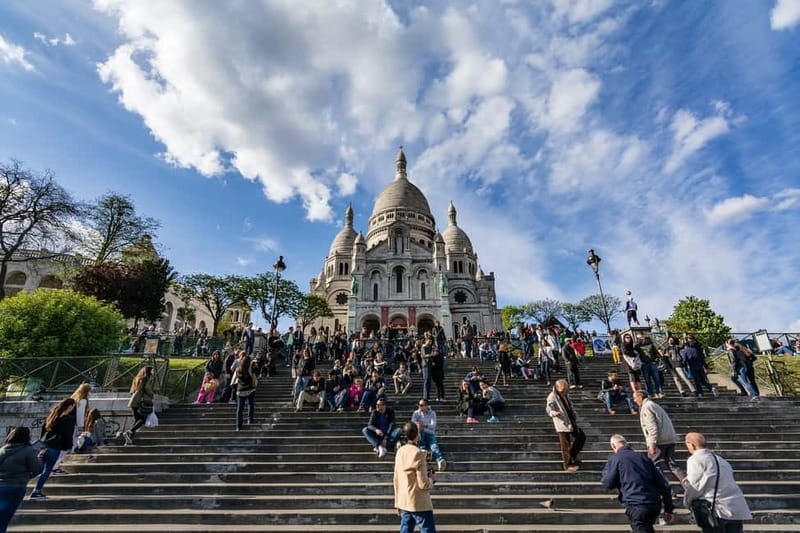
- Starting beneath Sacré-Cœur at Place Saint-Pierre
- The Wall of Love and Montmartre’s softer side
- Bateau-Lavoir, where modern art changed direction
- Moulin de la Galette and the painted Montmartre
- Maison Rose and the lanes beyond the postcards
- Place du Tertre and the working artist tradition
- The guide’s storytelling is the real selling point
- Who will get the most from the $34 price
- Practical details that affect your day
- Should you book the Montmartre Highlights Walking Tour?
- FAQ
- Where does the Montmartre walking tour start?
- How long does the tour last?
- Which language is the tour conducted in?
- What places are included on the route?
- Is the tour suitable for children?
- Is the tour suitable for wheelchair users?
Key points to know before you book
- The route begins below Sacré-Cœur: Start at Place Saint-Pierre, with the basilica and Paris views setting the scene.
- The art story is the main event: Picasso, Modigliani, Van Gogh, Dalí, Toulouse-Lautrec, and others all appear in the guide’s storytelling.
- You see five strong Montmartre landmarks: The Wall of Love, Bateau-Lavoir, Moulin de la Galette, Maison Rose, and Place du Tertre.
- Small groups keep the walk manageable: A maximum of 16 people is more practical than a large coach-style outing.
- The walk works well for families: The route is adapted for children, and guides may add playful touches such as music, photos, or small treats.
- Bring proper shoes and some cash: The streets are hilly and cobbled, and food is not included.
Why this Montmartre walk works so well
Montmartre can feel confusing on a first visit. Sacré-Cœur is easy to find, but the neighborhood spreads out behind it in a maze of steps, lanes, squares, and steep streets. A guide gives you a route and, just as important, a reason to look twice.
This is not only a basilica-and-photo-stop outing. The walk uses Montmartre’s artists, singers, rebels, and eccentrics to explain how the district became famous. You hear about Picasso and Modigliani, but also Dalida, Charles Aznavour, Salvador Dalí, and other figures tied to the area’s cultural life.
I especially like that the tour does not rush directly from one famous address to the next. The guide may point out a quiet courtyard, an old cabaret, a vineyard, or a narrow passage that you would probably miss alone. Those small turns help you see Montmartre as a lived-in neighborhood rather than just a collection of Instagram locations.
The English-speaking guides are a major part of the experience. Yazid is repeatedly praised for lively storytelling and an unusual range of interests, from painting to music. Sylvia is described as friendly, fluent in English, and good at keeping the pace comfortable. Jean Baptiste is known for combining serious historical knowledge with an easy, conversational manner.
Guides vary, so you should not book on the assumption that one particular person will lead your departure. Still, the repeated praise for energy, humor, and subject knowledge suggests that the guide’s personality is central to the tour’s value.
More Walking Tours in Paris
- Paris Top Sights Half Day Walking Tour with a Fun Guide
★ 5.0 · 2,893 reviews - Montmartre Hidden Gems and Scenic Highlights Walking Tour
★ 5.0 · 2,684 reviews - Montmartre Hill French Gourmet Food and Wine Tasting Walking Tour
★ 5.0 · 2,588 reviews
Starting beneath Sacré-Cœur at Place Saint-Pierre
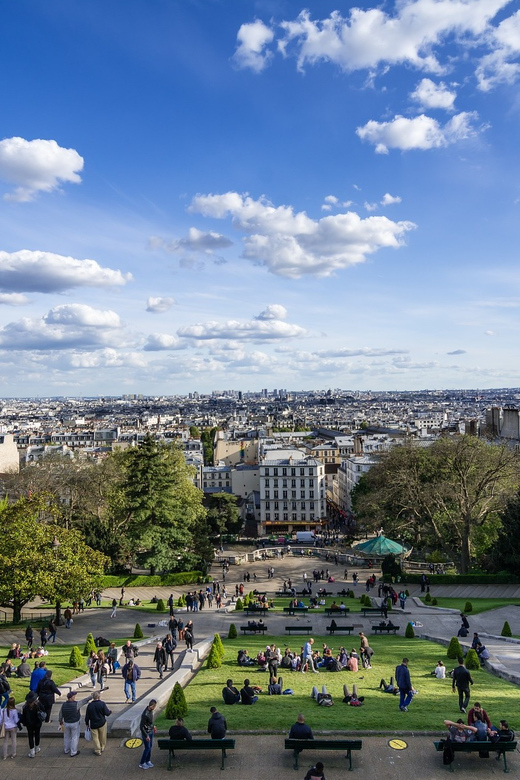
The meeting point is at Place Saint-Pierre, near the carrousel. Look for the Paris Tours Experiences guide. This places you at the foot of Montmartre rather than halfway up the hill, so the walk begins with the district’s physical rise in front of you.
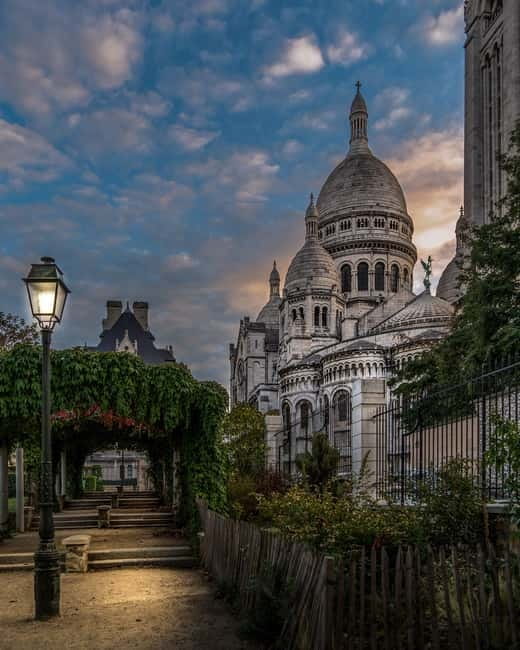
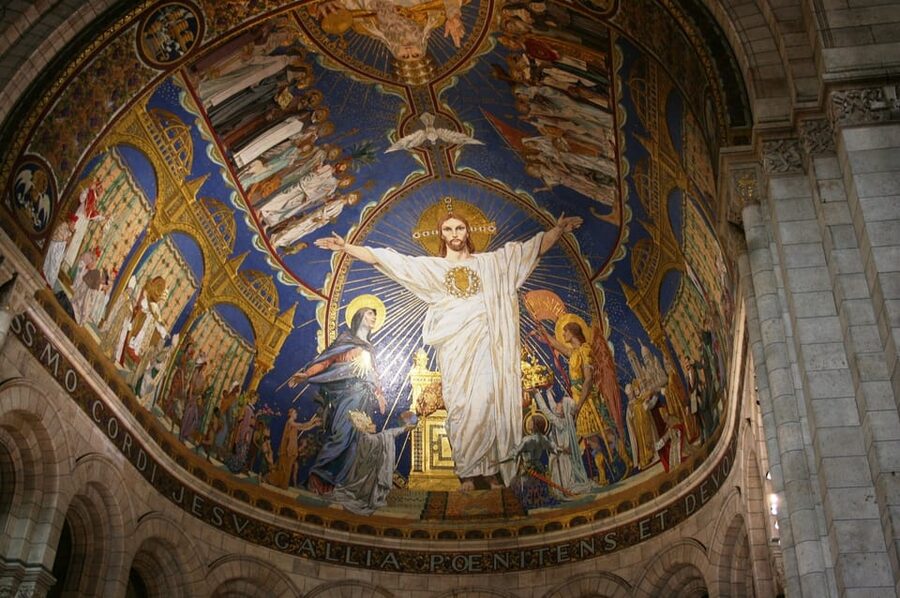
You also get an early view toward the Sacré-Cœur basilica and across Paris. The guide uses this opening to explain Montmartre’s past and orient you to the neighborhood. That is useful because the basilica dominates the area, yet the artistic quarter spreads well beyond the main steps.
The exact amount of uphill walking is described as manageable, and one guide was praised for keeping the route accessible to different ages. Even so, you should expect a genuine city walk, not a flat stroll through a park. Wear shoes with good grip and avoid bringing bulky luggage.
The activity information says the walk ends back at the meeting point, while the route description places the final sightseeing stop at Place du Tertre near Sacré-Cœur. Since the practical end point can matter for your next plan, check the exact meeting and finish details when booking.
The Wall of Love and Montmartre’s softer side

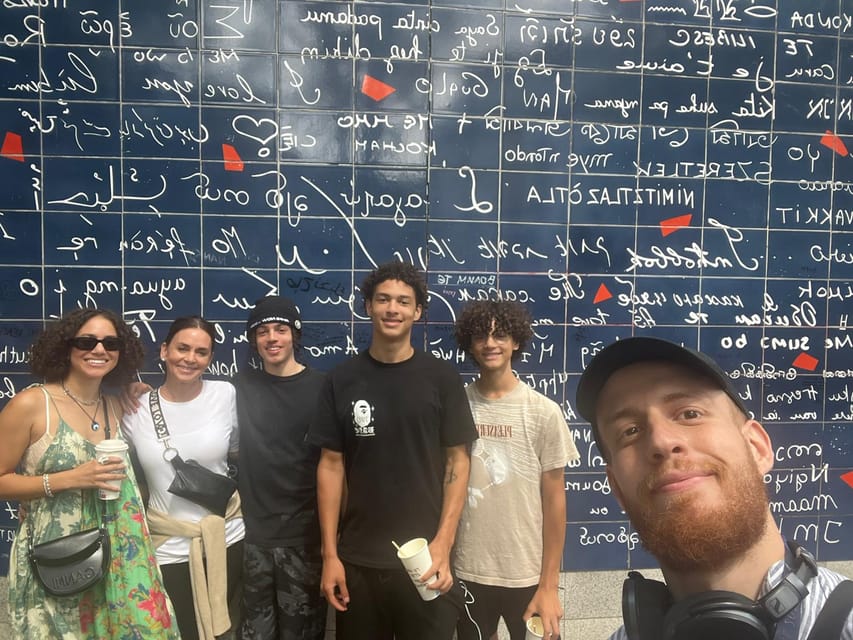
The first major stop is the Wall of Love, a tiled mural displaying 311 ways to say I love you in many languages. The stop lasts around 30 minutes, including guiding and time to look around.
This is a gentler introduction to Montmartre than beginning with a list of painters and dates. You get a clear photo opportunity, but the guide can also connect the mural to the neighborhood’s romantic image and its long appeal to artists and couples.
It is worth knowing that this stop is a popular photo location, so the experience depends partly on how busy the area is. Your guide can help organize the stop and explain what you are seeing, but you should not expect a private viewing or a long period of quiet.
The family angle works well here. Children can engage with the different languages and the simple visual idea of a wall covered in declarations of love. The stop also offers a break before the route moves into the more detailed art story.
Bateau-Lavoir, where modern art changed direction
The Bateau-Lavoir is one of the most important addresses on the route. Picasso, Modigliani, and other artists lived and worked here, and the building is closely tied to the birth of modern art.
The value of this stop is not the building alone. Much of the interest comes from understanding what Montmartre offered these artists: cheap rooms, creative company, unconventional characters, and a setting where old artistic rules could be challenged. Your guide explains how the people who came here shaped the district, and how the district shaped their work in return.
The stop is planned for about 30 minutes, enough time for a proper explanation rather than a quick point-and-shoot photo. If you enjoy art, this may be the strongest part of the tour. Guides often bring the stories to life with photos, anecdotes, and connections between artists who lived in the area.
One useful expectation check: this is a street-based visit, not entry to an art museum. You are learning about the site and its former residents from outside. The appeal is the setting and the story, not an interior collection.
More Paris walks with a guide:
- Paris Île de la Cité and Notre-Dame Walking Tour With Crypt
★ 5.0 · 2,272 reviews - Paris: Montmartre Cheese, Wine & Pastry Guided Walking Tour
★ 4.8 · 2,255 reviews - Paris in a Day: Louvre or Orsay, Eiffel Tower, City Walk & Cruise
★ 5.0 · 1,956 reviews - Paris City Center Free Walking Tour (Tip-Based)
★ 5.0 · 1,340 reviews
Moulin de la Galette and the painted Montmartre
The Moulin de la Galette is both a real former windmill and an image fixed in the work of impressionist painters. The stop includes a visit, explanation, and photo time, with roughly 30 minutes allotted.
This is where the tour links the physical neighborhood to the way artists represented it. You can learn why a windmill became a symbol of Montmartre and how the district’s rural past survived inside a growing city.
The site is easy to appreciate even if you are not an art specialist. You see an ordinary-looking Paris address, then gain a sense of how painters turned places like this into lasting cultural symbols. I find that kind of context more useful than simply being told that a famous artist once stood nearby.
The drawback is that the windmill is now an icon rather than a preserved working attraction that you can explore at length. Treat it as a historical and photographic stop, with the guide’s explanation providing most of the depth.
Maison Rose and the lanes beyond the postcards
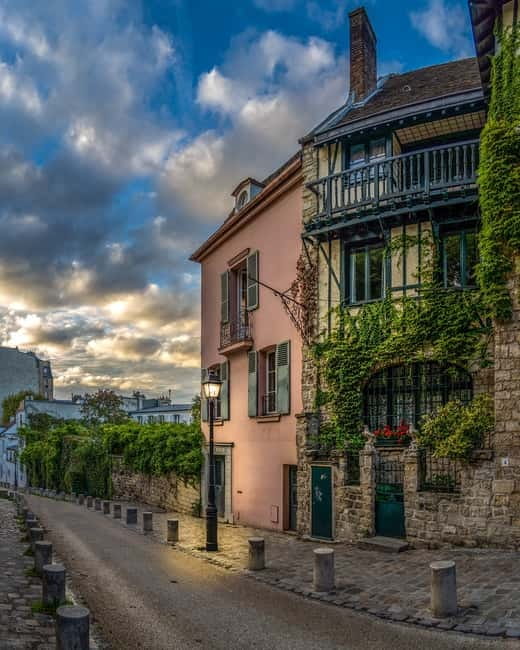
Maison Rose is one of Montmartre’s most photographed buildings. Its painted exterior is instantly recognizable, and the tour allows time for a break and photographs.
This is a good pause in the route. You can take pictures, catch your breath, and enjoy the visual side of the neighborhood before continuing. The guide also places the building within Montmartre’s artistic story rather than treating it as a standalone backdrop.
As with any famous photo spot, expect the experience to be more about seeing and framing the exterior than going inside. Food is not included, so do not count on this stop as a meal break. Bring cash if you want to buy something during free time, but the tour itself provides no food.
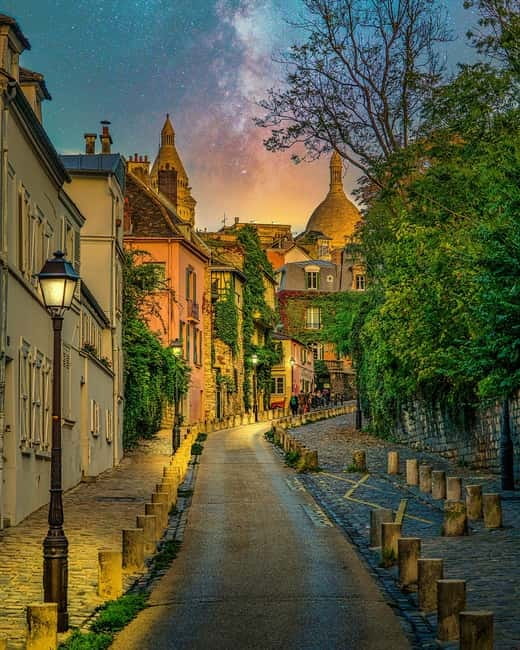
After Maison Rose, the route moves into quieter corners. You may see vineyards, courtyards, old cabarets, and passageways that are easy to overlook when you follow only the main streets. This is one of the best reasons to take the walk early in your Paris visit: you get a mental map of places worth revisiting later.
Place du Tertre and the working artist tradition
The route finishes at Place du Tertre, where artists still work outdoors. This square is one of Montmartre’s most recognizable spaces, and it can also be one of its busiest and most commercial-feeling.
A guide helps you read the square with more perspective. You can see the present-day portrait artists and painters while hearing about the area’s earlier creative life. The point is not to pretend the neighborhood has remained unchanged. It is to understand the link between the old artistic quarter and the public art scene you see today.
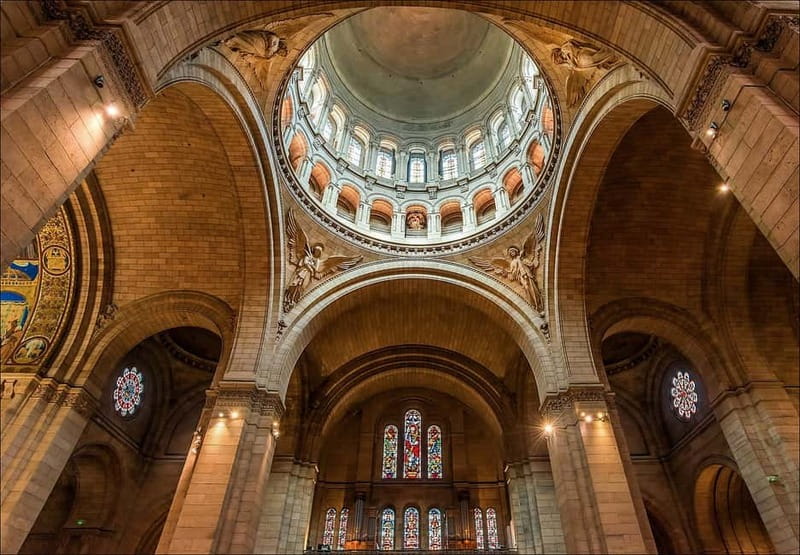
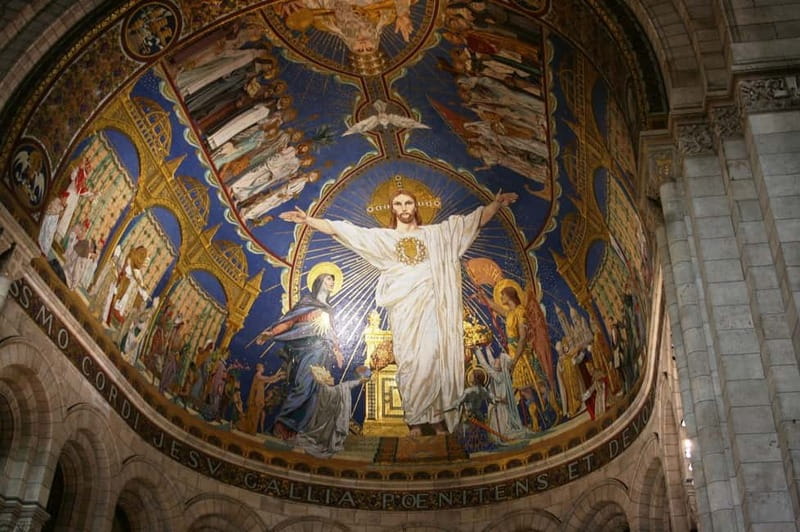
The square is well placed for continuing to Sacré-Cœur. The guide gives you tips for visiting the basilica on your own, so you can go inside after the walk rather than using tour time for a full basilica visit. That division works well if you want both the neighborhood stories and time to look around the church at your own pace.
If you prefer a quiet, empty Montmartre, Place du Tertre may test your patience. If you want to see the district’s best-known artistic square and then explore the basilica, the location is convenient.
The guide’s storytelling is the real selling point
The strongest feature is not any single stop. It is the way the guide connects art, music, politics, and local character.
Yazid is described as bringing together stories of Van Gogh, Picasso, Dalí, Toulouse-Lautrec, Edith Piaf, Dalida, and Charles Aznavour. That range gives the walk a broader feel than a standard painting-focused tour. You are not only following painters. You are learning how musicians, singers, performers, and outsiders helped define Montmartre.
His style also appears highly interactive. He may recommend a café, adjust the pace to suit the group, play music, show pictures, or add a small surprise such as Chupa Chups lollipops connected to Dalí’s daisy logo design. Those touches are not guaranteed, but they show the kind of personal delivery you may get from a local guide rather than an audio recording.
Sylvia’s approach is described as friendly, entertaining, and good at maintaining a steady pace. Jean Baptiste brings a more conversational style, encouraging people to see the past through the eyes of a Parisian. These details matter if you are choosing between a basic orientation walk and an outing built around storytelling.
One honest caution: the guide may have so much to say that the tour runs longer than the advertised 140 minutes. That can be a bonus if you enjoy art and local history. It may feel tiring if you have another timed booking soon afterward.
Who will get the most from the $34 price
At $34 per person, this is a reasonable price for a 140-minute guided walk, especially when you consider the small group limit and the number of major stops. You are paying for route planning, local interpretation, and access to a set of stories that would take time to assemble on your own.
The value is highest for a first visit to Montmartre. You see the essential addresses, learn where the artists lived, and receive advice for visiting Sacré-Cœur afterward. It is also useful for a returning visitor who saw the basilica and Place du Tertre before but missed the Bateau-Lavoir, Moulin de la Galette, vineyards, and side streets.
The price does not include food, museum admission, or a private guide. It is best compared with other small-group walking tours, not with a private half-day experience. Family pictures taken by the guide at different spots are included, which adds a practical benefit for couples and families who would otherwise struggle to get photos together.
I would choose this tour early in a Paris stay. The route introduces an entire district and gives you ideas for where to return for a meal, another photograph, or a slower walk.
Practical details that affect your day
The tour is offered in English with a live guide. Groups can reach 16 people, so you get more personal attention than on a large city tour, though it is not a private experience.
Wear comfortable clothes and shoes. Montmartre has slopes, cobbled stretches, steps, and uneven pavement, even if the route is described as not too strenuous. The activity is adapted for children, but young children still need to manage a long city walk.
Oversize luggage is not allowed. Bring cash for personal purchases, since food is not included. The guide takes family pictures at different spots, but you should not treat this as a professional photo session.
You can cancel up to 24 hours before the start for a full refund, and the reserve-now, pay-later option keeps your plans flexible. The activity is not suitable for wheelchair users or people with mobility impairments, so check the route carefully before booking.
Should you book the Montmartre Highlights Walking Tour?
Book it if you want Montmartre explained through people and stories, not just checked off as a set of famous addresses. The mix of the Wall of Love, Bateau-Lavoir, Moulin de la Galette, Maison Rose, and Place du Tertre gives you the major sights, while the side streets keep the walk from feeling too predictable.
I would especially recommend it to culture lovers, photographers, families, and first-time visitors who want a friendly introduction to the hill. The strongest guides, particularly Yazid, Sylvia, and Jean Baptiste, appear to make the experience personal, lively, and easy to follow.
Skip it if you need step-free access, dislike group walking, or want a silent visit focused only on Sacré-Cœur. Also leave a little flexibility after the advertised 140 minutes, since a passionate guide may spend extra time on the stories.
For $34, this is a solid way to get your bearings in Montmartre and understand why the neighborhood became one of Paris’s great creative quarters.
FAQ
Where does the Montmartre walking tour start?
The tour starts at Place Saint-Pierre, beneath the Sacré-Cœur basilica. Look for Paris Tours Experiences near the carrousel, where the guide will be waiting.
How long does the tour last?
The advertised duration is 140 minutes. Check the available starting times when you book.
Which language is the tour conducted in?
The tour is conducted in English with a live guide.
What places are included on the route?
The route includes Place Saint-Pierre, the Wall of Love, Bateau-Lavoir, Moulin de la Galette, Maison Rose, and Place du Tertre. It also passes lesser-known parts of Montmartre, including vineyards, courtyards, old cabarets, and passageways.
Is the tour suitable for children?
Yes. The walk is adapted for kids, and guides can make the experience engaging for different ages.
Is the tour suitable for wheelchair users?
No. The activity is listed as unsuitable for wheelchair users and people with mobility impairments. Comfortable shoes and clothes are recommended for the walking route.
Recently reviewed around Paris
- Louvre Private Tour – The Essentials and More with Expert Guide★ 5.0 · 227 reviews
- 2CV tour by night★ 5.0 · 55 reviews
- Eiffel Tower Second or Summit Floor Access by Elevator with Views★ 3.5 · 161 reviews
- The only Paris Wine Tasting experience you need to do – 2 hours★ 5.0 · 265 reviews
- 2 Hour Street-art Walk and Space Invaders Hunt in Paris★ 5.0 · 27 reviews
- 2 hour outdoor group activity in Paris: SAINT GERMAIN★ 5.0 · 48 reviews
- Sainte-Chapelle, Conciergerie & Palais de Justice Private Tour★ 5.0 · 72 reviews
- Private 2 – Hour Paris Landmarks Tour by Golf Cart Mini Moke★ 5.0 · 38 reviews
Montmartre Tours, compared.

Montmartre Hidden Gems and Scenic Highlights Walking Tour
Read our review →
Montmartre Hill French Gourmet Food and Wine Tasting Walking Tour
Read our review →
Montmartre Cheese, Wine & Pastry Guided Walking Tour
Read our review →
Sacré-Coeur and Montmartre Tour with Expert Guide
Read our review →
Private Montmartre Food Tour with Wine, Cheese & Pastries
Read our review →
Paris Montmartre Food Tour – A Full French Meal by Do Eat Better
Read our review →
Hidden Montmartre: Paris’ Secret Streets Walking Tour
Read our review →
Paris Montmartre Food & Wine Tour with Eating Europe
Read our review →Browse the lists this tour appears in