

Reviewed · MONTMARTRE TOURS
Montmartre Hidden Gems and Scenic Highlights Walking Tour
Montmartre reveals itself best at street level, where a former artists’ quarter unfolds through old lanes, windmills, vineyards, cafés, and sharp city views. This 90-minute walk connects famous sights with less obvious corners, giving you a useful first look at one of Paris’s most atmospheric neighborhoods.
I like the strong mix of art and local stories, from Picasso’s former studio to a bronze tribute to singer Dalida. I also like the short, easy-to-follow format, especially if you have limited time in Paris. The main caution is the terrain: the route avoids stairs but includes hills, narrow streets, and some busy or uneven areas.
- Artists’ Montmartre: See the Bateau-Lavoir and Moulin de la Galette while learning how painters shaped the quarter.
- Useful first visit: The tour gives you bearings and suggestions for what to do after it ends.
- Paris views: Sacré-Cœur sits at the city’s highest point, with wide views across Paris.
- Local character: Pass the vineyard, the Pink House, Dalida’s statue, and small squares away from the main boulevard.
- Guide-led storytelling: Laura, Denise, Sylvia, David, Linda, and other English-speaking guides have drawn especially strong praise for their humor and local insight.
- Practical pace: The walk lasts about 90 minutes and accepts a maximum of 25 people.
In This Review
- Why Montmartre Works Best on Foot
- The I Love You Wall and Rue des Abbesses
- Bateau-Lavoir and Montmartre’s Art Scene
- Moulin de la Galette and the Neighborhood’s Rural Past
- The Man Who Walked Through a Wall
- Dalida, the Pink House, and Everyday Montmartre
- The Montmartre Vineyard
- Sacré-Cœur and the Views Across Paris
- Place du Tertre and La Bonne Franquette
- What the $38.70 Price Buys You
- Hills, Weather, and Who Should Book
- The Guides Make the Difference
- Should You Book the Montmartre Walk?
- FAQ
- How long does the Montmartre walking tour last?
- What language is the tour offered in?
- Where does the tour begin?
- Where does the tour end?
- Is entry to Sacré-Cœur included?
- Does the route include stairs?
- How fit do I need to be?
- How large can the group be?
- Can I cancel for a full refund?
Why Montmartre Works Best on Foot
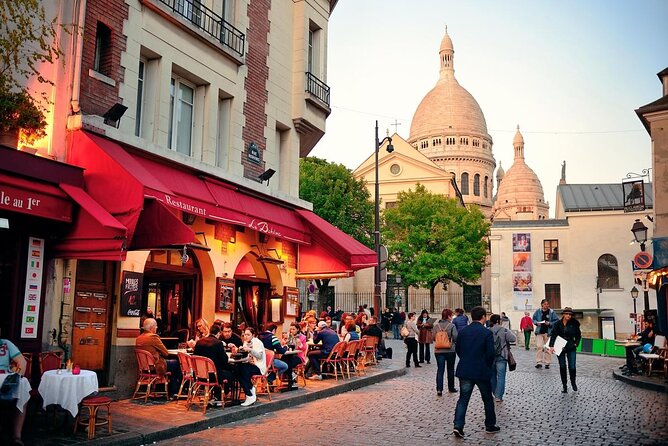
Montmartre is not just a monument at the top of a hill. It is a neighborhood of sudden turns and small discoveries. One street may feel urban and busy, while the next opens onto a quiet square, a modest vineyard, or a wall covered in declarations of love.
A walking tour helps you understand how these places fit together. You are not simply checking off Sacré-Cœur and a windmill. You are following the old shape of the neighborhood and seeing how artists, singers, cafés, and village traditions became part of Paris.
The route starts at 19 Rue des Abbesses. That is a practical location in the lower part of Montmartre, near public transportation. Arrive 15 minutes early. The tour starts on time, and catching up later may not be possible once the group has moved into the side streets.
The walk ends at La Bonne Franquette, 18 Rue Saint-Rustique. This is useful because you finish near the artistic center of Montmartre, with cafés and restaurants close by. Several guides also offer suggestions for lunch and further sightseeing, so you can turn the walk into a longer half-day visit.
The I Love You Wall and Rue des Abbesses
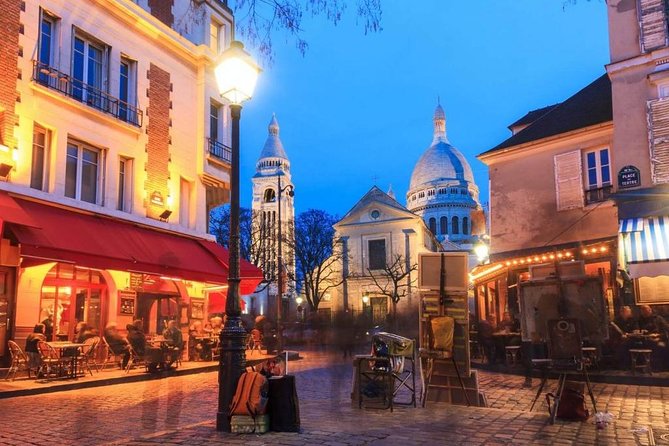
The first stop is the I Love You Wall in a small Montmartre square. The phrase appears in more than 300 languages, making this a quick but memorable introduction to the neighborhood’s romantic image.
The wall is easy to understand on your own, but a guide gives it a place within the wider walk. It is a photo stop, a meeting point, and a reminder that Montmartre has long attracted people who want to express something personal through art.
From there, the route reaches one of the quarter’s oldest streets. Its cafés, shops, and old buildings offer a better sense of Montmartre than a single grand monument can provide. Your guide explains the area’s bohemian past and points out details you might otherwise pass without noticing.
This part of the tour is also where the pace matters. The walk is described as casual rather than rushed, but the group still needs to keep moving. If you want long café breaks or time inside every shop, you will need to return after the tour.
More Walking Tours in Paris
- Paris Top Sights Half Day Walking Tour with a Fun Guide
★ 5.0 · 2,893 reviews - Montmartre Hill French Gourmet Food and Wine Tasting Walking Tour
★ 5.0 · 2,588 reviews - Paris Île de la Cité and Notre-Dame Walking Tour With Crypt
★ 5.0 · 2,272 reviews
Bateau-Lavoir and Montmartre’s Art Scene
The Bateau-Lavoir is one of the most important stops for anyone interested in modern art. This former artists’ residence was associated with Picasso, Modigliani, Braque, and other painters who helped change European art.
You will see the site from outside, so do not expect a museum visit or studio tour. Its value comes from the story. The building represents the period when Montmartre offered artists inexpensive rooms and a loose, creative community.
Your guide’s storytelling makes a real difference here. Laura, Linda, Denise, and David are among the guides praised for explaining the art scene in a lively way rather than simply listing names and dates. Linda, in particular, has been noted for making the artists’ stories funny and easy to remember.
This is one reason to choose the tour instead of walking Montmartre with a map. The buildings may not announce their importance. Without context, the Bateau-Lavoir can look like another old address. With context, it becomes part of the neighborhood’s role in the birth of modern art.
Moulin de la Galette and the Neighborhood’s Rural Past
The Moulin de la Galette gives Montmartre a touch of countryside. This historic windmill appeared in paintings by Renoir and Van Gogh and once operated as a popular dance hall.
Today, you see it from outside. The stop is less about entering a preserved windmill and more about understanding what Montmartre used to be. Before the district became expensive and heavily visited, it had a rural identity, with windmills, vineyards, gardens, and places where Parisians went to eat, drink, and dance.
The changing cost of the neighborhood is another useful theme. One guide described how Montmartre shifted from one of the cheapest areas of Paris to one of the most expensive. That contrast helps explain why the quarter can feel both historic and highly sought-after.
The Moulin de la Galette is also a good example of the tour’s limits. If you want an inside visit to an attraction or a detailed discussion of every painting connected to the site, this walk will feel brief. If you want a clear introduction with a few memorable stories, the stop fits the format well.
The Man Who Walked Through a Wall
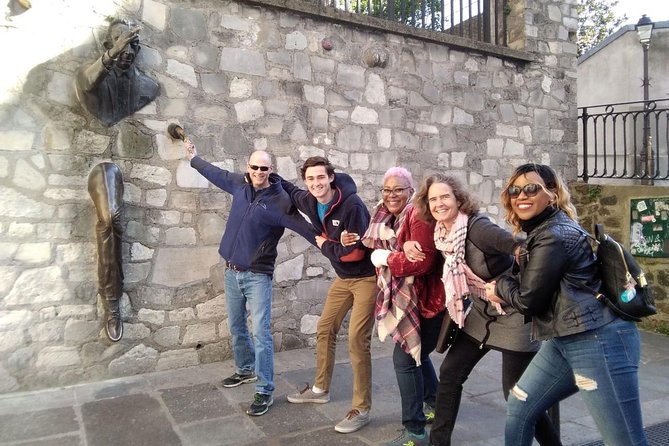
Near the former home of writer Marcel Aymé, you find a sculpture inspired by one of his short stories. It shows a man appearing to walk through a wall.
This playful work breaks up the more familiar artist-and-church stops. It also captures Montmartre’s taste for the strange and theatrical. The sculpture is small, so a guide is helpful in pointing it out and explaining why it is there.
I like stops such as this because they reward close attention. You do not need an art degree or a long visit. You simply need someone to show you where to look and explain the local connection.
More Paris walks with a guide:
- Paris: Montmartre Cheese, Wine & Pastry Guided Walking Tour
★ 4.8 · 2,255 reviews - Paris in a Day: Louvre or Orsay, Eiffel Tower, City Walk & Cruise
★ 5.0 · 1,956 reviews - Paris: Montmartre Highlights Walking Tour with a Local Guide
★ 4.9 · 1,668 reviews - Paris City Center Free Walking Tour (Tip-Based)
★ 5.0 · 1,340 reviews
Dalida, the Pink House, and Everyday Montmartre
The bronze bust of Dalida sits in a peaceful square and honors one of France’s most famous singers. Dalida lived in Montmartre for many years, and the statue has become a quiet place for fans to leave tributes.
This stop adds a personal side to the neighborhood. Montmartre is not only a story about painters from the early twentieth century. It also became home to performers and public figures whose presence still shapes the area’s identity.
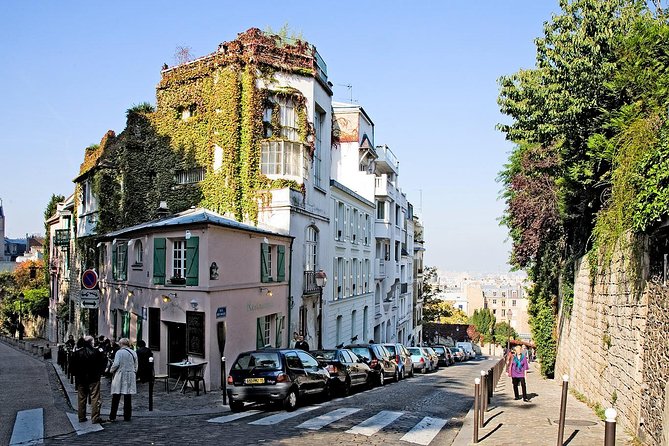
The Pink House offers another familiar image. Once associated with artists such as Picasso and Utrillo, it is now a café serving French food. Its bright exterior makes it a natural photo stop, but your guide also explains why it matters beyond its color.
You should expect time for a quick look rather than a meal during the walk. If the café appeals to you, save it for later or return after the tour. The ending near La Bonne Franquette gives you several options for lunch or a drink.
The Montmartre Vineyard
The vineyard is one of the most surprising sights in Paris. Established in 1933 to protect Montmartre’s winemaking tradition, it remains a small working reminder of the quarter’s rural past.
You view the vineyard from outside. It is not a wine tasting and does not turn the tour into a food-and-drink outing. Its importance lies in the contrast: a patch of vines survives in a dense capital city, close to some of Paris’s most visited monuments.
This is the sort of stop that makes the walk feel more local. Sacré-Cœur draws the crowds, but the vineyard helps explain the older character beneath the postcard version of Montmartre.
Sacré-Cœur and the Views Across Paris
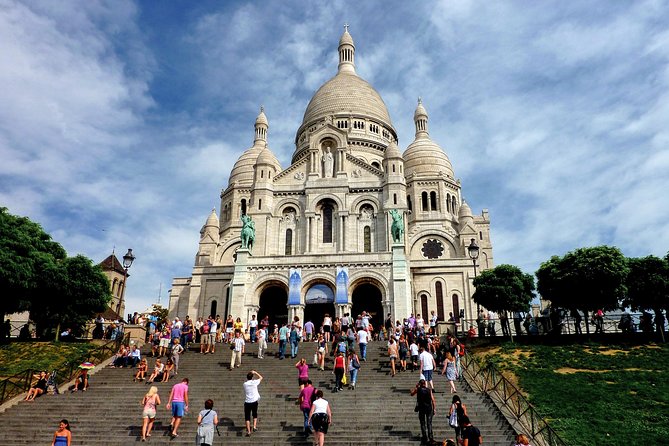
The Basilica of Sacré-Cœur is the grand finish to the route. Built in the late nineteenth century, it is known for its white domes and elaborate mosaics. Because it sits at the highest point in Paris, the area around it offers broad city views.
The guided portion takes you past the exterior. Entry inside is not included, though the basilica is free to enter when open. Your guide gives you advice on what to see inside, allowing you to make a self-guided visit after the walk.
This arrangement keeps the tour within 90 minutes and avoids forcing the whole group through an indoor visit. It also means you should plan extra time if the basilica interior matters to you. The guide can explain the highlights, but you will need to visit on your own.
Sacré-Cœur is often the busiest section of Montmartre. An early departure is a smart choice if you want more room around the viewpoints and fewer problems hearing your guide. David’s early tour was specifically recommended for avoiding the heavier crowds that build quickly.
Place du Tertre and La Bonne Franquette
The walk finishes near Place du Tertre, the square most closely linked with Montmartre’s working artists. Painters, caricaturists, and street performers gather here, surrounded by cafés and restaurants.
The square can feel crowded and commercial, but it remains an important part of Montmartre’s public image. Your guide can help you understand the difference between the historic artistic tradition and the present-day visitor scene.
The official end point is La Bonne Franquette, an old restaurant at 18 Rue Saint-Rustique. Finishing here is convenient if you want to eat, continue exploring, or return to Sacré-Cœur for your own visit.
Do not assume the tour ends at the basilica steps simply because Sacré-Cœur is the final major sight. The listed end is La Bonne Franquette. That small detail matters when planning a timed reservation afterward.
What the $38.70 Price Buys You
At $38.70 per person, the tour is priced as a modest orientation walk rather than a full-day cultural program. You get an English-speaking guide, a 90-minute visit, and a route that links several locations you could otherwise struggle to connect.
The value is strongest on a first visit to Montmartre. A good guide can save you time, explain why ordinary-looking buildings matter, and point out places you may want to revisit. The advice on restaurants and later sightseeing adds value if you plan to spend the rest of the day in the neighborhood.
The price is less attractive if you want entry tickets, a long basilica visit, or a highly detailed art lecture. None of those is included. You are paying for orientation, local stories, and a well-planned walk.
The group can reach 25 people. That is not a tiny private tour, and hearing every word may be harder when the streets are crowded. Stay close to the guide, especially at busy corners. The strongest feedback consistently centers on guides who keep people engaged, answer questions, and maintain the group’s attention.
Hills, Weather, and Who Should Book
The route does not include stairs according to the tour information, but it does include several hills and narrow streets. Montmartre can also involve uneven paving and difficult footing, so you should feel comfortable walking uphill for 90 minutes.
A moderate level of fitness is recommended. Wear shoes with reliable grip, bring water, and dress for the weather. The tour runs in rain or other conditions, so a light waterproof layer can matter more than a stylish outfit.
Mobility needs deserve careful thought. The route is not presented as fully accessible, and the slopes and old street surfaces may be hard for some wheelchair users or anyone who tires easily. Contact the operator before booking if you have specific mobility concerns.
This tour suits you best if:
- You want a short introduction before exploring alone.
- You enjoy stories about artists, singers, writers, and neighborhood life.
- You want Sacré-Cœur views without spending the whole morning at the basilica.
- You prefer walking through streets instead of moving between isolated attractions.
- You are happy to see major sights from outside and return later for interiors.
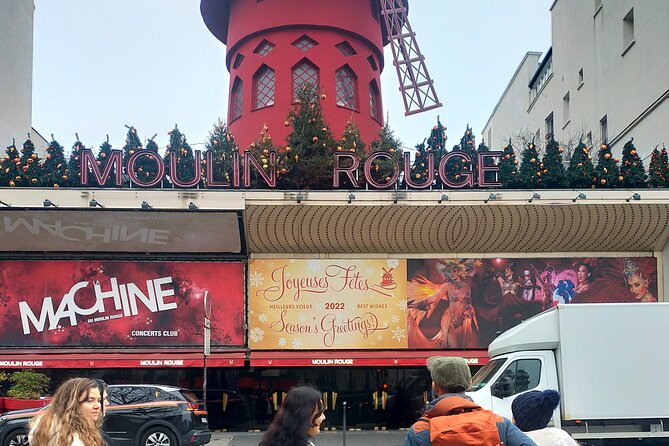
It is a weaker match if your main goals are the Moulin Rouge, the funicular, a long visit inside Sacré-Cœur, or extensive street-art coverage. Those interests are not central to this route.
The Guides Make the Difference
Guide quality is the biggest variable in a storytelling walk. Laura has been praised for explaining Montmartre’s social changes and for keeping the pace relaxed. Sylvia has been singled out for answering questions and offering practical advice about the neighborhood.
David brings strong interest in art and is especially suited to an early departure. Denise is known for a friendly style and clear explanations, while Linda uses humor to bring the artists’ stories to life. Sophie has also been praised for spotting details that are easy to miss and suggesting things to do after the tour.
Names can change by departure, so you should not book expecting one particular guide unless the operator confirms it. Still, the range of positive guide feedback suggests that the experience depends more on personal storytelling than on a fixed script.
Should You Book the Montmartre Walk?
Book it if you want a compact, story-filled introduction to Montmartre. The route gives you art, local characters, rural traces, a famous basilica, and city views without taking up an entire day.
I would choose an early time if available. You will have a better chance of hearing the guide clearly and enjoying the main viewpoints before the quarter fills up. Keep the rest of the day flexible so you can enter Sacré-Cœur, eat near La Bonne Franquette, or revisit the places that caught your attention.
Skip it if you expect a full tour of every famous Montmartre attraction or want a museum-style art lecture. The tour is brief, outdoor-focused, and built around context rather than long visits inside buildings.
With a 4.9 rating from 2,684 ratings and 97 percent of customers recommending it, the format clearly works for most people. Its best use is simple: take the walk early in your Paris stay, then use what you learn to explore Montmartre with more purpose.
FAQ
How long does the Montmartre walking tour last?
The tour lasts approximately 1 hour and 30 minutes.
What language is the tour offered in?
The guided visit is offered in English.
Where does the tour begin?
The meeting point is 19 Rue des Abbesses, 75018 Paris, France.
Where does the tour end?
The walk ends at La Bonne Franquette, 18 Rue Saint-Rustique, 75018 Paris.
Is entry to Sacré-Cœur included?
No. The tour passes the exterior of Sacré-Cœur. Entry is free when the basilica is open, and the guide provides tips for visiting inside independently.
Does the route include stairs?
The tour information says the route does not include stairs. It does include hills, narrow streets, and sometimes busy areas.
How fit do I need to be?
A moderate level of physical fitness is recommended. You should be comfortable walking up hills for the duration of the tour.
How large can the group be?
The tour can have a maximum of 25 people.
Can I cancel for a full refund?
Yes. You can cancel at least 24 hours before the start time for a full refund. Cancellations within 24 hours are not refunded, and changes within that period are not accepted.
Recently reviewed around Paris
- Louvre Private Tour – The Essentials and More with Expert Guide★ 5.0 · 227 reviews
- 2CV tour by night★ 5.0 · 55 reviews
- Eiffel Tower Second or Summit Floor Access by Elevator with Views★ 3.5 · 161 reviews
- The only Paris Wine Tasting experience you need to do – 2 hours★ 5.0 · 265 reviews
- 2 Hour Street-art Walk and Space Invaders Hunt in Paris★ 5.0 · 27 reviews
- 2 hour outdoor group activity in Paris: SAINT GERMAIN★ 5.0 · 48 reviews
- Sainte-Chapelle, Conciergerie & Palais de Justice Private Tour★ 5.0 · 72 reviews
- Private 2 – Hour Paris Landmarks Tour by Golf Cart Mini Moke★ 5.0 · 38 reviews
Montmartre Tours, compared.
Montmartre Hill French Gourmet Food and Wine Tasting Walking Tour
Read our review →
Montmartre Cheese, Wine & Pastry Guided Walking Tour
Read our review →
Montmartre Highlights Walking Tour with a Local Guide
Read our review →
Sacré-Coeur and Montmartre Tour with Expert Guide
Read our review →
Private Montmartre Food Tour with Wine, Cheese & Pastries
Read our review →
Paris Montmartre Food Tour – A Full French Meal by Do Eat Better
Read our review →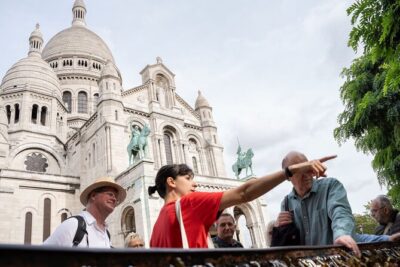
Hidden Montmartre: Paris’ Secret Streets Walking Tour
Read our review →
Paris Montmartre Food & Wine Tour with Eating Europe
Read our review →Browse the lists this tour appears in