
Reviewed · NORMANDY D-DAY TOURS
From Bayeux: D-Day American Beaches and US Airborne Day Tour
The most moving part of this full-day Normandy tour is its range. In about eight and a half hours, you follow the American campaign from the exposed sands of Omaha Beach to the church aid station at Angoville-au-Plain, with the American Cemetery, Pointe du Hoc, Utah Beach, and Sainte-Mère-Église filling in the story between them.
I like two things in particular: the small group, limited to seven, and the guide’s use of maps and photographs to make a complicated battle easier to follow. I also like that the day includes the Airborne Museum, not just outdoor sites. The main drawback is its pace. You cover a lot of ground, so lunch in Sainte-Mère-Église is brief and some stops may feel short if you want time for quiet reflection.
In This Review
- Key points to know before booking
- Why this route works for a first Normandy visit
- Omaha Beach and the first hard lesson of D-Day
- The American Cemetery: time for silence and scale
- Pointe du Hoc and the Ranger assault
- Sainte-Mère-Église and the airborne campaign
- Utah Beach and Brigadier General Theodore Roosevelt Jr
- Angoville-au-Plain and the human side of battle
- What the van ride adds to the day
- The guide makes or breaks this experience
- Price, pace, and who gets the best value
- Practical advice for a better day
- Should you book this D-Day tour from Bayeux?
- FAQ
- Where does the tour start and end?
- How long does the tour last?
- Which D-Day sites are included?
- Is admission to the Airborne Museum included?
- Is lunch included?
- What language is the tour in?
- How large is the group?
- What should I bring?
Key points to know before booking
- Omaha Beach comes first: See where the 1st and 29th US Infantry Divisions landed and hear how German defenses shaped the first waves.
- The American Cemetery is given a full hour: You have guided time and free time among more than 9,000 graves.
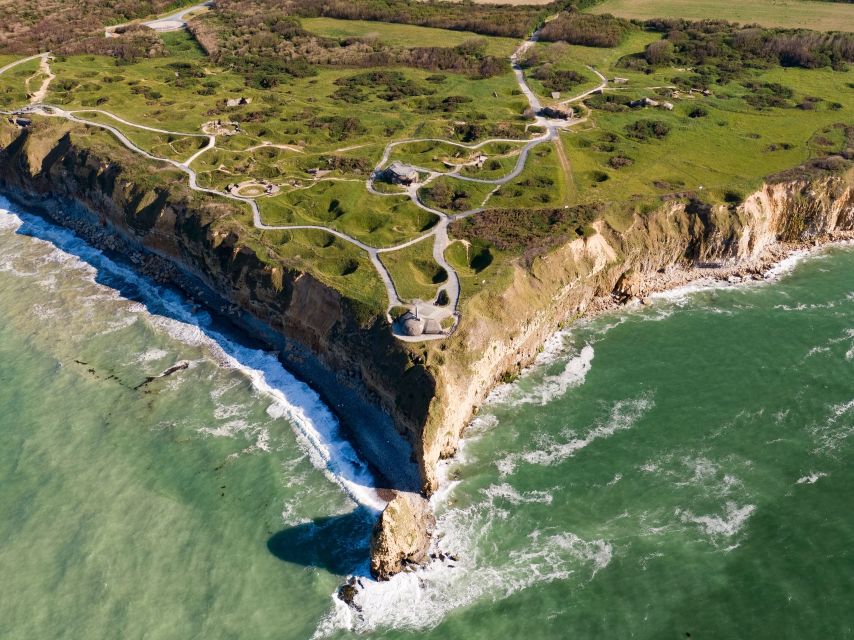
- Pointe du Hoc is a real battlefield site: Bomb craters, bunkers, and dugouts make the Ranger assault easier to grasp.
- The Airborne Museum is included: This is a valuable indoor stop in Sainte-Mère-Église, especially in wet weather.
- The route covers both beaches and airborne action: Utah Beach and Angoville-au-Plain broaden the day beyond the usual Omaha visit.
- The van keeps the group moving: Transport is shared with no more than seven participants, and headsets help you hear the guide.
Why this route works for a first Normandy visit
The American D-Day story can feel scattered when you look at sites one by one. Omaha is in one direction, Utah is farther west, Pointe du Hoc sits between them, and Sainte-Mère-Église belongs to the airborne operation rather than the beach landings.
This tour ties those places together in one route from Bayeux. You get the broad outline first, then the human details: infantrymen facing fire on Omaha, Rangers climbing the cliffs at Pointe du Hoc, paratroopers landing around Sainte-Mère-Église, and medics caring for wounded men at Angoville-au-Plain.
That structure is useful if this is your first time in Normandy. You do not need to work out the military map alone. Guides such as Sophie, Yannick, Gwen, Bridget, Gwenaël, Mathew, and Dillon have been praised for clear explanations, strong storytelling, and visual aids. Sophie is also noted for encouraging questions, while Yannick used maps and photographs to support his explanations.
The group size matters. With up to seven people, you are not lost in a large coach crowd. You can ask a question without trying to catch a guide’s attention from the back of a bus. Headsets are included, which helps when the guide is explaining a point outdoors or when traffic and wind make normal conversation harder.
Still, this is not a slow, private battlefield study. You spend around 510 minutes on the road and at the sites, with several van transfers. If you already have a strong background in the Normandy campaign, you may prefer a private tour with fewer stops and longer time at each position.
Other Bayeux days travellers weigh against this one:
- Normandy American D-Day Beaches Full Day Tour from Bayeux
★ 5.0 · 2,103 reviews - Normandy American D-Day Experience – Group tour from Bayeux
★ 5.0 · 1,566 reviews - Normandy Beaches Half-Day Afternoon Trip from Bayeux (A2)
★ 4.5 · 1,116 reviews
Omaha Beach and the first hard lesson of D-Day
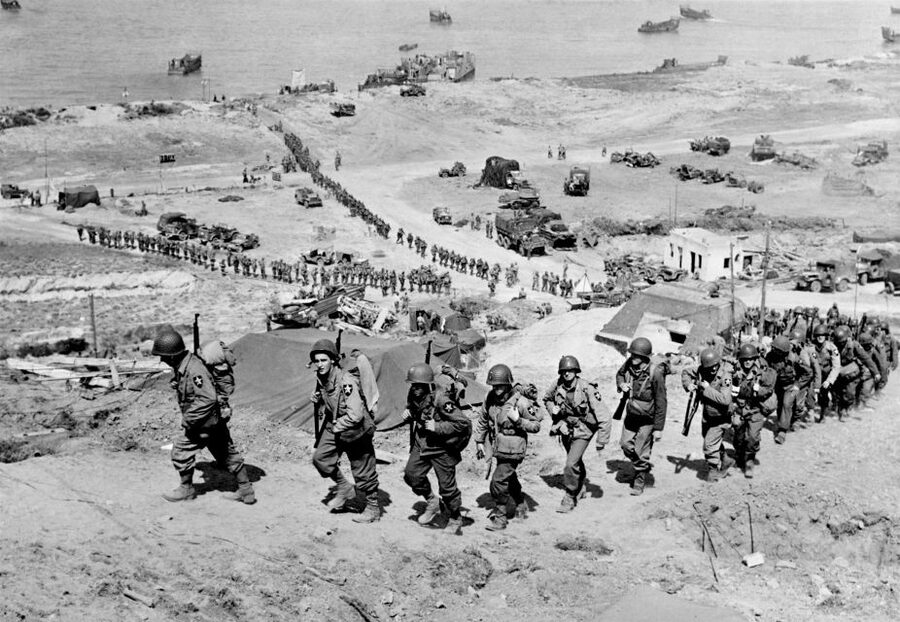
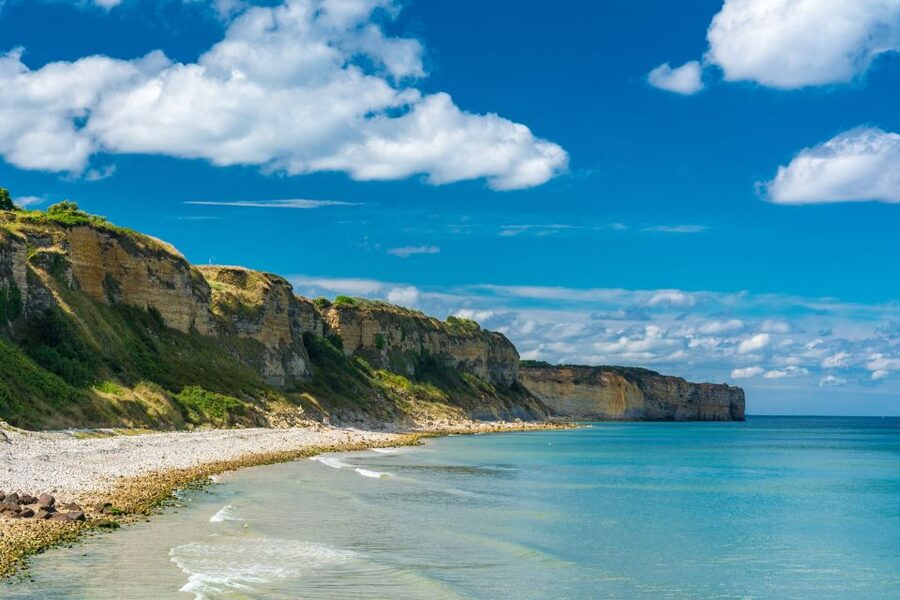
The day begins at Omaha Beach, where the 1st and 29th US Infantry Divisions came ashore. The visit lasts about 40 minutes, and the guide uses maps and photographs to explain the German defensive layout and the problems faced by the first waves of American soldiers.
This is a good place to begin because Omaha shows how quickly a carefully planned assault could go wrong. The beach is open and exposed, and the guide’s job is to connect the present-day view with the positions and obstacles that shaped the fighting.
You will hear about the men who had to move forward under severe pressure, as well as the decisions that allowed the landing to continue. The value here is not just seeing the beach. It is learning how terrain, defensive fire, timing, and confusion affected the operation.
The stop is relatively short. You will not have hours to walk the shoreline or study every defensive position. I would listen closely during the explanation, then use your spare moments for photographs and a brief look across the beach.
The American Cemetery: time for silence and scale

A five-minute drive brings you to the Normandy American Cemetery, located behind Omaha Beach. More than 9,000 American service members are buried here, and the American Battle Monuments Commission maintains the grounds.
The schedule allows about an hour, including a guided visit and free time. That balance is important. You get the context you need, then a chance to walk quietly without a running commentary.
This is the most formal and solemn stop of the day. The scale of the cemetery changes your understanding of the campaign. At Omaha, the focus is on the assault itself. Here, the cost is counted in individual graves.
I appreciate that the tour does not rush you straight back into the van. Use the free time for your own reflection, and do not expect this stop to feel like a standard sightseeing break. It is a place for respectful behavior, quiet voices, and comfortable shoes.
Pointe du Hoc and the Ranger assault
At Pointe du Hoc, the tour shifts from the beach to high ground. The 2nd US Ranger Battalion, led by Lieutenant Colonel James E. Rudder, scaled the cliffs to attack a German gun battery that threatened the American landing operation.
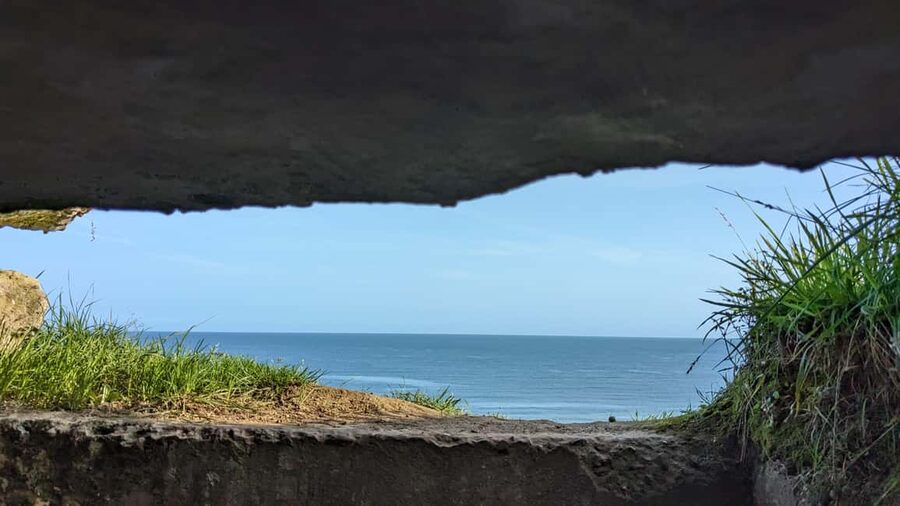
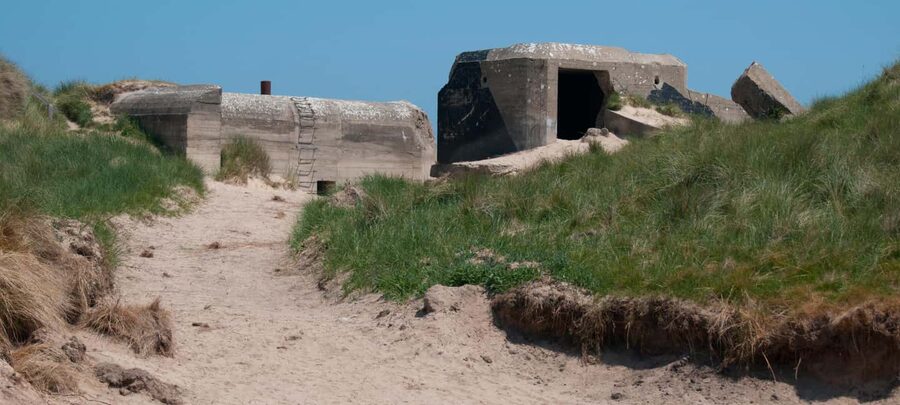
The visit lasts about 50 minutes. You will see bomb craters, bunkers, and dugouts, making this one of the most physical and visually direct battlefield stops on the route.
The site helps explain why the position mattered. The Rangers were not simply taking another patch of ground. They were attacking a battery considered dangerous to the landing beaches and trying to do so from below steep cliffs.
This stop can be uneven underfoot, so wear shoes with good support. Rain gear is also worth packing because the tour operates in all weather. The open site may feel especially exposed on a wet or windy day, but the weather can also make the setting feel closer to the difficult conditions faced by the soldiers.
A different way to spend the day, same corner of France:
- Omaha and Band Of Brothers Full Day Tour
★ 5.0 · 1,104 reviews - Omaha Beach D-Day Experience – Afternoon group tour from Bayeux
★ 5.0 · 1,088 reviews - Omaha and Utah beaches
★ 5.0 · 1,085 reviews - Normandy Battlefields Tour – American Sites (A3)
★ 5.0 · 876 reviews
Sainte-Mère-Église and the airborne campaign
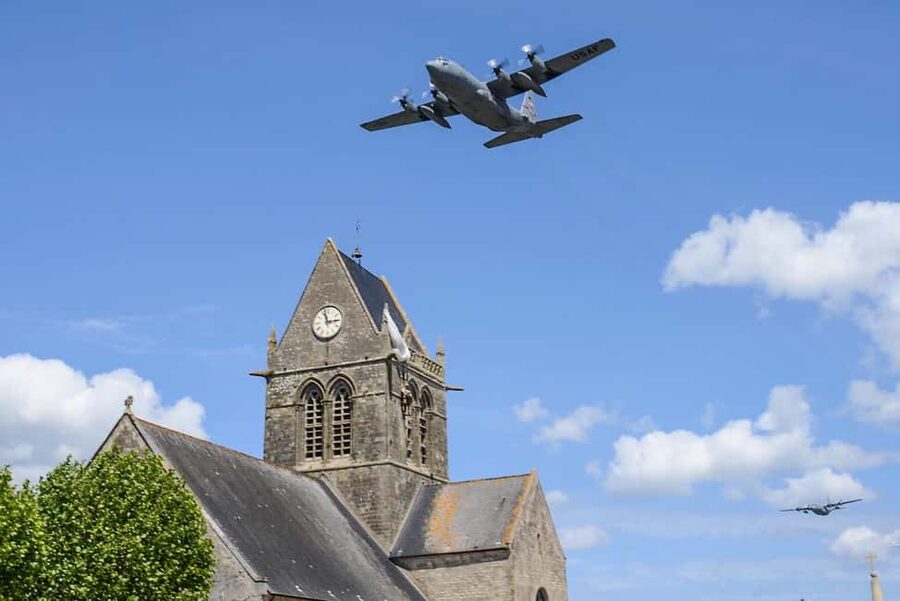
After roughly 30 minutes in the van, you reach Sainte-Mère-Église. The town was the first captured by American paratroopers, and its church is linked to the famous story of a paratrooper becoming caught on the tower during the night.
You have about 50 minutes here for lunch, free time, and shopping. Food and drinks are not included, so bring money for your meal. The lunch window is practical rather than leisurely. If you like to eat slowly or browse shops, keep an eye on the meeting time.
This part of the day gives you a change of scale. The beaches show a large amphibious assault, while Sainte-Mère-Église brings the airborne operation into a small town setting. Your guide can explain the confusion and risk involved in dropping troops at night, often far from their intended landing areas.
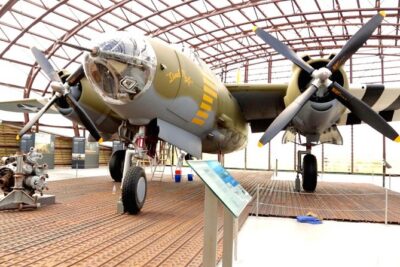
The town visit is followed by one hour at the Airborne Museum, and admission is included. This is one of the strongest features of the tour. An indoor museum gives you time to absorb equipment, stories, and the airborne operation in a more controlled setting after several outdoor stops.
The museum also provides a useful break from the weather. You still need to stay with the schedule, but an hour is enough to get a proper look rather than simply passing through.
Utah Beach and Brigadier General Theodore Roosevelt Jr
The next beach is Utah, where the 4th Infantry Division breached the German defenses. The guided visit lasts about 40 minutes.
The guide will explain how this landing differed from Omaha and why the operation succeeded there. Brigadier General Theodore Roosevelt Jr led the first wave, landing at 6:30 in the morning. He was later awarded the Medal of Honor.
This stop works best when you compare it with Omaha. The two beaches were part of the same invasion, yet the conditions and results were different. Seeing both in one day gives you a clearer sense of how varied the American operation was.
Again, 40 minutes is enough for a focused explanation but not for a long independent walk. If Utah Beach is your main interest, you may want a separate visit on another day. For a first overview, the stop gives you the essential setting and military context without breaking the route.
Angoville-au-Plain and the human side of battle
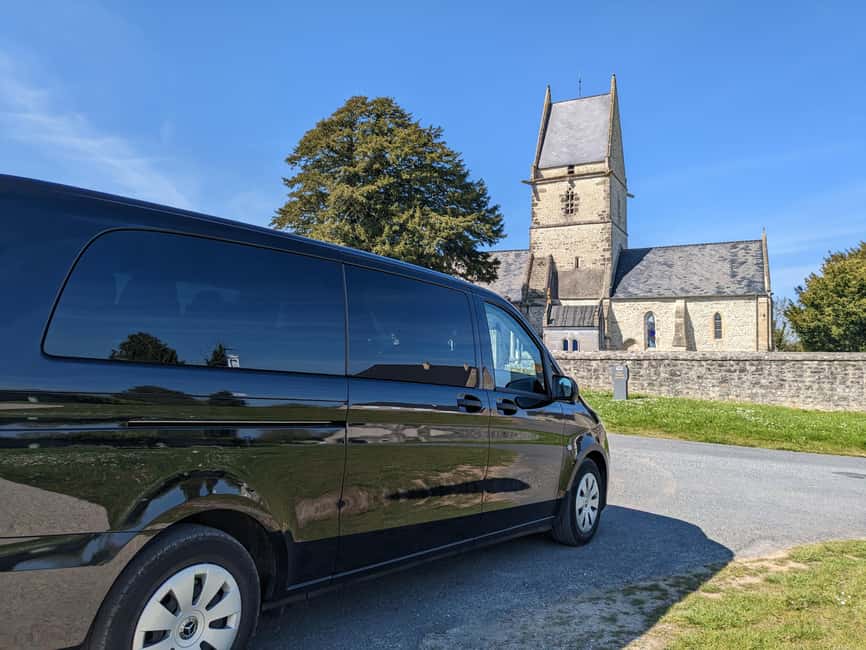
The final site is the church at Angoville-au-Plain, reached after a 15-minute van ride from Utah Beach. The church served as an aid station where two young medics treated around 80 wounded soldiers for two days.
This is a small site, with about 20 minutes for a guided visit, but it may be the most personal stop of the day. The story shifts away from landing plans and battlefield positions to care, endurance, and the duty to help the wounded.
The stop has particular meaning for people interested in medical history. One past participant with a medical background singled it out as especially valuable, and I can see why. It shows how ordinary buildings became places of emergency treatment and how much responsibility fell on young medics.
Do not expect a large museum or a long walk here. The power of Angoville-au-Plain comes from the story and the setting. The guide’s explanation is central, so stay close and listen.
What the van ride adds to the day
The route includes several transfers: about 30 minutes to Omaha, short drives between nearby stops, and longer stretches between the coast and Sainte-Mère-Église. The final trip back to Place de Québec takes about 35 minutes.
A small van is a sensible choice for this itinerary. You can reach several sites in one day without dealing with navigation, parking, or finding the right roads between beaches. The transport has received a 90 percent perfect score, and the group limit keeps the vehicle more personal than a large coach.
The tradeoff is time in transit. You are not spending eight and a half hours walking through the sites. A good part of the day is spent moving between them, though that is the price of seeing both Omaha and Utah along with the airborne area.
The tour starts and ends at Place de Québec in Bayeux. Hotel pickup and drop-off are not included. At the meeting point, look for the vehicle with the HQ Company Tour sign at the back.
The guide makes or breaks this experience
The subject is complicated, and the guide has a major role in making the day useful. You need someone who can explain military movements without turning every stop into a list of dates and unit names.
The strongest guide feedback centers on clear English, visual aids, and storytelling. Sophie is described as easy to understand and engaging. Yannick is praised for detailed explanations, maps, photographs, and memorable stories. Gwen, Bridget, Gwenaël, Mathew, and Dillon are also singled out for strong command of the subject and a willingness to answer questions.
That does not mean every guide will tell the day in exactly the same way. The experience depends partly on who leads your departure. The common thread is an emphasis on making a complicated campaign manageable, while also discussing the physical, emotional, and mental impact on local people.
Headsets are included, which I consider important. Outdoor battlefield sites can be windy, and a guide may be standing several feet away while pointing out a defensive position. Clear audio lets you focus on the explanation instead of trying to read lips.
Price, pace, and who gets the best value
At $165 per person, this is not the cheapest way to see Normandy. It is a full-day guided route with transport, a licensed English-speaking guide, headsets, and admission to the Airborne Museum.
The value comes from the number of major American sites covered in one day. Renting a car could give you more freedom, but you would need to plan the route, understand what you are seeing, and manage parking and timing. A larger coach tour might cost less, but the seven-person limit gives you more room to ask questions and hear the guide.
The price makes the most sense if you have one day for the American sector and want structure. It is less suitable if you already know exactly which two sites you want to study at length. In that case, a smaller custom plan could give you more time at fewer locations.
The schedule also affects value. You see six important settings, but several visits last only 20 to 50 minutes. Think of this as a well-organized overview with strong interpretation, not a slow research visit.
Practical advice for a better day
Wear comfortable shoes. Pointe du Hoc and the other outdoor sites can require walking on uneven ground, and the day has many short walks in addition to the van rides.
Bring rain gear. The tour runs rain or shine, and Normandy weather can change quickly. The Airborne Museum offers indoor time, but Omaha, Pointe du Hoc, Utah Beach, and Angoville-au-Plain are outdoor or partly outdoor visits.
Plan your lunch before you leave Bayeux. The meal stop is in Sainte-Mère-Église and lasts about 50 minutes, but food and drinks are your responsibility. Do not count on a long restaurant meal if you want time for the town and the museum.
This experience is not suitable for people with mobility impairments. You should be comfortable getting in and out of a van and walking at outdoor historical sites.
Free cancellation is available up to 24 hours in advance, and you can reserve now and pay later. Those terms are useful if your Normandy plans may shift, but the main booking decision should be the pace and subject matter.
Should you book this D-Day tour from Bayeux?
Book it if you want the widest useful overview of the American D-Day story in one day. The route combines Omaha, the cemetery, Pointe du Hoc, Sainte-Mère-Église, the Airborne Museum, Utah, and Angoville-au-Plain, which is hard to organize efficiently on your own without a car.
It is especially well suited to first-time Normandy visitors, World War II enthusiasts, and anyone who wants a guide to explain what happened at each site rather than simply point out the beach. The small group, headsets, and visual aids add real value.
Skip it if you dislike a tight schedule, need extended time at each site, or have limited mobility. For everyone else, $165 is a fair price for a focused day that combines major sights with the smaller, more human story at Angoville-au-Plain.
FAQ
Where does the tour start and end?
The tour starts and returns to Place de Québec in Bayeux. Hotel pickup and drop-off are not included.
How long does the tour last?
The experience lasts 510 minutes, or about eight and a half hours. Check availability for the exact starting time.
Which D-Day sites are included?
The route includes Omaha Beach, Normandy American Cemetery, Pointe du Hoc, Sainte-Mère-Église, the Airborne Museum, Utah Beach, and Angoville-au-Plain.
Is admission to the Airborne Museum included?
Yes. Entry to the Airborne Museum in Sainte-Mère-Église is included in the tour price.
Is lunch included?
No. The schedule provides about 50 minutes in Sainte-Mère-Église for lunch, free time, and shopping, but food and drinks are not included.
What language is the tour in?
The tour is conducted in English by a live English-speaking guide.
How large is the group?
The tour is limited to seven participants, making it a small-group experience.
What should I bring?
Bring comfortable shoes and rain gear. The tour runs in all weather, and several stops take place outdoors.
Recently reviewed around Bayeux
- WW2 Jeep or Dodge truck tour of the Omaha Beach site★ 5.0 · 51 reviews
- 2- to 6-hour sidecar excursion on the D-Day Landing Beaches★ 5.0 · 131 reviews
- Normandy U.S. D-Day Sites Half Day Tour From Bayeux★ 5.0 · 325 reviews
- Mont Saint Michel Experience – Shuttle Service from Bayeux★ 5.0 · 194 reviews
- Normandy Battlefields D-Day Private Trip with VIP Services from Paris★ 5.0 · 240 reviews
- Private Walking Guided Tour of Historic Bayeux English or French★ 5.0 · 36 reviews
- Private Full day American D-Day Guided Tour in Bayeux★ 5.0 · 133 reviews
- Private vintage sidecar tour of the D-Day Landing Beaches★ 5.0 · 130 reviews
Normandy D-Day Tours, compared.
Normandy D-Day Sites & Cemetery Day Trip from Paris with Lunch
Read our review →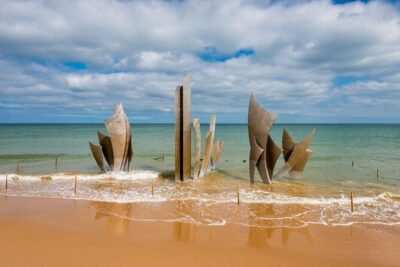
Normandy D-Day Small-Group Day Trip with Omaha Beach, Cemetery & Cider Tasting
Read our review →
Normandy D-Day Beaches and American Cemetery Day Trip from Paris
Read our review →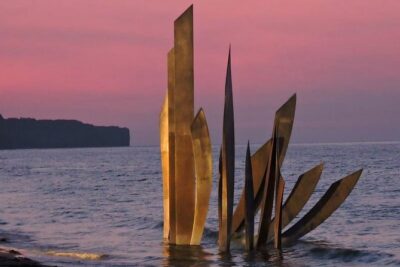
Normandy American D-Day Beaches Full Day Tour from Bayeux
Read our review →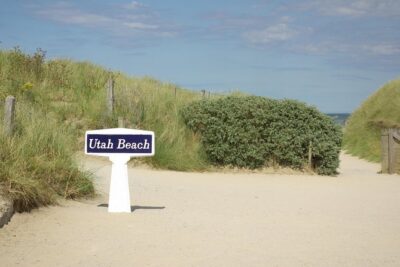
Normandy American D-Day Experience – Group tour from Bayeux
Read our review →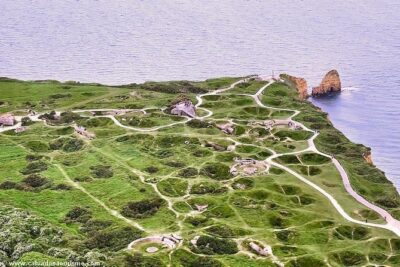
Normandy Beaches Half-Day Afternoon Trip from Bayeux (A2)
Read our review →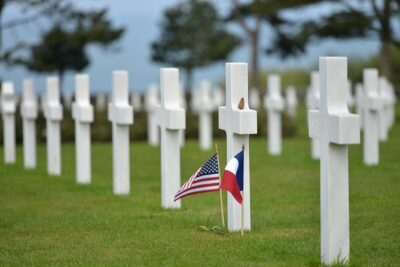
Omaha Beach D-Day Experience – Afternoon group tour from Bayeux
Read our review →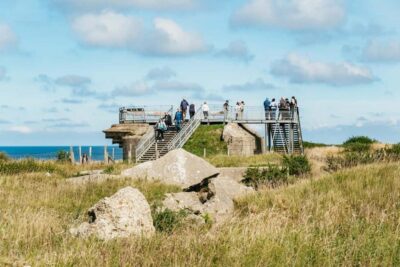
Normandy D-Day Sites Guided Day Trip with Lunch
Read our review →Browse the lists this tour appears in