
Reviewed · CITY TOURS
Marseille: Old Port and City Highlights Boat Tour
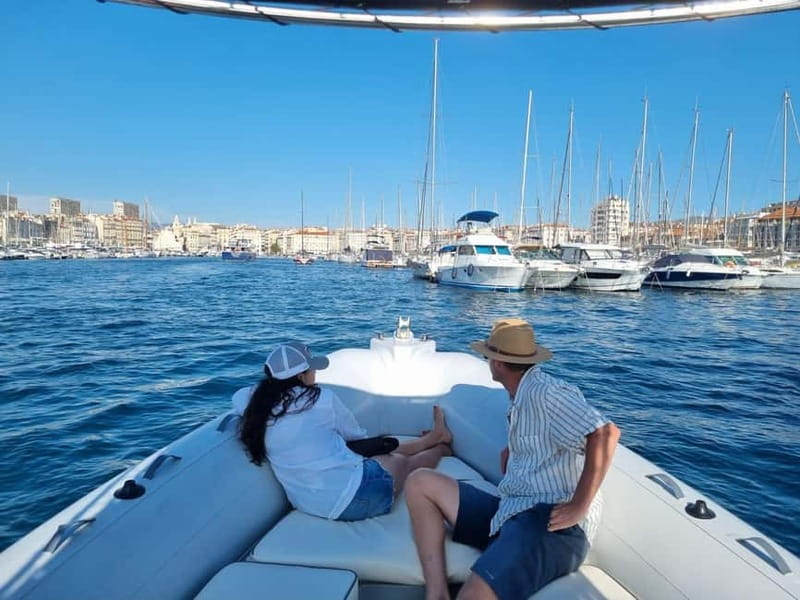
Marseille’s Old Port is best understood from the water, where Fort Saint-Jean, Mucem, City Hall, and the hilltop Notre-Dame de la Garde line up in one broad view. This one-hour cruise keeps you close to the harbor’s landmarks while a guide explains the city’s symbols, from the famous sardine story to the old fishing boats called pointus.
I like the way the boat gives you a quick sense of Marseille without demanding a full day, and I like the mix of major sights and smaller details, such as the Théâtre de la Criée and the Monument to the Heroes and Victims of the Sea. The main limitation is that most of the trip stays inside the port, so you should not book it expecting a full cruise along the Calanques.
In This Review
- Key points to know before you book
- Why the Old Port is best seen from a boat
- Boarding at Bateau Marseille Calanques
- Fort Saint-Jean, Mucem, and the harbor entrance
- City Hall, the Place d’Armes, and old Marseille
- Notre-Dame de la Garde from the water
- The Théâtre de la Criée and Marseille’s working character
- Saint-Victor, Fort Saint-Nicolas, and the Pharo Palace
- How much time you really need
- Is $40 good value?
- What the guides and boat handling add
- Who should book this cruise?
- Should you book the Old Port boat tour?
- FAQ
- How long is the Marseille Old Port boat tour?
- Where does the boat tour start and finish?
- What languages are available?
- How many departure times are offered?
- What landmarks can I see from the boat?
- Are food and drinks included?
- Can children join the cruise?
- Is the boat tour accessible to wheelchair users?
Key points to know before you book
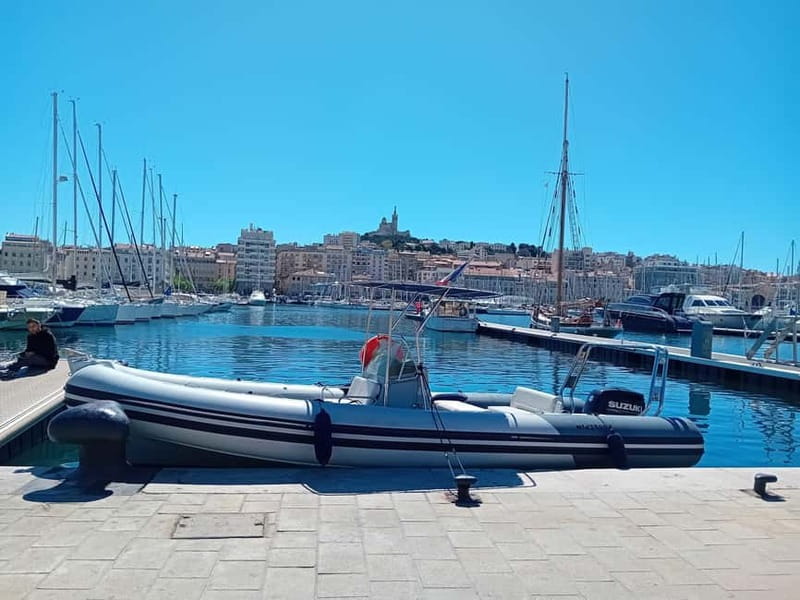
- The Old Port is the main event: You cruise past Fort Saint-Jean, Mucem, City Hall, Fort Saint-Nicolas, and the Pharo Palace.
- The guide adds the context: Tours run in French or English, with stories about Marseille’s port, the sardine legend, and the city’s landmarks.
- You get three departure choices: This makes the cruise easy to fit around a morning walk, lunch, or another Marseille visit.
- It is a short, focused outing: The cruise lasts one hour and returns to Bateau Marseille Calanques.
- You may see beyond the harbor: One account describes a guide taking the boat out for a city view and a look toward the Frioul Islands, though the standard route is centered on the Old Port.
- Children can join at a reduced cost: Children under four go free, and children aged four to ten pay half price.
Why the Old Port is best seen from a boat
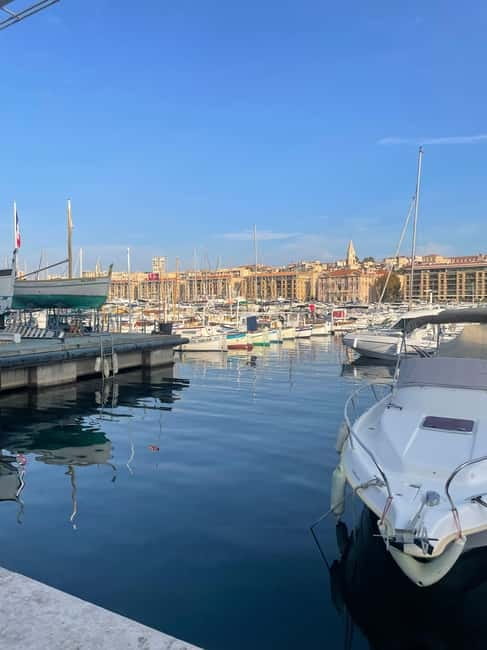
Marseille’s Vieux Port is not just a pretty waterfront. It is the city’s main visual and historical reference point, and from the boat you can see how the harbor fits together. The quays, forts, churches, civic buildings, and newer museums all face this strip of water.
From land, buildings can feel scattered among traffic and busy streets. On the boat, the view opens up. You can look back at the city skyline, then turn toward the harbor entrance and the forts that once guarded it. That change in angle is the real value of the trip.
This is also a useful first activity in Marseille. You get a quick orientation before setting off on foot. Afterward, you will have a better idea of where the Canebière, Saint-Victor, the Mucem, and the port’s main quays sit in relation to one another.
The trip is not built around swimming, meals, or a long run into open water. It is a sightseeing cruise with commentary. That distinction matters. You are paying for a close look at Marseille’s waterfront and an hour of explanation, not for a full coastal excursion.
More Boat Tours in Marseille
- Marseille: Frioul Calanques Sailing Trip
★ 4.8 · 433 reviews - Marseille: Calanques Côte Bleue Marine Park Boat Cruise
★ 4.7 · 429 reviews - Marseille: Calanques Sailing Day Trip with Lunch and Wine
★ 4.8 · 411 reviews
Boarding at Bateau Marseille Calanques
The tour begins and ends at Bateau Marseille Calanques. You should arrive 10 minutes before departure, since the boat leaves from the starting point and the activity lasts only an hour.
Wear shoes that are comfortable for walking and boarding. Sunglasses, a hat, sunscreen, and light, comfortable clothing are sensible in sunny weather. The boat has a sun awning, which helps, but you should still prepare for glare from the water.
There is no hotel pickup or drop-off. You need to make your own way to the meeting point, so allow time to reach the Old Port before boarding. The three daily departure times give you some flexibility, but you still need to check the current schedule when booking.
The boat is not suitable for wheelchair users. That is an important point to settle before paying, especially because access to a boat can involve steps or narrow boarding areas.
Fort Saint-Jean, Mucem, and the harbor entrance
One of the first major sights is Fort Saint-Jean, a stronghold at the entrance to the Old Port. From the water, you can see its defensive position more clearly than from many points on land. The guide explains the fort’s origins and its role in Marseille’s long connection with the sea.
Near it is the Mucem, the Museum of European and Mediterranean Civilisations. Its modern form contrasts sharply with the old stone fort. The cruise gives you a particularly useful view of the relationship between the museum, the fort, and the water.
The route also includes the Tour du Fanal and the Saint-Jean district. The tower is tied to the harbor’s defenses, while the district helps connect the waterfront with the older parts of Marseille. You are not simply ticking off monuments. You are seeing the pieces that controlled access to the port and shaped life around it.
The tour may also point out the transborder bridge. From the boat, these structures make more sense because you can see how they link the port’s separate edges and create a changing frame for the skyline.
City Hall, the Place d’Armes, and old Marseille
As the boat moves through the port, the guide turns attention toward the Hôtel de Ville, or City Hall. Seen from the water, the building forms part of the historic waterfront rather than appearing as an isolated stop on a walking route.
The Place d’Armes and the Saint-Jean area add more local detail. You will also hear about the pointus, Marseille’s traditional small fishing boats. These boats help explain the port’s working identity, which is easy to miss if you only focus on the large forts and museums.
The commentary is available in French and English. One guide named Fleur is specifically praised for making the tour enjoyable, and another skipper, Thomas, is described as both a skilled pilot and a strong source of local history. Guide names and availability can change, so do not assume you will have either person on your departure.
The boat’s music adds atmosphere, but it can also compete with commentary at times depending on where you sit and how the sound carries. If the explanation matters most to you, stay close to the guide or ask where the best listening position is before departure.
More City Tours in Marseille
- Marseille: City Sightseeing Hop-On Hop-Off Bus Tour
★ 3.8 · 2,820 reviews - Marseille: City Highlights Guided Half-Day E-Bike Tour
★ 4.8 · 325 reviews - Marseille Shore Excursion: City Sightseeing Tour of Marseille
★ 4.0 · 321 reviews - Marseille: Half-Day City Highlights Guided Walking Tour
★ 5.0 · 273 reviews
Notre-Dame de la Garde from the water
The view toward Notre-Dame de la Garde is one of the cruise’s best payoffs. The basilica sits above Marseille, and from the port you see why it is known as the Bonne Mère, or Good Mother. It watches over the city from the hill, while the forts guard the water below.
The boat gives you a clean citywide view that is hard to get from street level. You can see the church against the skyline rather than looking up at it from a narrow road. Have your camera ready, but do not spend the entire hour behind it. The guide’s explanation adds meaning to what might otherwise be just a postcard view.
The route also includes the Canebière, Marseille’s famous central avenue, as part of the broader waterfront view. You may not see every part of the avenue from the boat, but the guide connects it to the port and to the city’s growth inland.
This section works especially well for first-time visitors. It links the city’s best-known symbol with the port that made Marseille important. It is also a good reason to take the cruise early in your stay, before visiting the basilica on foot.
The Théâtre de la Criée and Marseille’s working character
The Théâtre de la Criée gives the tour a different kind of landmark. Its name and building are tied to the former fish market, and the guide explains how the site changed into a theater. That story reflects Marseille’s habit of adapting old port buildings to new uses.
You will also hear about the Museum of Soap. Marseille soap is one of the city’s best-known traditional products, and its mention adds a practical, everyday layer to the cruise. The tour is not only about rulers, forts, and grand monuments. It also touches on trades and products connected with local life.
The famous sardine story is another lighter moment. The tale says a sardine blocked the port, a story often used to poke fun at an old military mishap. It is a small detail, but it gives the guide a chance to show Marseille’s humor and its fondness for colorful port stories.
These details make the hour feel less like a list of buildings. You get a sense of a city shaped by fishing, shipping, defense, food, theater, and trade.
Saint-Victor, Fort Saint-Nicolas, and the Pharo Palace
The cruise also passes or points out the Abbey of Saint-Victor, Fort Saint-Nicolas, and the Pharo Palace. Together, they show different sides of Marseille.
The Abbey of Saint-Victor connects the waterfront with the city’s religious past. Fort Saint-Nicolas, on the opposite side of the port entrance, reinforces the military story begun at Fort Saint-Jean. Seeing the two forts from the water helps you understand the harbor as a protected gateway.
The Pharo Palace adds a grand civic and imperial note. Its position by the sea gives you another strong view back toward the Old Port and the surrounding buildings.
The Monument to the Heroes and Victims of the Sea is a quieter sight, but it suits the setting. Marseille’s life has always been tied to the risks of the water, and the monument brings a sober note to an otherwise relaxed boat ride.
If you enjoy architecture, the cruise gives you a broad sample without requiring a separate visit to each site. The tradeoff is that you see most places from outside. This is an introduction, not a substitute for touring the Mucem, Fort Saint-Jean, the abbey, or the basilica indoors.
How much time you really need
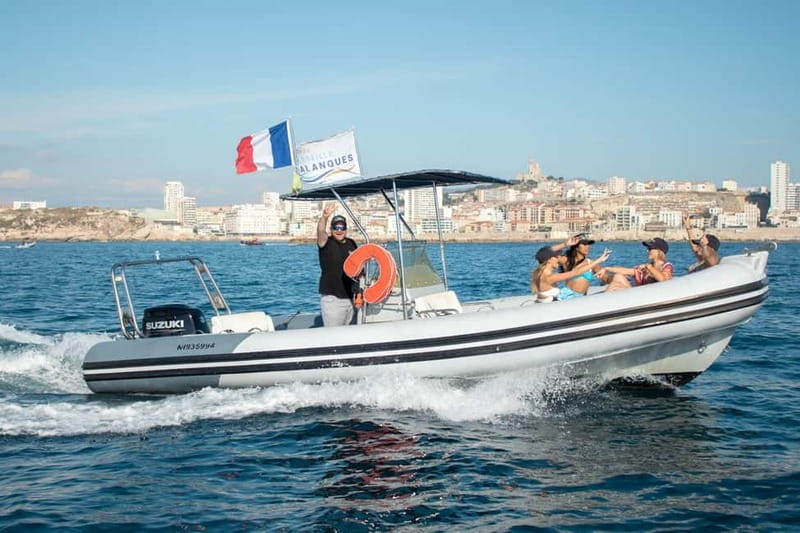
The advertised cruise lasts one hour. That is long enough to see the main Old Port sights, hear a guided overview, and take photos without making the outing feel like a major commitment.
I would pair it with a walking tour of the waterfront. Use the boat to understand the layout, then return to the places that catch your interest. A morning departure can help you plan the rest of your day, while an afternoon trip can provide a calmer break after time on Marseille’s streets.
Three departure times make this easier to arrange. Check the available options before booking, since the exact starting times are not listed here and may vary by date.
One report describes a two-hour upgrade offered by text after booking the one-hour trip. That longer version included a view of the city and the Frioul Islands, a short island stop for a picnic, and faster turns on the way back. Treat that as an occasional upgrade, not as part of the standard one-hour experience. If you receive such an offer, read its terms carefully before accepting.
Is $40 good value?
At $40 per person, the cruise is reasonably priced if you want a guided overview of Marseille from the water. The boat combines transport through the port, a live guide, music, and a covered area for sun protection.
The value is strongest for first-time visitors, families, and anyone with limited time. In one hour, you can see a large collection of major sights without walking between them. That can save energy on a hot day, especially if you plan to visit Notre-Dame de la Garde or the Mucem afterward.
The price is less compelling if you mainly want a long coastal cruise or a quiet ride with no commentary. Most of the route remains within the harbor, and food and drinks are not included. You are paying for sightseeing and interpretation rather than a meal or a full-day boat outing.
Children under four go free, and children aged four to ten receive half-price tickets. That makes the activity easier to justify for families, especially since the short duration reduces the risk of young children getting restless.
Free cancellation up to 24 hours before departure and the option to reserve now and pay later give you useful flexibility. These terms are practical in Marseille, where wind or rain can affect how enjoyable a boat ride feels.
What the guides and boat handling add
The live guide is central to the experience. The route contains many sights, but their meaning is not always obvious from the water. A guide can explain why Fort Saint-Jean sits where it does, how City Hall fits into the port, and why the sardine story remains part of Marseille’s popular identity.
The tour is offered in French and English. One account describes Thomas translating into English for two passengers during a longer outing, which suggests that clear bilingual explanation can be available. Still, the exact guide and speaking style depend on the departure.
Boat handling can also shape the trip. The one-hour cruise is described as calm and relaxing, while the longer outing included close approaches to coastal sights and some quick turns. The standard tour should be treated as a steady sightseeing ride, not an adventure boat trip.
The sun awning is a welcome feature, but open-water glare can still be strong. Choose clothing for the forecast, use sunscreen, and keep sunglasses handy. On a calm, sunny day, the boat offers a pleasant pause from the stone and pavement of the city. In poor weather, the views and comfort may be less rewarding.
Who should book this cruise?
I would recommend it to you if you are visiting Marseille for the first time, have only a few hours, or want an easy way to connect the city’s major sights. It is also a good fit for families, provided everyone can board the boat safely.
The cruise suits people who enjoy history in short, digestible portions. You get stories about forts, fishing, theater, soap, civic buildings, and the city’s relationship with the sea, all without committing to a long guided walk.
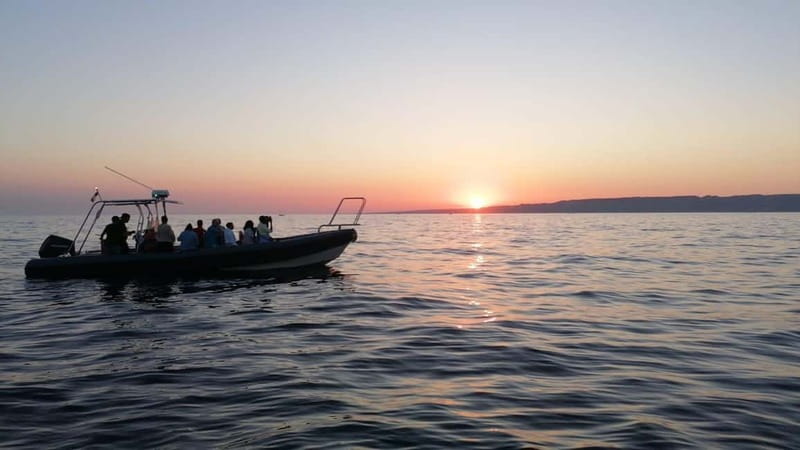
You may want something else if your main goal is the Calanques, swimming, island time, or a full coastal voyage. The one-hour route is centered on the Old Port, and the Frioul Islands appear only in the account of a longer upgrade.
Should you book the Old Port boat tour?
Book it if you want a compact, guided introduction to Marseille that gives you strong views of Fort Saint-Jean, Mucem, Notre-Dame de la Garde, Fort Saint-Nicolas, and the Pharo Palace. At $40, it offers fair value for a one-hour orientation, especially with three departure times and reduced child fares.
Skip it if you already know the Old Port well or want a longer trip beyond the harbor. For most first visits, though, the cruise is a smart way to get your bearings, hear the city’s best port stories, and see Marseille from the place that shaped it: the water.
FAQ
How long is the Marseille Old Port boat tour?
The standard cruise lasts one hour and returns to Bateau Marseille Calanques.
Where does the boat tour start and finish?
The tour starts and ends at Bateau Marseille Calanques.
What languages are available?
The live guide is available in French and English.
How many departure times are offered?
You can choose from three daily departure times. Check availability for the exact times on your date.
What landmarks can I see from the boat?
The cruise includes views of Fort Saint-Jean, Mucem, the Tour du Fanal, City Hall, Notre-Dame de la Garde, the Canebière, Théâtre de la Criée, the Abbey of Saint-Victor, Fort Saint-Nicolas, the Pharo Palace, and the Monument to the Heroes and Victims of the Sea.
Are food and drinks included?
No. Food and drinks are not included.
Can children join the cruise?
Yes. Children under four go free, and half-price tickets are available for children aged four to ten.
Is the boat tour accessible to wheelchair users?
No. The activity is not suitable for wheelchair users.
Recently reviewed around Marseille & Provence
- Skip the Line: Museum of Romanity Ticket★ 4.5 · 45 reviews
- Guided tour Distillery of Lavender between Nîmes & Arles★ 5.0 · 84 reviews
- A Private Guided Historical and Cultural Tour in Nîmes★ 4.5 · 32 reviews
- Provence Hot-Air Balloon Ride from Forcalquier★ 4.5 · 75 reviews
- Horse ride in Haute Provence Luberon and Forcalquier★ 5.0 · 77 reviews
- Sailing day in the heart of the Calanques★ 4.5 · 61 reviews
- The Urban Hike of Marseille★ 5.0 · 35 reviews
- Sormiou Calanques National Park Electric Bike Tour from Marseille★ 5.0 · 60 reviews
City Tours, compared.
Eiffel Tower Summit Option with Seine River Cruise and City Tour
Read our review →
Paris in a Day: Louvre or Orsay, Eiffel Tower, City Walk & Cruise
Read our review →

Eiffel Tower Hosted Tour, Seine Cruise and City Tour
Read our review →
City and River Seine Tour on an Amphibious Bus
Read our review →

Eiffel Tower and City Tour by Bus with Seine River Cruise Option
Read our review →Browse the lists this tour appears in