
Reviewed · CITY TOURS
Paris: 2-Hour Passages Private City Tour in German
Paris hides some of its best stories under glass roofs and behind ordinary streets. This two-hour private tour of the covered passages leads you from Le Peletier through Passage Verdeau, Passage Jouffroy, Passage des Panoramas, the Grands Boulevards, and on to Palais-Royal, with the story told in German.
I like the small private format, which gives you room to ask questions, and I like the strong sense of place. You are not ticking off the Eiffel Tower or Louvre. You are following the quieter Paris of the early 19th century. The possible drawback is simple: at $94 per person, this is a focused specialist walk, not a broad introduction to the whole city.
In This Review
- Key points to know before you book
- Why Paris’s passages are worth your time
- Starting at Le Peletier on Metro Line 7
- Passage Verdeau and the feel of old Paris
- Passage Jouffroy and the rise of covered shopping
- Passage des Panoramas, the signature stop
- The Grands Boulevards connect the passages to the city
- Finishing in the Palais-Royal Quarter
- What the private German format adds
- Is $94 per person a fair price?
- Who will enjoy this Paris passages tour?
- Timing, flexibility, and simple planning tips
- My take on the experience
- Should you book this tour?
- FAQ
- Where does the tour begin?
- Where does the tour end?
- How long does the tour last?
- What language is the tour conducted in?
- Is the tour private?
- Which passages are included?
- Does the price include food, entrance fees, tips, or hotel pickup?
Key points to know before you book
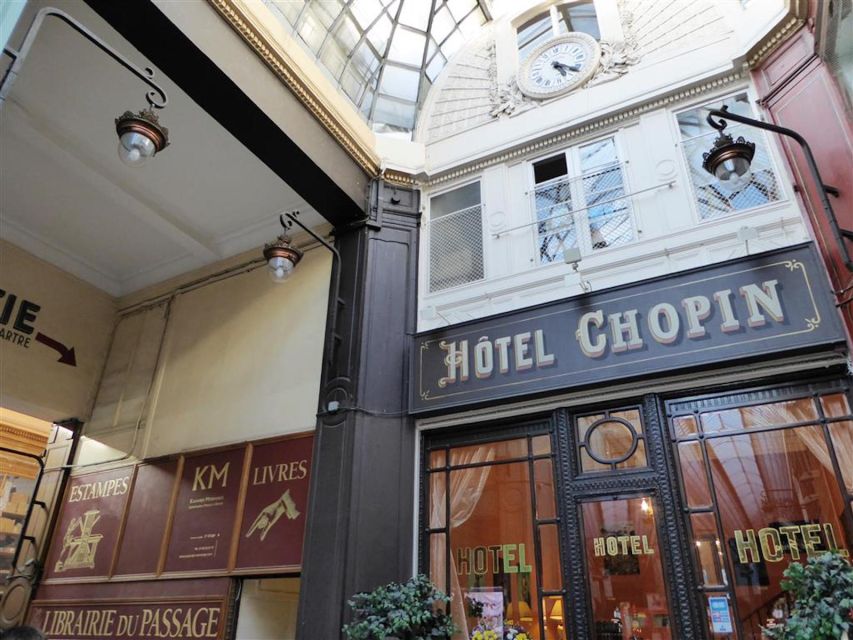
- Three historic passages in one walk: See Passage Verdeau, Passage Jouffroy, and Passage des Panoramas in a compact route.
- A look at old Paris: Learn why these passages developed when Paris was dirty, crowded, and far less modern.
- German-speaking private guide: The tour is designed for a private group, with German used throughout.
- A practical two-hour length: The route gives you a distinct Paris experience without taking up a full morning or afternoon.
- A different finish: The walk ends at Palais-Royal after passing through the Grands Boulevards.
- Strong personal guidance: Solene has been praised for her friendly manner, useful detail, and ability to connect the sites.
Why Paris’s passages are worth your time
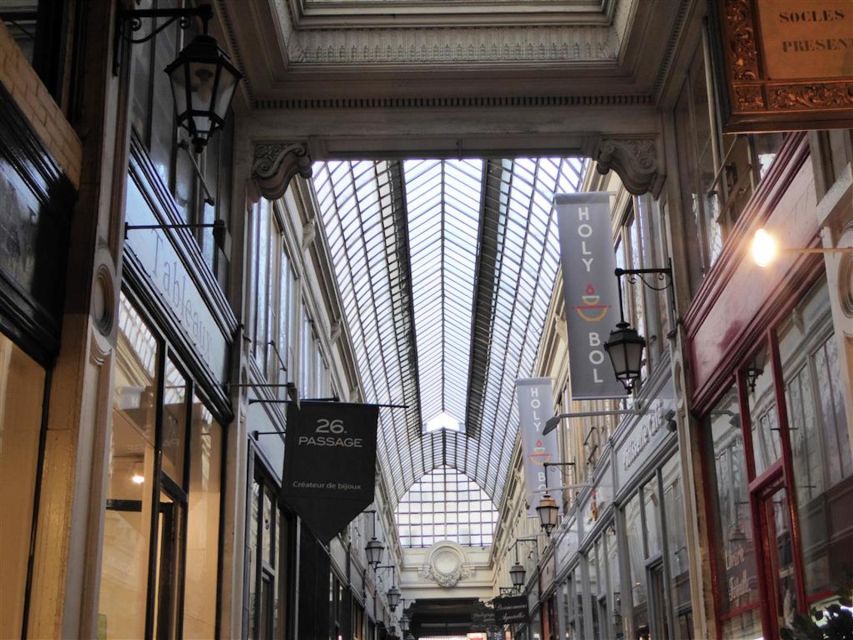
The covered passages do not announce themselves like the major monuments. You may pass near one without noticing the entrance. That is part of the appeal. These were not originally grand shopping arcades in the modern sense. They grew out of the needs of a changing city in the early 19th century.
Paris at that time had a dirty reputation. The city was not yet the polished capital seen in so many postcards. The passages offered a more protected and organized way to move through the city, while also creating places for commerce and social life. In that sense, they were early forerunners of the grand magasin, the large department stores that would later reshape Paris shopping.
I like this theme because it gives the walk a clear purpose. You are not simply looking at pretty covered corridors. You are learning how a practical answer to urban problems became part of Parisian style. The tour also explains why the passages were fashionable for a period, then spent time out of favor before attracting renewed interest.
The experience suits you best if you already know the major sights and want a less obvious side of Paris. It also works well early in a visit, since the route gives you a useful sense of how different parts of central Paris connect. Just keep your expectations measured. This is a specialist walk about passages and nearby districts, not a full city tour.
More City Tours in Paris
- Eiffel Tower Summit Option with Seine River Cruise and City Tour
★ 3.5 · 2,176 reviews - Paris in a Day: Louvre or Orsay, Eiffel Tower, City Walk & Cruise
★ 5.0 · 1,956 reviews - Paris: City Highlights Bike Tour
★ 4.7 · 1,835 reviews
Starting at Le Peletier on Metro Line 7
The meeting point is Le Peletier Metro station on Line 7. You should look for the guide carrying a HelpTourists bag. The clear landmark matters here because the passages are tucked into the city rather than gathered around one large, easy-to-spot entrance.
Starting at a Metro station also makes the tour practical. You do not need hotel pickup, and that service is not included, so you will need to reach Le Peletier on your own. The end point is Palais-Royal, giving you a convenient place to continue exploring after the walk.
The tour runs from Monday through Saturday. It lasts two hours, and available starting times depend on the date you select. Since the walk is private, the pace can feel more personal than a large group outing, although the exact size of your private group is not specified.
Passage Verdeau and the feel of old Paris
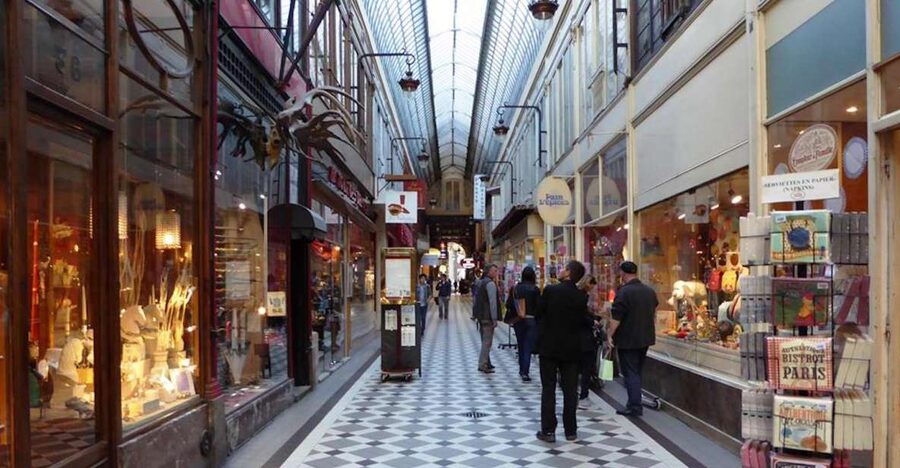
Passage Verdeau is the first named passage on the route. It begins the tour’s main lesson: Paris has a second layer that is easy to miss if you stay on the broad avenues.
Here, your guide can set the scene for the early 19th century, when these passages answered real problems in the city. The important point is not only what the passage looks like. It is why this type of covered route appeared at all, and how it offered a new kind of urban experience.
I would pay close attention to the links between street life, commerce, and the changing image of Paris. The experience is strongest when you treat the passage as a piece of city planning and social history, rather than just a photogenic stop.
Passage Verdeau also helps establish the tour’s pace. You move from one enclosed setting to another, with explanations connecting each place. Since the walk is only two hours, you will not be asked to spend a long time at every location. That keeps the experience moving, but it also means you should listen closely if you want to remember the details.
Passage Jouffroy and the rise of covered shopping
The next stop, Passage Jouffroy, develops the story of the passages as early commercial spaces. These routes were not simply shortcuts. They helped shape the habits and pleasures of city life.
The supplied description compares them with the forerunners of the grand magasin. That comparison is useful. It places the passages in the story of modern shopping, before the large department stores became one of Paris’s defining features.
I like this part of the route because it makes an ordinary-looking urban feature more meaningful. You begin to see the passages as experiments in how people could shop, walk, and spend time in the city. Your guide can also explain why their charm has become fashionable again only in more recent times.
The main limitation is that the tour does not include entrance fees or food. If you want to stop for a pastry or browse at length, those costs and detours are your responsibility. The two-hour schedule is designed for sightseeing and interpretation, not a leisurely shopping afternoon.
More Paris trips worth a second look
- The Père Lachaise Cemetery: Guided 2-Hour Small-Group Tour
★ 4.7 · 1,065 reviews - Paris: 2-Hour Perfume Creation Workshop
★ 4.8 · 731 reviews - Paris Louvre: 2-Hour Private Tour for Groups or Families
★ 4.6 · 639 reviews - Paris Montmartre: 2-Hour City Tour in German
★ 4.9 · 299 reviews
Passage des Panoramas, the signature stop
Passage des Panoramas is the third named passage and may be the point many people most anticipate. By this stage, you have already heard the larger story, so the passage can be understood as part of a pattern rather than an isolated curiosity.
This stop gives the guide another chance to explain the charm of the Parisian passages and their place in the city’s earlier development. You will be moving through a setting that feels removed from the broad modern streets outside, which helps explain the appeal of the route.
I would not book this walk expecting a long list of famous monuments. Its value comes from seeing how the passages fit together as a group. Three separate stops make the subject easier to understand, and the private format leaves room for questions about details that catch your eye.
The route is also a good choice for repeat visitors. If you have already spent time around the classic sights, this gives you a different view of Paris without requiring a full day away from the center.
The Grands Boulevards connect the passages to the city
After the passages, the walk includes the Grands Boulevards. This section broadens the experience. The passages are enclosed and intimate, while the boulevards place them back in the larger urban setting.
The contrast matters. Paris is not just a collection of quiet corners. Its covered passages make more sense when you understand their relationship to the major streets and districts around them. The Grands Boulevards help connect the specialist subject to the wider city.
Your guide can also show how the character of Paris changed over time. The tour’s central idea is that the city moved from a rougher early-19th-century environment toward the more organized and fashionable capital you recognize today.
Because the information provided does not promise specific stops, shops, or architectural features along the boulevards, I would treat this section as a connecting part of the walk rather than a separate attraction. It adds context and keeps the route from feeling like a simple passage-to-passage checklist.
Finishing in the Palais-Royal Quarter
The final area is the Palais-Royal Quarter, with the tour ending at Palais-Royal. This is a fitting finish because the route moves from less familiar covered passages toward one of central Paris’s better-known quarters.
The ending gives you a useful choice. You can continue exploring on your own, use the area as a reference point for the rest of your day, or simply finish with the main story complete. Hotel drop-off is not included, so plan your next move from Palais-Royal.
I appreciate tours that end somewhere useful rather than returning you to the starting point. Here, the route has a clear direction, and the finish makes sense geographically. Still, you should confirm the precise end point with your guide if you have a reservation immediately afterward, since the published information identifies Palais-Royal but does not give a street address.
What the private German format adds
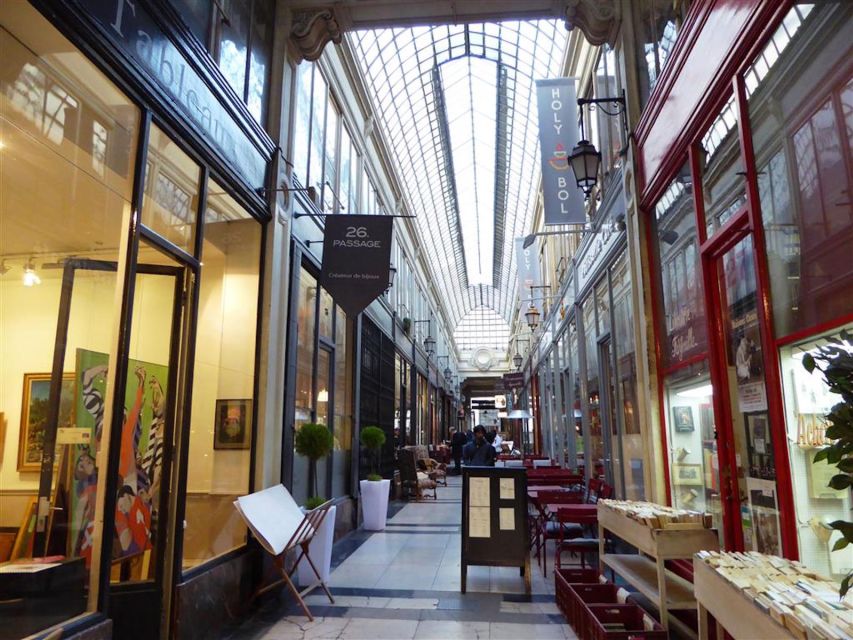
The tour is conducted in German by a live guide. That makes it especially suitable if you understand historical explanations best in German or want to discuss the city in that language.
The private format is the bigger advantage. A private group can usually ask more questions and follow a more natural rhythm than a large group, although no specific group-size limit is provided. You are paying for focused attention as much as for the route itself.
Solene is one guide associated with the experience. She has been praised for being friendly and for explaining interesting details and connections. That praise points to the best version of this tour: not just a walk between three passages, but a conversation that links the sites into one story.
The provider is HelpTourists, a group of German guides who present their own view of Paris. That local focus is useful here because the subject depends on small details and background. You want a guide who can explain why these places matter, not just identify them.
Is $94 per person a fair price?
At $94 per person, this is not a budget walking tour. The price makes more sense if you are booking for a small private group and value German-language guidance. It is less attractive if you only want to see the passages quickly or are comfortable researching the history yourself.
The two-hour length helps the value. You are not committing half a day, and the route covers three named passages plus the Grands Boulevards and Palais-Royal Quarter. For a visitor with limited time, that focused plan can be more useful than a long general tour that gives every subject only a few minutes.
The price does not include food, entrance fees, tips, or hotel pickup. Since the activity is primarily an outdoor city walk through public areas, the main cost is the guide’s time and private attention. You should budget separately for anything you choose to eat or enter along the way.
I would call the value good for language-specific private guiding, but only moderate for sightseeing volume. You are buying interpretation, atmosphere, and a less familiar side of Paris. You are not buying admission to attractions or a packed list of major landmarks.
Who will enjoy this Paris passages tour?
I would recommend it to:
- German-speaking visitors who prefer a private guide
- Repeat visitors who have already seen the main monuments
- First-time visitors who want a quieter introduction to central Paris
- History-minded visitors interested in how cities change
- Couples, families, or small groups willing to pay for a private format
- Anyone who enjoys architecture, shopping history, and unusual city details
I would think twice if you want a broad orientation tour covering the Eiffel Tower, Notre-Dame, the Louvre, or Montmartre. None of those places is part of this route.
The walk may also be a poor fit if you want a food tour or an extended shopping outing. Food is not included, and the schedule is built around sightseeing and explanation. You might find things to browse along the way, but that is not promised as the main activity.
Timing, flexibility, and simple planning tips
You can cancel up to 24 hours before the start for a full refund, and the reserve-now, pay-later option lets you keep your plans flexible. Those policies are helpful in Paris, where weather, transport, and changing museum plans can affect your day.
Check availability for the starting time you want. The tour operates Monday through Saturday, so Sunday is not an option based on the stated schedule.
Arrive at Le Peletier Metro station with enough time to identify the guide’s HelpTourists bag. Since pickup is not included, leave room for the journey to the meeting point. At the end, remember that you will be at Palais-Royal, not back at your hotel.
I would also keep your schedule after the tour reasonably open. Two hours is the stated duration, but a private walk is easier to enjoy when you are not watching the clock for a tight museum reservation.
My take on the experience
The strongest part of this tour is its focus. It takes one easily missed feature of Paris and gives it a full story: why the passages appeared, what they meant in the early 19th century, how they anticipated modern department stores, and why people have become interested in them again.
The most praised qualities are the friendly atmosphere, the amount of information, and the sense that the route shows Paris from another side. Those are exactly the qualities to look for in a private city walk. Solene’s friendly, detailed approach is a good example of what makes the format work.
The main tradeoff is price. At $94 per person, you should care about having a German-speaking private guide. If that matters to you, the compact route and personal attention support the cost. If not, the same passages may be better treated as a self-guided outing.
Should you book this tour?
Book it if you want a focused German-language walk through lesser-known Paris, especially if you enjoy urban history and have already covered the major sights. The two-hour route is manageable, the private group format is appealing, and the passage theme gives the experience a clear identity.
Skip it if your priority is famous landmarks, included food, hotel pickup, or a low-cost group tour. For the right visitor, though, this is a smart way to see Paris in a different light, one covered passage at a time.
FAQ
Where does the tour begin?
The tour begins at Le Peletier Metro station on Line 7. Look for the guide carrying a HelpTourists bag.
Where does the tour end?
The tour ends at Palais-Royal, after visiting the Palais-Royal Quarter.
How long does the tour last?
The tour lasts two hours.
What language is the tour conducted in?
The tour is conducted in German by a German-speaking live guide.
Is the tour private?
Yes. The activity is offered for a private group.
Which passages are included?
The route includes Passage Verdeau, Passage Jouffroy, and Passage des Panoramas.
Does the price include food, entrance fees, tips, or hotel pickup?
No. Tips, entrance fees, food, and hotel pickup are not included.
Recently reviewed around Paris
- Louvre Private Tour – The Essentials and More with Expert Guide★ 5.0 · 227 reviews
- 2CV tour by night★ 5.0 · 55 reviews
- Eiffel Tower Second or Summit Floor Access by Elevator with Views★ 3.5 · 161 reviews
- The only Paris Wine Tasting experience you need to do – 2 hours★ 5.0 · 265 reviews
- 2 Hour Street-art Walk and Space Invaders Hunt in Paris★ 5.0 · 27 reviews
- 2 hour outdoor group activity in Paris: SAINT GERMAIN★ 5.0 · 48 reviews
- Sainte-Chapelle, Conciergerie & Palais de Justice Private Tour★ 5.0 · 72 reviews
- Private 2 – Hour Paris Landmarks Tour by Golf Cart Mini Moke★ 5.0 · 38 reviews
City Tours, compared.

Eiffel Tower Summit Option with Seine River Cruise and City Tour
Read our review →
Paris in a Day: Louvre or Orsay, Eiffel Tower, City Walk & Cruise
Read our review →

Eiffel Tower Hosted Tour, Seine Cruise and City Tour
Read our review →

City and River Seine Tour on an Amphibious Bus
Read our review →

Eiffel Tower and City Tour by Bus with Seine River Cruise Option
Read our review →Browse the lists this tour appears in