
Reviewed · WORKSHOPS
Paris: Butter and Cheesemaking Workshop
The best thing about this Paris workshop is that you do not just taste French cheese, you make it. In a small cheese-making room at the Living Cheese Museum, you learn how milk becomes tomme fraiche, a mild, slightly acidic cheese made for melting, then churn your own butter.
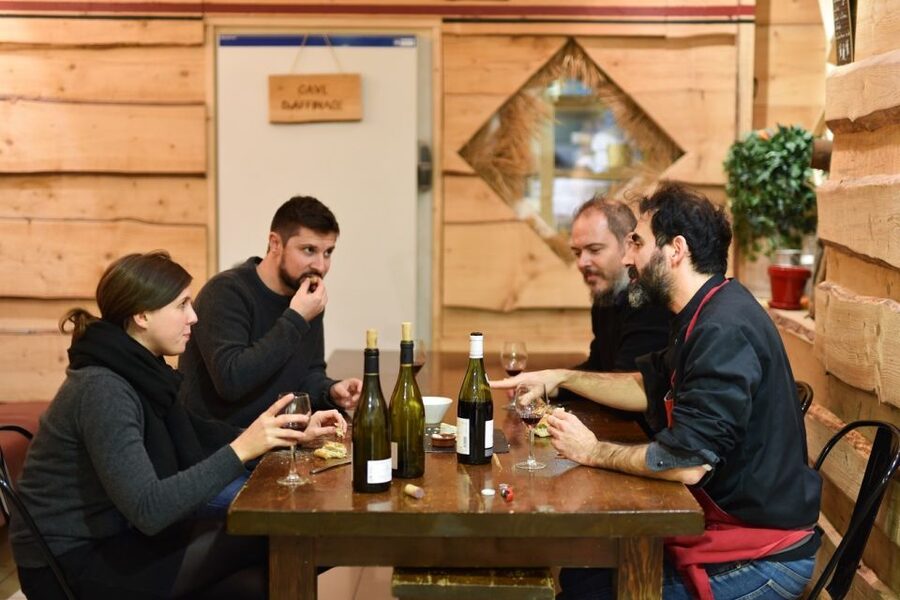
I like the hands-on work and the friendly teaching style. Instructors such as Agathe, Paul, Romain, and Gabriele have led sessions, and the class relies on clear demonstrations, questions, and plenty of humor. I also like the ending: you taste your cheese and butter with other French cheeses, bread, and a glass of wine.
The main thing to check is the meeting location. One recent booking noted that the museum was preparing to move, so confirm the current address before setting out. The workshop is also not suitable for wheelchair users, and pets are not allowed.
In This Review
- Key points to know before booking
- Why making cheese beats another Paris tasting
- Meeting the cheese master at the Living Cheese Museum
- Making tomme fraiche from the basics
- Churning traditional butter by hand
- The final tasting with cheese, bread, and wine
- What the two-hour schedule means for your day
- Is $82 a fair price?
- Who will enjoy this workshop most?
- Booking details worth checking
- Should you book the Paris butter and cheese workshop?
- FAQ
- Where does the workshop meet?
- How long does the activity last?
- Is the workshop taught in English?
- What will I make?
- Is wine included?
- Is transportation from my hotel included?
- Can wheelchair users take part?
Key points to know before booking
- You make two French staples: Learn the basic process for tomme fraiche and traditional butter, not just the names of the products.
- The tasting is part of the lesson: Try your own cheese and butter alongside other French cheeses, bread, and wine.
- Groups are capped at 10: The small size gives you a better chance to ask questions and take part in each step.
- The class lasts two hours: It fits neatly into a morning or afternoon in Paris without taking over your day.
- Some butter may go home with you: Several sessions have allowed participants to take their remaining butter after tasting.
- Check the venue before arrival: The museum has been preparing for a relocation, so use your booking details for the latest meeting point.
Why making cheese beats another Paris tasting
Paris has no shortage of cheese shops and food walks. Most ask you to look, smell, and taste. This class adds the missing part: you handle the ingredients and see how a simple process produces something you recognize from a French table.
That makes the workshop especially useful if you want more than a quick food stop. You learn why cheese differs in texture and flavor, how butter is made, and how a fresh cheese such as tomme fraiche fits into French cooking.
The class takes place at the Living Cheese Museum, where you meet the cheese master and your group before entering the cheese-making room. The setting is focused on the craft rather than a large sightseeing show. With no more than 10 participants, the session should feel personal enough for questions and practical help.
I would not book this as a formal culinary school course. It is a compact introduction, designed to be fun and accessible rather than technical. Still, the two-hour format covers a surprising amount: cheese varieties, the production process, hands-on preparation, butter-making, and a final tasting.
More Paris trips worth a second look
- Fragonard Paris: Mini Perfume Workshop
★ 4.5 · 1,924 reviews - Paris Cooking Class and Lunch with Wine plus Market Visit Option
★ 5.0 · 1,024 reviews - Paris Croissant Small-Group Baking Class with a Chef
★ 5.0 · 910 reviews
Meeting the cheese master at the Living Cheese Museum
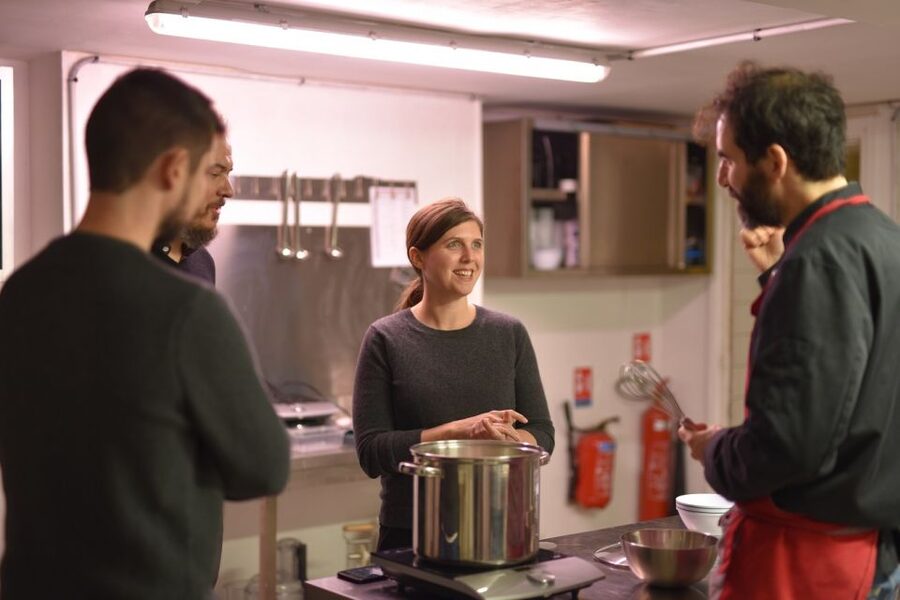
Your first contact is with the English-speaking instructor, described as a cheese master or fromager. The teachers who have led sessions include Agathe, Paul, Romain, and Gabriele. Their approach appears to be warm and informal, with explanations mixed into the practical work.
That matters because cheese can become a fog of French names and complicated terms. A good teacher gives you a simple framework: what the cheese is, how it is made, what it tastes like, and how people use it. This workshop seems to do exactly that.
You can expect an introduction to different varieties of French cheese before moving into production. The instruction covers both cheese and butter, so the class is not limited to one recipe. It also gives you a better sense of the contrast between a fresh cheese and the aged cheeses commonly associated with France.
The atmosphere is part of the value. The strongest sessions have been described as funny, patient, engaging, and easy to follow. Families have enjoyed it with children ranging from 5 to 17, while adults have used it as a distinctive break from museums and monuments.
Making tomme fraiche from the basics
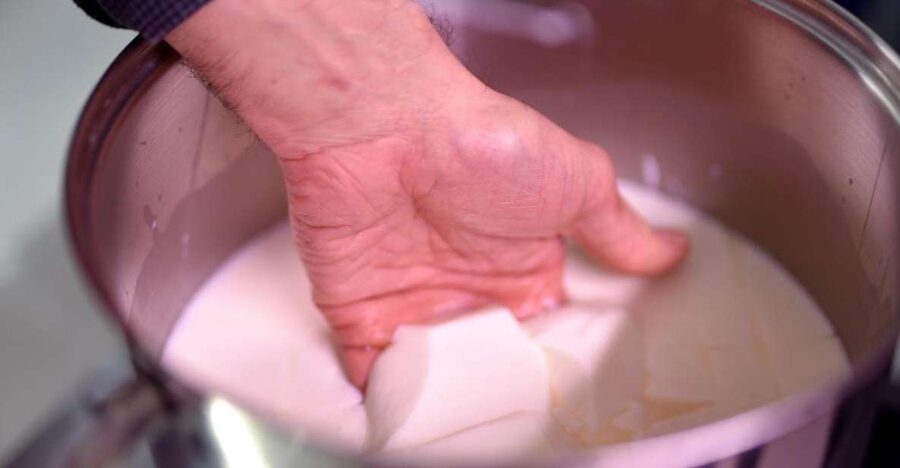
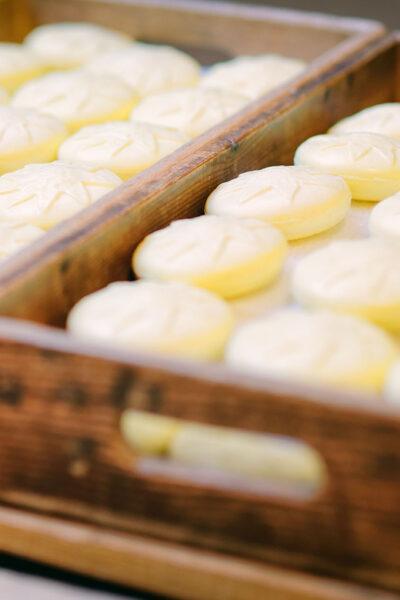
The main cheese project is tomme fraiche. This is a fresh cheese with a slightly milky, acidic taste. It is especially useful in cooking because it melts well in traditional dishes.
Do not expect a long aging process. In a two-hour workshop, you are learning the early stages and producing something ready to taste. That is the point: you see how the ingredients change and gain a clear idea of how fresh cheese differs from a finished aged wheel.
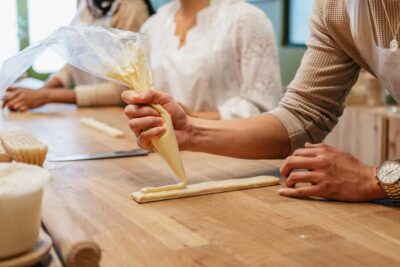
The activity is practical from start to finish. You are not simply watching the instructor work at a counter. You take part in the method, follow directions, and help produce the cheese you later eat.
I like this part because it connects French food culture to an everyday cooking idea. Tomme fraiche is not presented as a museum object. It is a useful ingredient, valued for its mild flavor and melting quality. After the class, you have a better reason to notice fresh cheese on a menu or in a market.
The workshop may also suit cautious eaters. A mild cheese is an easier introduction than a strongly aged or pungent variety. At the same time, anyone who already loves French cheese will get a closer look at the process behind the finished product.
Churning traditional butter by hand
The second project is traditional butter. This gives the class a nice contrast. Cheese-making can seem like a long, careful process, while butter offers a direct lesson in transformation.
You work with the equipment provided and follow the instructor’s method. The finished butter becomes part of the tasting, and some sessions have allowed participants to take the extra portion away. That is a useful bonus, especially if you are staying in an apartment or have a meal planned soon after.
Several people have said they planned to make butter and cheese at home after the workshop. That does not mean you leave with a professional recipe book or a full production course. It does mean the method is explained in a way that feels possible rather than mysterious.
This is also the part that can bring a family into the activity. Children may not care about a lecture on milk chemistry, but they can understand that working the mixture changes it into butter. Adults get the food lesson, and younger participants get a clear result they helped create.
You should keep your expectations sensible. The class is short, and the exact amount you take home may vary. The important benefit is learning how butter is produced and tasting a fresh version made during the session.
A different way to spend the day, same corner of France:
- Paris: Louvre Museum Timed-Entrance Ticket
★ 4.6 · 71,977 reviews - Disneyland® Paris 1-Day Ticket
★ 4.6 · 49,412 reviews - Paris: Versailles Palace and Gardens Full Access Ticket
★ 4.6 · 41,579 reviews - Paris: Evening River Cruise with Music
★ 4.4 · 22,721 reviews
The final tasting with cheese, bread, and wine
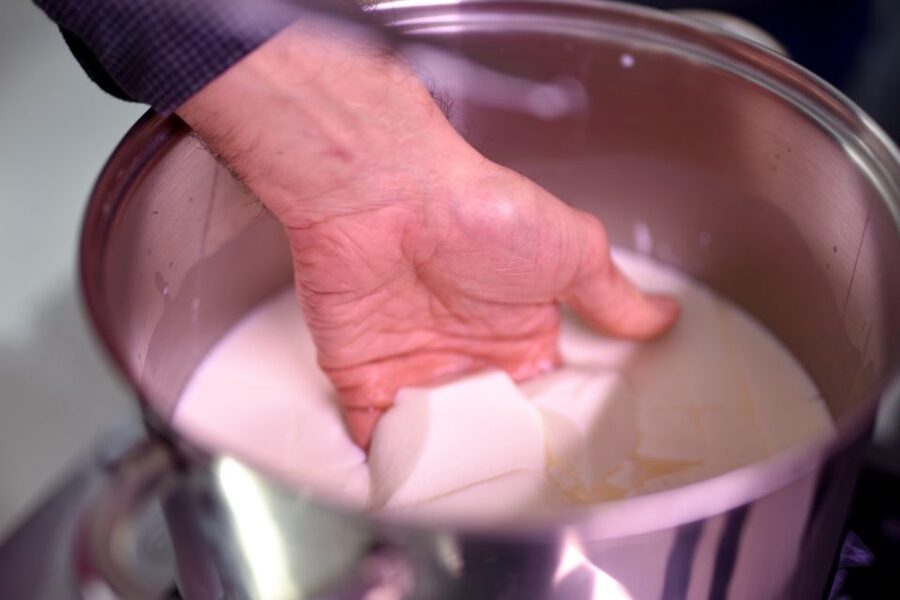
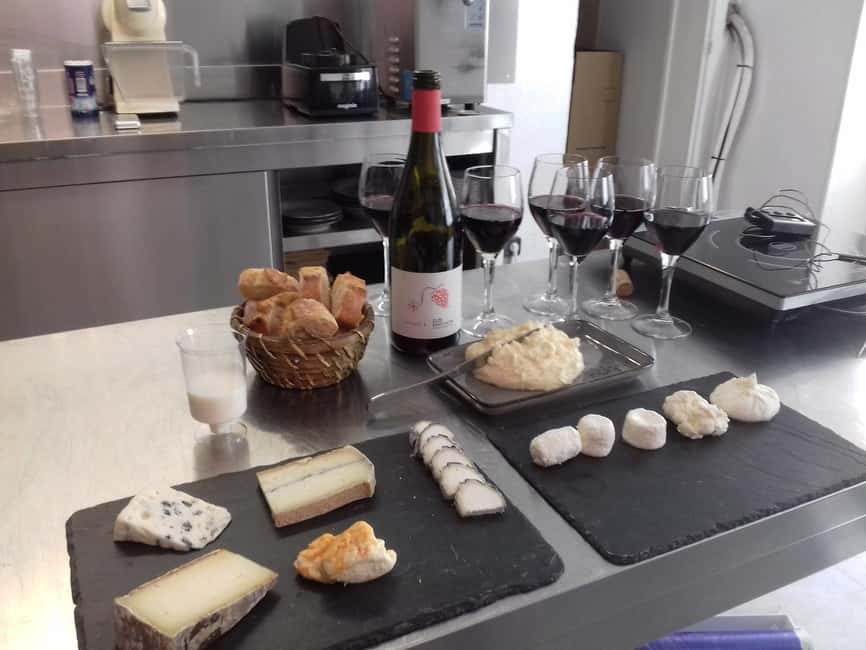
The tasting at the end is not an afterthought. It is where the class comes together. You taste your tomme fraiche and butter, usually alongside a selection of French cheeses, with bread and wine included in the session.
This gives you a chance to compare. Your own cheese is mild and fresh, while other samples can show how much French cheese varies in taste and texture. You also get to see how butter and cheese work with bread, rather than treating them as isolated ingredients.
The wine adds a classic French touch, but the activity is not described as wine-centered. If you are interested in cheese and prefer to keep wine optional, the experience can still work for you. One family specifically valued the fact that the cheese activity did not require wine to be the main attraction.
The tasting can also be a pleasant social finish. You sit with the group, share the results, and ask final questions. Some participants have carried their butter onward and shared it with restaurant staff or saved it for later. That makes the food feel connected to the rest of your day in Paris.
I would schedule this when you can enjoy the tasting without rushing to another appointment. Two hours is the stated duration, but the final part is one of the reasons to book. Leaving immediately would cut short the most relaxed section.
What the two-hour schedule means for your day
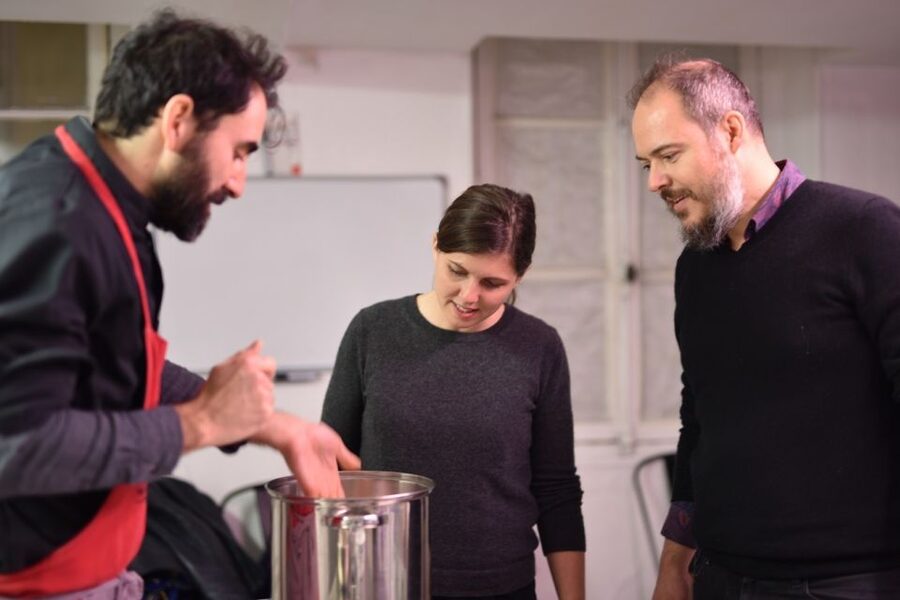
Two hours is a sensible length for this activity. It is long enough for real participation, but short enough to fit around a museum, market visit, or meal.
You should allow extra time to reach the Living Cheese Museum and find the precise entrance. Hotel pickup and drop-off are not included. Since the venue has been preparing to move, check your current booking information rather than relying on an old map pin or an address saved from a previous visit.
The activity starts at a specific time, and starting times vary by availability. That makes it easy to place in a morning or afternoon plan, but you should not assume you can arrive at any point during the day.
The small group limit of 10 is important. Cheese-making involves shared equipment and close instruction, so a large class would make the practical work less satisfying. A small group also gives you a better chance to speak with the instructor and get help if a step is unclear.
The class is taught in English. That removes a major worry for many international visitors, especially when the subject includes unfamiliar French terms. You will still hear French names for cheeses and ingredients, but the actual instruction is in English.
Is $82 a fair price?
At $82 per person, this is not the cheapest way to eat cheese in Paris. You could buy a fine selection from a fromagerie for much less. But this is not simply a tasting, and the price includes the instructor, the workshop, equipment, and all tastings.
The value depends on what you want from a food activity. If you mainly want a large plate of cheese, spend your money at a market or wine bar. If you want to learn a process, make two products, and enjoy a guided tasting in a small group, the price is more reasonable.
I see three parts of the value:
- Instruction: You receive two hours with an English-speaking cheese professional rather than a printed explanation.
- Participation: You make both cheese and butter, using the equipment provided.
- Food and drink: You taste the products you made along with other cheeses, bread, and wine.
The experience also has a lasting benefit. You may leave with a better understanding of French cheese, a portion of butter, and enough practical knowledge to try the process at home. That gives it more substance than a quick tasting that ends when the plate is empty.
Still, do not book it expecting a large take-home cheese. The workshop is about learning and tasting fresh products during a short class. Any butter you take with you is an extra benefit, not the main reason to reserve.
Who will enjoy this workshop most?
This is a strong choice for people who enjoy food, cooking, and small cultural experiences. It works particularly well for couples, families, and friends who want something different from the usual Paris schedule.
Families have found it suitable for children and older relatives in the same group. The activity has enough practical work to hold a child’s attention, while the cheese background gives adults something to think about. A mixed-age group can take part together rather than splitting up.
It also suits people who want to understand French culture through food. Cheese and butter are not just items on a restaurant plate. They are part of daily cooking and regional food traditions. Making them yourself gives you a more useful connection than simply memorizing names.
I would be more cautious if you dislike dairy, need a fully accessible venue, or want a high-level professional cooking class. The activity is not suitable for wheelchair users, and pets are not allowed. The workshop also appears to focus on fresh cheese and butter, not on aging a cheese over many weeks.
For a first visit to Paris, I would pair it with a nearby food market or a relaxed meal later in the day. For a return visit, it can replace another standard cooking class and offer a more unusual subject.
Booking details worth checking
The meeting point is the Musée Vivant du Fromage, also called the Living Cheese Museum. Because the venue has been preparing for relocation, confirm the current address and entrance after booking.
The activity includes an expert English-speaking instructor, cheese-making instruction, all equipment, and tastings. Hotel transportation is not included, so you make your own way there and back.
You can cancel up to 24 hours before the activity for a full refund. The reserve-now, pay-later option lets you hold a place without paying at once, which is useful when your Paris schedule is still changing.
The rating is 4.9 from 103 reviews, with repeated praise for the instructors, the hands-on format, and the final cheese and butter tasting. The most consistent practical point is simple: book it for the class itself, then treat any take-home butter as a welcome extra.
Should you book the Paris butter and cheese workshop?
I would book this if you want a small, active food experience rather than another guided walk or restaurant meal. The class gives you something to do with your hands, teaches a useful piece of French food culture, and ends with a tasting that feels earned.
The best reasons to go are the two different projects, the English instruction, the 10-person limit, and the warm teaching style associated with instructors such as Agathe, Paul, Romain, and Gabriele. The main cautions are the $82 price, the lack of hotel transport, the wheelchair restriction, and the need to confirm the museum’s current location.
If you love cheese, this is an easy recommendation. If you are unsure about a cheese-focused activity, the butter-making and family-friendly format make it less narrow than the title suggests. Just leave room in your schedule to enjoy the final tasting, and check the meeting address before you head out.
FAQ
Where does the workshop meet?
The meeting point is the Musée Vivant du Fromage, also known as the Living Cheese Museum.
How long does the activity last?
The workshop lasts two hours.
Is the workshop taught in English?
Yes. The instructor speaks English, and English is the listed language for the activity.
What will I make?
You will learn how to make traditional butter and tomme fraiche, a fresh cheese with a slightly milky, acidic taste that is used for melting in traditional dishes.
Is wine included?
Yes. The final tasting includes a glass of wine, along with tastings of your creations and other cheeses.
Is transportation from my hotel included?
No. Hotel pickup and drop-off are not included.
Can wheelchair users take part?
The activity is listed as not suitable for wheelchair users. Pets are also not allowed.
Recently reviewed around Paris
- Louvre Private Tour – The Essentials and More with Expert Guide★ 5.0 · 227 reviews
- 2CV tour by night★ 5.0 · 55 reviews
- Eiffel Tower Second or Summit Floor Access by Elevator with Views★ 3.5 · 161 reviews
- The only Paris Wine Tasting experience you need to do – 2 hours★ 5.0 · 265 reviews
- 2 Hour Street-art Walk and Space Invaders Hunt in Paris★ 5.0 · 27 reviews
- 2 hour outdoor group activity in Paris: SAINT GERMAIN★ 5.0 · 48 reviews
- Sainte-Chapelle, Conciergerie & Palais de Justice Private Tour★ 5.0 · 72 reviews
- Private 2 – Hour Paris Landmarks Tour by Golf Cart Mini Moke★ 5.0 · 38 reviews
Workshops, compared.
Paris Cooking Class and Lunch with Wine plus Market Visit Option
Read our review →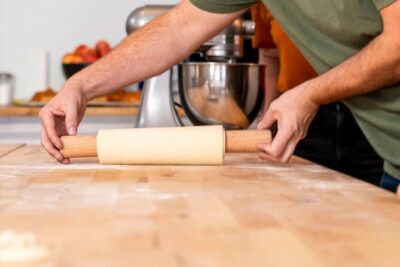
Paris Croissant Small-Group Baking Class with a Chef
Read our review →
Fragonard Eze: Perfume Making Class and Factory Tour
Read our review →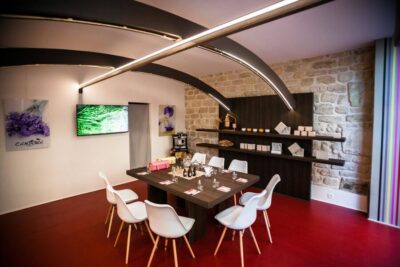
Perfume Making Class and Fragonard Factory Tour
Read our review →Browse the lists this tour appears in