
Reviewed · LOUVRE MUSEUM TOURS
Paris: Louvre Museum Skip-The-Line Tour
The best thing about this Louvre visit is its clear artistic route. Instead of trying to cover the entire museum, your private guide connects the early Renaissance, Neoclassicism, and Romanticism through works by Botticelli, Mantegna, Leonardo, David, Delacroix, and Gericault. Botticelli’s fresco and the huge Marriage at Cana give the tour real visual variety.
I like the private format, which lets the guide adjust the pace and explain what you are seeing without turning the visit into a race. I also like the historical thread, from Medieval religious art toward Humanism and later political painting. The main drawback is the price: at $294 per person for two hours, this makes the most sense for people who value expert guidance and efficient access.
In This Review
- Key points at a glance
- A smart way to approach the Louvre in two hours
- Meeting at the Arc de Triomphe du Carrousel
- The early Renaissance: Botticelli and a changing view of people
- Leonardo’s Mona Lisa and the challenge of fame
- Venetian color and the scale of Marriage at Cana
- The Nike of Samothrace and the Louvre’s grand spaces
- Neoclassical order in David’s paintings
- Romantic drama: Gericault and Delacroix
- What the private format adds
- Is $294 per person a fair price?
- Who should book this Louvre visit?
- Should you book it?
- FAQ
- How long does the Louvre tour last?
- What is included in the price?
- Is food or drink included?
- Where does the tour meet?
- Which languages are available?
- Is this a private tour?
- Is the Louvre ticket line skipped?
- Is the tour wheelchair accessible?
- Can I bring a large suitcase or oversized bag?
- Can I cancel for a full refund?
Key points at a glance
- A focused Louvre route: See selected works from the Renaissance, Neoclassical, and Romantic periods rather than wandering without a plan.
- Private group format: Your guide can adapt explanations and pacing to your interests, including family needs.
- Major works included: The route features the Nike of Samothrace, Mona Lisa, Marriage at Cana, Raft of Medusa, and Liberty Leading the People.
- Useful skip-the-line entry: You avoid the ticket line, which matters when your Paris schedule is tight.
- Strong guide-led experience: Boris is noted for connecting art to changing ideas about light, history, and society.
- Practical meeting point: Look for the guide with a red canvas tote at the Arc de Triomphe du Carrousel.
A smart way to approach the Louvre in two hours
The Louvre is too large for a complete visit in a single morning, let alone two hours. This tour handles that problem by giving you a defined route through some of the museum’s major painting and sculpture rooms.
You will not see every famous object in the building. That is a good thing here. A two-hour visit with a sensible theme can leave you with a clearer idea of how European art changed than a longer solo walk through room after room.
The focus falls on three broad periods: the Renaissance, Neoclassicism, and Romanticism. Those labels may sound academic, but the route gives them a practical shape. You can watch artists move from religious medieval traditions toward human emotion, classical order, political drama, and intense individual feeling.
The visit is private, and the listed languages are English, French, and Serbo-Croatian. That setup suits couples, families, and small groups who want to ask questions or request extra attention to a particular artist. One family used the format successfully with two teenage boys, and the guide adjusted to keep the group involved.
More Paris museums and collections:
- Paris: Louvre Museum Timed-Entrance Ticket
★ 4.6 · 71,977 reviews - Louvre Museum Masterpieces Guided Tour with Access
★ 4.5 · 12,023 reviews - Paris: Louvre Museum Entry Ticket With Host and River Cruise
★ 4.6 · 9,926 reviews
Meeting at the Arc de Triomphe du Carrousel
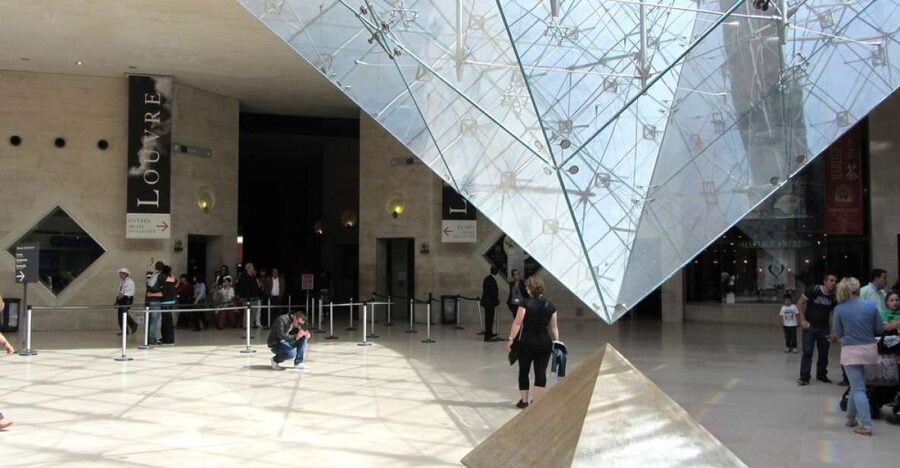
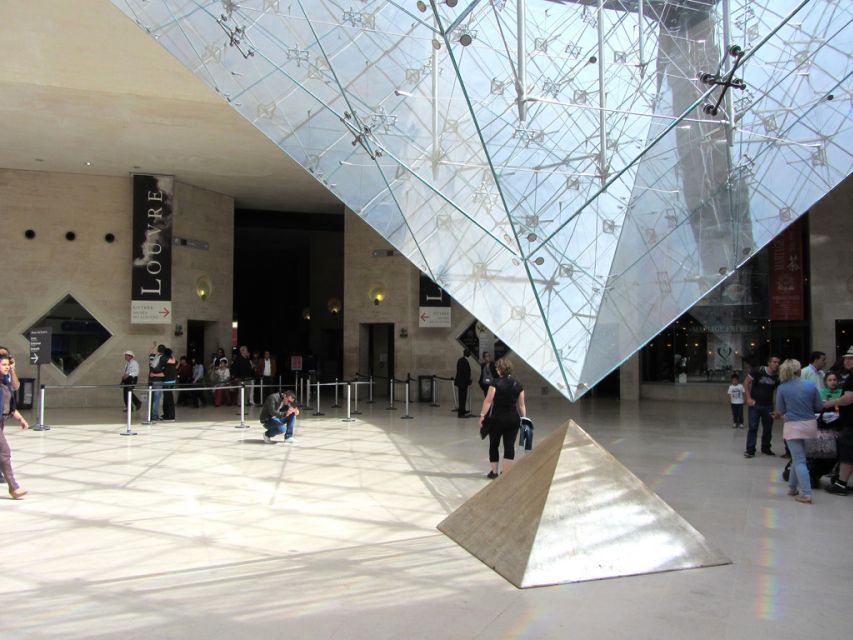
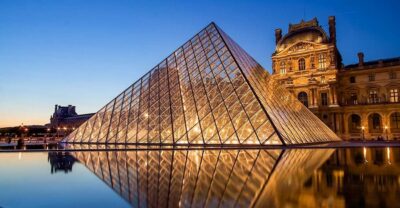
The meeting point is the Arc de Triomphe du Carrousel, the smaller triumphal arch near the Louvre. Your guide will carry a red canvas tote bag, which is the detail to keep in mind when you arrive.
Give yourself enough time to reach this point without rushing. The Louvre complex has several courtyards, entrances, and nearby landmarks, so a clear meeting location helps. Once you find the guide, the tour can begin with less fuss than a self-guided visit that starts with ticket questions and route planning.
The ticket includes skip-the-line entry. This means you avoid the ticket queue, a real benefit when you have limited time in Paris. It does not mean the museum will feel empty. The Louvre remains a major attraction, and the famous works can be crowded. A guide helps you make better use of the time you do have.
The museum allows no item larger than 55 by 35 by 20 centimeters. Oversize luggage is not permitted, so arrive with a small bag rather than a suitcase or large backpack. The tour runs rain or shine, though most of the experience takes place indoors.
The early Renaissance: Botticelli and a changing view of people
The early part of the route introduces the shift from the Medieval period toward Humanism. That change is one of the most useful ideas to carry into the rest of the visit.
In Medieval art, religious purpose often shaped the image. During the Renaissance, artists increasingly explored the human body, the natural world, classical ideas, and individual identity. Your guide will use works in the Louvre to show how that change appears in style and subject.
Botticelli’s fresco, Venus and the Three Graces Presenting Gifts to a Young Woman, is one of the early highlights. The scene brings together a mythological figure, graceful movement, and a carefully arranged group of women. It gives you a direct look at the elegance associated with Florentine art.
This is also where a guide can add value without burying you in dates. The point is not only to identify Venus or the Three Graces. It is to notice how bodies, gestures, clothing, and facial expressions create meaning. With a private guide, you can pause over a detail that interests you instead of waiting for a large group to move on.
Mantegna’s Saint Sebastian continues the Renaissance section. The work is associated here with early Florentine art, and it offers a different mood from Botticelli’s graceful scene. The subject is religious, yet the treatment reflects the period’s concern with the human figure and the physical world.
You may also see other Renaissance works as the route connects these examples to Leonardo and Venetian painting. The strength of this part of the visit is the comparison. One painting shows elegance and mythology, another presents suffering, and both reveal artists thinking in new ways about the human subject.
Leonardo’s Mona Lisa and the challenge of fame
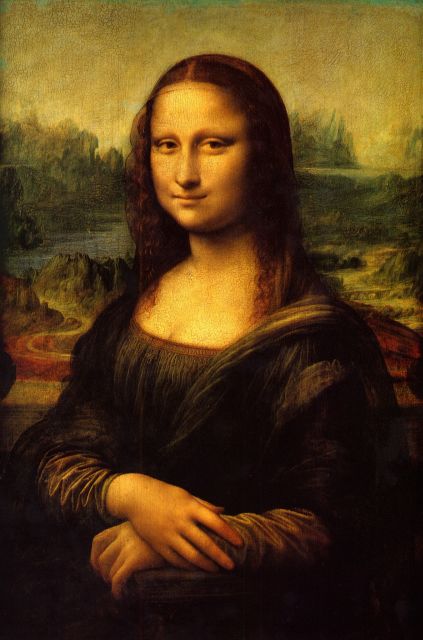
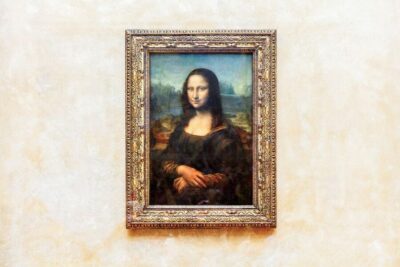
Leonardo da Vinci is represented by works including the Mona Lisa. The painting needs little introduction, but the experience of seeing it is not simply a box to check.
The Mona Lisa is famous enough to dominate many first-time Louvre visits. A guide can help keep it in proportion by placing it within the larger Renaissance story. Leonardo matters not only because of one portrait, but because his work reflects close observation, controlled expression, and an interest in how a person appears to think and feel.
Expect attention around this painting. The visit does not promise a quiet, private view of the Mona Lisa, and the tour information does not specify crowd levels or a separate viewing arrangement. Your guide can still provide context before or after you reach it, so the painting becomes part of the route rather than the entire reason for entering the museum.
If you want the famous image and a broader understanding of Renaissance art, this approach works well. If your only goal is a long, unhurried look at Leonardo, two hours and a major museum may feel too compressed.
More Paris trips worth a second look
- Versailles: Skip-the-Line Tour of Palace with Gardens Access
★ 4.7 · 9,778 reviews - Versailles: Skip-the-Line Guided Palace Tour and Full Access
★ 4.6 · 5,214 reviews - Louvre Museum: Skip-the-Line Small Group Guided Tour
★ 4.6 · 3,960 reviews - From Paris: Versailles Skip-the-Line Tour & Gardens Access
★ 4.7 · 3,011 reviews
Venetian color and the scale of Marriage at Cana
Veronese’s Marriage at Cana is another major stop. It is the largest painting in the Louvre, and its size alone changes how you look at it. You need time to take in the whole arrangement before examining the figures and smaller details.
The painting also adds a Venetian note to a route that includes Florentine and other Italian traditions. Venetian painting is often associated with color and surface effects, and your guide will place Bellini’s Venetian paintings within that wider story.
This is a useful point for comparing regional approaches. Florence can lead you toward drawing, structure, and the study of the human form. Venice brings a different emphasis to the eye. Standing before a vast Veronese canvas makes those differences easier to grasp than reading a short label.
The scale of Marriage at Cana also shows why guided timing matters. You could spend a long time here without noticing the clock. A good guide gives you enough space to see the work properly while keeping the group moving toward the later rooms.
The Nike of Samothrace and the Louvre’s grand spaces
The Nike of Samothrace is a 2nd-century BC marble sculpture of Nike, the Greek goddess of Victory. It is one of the tour’s key sculpture stops and a welcome change after a sequence of paintings.
The statue is particularly effective because it is presented as a dramatic arrival at the top of a staircase. Even without knowing every detail of its original setting, you can see how movement is created through the wings, drapery, and forward thrust of the body.
This stop also gives you a sense of the Louvre as a palace and museum, not just a collection of framed pictures. The building’s grand circulation spaces are part of the experience. A guide can explain the object while helping you understand why the setting affects your response to it.
The tour covers art from Ancient Egypt and Greece through the early 19th century, but the stated route concentrates on the three main periods. That distinction matters. You will get selected glimpses of the wider collection, not a full survey of every civilization represented in the museum.
Neoclassical order in David’s paintings
The Neoclassical section brings a sharper sense of order, civic virtue, and public ceremony. Jacques-Louis David’s The Oath of the Horatii is an important example.
The painting’s strong lines and arranged figures make the scene feel deliberate. It presents duty and sacrifice with a seriousness that fits Neoclassical taste. Your guide can help you see how the painting’s structure supports its message, rather than leaving you with only the broad label of Neoclassicism.
David’s Crowning of Napoleon shifts the focus from a heroic oath to a major political ceremony. Its size and formal arrangement make it a work about power as much as painting. Look at who is given space, how the figures are positioned, and how ceremony is turned into an image for public memory.
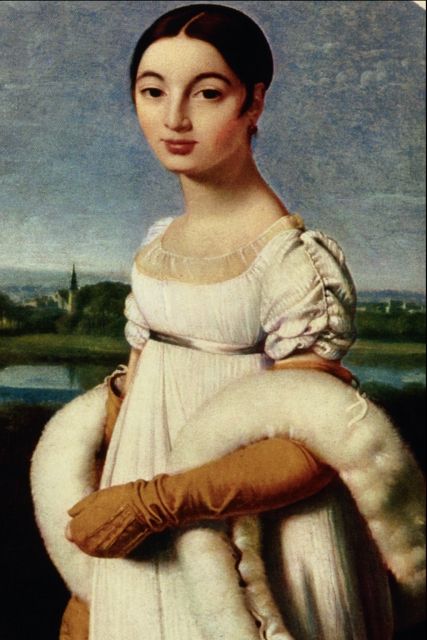
Ingres’ Une Odalisque adds a very different kind of Neoclassical subject. The sinuous nude draws attention to line, pose, and idealized form. It is a useful contrast with David’s public scenes because it shows how the same broad period can include both civic grandeur and intimate studio imagery.
This portion of the tour should appeal to you if you like art connected to politics and public life. It also helps explain why the Louvre can feel more rewarding when you understand the ideas behind the pictures, not just the names on the wall.
Romantic drama: Gericault and Delacroix
The final major period is Romanticism, where emotion, movement, and crisis take center stage. Gericault’s Raft of Medusa is the clearest example on this route.
The painting shows people in a desperate situation, and its scale pulls you into the event. It is not a calm historical scene. The work uses suffering, unstable bodies, and dramatic movement to create an urgent response.
Your guide can explain how Romantic painting differs from Neoclassical control. Where David arranges figures to support reason, duty, and order, Gericault presents people pushed to the edge. Seeing these works in the same tour makes the change easier to remember.
Delacroix’s Liberty Leading the People commemorates the July Revolution of 1830. The painting combines political events with an allegorical figure of Liberty, giving the scene both immediate historical force and symbolic meaning.
This is a particularly useful stop if you want to understand how art can shape national memory. The painting is not just a record of a revolt. It turns a political struggle into a powerful image of collective action, with Liberty leading the figures forward.
The Romantic section gives the tour a strong finish. You move from the grace of Botticelli and the balance of David toward paintings that ask for an emotional response. The progression helps the Louvre feel less like a list of masterpieces and more like a story about changing ways of seeing.
What the private format adds
The private group format is the main reason to consider this experience instead of entering the Louvre alone. You have a guide dedicated to your group, rather than sharing explanations with a large crowd.
That can matter when you are visiting with children or teenagers. One guide successfully handled a family with two teenage boys, and the group was able to learn while moving through the museum. For families, the practical benefit is not only extra information. It is having someone else take charge of the route.
The format also allows some customization. A past booking was adjusted to suit the group’s interests, with the guide changing the delivery rather than following a rigid script. You should still expect the core route to center on Renaissance, Neoclassical, and Romantic works, but you may be able to signal which artists or ideas deserve more attention.
Boris is one guide associated with the experience. His approach includes a historical look at how artists depicted the sun and light across different periods. That kind of theme can make familiar paintings easier to compare. Other guides are available in English, French, and Serbo-Croatian, but individual guide assignments are not specified.
The strongest praise attached to the experience centers on clear explanations, professional conduct, historical perspective, and personal attention. Those qualities matter more than simply moving quickly through the museum. A private tour is worth paying for when the guide helps you notice things you would otherwise miss.
Is $294 per person a fair price?
At $294 per person, this is an expensive two-hour activity. The price includes skip-the-line admission and a guide, but not food or drinks.
The value depends on your priorities. If you are in Paris for a short stay, the tour can save time and prevent you from wandering through the Louvre without a plan. A private group may also make the cost easier to justify if several people want the same guide and can share the experience.
The price is harder to defend if you already know the Louvre well, prefer reading labels at your own pace, or have several hours available for independent exploration. The tour is not designed to replace a full museum day.
I see it as a convenience and interpretation purchase, not a bargain admission ticket. You are paying for a route, a live guide, and the chance to ask questions. The excellent score from 32 ratings, including particularly strong comments about Boris and the family-friendly approach, supports the idea that guide quality is the main product.
Who should book this Louvre visit?
I would recommend it most strongly to first-time Louvre visitors who want a coherent introduction rather than a checklist of famous names. It also suits people with only a short window in Paris, since the route is limited to two hours and the ticket line is skipped.
Families may find the private setup helpful, especially with older children or teenagers. Art students, curious beginners, and visitors who enjoy links between politics and painting should also get a lot from the progression through the three periods.
You may want another option if you want to explore Ancient Egypt in depth, spend a long time with Greek sculpture, or focus mainly on one artist. The tour includes the museum’s wider time span, but its actual emphasis is Renaissance, Neoclassicism, and Romanticism.
Wheelchair access is available. Remember the bag rule, since anything over 55 by 35 by 20 centimeters is not permitted. The tour runs in all weather, and cancellation is free up to 24 hours before the start. You can also reserve now and pay later, which helps if your Paris schedule is still changing.
Should you book it?
Book this tour if you want the Louvre’s famous works arranged into a clear story, need to make the most of two hours, and value a private guide who can adjust the explanation to your group. The route gives you a strong spread: Botticelli and Mantegna for the Renaissance, Leonardo and Veronese for Italian greatness, David and Ingres for Neoclassical ideas, and Gericault and Delacroix for Romantic drama.
Skip it if $294 feels too high for a short visit or if you prefer a slow, self-directed museum day. For the right visitor, the price buys focus, context, and less time spent figuring out where to go. For everyone else, the Louvre’s permanent collection can still reward a careful independent walk.
FAQ
How long does the Louvre tour last?
The tour lasts two hours.
What is included in the price?
The price includes skip-the-line entrance to the Louvre and a guide.
Is food or drink included?
No. Food and beverages are not included.
Where does the tour meet?
Meet at the Arc de Triomphe du Carrousel. Your guide will carry a red canvas tote bag.
Which languages are available?
The tour is offered in English, French, and Serbo-Croatian.
Is this a private tour?
Yes. The activity is offered as a private group experience.
Is the Louvre ticket line skipped?
Yes. The experience includes skip-the-line entrance and allows you to skip the ticket line.
Is the tour wheelchair accessible?
Yes. The activity is listed as wheelchair accessible.
Can I bring a large suitcase or oversized bag?
No. Oversize luggage is not allowed, and items larger than 55 by 35 by 20 centimeters cannot enter the museum.
Can I cancel for a full refund?
Yes. You can cancel up to 24 hours in advance for a full refund.
Recently reviewed around Paris
- Louvre Private Tour – The Essentials and More with Expert Guide★ 5.0 · 227 reviews
- 2CV tour by night★ 5.0 · 55 reviews
- Eiffel Tower Second or Summit Floor Access by Elevator with Views★ 3.5 · 161 reviews
- The only Paris Wine Tasting experience you need to do – 2 hours★ 5.0 · 265 reviews
- 2 Hour Street-art Walk and Space Invaders Hunt in Paris★ 5.0 · 27 reviews
- 2 hour outdoor group activity in Paris: SAINT GERMAIN★ 5.0 · 48 reviews
- Sainte-Chapelle, Conciergerie & Palais de Justice Private Tour★ 5.0 · 72 reviews
- Private 2 – Hour Paris Landmarks Tour by Golf Cart Mini Moke★ 5.0 · 38 reviews
Louvre Museum Tours, compared.
Louvre Guided Tour with Reserved Access & Boat Cruise
Read our review →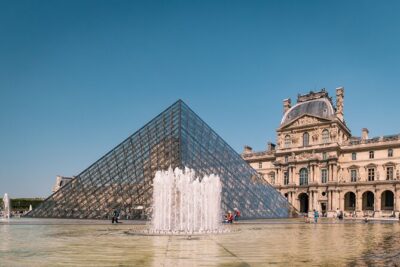
Louvre Museum Masterpieces Guided Tour with Access
Read our review →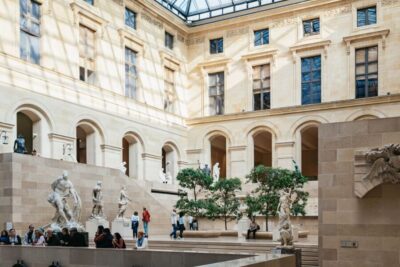
Louvre Museum Entry Ticket With Host and River Cruise
Read our review →
Priority Access Louvre with Host -Direct to Mona Lisa
Read our review →
Mona Lisa & Louvre Masterpieces Tour with Reserved Access
Read our review →
Louvre Museum – Exclusive Guided Tour (Entry Included)
Read our review →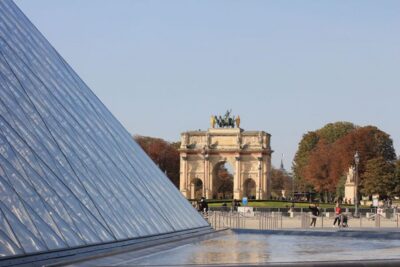
Louvre Reserved Ticket and River Cruise Combo
Read our review →Browse the lists this tour appears in