
Reviewed · WORKSHOPS
Paris: Macarons Class, Teatime and To-Go Box
Making macarons in Paris is a fine way to spend three hours, especially when you learn the Italian meringue method, pipe the shells yourself, and finish with teatime. I like the small groups, usually three to seven people, and the generous box of macarons you take home. The main catch is that this is hands-on work for about two hours, so it suits people ready to follow careful steps rather than simply watch a chef.
I also like that the class welcomes beginners and keeps the mood light with stories about French culture. Instructors such as Stéphane Jimenez, Anne, Fanny, Luc, Amanda, and Florence have been praised for patience and clear teaching. One practical point: children under 12 cannot join, and anyone aged 12 to 16 must have a participating adult alongside them.
In This Review
- Key points at a glance
- Why macaron making is harder than it looks
- Inside Le Foodist on Rue Cardinal Lemoine
- The first two hours: from shells to filling
- Teatime and the story behind the sweet
- What you take home
- Is $152 a fair price?
- Who will enjoy this most?
- What could disappoint you?
- Timing, cancellation, and planning your afternoon
- The final call
- FAQ
- Where does the macaron class take place?
- How long does the experience last?
- What macaron technique will I learn?
- Is the class taught in English?
- How many people are in the group?
- Do I make the macarons myself?
- What is included with the class?
- Can children participate?
- Can a nonparticipating adult enter the kitchen?
- Can I cancel for a refund?
Key points at a glance
- Italian meringue technique: Learn the more demanding method, valued for its reliable results when the instructions are followed closely.
- Small working groups: With no more than six participants listed, you get room to ask questions and receive help with piping and mixing.
- More than a demonstration: You make shells, add color, prepare a filling, pipe the mixture, and assemble the macarons.
- Teatime with a Parisian touch: Sit down with tea, coffee, fruit juice, your macarons, and stories about French food and culture.
- A useful souvenir: Take home a box of your own macarons plus recipes in English, supplied in print and electronic form.
- A good family activity for teens: Participants must be at least 12, and younger teens need an adult who is also taking part.
Why macaron making is harder than it looks
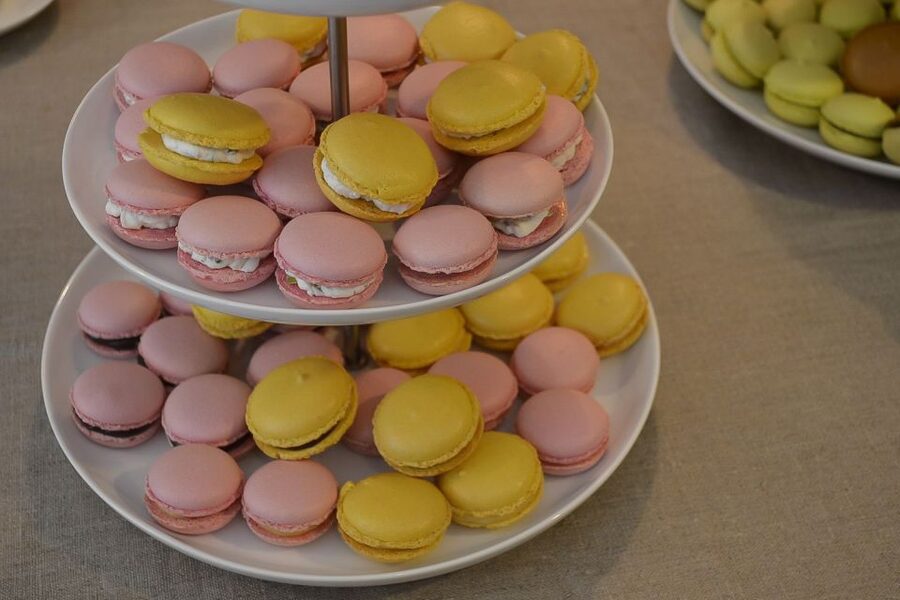
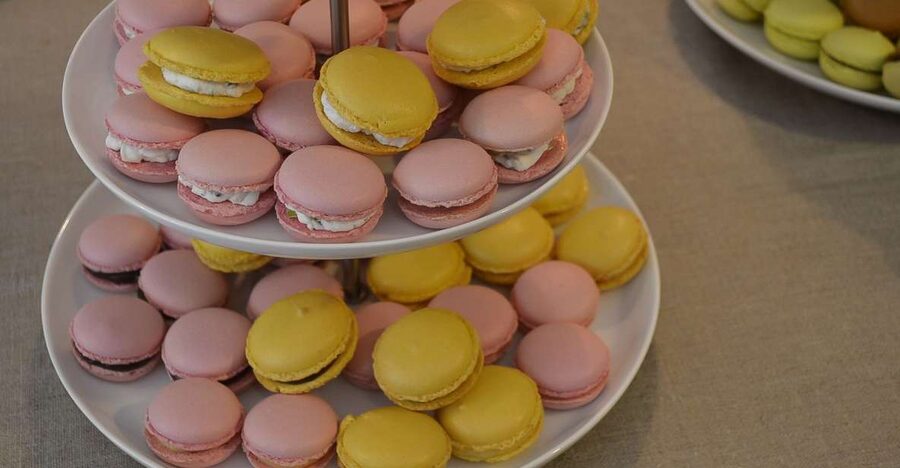
A macaron may look like a small, harmless cookie. It is not. The smooth top, crisp edge, soft center, and neat filling depend on several small details, and a little rough handling can affect the result.
That is why the Italian meringue method matters. Instead of simply whipping sugar into egg whites, you work with a hot sugar syrup. It takes more care, but the method is considered more reliable once you learn the order and timing of the steps.
You will not just watch a pastry chef produce a perfect tray. The class is built around making the macarons yourself. That means you can ask why a mixture should be folded a certain way, how to judge its texture, and how to pipe evenly sized shells.
For a first-time baker, this is useful instruction rather than a glossy food show. You leave with a better idea of what to repeat at home, and what can go wrong.
More Paris trips worth a second look
- Fragonard Paris: Mini Perfume Workshop
★ 4.5 · 1,924 reviews - Paris Cooking Class and Lunch with Wine plus Market Visit Option
★ 5.0 · 1,024 reviews - Paris Croissant Small-Group Baking Class with a Chef
★ 5.0 · 910 reviews
Inside Le Foodist on Rue Cardinal Lemoine
The class meets at Le Foodist, at 59 Rue Cardinal Lemoine in the 5th arrondissement. That puts you in the Latin Quarter, an easy area to pair with other central Paris sightseeing, though the exact walk from your hotel will depend on where you are staying.
The cooking space has been described as clean, attractive, and well organized. Equipment and an apron are supplied, so you do not need to arrive with baking tools. The setting is designed for a small class, which matters here because pastry work is much easier when you can see the instructor’s hands and get close help at your own station.
Give yourself time to find the address. One past participant found the street difficult to locate, and arriving late is not ideal when sugar temperatures and meringue steps are involved. I would not plan a tight museum reservation immediately afterward. The scheduled activity lasts three hours, and the final tea and conversation are part of the experience.
The first two hours: from shells to filling
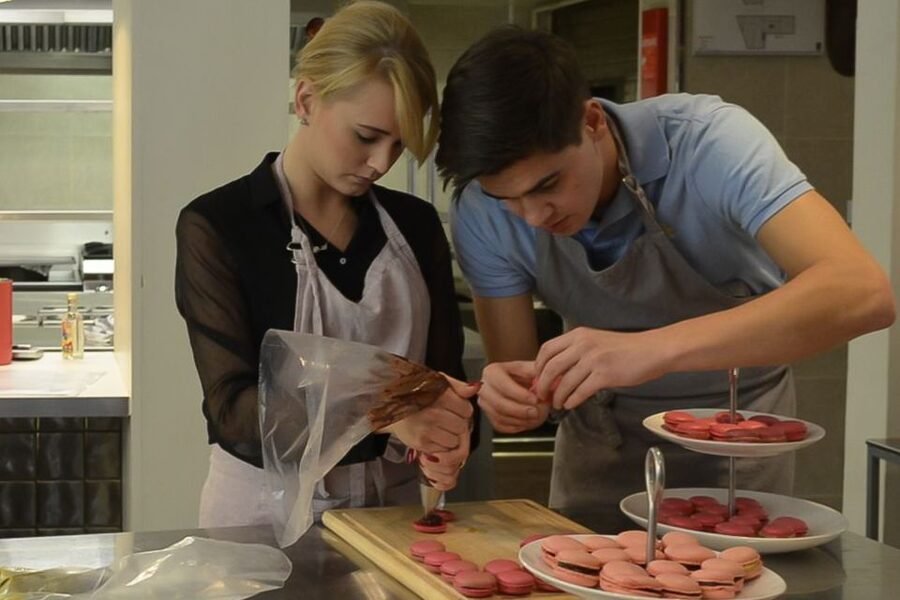
The working portion lasts about two hours. Your instructor begins with a demonstration and clear directions, then guides the group through the process.
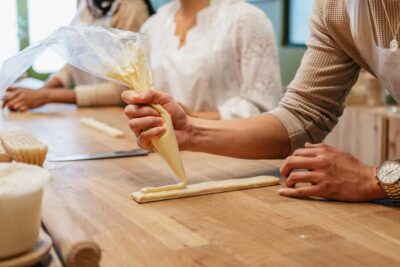
You learn how to prepare the macaron shells using Italian meringue. The class also covers incorporating color, an appealing detail if you want macarons that look as polished as the ones in Parisian pastry shops. You then practice piping, one of the skills that makes the class worthwhile. Consistent pressure and spacing help produce shells that match when you sandwich them together.
The pace is active. One participant described working almost continuously during the baking section, which is helpful to know if you were expecting a relaxed demonstration. You will be measuring, mixing, piping, and paying attention to the instructor’s corrections.
The filling is another hands-on part. Depending on the session, you may prepare a ganache or curd, then use it to sandwich the shells. This gives you more than a single recipe. You learn the basic structure of a macaron and how the filling affects the final bite.
This is also where the small group earns its price. In a large class, a beginner can pipe a tray of uneven shells without much help. Here, the instructor can watch your technique and step in before a small mistake spreads across the whole batch. Past instructors including Anne, Luc, Fanny, and Stéphane Jimenez have been praised for making beginners feel comfortable and keeping everyone involved.
Teatime and the story behind the sweet
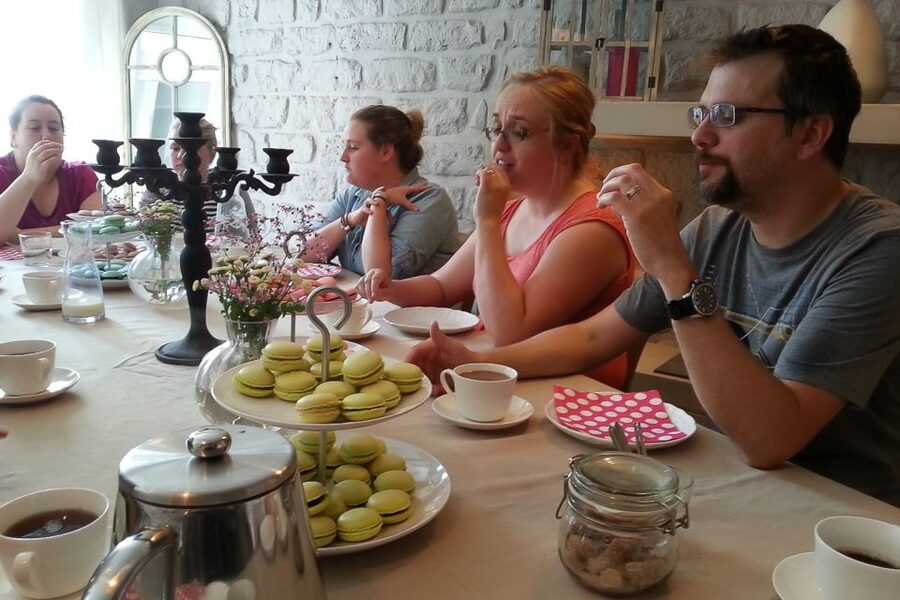
Once the baking work is complete, you sit down for teatime. Tea, coffee, fruit juices, and some of your own macarons are provided.
This pause changes the rhythm of the class. You move from technical work to conversation, tasting the results while the instructor shares the story of the macaron and a few observations about French culture. The storytelling is described as light and sometimes tongue in cheek, so expect something more relaxed than a formal food lecture.
I like this part because it connects the recipe to Paris rather than treating baking as an isolated task. You have made the food, then sit around a table to enjoy it. You also meet the other people in the group, who may be traveling from different countries.
Do not rush away as soon as the last tray is ready. The tea, stories, and shared tasting are included in the three-hour experience. One past participant had a pre-booked taxi arrive early and missed some of the social time, so leave a little breathing room if you want the full afternoon.
A different way to spend the day, same corner of France:
- Paris: Louvre Museum Timed-Entrance Ticket
★ 4.6 · 71,977 reviews - Disneyland® Paris 1-Day Ticket
★ 4.6 · 49,412 reviews - Paris: Versailles Palace and Gardens Full Access Ticket
★ 4.6 · 41,579 reviews - Paris: Evening River Cruise with Music
★ 4.4 · 22,721 reviews
What you take home
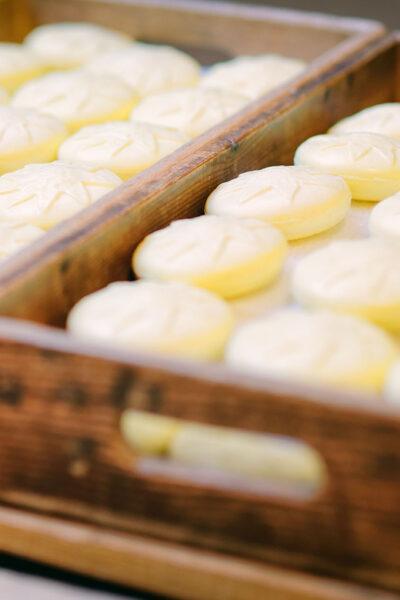
The take-home box is one of the strongest practical benefits. You do not merely eat two or three macarons at the end and walk away with a recipe. You leave with a box of your own creations, enough to share with family and friends or enjoy over the next few days.
The exact quantity and appearance can vary because you are making the macarons yourself. That is part of the appeal. Some may be more uniform than others, but they carry the memory of the work you did in the kitchen.
Recipes are provided in English in both hard copy and electronic form. Having the printed version during the lesson is helpful because you can make notes as the chef explains small points. One participant specifically valued receiving the recipe during the class, while another wished the chef’s personal tips had been printed alongside the directions. My advice is to bring a pen and write down those extra comments as you go.
The electronic copy is useful once you are back home, but the paper recipe is easier to mark while your hands are busy.
Is $152 a fair price?
At $152 per person, this is not a cheap way to buy macarons. If your main goal is simply to taste French pastries, a bakery visit will cost far less.
The value comes from the full package: about two hours of instruction, use of all equipment, an apron, drinks, teatime, cultural stories, recipes, and a box of macarons to take away. You are paying for instruction and participation, not just dessert.
The small group also changes the calculation. A class capped at six gives you more access to the instructor than a crowded cooking demonstration. Several past participants singled out the individual attention, patient guidance, and beginner-friendly teaching. That matters with macarons, where folding and piping can be difficult to judge from the back of a room.
I think the price makes the most sense for couples, families with teens, and people who genuinely want to learn a technique they can try at home. It is less convincing for someone with little interest in baking or someone who prefers a passive food tour.
Who will enjoy this most?
This class is a strong fit for beginners. You do not need to arrive as a skilled baker, and the instruction is structured so that you can ask questions and keep pace with the group.
It also works well for a parent and teenager. Children under 12 cannot participate, but 12 to 16 year olds may join when accompanied by an adult who is also taking the class. There are no crèche or childcare facilities, and only participating people can enter the kitchen, so this is not an activity where a younger child can tag along as an observer.
Teenagers appear to get a lot from the balance of work, food, and conversation. Past families have included 14 and 15 year olds, as well as groups celebrating a 13th birthday. If you are booking for a family, make sure every person entering the kitchen meets the age rules and has a paid participating place.
Couples can enjoy it as a shared activity, while solo participants have a natural way to meet a small group. The English instruction also makes the technical steps easier to follow if you do not speak French.
What could disappoint you?
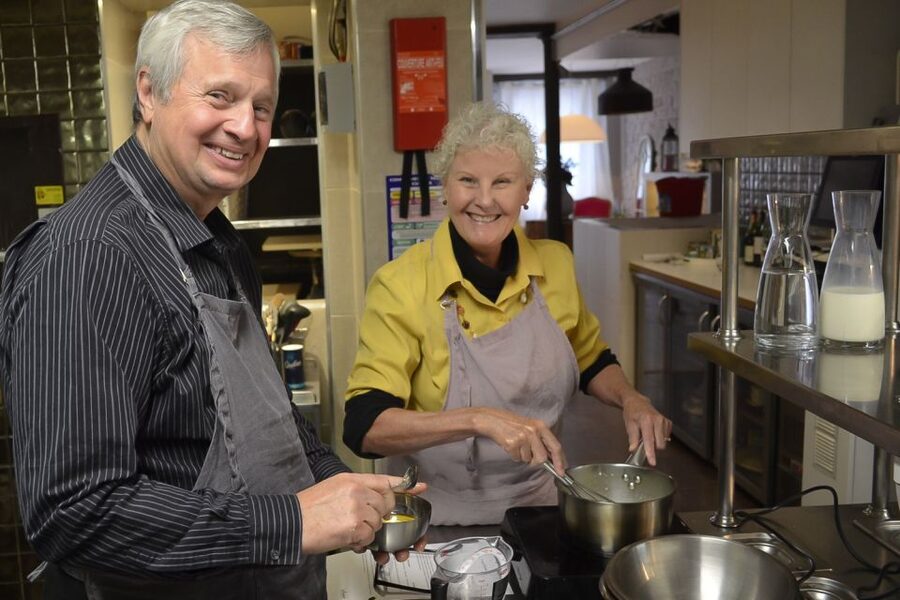
The class is not a quick photo opportunity. You will spend much of the first two hours working, and macaron preparation requires attention. If you want a carefree afternoon with no measuring or piping, choose a tasting activity instead.
The result is also not guaranteed to look professional. The instructors provide help, but your macarons are still your own work. That is a benefit if you enjoy learning, but a possible frustration if you expect every shell to be identical.
Another consideration is that the information describes groups as small, with a maximum of six, while one older account described a group of eight. Group size can change by session or over time, so check the current details when booking if the size of the class is especially important to you.
Finally, the class is in English. That is useful for English-speaking visitors, but it may not be the right choice if you want a French-language lesson.
Timing, cancellation, and planning your afternoon
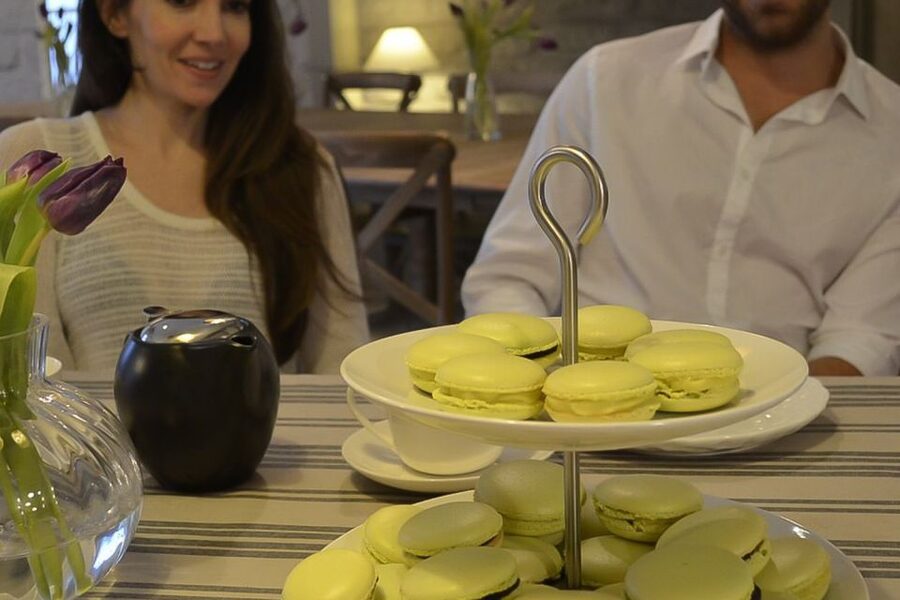
The activity lasts three hours, with starting times depending on availability. Check the selected date and time carefully, then allow extra time to reach Rue Cardinal Lemoine and find the entrance.
You can cancel up to 24 hours before the activity for a full refund. A reserve-now, pay-later option is also available, which helps if your Paris schedule is still shifting.
Wear something suitable for a kitchen, though an apron is included. You do not need to bring cooking equipment. A notebook or pen is worth packing for the extra tips that may not appear in the printed recipe.
I would schedule this on a day when you have room to linger. The class works best as a main activity, perhaps followed by a gentle walk through the Latin Quarter, rather than as a small gap between major appointments.
The final call
Book this class if you want to do something practical in Paris, enjoy sweets, and learn a skill you can repeat at home. The small group and patient instruction are especially valuable for beginners, while the teatime gives the afternoon a social and distinctly French finish.
Skip it if you only want to sample macarons or dislike careful kitchen work. At $152, the class earns its price through instruction, equipment, conversation, recipes, and the substantial take-home box. For a baking-minded couple, a family with teenagers, or anyone seeking a hands-on break from museums, it is a well-focused choice.
FAQ
Where does the macaron class take place?
The class meets at Le Foodist, 59 Rue Cardinal Lemoine, 75005 Paris.
How long does the experience last?
The complete experience lasts three hours. About two hours are devoted to the hands-on macaron class, followed by teatime and conversation.
What macaron technique will I learn?
You will learn the Italian meringue method, which uses a hot sugar syrup and is considered more difficult but reliable when handled correctly.
Is the class taught in English?
Yes. The instructor teaches in English, and the recipes are provided in English.
How many people are in the group?
The activity is described as a small group limited to six participants, though group sizes may vary by session.
Do I make the macarons myself?
Yes. You take part in preparing the shells, adding color, piping, and making a ganache or curd filling.
What is included with the class?
Equipment, an apron, the two-hour class, teatime drinks, stories, recipes in printed and electronic form, and a box of your macarons to take away are included.
Can children participate?
Children under 12 cannot participate. Children aged 12 to 16 must be accompanied by an adult who is also participating.
Can a nonparticipating adult enter the kitchen?
No. Only participants can enter the kitchen, so an adult accompanying a teenager must have a participating place.
Can I cancel for a refund?
Yes. You can cancel up to 24 hours in advance for a full refund. A reserve-now, pay-later option is also available.
Recently reviewed around Paris
- Louvre Private Tour – The Essentials and More with Expert Guide★ 5.0 · 227 reviews
- 2CV tour by night★ 5.0 · 55 reviews
- Eiffel Tower Second or Summit Floor Access by Elevator with Views★ 3.5 · 161 reviews
- 2 Hour Street-art Walk and Space Invaders Hunt in Paris★ 5.0 · 27 reviews
- 2 hour outdoor group activity in Paris: SAINT GERMAIN★ 5.0 · 48 reviews
- The only Paris Wine Tasting experience you need to do – 2 hours★ 5.0 · 265 reviews
- Sainte-Chapelle, Conciergerie & Palais de Justice Private Tour★ 5.0 · 72 reviews
- Private 2 – Hour Paris Landmarks Tour by Golf Cart Mini Moke★ 5.0 · 38 reviews
Workshops, compared.

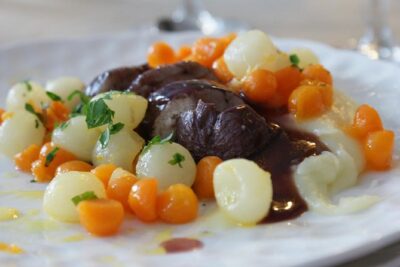
Paris Cooking Class and Lunch with Wine plus Market Visit Option
Read our review →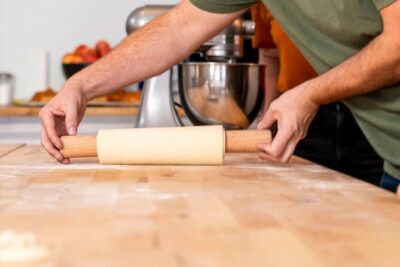
Paris Croissant Small-Group Baking Class with a Chef
Read our review →
Fragonard Eze: Perfume Making Class and Factory Tour
Read our review →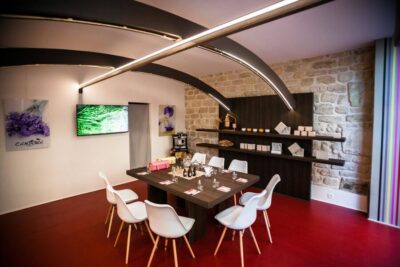

Perfume Making Class and Fragonard Factory Tour
Read our review →Browse the lists this tour appears in